PSI walks in wearing boxing gloves
PSI enters as a tiny boxer labeled “push.” He punches water up a pipe and says, “I am pressure. I help move against resistance.”
Pump Boy thinks pressure and flow are the same thing. Hydro-Sensei takes one deep breath, sharpens three pieces of chalk, and turns the classroom into the funniest PSI vs GPM lesson the water system has ever survived.
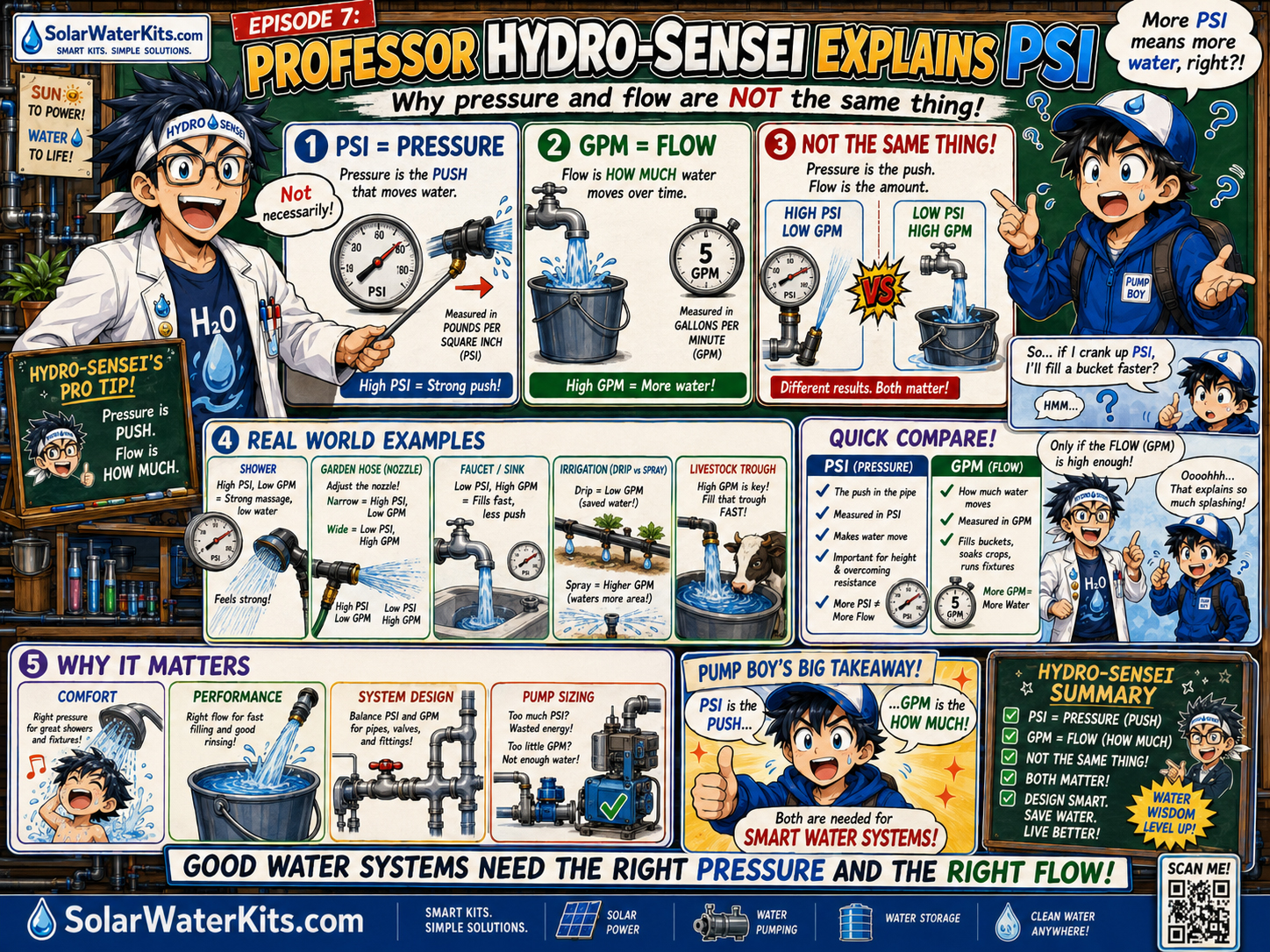
Episode 7 teaches the behavior lesson: pressure and flow are related, but they are not the same thing. A good water system needs both in the right balance.
PSI, GPM, lift, head, and friction enter the classroom.
Pump Boy bursts into class holding a garden hose and shouting, “We need more PSI so the bucket fills faster!”
Hydro-Sensei closes his eyes. A single chalk stick snaps in half from educational tension.
PSI enters as a tiny boxer labeled “push.” He punches water up a pipe and says, “I am pressure. I help move against resistance.”
GPM arrives carrying a bucket marked “amount per minute.” “I am flow,” GPM says. “I answer how much water actually arrives.”
Pipe Friction crawls through elbows, filters, hoses, and tiny fittings, stealing performance while everyone blames the pump.
Hydro-Sensei writes: useful water = enough pressure + enough flow at the actual point of use.
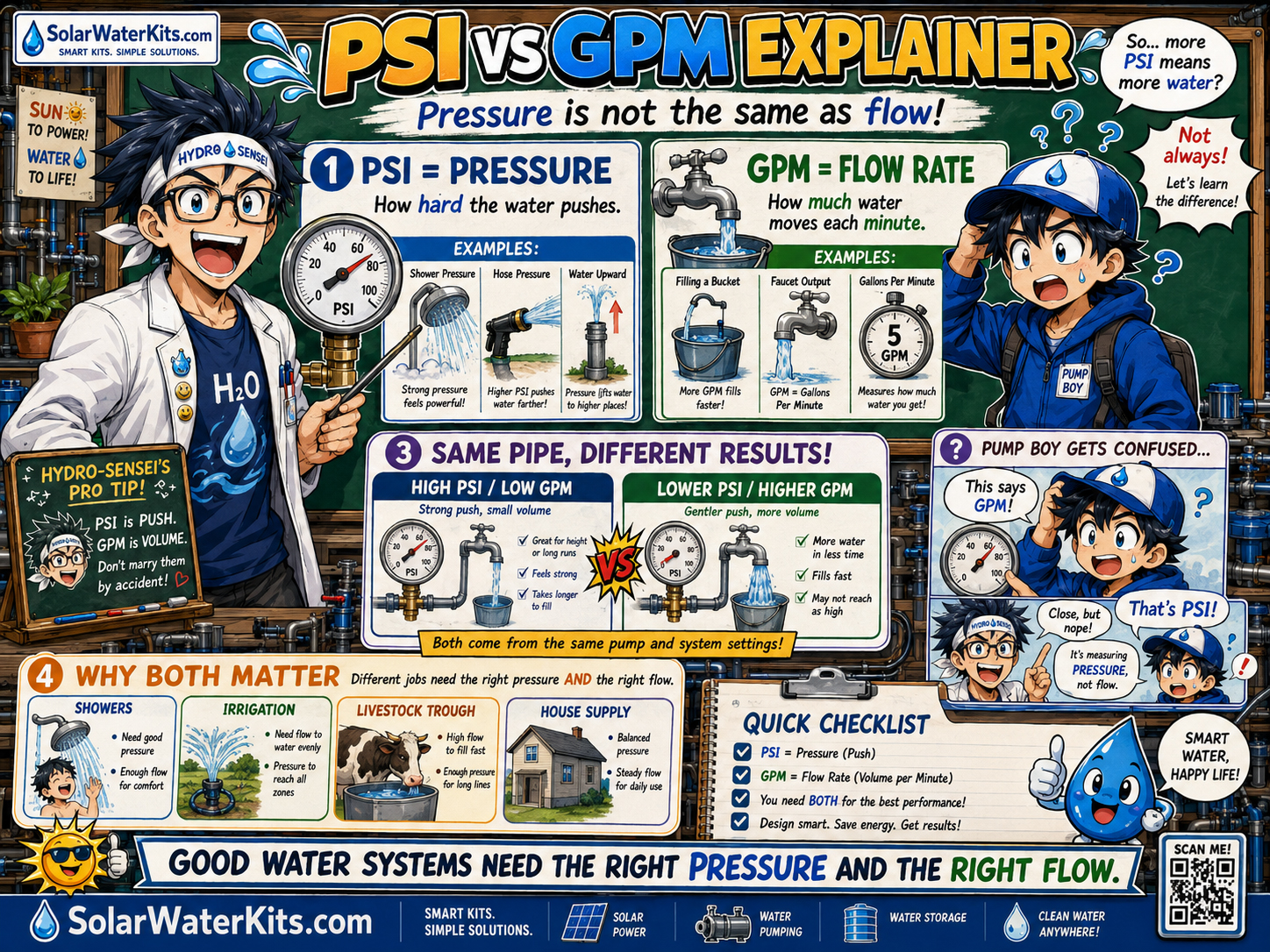
Pressure is the push. Flow is the delivered amount.
The shower says, “I need steady pressure and enough flow.” The garden hose says, “I need more flow.” The drip emitter whispers, “Please do not blast me.”
Hydro-Sensei shows a pump curve. Pump Boy learns that a pump does not deliver the same flow at every pressure and head condition.
Pump Boy finally says, “So we size the pump for actual flow at actual head.” Hydro-Sensei quietly frames the sentence.
A water system can fail if it has pressure but not enough flow, or flow with too little pressure. The correct target depends on the use: faucet, shower, hose, trough, drip zone, sprinkler, filter, or tank fill.
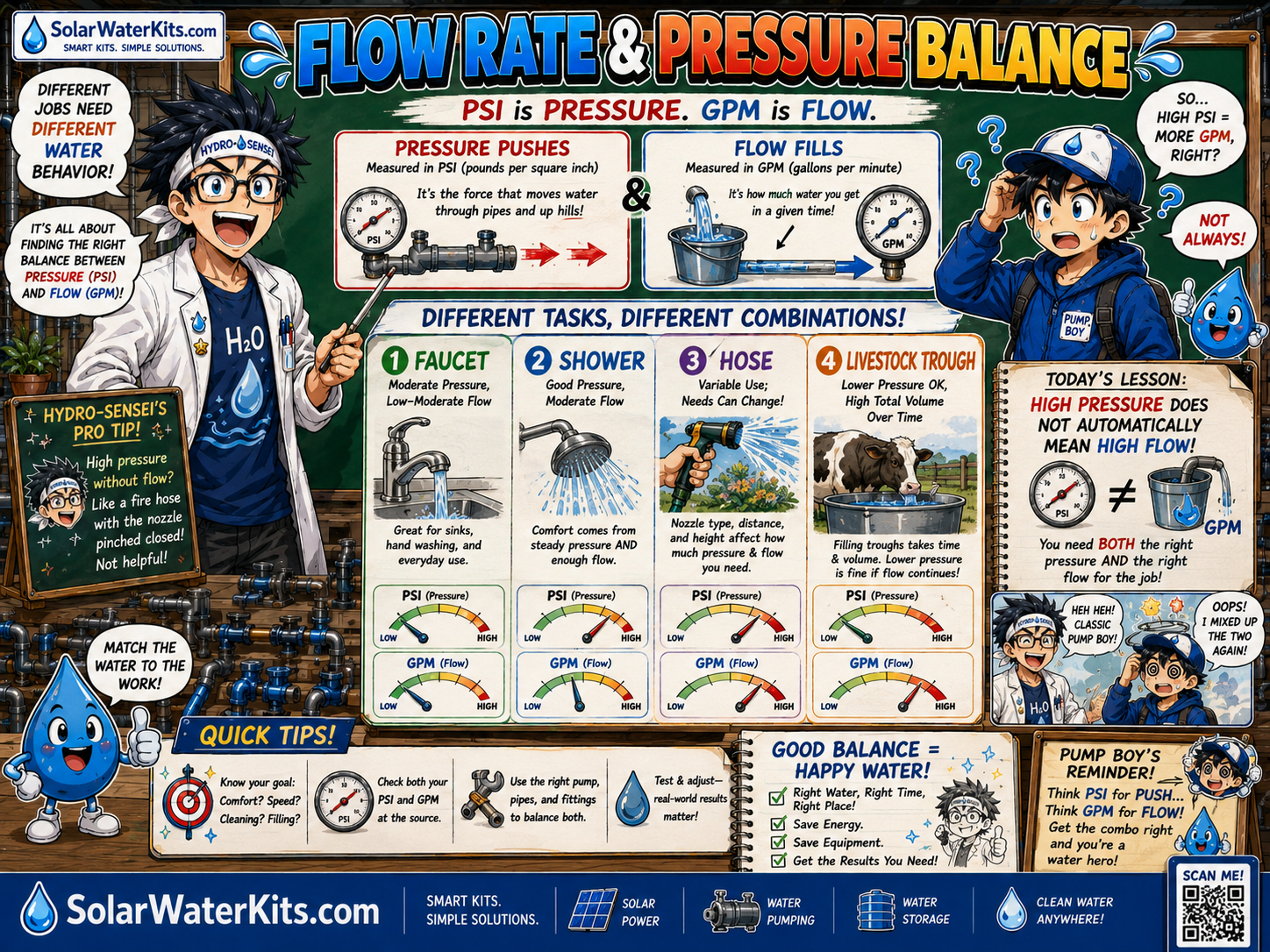
A faucet, shower, hose, trough, and drip zone each need different flow and pressure behavior.
Flow & Pressure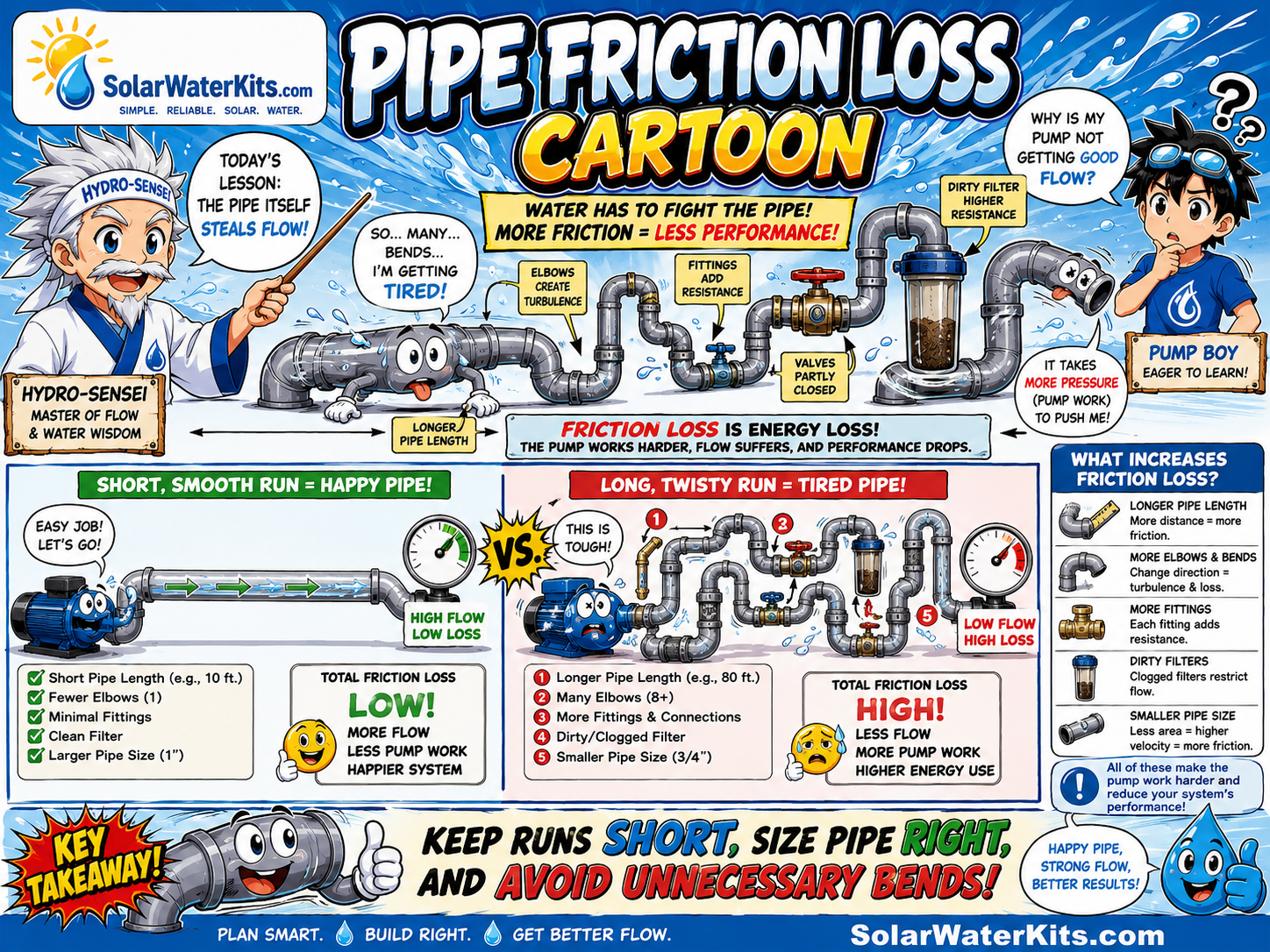
Pipe length, diameter, elbows, valves, hoses, and filters reduce performance.
Pump Sizing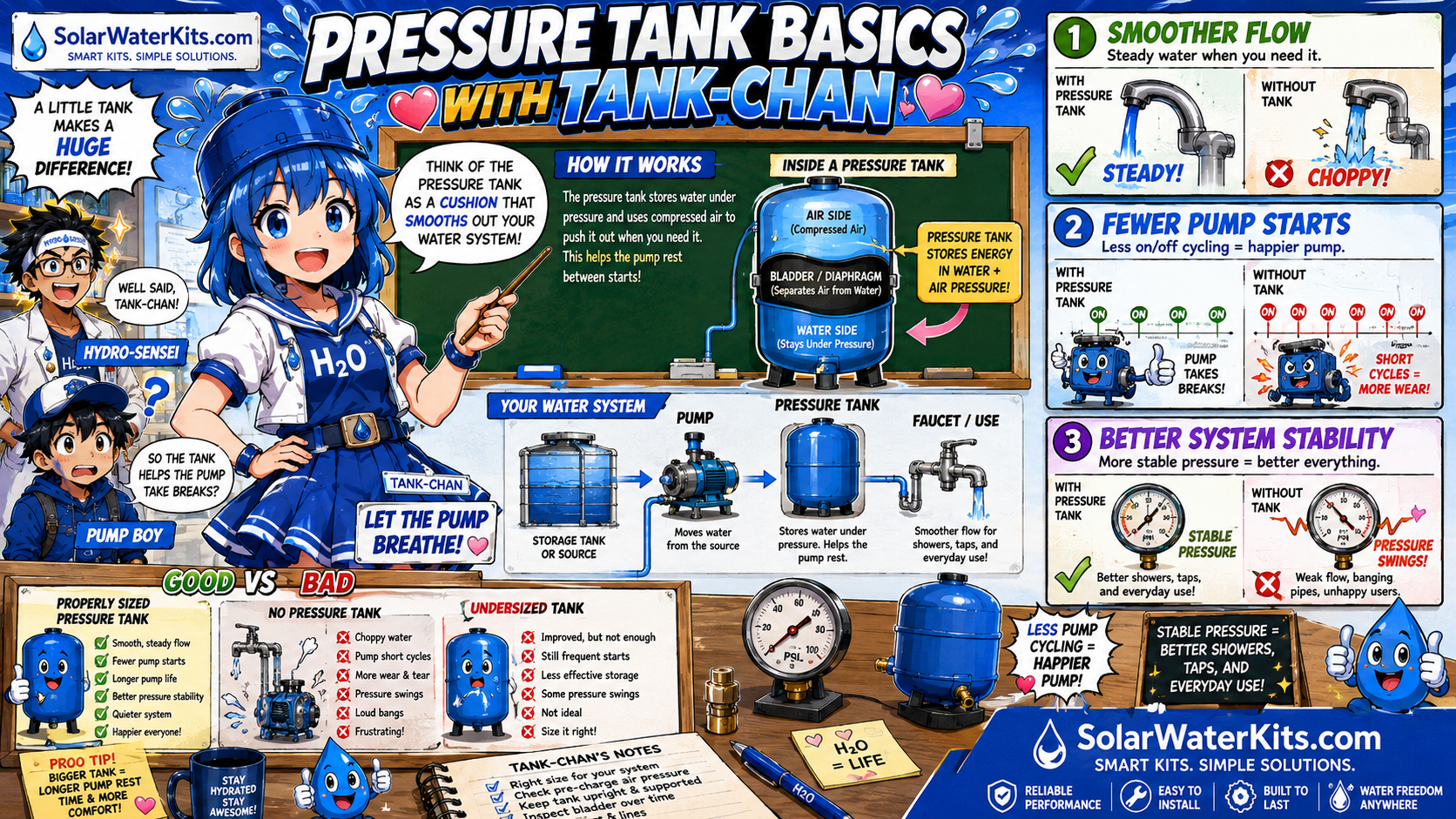
Pressure tanks smooth delivery, reduce pump starts, and help the system behave calmly.
Pressure Tanks| Term | Plain Meaning | Pump Boy Mistake |
|---|---|---|
| PSI | Pressure; how hard the water is pushed. | Thinking PSI alone means lots of water. |
| GPM | Gallons per minute; how much water moves. | Ignoring flow when trying to fill, flush, or irrigate. |
| Vertical lift | How high the pump must raise water. | Forgetting uphill water takes work. |
| Friction loss | Resistance from pipe, fittings, filters, valves, and hoses. | Blaming the pump when the pipe is too small or clogged. |
| Total dynamic head | The total workload at the required flow. | Sizing from lift alone instead of the whole system. |
| Pump curve | A chart showing flow at different head conditions. | Believing the biggest number on the pump box. |
| Pressure tank drawdown | Usable water delivered before pump restart. | Thinking the pressure tank is bulk storage. |
Pressure without flow is drama. Flow without pressure is a puddle.
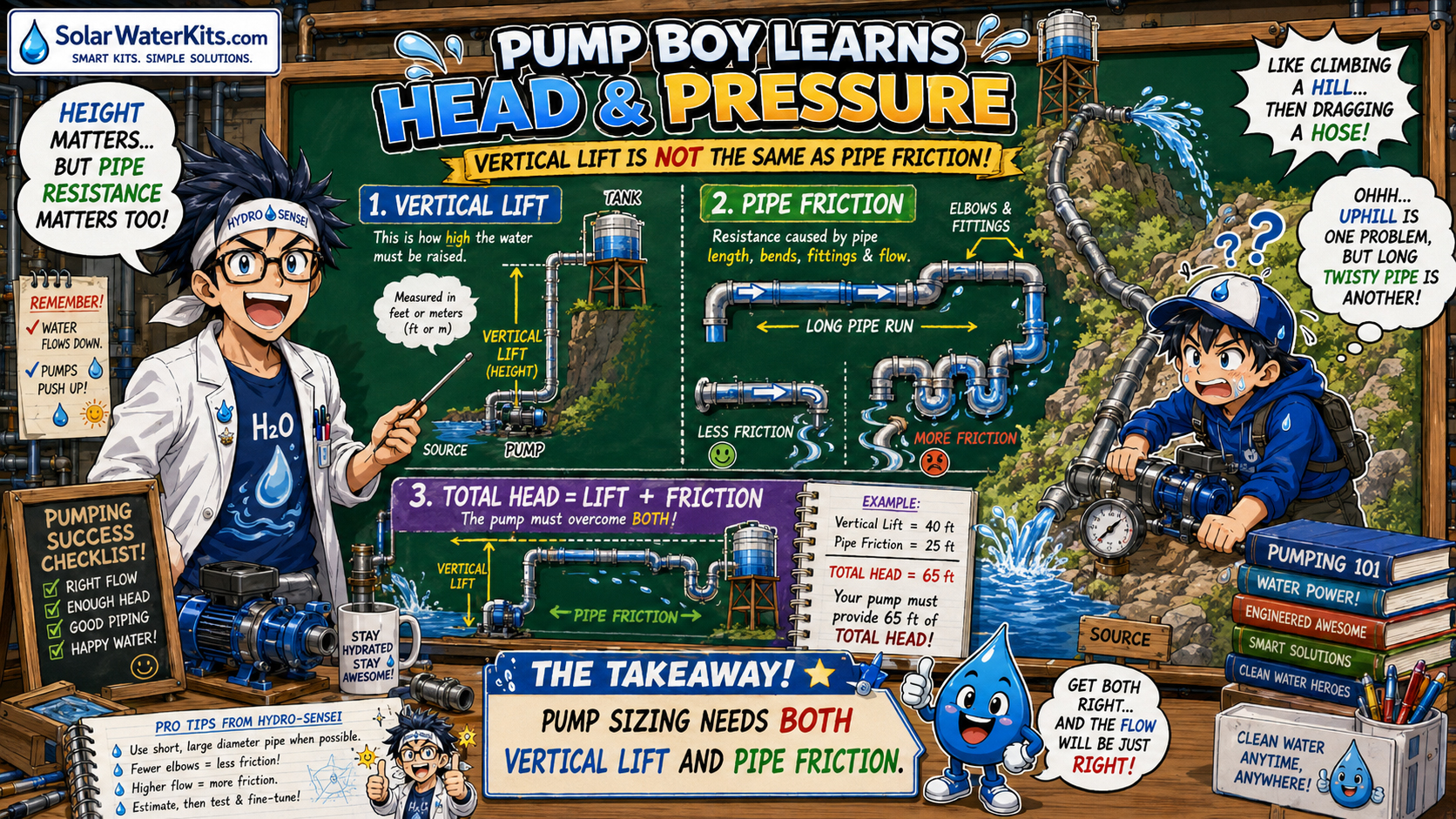
Lift, pressure, friction, filters, valves, and fittings all count.
A good solar water system is sized for actual gallons, actual pressure, actual pipe, actual distance, actual filters, actual elevation, and actual use.
Pump Boy: “So more PSI is not always the answer?”
Hydro-Sensei: “Correct. Sometimes the answer is a bigger pipe, a smaller zone, a clean filter, or math.”
Real water systems may involve pumps, pressure tanks, pressure switches, relief valves, pipe sizing, fittings, backflow protection, potable-water plumbing, electrical systems, batteries, inverters, filters, tanks, permits, inspections, and manufacturer instructions.
The crew takes the lessons to the ranch, where cattle, troughs, tanks, float valves, solar pumping, and field durability become the next manga class.
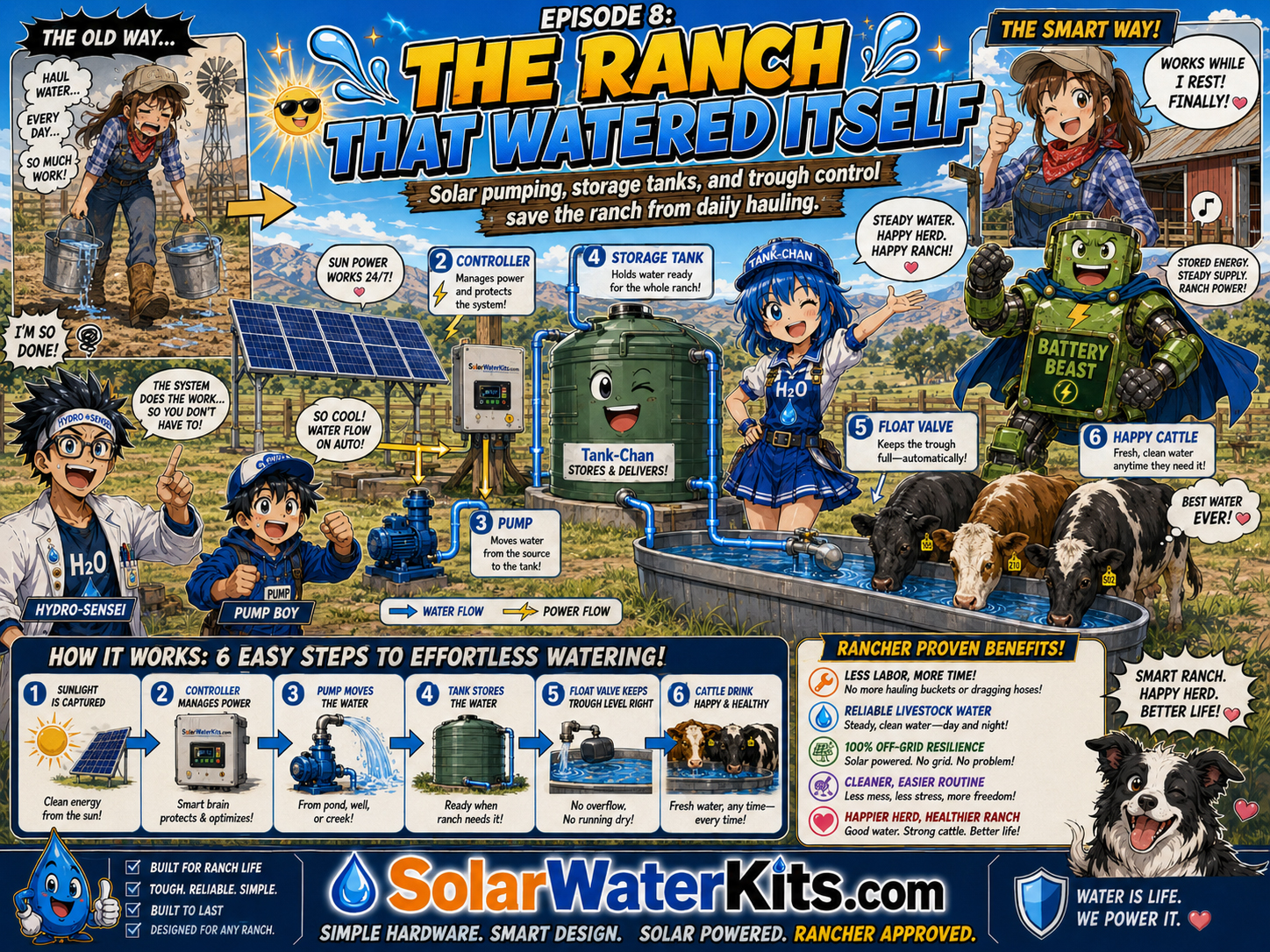
The cows think it is magic. Hydro-Sensei calls it design.
Read Episode 8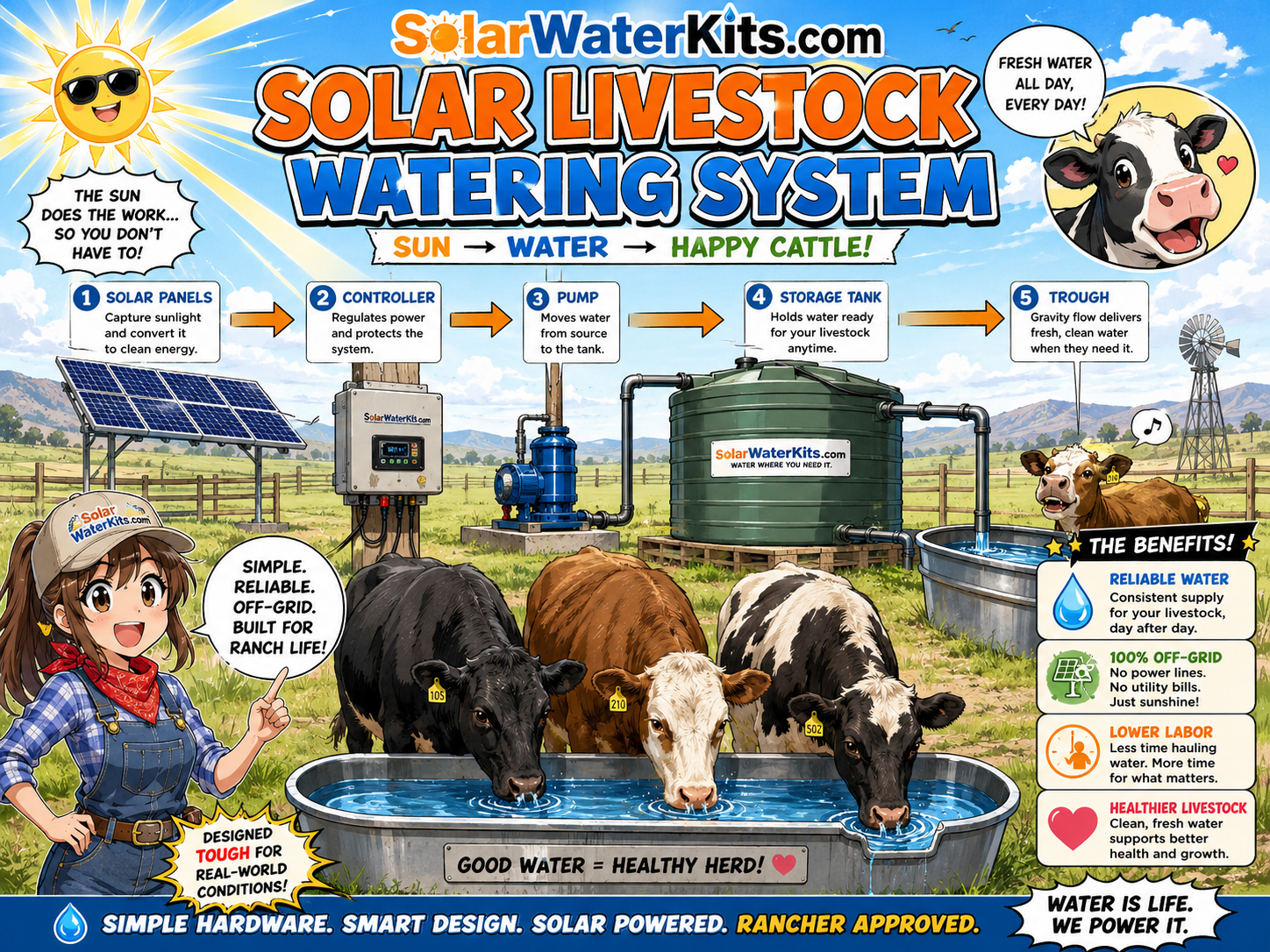
Troughs, storage tanks, float valves, solar pumping, and herd reliability.
Livestock Water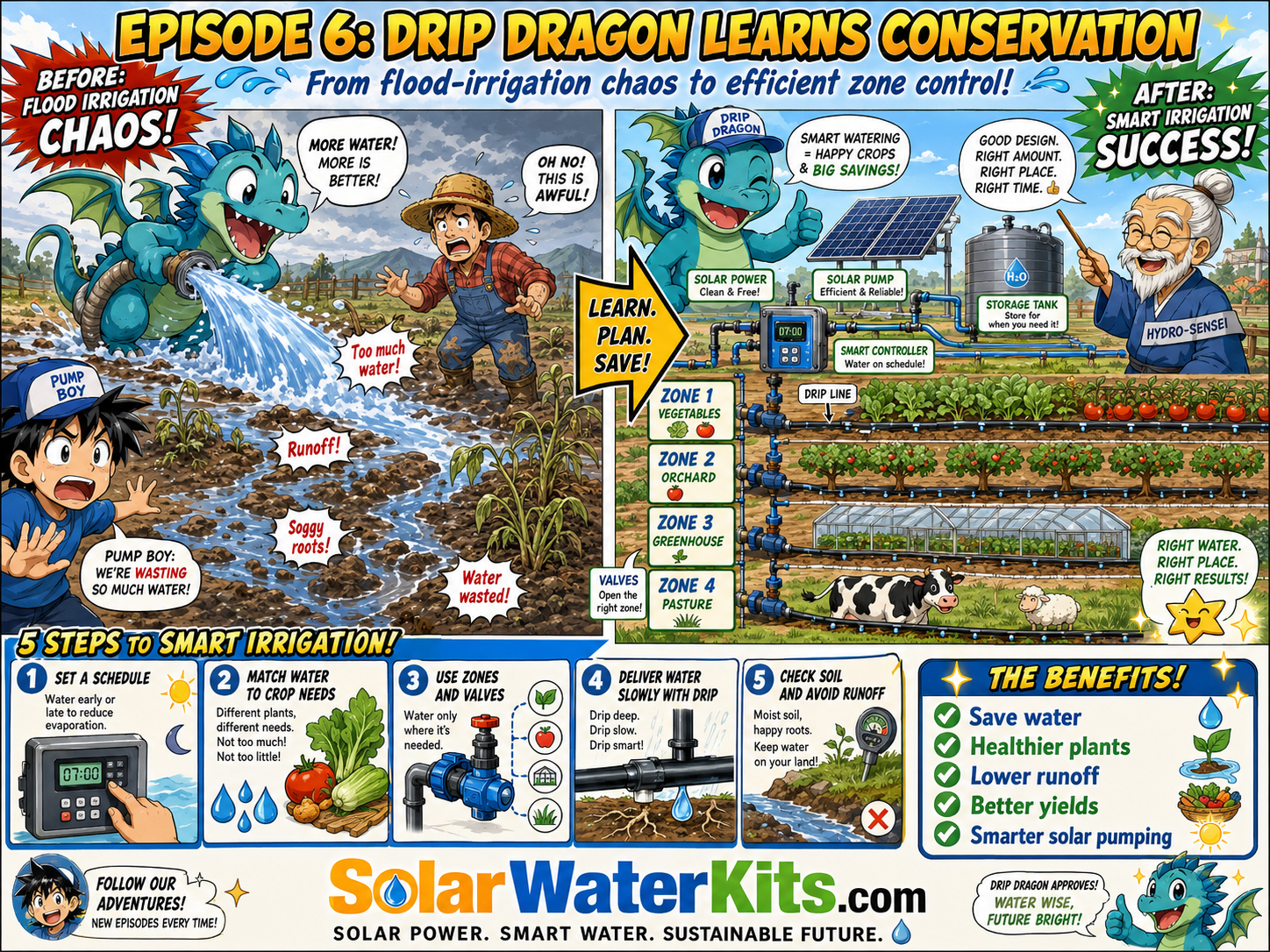
Go back to the irrigation conservation lesson.
Read Episode 6