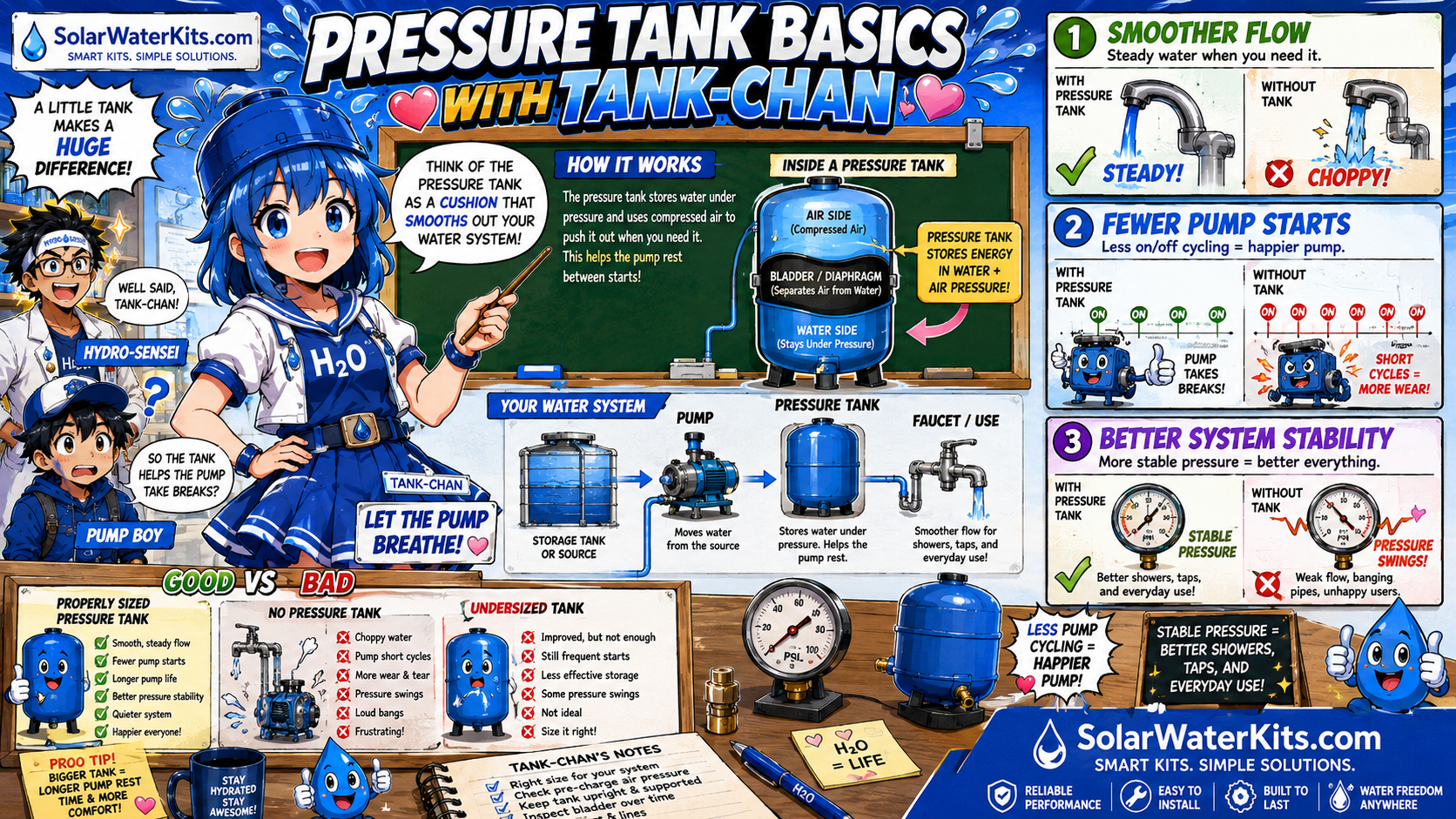
Tank-chan
Smoother flow
Pressure tanks help the system deliver small draws without instantly starting the pump.
Pressure TanksPump Boy keeps mixing up PSI and GPM. Hydro-Sensei explains the difference: pressure is the push, flow is the amount, and a good solar water system needs the right balance for the real fixture, hose, trough, shower, filter, sprinkler, or irrigation zone.
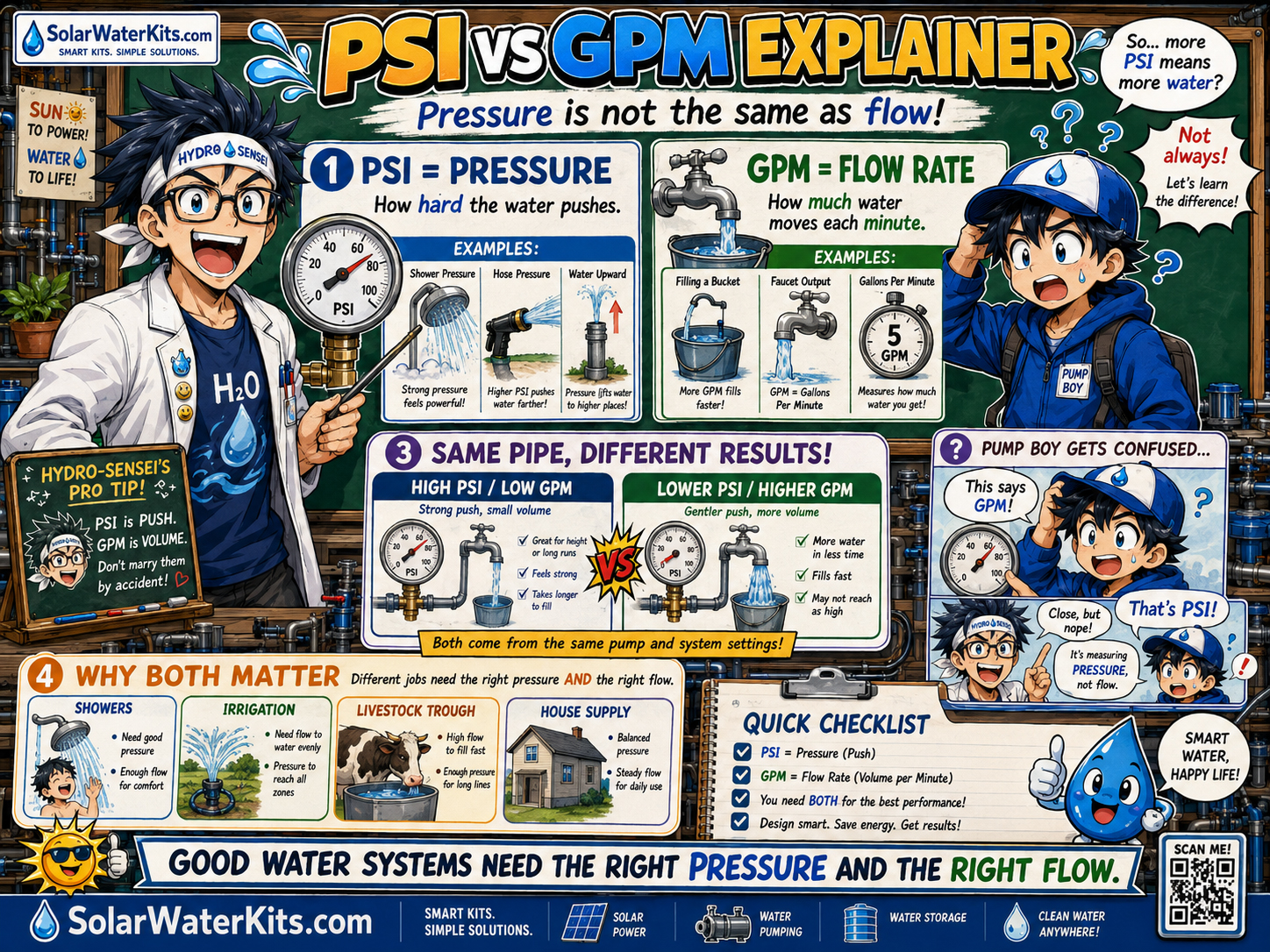
A system can have pressure with little flow, or lots of flow at low pressure. Real water design asks for both: how hard the water is pushed and how much water is moving.
Pressure and flow must be designed together.
A water system fails when one pump is expected to satisfy every load without design discipline. Hydro-Sensei maps the personalities before choosing pumps, tanks, pipe, filters, and valves.
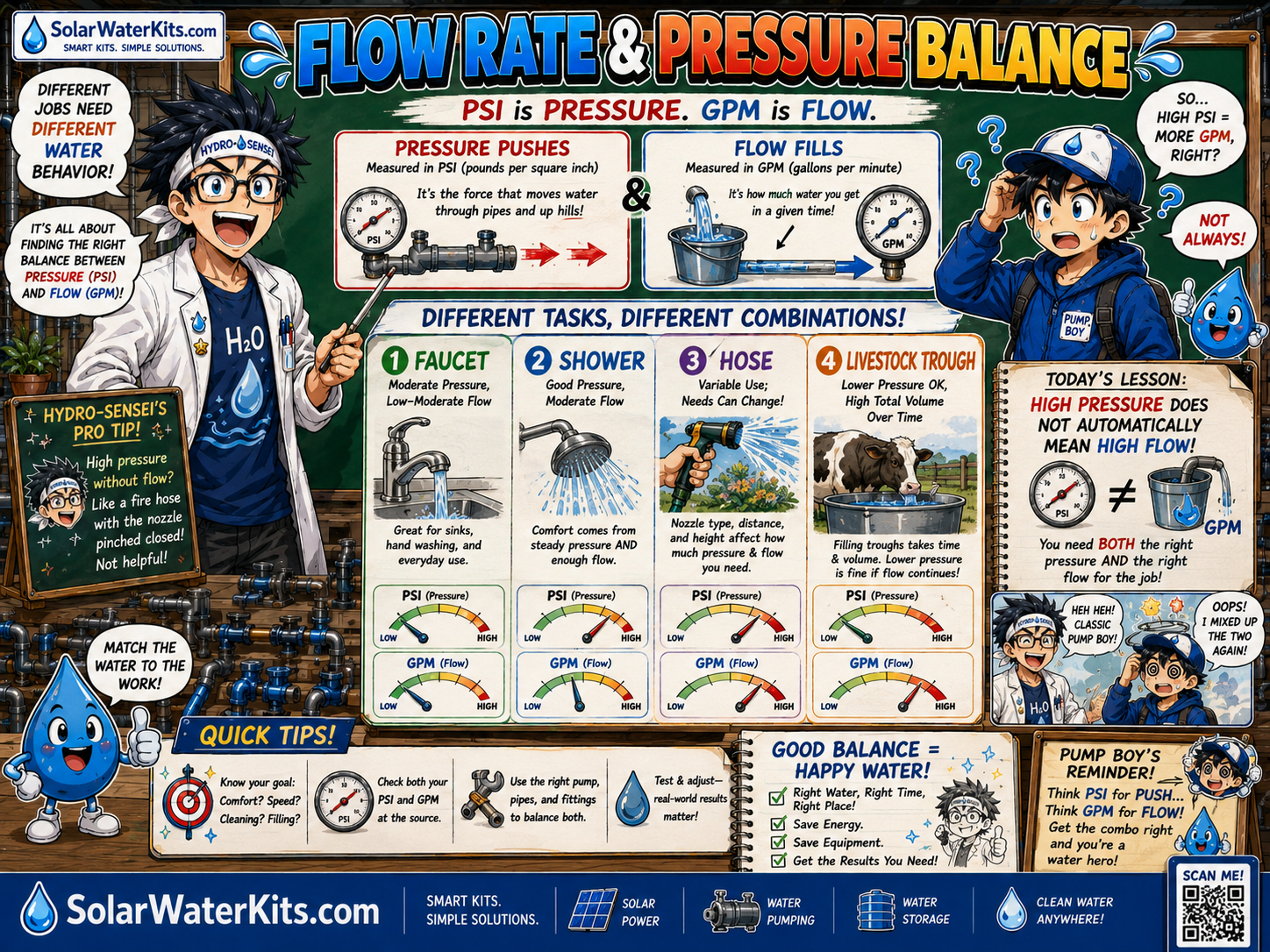
Flow and pressure targets change with the job.
| Water Load | Usually Needs | Common Mistake |
|---|---|---|
| Bathroom faucet | Moderate pressure, modest flow, clean potable plumbing. | Overbuilding pump size for small fixture draws. |
| Shower | Steady pressure and enough flow for comfort. | Ignoring pressure drop through filters or long pipe runs. |
| Garden hose | Higher flow and useful pressure at the hose end. | Expecting a long skinny hose to behave like large pipe. |
| Livestock trough | Reliable refill, float valve control, enough daily gallons. | Focusing on instant pressure instead of daily water reserve. |
| Drip irrigation | Filtered water, controlled pressure, zone flow, timer logic. | Sending dirty or over-pressurized water to emitters. |
| Sprinkler zone | Specific pressure and flow per zone. | Running too many heads at once. |
| Emergency booster | Essential pressure and controlled low-flow use. | Trying to run the whole property like nothing happened. |
Water does not glide through the system for free. Pipe walls, elbows, filters, valves, fittings, hoses, and long distances all create resistance.
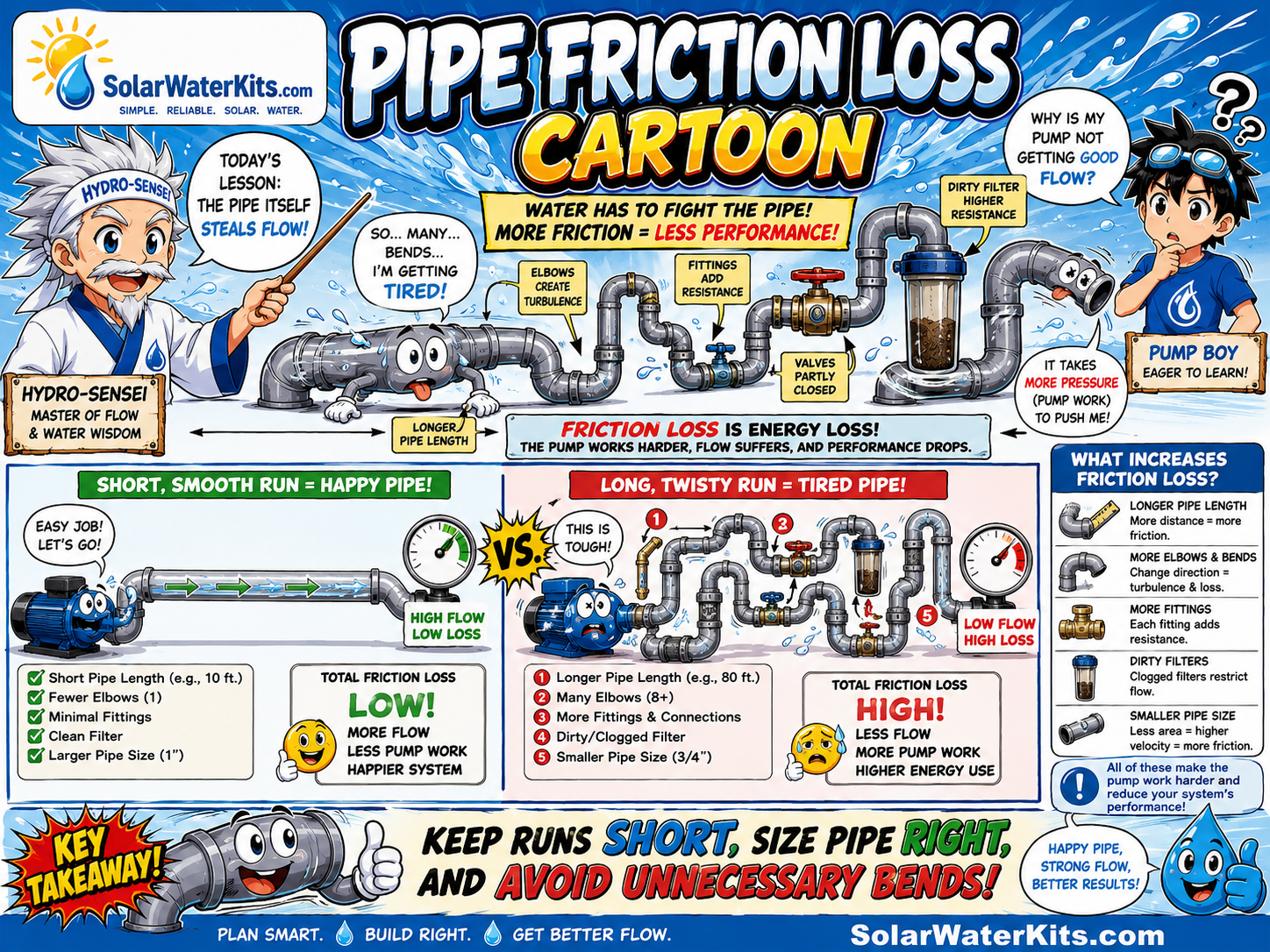
Pipe layout is part of pump sizing.
A bigger pump is not a cure for a tiny pipe.
A pressure tank does not create endless water, but it can store pressurized drawdown, reduce pump starts, and make small water uses behave better.
Pressure tanks help the system deliver small draws without instantly starting the pump.
Pressure Tanks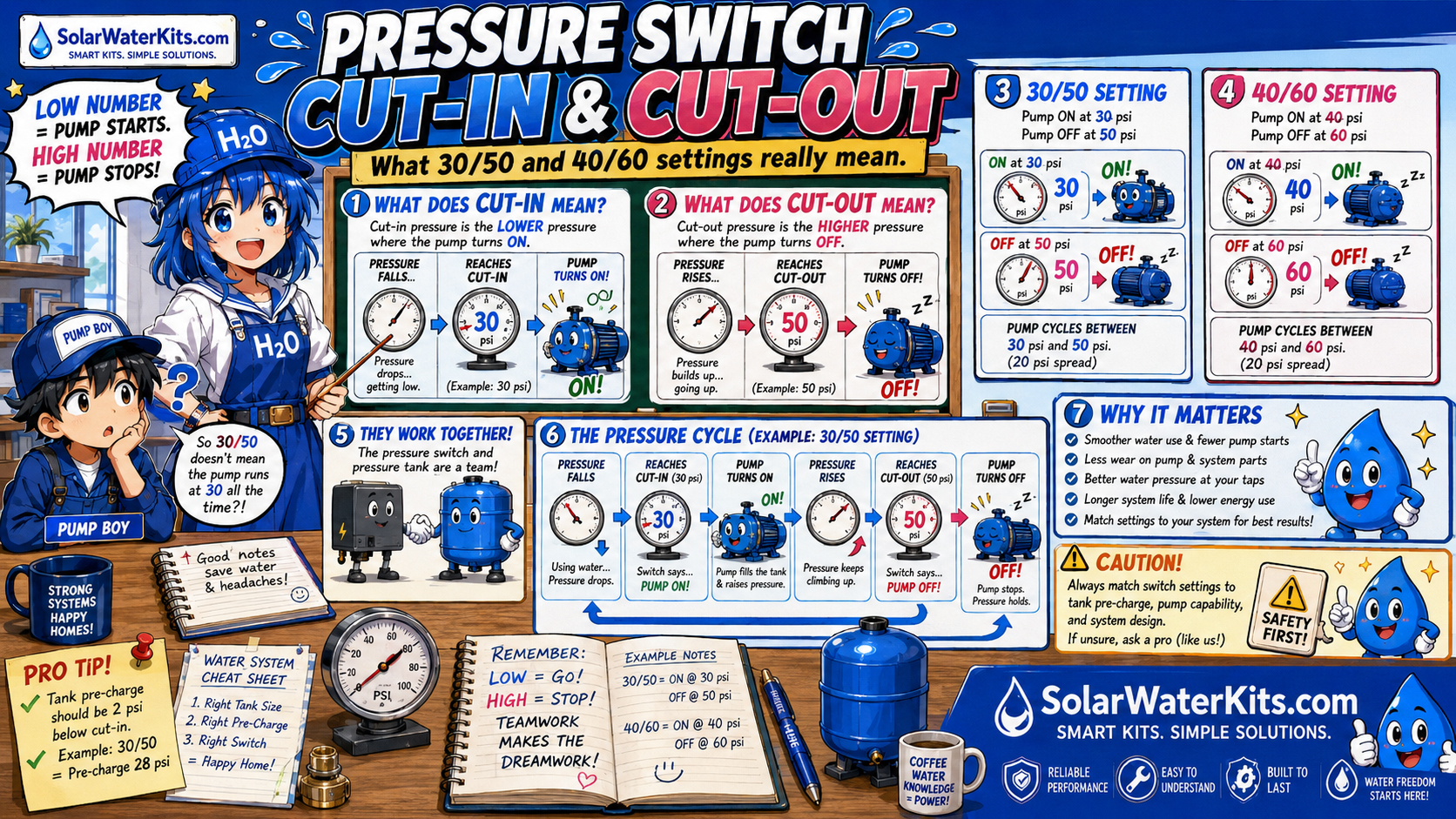
Pressure switches tell the pump when to start and stop within a pressure range.
Switch Logic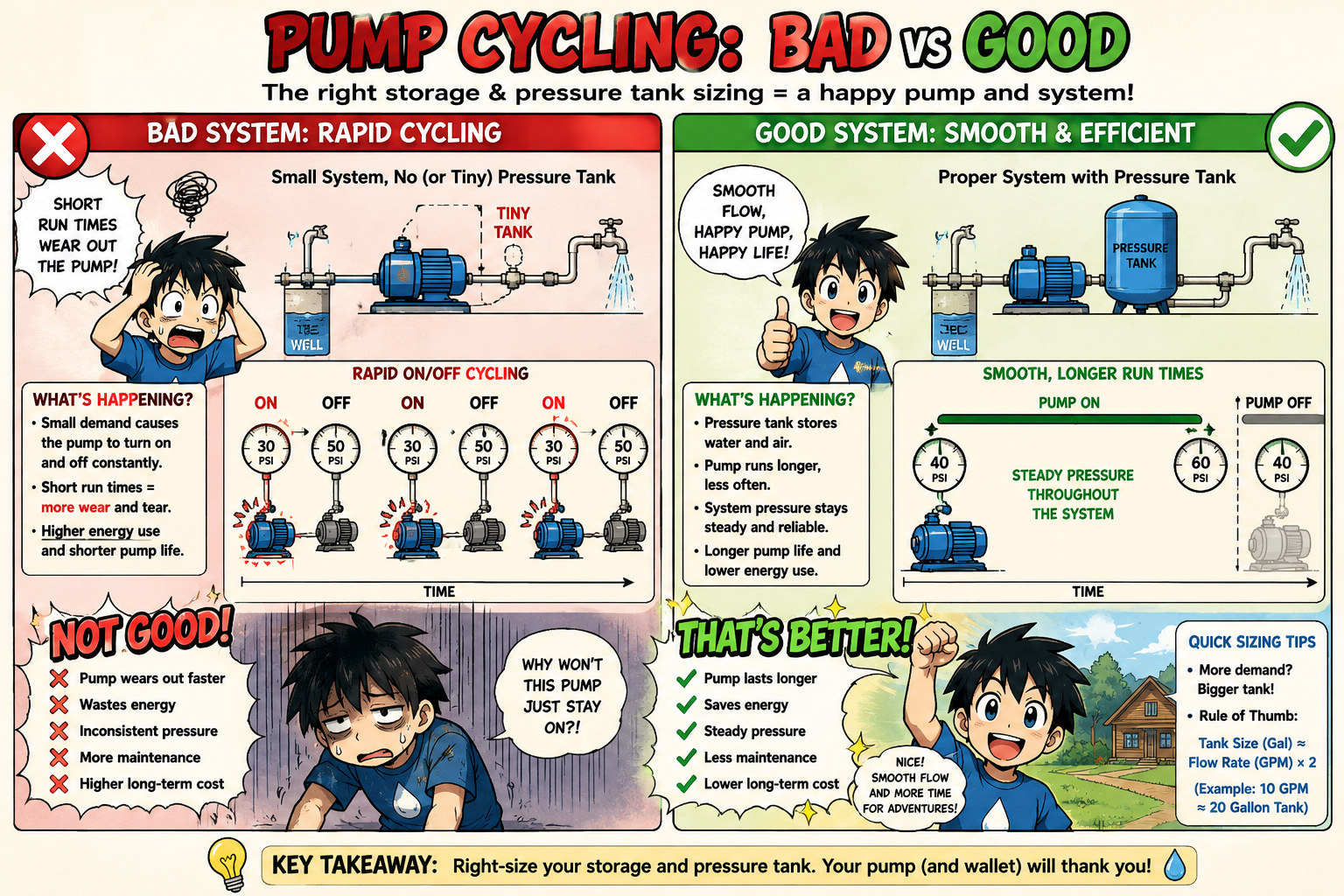
Bad pressure behavior can make pumps start and stop too often.
Pump CyclingStorage tanks answer “how many gallons do we have?” Pressure tanks answer “how calmly can we deliver pressurized water before the pump starts again?”
A solar pump must satisfy both the water side and the power side. The water side asks for flow, pressure, lift, and pipe behavior. The power side asks for voltage, inverter size, battery capacity, controller compatibility, and runtime.
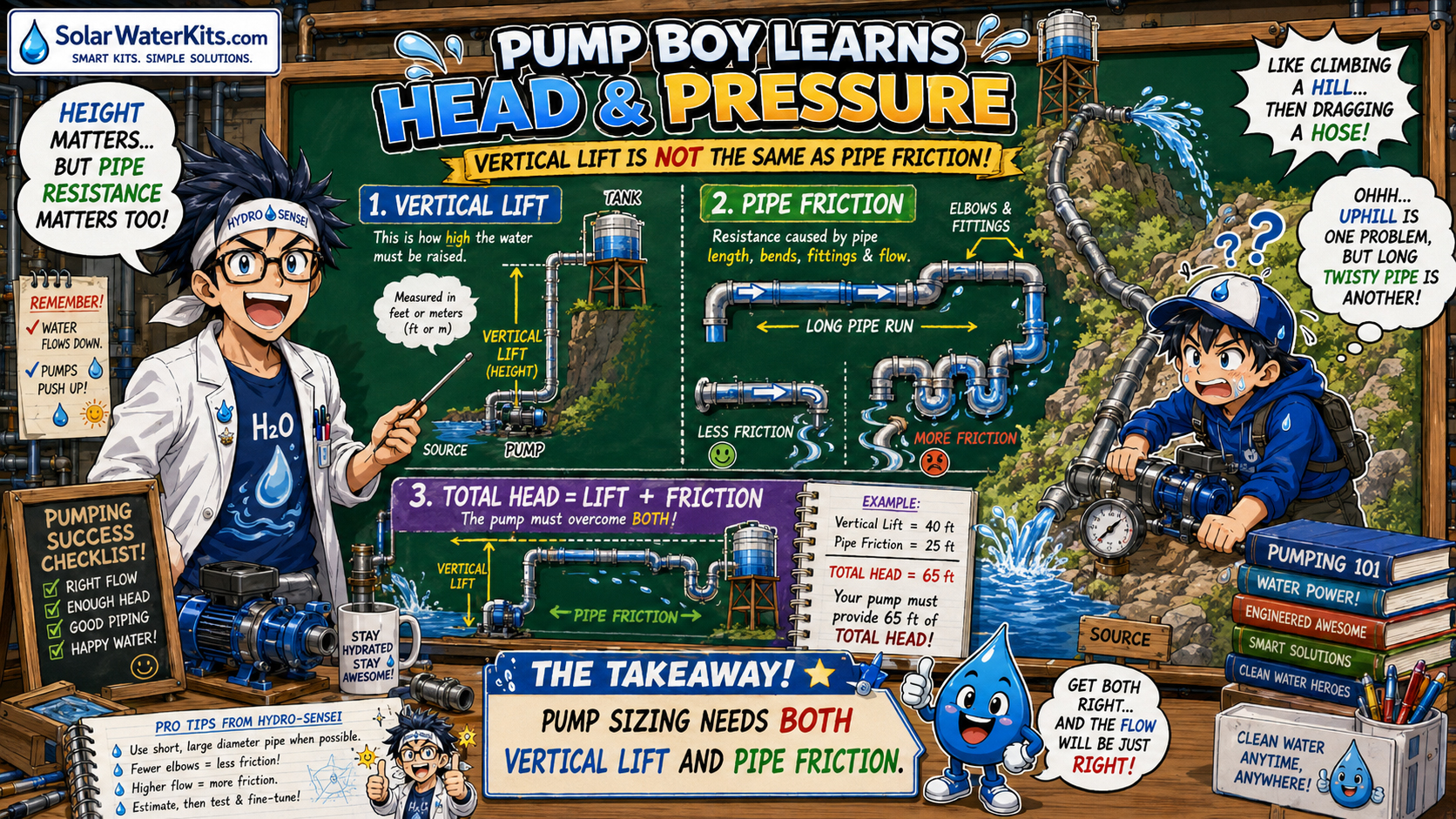
Lift plus friction plus pressure equals real pump work.
Solar water systems can fail when every use case is treated like the same water problem. The system should match the actual mission.
Needs usable household pressure, clean water, storage, freeze protection, and a simple service plan.
Needs daily gallons, reliable refill, storage, float valve control, and rugged field hardware.
Needs pressure and flow at each head. Too many heads at once can collapse performance.
A shower, a cow, and a sprinkler do not agree on what “good water pressure” means.
| Symptom | Possible Cause | What to Check |
|---|---|---|
| Weak flow at hose | Small pipe, long run, clogged filter, low pump capacity. | Pipe size, filter condition, pressure at pump, flow at source. |
| Pump runs constantly | Leak, undersized pump, pressure switch issue, tank issue. | Leaks, pressure tank, cut-in/cut-out, demand load. |
| Pump short-cycles | Bad pressure tank, wrong pre-charge, small tank, leak. | Tank pre-charge, switch settings, drawdown, system leaks. |
| Drip emitters clog | Dirty source water or inadequate filtration. | Filter size, maintenance, water source, flushing routine. |
| Sprinklers do not spray correctly | Not enough pressure or flow for zone. | Zone size, pump curve, pipe friction, head count. |
| Battery drains too fast | Pump load too large, runtime too long, short-cycling. | Pump watts, starting surge, pressure tank, essential-load plan. |
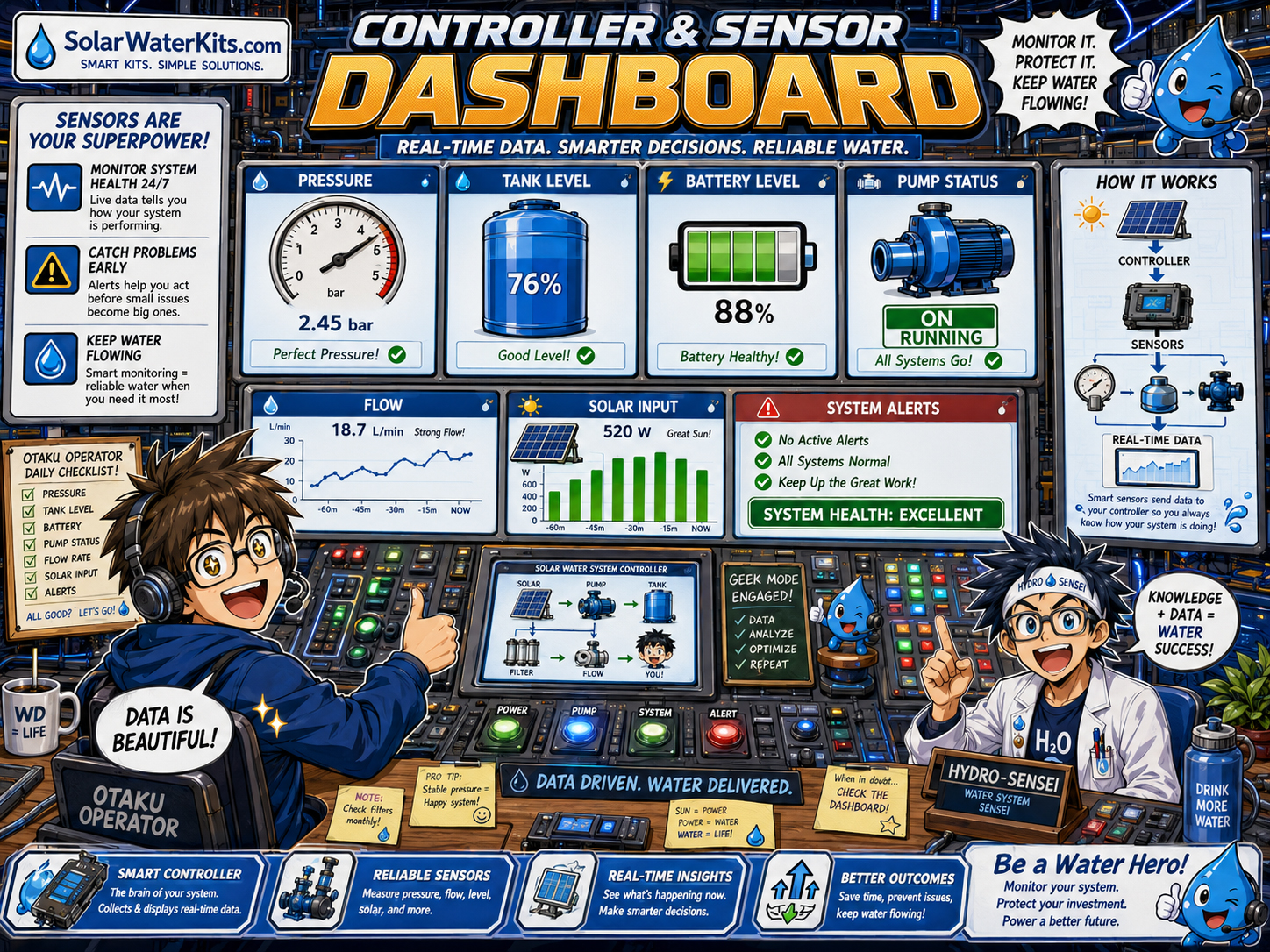
Pressure gauges, flow checks, tank levels, and pump status help troubleshoot intelligently.
Controls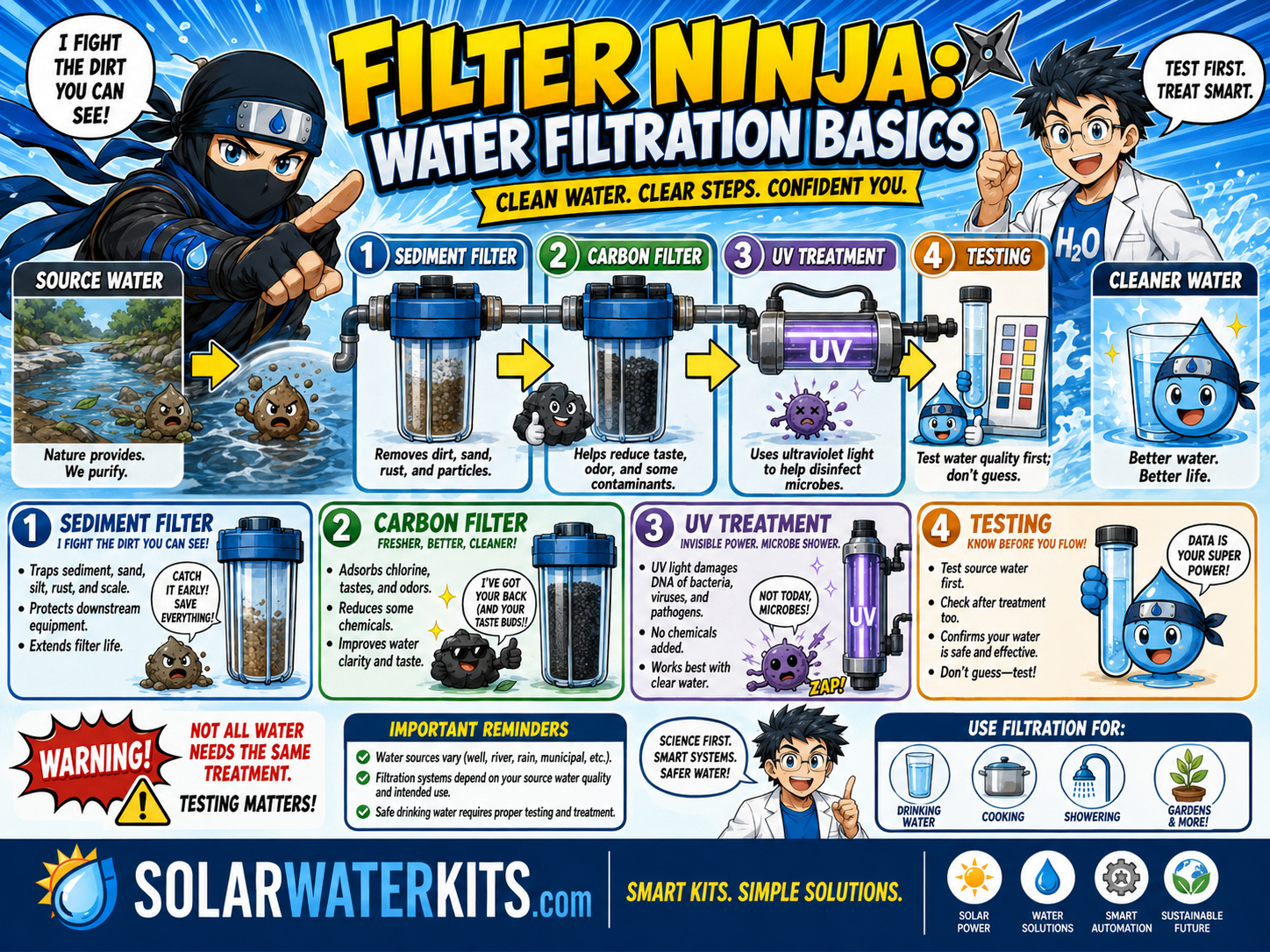
Good filters protect equipment, but clogged filters can starve the system.
Filtration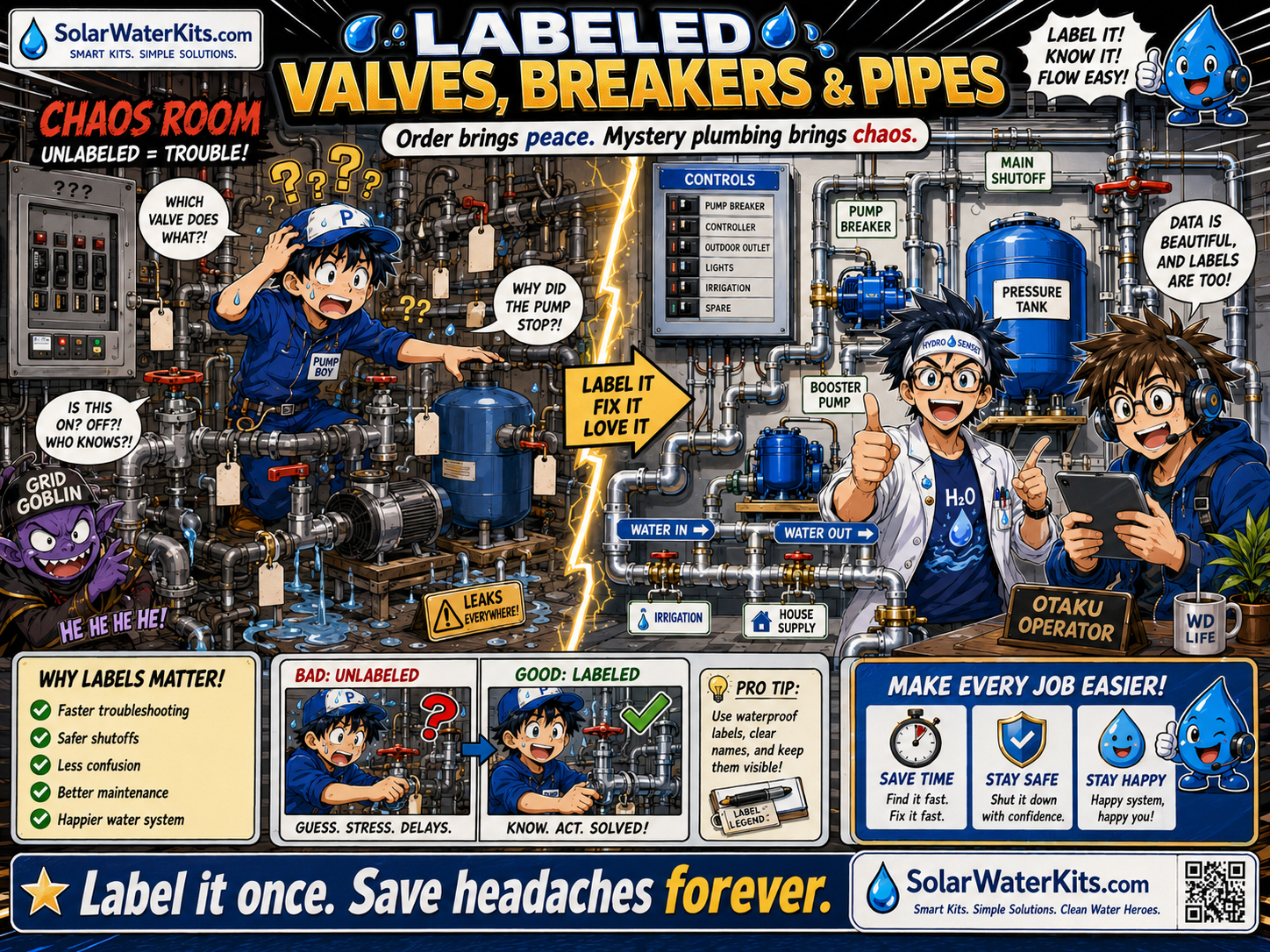
Flow and pressure design may involve pumps, pressure tanks, relief valves, pressure switches, filters, pipe sizing, backflow protection, potable-water plumbing, batteries, inverters, electrical work, and local permits. This page is educational only.