Vertical lift
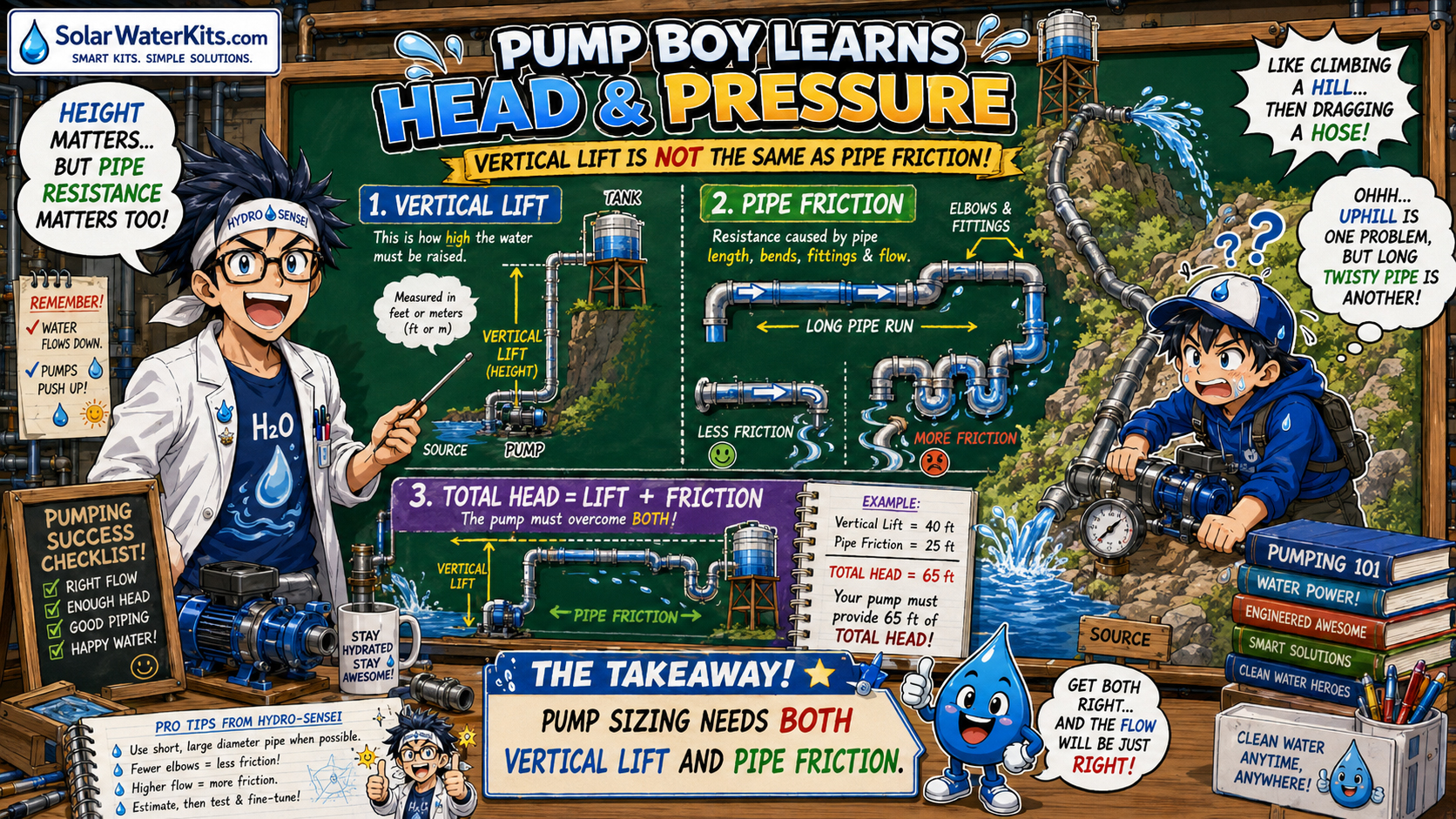
Water has to climb from the source to the delivery point. The pump must overcome that elevation difference.
Flow & PressurePump Boy wants the biggest pump on the shelf. Hydro-Sensei says no. A pump should be sized by gallons needed, flow rate, lift, total dynamic head, pressure, pipe friction, runtime, power source, and the system’s real mission.
The right pump is the one that delivers the required water at the required pressure, through the real pipe, over the real lift, during the real runtime, using the real power source.
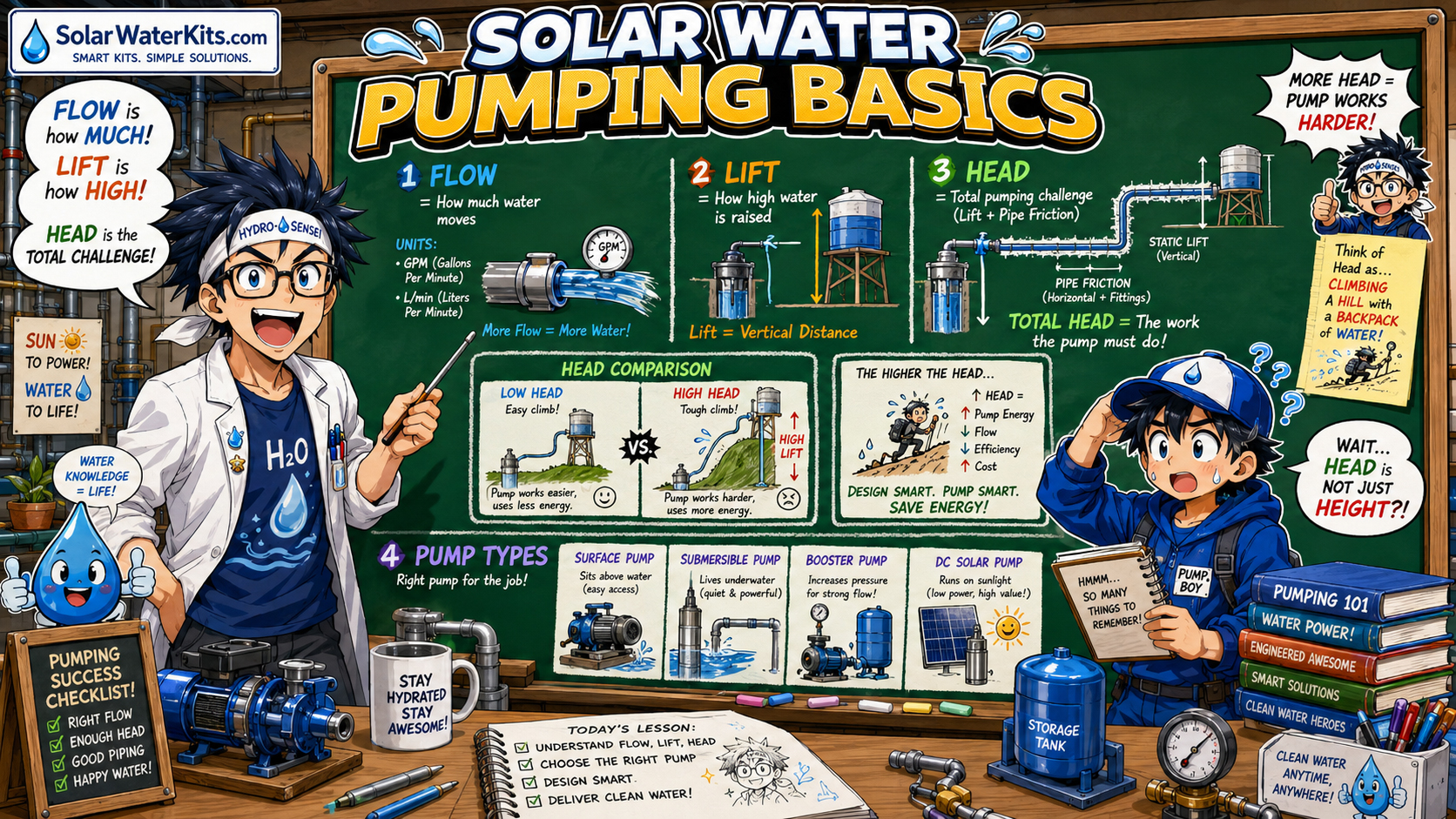
Flow, lift, head, friction, pressure, and runtime decide the pump.
Vertical lift is only part of the problem. Total dynamic head includes lift, pressure requirement, pipe friction, fittings, filters, valves, and other restrictions.
Water has to climb from the source to the delivery point. The pump must overcome that elevation difference.
Flow & PressurePipe length, small diameter, filters, valves, elbows, and hoses add resistance. A long skinny pipe can defeat a good pump.
Pumping BasicsA faucet, hose, trough, shower, drip zone, sprinkler, and filter each demand a different pressure and flow personality.
Compare LoadsTotal dynamic head is the pump’s real workload at the desired flow. If you ignore friction, filters, valves, fittings, and pressure, the pump may look correct on paper and disappoint in the field.
| Sizing Term | Plain-English Meaning | Common Mistake |
|---|---|---|
| Gallons per day | Total water needed over a day. | Using wishful demand instead of real demand. |
| GPM | How fast water must move. | Confusing total daily gallons with peak flow. |
| Vertical lift | Height water must be raised. | Using well depth instead of actual pumping water level. |
| Friction loss | Resistance from pipe, fittings, filters, and valves. | Forgetting that long pipe and small pipe hurt flow. |
| Total dynamic head | Total pumping work at the selected flow. | Sizing from lift alone. |
| Pump curve | Chart showing flow at different head conditions. | Assuming one rated flow applies at every pressure. |
| Starting surge | Extra motor power needed to start some pumps. | Assuming running watts are enough for battery backup. |
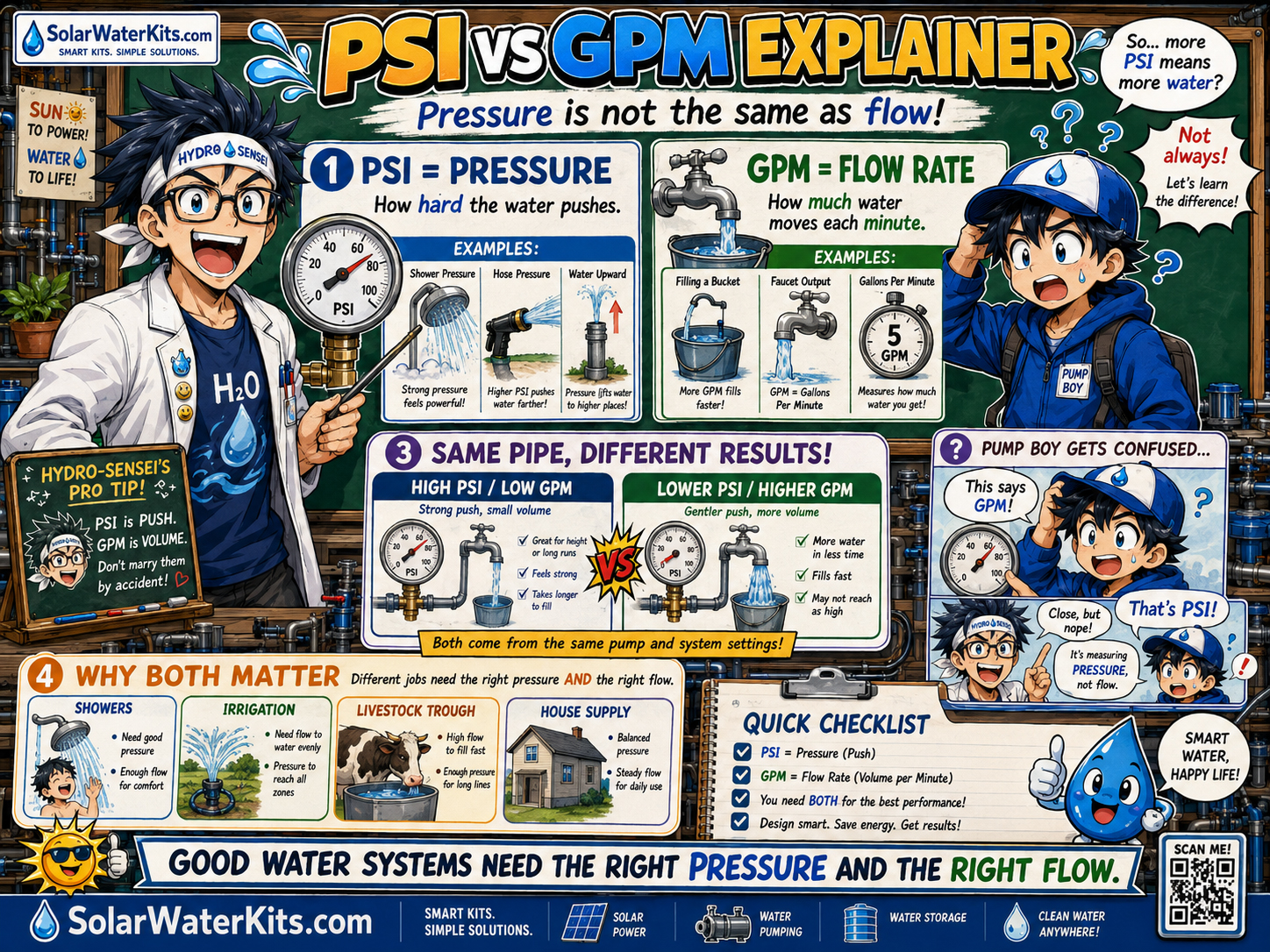
The more the pump must push, the less flow may be available.
A pump may advertise impressive maximum flow, but maximum flow usually happens at low head. As head increases, flow drops. Read the curve before buying the pump.
The largest number on a pump box is not your field performance. Your field performance depends on your system.
A water pump must fit the water job and the electrical system. Solar panels, battery, inverter, controller, wire length, voltage, surge current, and protection all matter.
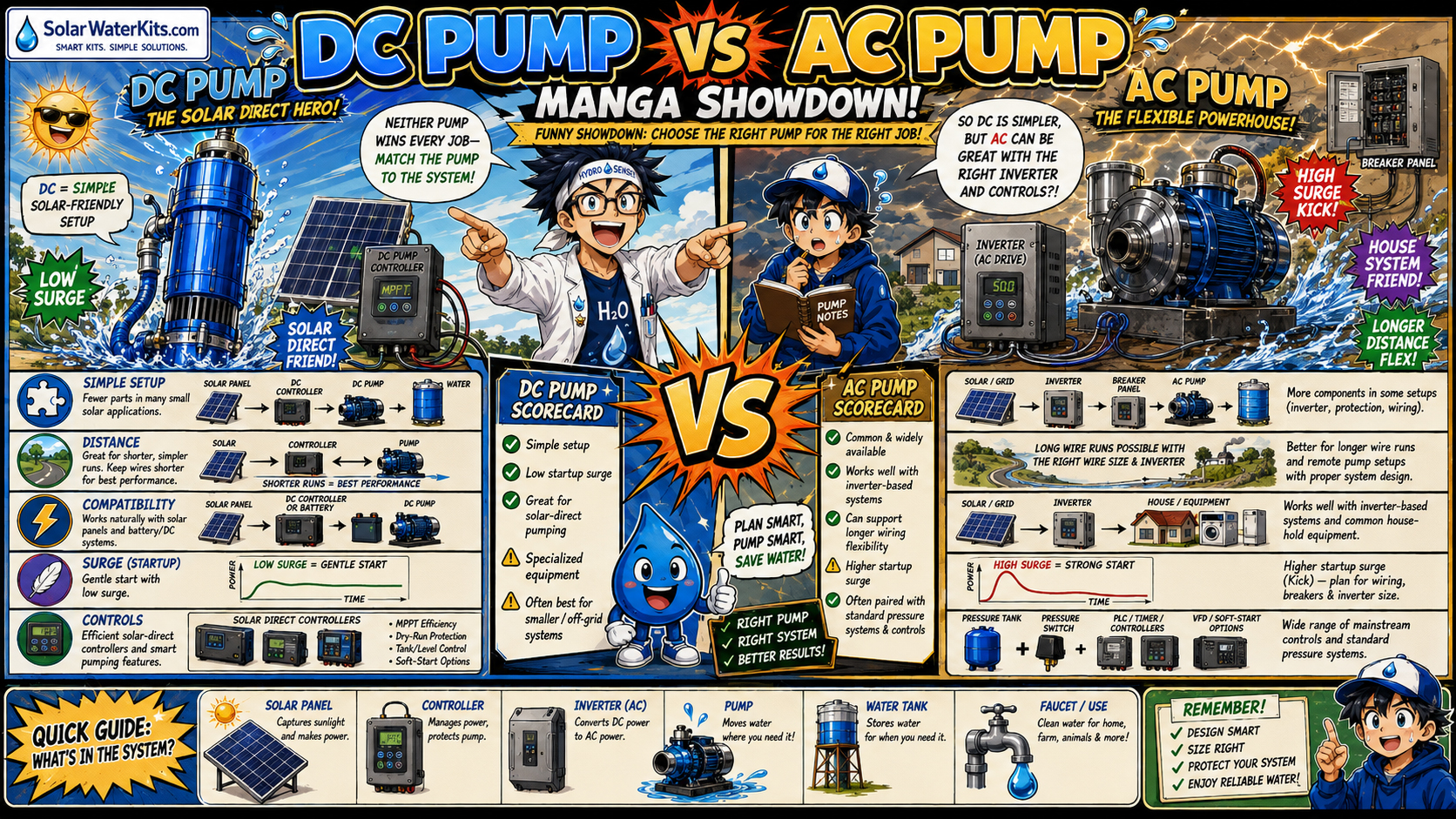
DC solar pumps and AC inverter-backed pumps have different strengths and requirements.
Pump Types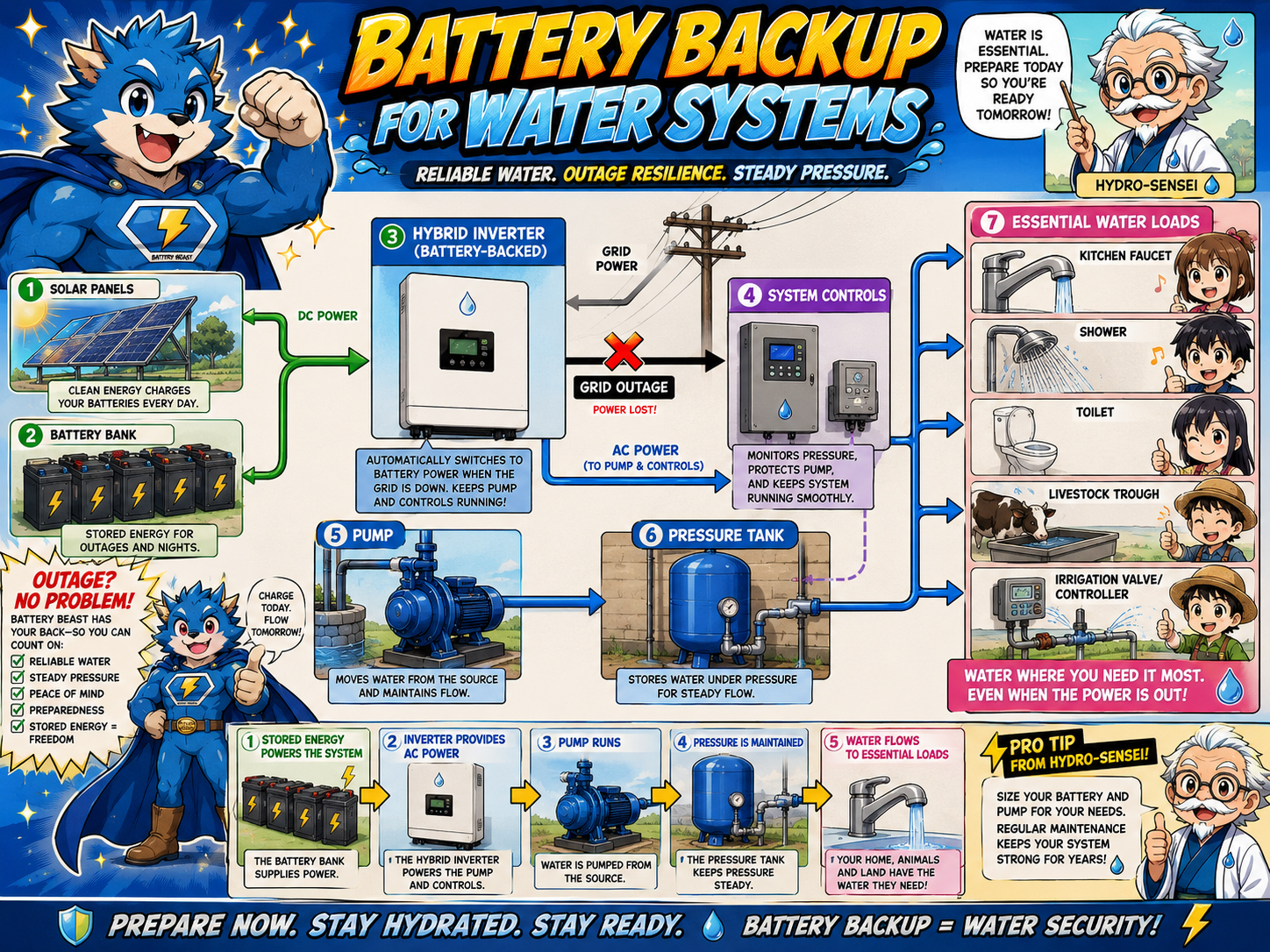
Battery size must match pump load, starting surge, runtime, and essential water needs.
Battery Backup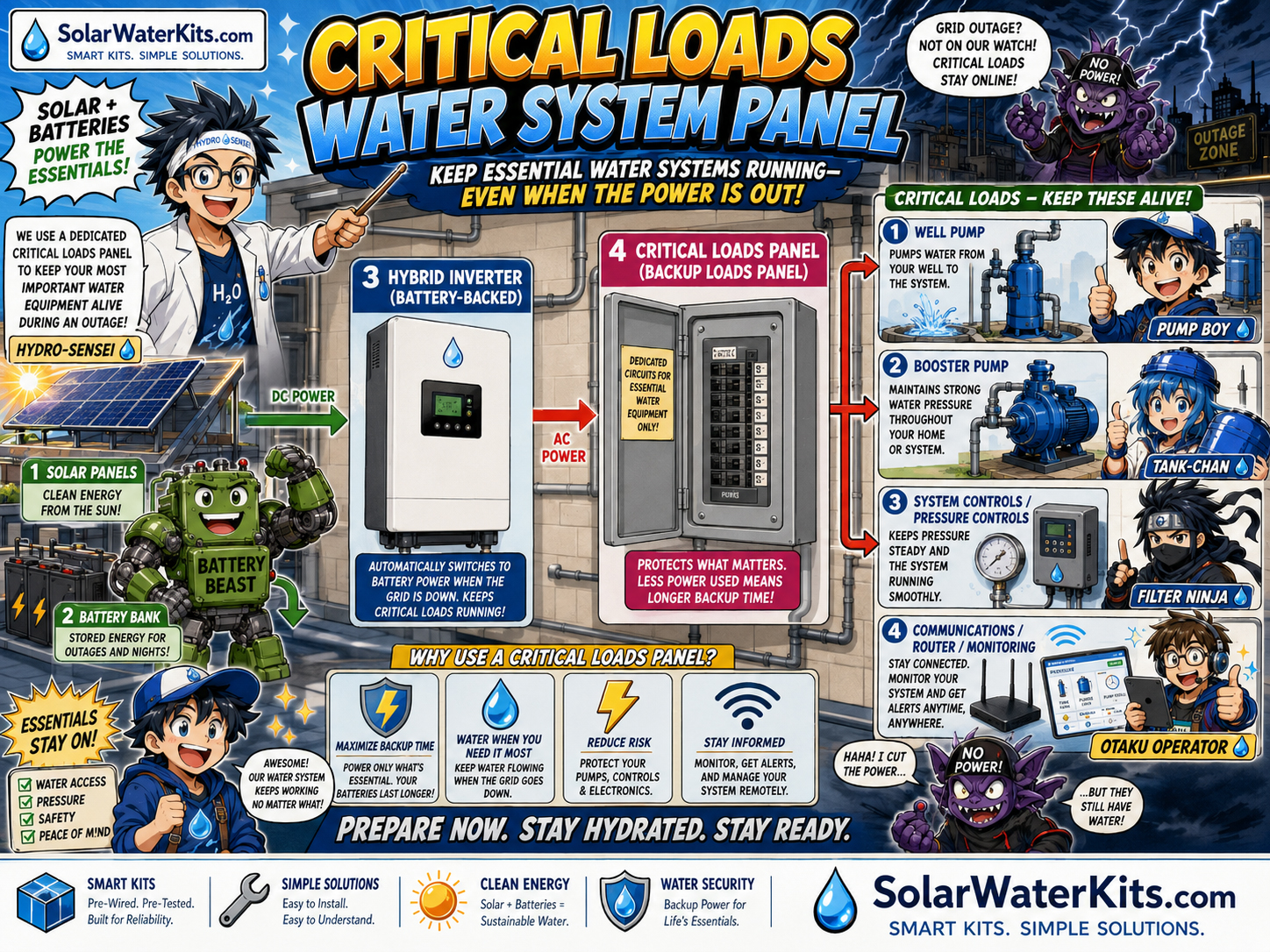
A critical-load panel can keep pump backup focused and serviceable.
Critical Loads| Electrical Issue | Why It Matters | Design Warning |
|---|---|---|
| Voltage | Pump, controller, inverter, and wire must match. | Wrong voltage can damage equipment or prevent operation. |
| Wire distance | Long runs can cause voltage drop. | Remote pumps need careful conductor sizing. |
| Starting surge | Motors may need more power to start than to run. | An inverter may run lights but fail to start a pump. |
| Battery capacity | Determines how long pumps and controls can run without sun or grid. | Runtime claims need real watts and real hours. |
| Controller compatibility | Solar pump controllers manage power, starts, stops, and protection. | Not every controller works with every pump. |
| Protection devices | Disconnects, breakers, fuses, grounding, and safety devices protect people and equipment. | Improvised pump wiring is not a system. |
A storage tank can allow a smaller pump to run longer during good solar hours, instead of forcing a large pump to meet every instant demand. Tank-chan calls this “turning panic flow into patient flow.”
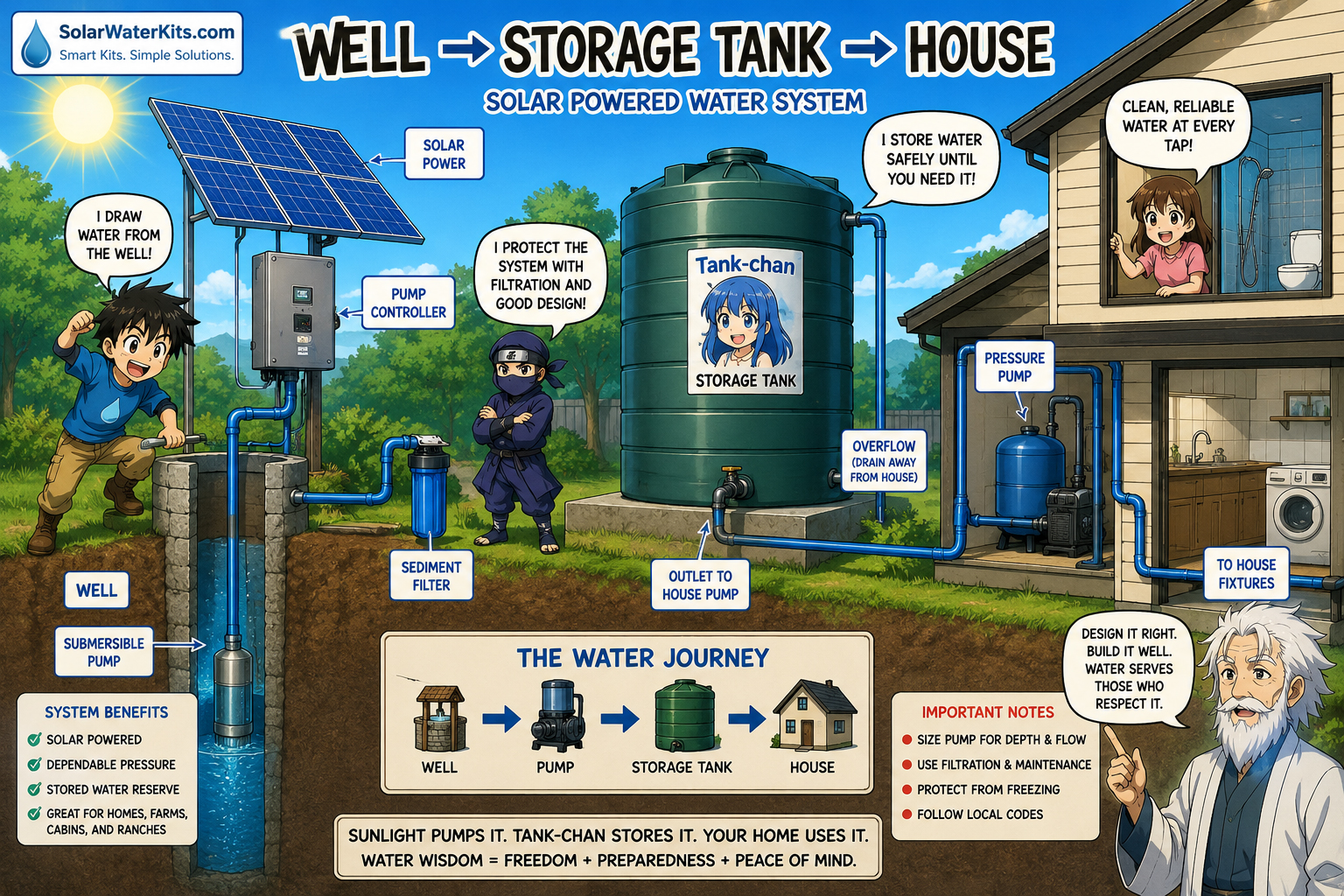
Storage can simplify pump duty and improve resilience.
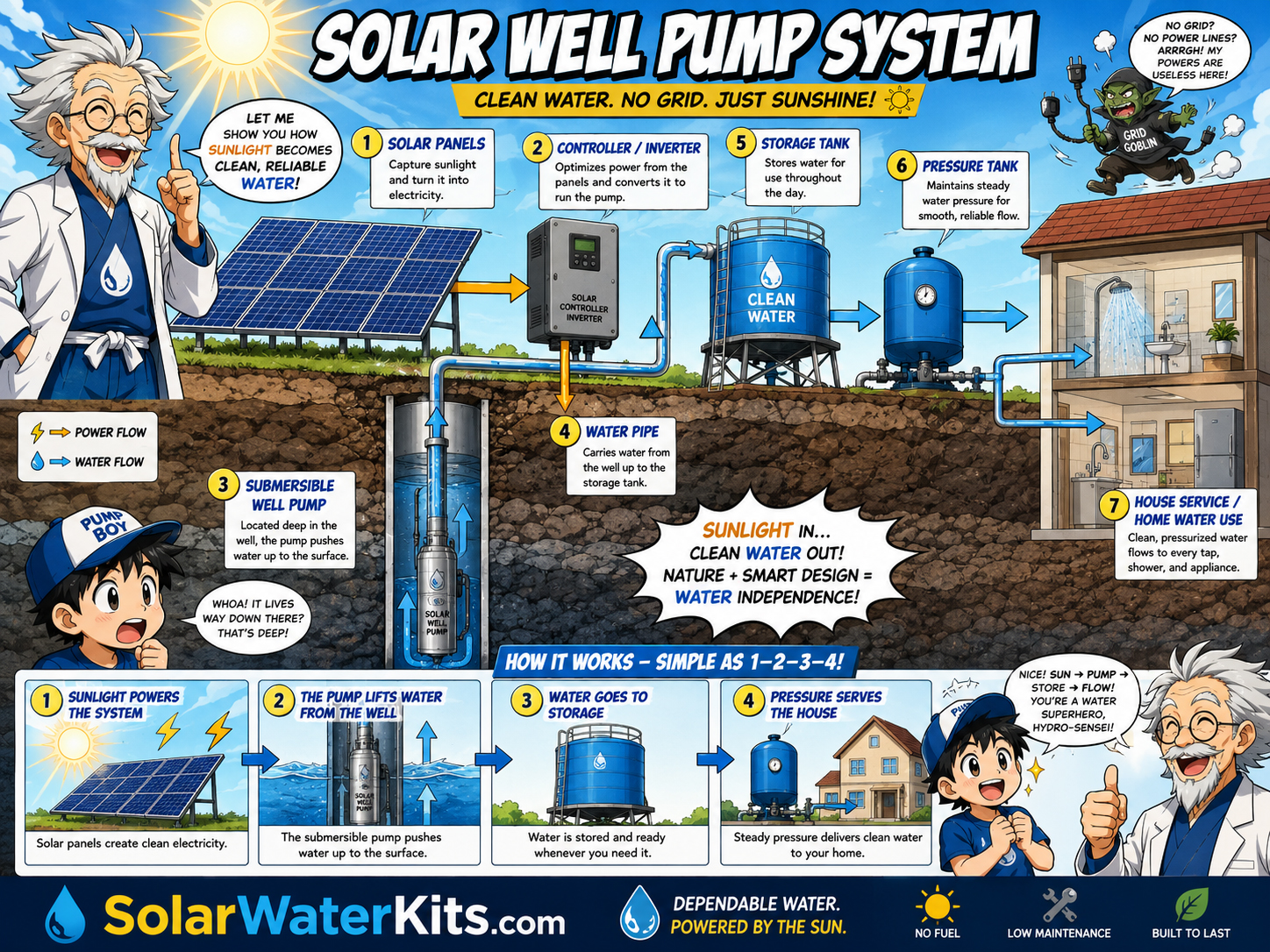
Well systems need static water level, pumping water level, recovery rate, storage, and pressure planning.
Well Pumps
Irrigation pump sizing depends on zone flow, pressure, filter loss, valves, emitters, and runtime.
Irrigation
Herd size, climate, trough refill rate, storage, distance, and reliability drive pump design.
Livestock Water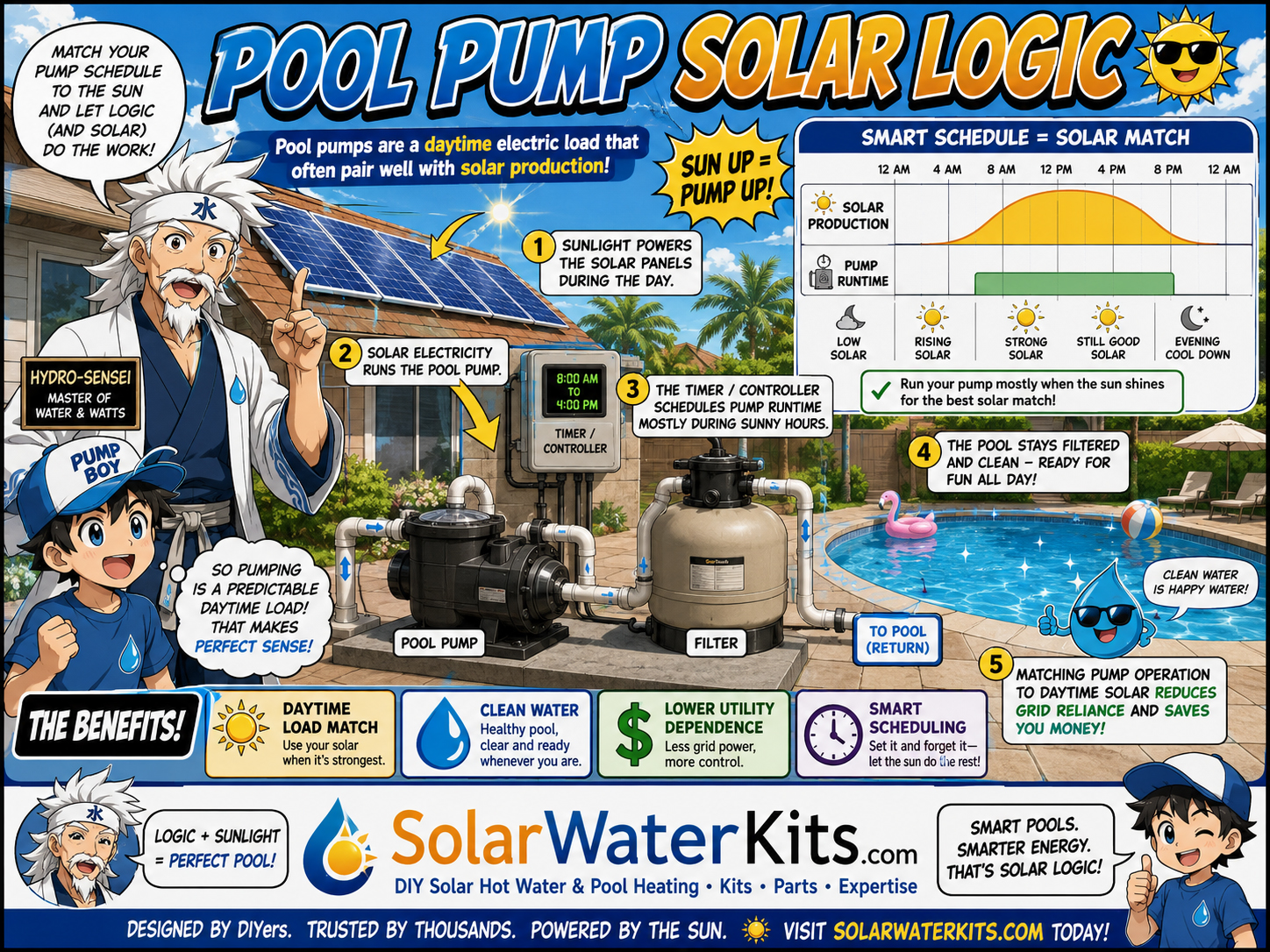
Pool pump sizing and scheduling depend on turnover, filtration, speed, equipment pad, and solar timing.
Pool Pumps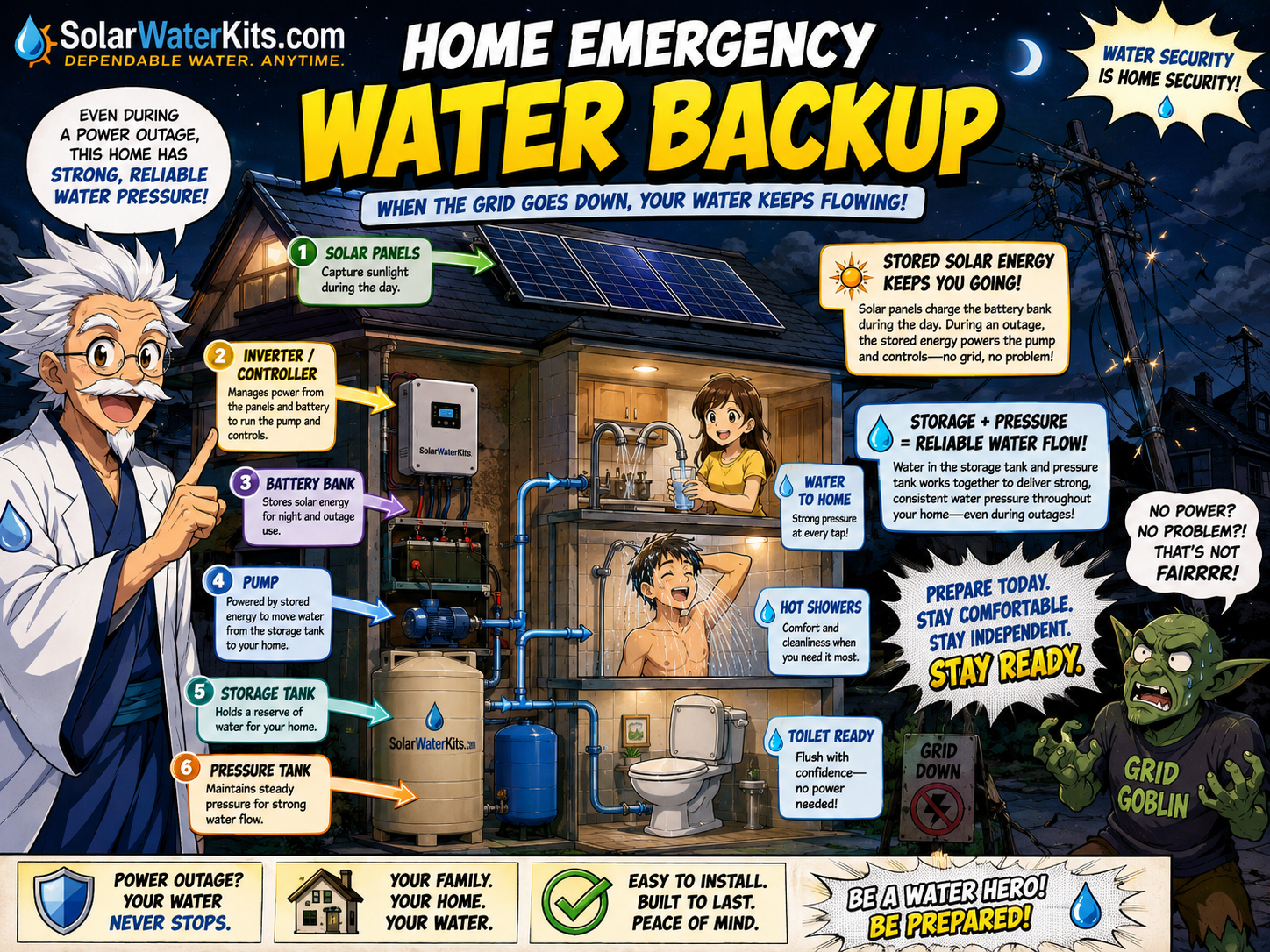
Emergency pump sizing begins with essential gallons, pressure, runtime, battery capacity, and storage.
Emergency Water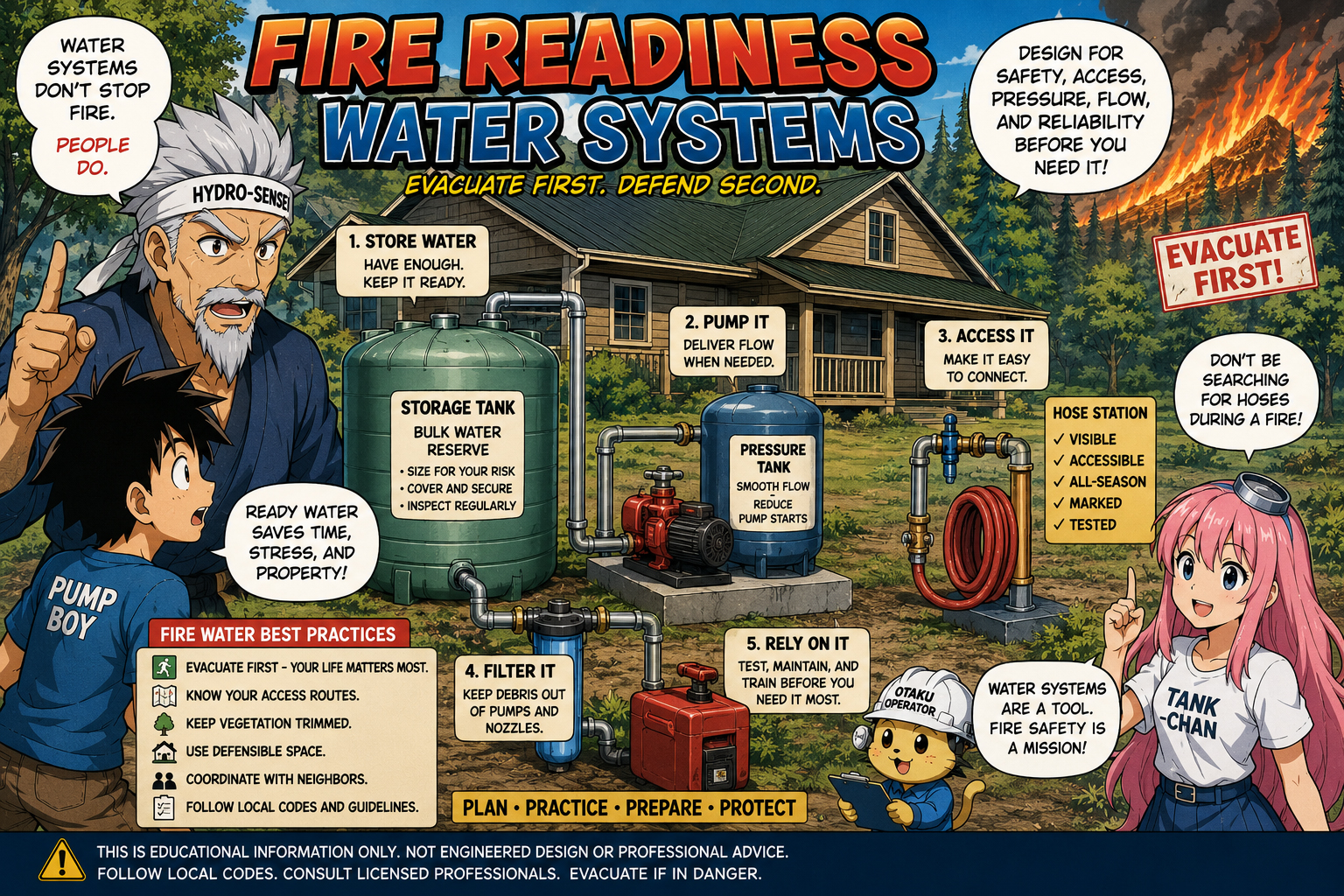
Fire-readiness water concepts need serious flow, pressure, storage, pump, safety, and professional review.
Fire ReadinessPump sizing may involve electrical work, plumbing pressure, pressure tanks, relief valves, wet locations, wells, batteries, inverters, controllers, wire sizing, grounding, backflow protection, water treatment, and local permits. This page is educational only.