πŸ„ Ranch Water Lesson

Solar Livestock Water

Cows do not care about utility outages, bad timers, dead batteries, or mystery valves. Hydro-Sensei teaches the ranch water chain: source, solar pump, storage tank, float valve, trough, backup plan, freeze protection, and water-quality awareness.

β˜€οΈ Solar Pump πŸ›’οΈ Storage Tank 🚰 Float Valve πŸ„ Reliable Trough
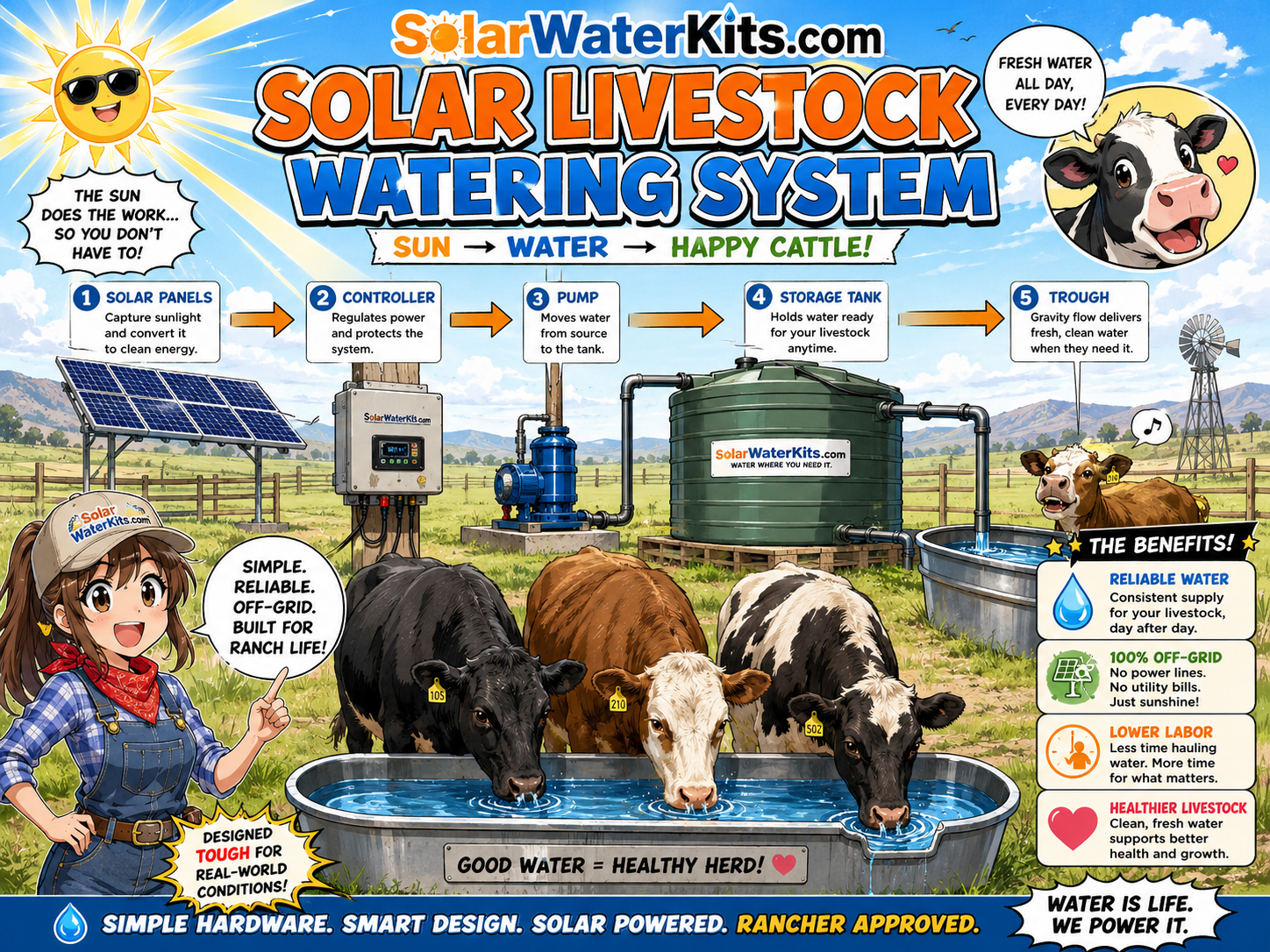
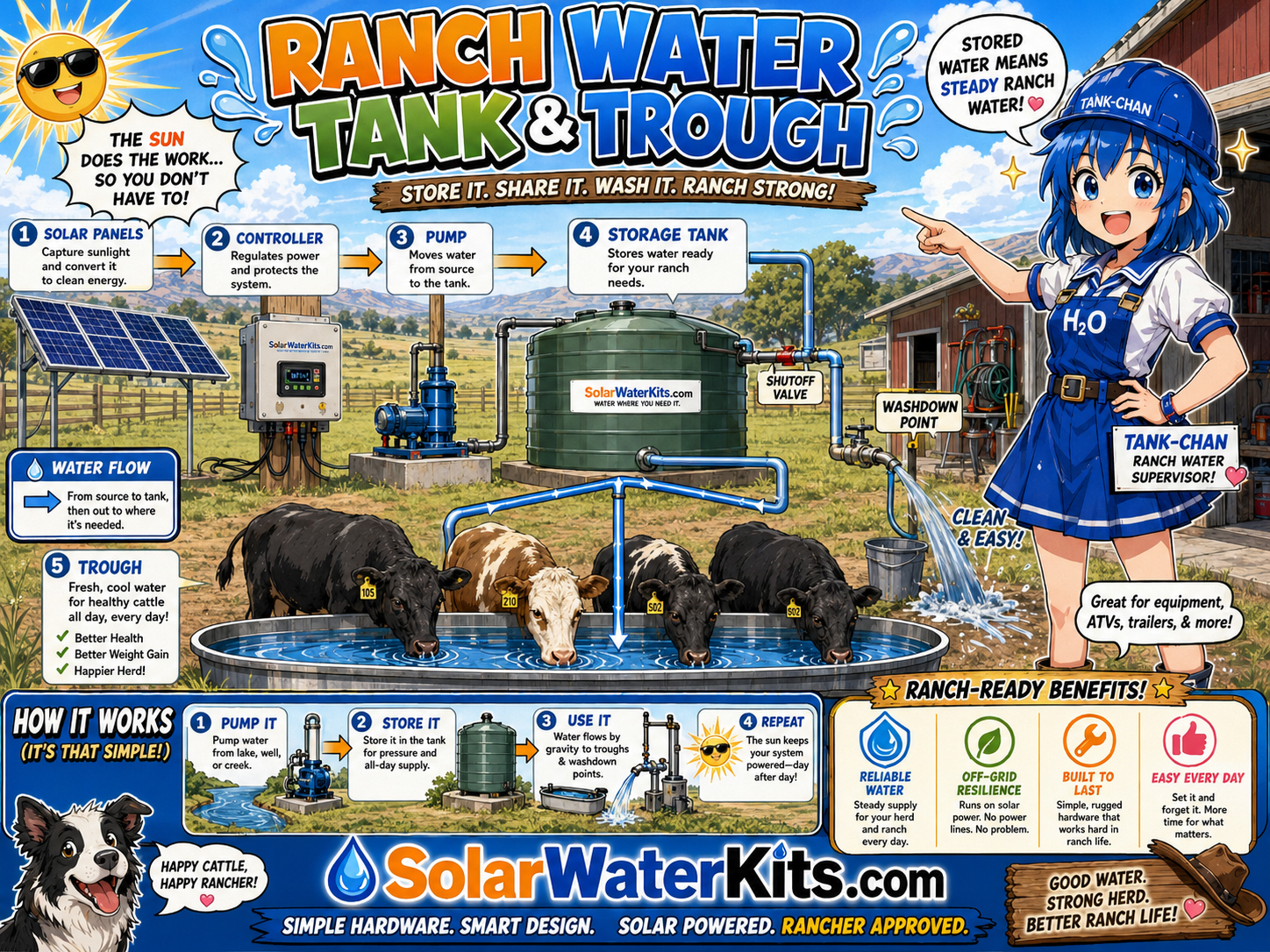
Cattle drinking from a trough fed by solar pumping, storage, and simple field hardware.
Happy herd. Steady water. Simple logic.
The Ranch Water Chain

Livestock water is about reliability first

A solar livestock watering system can be simple, but it must be durable. The animals need water every day, not just when the pump feels heroic.

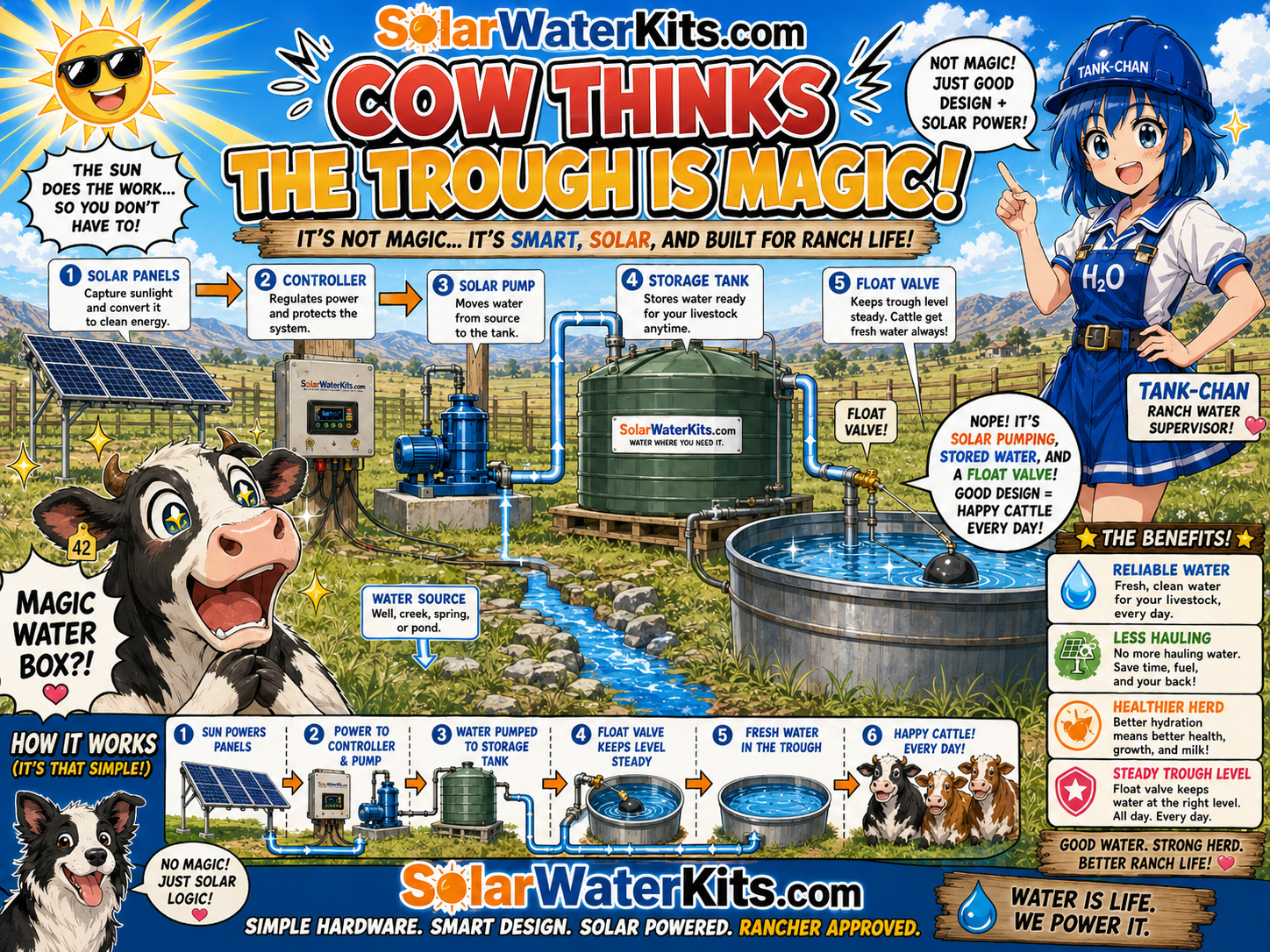
The basic livestock water path

Water source

Well, pond, spring, cistern, municipal supply, rainwater tank, or other approved source.

Solar pump

Moves water when sunlight is available, often to a storage tank or directly to a trough depending on design.

Storage tank

Creates reserve volume so animals are not dependent on instant pump operation every minute.

Float valve or trough control

Helps maintain trough level and prevents overflow when designed and maintained correctly.

Backup and inspection

Livestock systems need human review, backup water plans, freeze checks, leak checks, and routine maintenance.

Trough Logic

The cow thinks the trough is magic. Hydro-Sensei knows it is controls.

A trough looks simple, but it is where flow, level control, animal behavior, mud control, cleaning, freeze protection, and reliability all meet.

What makes a good trough setup?

  • Enough trough volume for the herd and climate.
  • Float valve protected from damage and debris.
  • Stable pad or drainage to reduce mud around the trough.
  • Overflow path that does not create erosion or swamp conditions.
  • Service access for cleaning and valve replacement.
  • Freeze protection where cold weather is possible.
  • Backup fill plan if solar, pump, or source water fails.

Ranch rule

The system is not finished when water reaches the trough. It is finished when animals can reliably drink and humans can service the system.

Sizing Reality

A livestock system must handle daily demand and bad days

Hot weather, herd size, distance, elevation, pump runtime, cloudy days, and source-water recovery all affect design. Pump Boy’s β€œjust add a bigger pump” strategy is not enough.

Daily water demand

Animal type, herd size, weight, temperature, feed, lactation, shade, and activity can change water demand. Use agricultural guidance and local experience.

  • Count animals honestly.
  • Plan for hot days.
  • Plan for peak demand, not average-only comfort.

Solar pumping window

A solar pump may produce most water during strong sun. Storage helps bridge mornings, evenings, clouds, maintenance, and short interruptions.

  • Match pump to solar window.
  • Use storage as a buffer.
  • Watch cloudy-day assumptions.

Field durability

Livestock can be rough on equipment. Pipes, valves, panels, wiring, and trough hardware must be placed and protected wisely.

  • Protect exposed pipe and wiring.
  • Fence or guard vulnerable equipment.
  • Design for cleaning and repair.
Design Item Why It Matters Otaku Operator Note
Herd size Drives gallons needed per day. Update numbers when animals are added.
Climate Hot weather increases water need; freezing can stop flow. Summer and winter are different villains.
Elevation Vertical lift increases pump work. Measure it. Do not eyeball it.
Distance Long pipe creates friction loss. Pipe size matters more than pride.
Storage volume Gives reserve for clouds, outages, and pump service. Storage is ranch peace of mind.
Float valve Controls trough level. Inspect it before the cows do.
Pump + Storage Strategy

Pump to storage first is often the ranch hero move

Direct-to-trough systems can work in some cases, but storage-first designs often give more flexibility. Tank-chan likes reserves. Cows like boring reliability.

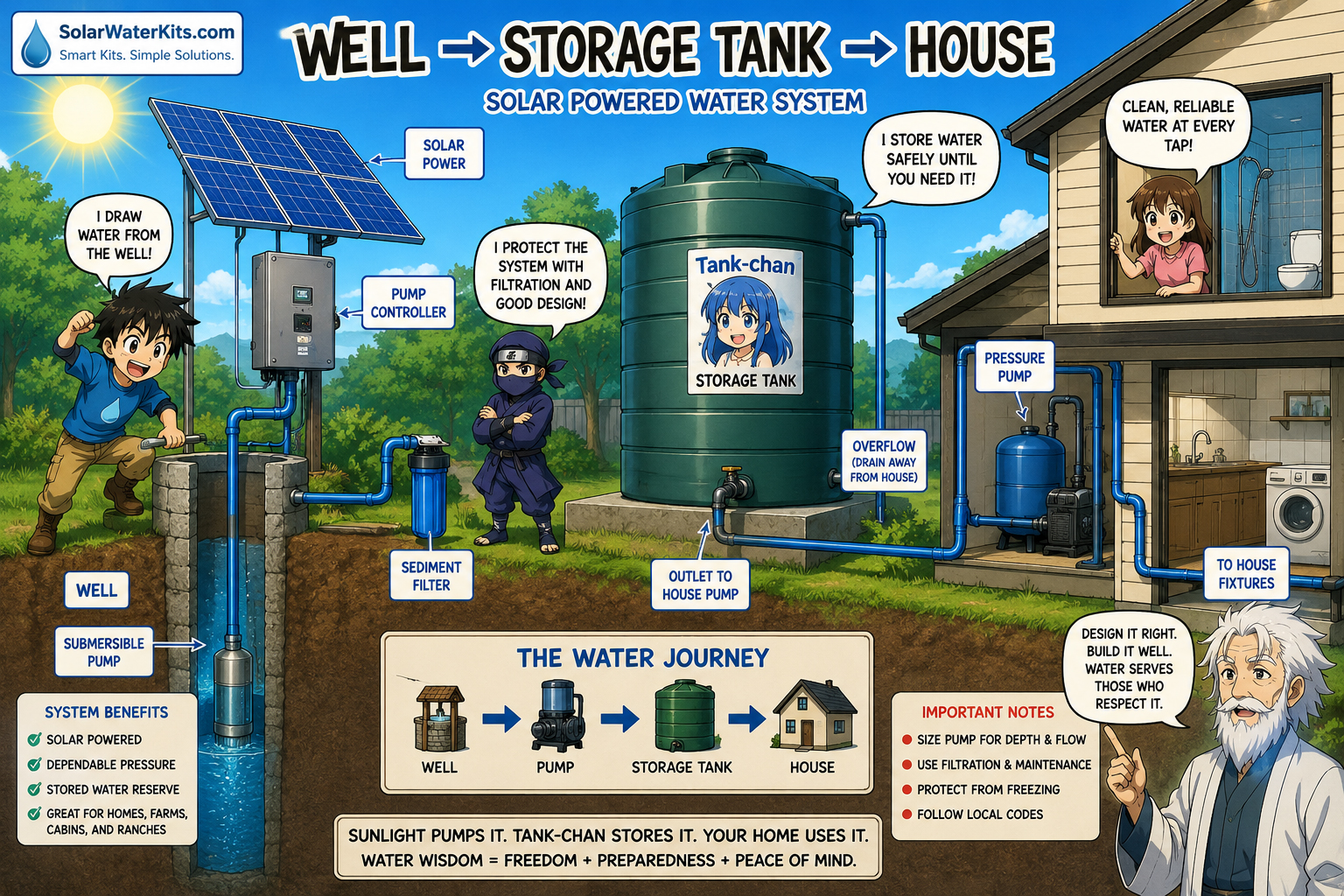
Educational sequence showing water pumping to storage first, then serving building needs.
Storage First

Fill the tank when solar is good

Daytime solar pumping can fill storage so water is available later.

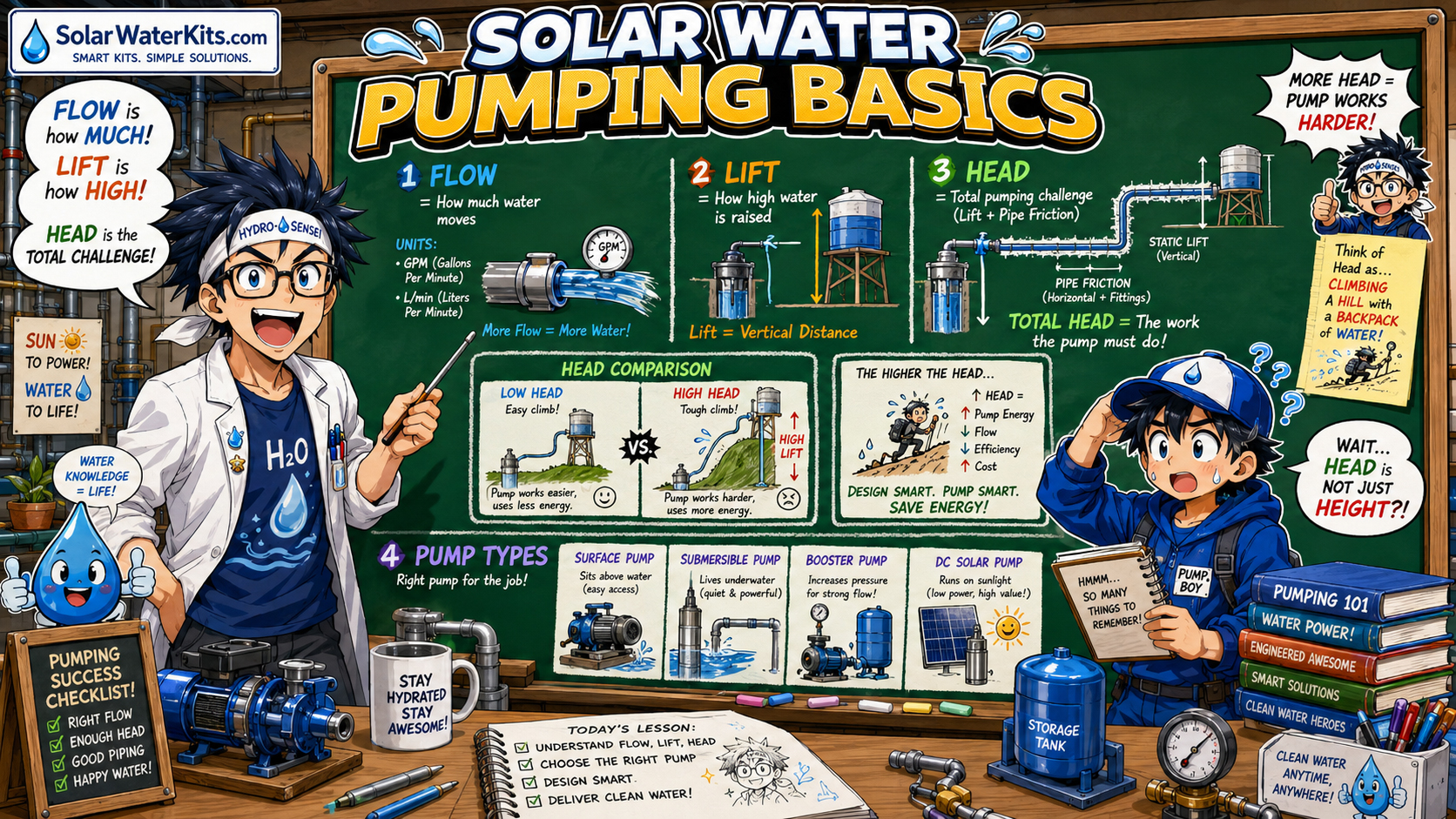
Hydro-Sensei explains flow, lift, head, and pump types.
Pump Math

Lift and distance matter

The pump must overcome depth, elevation, friction, filters, valves, and flow needs.

Float switch stops overflow and saves the pump.
Controls

Float switches prevent chaos

Tank and trough level controls help prevent overflow, dry-run, and wasted water.

Hydro-Sensei translation

Solar makes pumping possible. Storage makes pumping useful. Controls make pumping sane. Inspection keeps the herd from discovering the failure first.

Remote Ranch Reality

The farther the water, the cleaner the design must be

Remote livestock water systems need field-service thinking. A beautiful design on paper can fail if a rancher cannot find the valve, clean the filter, reach the pump, replace the fuse, or understand the alarm.

  • Use clear labels on valves, breakers, controllers, tanks, and pipes.
  • Keep a laminated system diagram in the equipment shed.
  • Stock common repair parts such as float valves, screens, fuses, fittings, and gaskets.
  • Protect equipment from livestock impact, heat, water, dust, and rodents.
  • Provide safe access for inspection, cleaning, and emergency shutoff.
Manga Episode

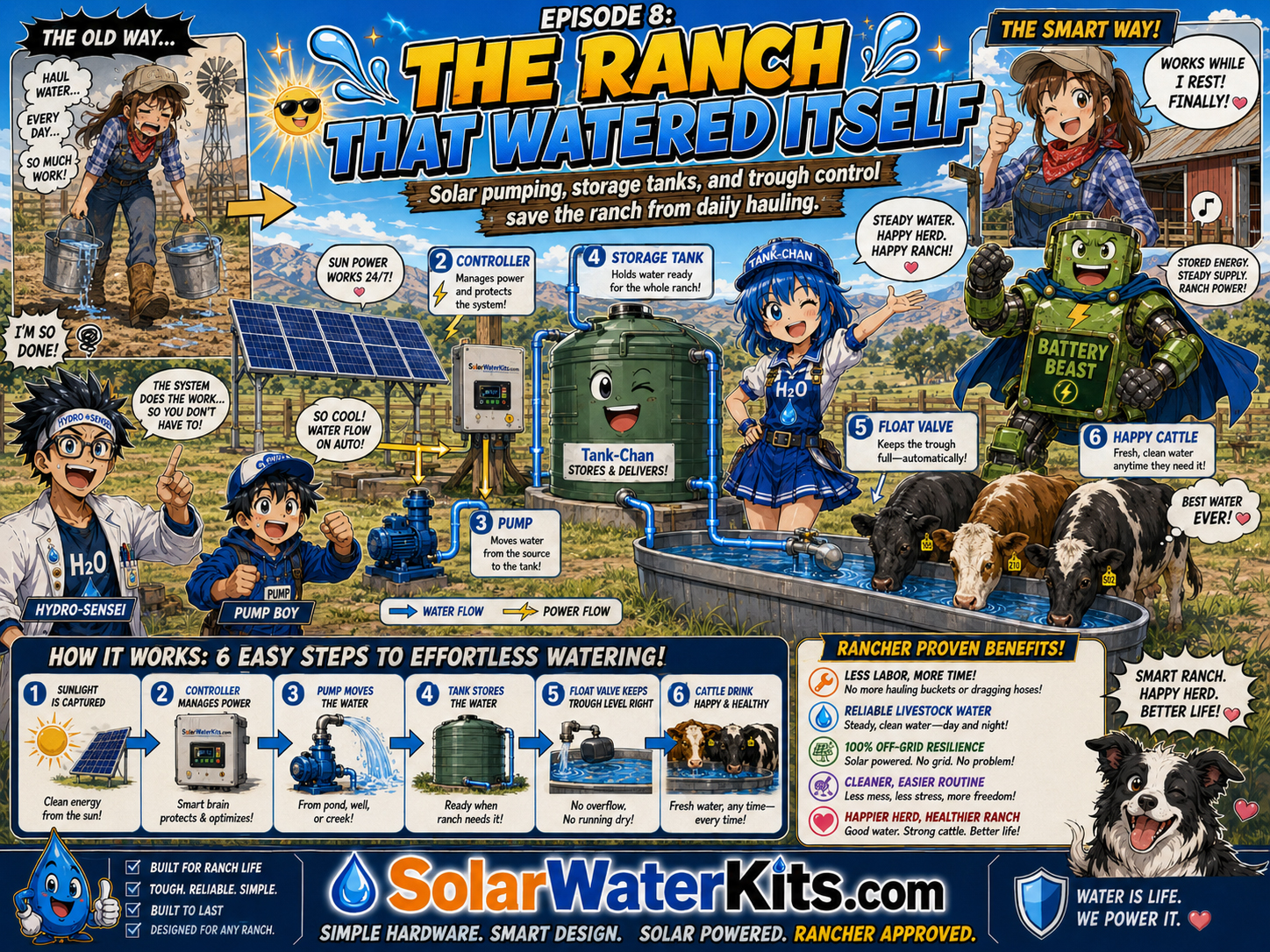
The ranch that watered itself

The old way was daily hauling, panic repairs, and guessing. The new way is solar pumping, storage tanks, trough controls, labels, checklists, and calm cows who think humans finally learned something.

Cow: β€œThe trough fills itself!”
Hydro-Sensei: β€œNo. The design fills it. Respect the design.”
Filtration & Source Water

Livestock water still needs quality awareness

Animals may tolerate different water than humans, but that does not mean anything goes. Salinity, algae, sediment, contamination, minerals, chemicals, stagnant water, and pathogens can matter.

Filter Ninja introduces sediment filtration, carbon, UV, and testing.
Filter Ninja

Protect equipment

Filters can protect valves, emitters, trough controls, pumps, and downstream hardware from sediment and debris.

Filtration basics β†’
Hydro-Sensei points to a sign that says Test first, treat correctly, do not guess.
Testing

Know the source

Well, pond, rainwater, ditch, and municipal sources all have different risks and rules.

Water safety β†’
Cute manga characters taking contamination very seriously.
Sanitation

Keep troughs clean

Algae, manure, mud, dead leaves, insects, and stagnant water can turn simple systems into problems.

Maintenance β†’
Animal Water Safety

Reliable livestock water is a health and welfare issue

Livestock water systems may involve wells, ponds, tanks, solar pumps, electrical equipment, troughs, float valves, source-water testing, freezing, algae, mud, backflow, and animal safety. This page is educational only and is not a veterinary, agricultural, plumbing, or electrical design manual.

Do this

  • Use agricultural and veterinary guidance for animal water demand and water quality.
  • Inspect trough levels and water quality regularly.
  • Provide backup water plans for pump, solar, freeze, or source failures.
  • Protect wiring, pipes, valves, and panels from animal damage.
  • Keep troughs, tanks, screens, and valves clean and serviceable.

Do not do this

  • Do not assume animals can drink any available water safely.
  • Do not leave the herd dependent on one unmonitored failure point.
  • Do not ignore algae, mud, contamination, salinity, or chemical risks.
  • Do not place electrical equipment where livestock can damage it.
  • Do not treat this page as an installation manual.
Next Lessons

Continue the ranch water classroom

Hydro-Sensei explains solar water pumping basics.
Pumping

Solar water pumping

Flow, lift, head, pipe friction, pump types, and protection.

Pumping basics β†’
Winter scene showing insulation, drain-down, and freeze protection concepts.
Winter

Freeze protection

Cold weather can defeat a good water system if freeze planning is skipped.

Freeze protection β†’