Educational
Concept explanation
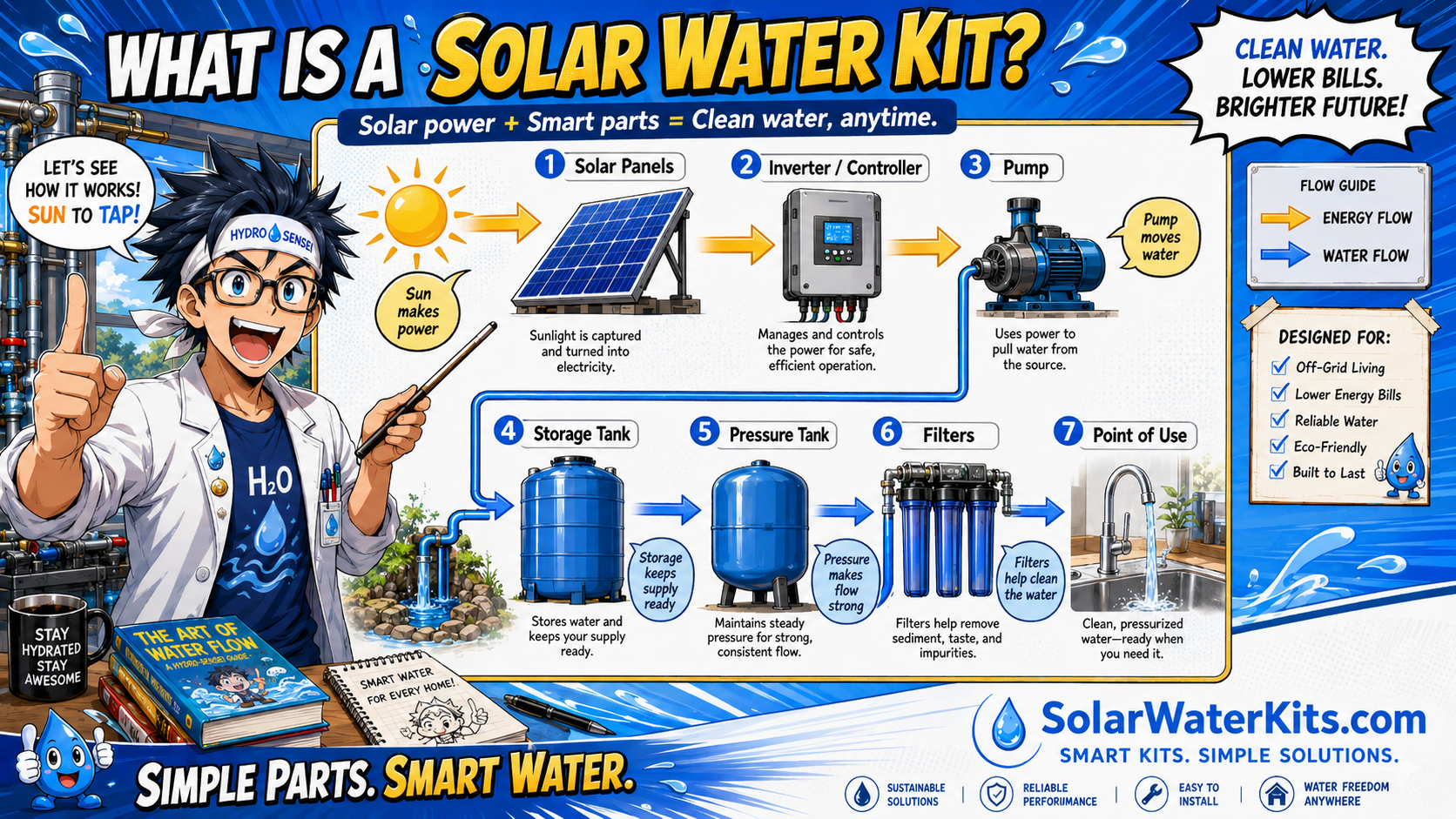
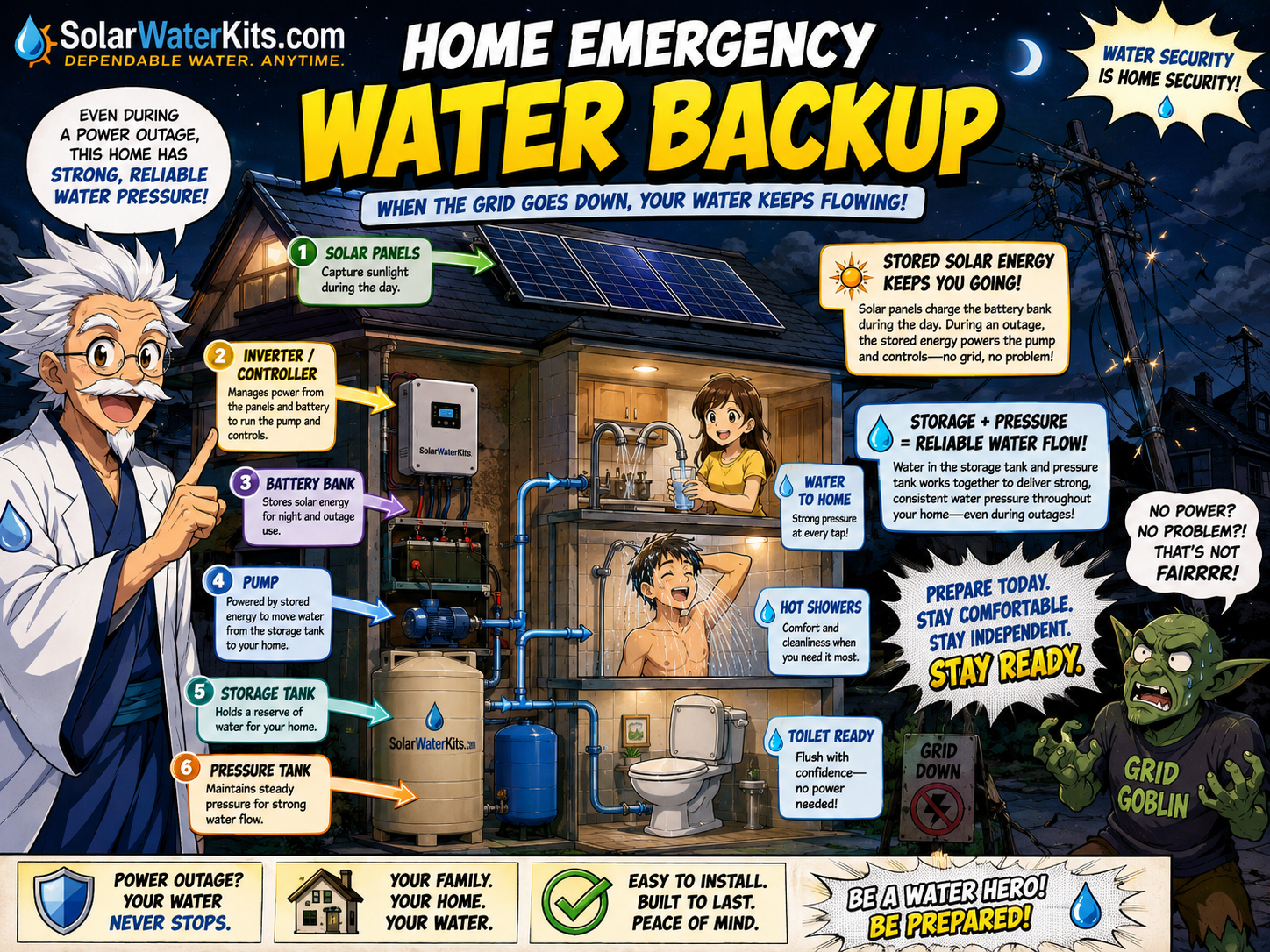
We explain how parts may relate: solar panels, controllers, pumps, tanks, filters, valves, pressure, and use points.
Water Kit BasicsSolarWaterKits.com is an educational manga concept site. It explains pumps, tanks, batteries, filters, rainwater, graywater, pressure, controls, and emergency water ideas. It does not approve, permit, engineer, inspect, certify, or authorize any real installation.

The pages on this site are intended to help readers understand basic solar-water concepts: how pumps move water, how tanks store water, how pressure behaves, how filters need maintenance, how batteries can support pumps, and why labels, testing, sanitation, and safety matter.
That educational purpose is not the same thing as a permit, design, engineering stamp, contractor scope, plumbing plan, electrical drawing, water-treatment certification, fire-code system, health approval, or inspection approval.
We explain how parts may relate: solar panels, controllers, pumps, tanks, filters, valves, pressure, and use points.
Water Kit Basics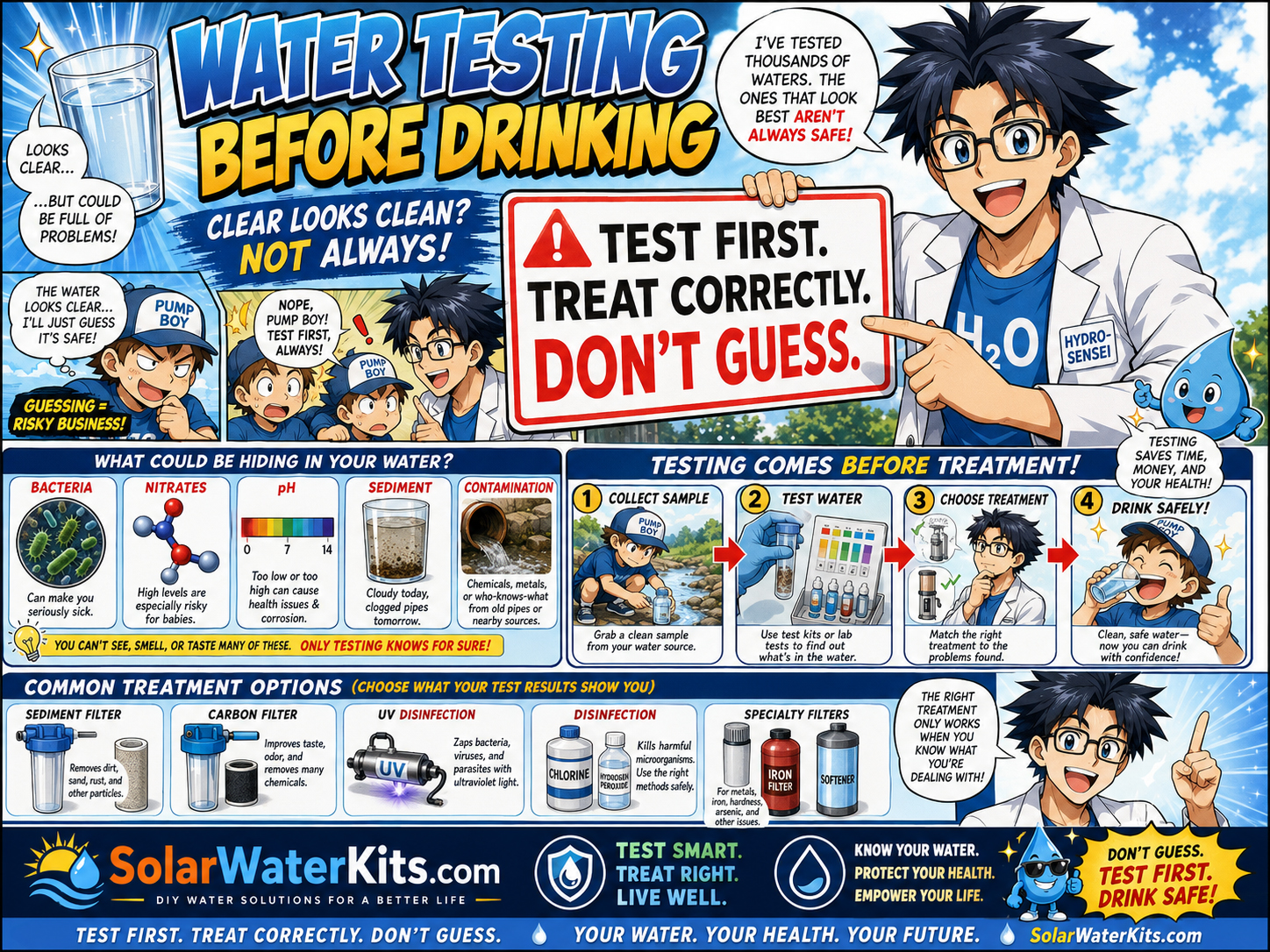
We point out hazards such as unsafe drinking water, cross-connections, pressure, freezing, electrical work, and bad assumptions.
Water Safety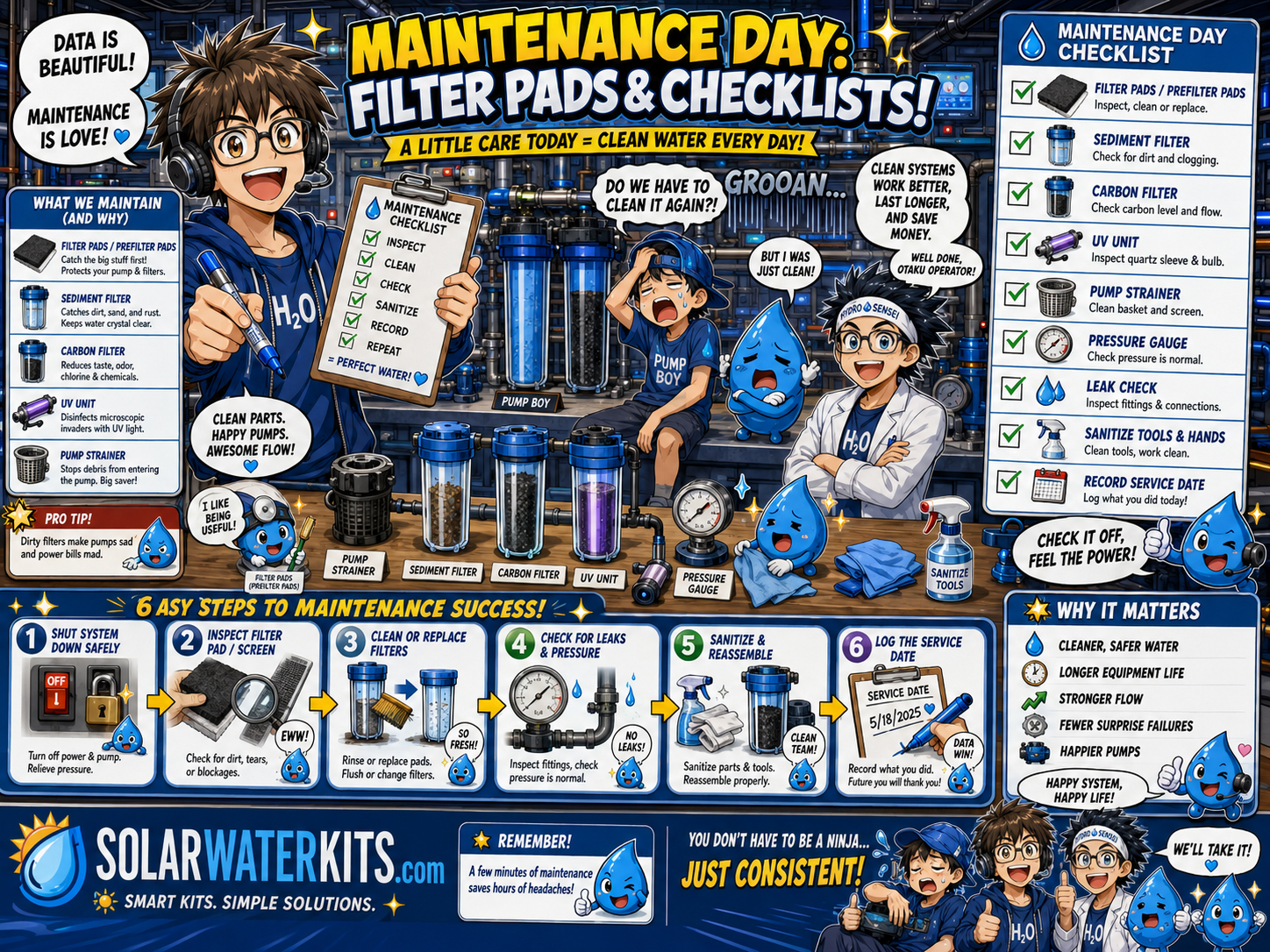
We encourage inspection, maintenance logs, labels, service access, and professional review.
MaintenanceHydro-Sensei can teach the manga lesson. Your city, county, water district, utility, fire authority, health department, building department, inspector, engineer, plumber, electrician, well contractor, and manufacturer decide the real requirements.
A cartoon diagram can teach you where the valve is. It cannot make the valve legal, safe, or inspected.
A solar-water idea can involve many different approval paths. Even a simple-looking pump and tank can touch plumbing, electrical, structural, potable-water, drainage, fire, well, and environmental rules.
| Project Area | Possible Review Needed | Why It Matters |
|---|---|---|
| Plumbing | Plumbing permit, code review, backflow protection, pressure relief. | Water systems can leak, burst, cross-connect, contaminate, or over-pressurize. |
| Electrical | Electrical permit, disconnects, grounding, GFCI, wet-location compliance. | Pumps, batteries, inverters, controllers, and heat trace involve shock and fire risk. |
| Potable water | Water testing, treatment design, health department or local requirements. | Clear-looking water can still be unsafe to drink. |
| Rainwater | Rainwater harvesting rules, tank requirements, non-potable labeling. | Roof runoff is not automatically drinking water and may require separation. |
| Graywater | Graywater code, plumbing rules, health department rules, irrigation review. | Graywater is non-potable and can create sanitation or cross-connection hazards. |
| Wells | Well contractor, well permit, pump selection, water-quality testing. | Well depth, recovery, water level, and contamination risks drive design. |
| Tanks | Foundation, structural support, seismic/wind restraint, overflow routing. | Water is heavy and overflow can damage property. |
| Fire-readiness water | Fire authority, fire-code review, professional fire-protection design. | Readiness concepts are not code-approved fire-suppression systems by default. |
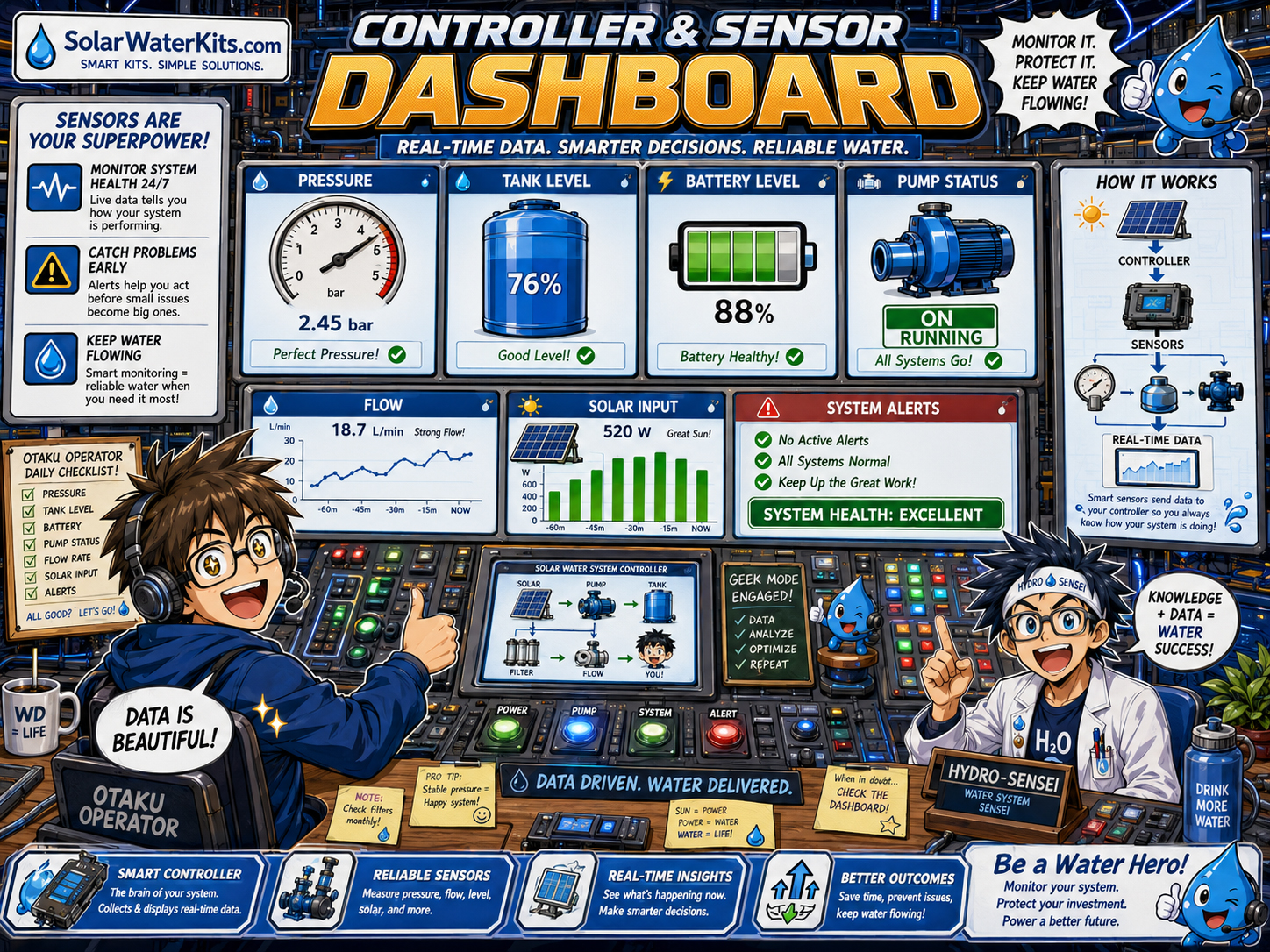
Dashboards do not replace permits, ratings, inspections, or code compliance.
Fire-readiness water concepts are educational. They are not fire engines, not permitted fire sprinklers, not hydrants, not municipal fire infrastructure, not a substitute for firefighters, and not a reason to ignore evacuation orders.
Preparation helps. Official safety instructions still rule.
The best use of SolarWaterKits.com is to ask better questions before spending money or touching plumbing.
A label is good. A permit is different. A licensed installation is different again.
This site is not site-specific. It does not know your water source, local code, building department, fire authority, health department, utility rules, soil, roof, tank foundation, frost depth, electrical service, battery location, pump model, pipe material, pressure rating, well condition, water test results, or inspection requirements.