New to solar water?
Start with the basic kit logic: source, solar power, pump, controller, storage tank, pressure, filtration, controls, and use point.
Water Kit BasicsLearn how solar power can help move, store, pressurize, filter, back up, and manage water — with manga characters who make pumps, tanks, batteries, pressure, filtration, irrigation, ranch water, and emergency water easy to remember.
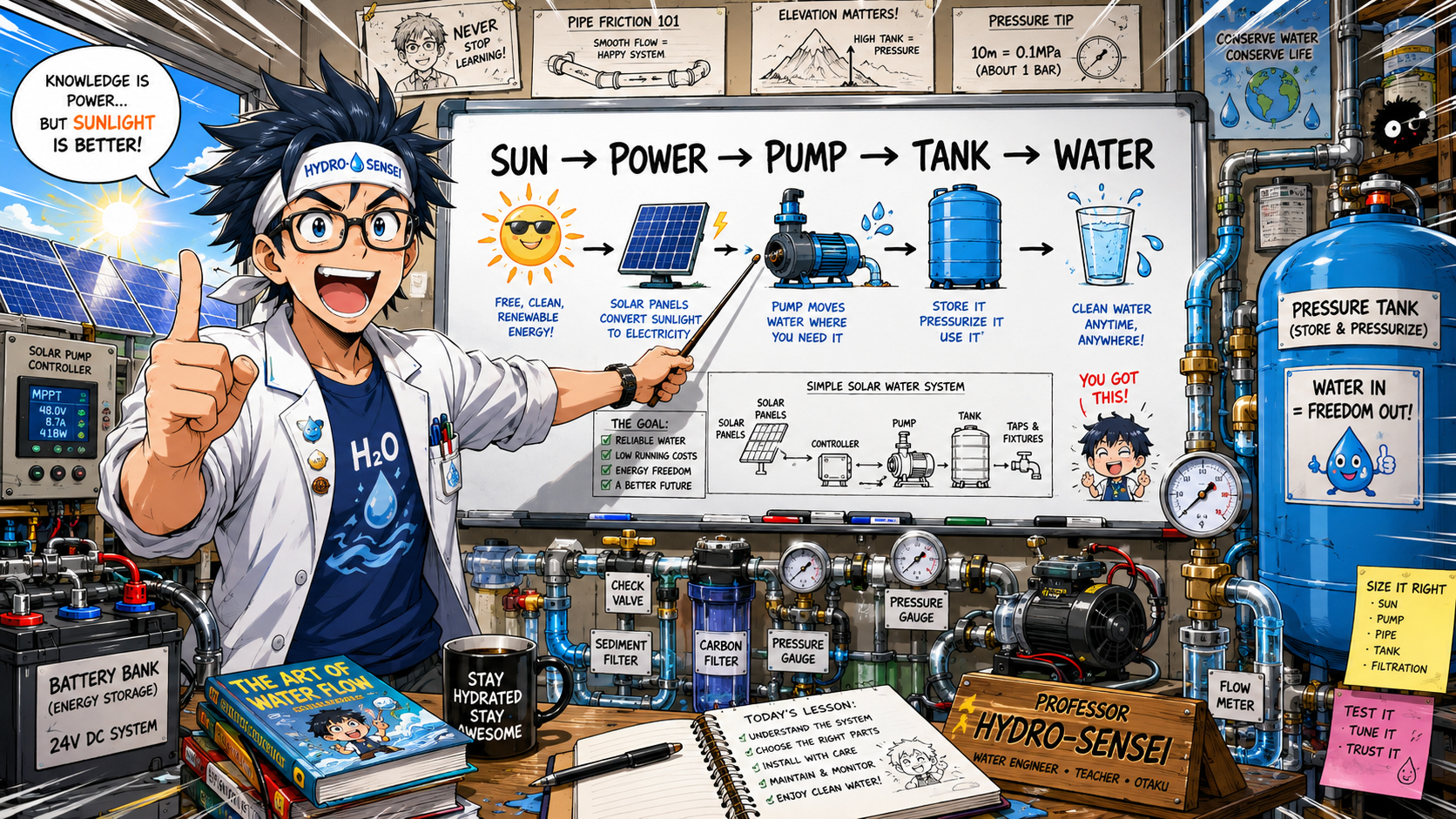
Choose the path that matches your water problem: learning the basics, sizing a pump, preparing for outages, or checking the safety and permit boundaries.
Start with the basic kit logic: source, solar power, pump, controller, storage tank, pressure, filtration, controls, and use point.
Water Kit BasicsPump Boy wants more horsepower. Hydro-Sensei wants flow, lift, total dynamic head, pipe friction, pump curves, and real demand.
Pump SizingBattery Beast explains critical loads, pump surge, runtime math, stored water, pressure tanks, and emergency water priorities.
Outage WaterStop before construction. This site is educational only. Real systems may need permits, licensed professionals, and inspections.
Not a PermitA solar water system succeeds when every link is understood: water source, pump, power, storage, pressure, filtration, sensors, valves, labels, maintenance, and safe use.
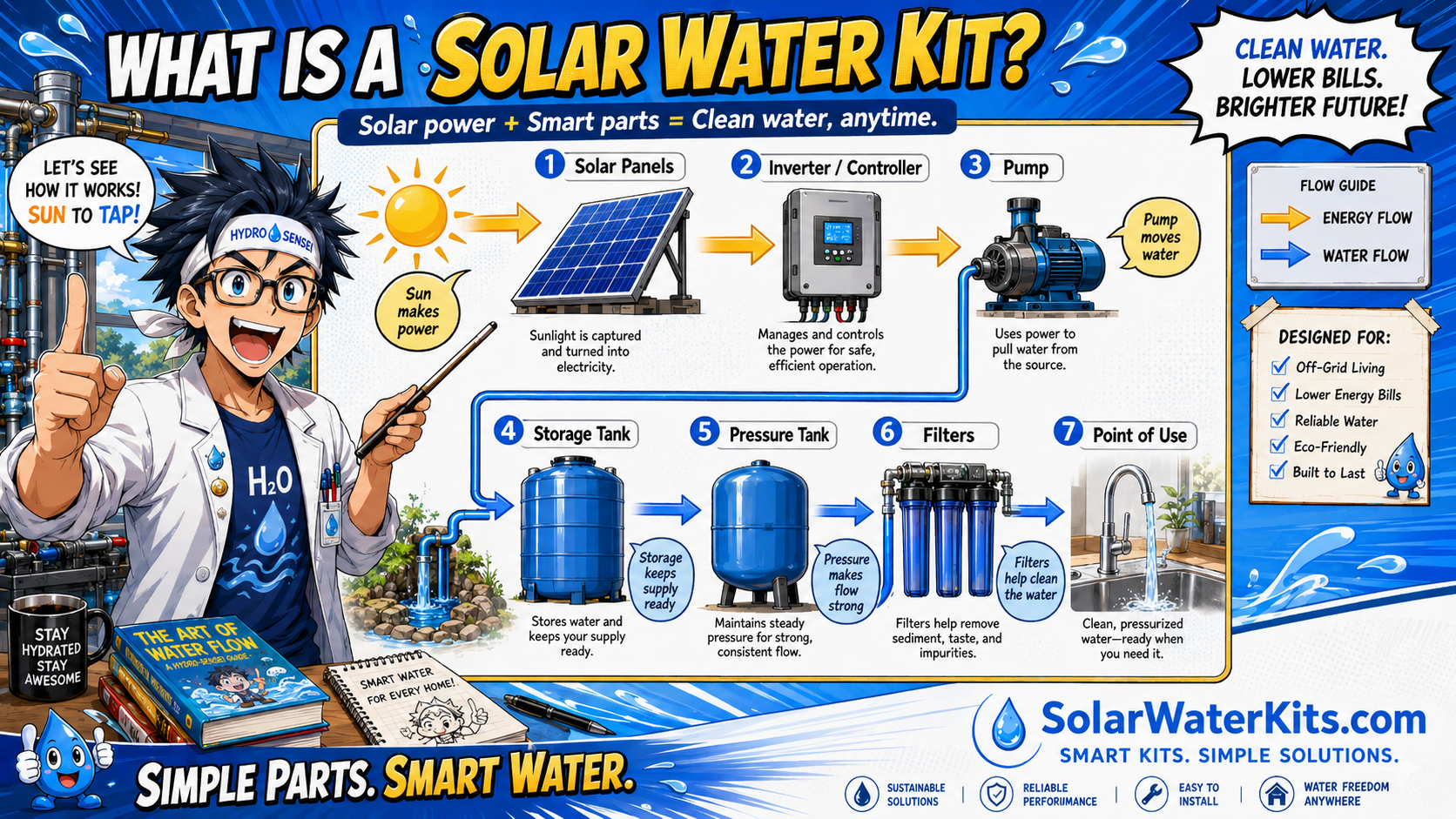
Sunlight becomes power. Power runs pumps. Tanks store water. Pressure and filtration make water useful.
Well, rainwater, cistern, municipal supply, pond, hauled water, graywater concept, or another approved source.
Solar direct, battery-backed, inverter-powered, DC pump, AC pump, booster pump, or transfer pump.
Storage tanks hold gallons. Pressure tanks smooth delivery. Booster pumps serve fixtures or zones.
Filter Ninja reminds everyone: moving water is not the same as making water safe.
Float switches, pressure switches, sensors, labels, checklists, and service access keep the system understandable.
Each character carries a technical rule. The jokes are memorable because the mistakes are real.
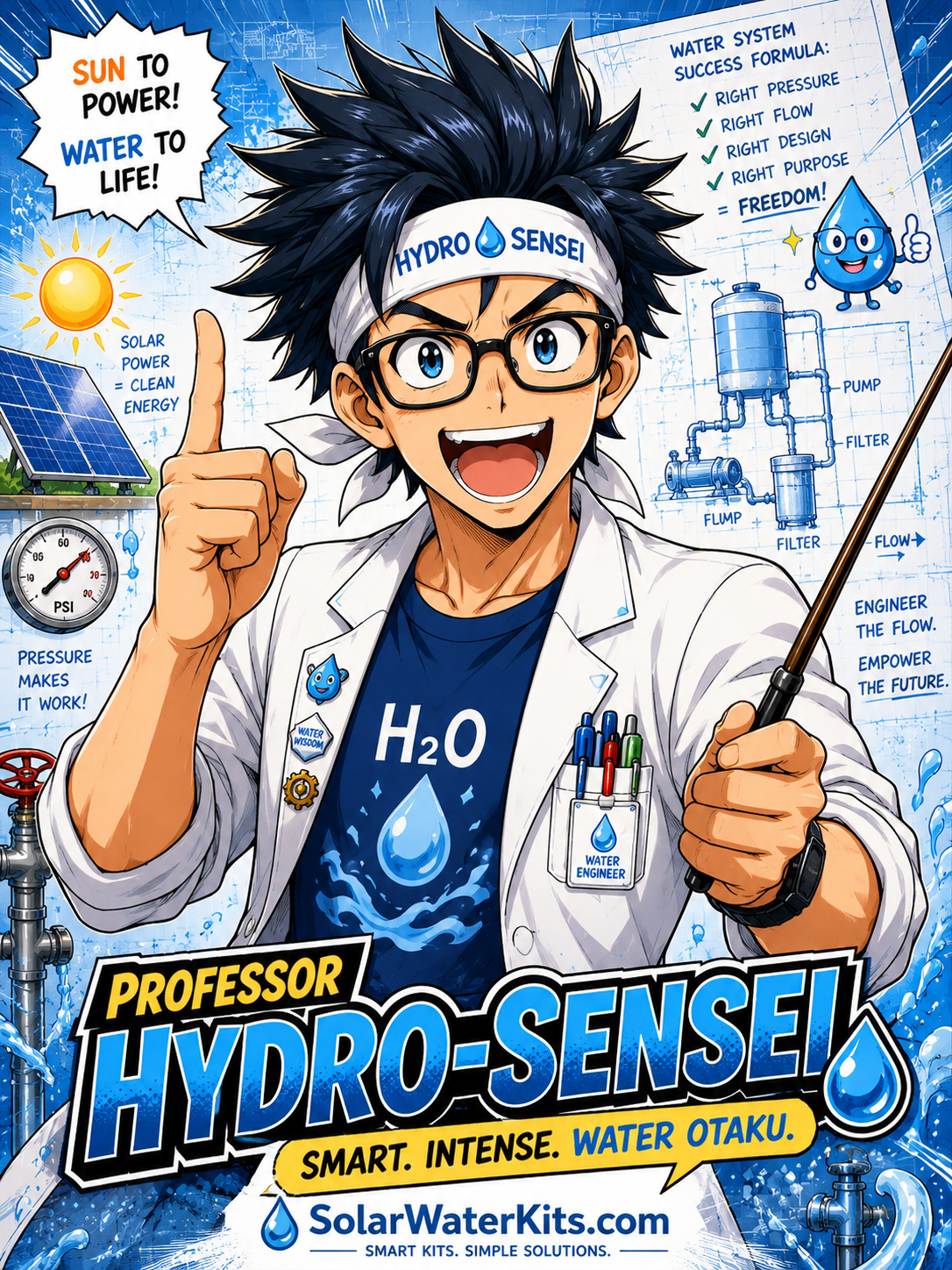
Explains the full system before Pump Boy buys the wrong pump.
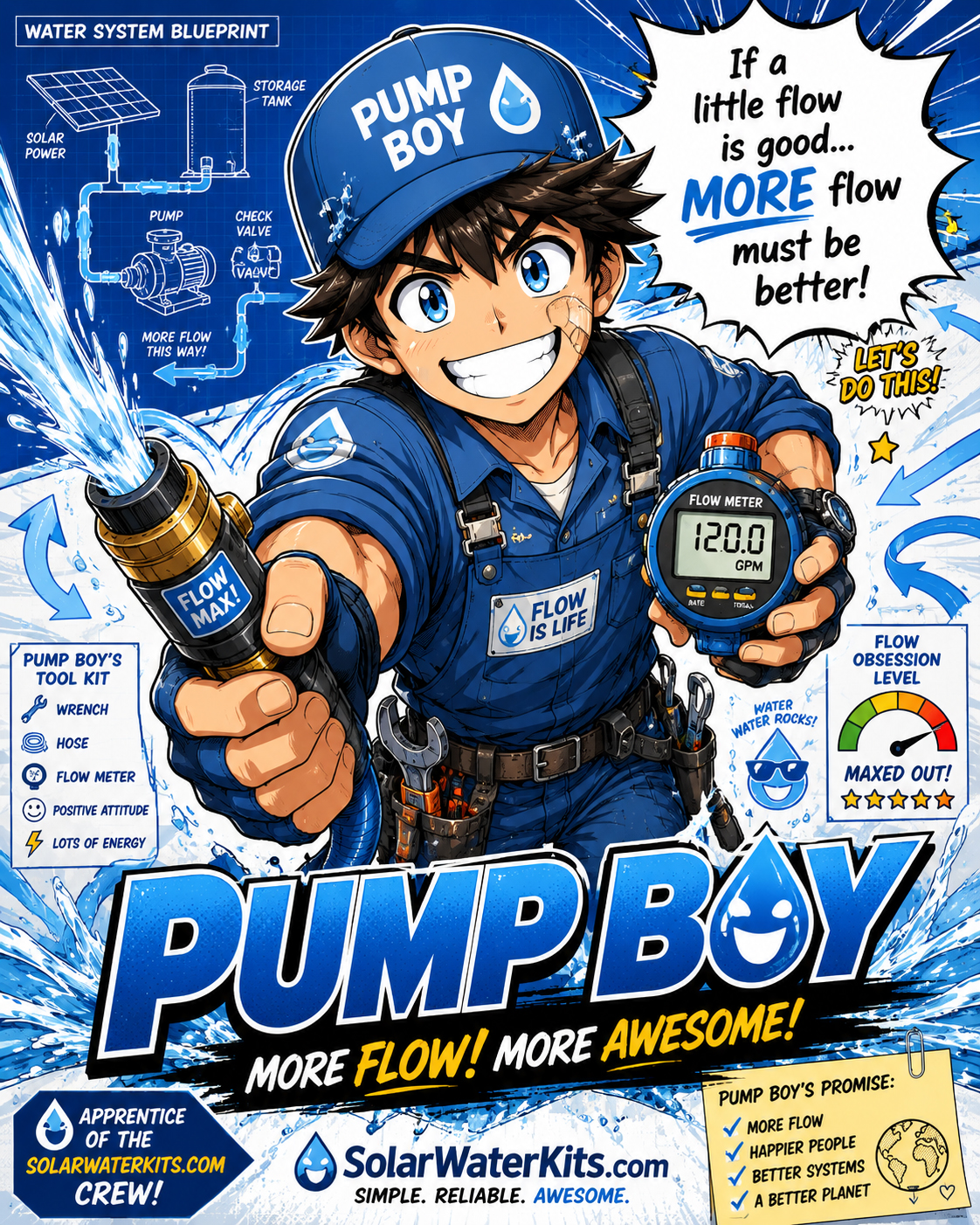
Always wants more flow. Accidentally demonstrates every sizing mistake.
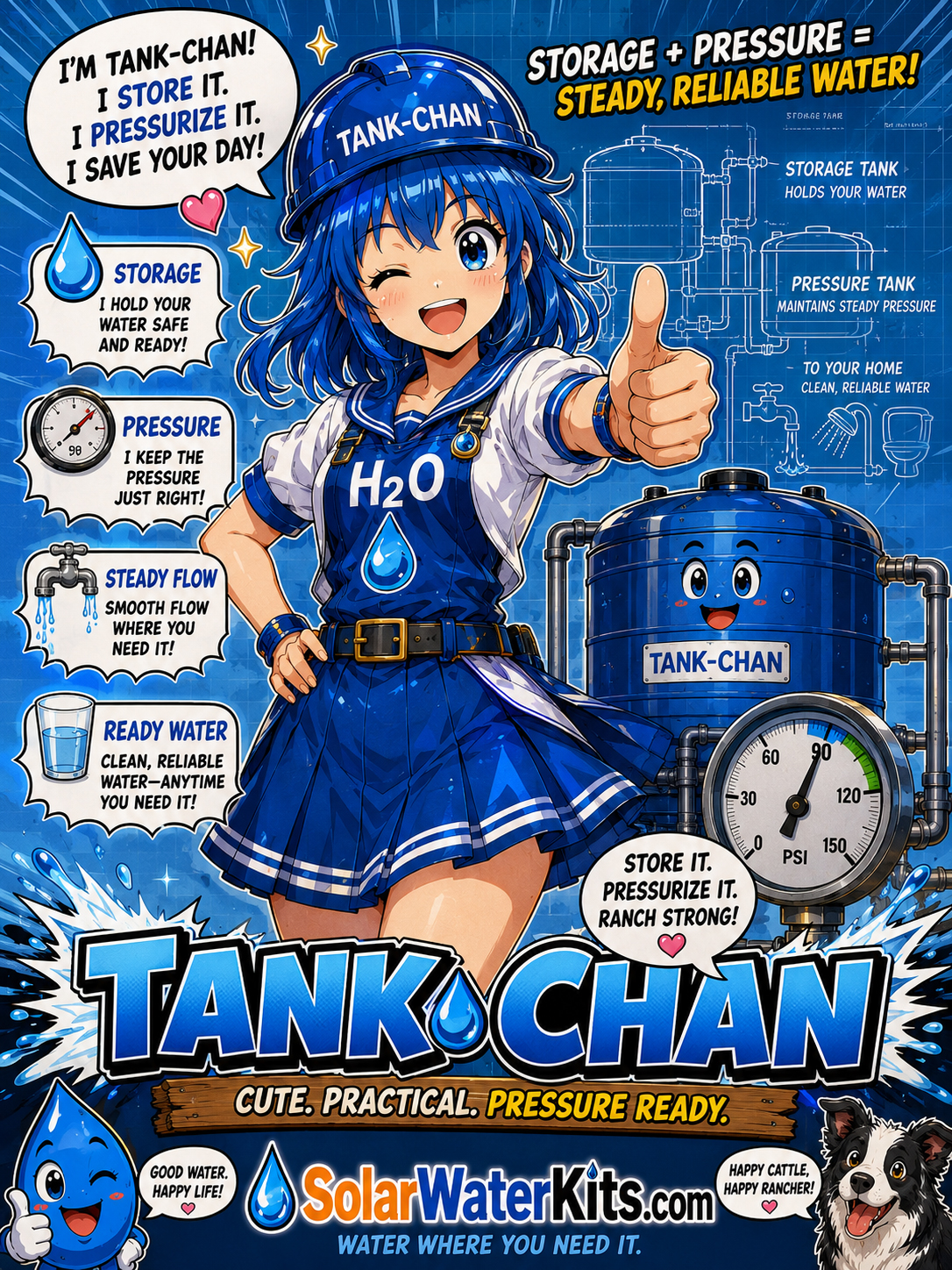
Teaches stored water, pressure tanks, drawdown, and calm delivery.
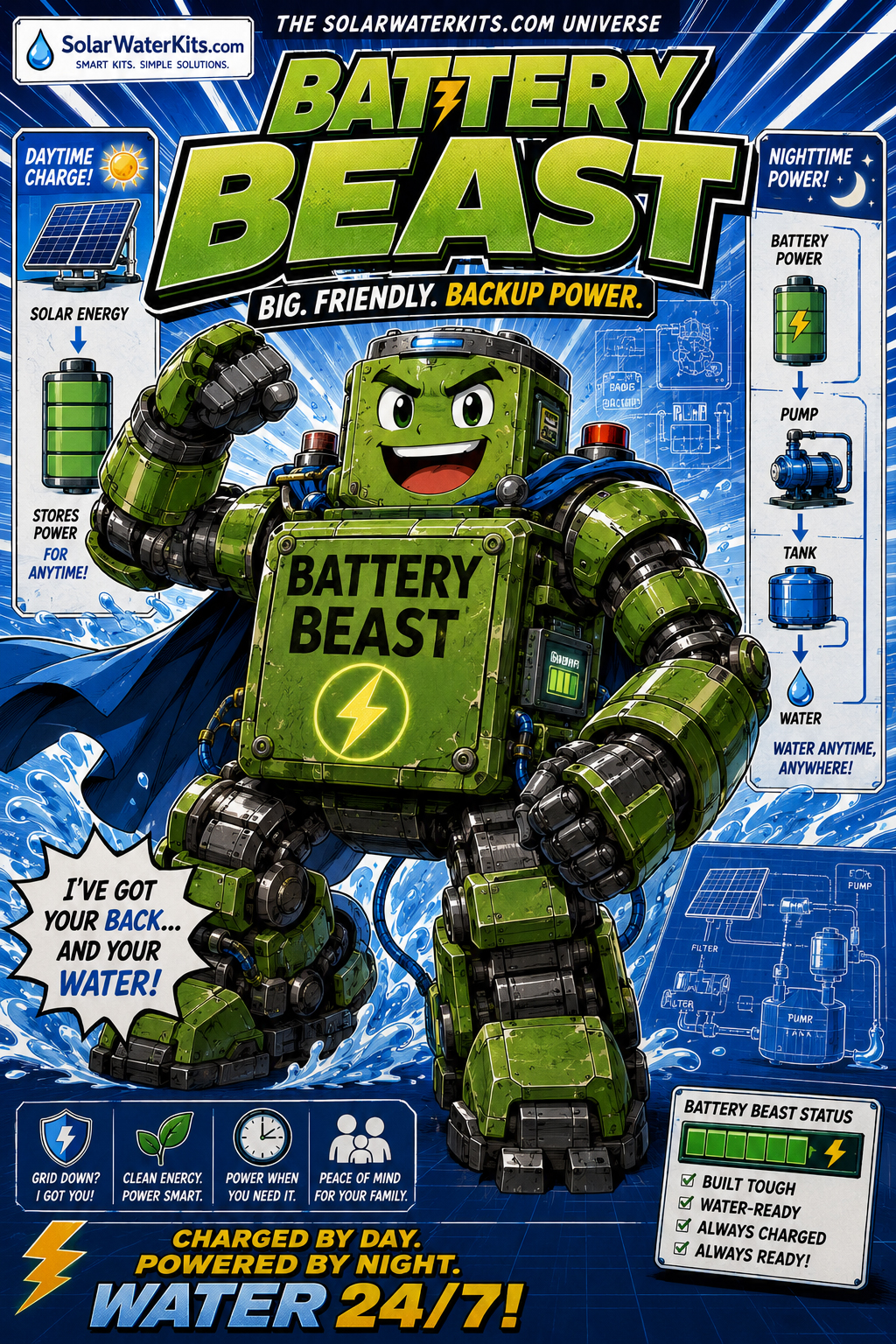
Powerful, friendly, and very clear that runtime is math.
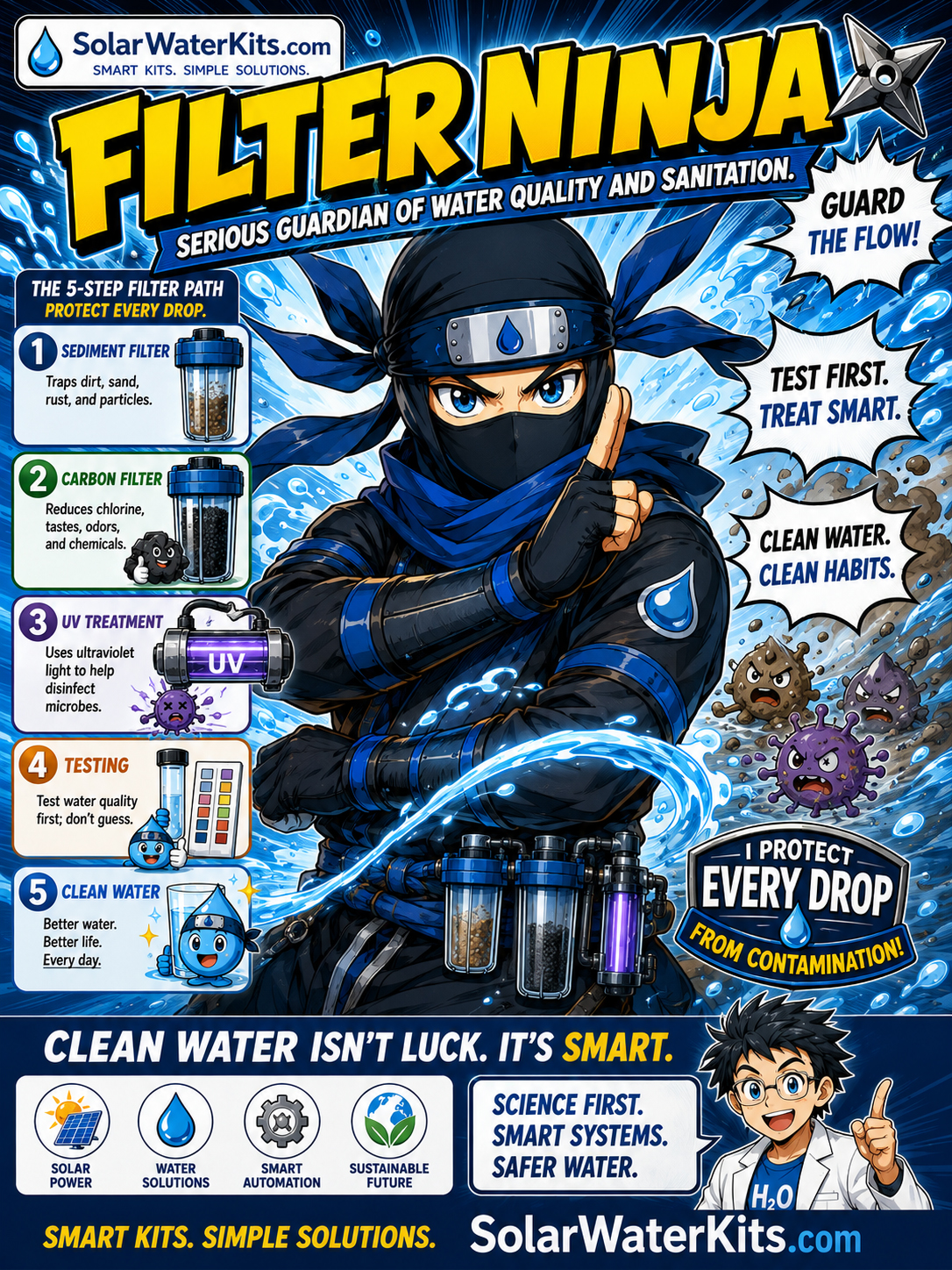
Guardian of testing, filtration, sanitation, and “do not guess.”
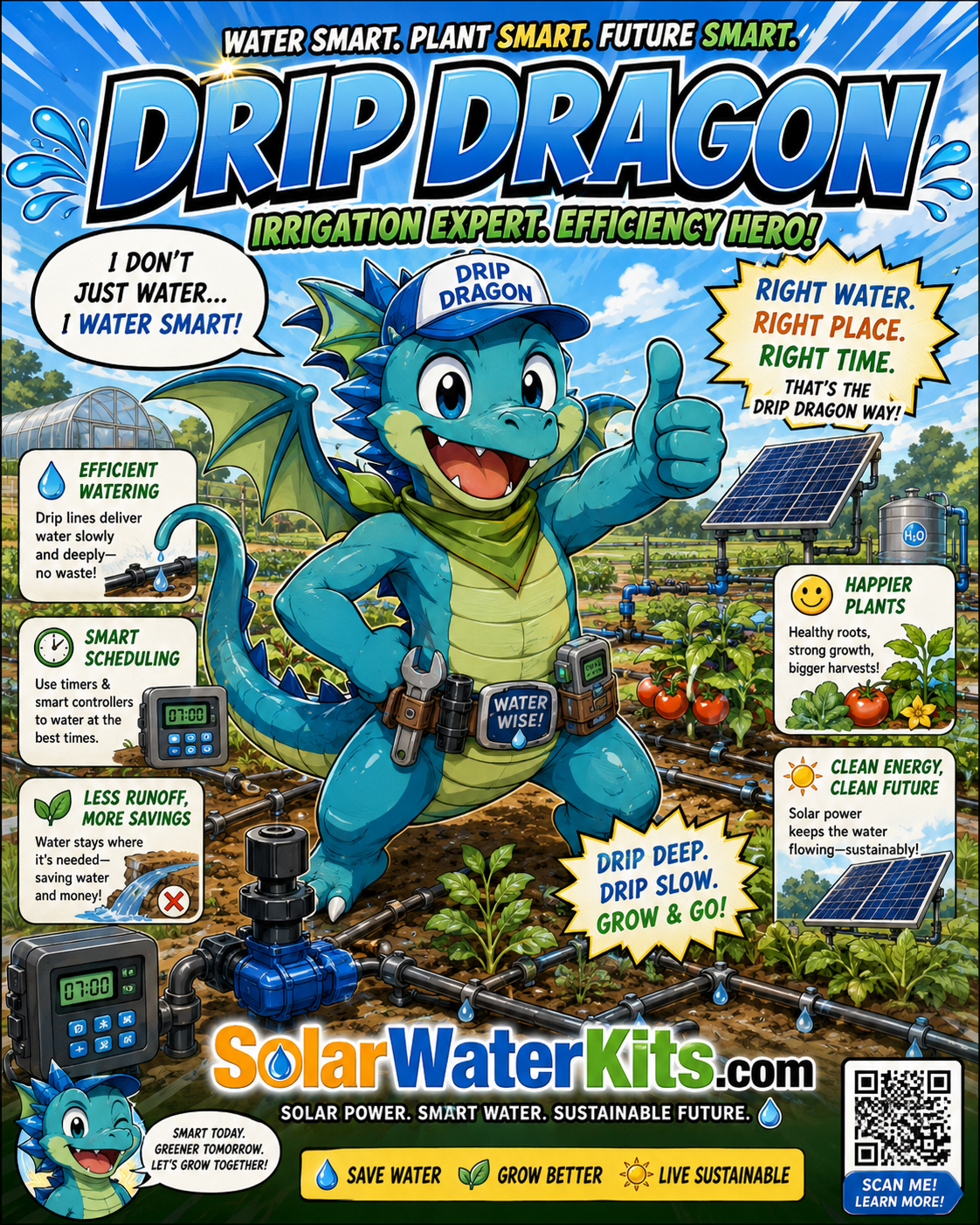
Learns that watering roots beats flooding the entire driveway.
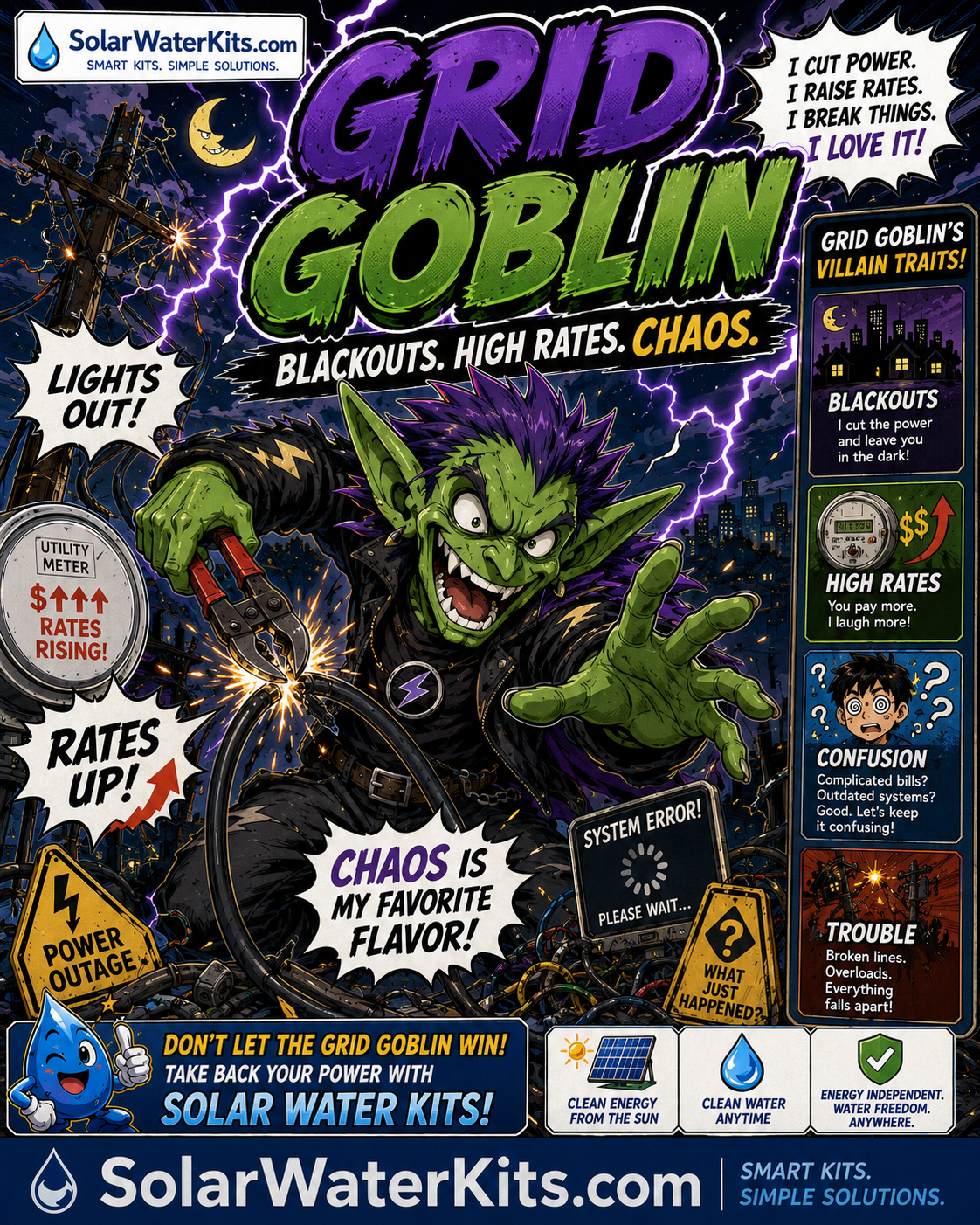
Blackouts, dead pumps, bad assumptions, and high-rate chaos.
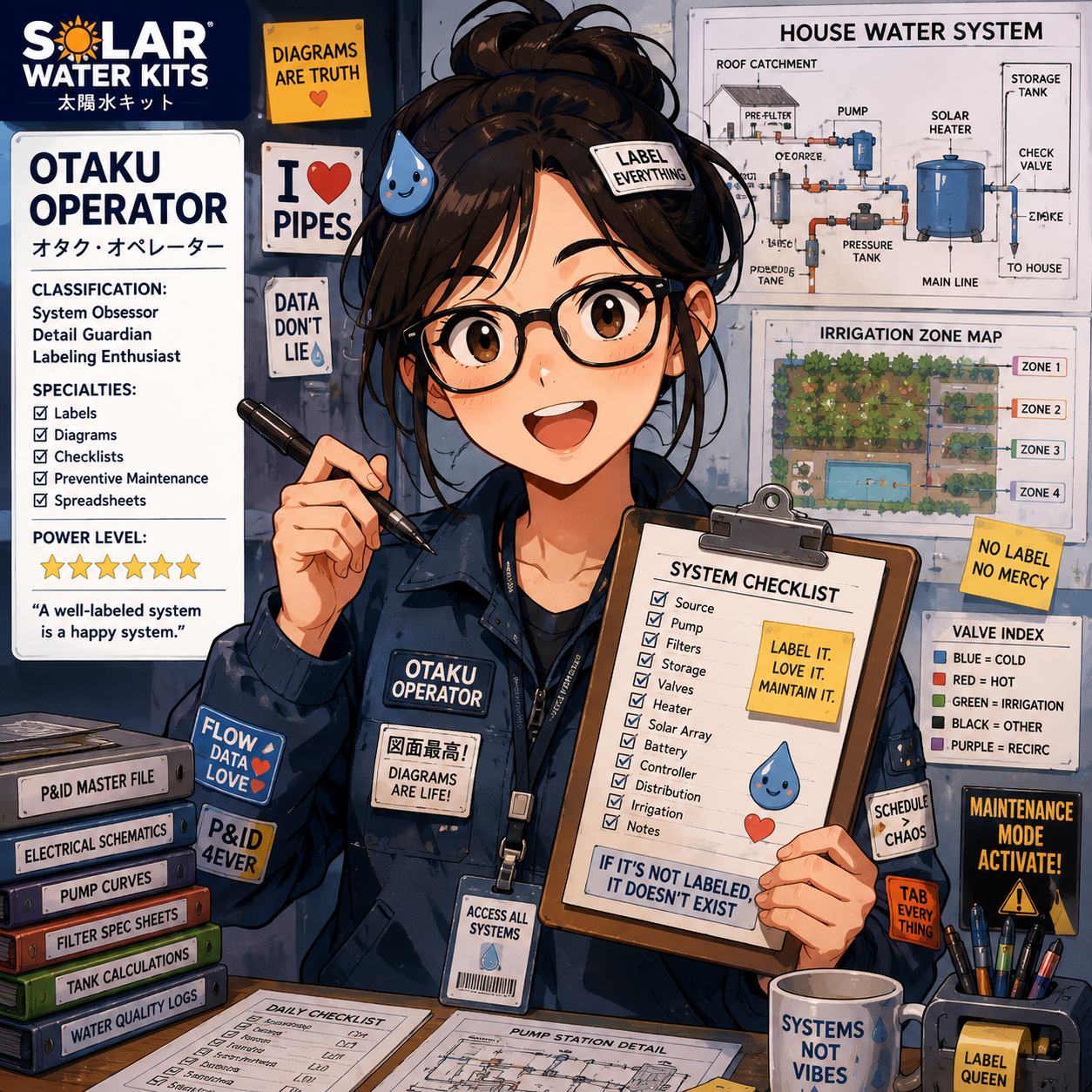
Labels, dashboards, laminated maps, maintenance logs, and checklists.
The same basic parts can serve very different missions. Each application needs its own flow, pressure, storage, power, water-quality, and maintenance plan.
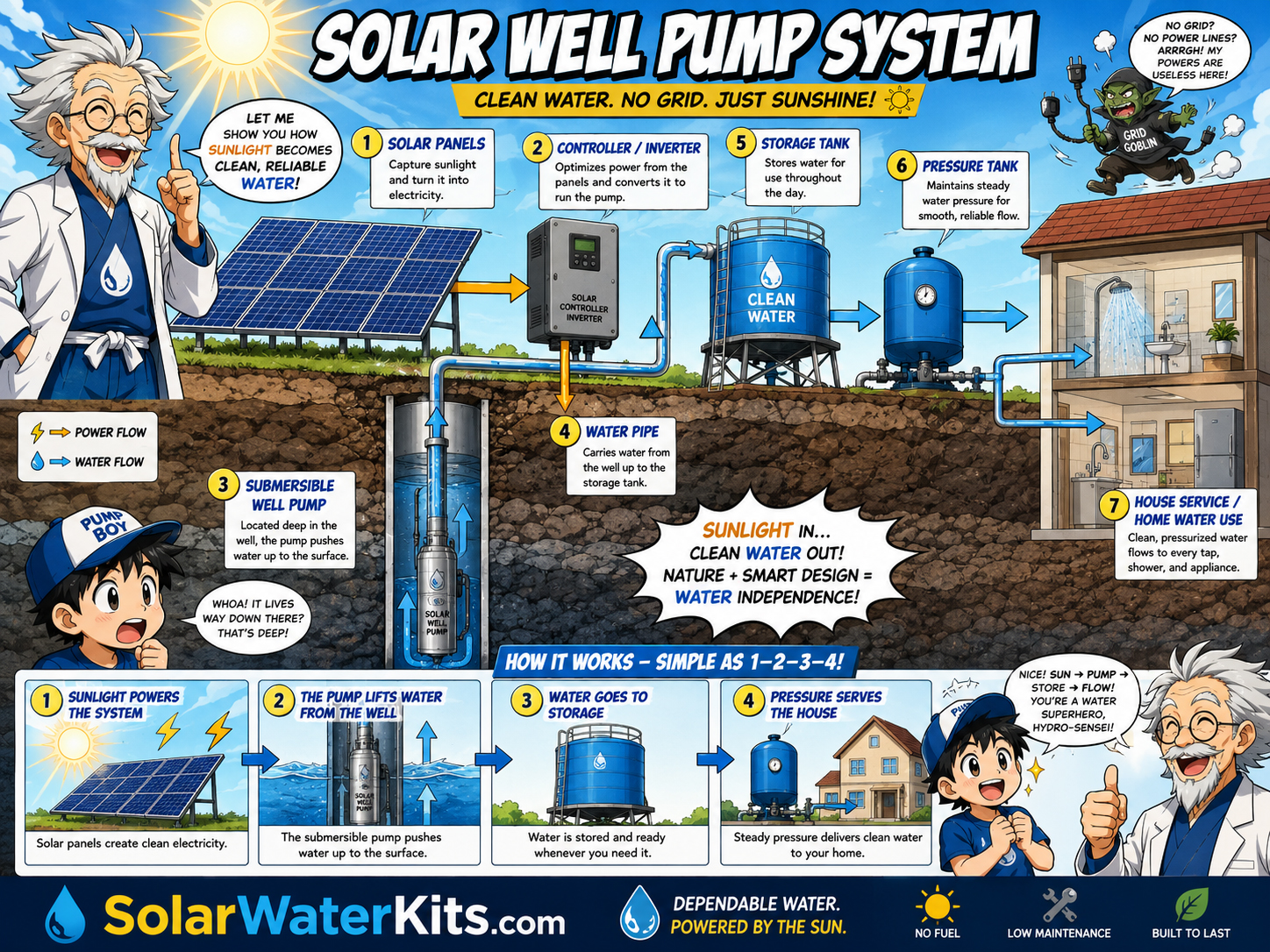
Well depth, static water level, pump surge, recovery rate, storage, pressure, and water testing.
Solar Well Pumps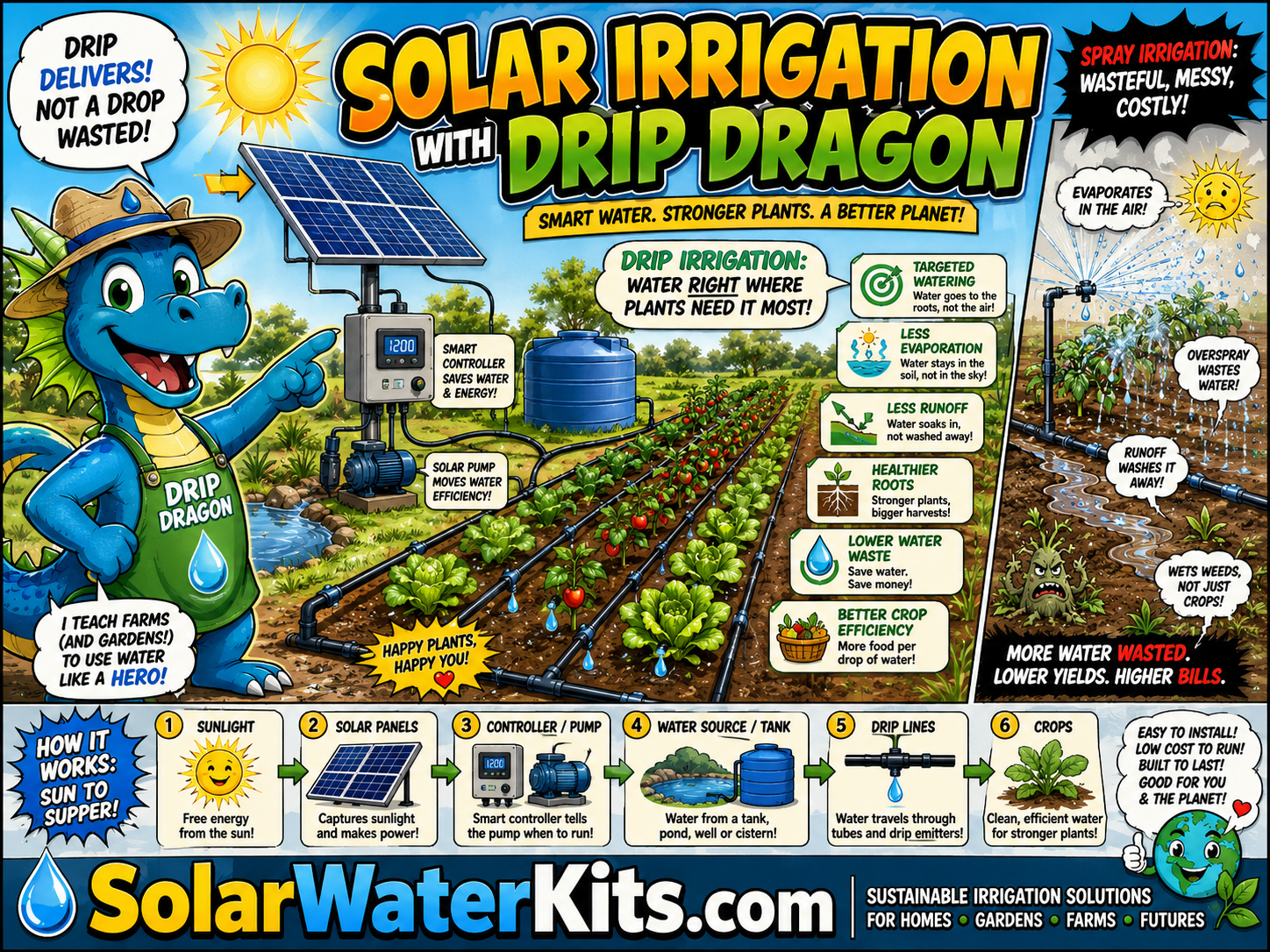
Drip lines, filters, pressure regulators, valves, timers, zones, and conservation.
Solar Irrigation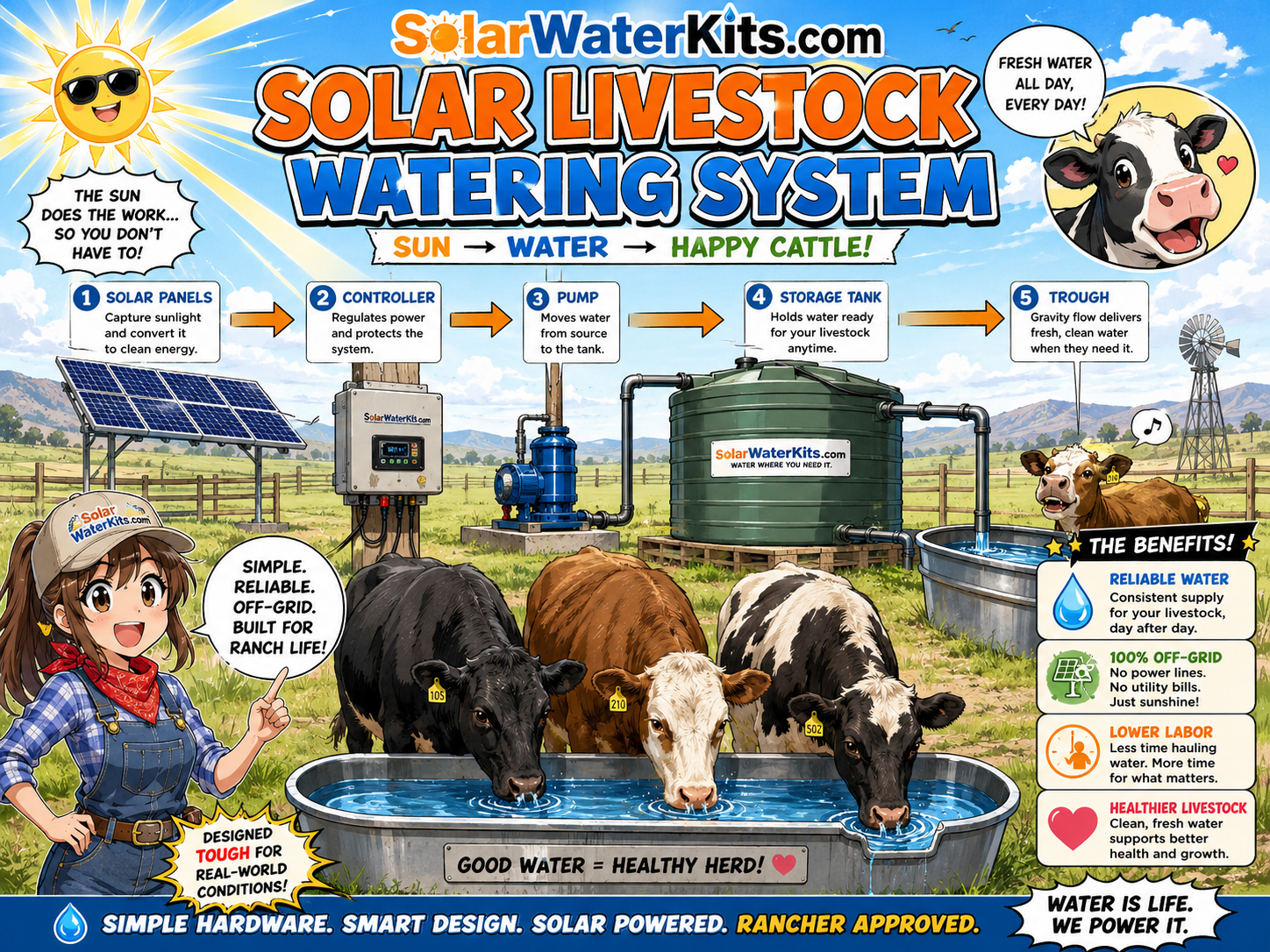
Troughs, float valves, tank reserves, herd demand, field durability, and inspection.
Livestock Water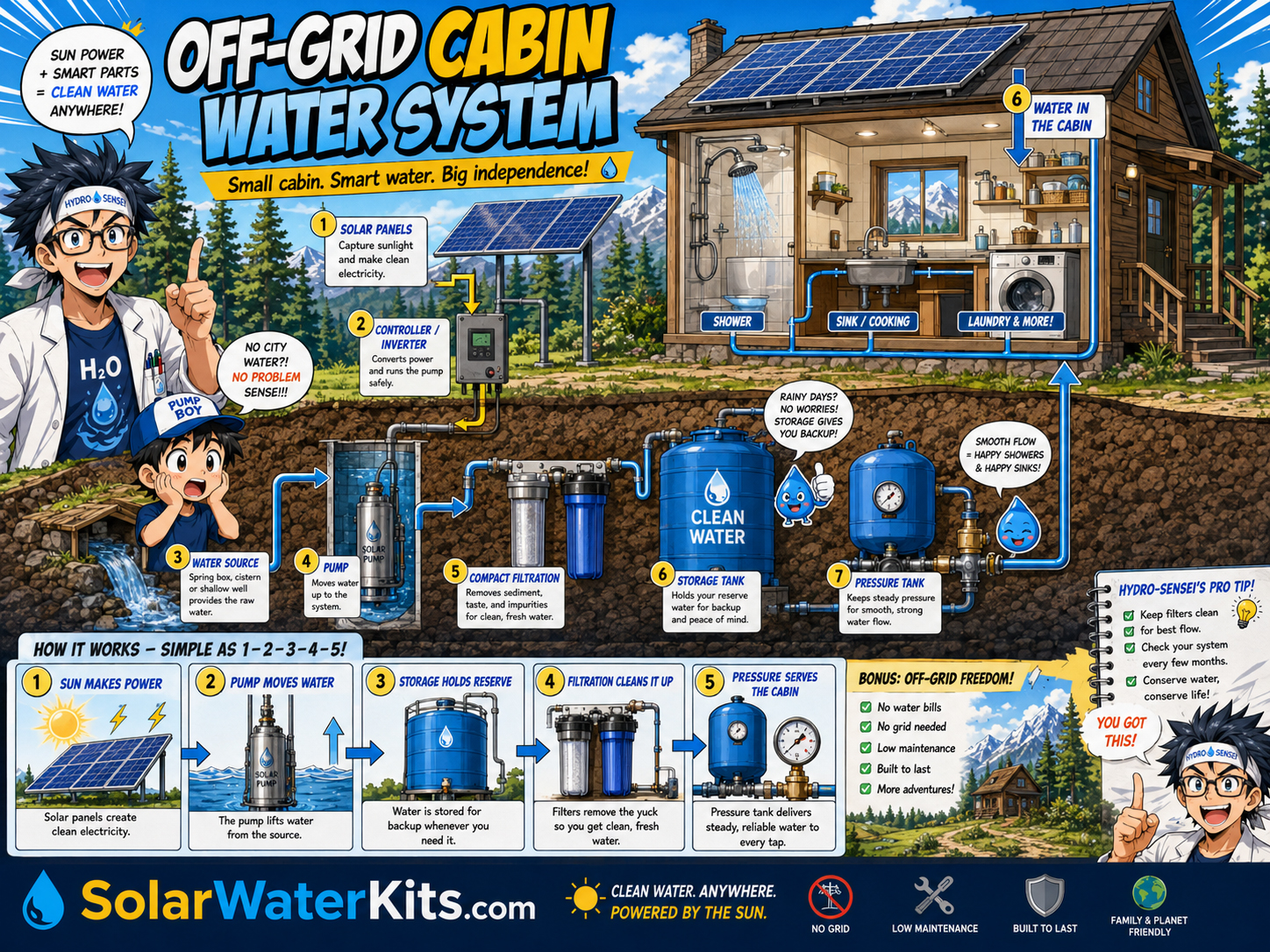
Off-grid water source, storage, pressure, filtration, battery backup, freeze protection, and shutdown routines.
Cabin Water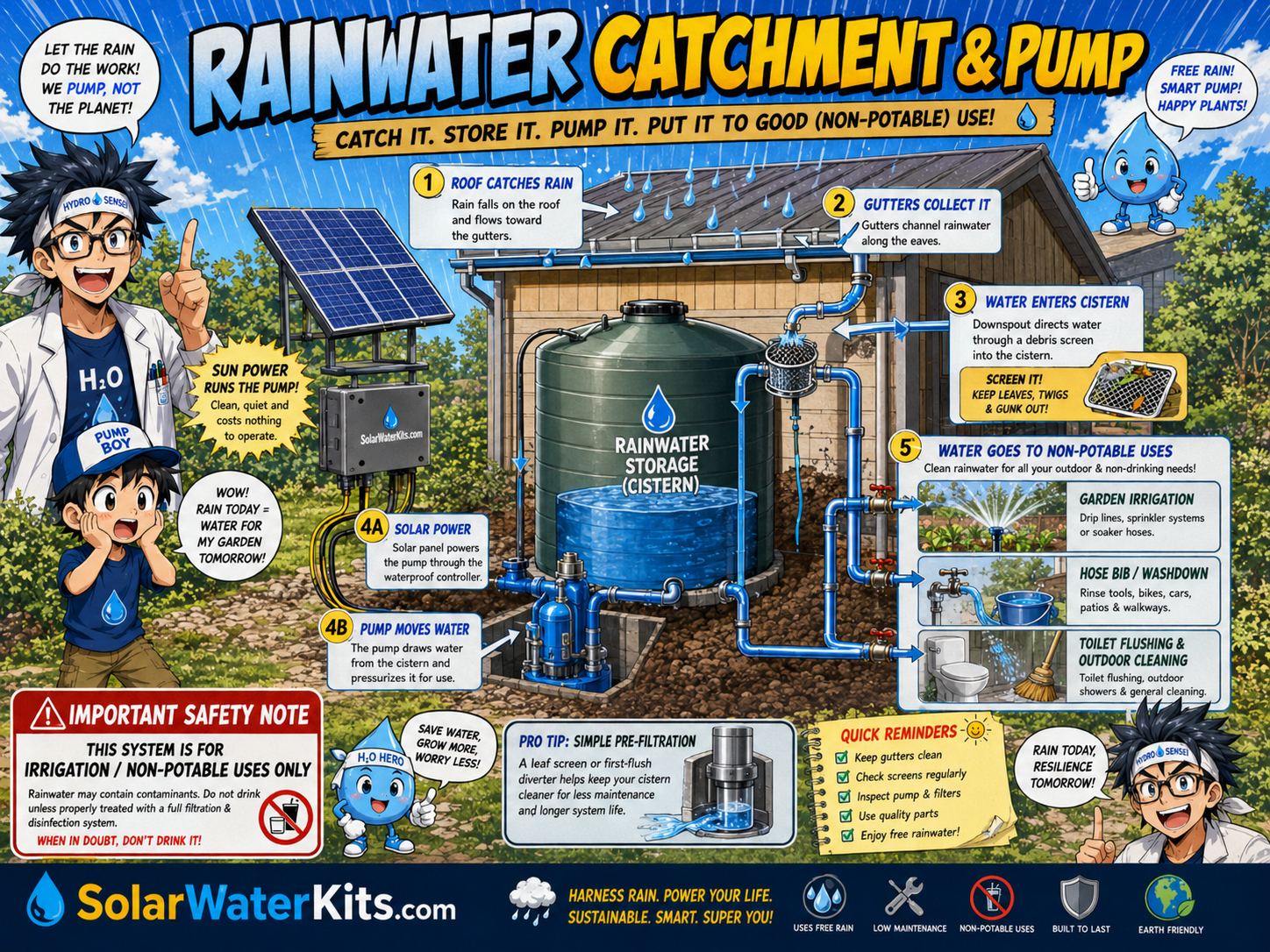
Catchment, gutters, screens, cisterns, solar pumps, labels, and non-potable water planning.
Rainwater Pumps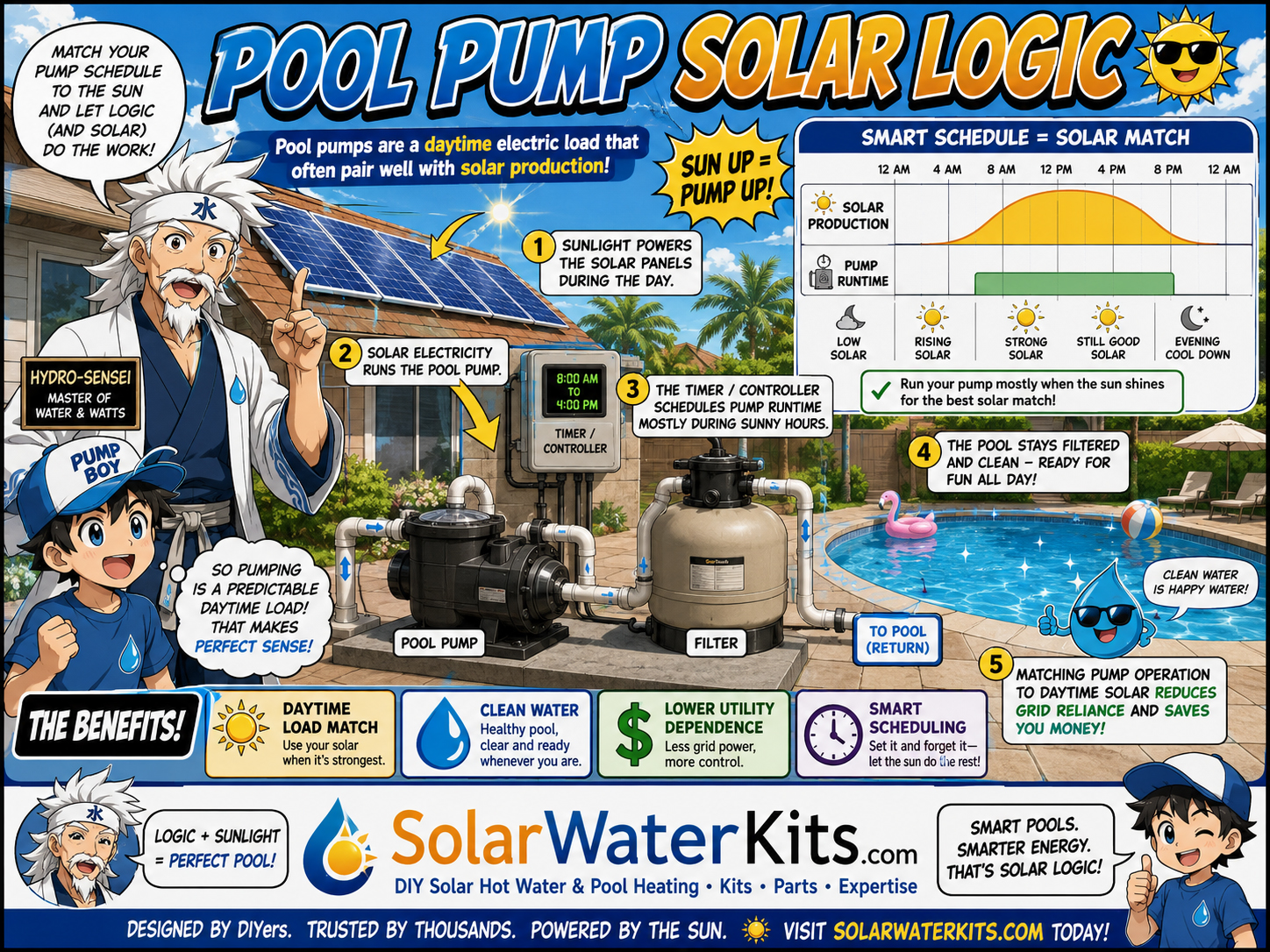
Pool pump loads, daytime solar matching, timers, equipment pads, and electrical safety boundaries.
Pool PumpsWhen the grid fails, pumps may stop. When pumps stop, pressure may disappear. Solar water resilience means thinking about stored water, backup power, essential loads, pressure delivery, filtration, labels, and safety before the emergency.
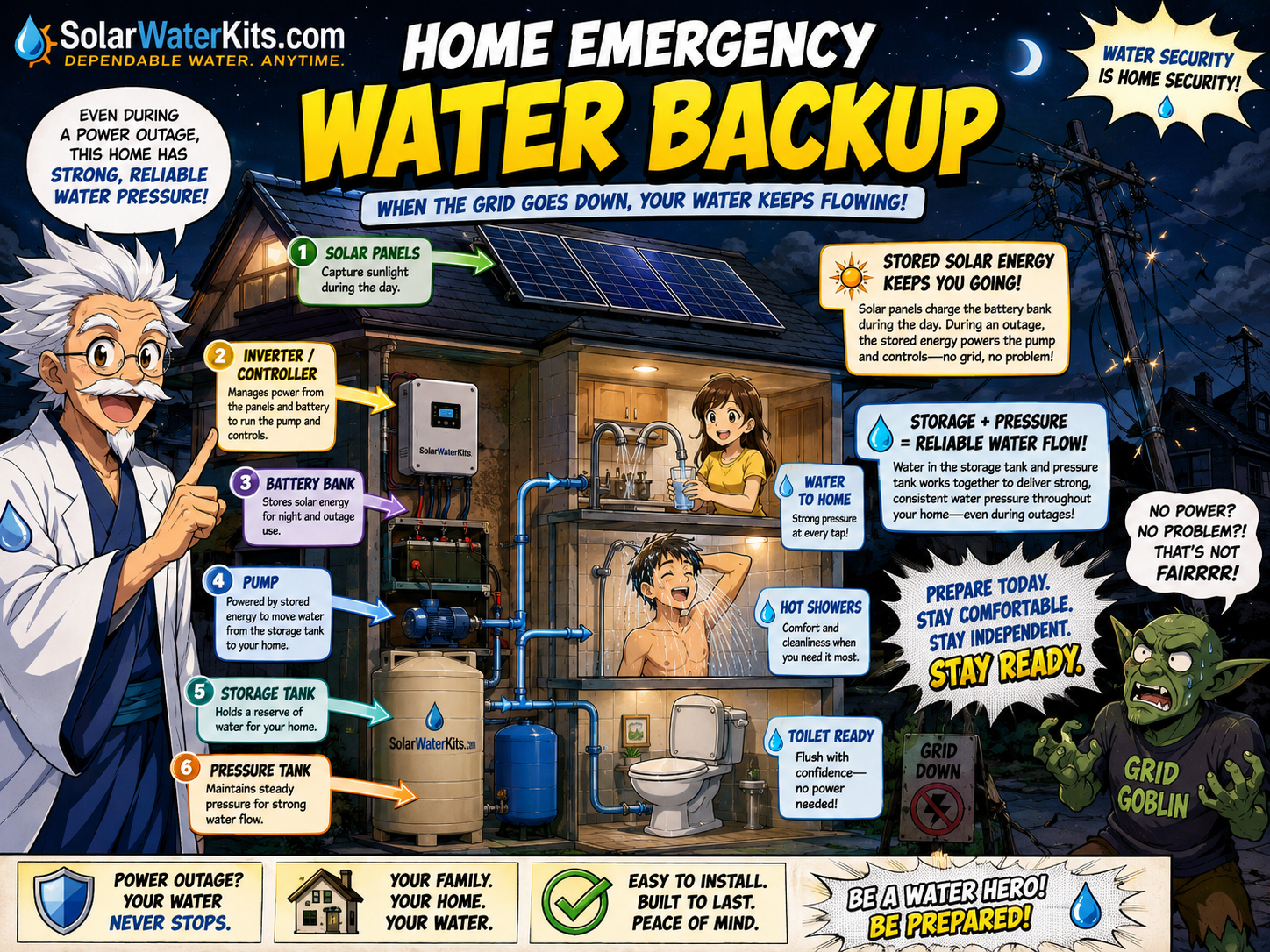
Essential water first. Comfort water later.
SolarWaterKits.com is an educational manga concept site. Real systems may involve electricity, pressure, potable water, non-potable water, tanks, batteries, wells, filters, backflow protection, fire-readiness concepts, graywater, rainwater, and local permits.
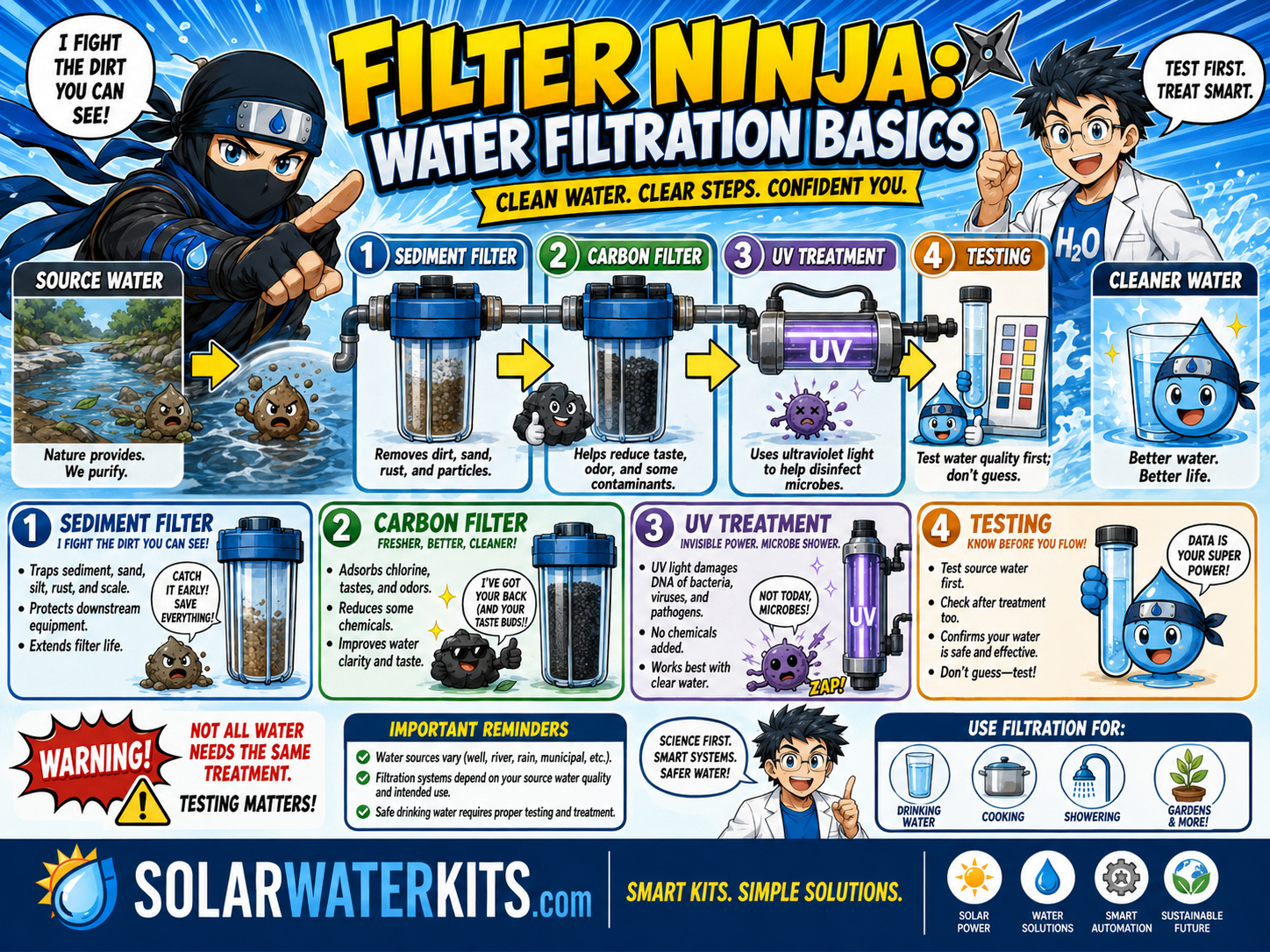
Sediment, carbon, UV, testing, treatment, tank sanitation, and maintenance.
Filtration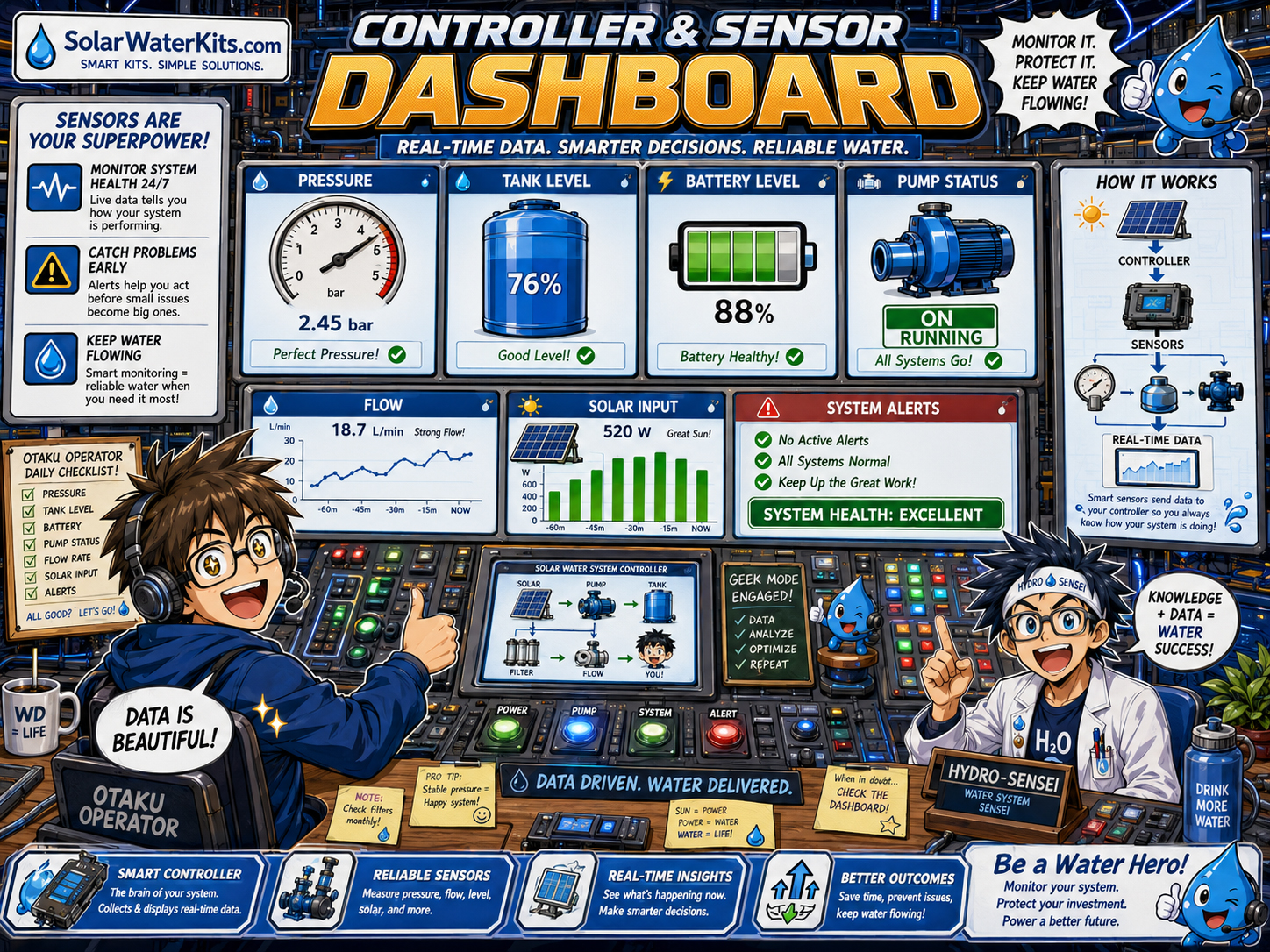
Float switches, low-water cutoff, pressure switches, flow meters, battery status, alarms, and dashboards.
Controls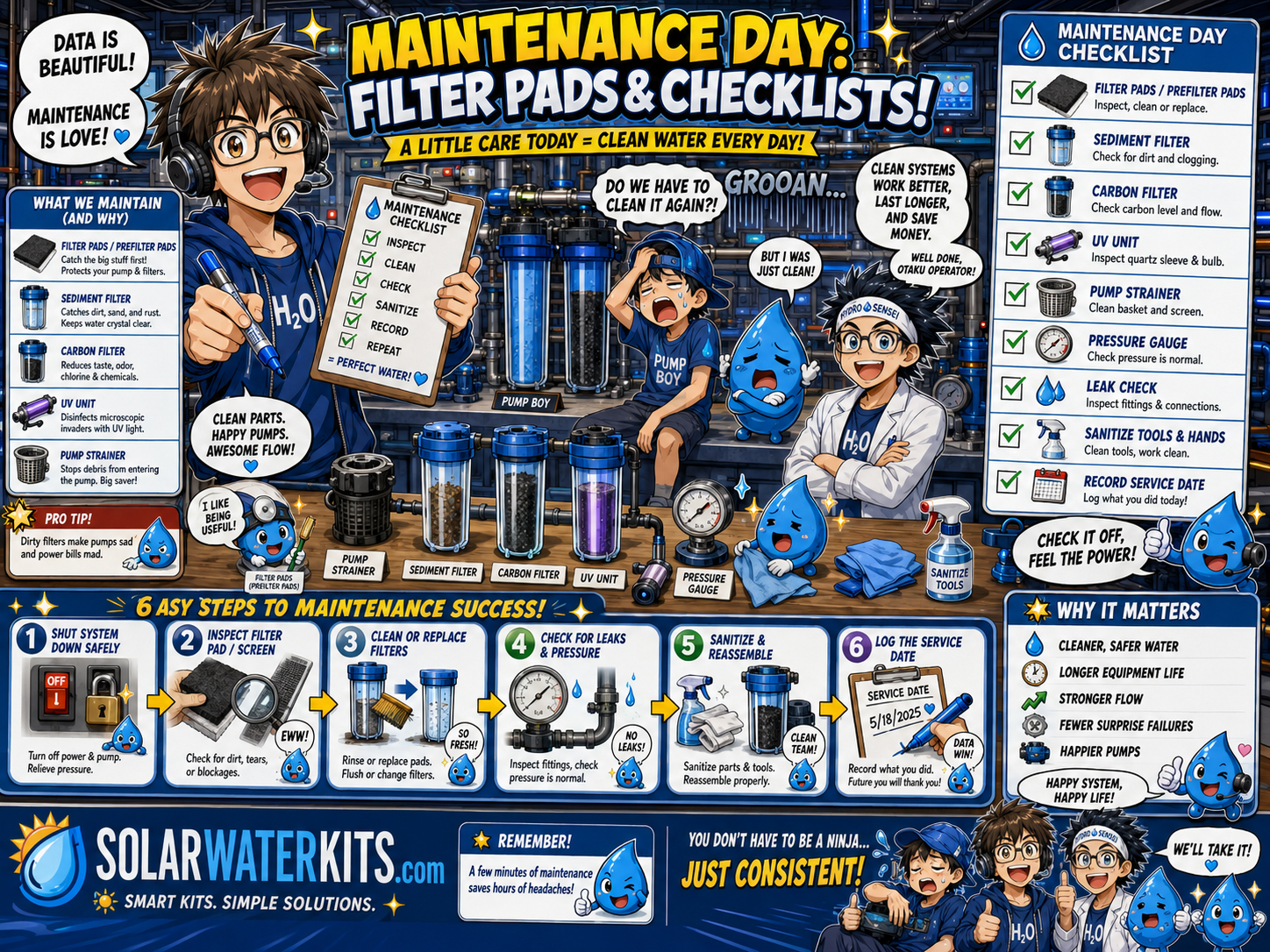
Filters, tanks, pumps, valves, batteries, labels, freeze protection, and emergency checks.
Maintenance