The plants file a complaint
One cactus holds up a sign: “I did not request swamp mode.” The lettuce looks happy for five seconds, then starts floating away.
Drip Dragon used to flood everything: roots, paths, fences, boots, and one very surprised mailbox. Hydro-Sensei introduces zones, valves, filters, timers, pressure regulation, and the sacred irrigation rule: water the roots, not the driveway.
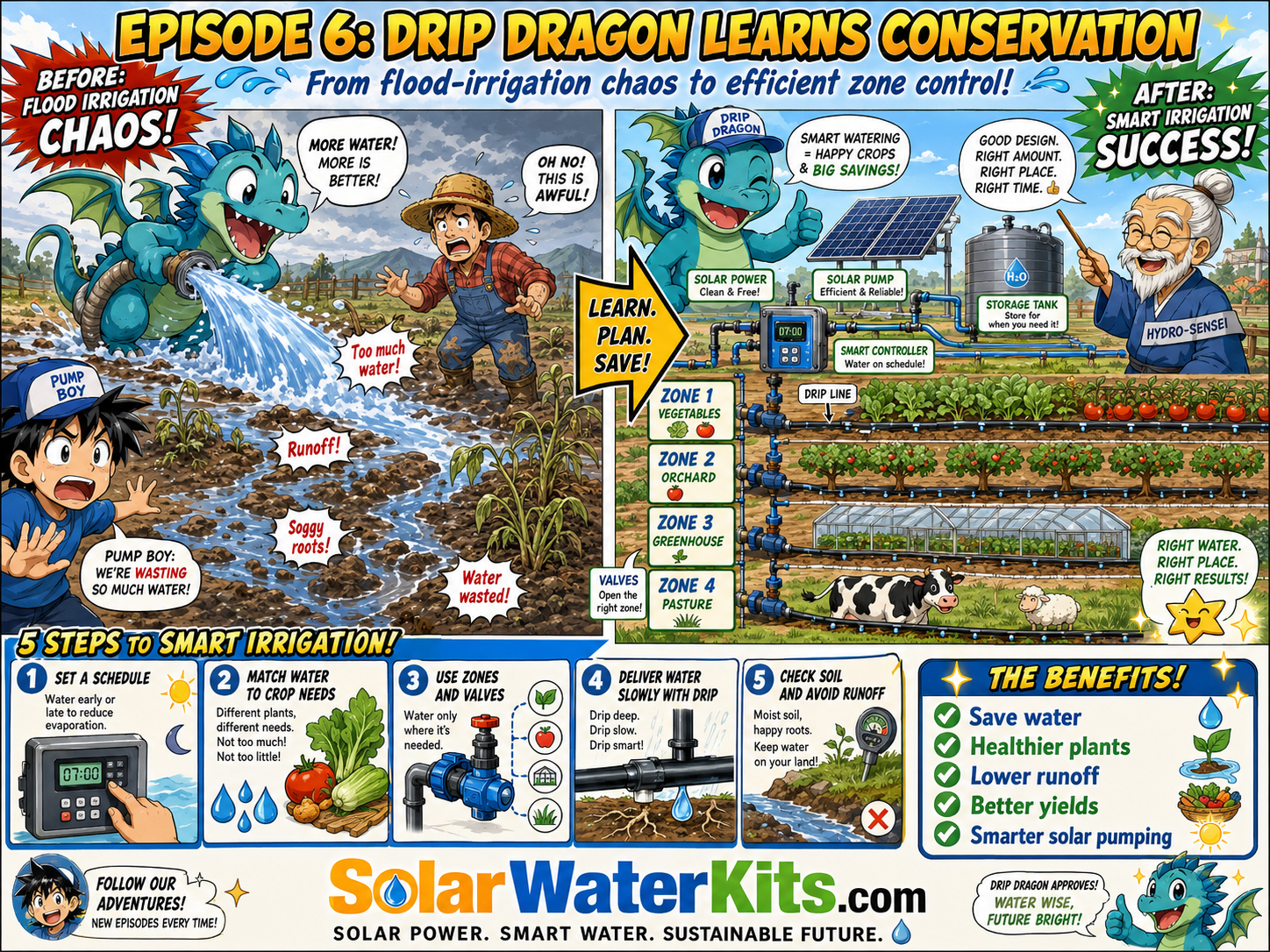
Episode 6 teaches the irrigation lesson: the goal is not maximum water. The goal is correct water, correct place, correct pressure, correct time.
The comedy starts with too much water in the wrong places.
Drip Dragon is excited to help the garden. Unfortunately, he starts by opening every valve at once. The tomatoes get soaked. The pathway becomes a river. Pump Boy rides a floating bucket.
Filter Ninja silently points to the clogged drip emitter.
One cactus holds up a sign: “I did not request swamp mode.” The lettuce looks happy for five seconds, then starts floating away.
The property becomes a map: trees, vegetable beds, slope, sunny area, shaded area, dry bed, and drip line. Each zone gets its own water logic.
Filter Ninja explains that drip emitters have tiny openings. Dirty water and neglected screens turn irrigation into a clog festival.
Hydro-Sensei writes the irrigation chain: source → pump → filter → pressure regulator → valve → zone → roots.
The dragon bows. The driveway finally dries.
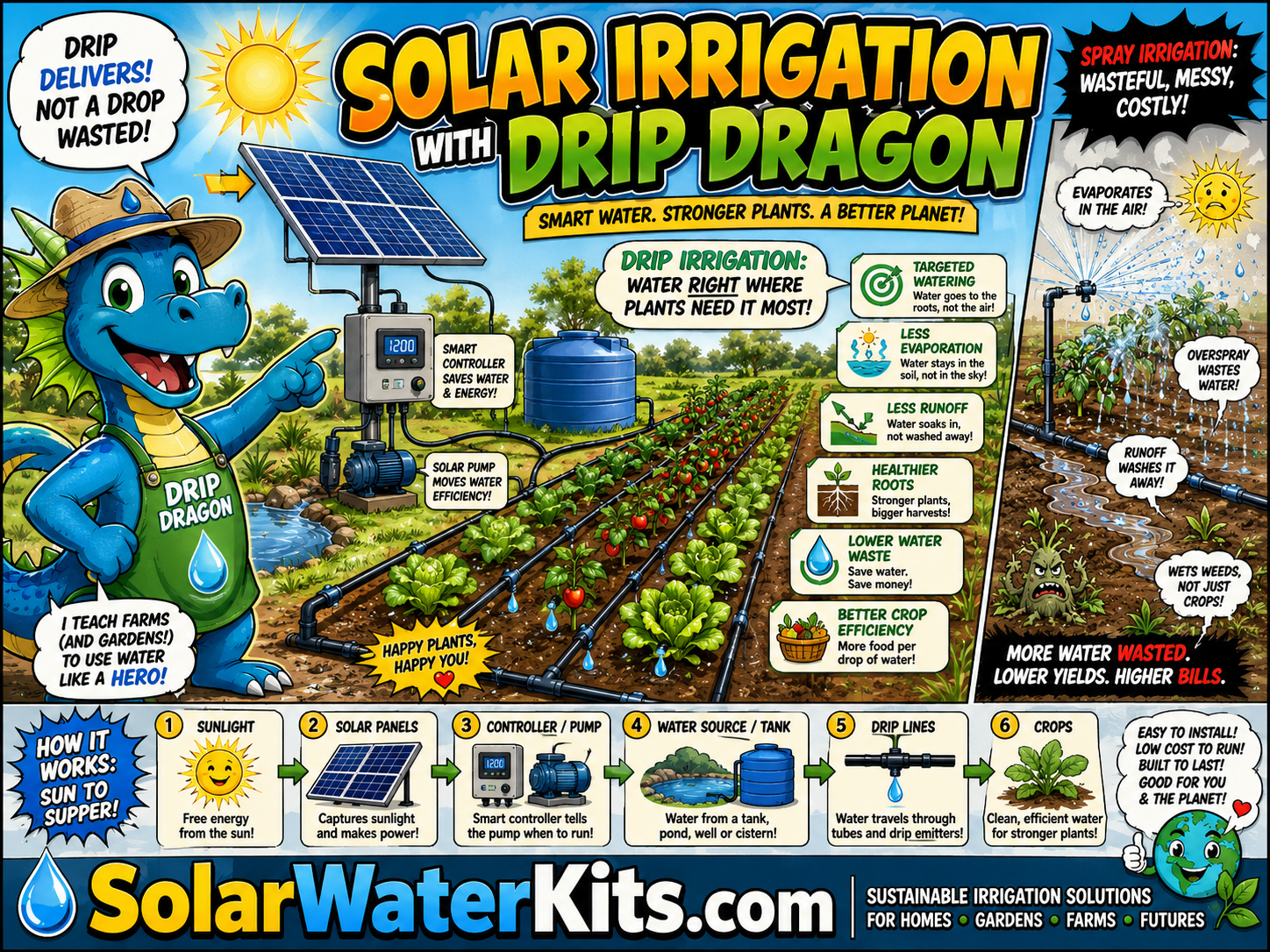
Drip irrigation can reduce waste when designed, filtered, and maintained correctly.
Otaku Operator programs zones by plant need, season, soil, and weather. Pump Boy is not allowed to press “run all zones forever.”
The pressure regulator enters wearing a tiny crown. “Emitters like control,” it says. “Too much pressure makes nonsense.”
Drip Dragon waters the root zone, the plants stand proudly, and the meter stops spinning like a comedy prop. Hydro-Sensei awards the dragon a golden emitter.
Irrigation design depends on water source, pump, pressure, filtration, emitters, valves, zone flow, soil, slope, plant type, climate, and schedule.
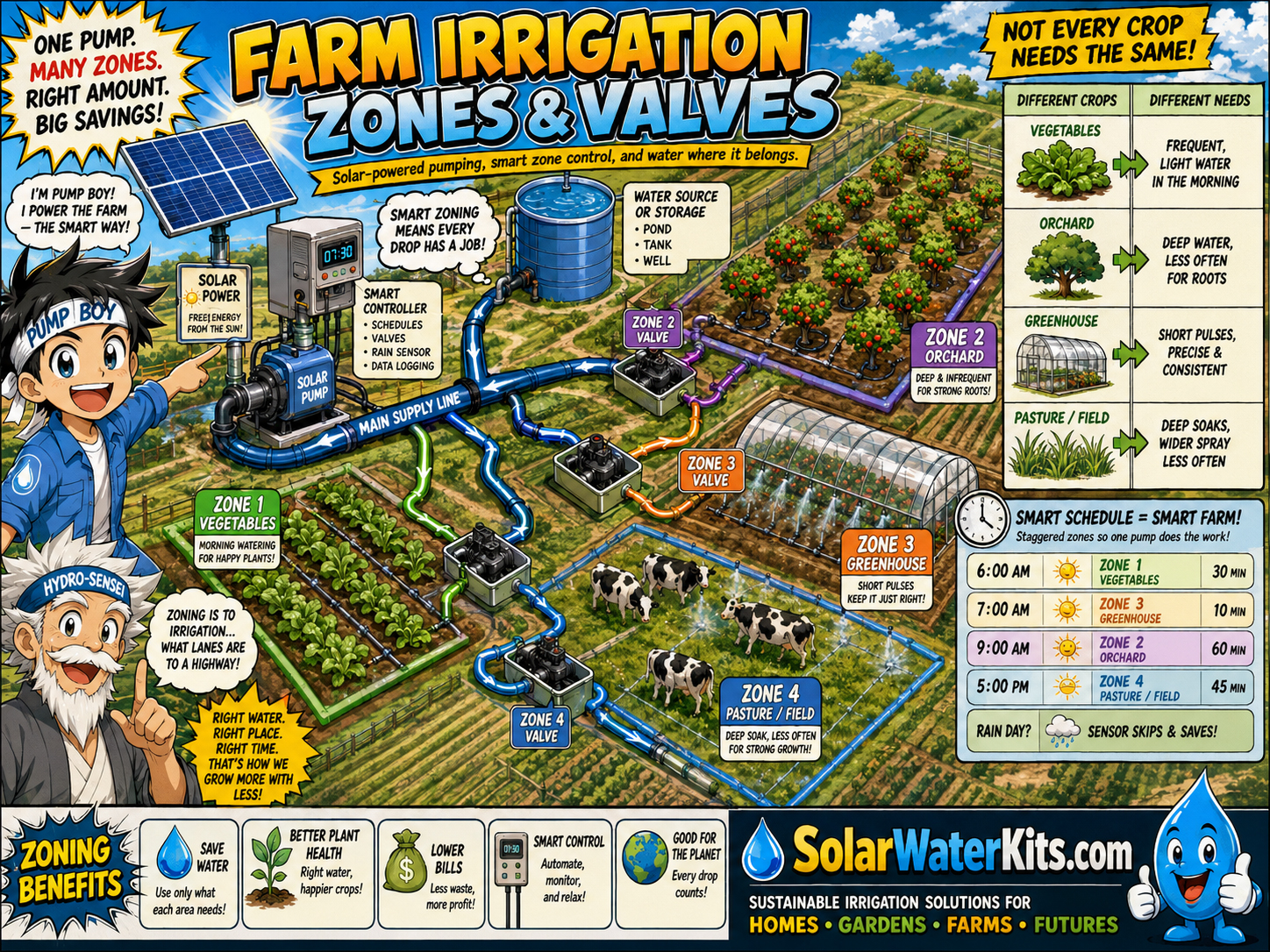
Each zone should match plant type, flow capacity, sun exposure, slope, soil, and watering schedule.
Zones and Valves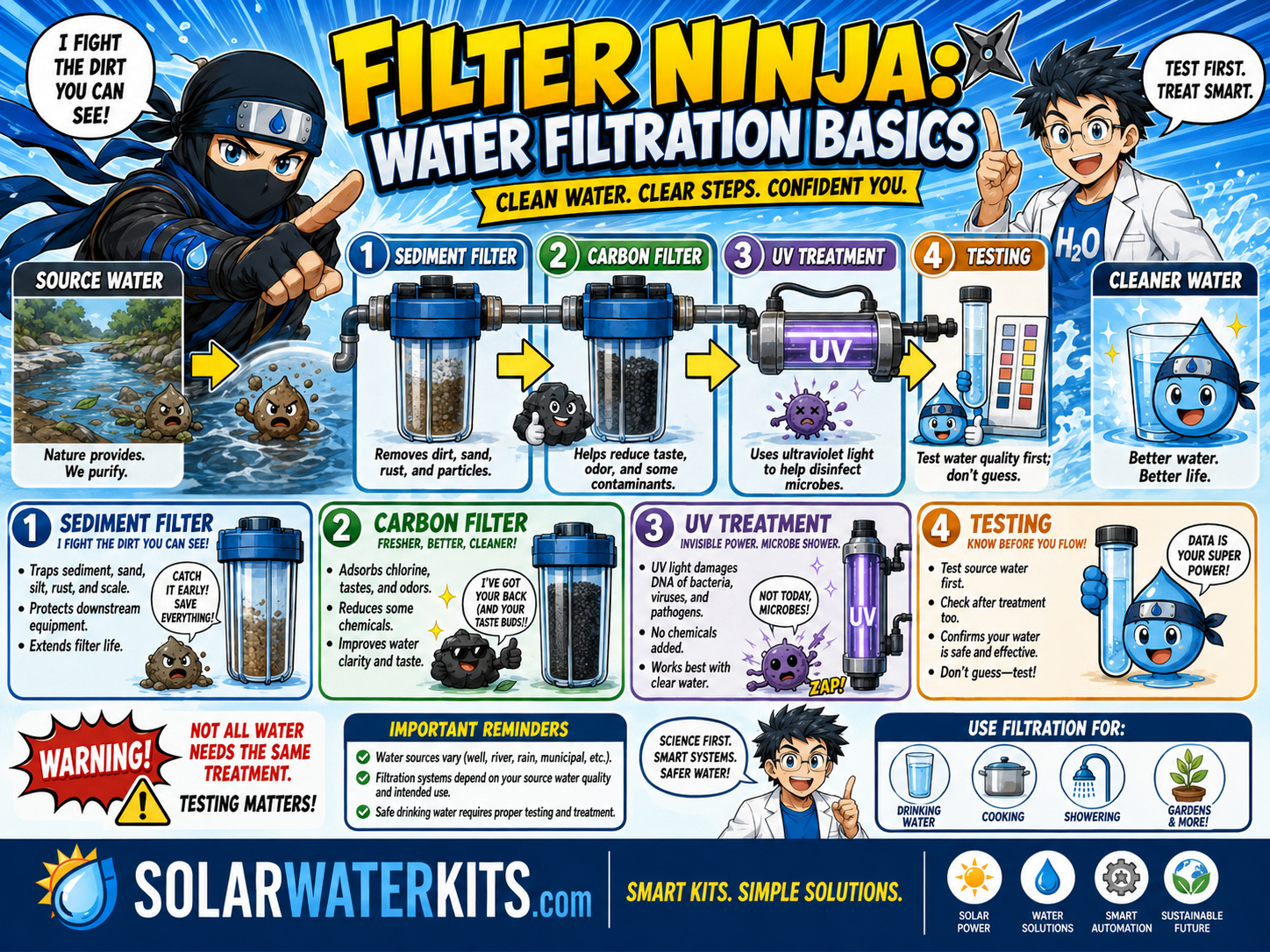
Small emitters and valves need proper filtration and maintenance to avoid clogging.
Filtration Basics
Overwatering can waste power, waste water, damage plants, create runoff, and cause disease problems.
Irrigation Lesson| Irrigation Part | Job | Drip Dragon Mistake |
|---|---|---|
| Solar pump | Moves water from source or storage. | Trying to run too many zones at once. |
| Filter | Protects valves, emitters, and regulators. | Skipping maintenance until the emitters clog. |
| Pressure regulator | Keeps pressure in a usable range for drip equipment. | Assuming more pressure always means better watering. |
| Zone valve | Controls where water goes. | Opening everything at once and collapsing flow. |
| Timer / controller | Controls when and how long each zone runs. | Never updating the schedule by season. |
| Emitter / drip line | Delivers water near the root zone. | Using dirty water or wrong pressure and blaming the plant. |
| Soil and slope | Decide how water absorbs or runs off. | Watering faster than the soil can accept. |
Conservation is not less care. It is more precise care.
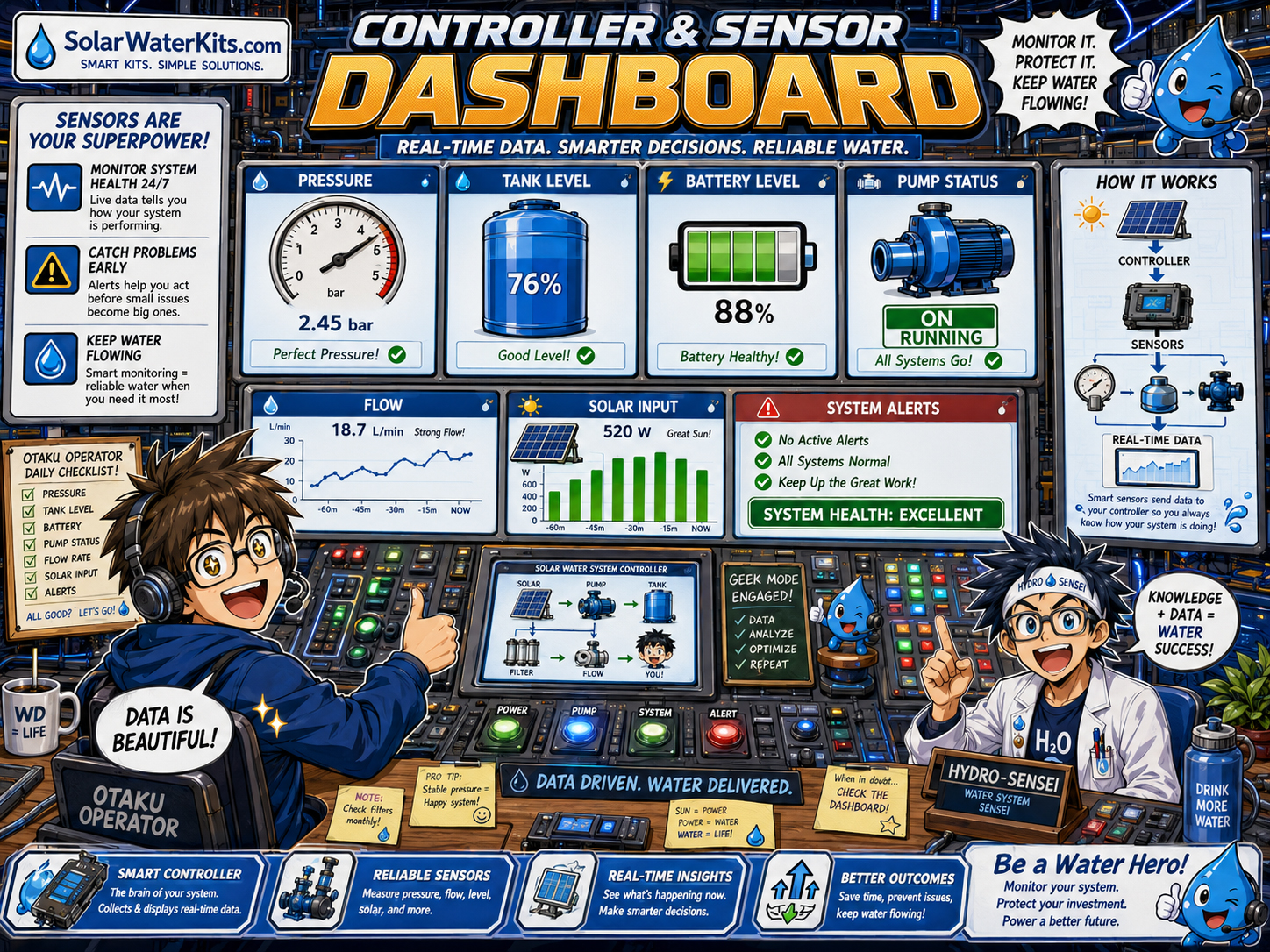
Tank level, pump status, zone timing, pressure, flow, and battery state all matter.
Solar irrigation can be powerful because daytime pumping and plant watering can be planned. The system works best when it respects zones, pressure, filters, soil, plants, and season.
Drip Dragon: “I used to flood the kingdom.”
Hydro-Sensei: “Now you irrigate like a professional.”
Real solar irrigation systems may involve pumps, electrical equipment, batteries, controllers, valves, pressure regulators, filters, tanks, non-potable water, backflow protection, cross-connection control, runoff, erosion, and local water-use rules.
Pump Boy finally learns why pressure and flow are not the same thing. Hydro-Sensei explains PSI, GPM, friction, and total dynamic head.
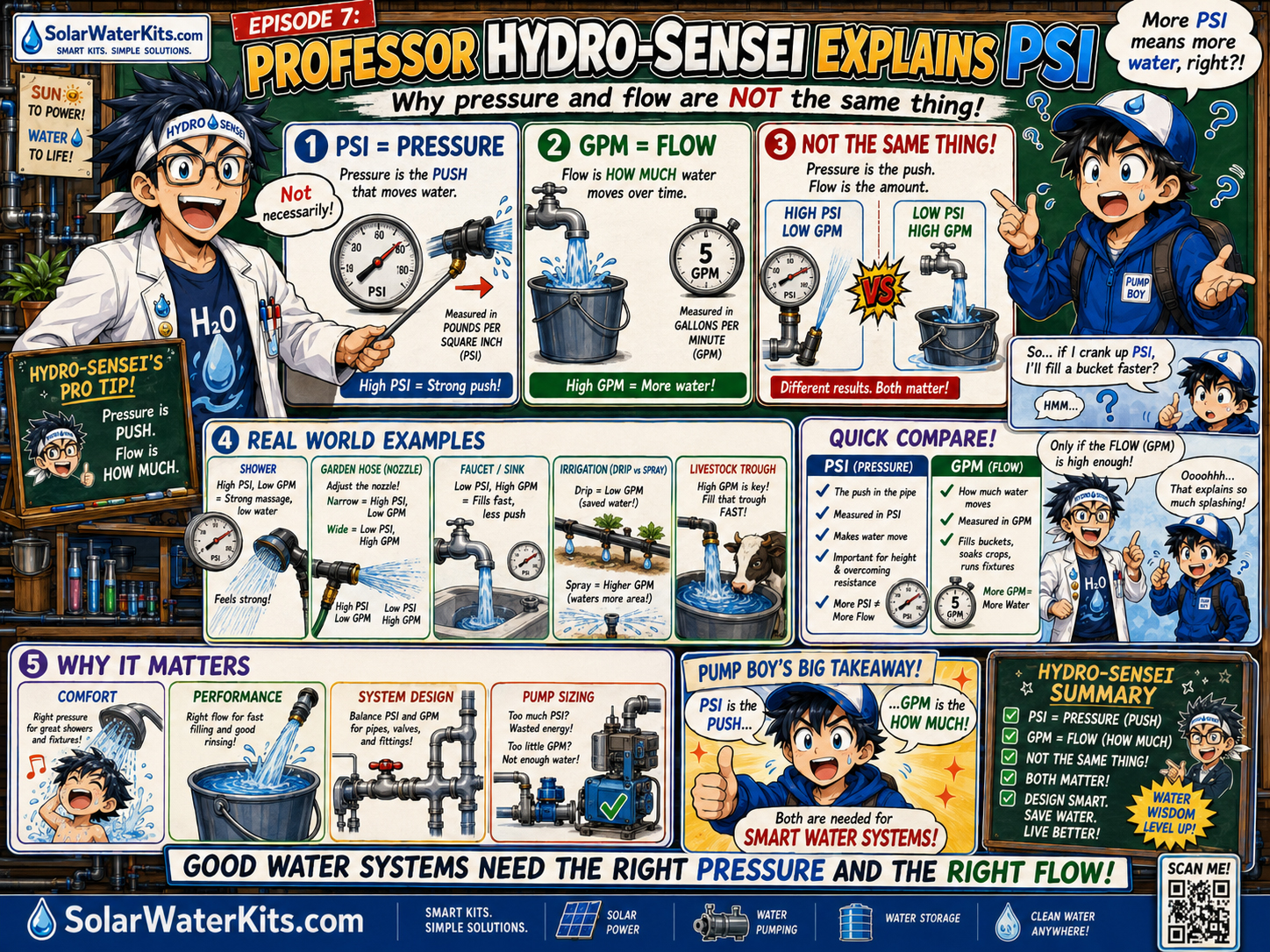
Pressure is the push. Flow is the amount. Pump Boy finally gets it.
Read Episode 7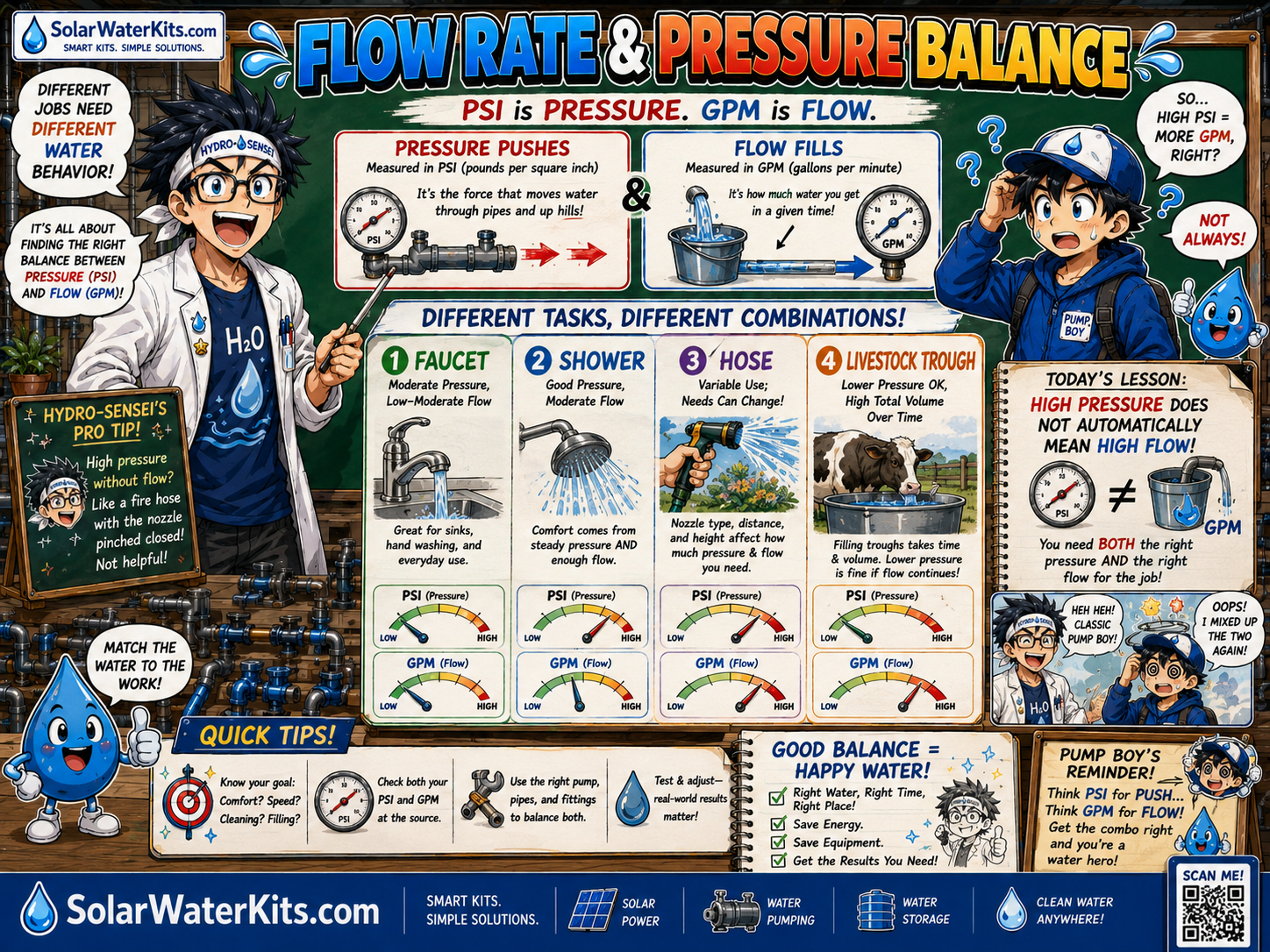
Learn PSI, GPM, friction, pump sizing, and different water-load personalities.
Flow & Pressure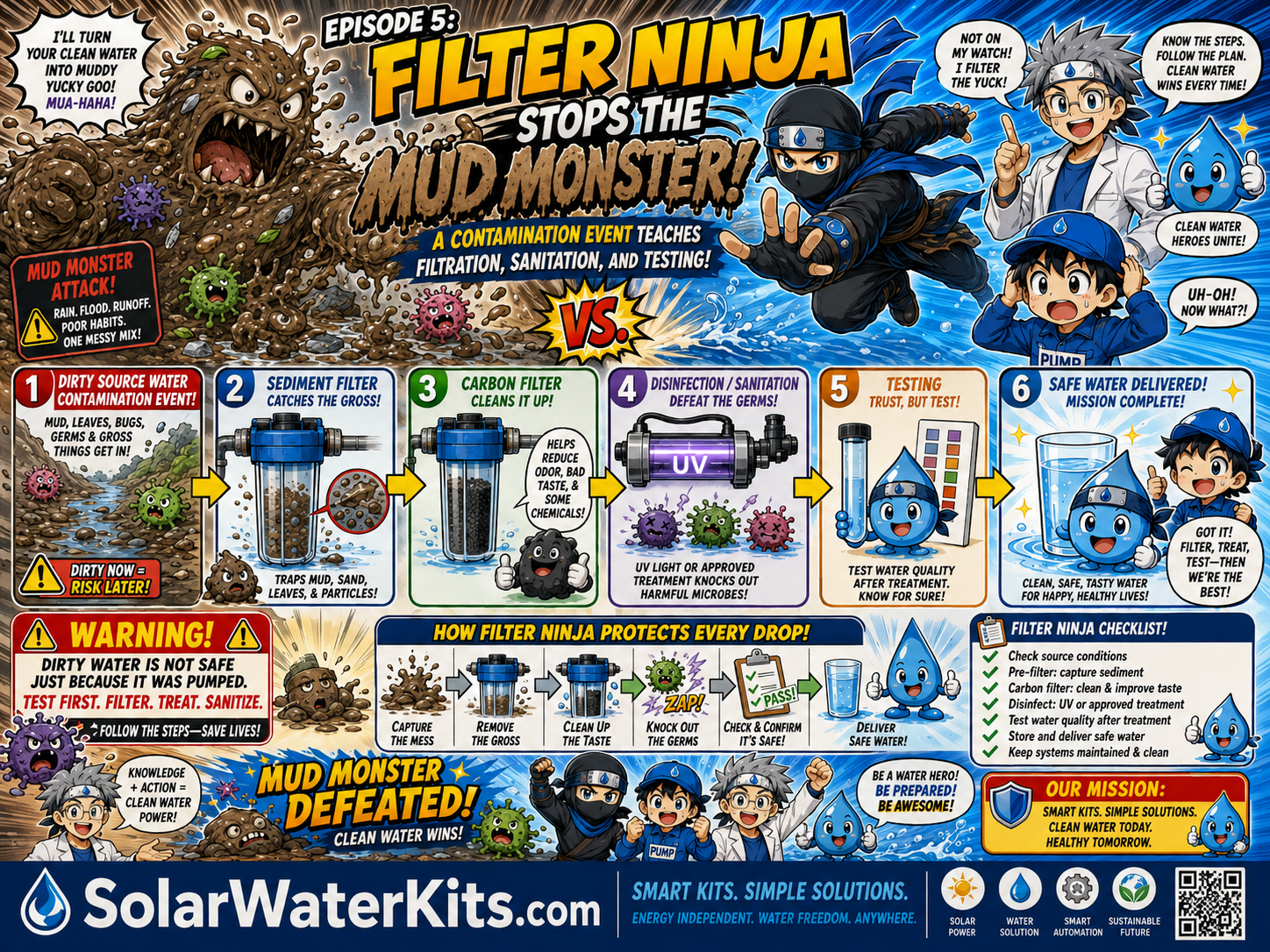
Go back to the water-quality lesson.
Read Episode 5