What drawdown means
Drawdown is the amount of water the pressure tank can deliver between cut-out and cut-in pressure. It is usually much less than the tank’s total physical volume.
A pressure tank is not a magic water barrel. Tank-chan teaches the real lesson: pressure tanks smooth delivery, reduce pump cycling, provide limited drawdown, and help water systems behave calmly between pump starts.
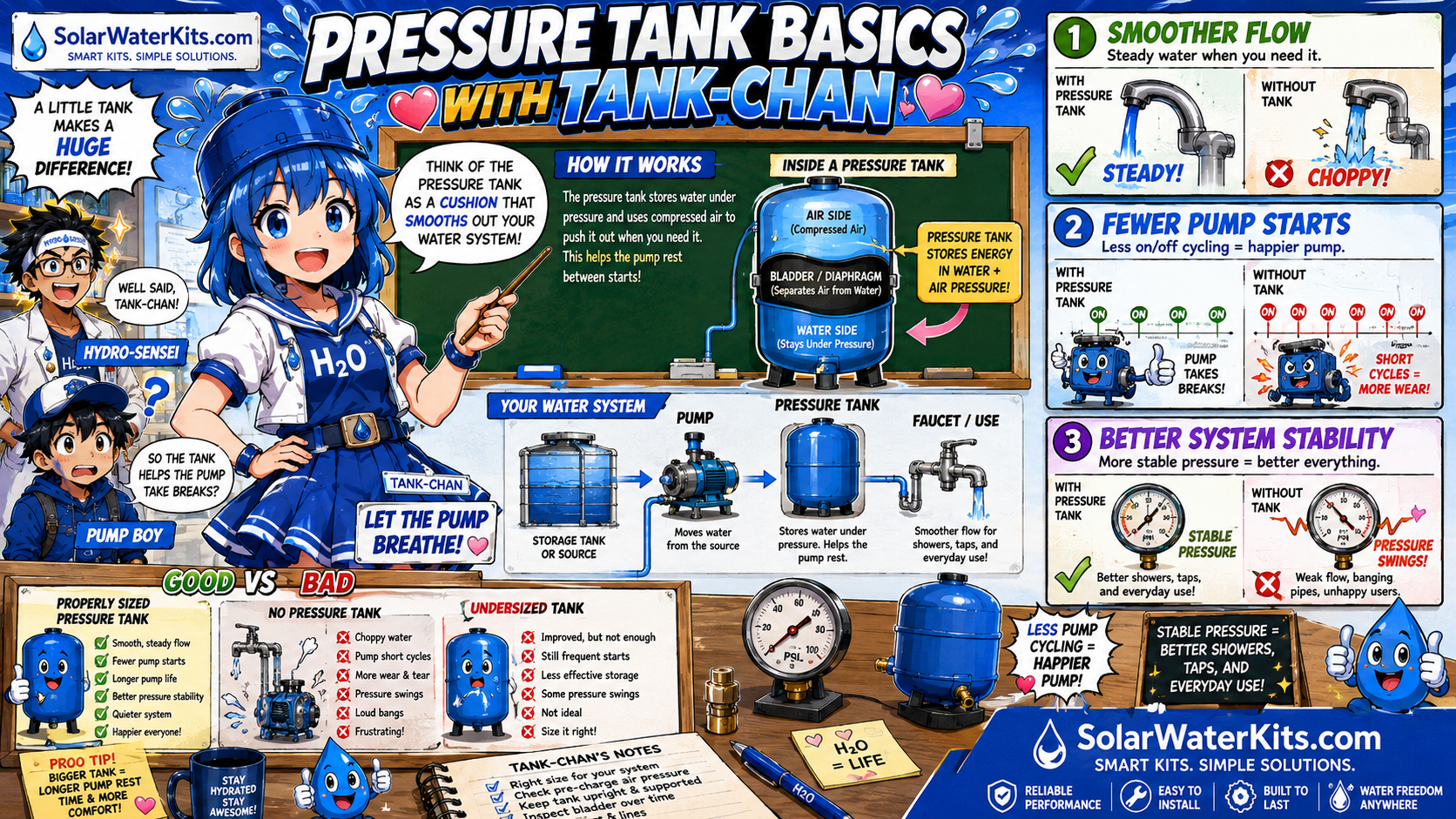
A pressure tank gives the system a small reserve of pressurized water. That reserve can reduce pump starts and help fixtures behave better during small draws.
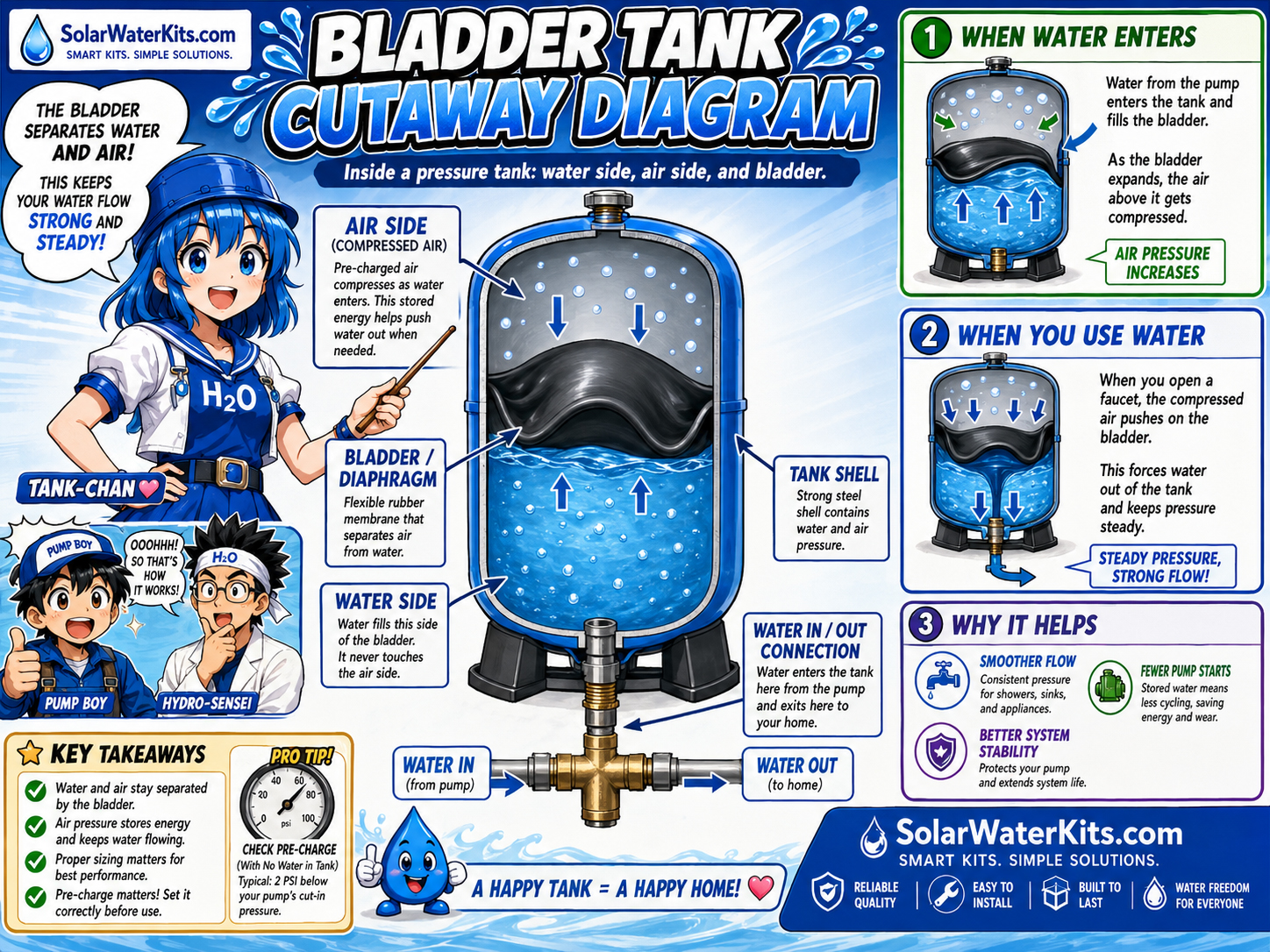
Air compresses. Water moves. The pump gets a break.
The pressure switch watches system pressure and tells the pump when to start and stop. Tank-chan gives the pump breathing room between those two points.
Cut-in is the lower pressure where the pump starts. Cut-out is the higher pressure where the pump stops.
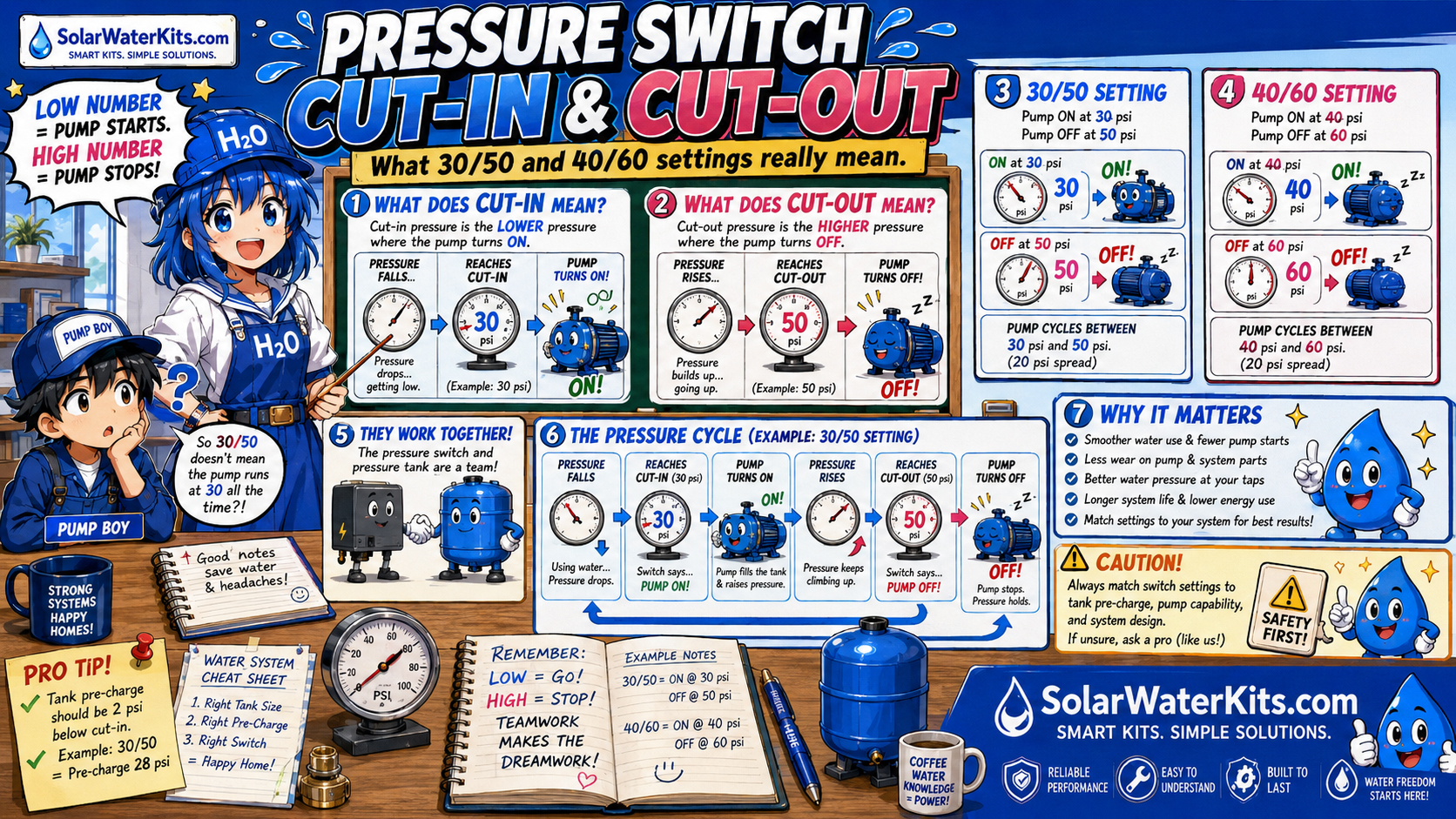
The switch controls pump starts and stops inside the pressure range.
“A pressure switch is not a toy dial. A small adjustment can affect pump life, pressure safety, battery behavior, and plumbing stress.”
Drawdown is the amount of water the pressure tank can deliver between cut-out and cut-in pressure. It is usually much less than the tank’s total physical volume.
More useful drawdown can reduce pump starts. That helps pump life, switch life, inverter behavior, and battery-backed water systems.
Drawdown is not a large emergency water reserve. Use a storage tank for bulk gallons. Use a pressure tank for pressure behavior.
| Term | Plain Meaning | Tank-chan Warning |
|---|---|---|
| Tank volume | The physical size of the tank. | Not all of that volume is usable drawdown. |
| Drawdown | Water delivered before the pump restarts. | Too little drawdown can cause rapid cycling. |
| Pre-charge | Air pressure set before water pressure is applied. | Wrong pre-charge causes poor performance. |
| Cut-in | Pressure where the pump starts. | Must match the tank and system design. |
| Cut-out | Pressure where the pump stops. | Must stay within equipment ratings. |
| Short-cycling | Pump starts and stops too often. | Hard on pumps, switches, batteries, and controls. |
Short-cycling means the pump starts and stops too often. Pump Boy thinks it is rhythm. Hydro-Sensei calls it a service warning.
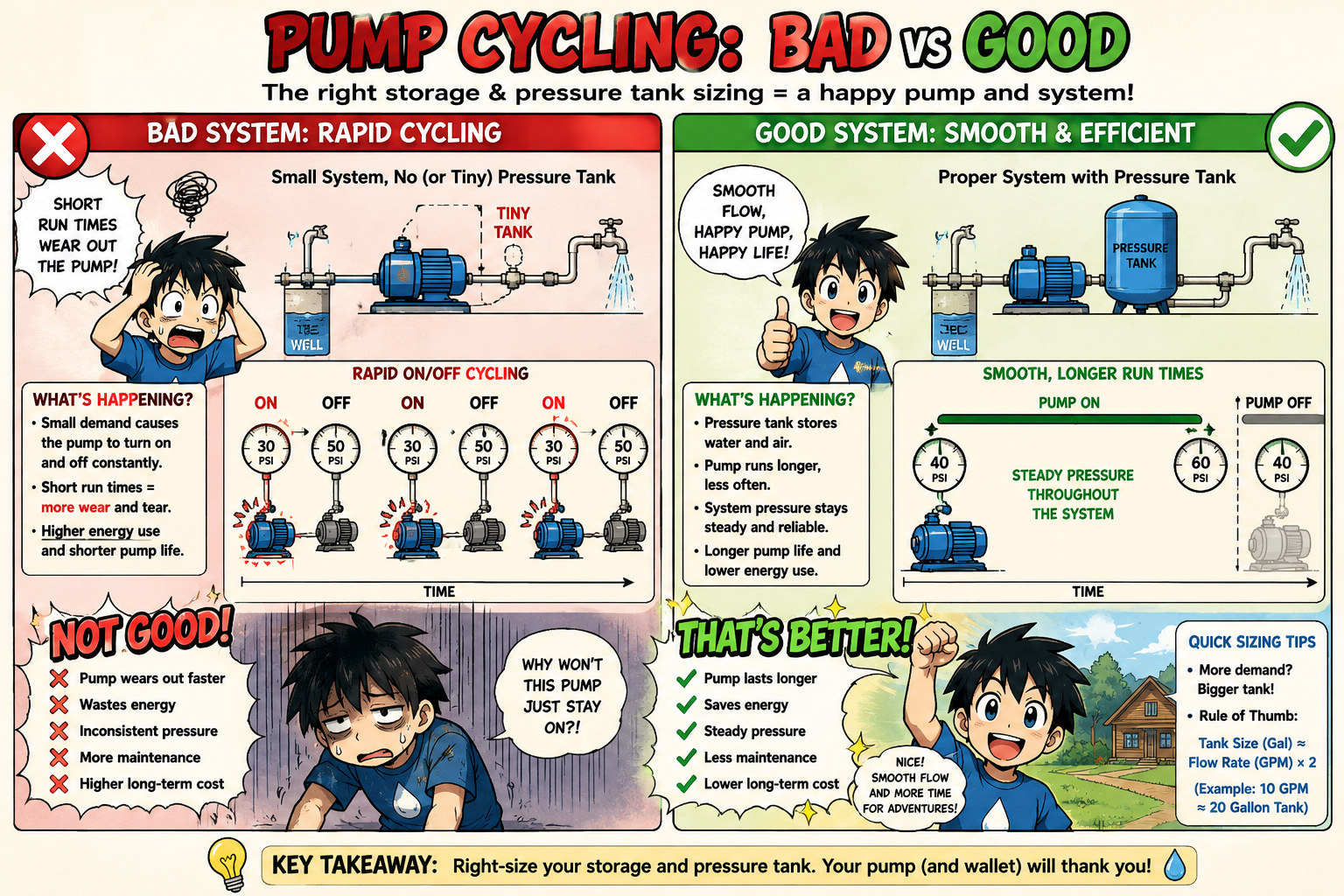
A properly designed pressure tank helps the pump breathe.
Short-cycling should be investigated. Repeated rapid starts can shorten pump life, stress controls, and drain batteries faster than expected.
Storage tanks and pressure tanks are different tools. Solar water systems often need both.
| Tank Type | Main Job | Common Misunderstanding |
|---|---|---|
| Storage tank | Holds bulk gallons for later use. | It does not automatically provide household pressure. |
| Pressure tank | Smooths pressurized delivery and reduces pump starts. | It is not a large emergency water supply. |
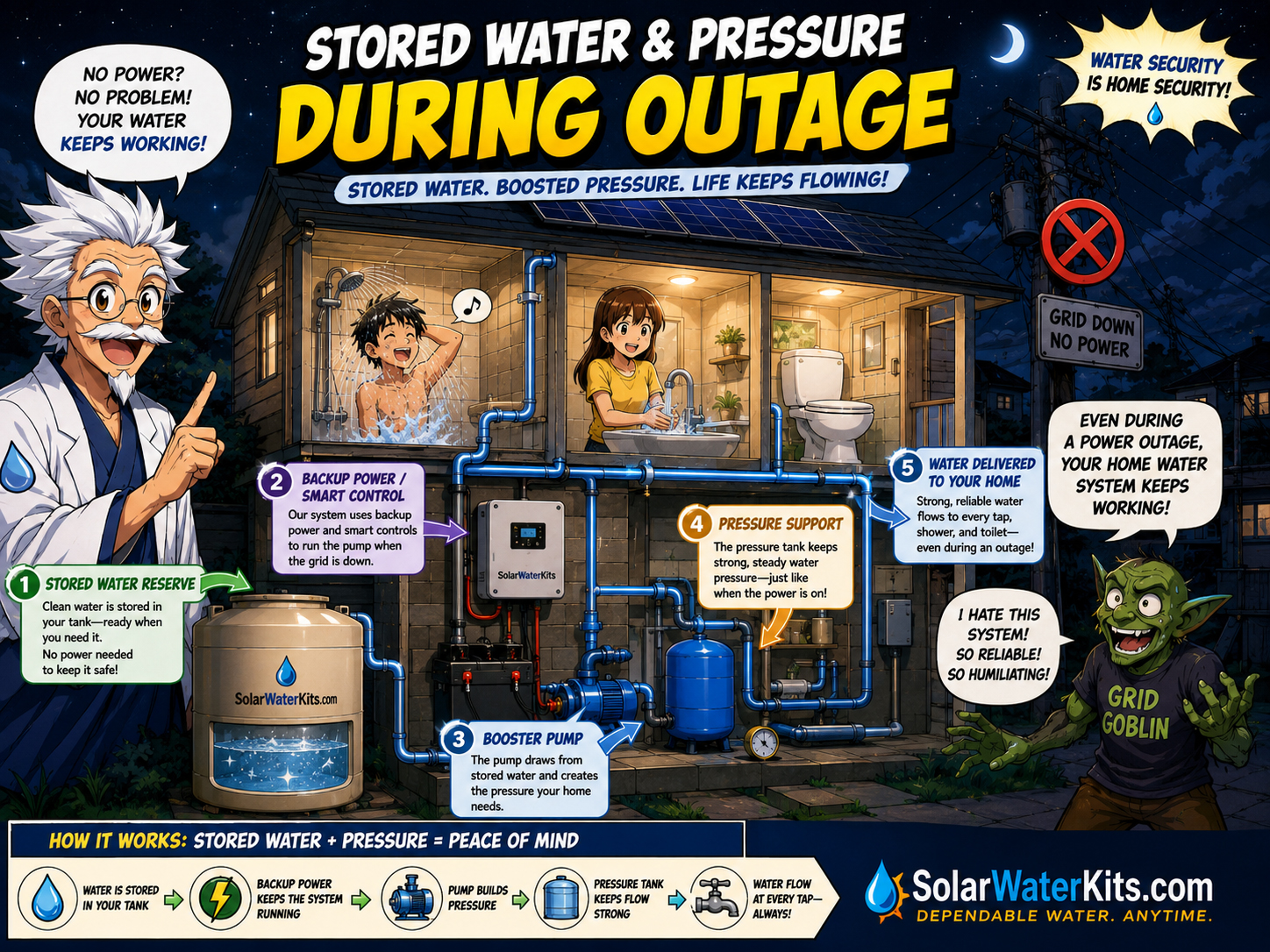
Storage gives gallons. Pressure equipment delivers usable water.
Battery Beast does not like unnecessary motor starts. A correctly sized pressure tank can reduce short-cycling and help a backup water system focus on essential loads.
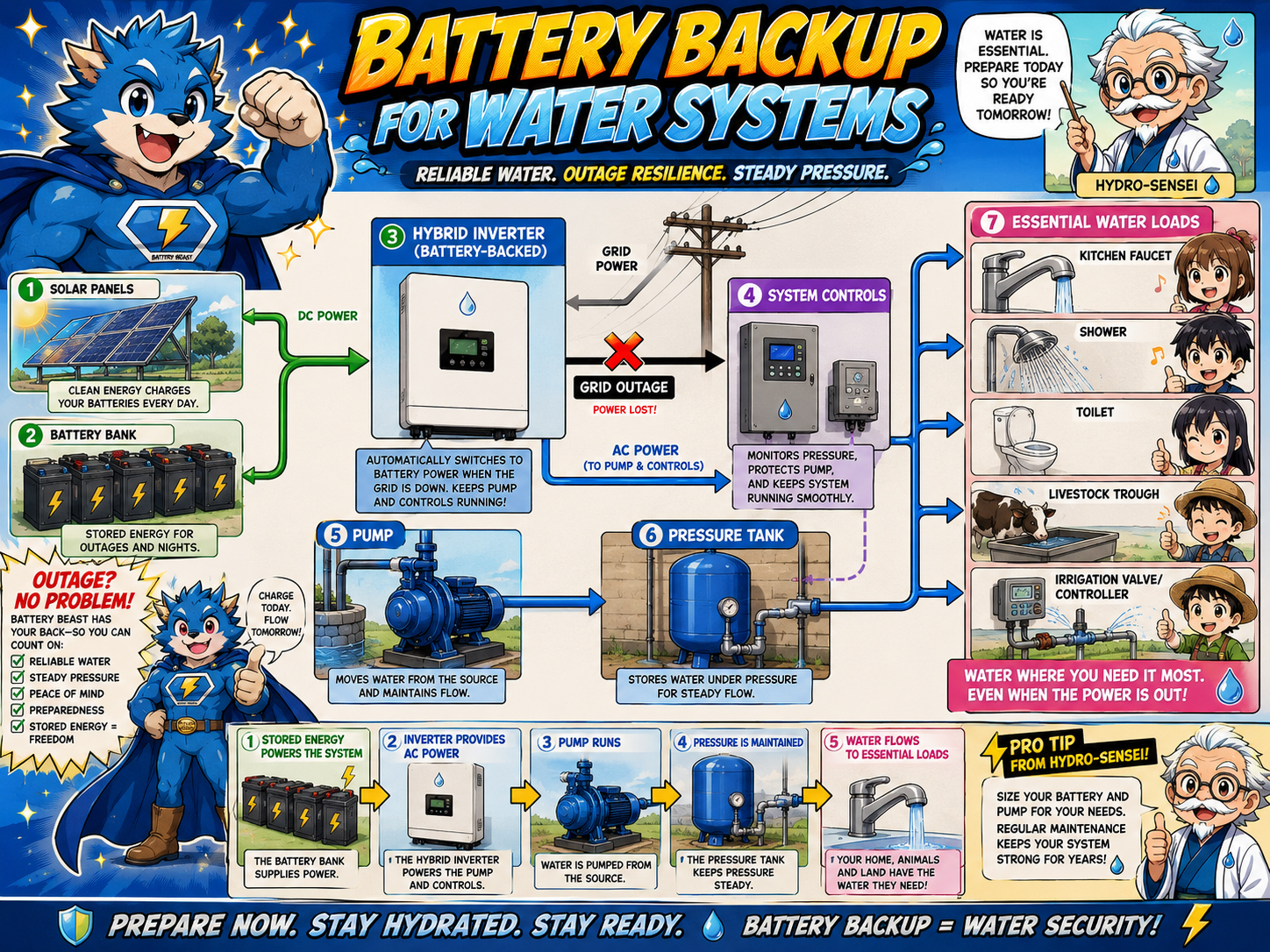
Pressure tank behavior matters during outage mode.
The pressure tank is often ignored until the pump starts acting strange. Otaku Operator prefers inspection before the complaint.
Watch cut-in, cut-out, gauge movement, pump starts, and pressure drop. Strange behavior usually means something changed.
Pre-charge should be checked according to manufacturer guidance, with proper isolation and pressure relief procedures.
Leaks can make pumps run too often and can masquerade as pressure tank problems.
“Record pressure settings, service dates, pre-charge checks, and pump cycling symptoms. The maintenance log remembers what the emergency brain forgets.”
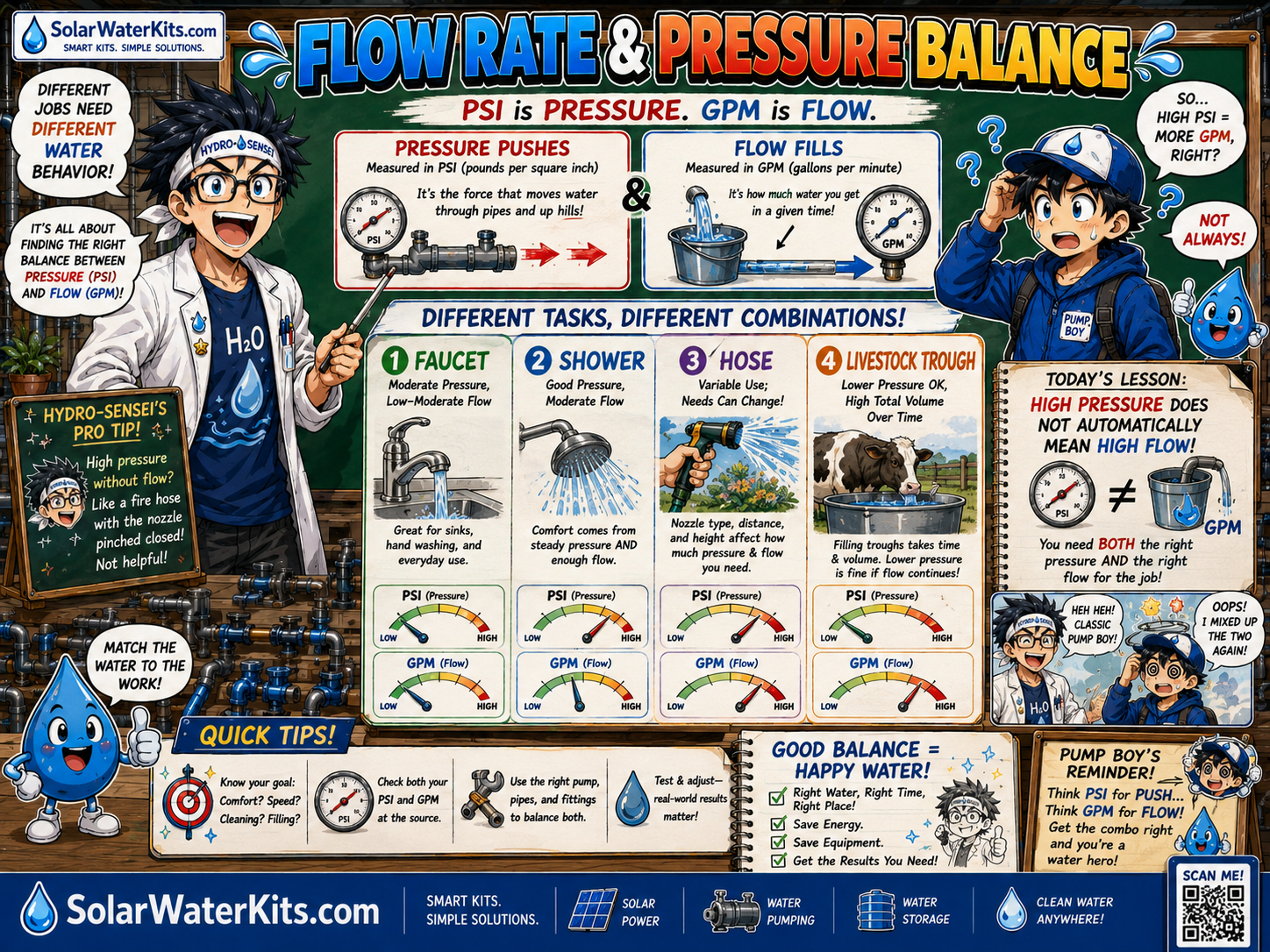
Learn why PSI and GPM are different and why both matter.
Flow & Pressure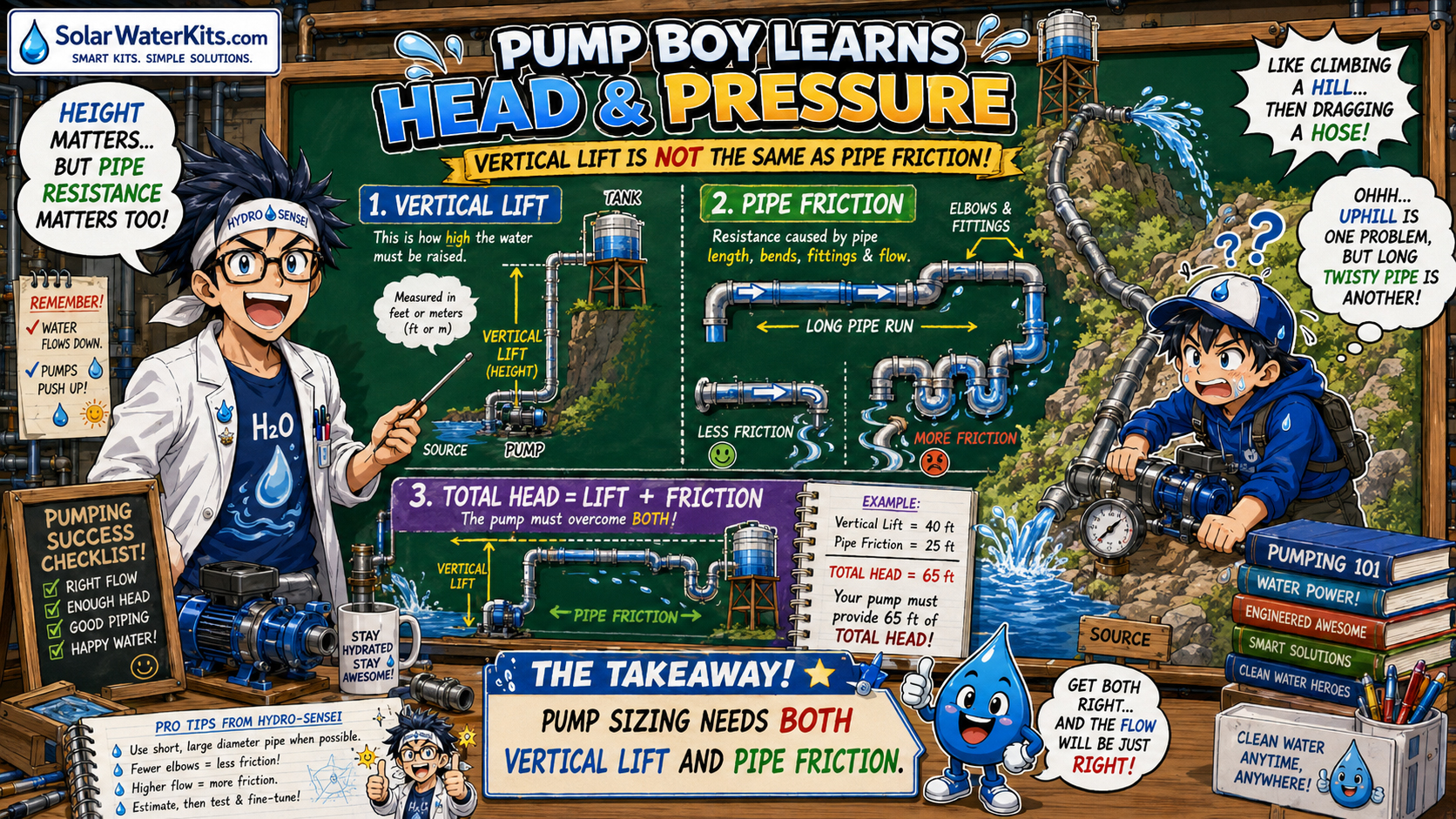
Gallons, GPM, lift, total dynamic head, pipe friction, runtime, and power.
Pump Sizing
Pressure switches, float switches, tank levels, pump status, and alarms.
ControlsPressure tank systems may involve pumps, pressure switches, relief valves, pressure-rated pipe, potable-water plumbing, backflow protection, electrical controls, batteries, inverters, local permits, and manufacturer requirements. This page is educational only.