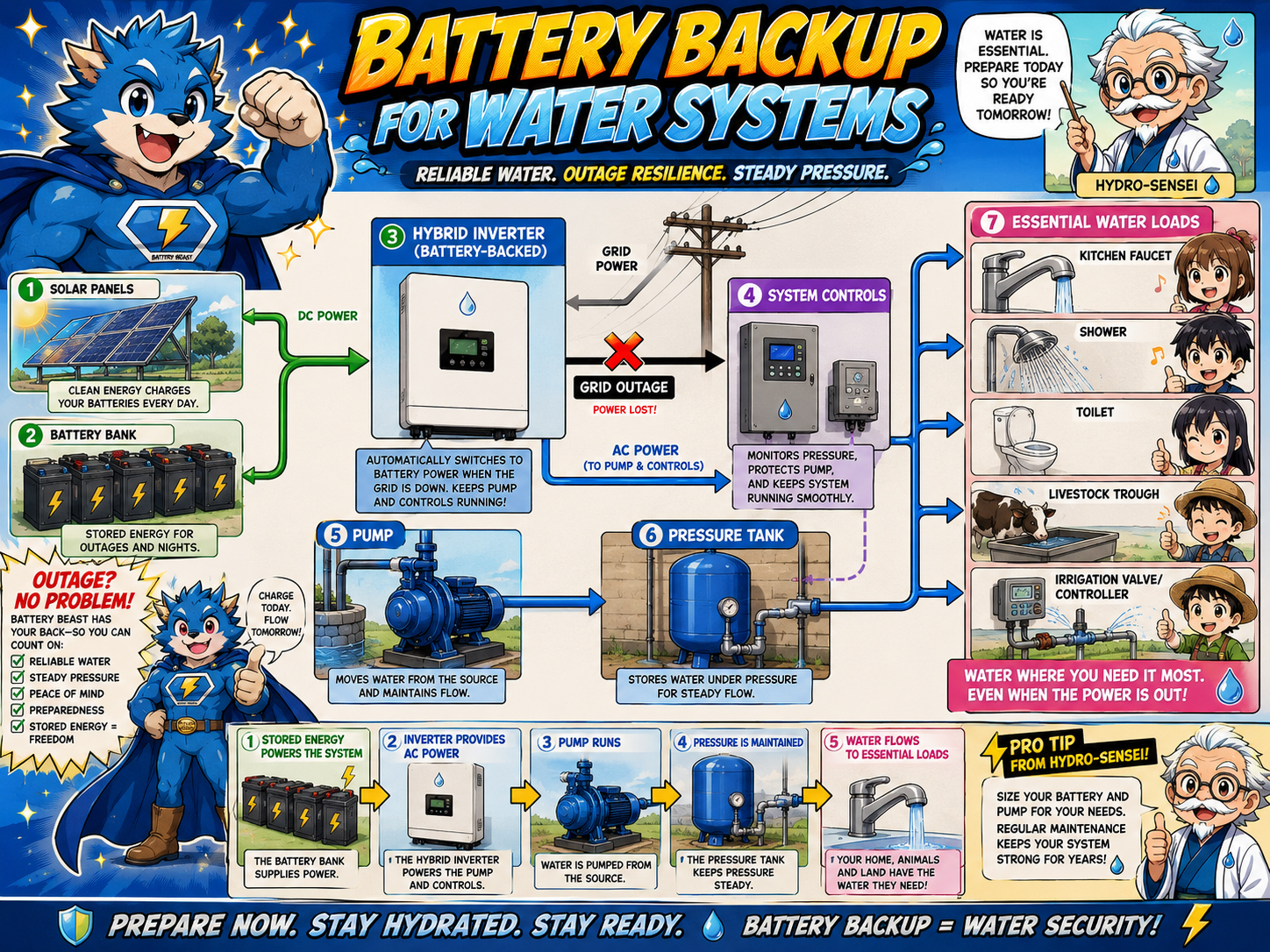
Backup Chain
Battery-backed pump
Solar, battery, inverter, pump, pressure, and controls must be matched carefully.
Battery pump backup →When the grid fails, water becomes urgent fast. Hydro-Sensei teaches the emergency chain: stored water, backup power, pump control, pressure delivery, filtration, sanitation, labels, shutoffs, and realistic household priorities.
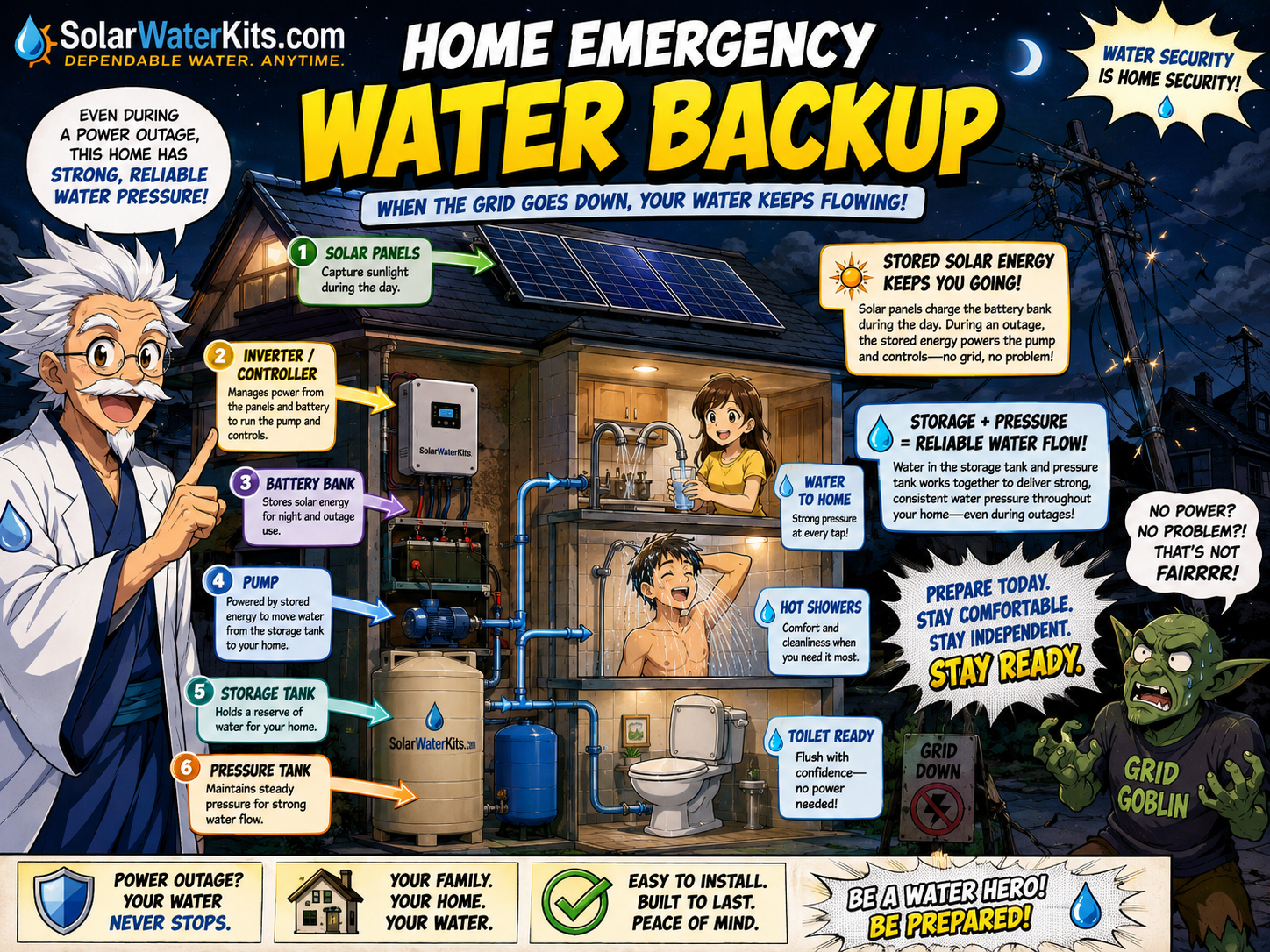
Grid Goblin loves weak planning. A real emergency water setup begins by deciding what water must remain available, how long it must last, how it will be pressurized, and how it will stay safe.
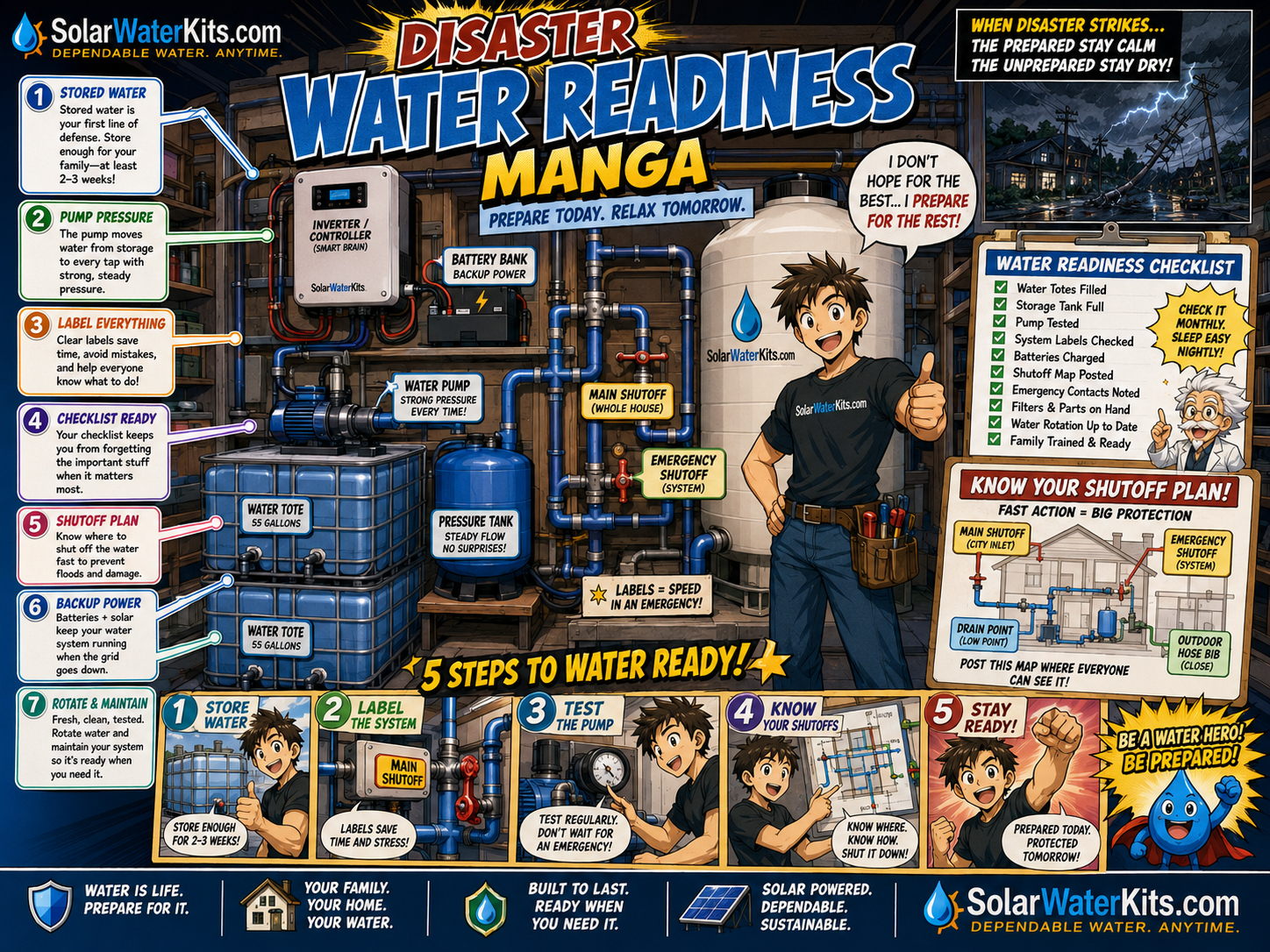
Storage, labels, shutoffs, pump backup, and a checklist beat confusion.
Drinking, hand washing, toilets, medical needs, animals, basic cleaning, and limited hygiene come before comfort uses.
Stored water creates time. Without storage, every outage becomes a pump-and-power emergency.
A booster pump, pressure tank, or critical water circuit can deliver usable water without backing up the whole house.
Solar, batteries, inverters, critical-load panels, and controls must be sized around real pump loads and runtime.
Emergency water must be stored, filtered, treated, tested, and labeled according to its intended use.
Tank-chan’s emergency lesson is simple: a tank full of water is not the same thing as usable water at a faucet. Emergency systems need both volume and a safe way to deliver it.
Bottled water, emergency containers, or small stored supplies for drinking and basic needs.
Cisterns, tanks, totes, or approved storage systems that provide larger reserves for toilets, washing, animals, or limited household use.
A booster pump and pressure tank can help stored water act more like normal service for selected loads.
Stored water gives you gallons. Pressure equipment gives you usable delivery. Filter Ninja decides whether that water is safe for the intended use.
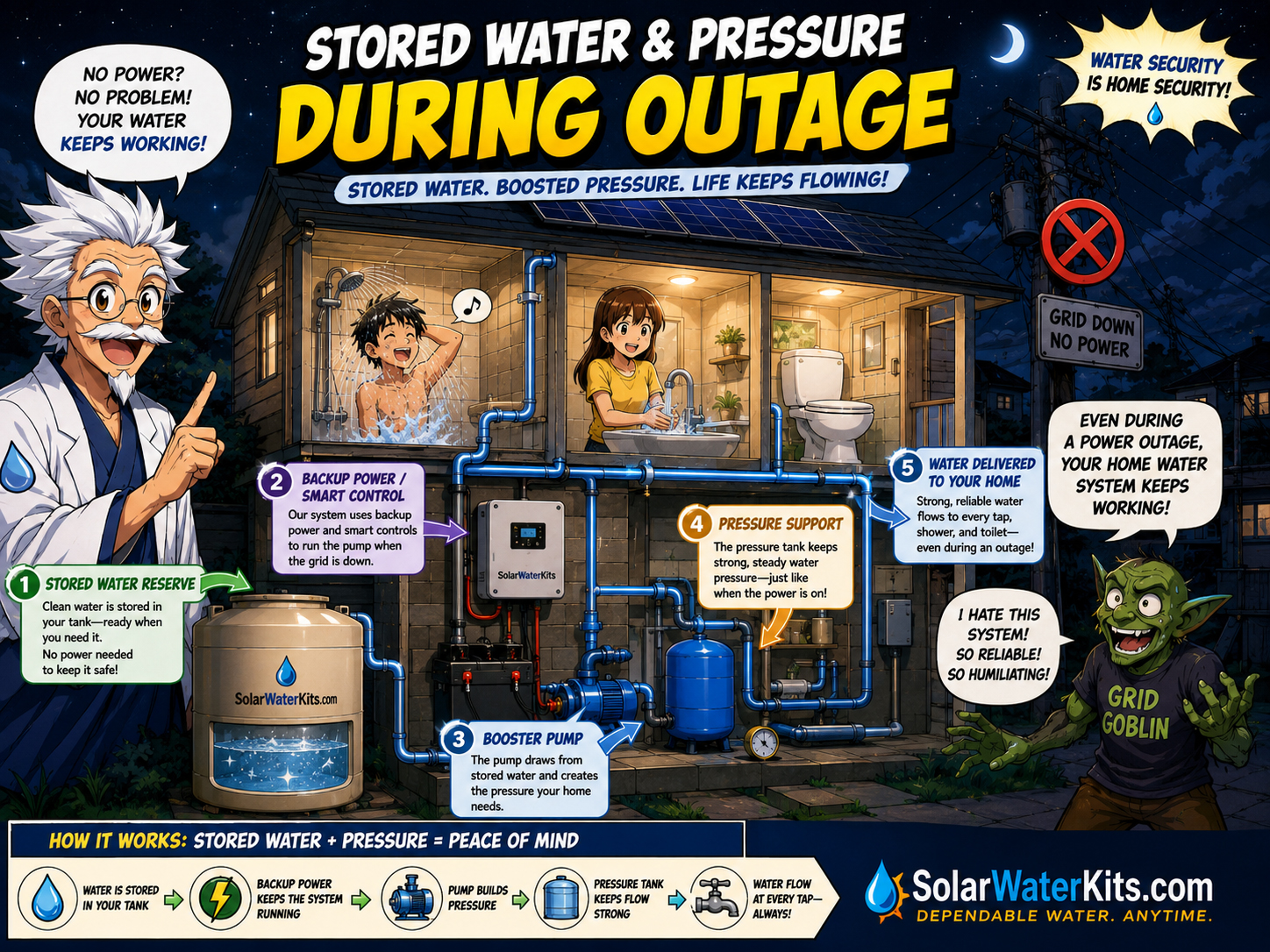
Emergency water should be stored before the emergency starts.
During an outage, not every water use deserves battery power. Battery Beast is strong, but Hydro-Sensei does not let him waste energy on non-essential loads while the well pump is waiting.
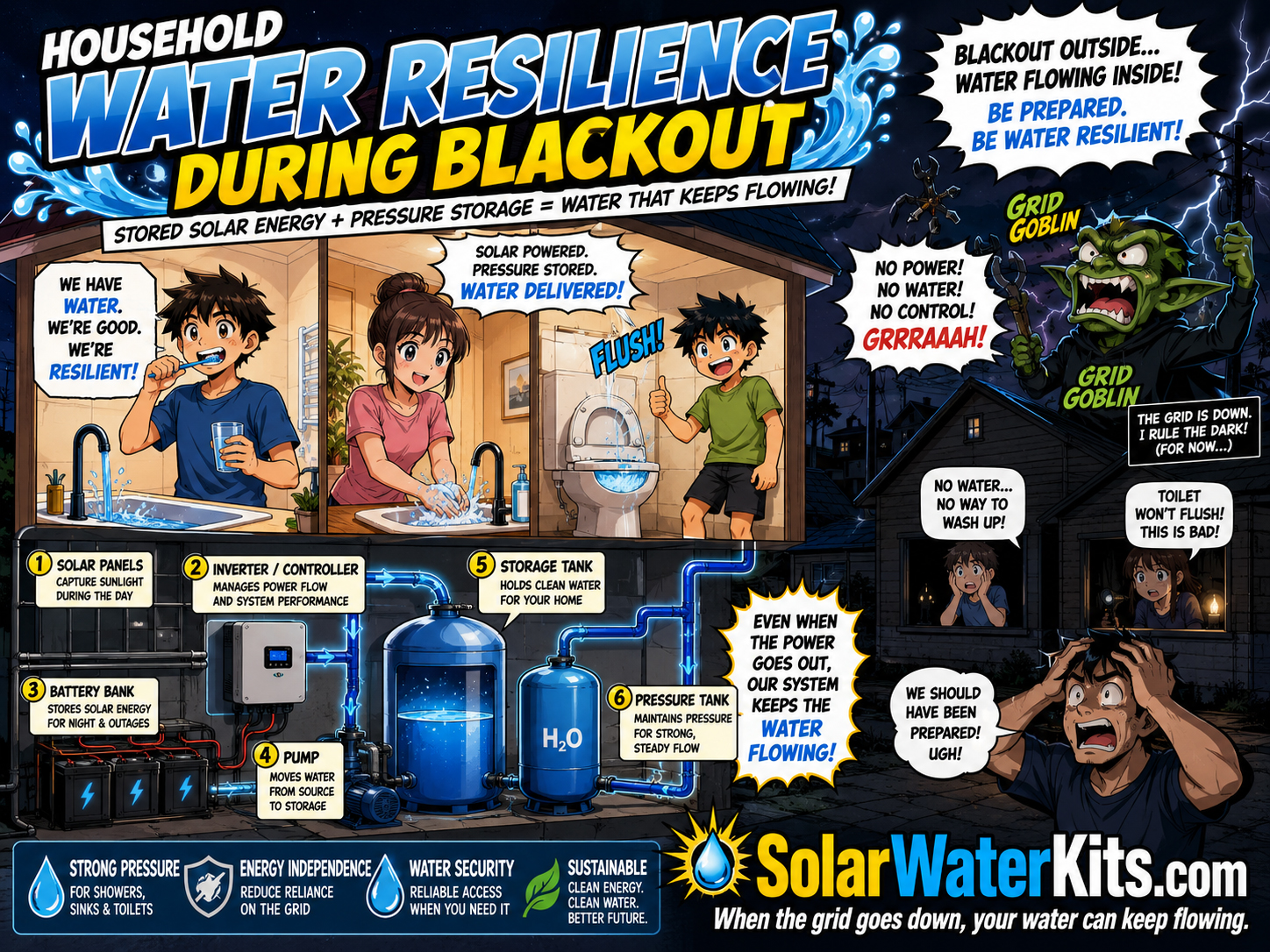
Small essentials matter more than pretending nothing happened.
Many pumps have starting surge. Many batteries have limits. Many inverters are not sized for motor loads. The water backup plan must be designed around the real pump, not the dream pump.
Solar, battery, inverter, pump, pressure, and controls must be matched carefully.
Battery pump backup →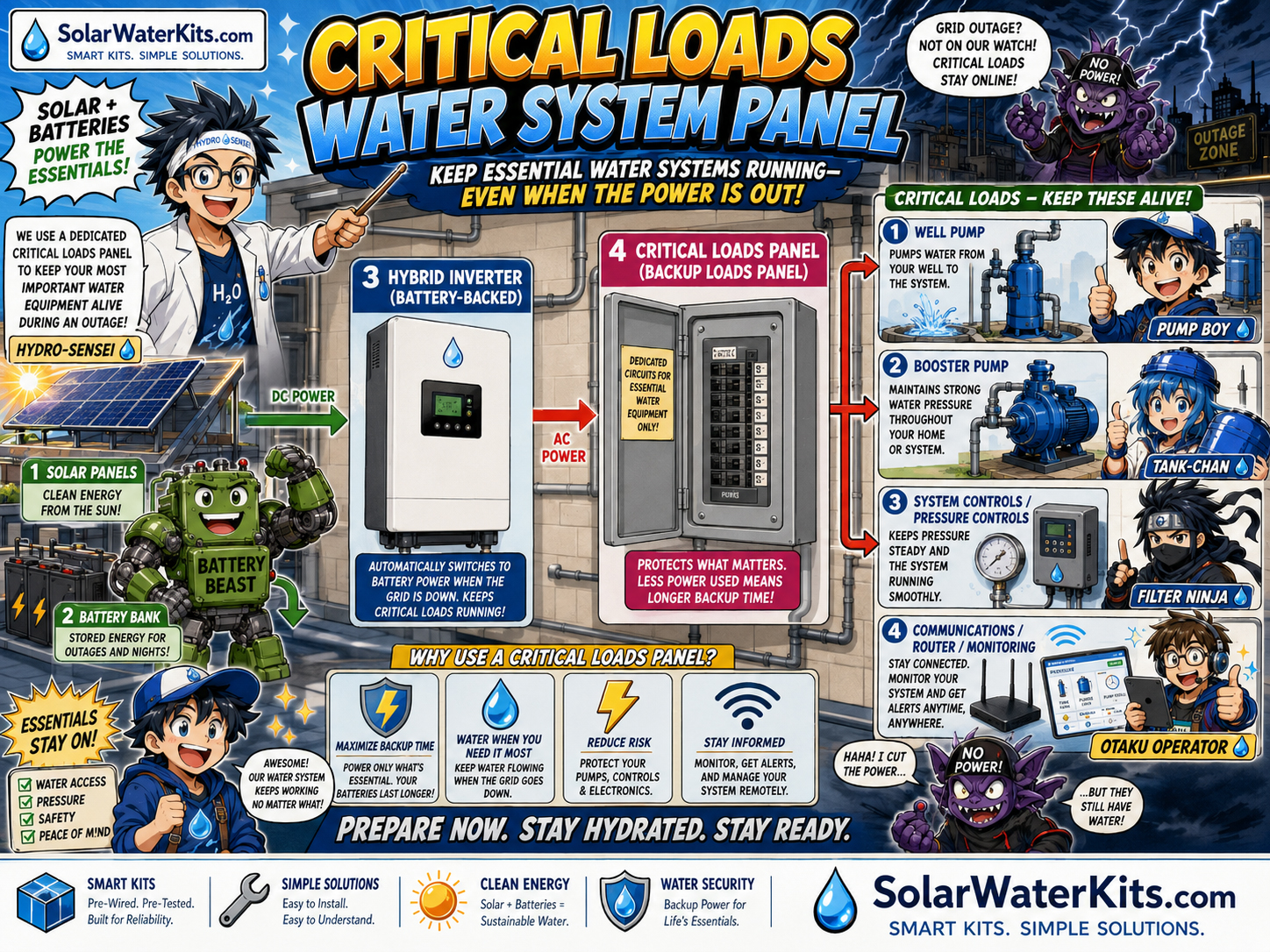
A backup loads panel can keep the water system focused and serviceable.
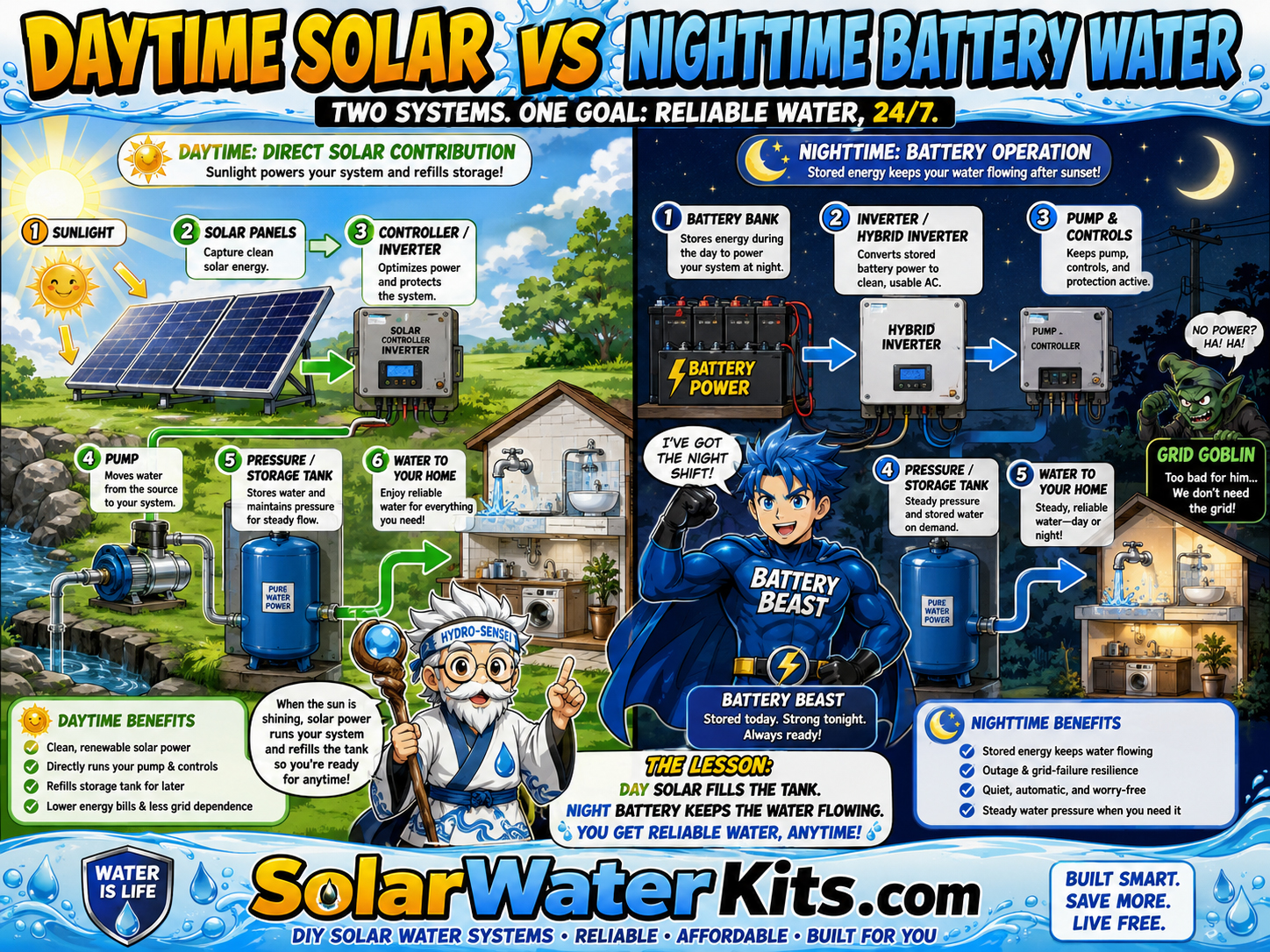
Solar helps during the day. Batteries cover night and outages. Storage reduces the fight.
| Backup Item | Why It Matters | Hydro-Sensei Warning |
|---|---|---|
| Pump horsepower and voltage | Determines inverter and circuit requirements. | Do not guess from the pump cover. |
| Starting surge | Motors may need more power to start than to run. | An inverter can run lights and still fail to start a pump. |
| Runtime | Determines battery energy use. | Minutes matter. Hours matter more. |
| Pressure tank size | Affects cycling and pump starts. | Short-cycling wastes battery and abuses equipment. |
| Storage tank size | Provides water reserve independent of immediate pumping. | Water storage can sometimes beat extra battery. |
| Controls and labels | Make emergency operation understandable. | Mystery valves are Grid Goblin’s cousins. |
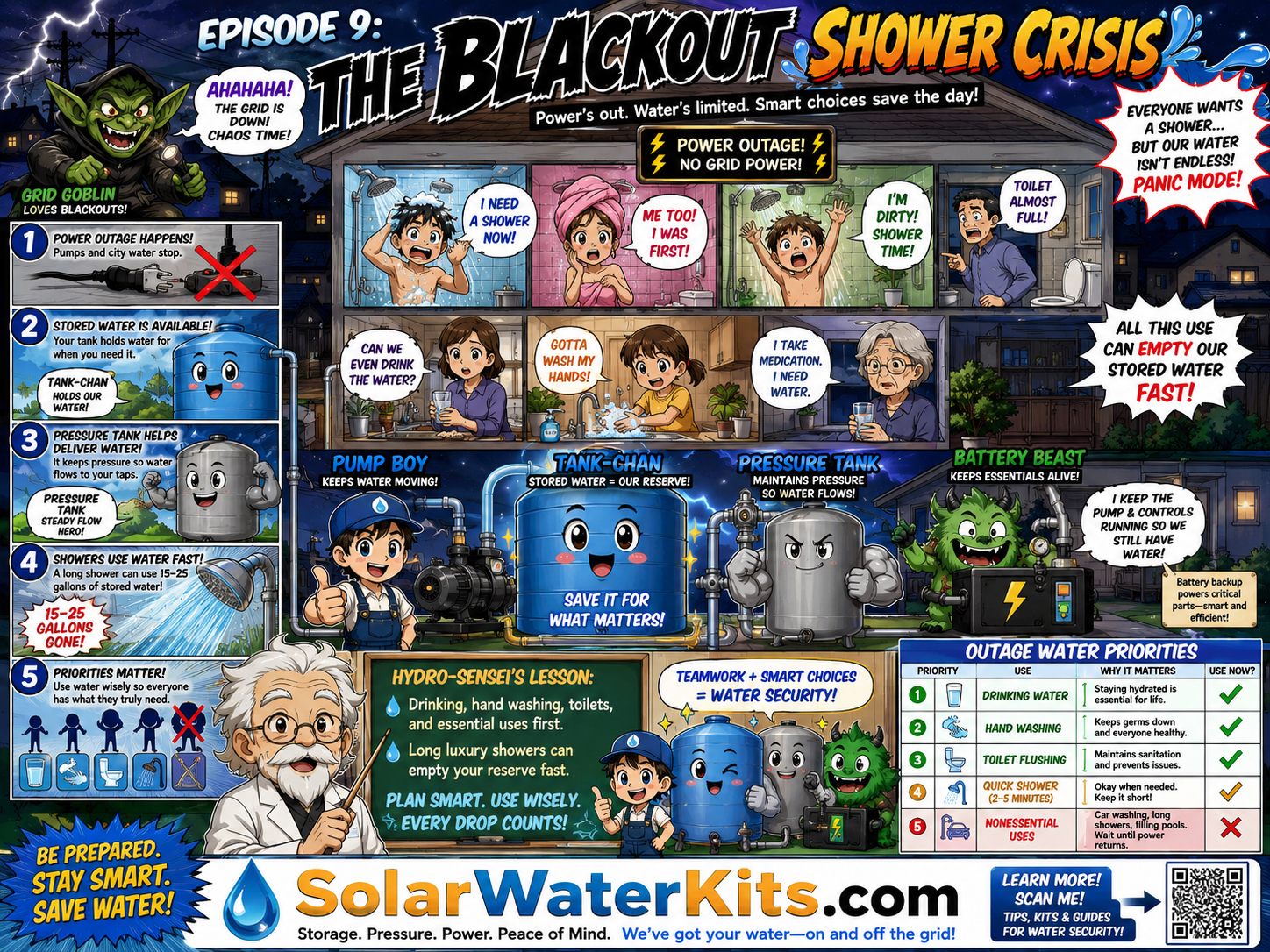
Comfort water and survival water are not the same priority.
Emergency water backup is about controlled use. A household that uses water normally during a blackout can drain tanks, batteries, and backup reserves quickly. Hydro-Sensei makes everyone choose priorities first.
During an emergency, nobody wants to decode a mystery valve maze. Labels, diagrams, and normal-position tags make the system understandable when people are stressed.
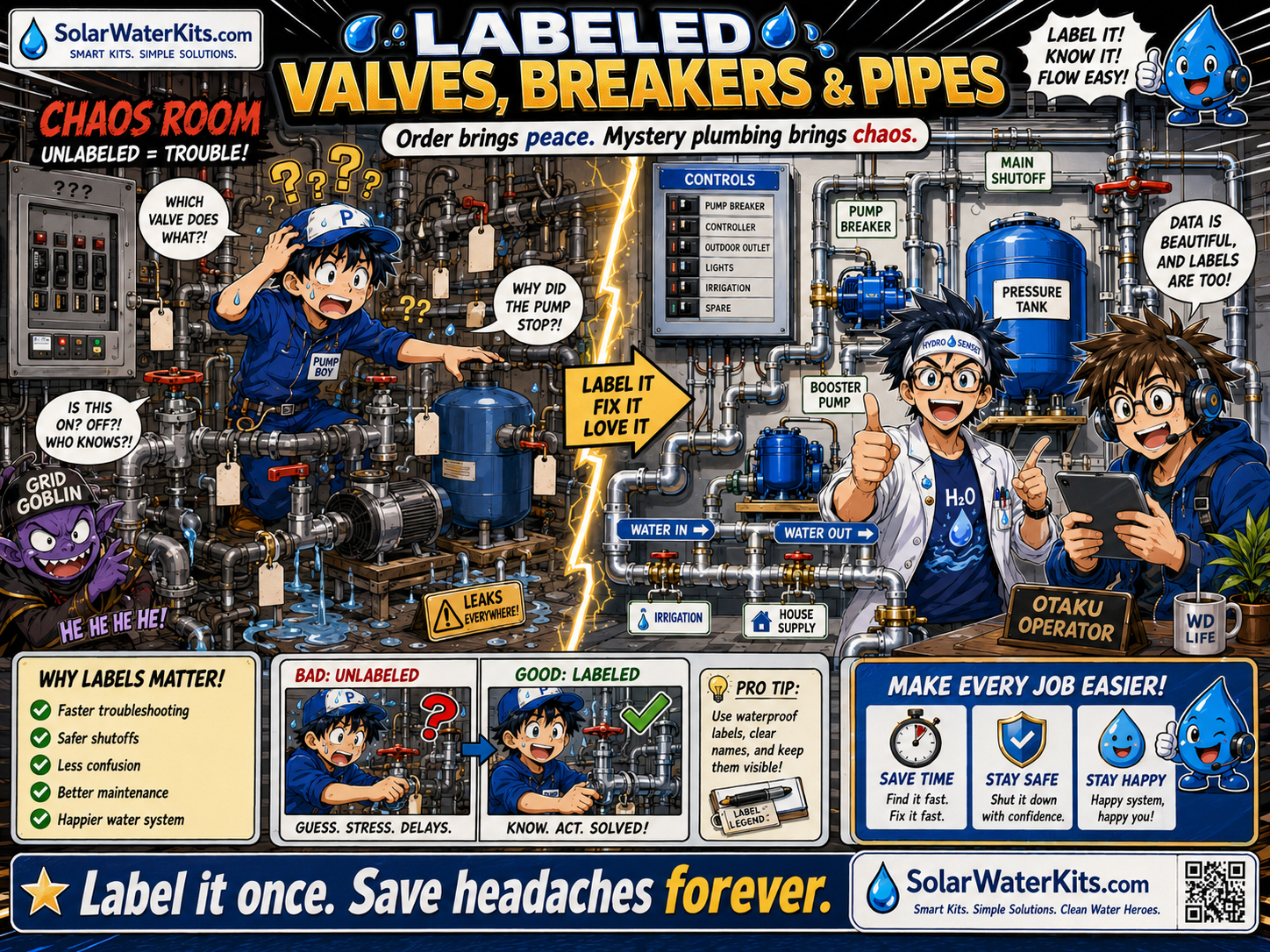
Valves, breakers, bypasses, pumps, filters, and tanks should be clear before the emergency.
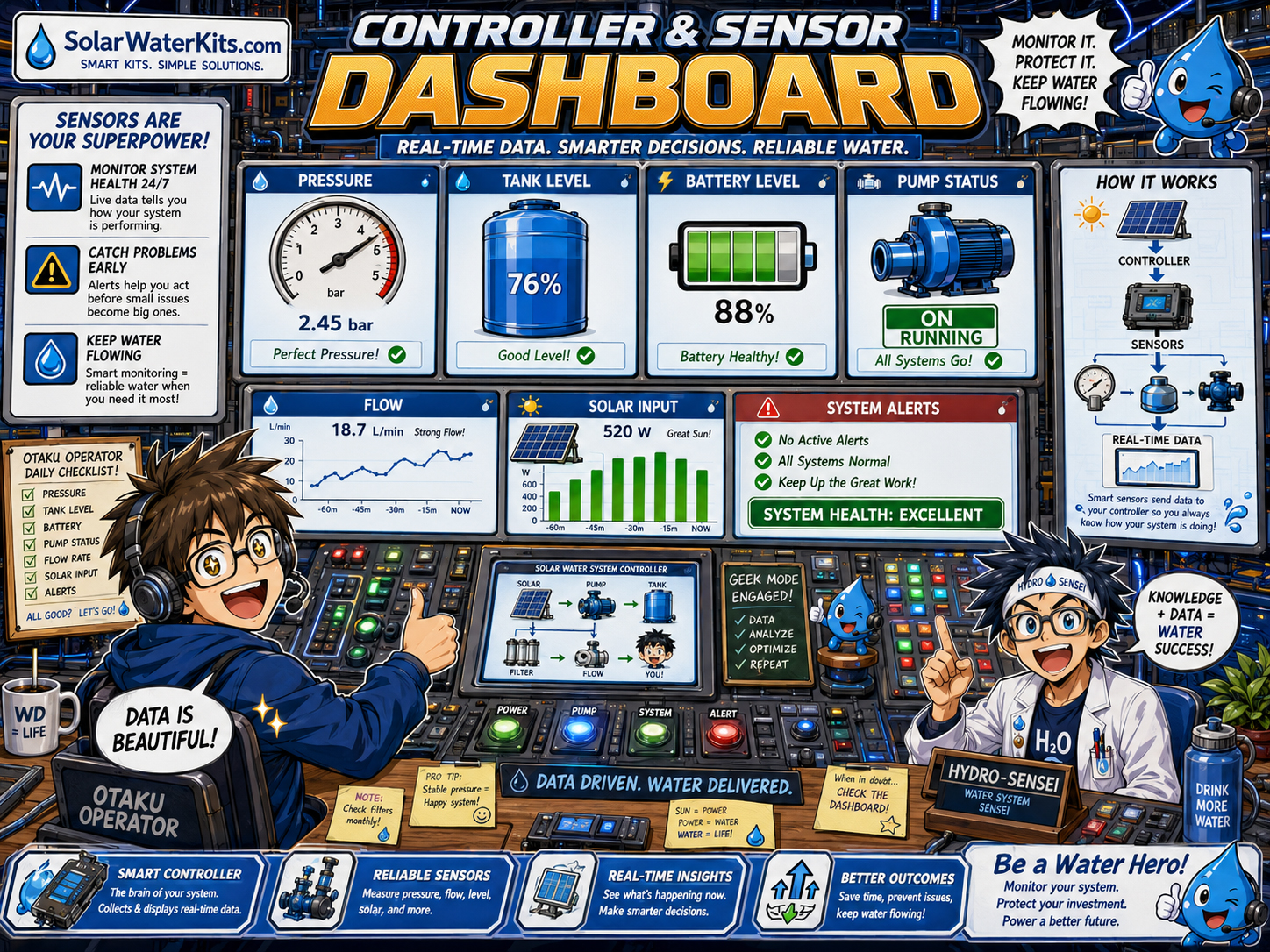
Tank level, battery charge, pressure, and pump status prevent blind decisions.
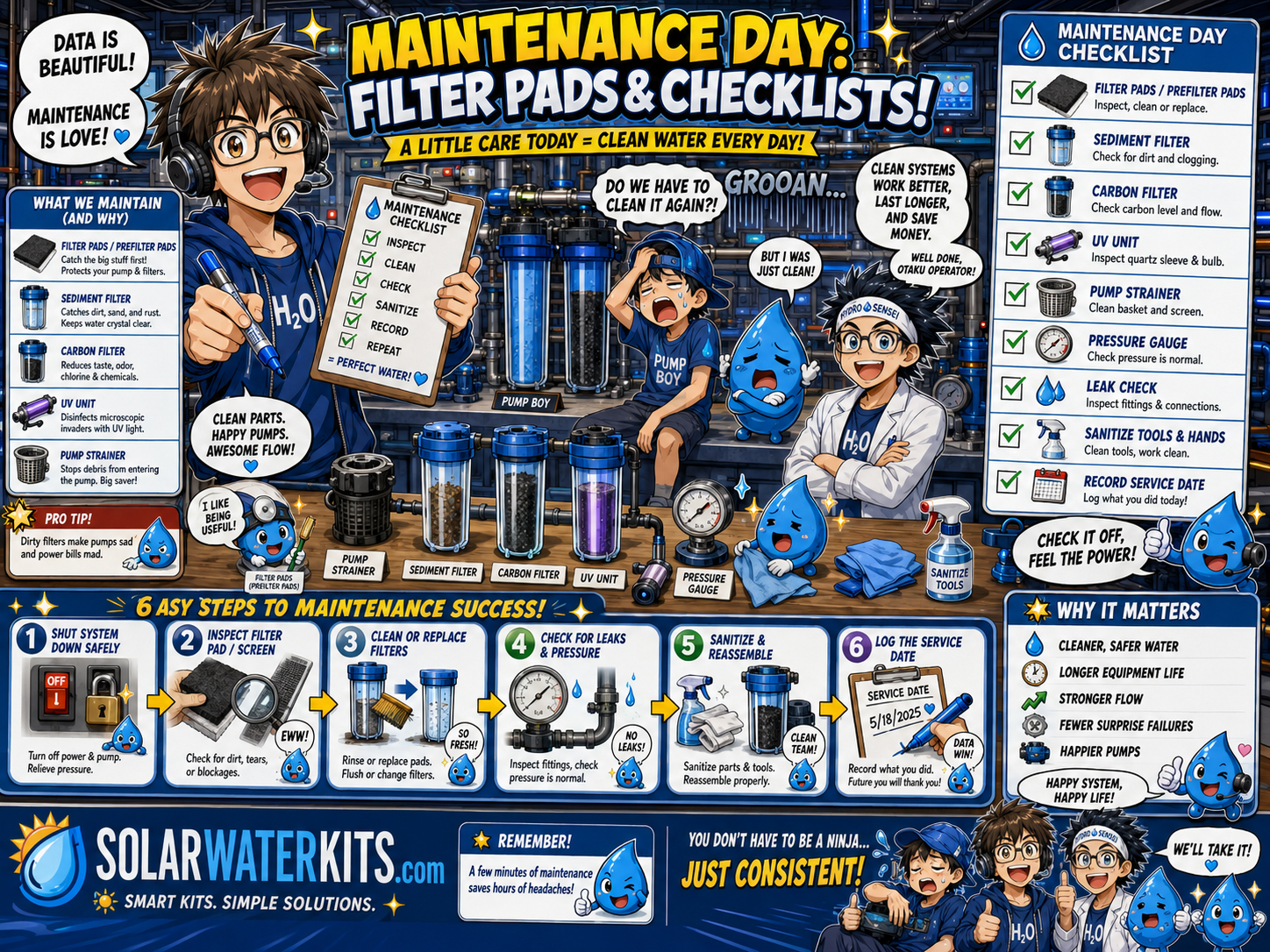
Emergency water systems should be checked before wildfire, storm, earthquake, or outage season.
Water for toilets, irrigation, firefighting reserve, animal use, hand washing, cooking, and drinking may require different storage, treatment, and labeling. Do not mix those categories casually.
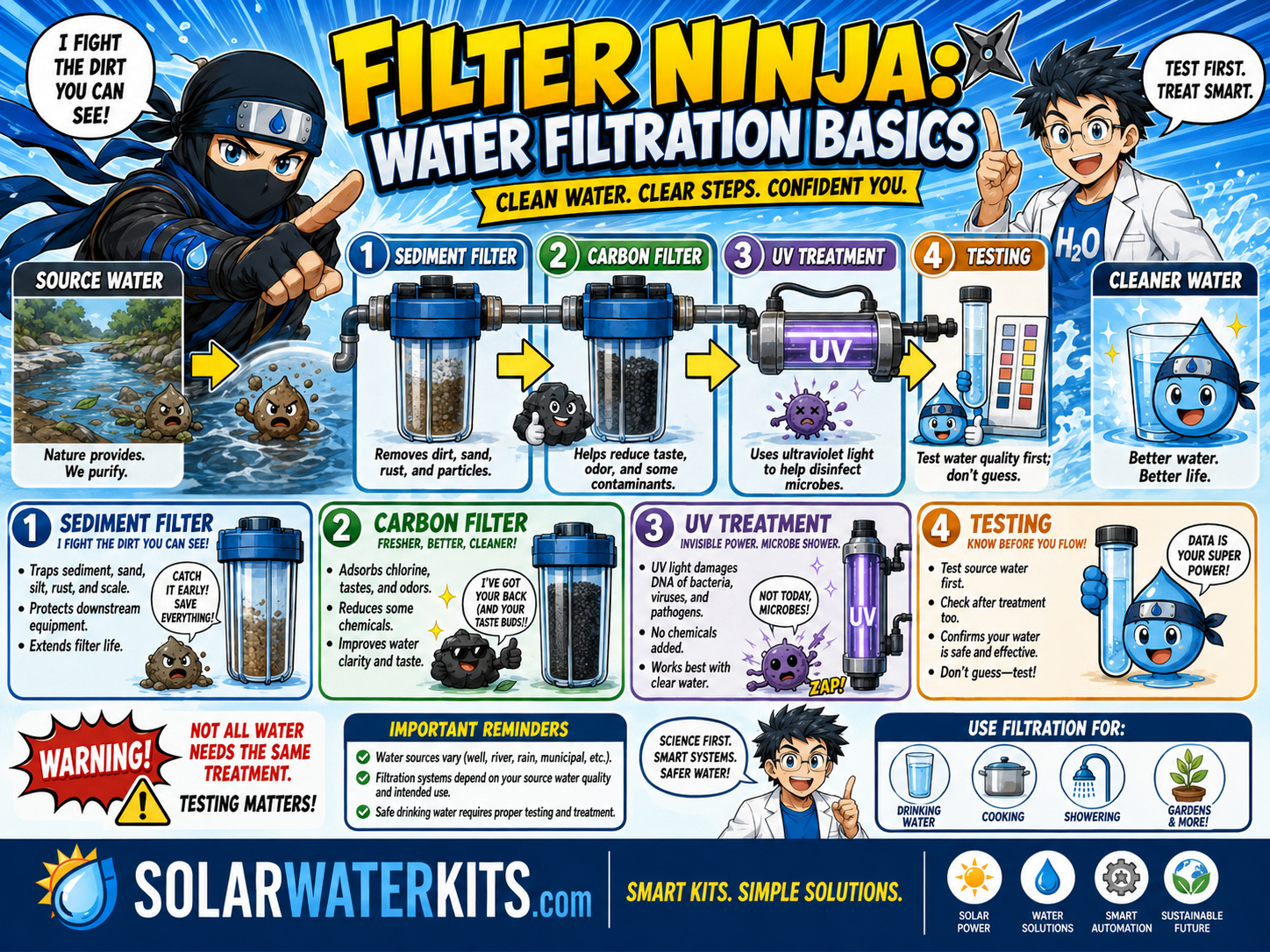
Sediment filtration, carbon, UV, disinfection, and testing have different roles.
Filtration basics →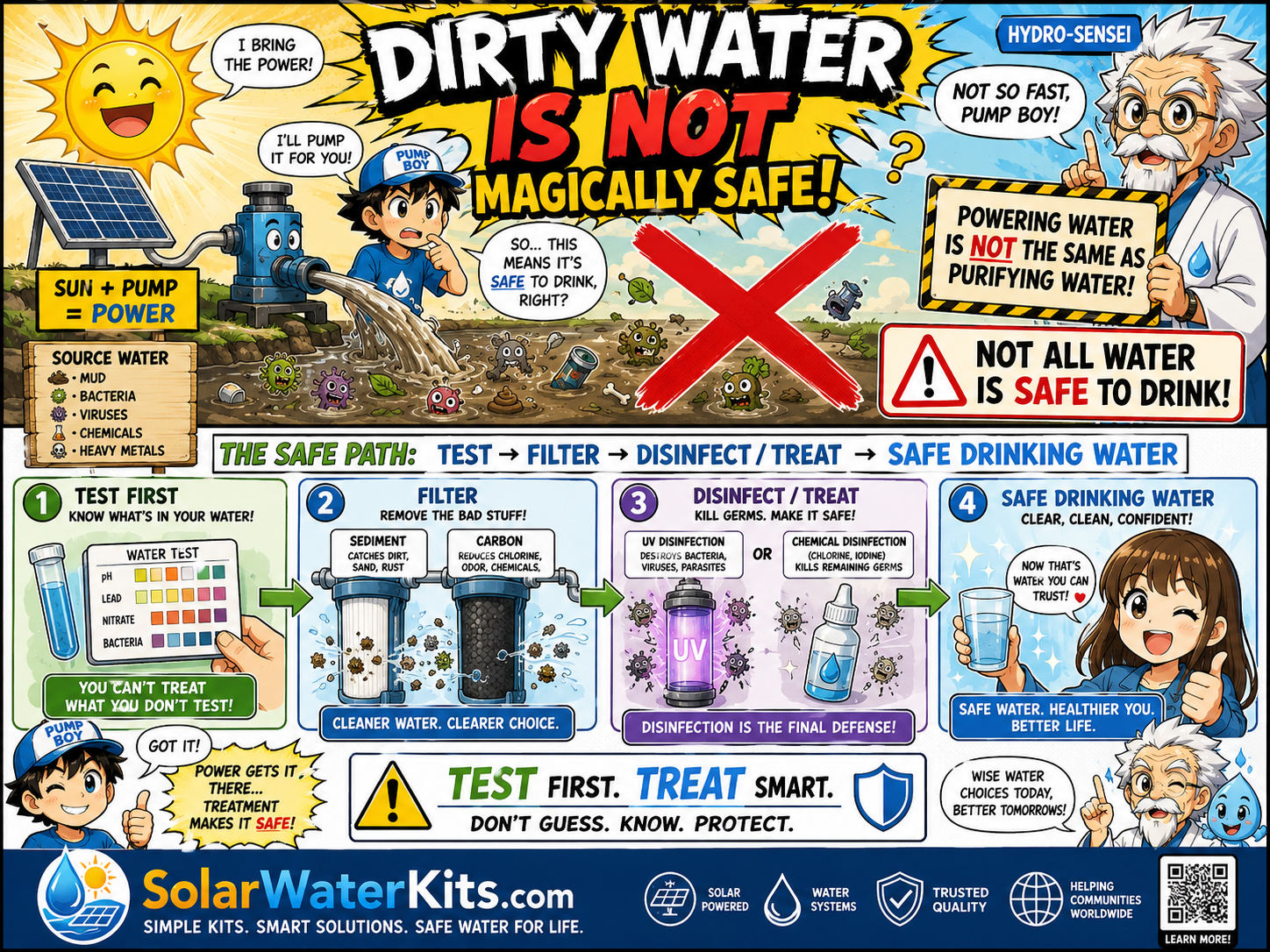
Moving water and making water drinkable are different jobs.
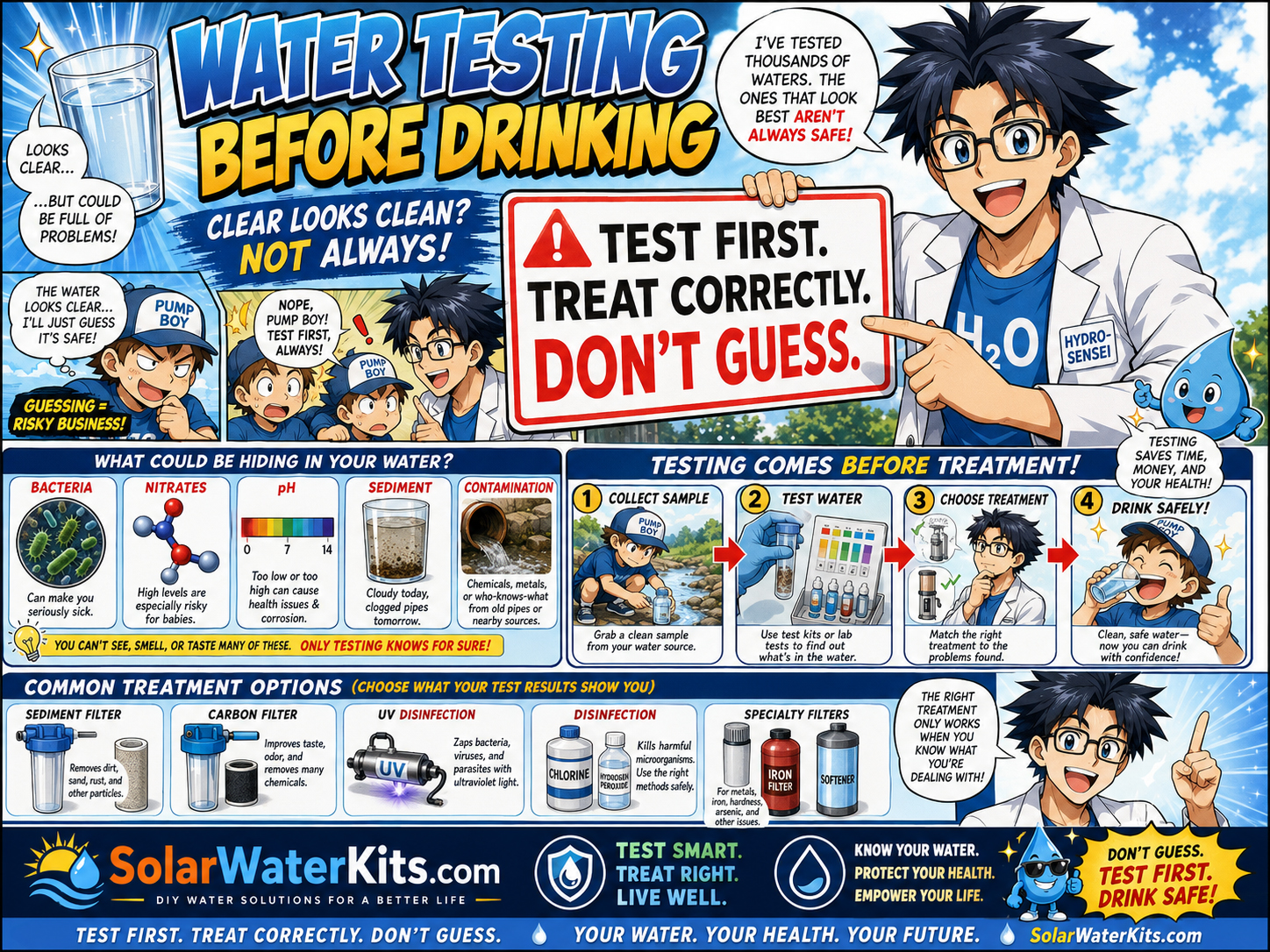
Clear-looking emergency water can still be unsafe. Test first. Treat correctly.
Water safety →Emergency water backup may involve potable water, non-potable water, pumps, batteries, inverters, pressure tanks, relief valves, tanks, disinfectants, filters, electrical equipment, cross-connection risk, backflow protection, sanitation, and local code. This page is educational only.
Learn how batteries, inverters, pumps, pressure, and critical loads fit together.
Battery backup →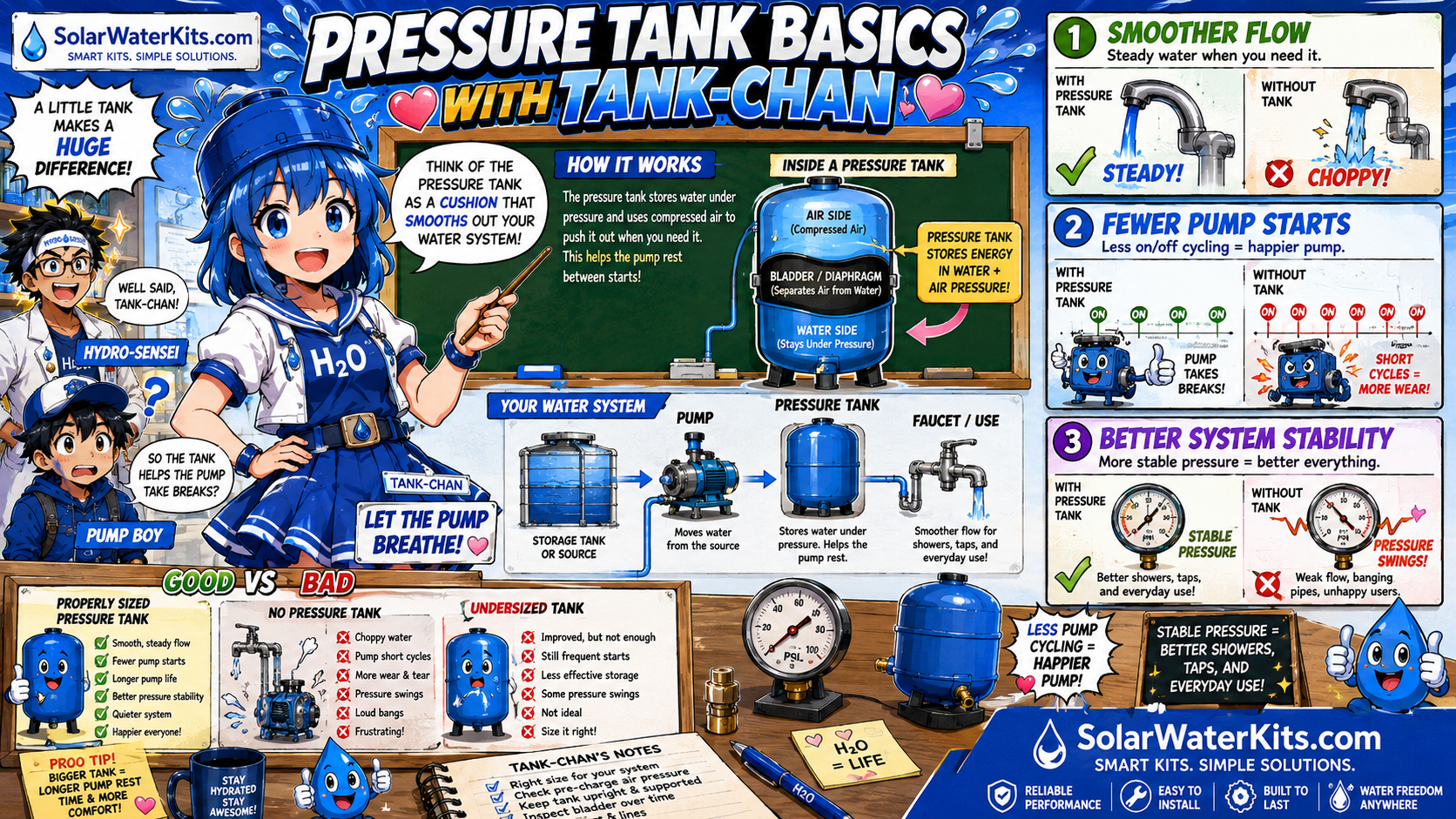
Stored pressure can reduce pump starts and make backup water more useful.
Pressure tanks →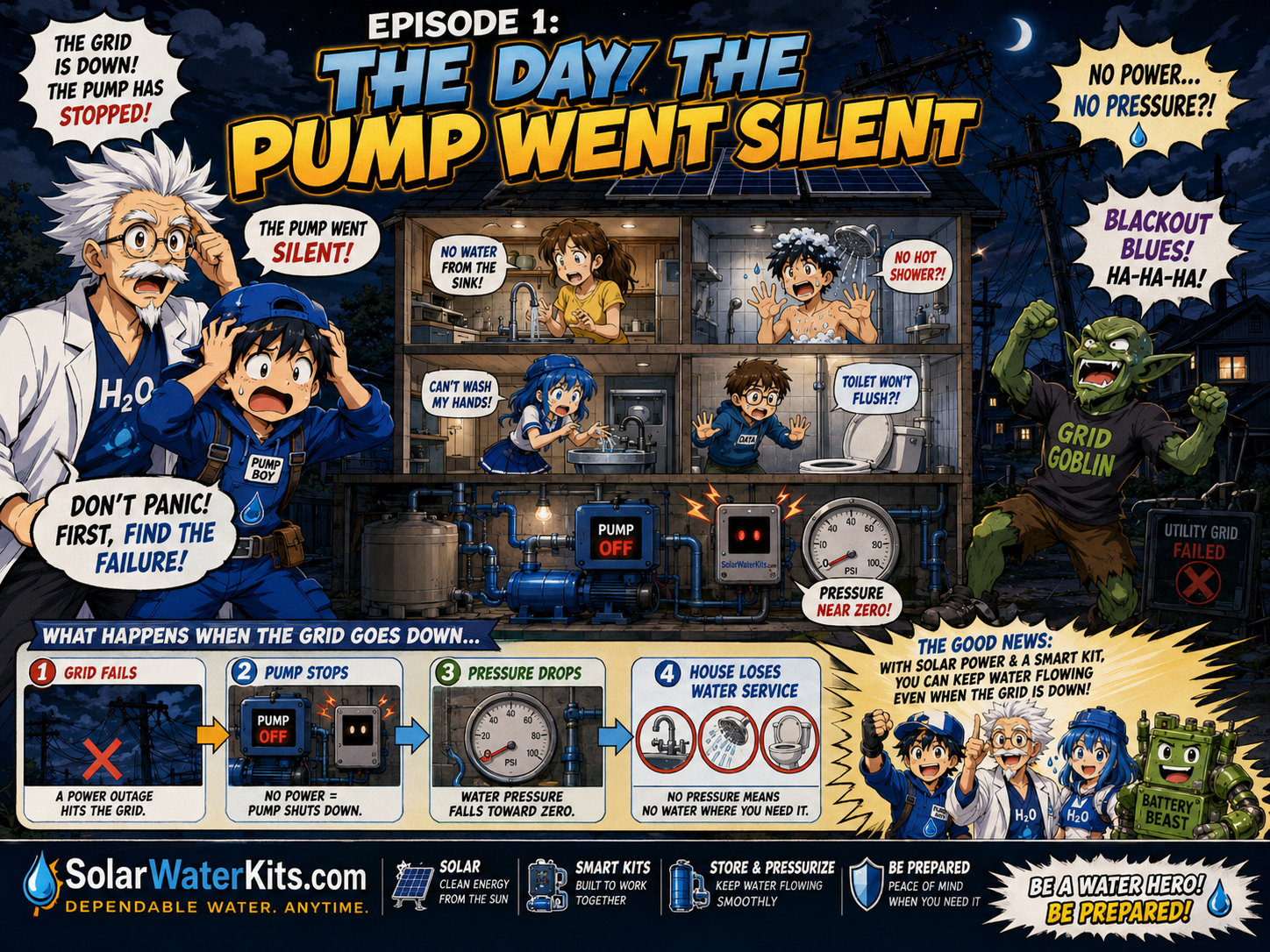
The grid fails. The pump stops. Hydro-Sensei’s emergency class begins.
Read the manga →