DC solar pumps
DC pumps can be elegant for direct solar pumping, remote water movement, tank filling, livestock systems, and simple daytime pumping.
- Good for remote solar use.
- Often pairs well with storage tanks.
- Controller compatibility matters.
Solar water pumping is where sunlight meets water movement. Hydro-Sensei teaches Pump Boy that the right pump is not chosen by excitement. It is chosen by flow, lift, total dynamic head, pressure, pipe friction, runtime, controls, and power source.
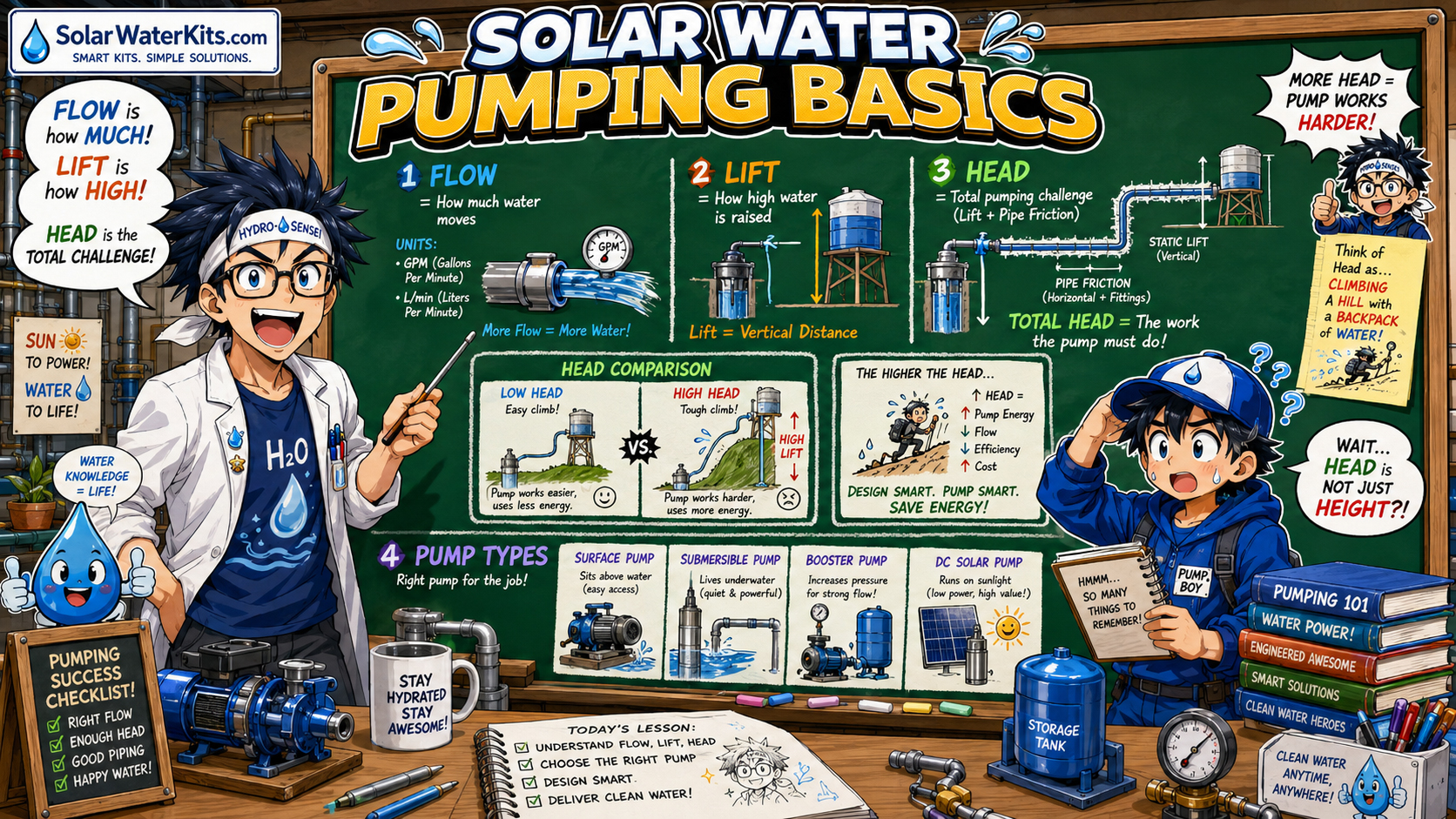
A pump does not simply “make water happen.” It must move the required amount of water through the real pipe, over the real lift, at the required pressure, using the available power.
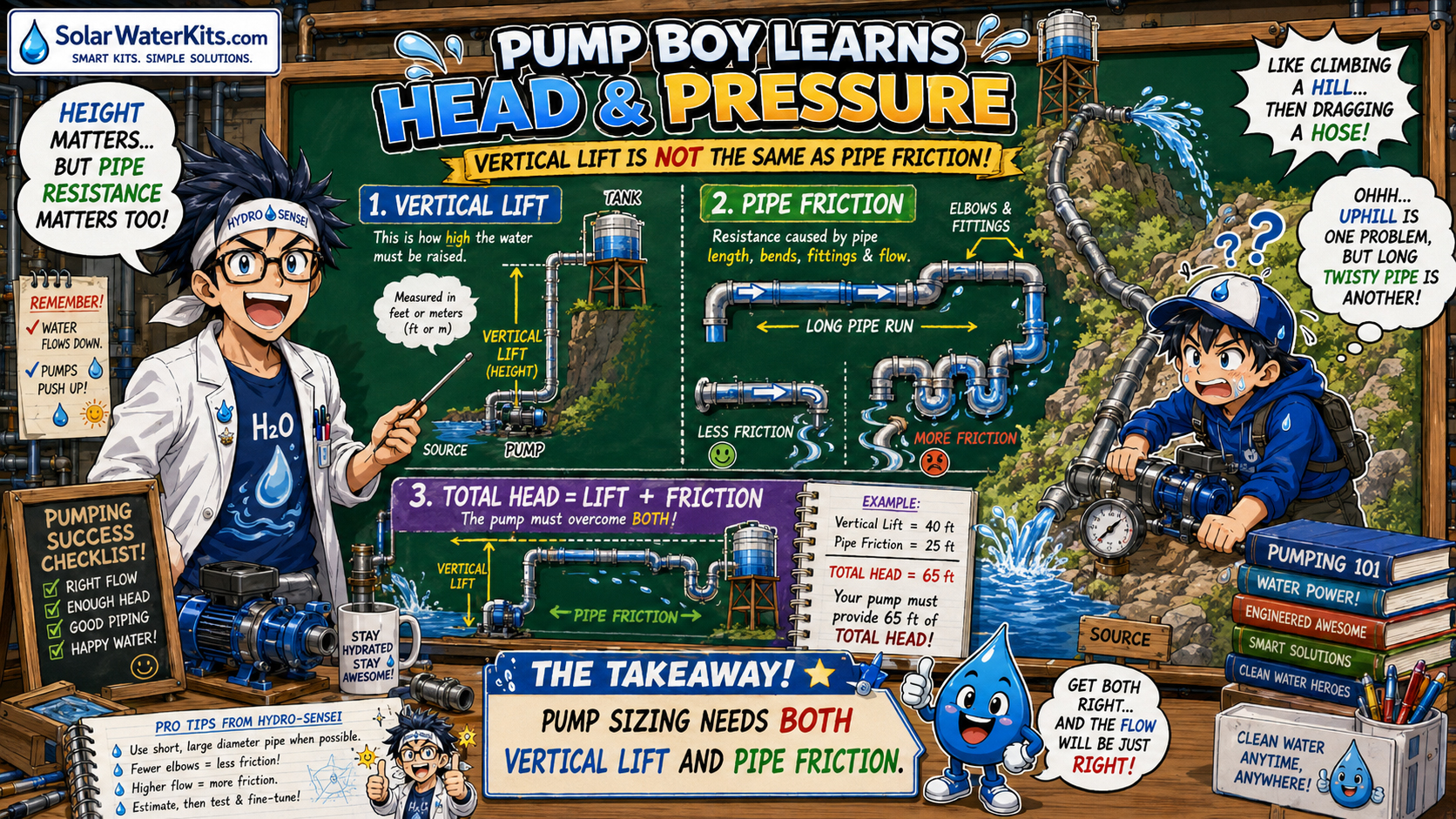
Lift, pressure, pipe friction, filters, valves, and fittings all count.
The correct pump depends on the source, distance, lift, pressure, flow, controls, power architecture, battery strategy, and maintenance reality.
DC pumps can be elegant for direct solar pumping, remote water movement, tank filling, livestock systems, and simple daytime pumping.
AC pumps may fit existing systems, booster pumps, well systems, battery-backed inverters, or grid-connected properties.
Submersible pumps sit in the water source. Surface pumps pull or boost water from above ground. Each has different limits and protection needs.
“The best pump” is not a universal object. The best pump is the pump that matches the actual water job, pipe, lift, pressure, source, power, and maintenance plan.
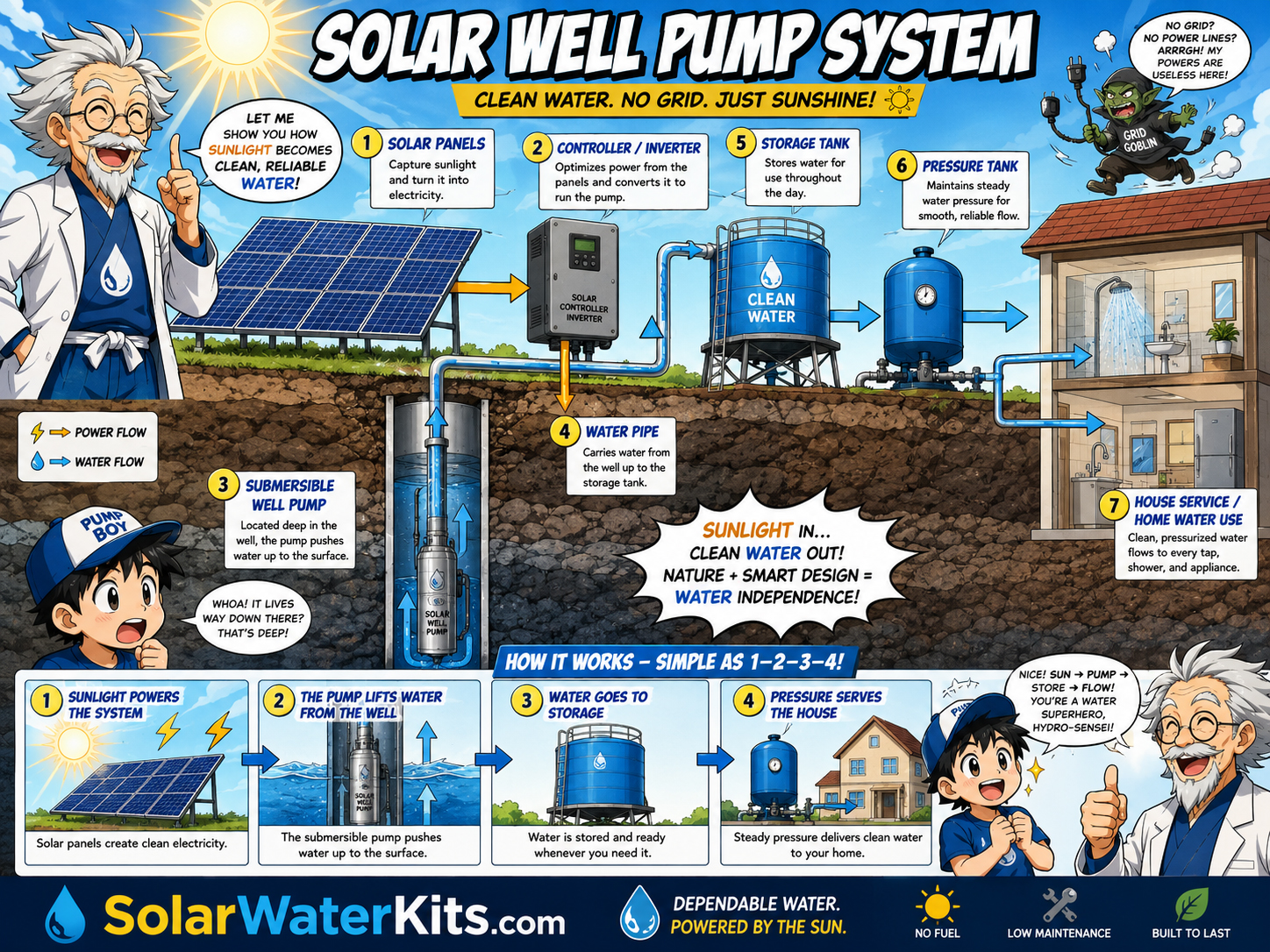
Well depth, static water level, pumping water level, recovery rate, surge, storage, and pressure.
Well Pumps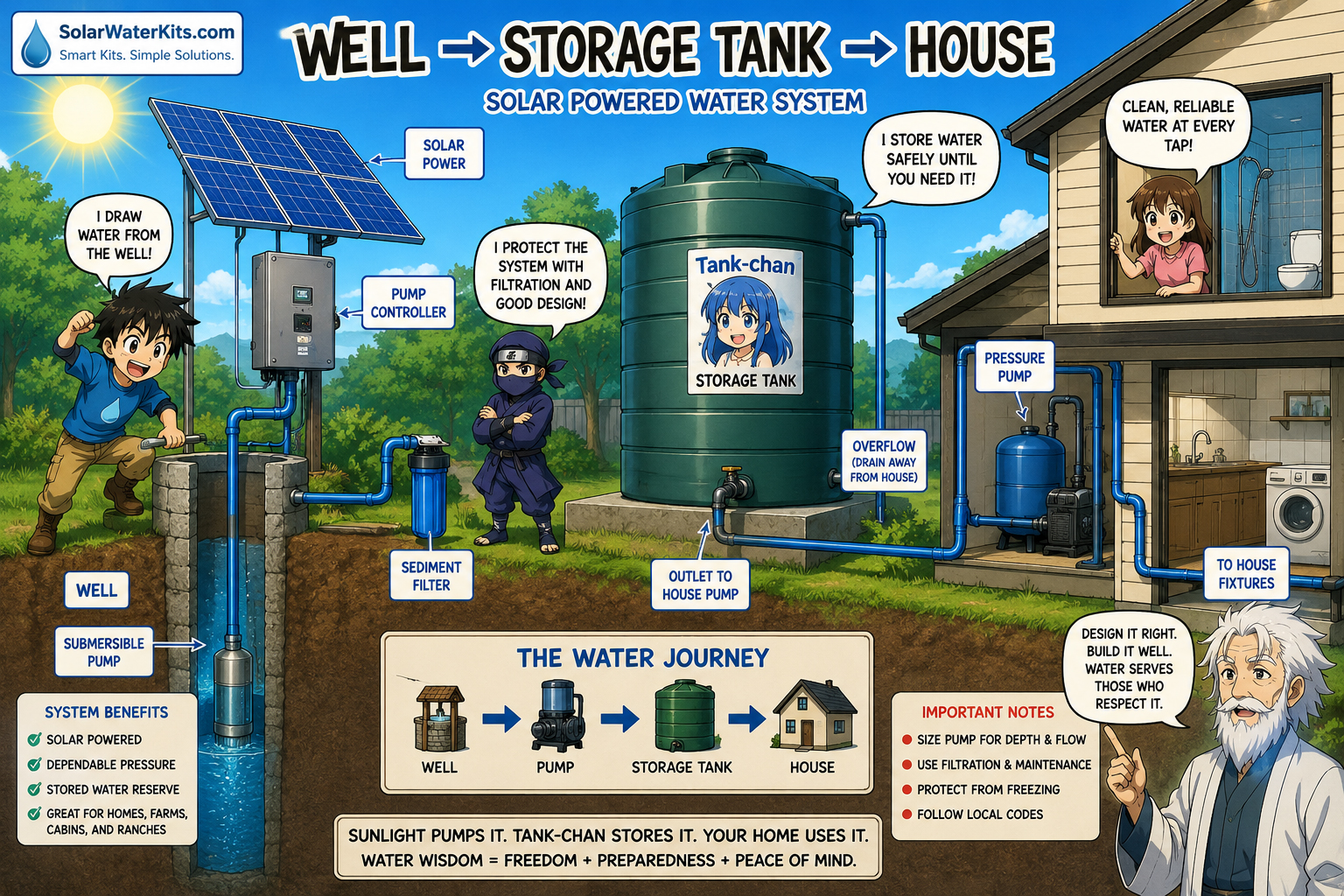
Storage lets a pump work during good solar hours and lets the building or trough use water later.
Stored Water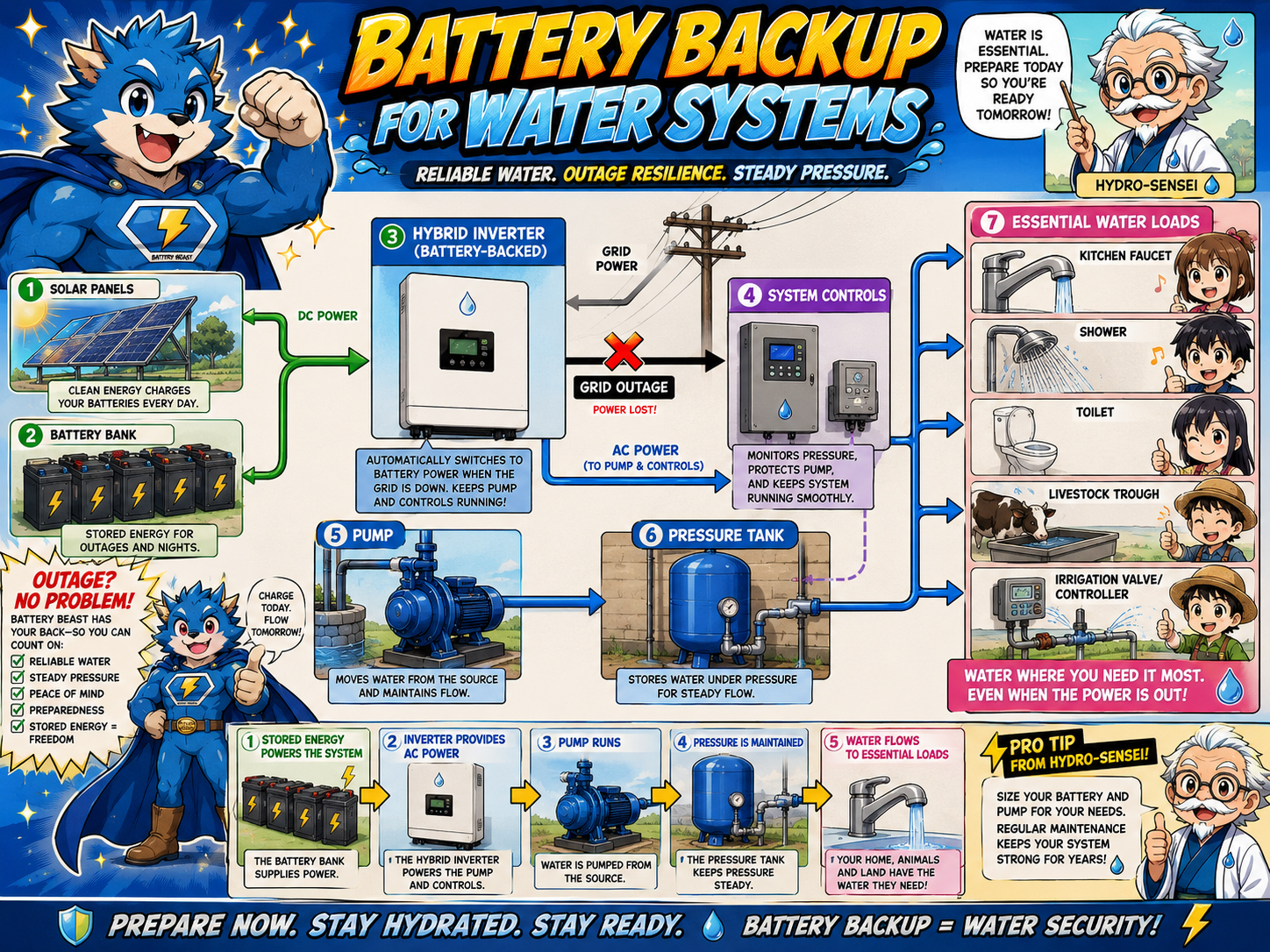
Pump surge, inverter size, runtime, battery capacity, critical loads, and controls must match.
Battery Backup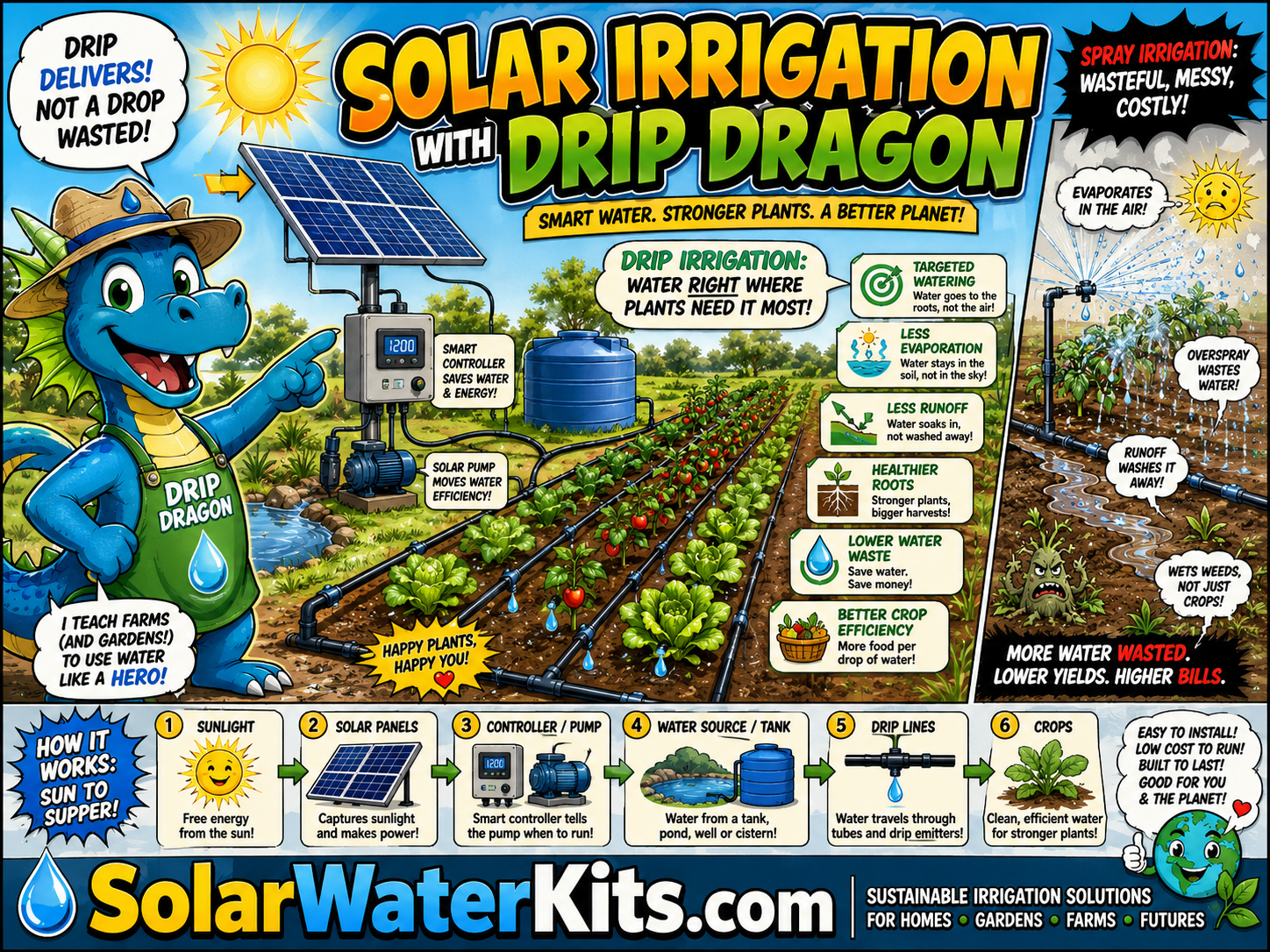
Zones, valves, filters, emitters, pressure regulation, and timers decide pump behavior.
Irrigation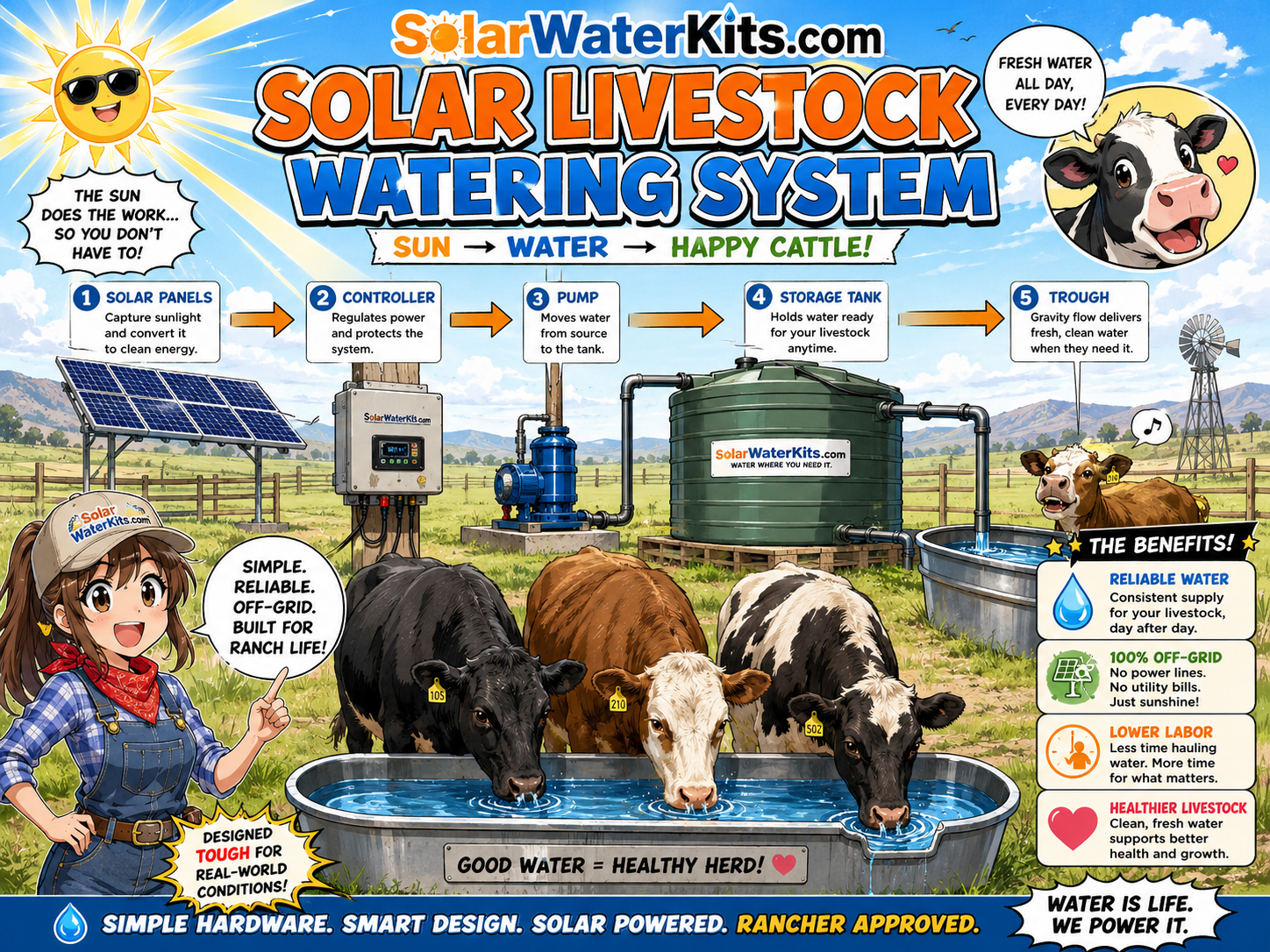
Daily gallons, trough refill, float valves, storage, freezing, and inspection are the ranch priorities.
Livestock Water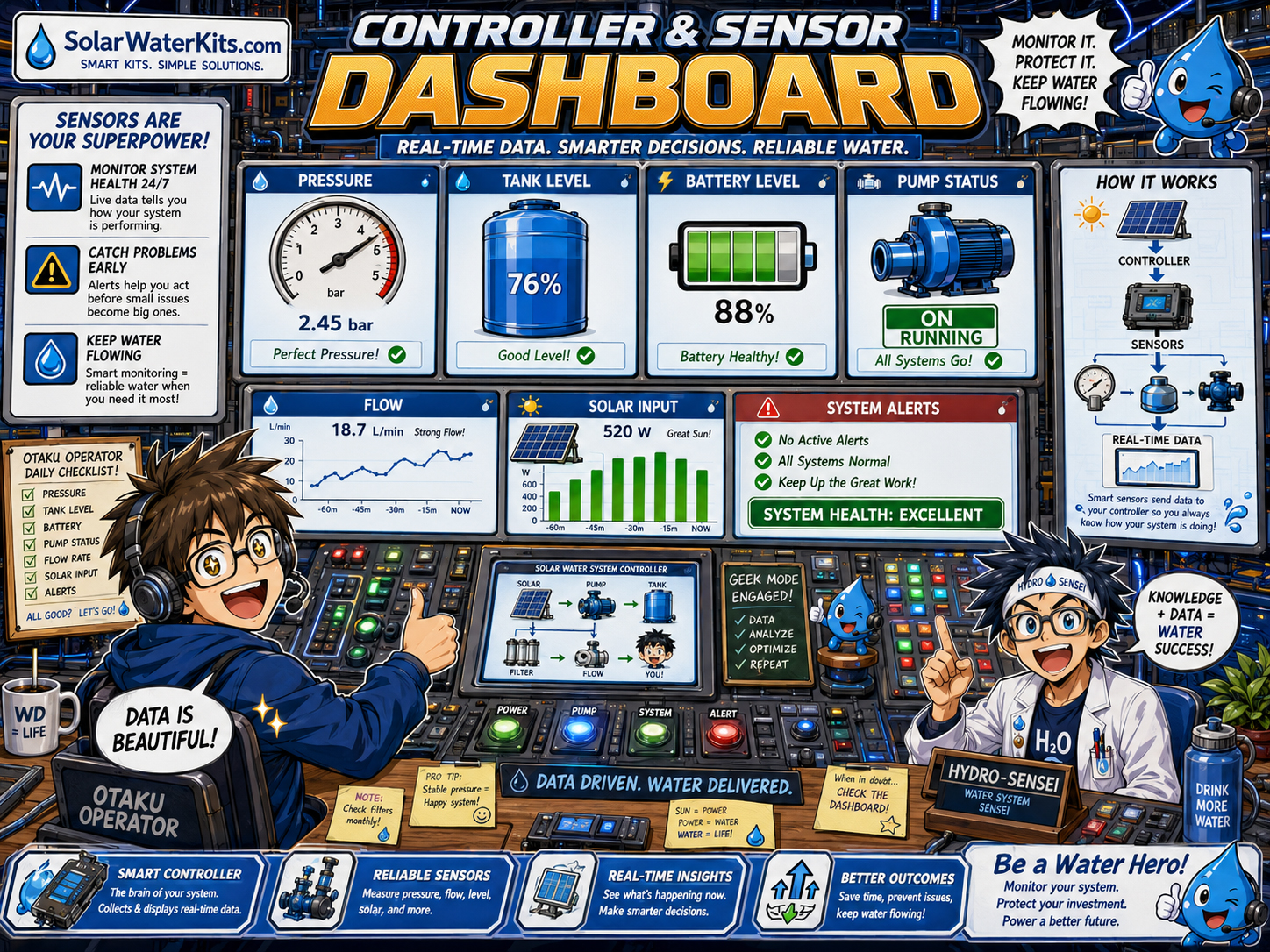
Float switches, low-water cutoffs, pressure switches, sensors, dashboards, and alarms protect the pump.
ControlsA pump may look strong on paper but struggle in the field because the pipe is too small, the run is too long, the filters are dirty, or too many elbows and fittings steal performance.
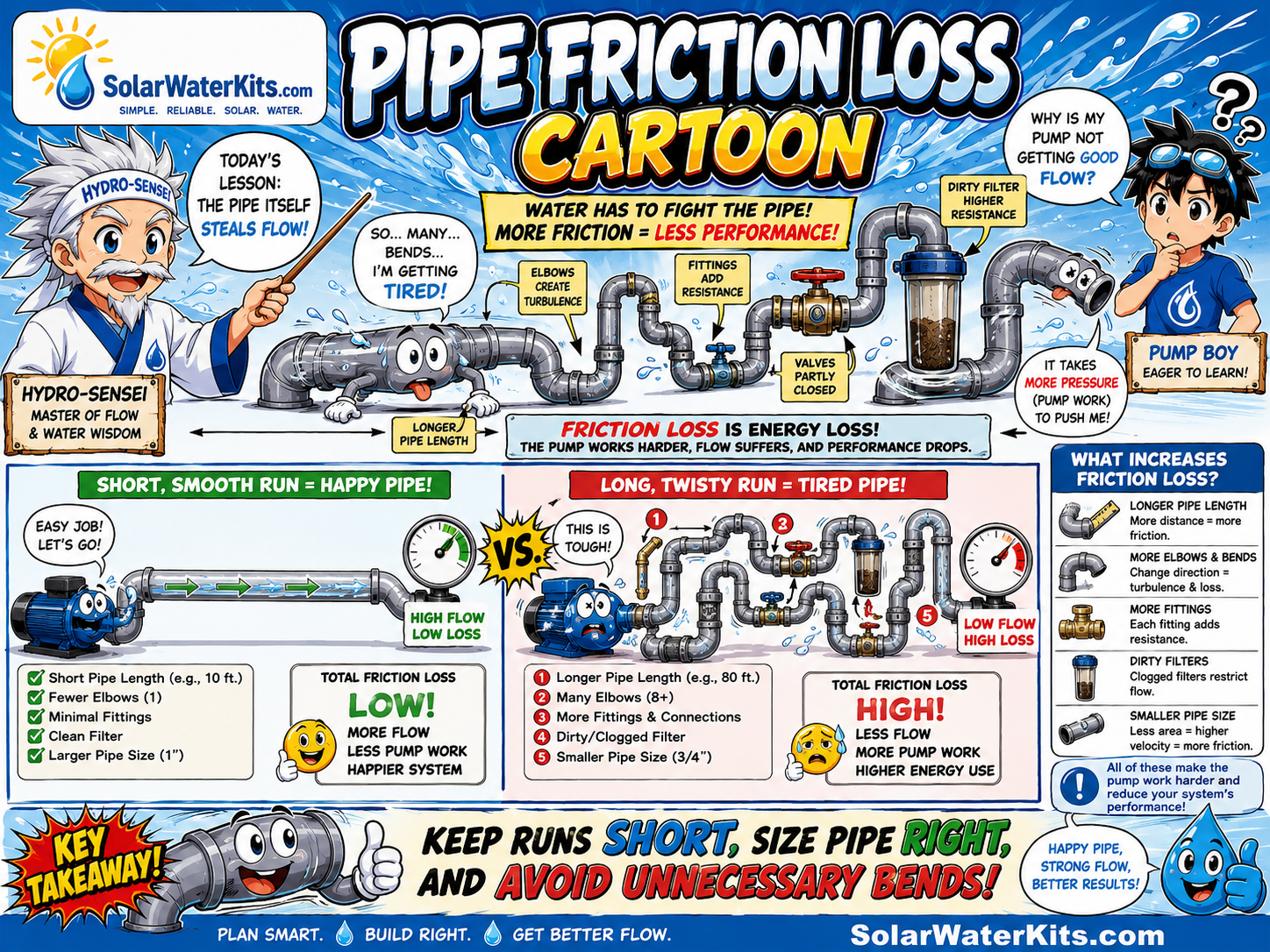
Sometimes the pipe, filter, valve, or fitting stole the water.
| Question | Why It Matters | Hydro-Sensei Warning |
|---|---|---|
| How many gallons per day? | Sets the total water target. | Daily gallons are not the same as peak flow. |
| How many gallons per minute? | Sets flow rate for fixtures, tanks, troughs, or irrigation zones. | Too little flow makes the system frustrating. |
| How much vertical lift? | Water lifted uphill takes pumping work. | Use real source and delivery elevations. |
| How much pipe friction? | Pipe size, length, filters, valves, and fittings reduce output. | Friction is often forgotten until the pump disappoints. |
| What pressure is needed? | Fixtures, filters, sprinklers, and pressure tanks need usable pressure. | Pressure and flow must be designed together. |
| What power source? | Direct solar, battery, inverter, or grid affects pump selection. | AC pump surge can surprise batteries and inverters. |
| What protection is needed? | Dry-run, low-water, float, pressure, and overcurrent protection prevent damage. | A pump without protection is a future service call. |
Solar water pumping may involve wet locations, electrical circuits, pumps, batteries, inverters, controllers, grounding, disconnects, pressure equipment, wells, potable water, non-potable water, backflow protection, and local permits.