1. Water source
The source may be a well, tank, cistern, rainwater system, municipal supply, hauled water, pond, or another approved source. The source decides many of the rules.
A solar water kit is not one magic box. It is a planned chain of parts: water source, solar power, pump, controller, storage tank, pressure tank, filtration, controls, labels, maintenance, and safe use.
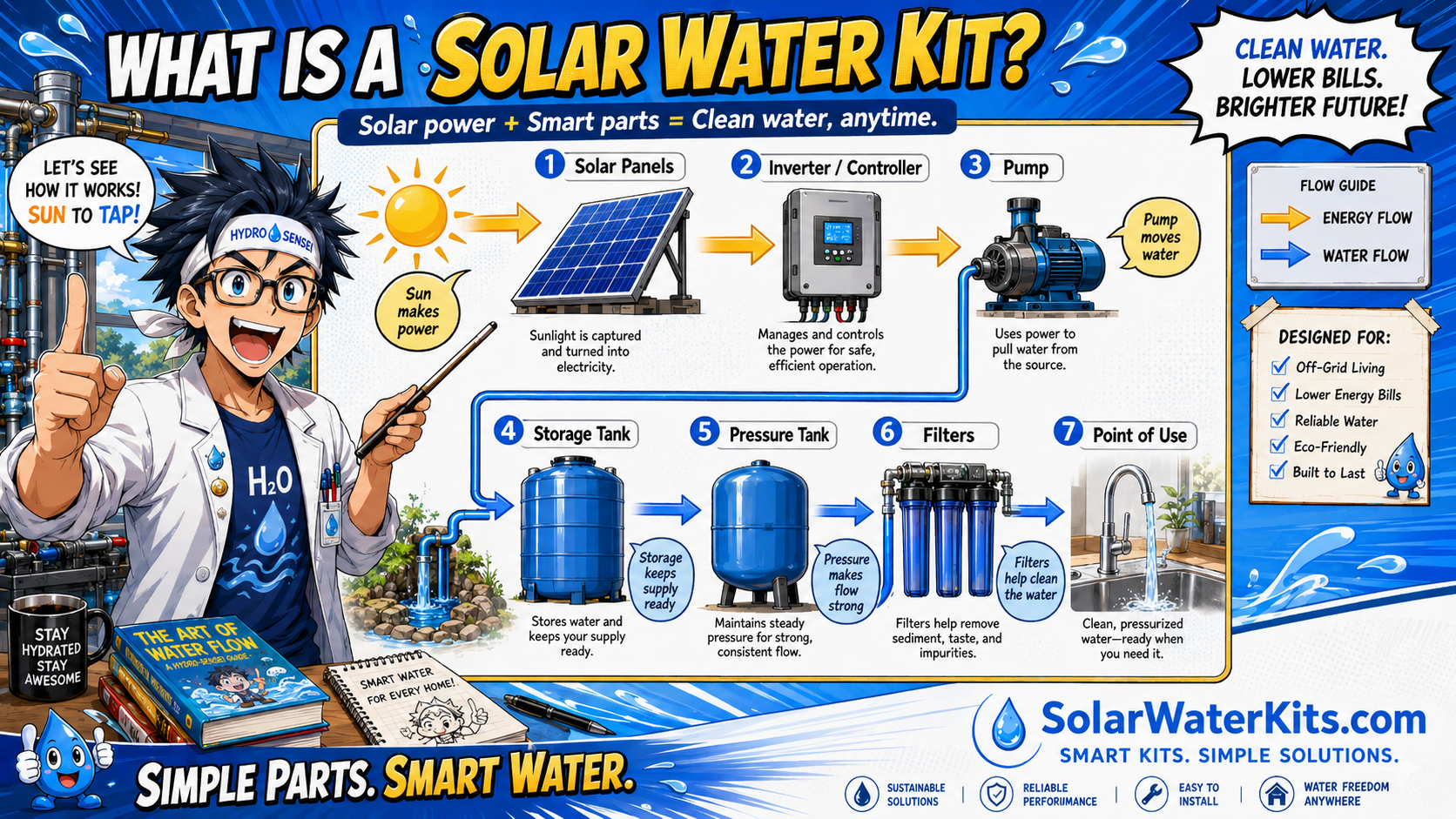
Pump Boy sees a pump. Hydro-Sensei sees a system. Tank-chan sees reserve. Filter Ninja sees water quality. Battery Beast sees runtime math.
The source may be a well, tank, cistern, rainwater system, municipal supply, hauled water, pond, or another approved source. The source decides many of the rules.
Solar panels can power pumps directly during sunlight, charge batteries, or support a larger property energy system. The electrical design must match the load.
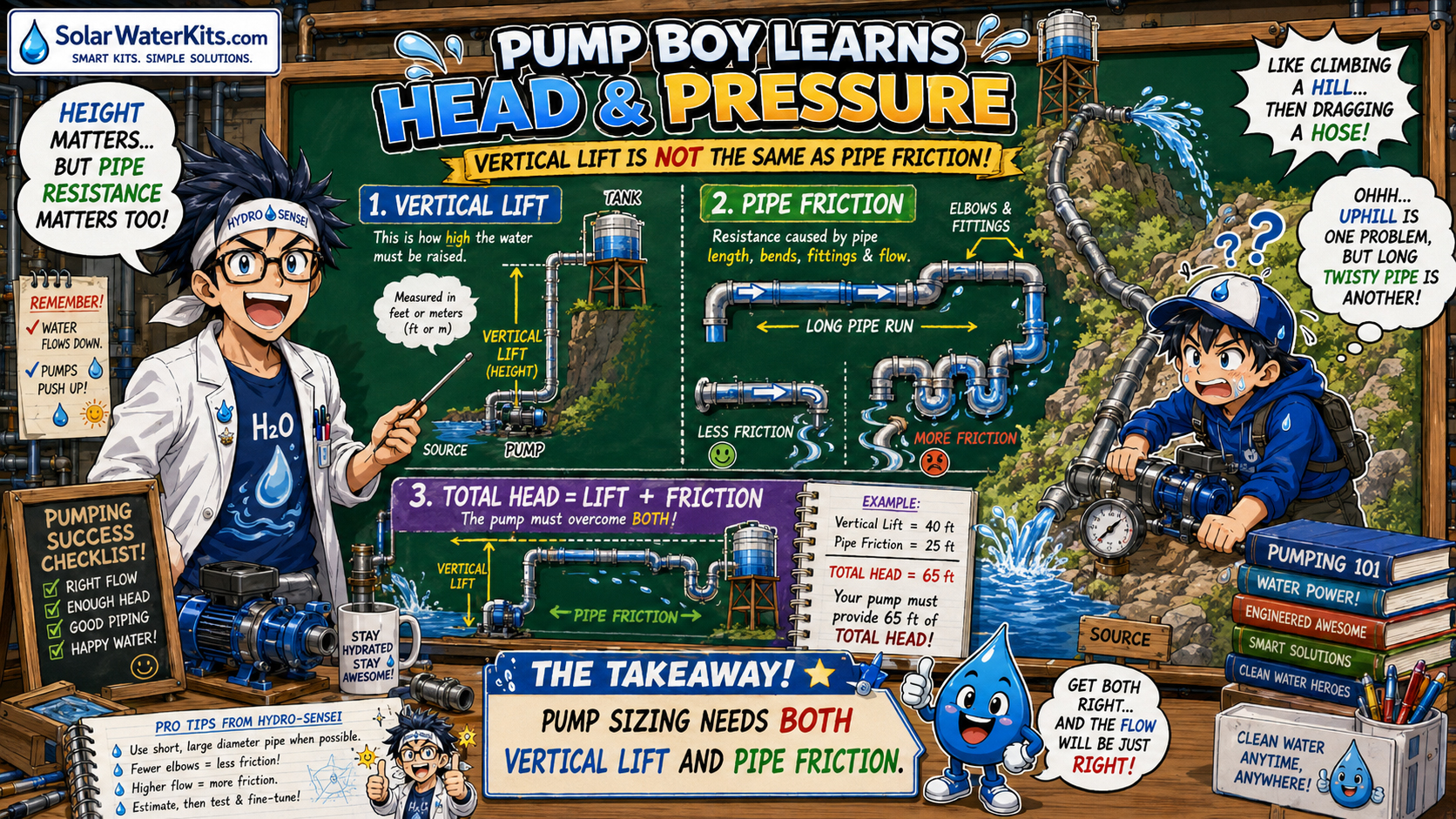
The pump moves water. The controller or inverter manages power. Flow, lift, total dynamic head, voltage, surge, and runtime all matter.
Storage tanks hold gallons. They create reserve water for outages, ranches, cabins, irrigation, or household use.
Pressure tanks smooth delivery, reduce pump starts, and help the system behave more calmly between pump cycles.
Filters and treatment must match the water source and intended use. Solar power does not automatically make water safe to drink.
This section is rebuilt so every card is dark text on a light background. No more white-on-white.
Flow is how much. Pressure is the push. Lift is the climb. Pipe friction is the hidden villain. Storage is your buffer. Controls keep the whole thing from becoming manga chaos.
Neither pump type wins every job. Match the pump to the system.
Neither wins every job. A DC pump may be elegant for remote solar work. An AC pump may fit existing equipment or battery-backed systems. Match the pump to the system.
Compare PumpsPumping to a storage tank can let solar work during strong sunlight, while pressure equipment serves water later when people, animals, or zones need it.
Stored WaterFloat switches, low-water cutoffs, pressure switches, sensors, dashboards, and labels prevent overflow, dry-run, mystery valves, and emergency confusion.
ControlsDaytime solar charges. Nighttime battery operation keeps essentials alive. The grid fails. Pressure drops. The lesson begins.
Battery backup works when the load list is honest: pump surge, runtime, inverter size, battery capacity, and essential water priorities all matter.
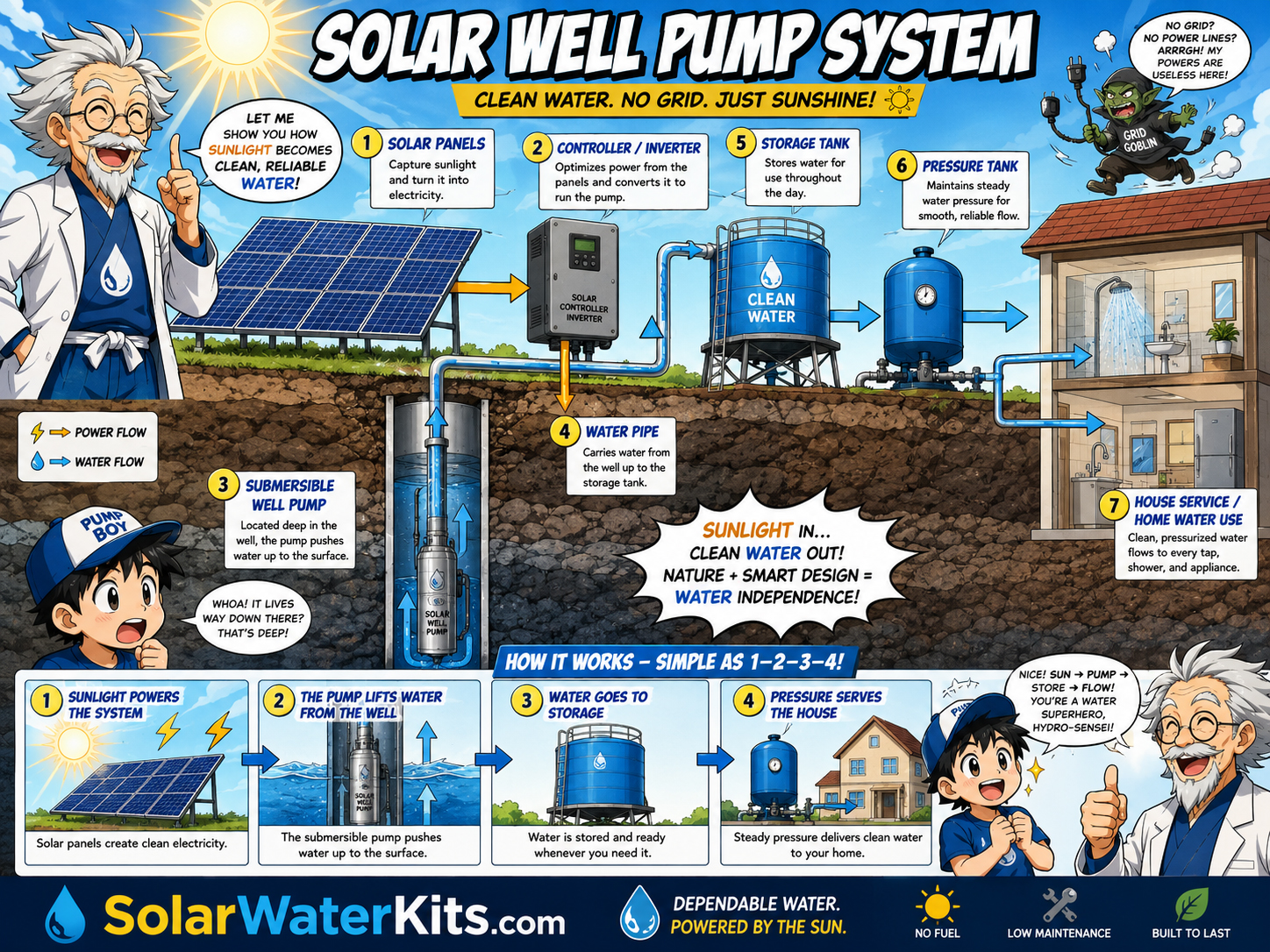
Well depth, static water level, pump surge, recovery rate, storage, pressure, and testing.
Well Pumps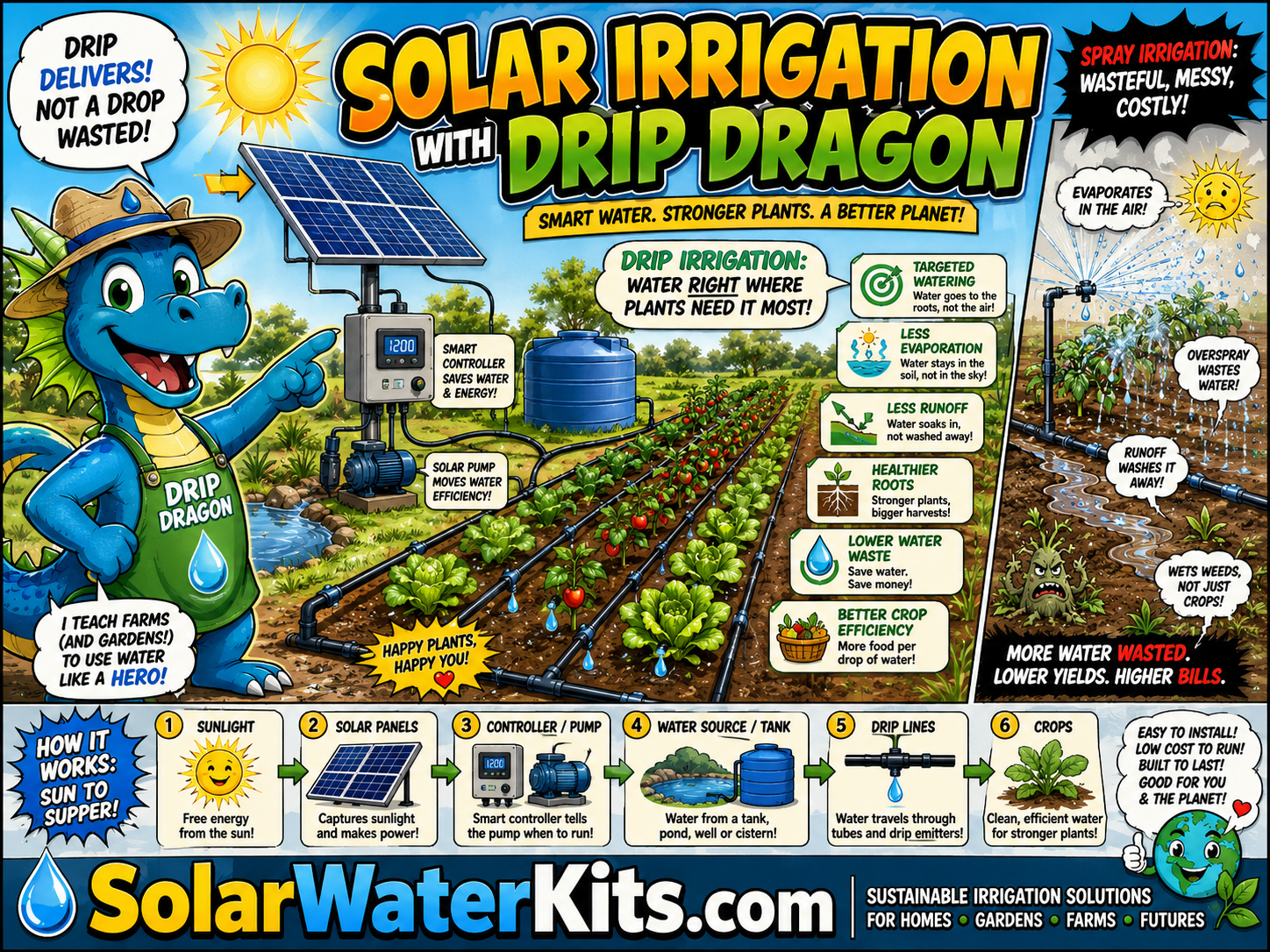
Drip lines, filters, pressure regulators, valves, timers, zones, and conservation.
Irrigation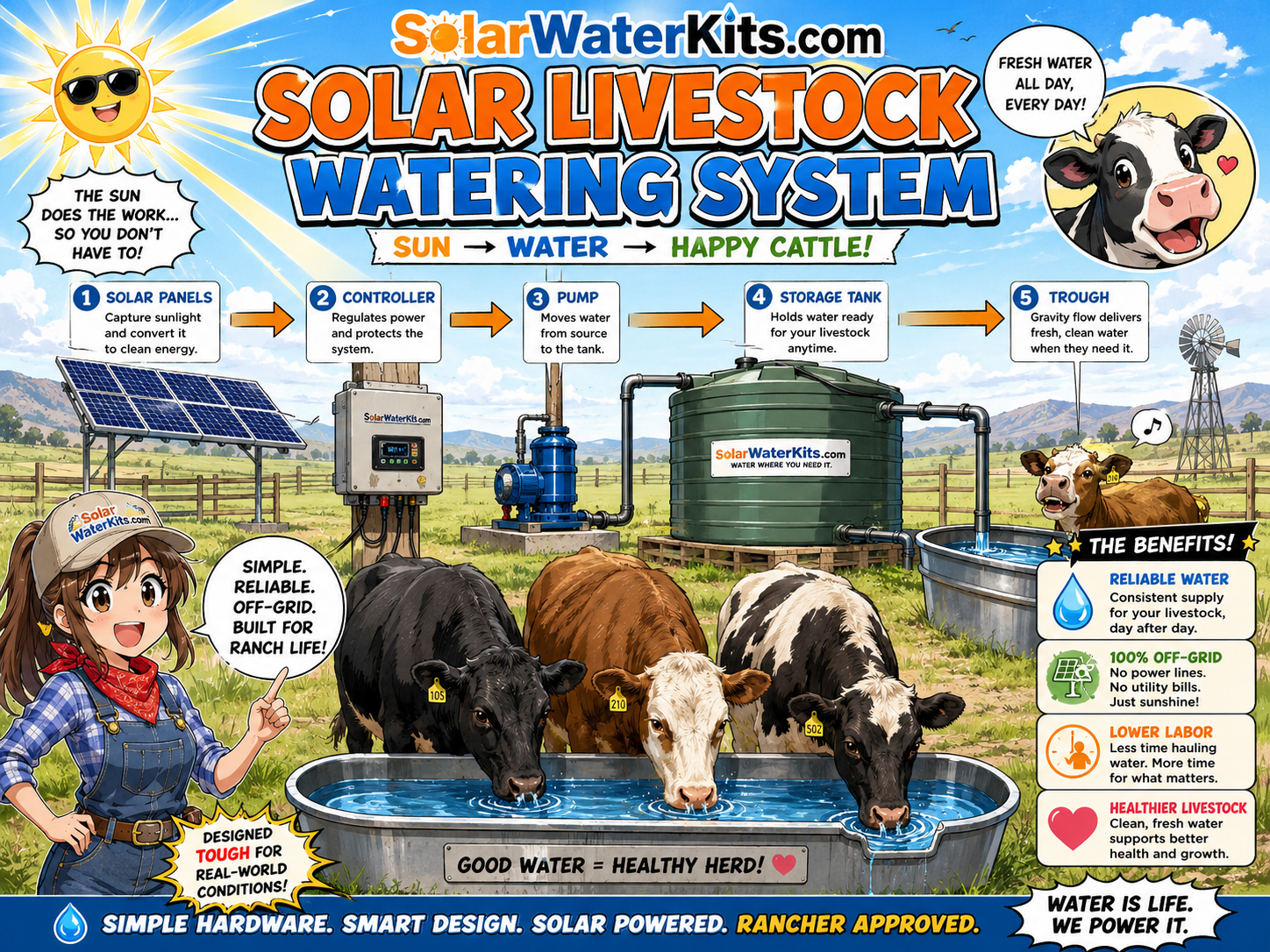
Troughs, float valves, tank reserves, herd demand, field durability, and inspection.
Livestock Water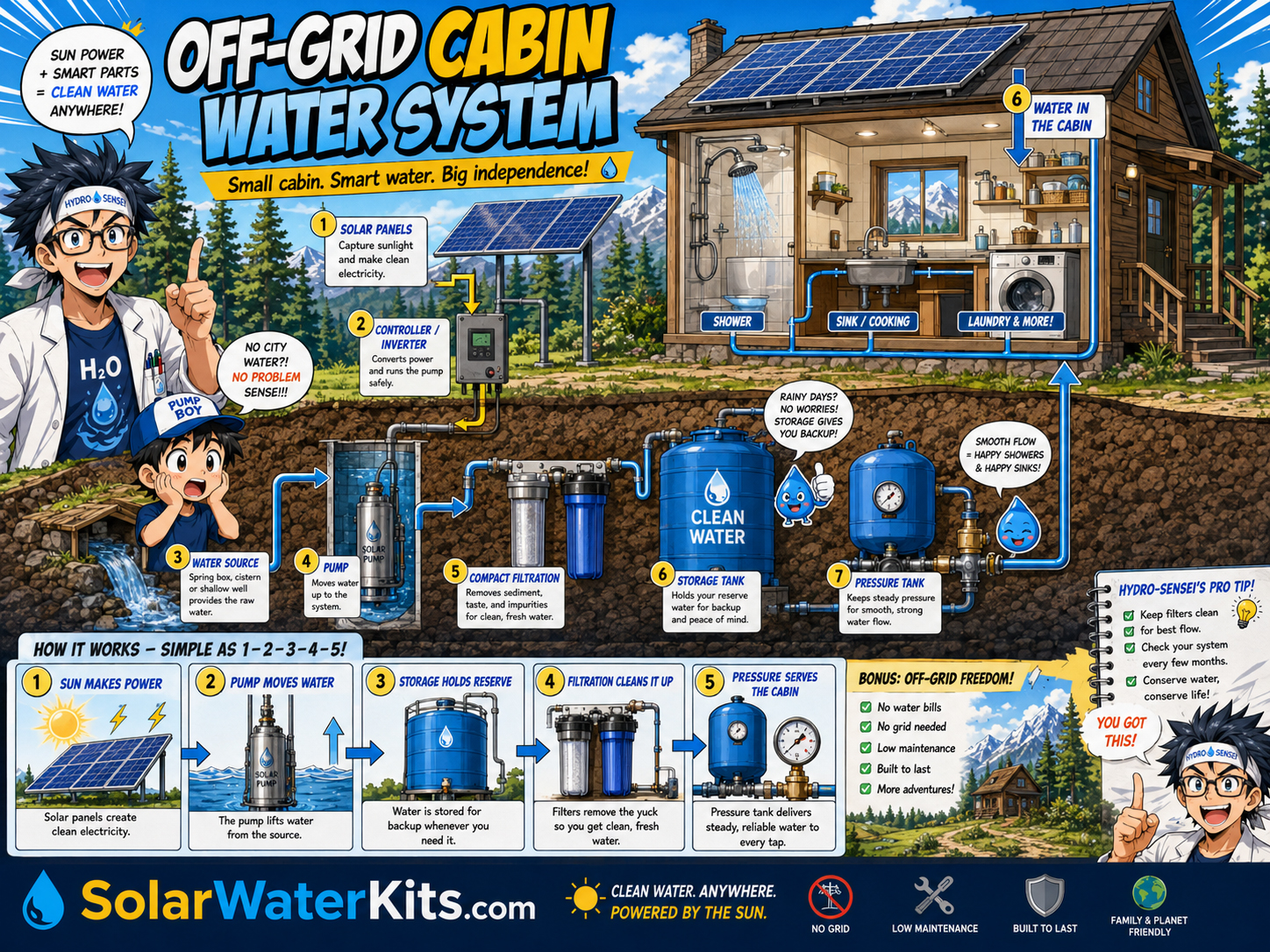
Source, storage, pressure, filtration, battery backup, freeze protection, and seasonal shutdown.
Cabin Water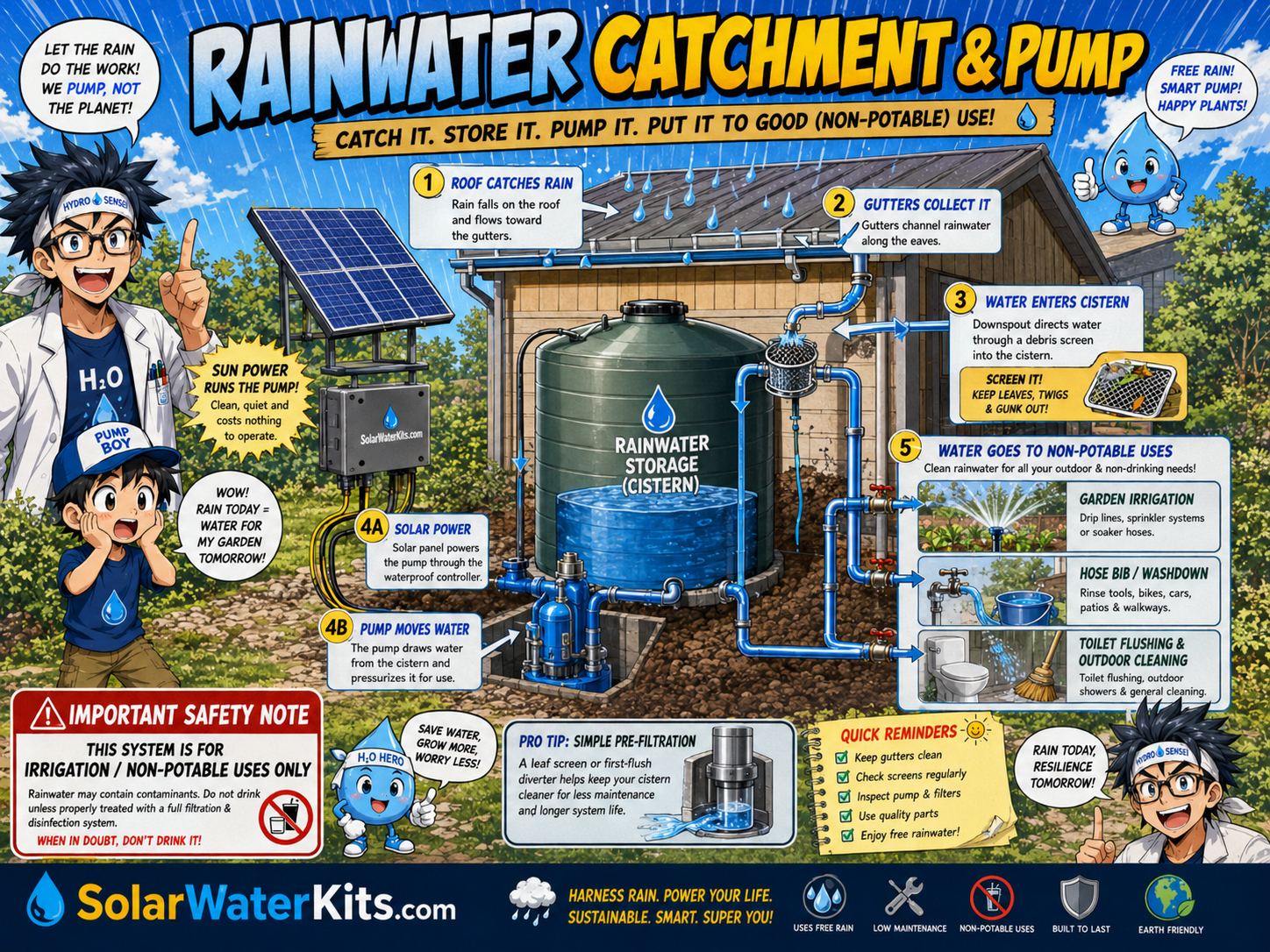
Catchment, gutters, screens, cisterns, solar pumps, labels, and non-potable planning.
Rainwater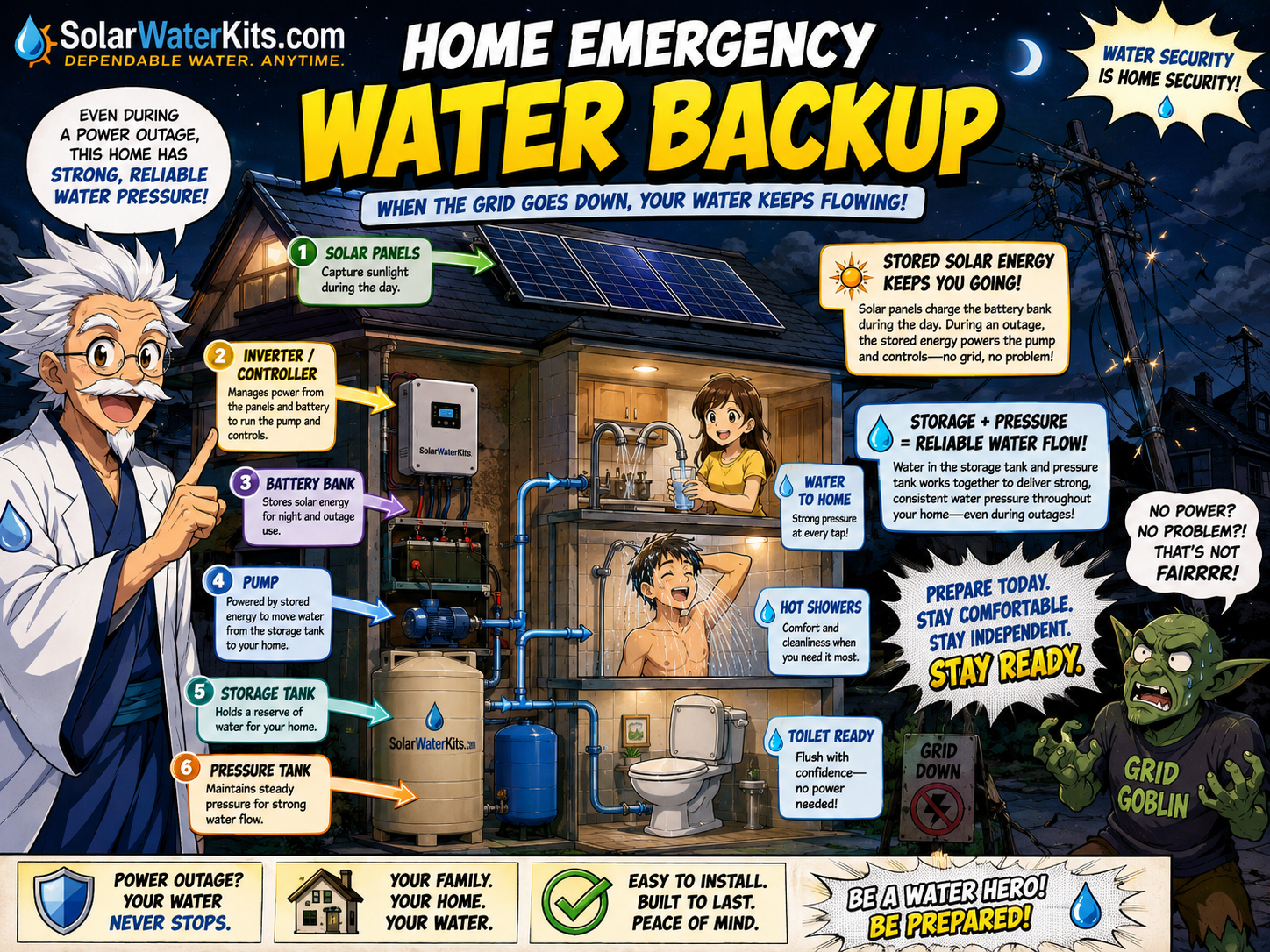
Stored water, backup power, pressure delivery, filtration, labels, and household priorities.
Emergency WaterReal water systems may involve electricity, pressure, potable water, non-potable water, tanks, batteries, wells, filters, backflow protection, graywater, rainwater, permits, inspections, and local code.