🧰 Otaku Operator’s Favorite Page

Solar Water System Maintenance

Pumps, tanks, filters, batteries, valves, sensors, and labels do not stay ready by magic. Otaku Operator teaches the boring hero work: inspect, clean, test, label, log, and repeat.
🥷 Filters 🛢️ Tanks ⚙️ Pumps 🏷️ Labels 🧪 Water Tests
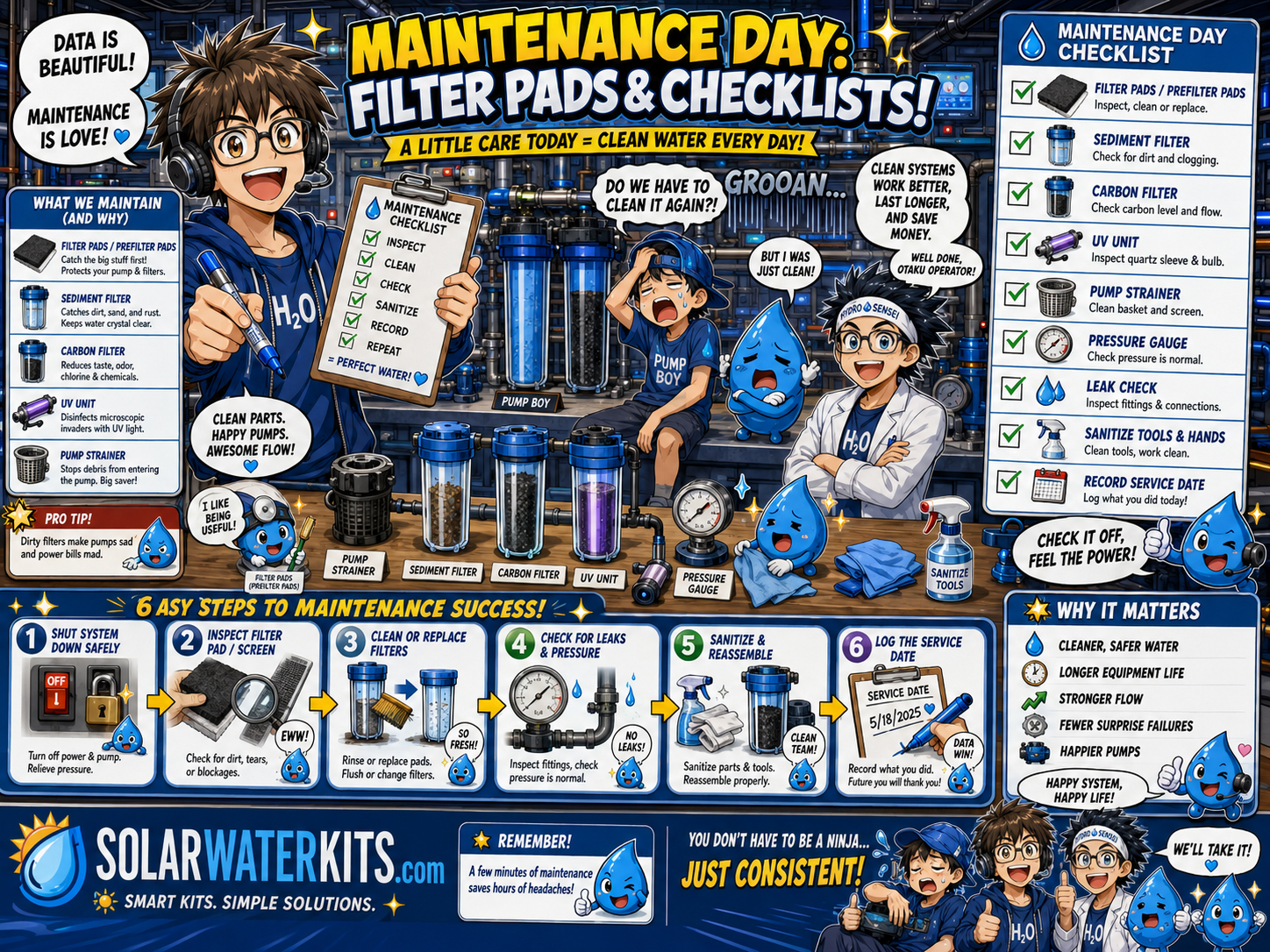
Otaku Operator happily doing solar water system maintenance with filters, pads, labels, tools, gauges, and checklists.
Maintenance day beats emergency day.
Why Maintenance Matters

A water system fails quietly before it fails loudly

Filters clog, tanks collect sediment, valves get bumped, labels fade, batteries age, pumps short-cycle, sensors drift, and water quality changes. Maintenance catches small problems before Pump Boy turns them into a manga disaster.

The maintenance chain

Inspect → clean → test → label → log → repair → retest.
  • Inspect tanks, pumps, filters, valves, batteries, sensors, pipe, and fittings.
  • Clean screens, strainers, filter housings, troughs, vents, and accessible tank components.
  • Test pumps, backup power, float switches, alarms, pressure behavior, and water quality.
  • Label valves, breakers, tanks, bypasses, drains, potable lines, and non-potable lines.
  • Log dates, readings, filter changes, repairs, water tests, and system changes.
  • Retest after any repair or service change.
Monthly Checks

The monthly walk-around prevents most chaos

A simple monthly check can catch leaks, low tank levels, clogged filters, dead sensors, valve confusion, pressure problems, and battery warnings.

Pumps and pressure

  • Listen for abnormal pump noise.
  • Check pump start and stop behavior.
  • Watch for short-cycling.
  • Check pressure gauge behavior.
  • Look for leaks near pump, tank, valves, and fittings.

Filters and water quality

  • Check sediment filter condition.
  • Look for pressure drop across filters where gauges exist.
  • Check filter replacement schedule.
  • Confirm UV or treatment status where used.
  • Record any color, odor, taste, or cloudiness changes.

Tanks and controls

  • Check storage tank level.
  • Inspect overflow and drain paths.
  • Check float switch behavior.
  • Confirm tank lids, screens, vents, and access covers are secure.
  • Review controller, dashboard, or alarm status.

Otaku Operator says

Monthly maintenance is not a chore. It is the system telling you how it feels before it screams.

Seasonal Checks

The system changes with heat, cold, rain, smoke, dust, and use

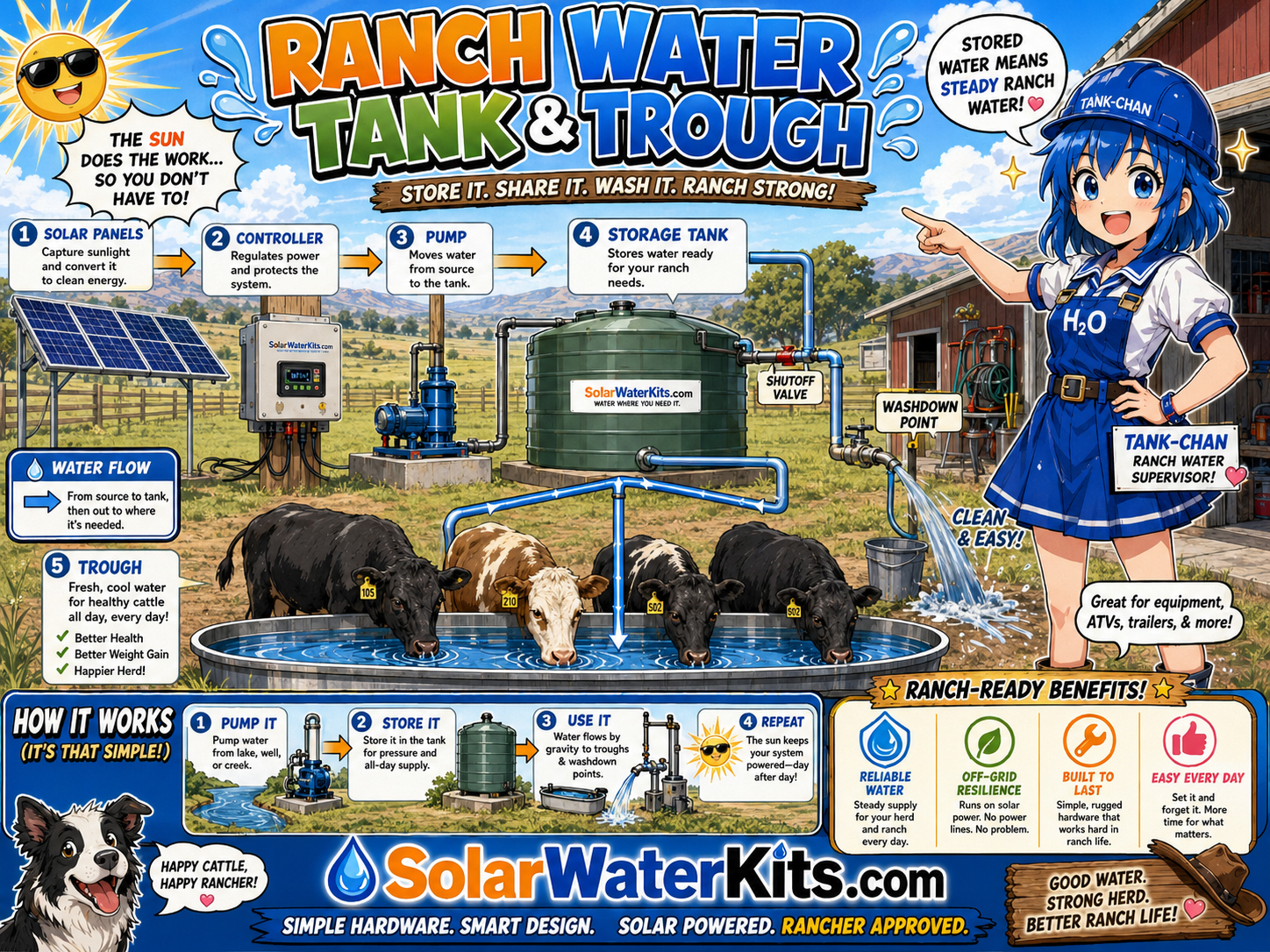
Seasonal maintenance is where the water system gets prepared for summer demand, winter freezing, storm debris, outage season, ranch needs, and emergency reserve planning.
Before hot season

  • Check storage tank reserve and refill rate.
  • Check pump runtime and heat exposure.
  • Inspect livestock troughs, irrigation zones, and high-demand uses.
  • Clean filters and screens before peak use.
  • Review battery cooling, ventilation, and state of health where applicable.
  • Confirm emergency water priorities are still posted and accurate.

Before freeze season

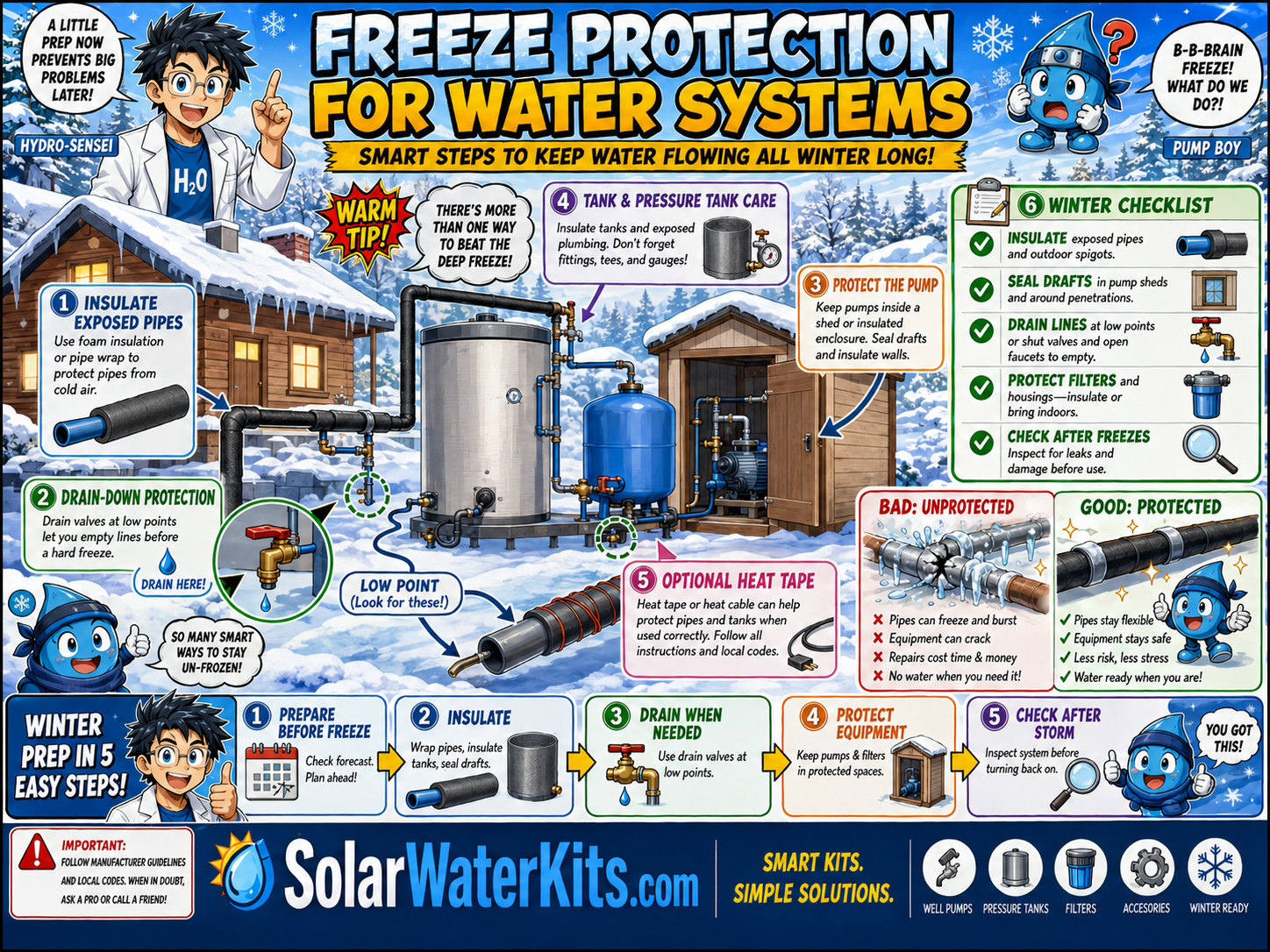
  • Identify exposed pipe, valves, filters, pumps, and hose bibs.
  • Confirm drain-down procedures where used.
  • Check insulation, heat trace, and electrical protection where used.
  • Label winter mode valves and normal positions.
  • Confirm tanks and overflows will not create freeze hazards.
  • Post restart procedure for spring operation.
Logs and Labels

If you do not write it down, the system forgets

Maintenance records are the memory of the water system. Labels are the memory attached to the hardware.

Maintenance log should include

  • Filter replacement dates.
  • Water test dates and results.
  • Pump service dates.
  • Pressure readings and unusual behavior.
  • Battery alerts or backup tests.
  • Controller faults and alarm history.
  • Tank cleaning or inspection dates.
  • Any valve, pipe, pump, or wiring change.

Labels should identify

  • Main shutoff and normal position.
  • Tank inlet, outlet, drain, and overflow.
  • Pump breakers and disconnects.
  • Filter inlet, outlet, and bypass.
  • Potable and non-potable lines.
  • Irrigation, rainwater, graywater, and unknown water categories.
  • Emergency valves and service-only valves.
  • Direction of flow where helpful.

Valve Samurai says

An unlabeled valve is a future argument with water.

Maintenance Table

What to check, why it matters, and who complains if you forget

Item Maintenance Task If Ignored
Pump Check sound, runtime, start/stop behavior, leaks, and protection devices. Pump failure, short-cycling, dry-run damage, or battery drain.
Pressure tank Check cycling behavior, gauge movement, pre-charge procedure, and leaks. Pump starts too often, poor pressure, worn switches.
Storage tank Inspect level, lid, screen, vent, overflow, drain, sediment, and foundation. Contamination, overflow, low reserve, structural problems.
Sediment filter Inspect and replace or clean on schedule. Low flow, clogged valves, damaged equipment.
Carbon filter Replace on schedule and according to water use. Poor performance or false sense of treatment.
UV system Check lamp, sleeve, power, alarm, and water clarity requirements. Disinfection failure.
Float switch Test start/stop behavior and inspect for damage or sticking. Overflow or dry-run risk.
Battery backup Test under real pump load and review alarms, state of charge, and runtime. Backup failure during outage.
Labels Replace faded labels and update after changes. Service chaos and emergency confusion.
Water quality Test according to source, use, and local guidance. Unsafe water assumptions.
Common Failure Stories

The disasters maintenance prevents

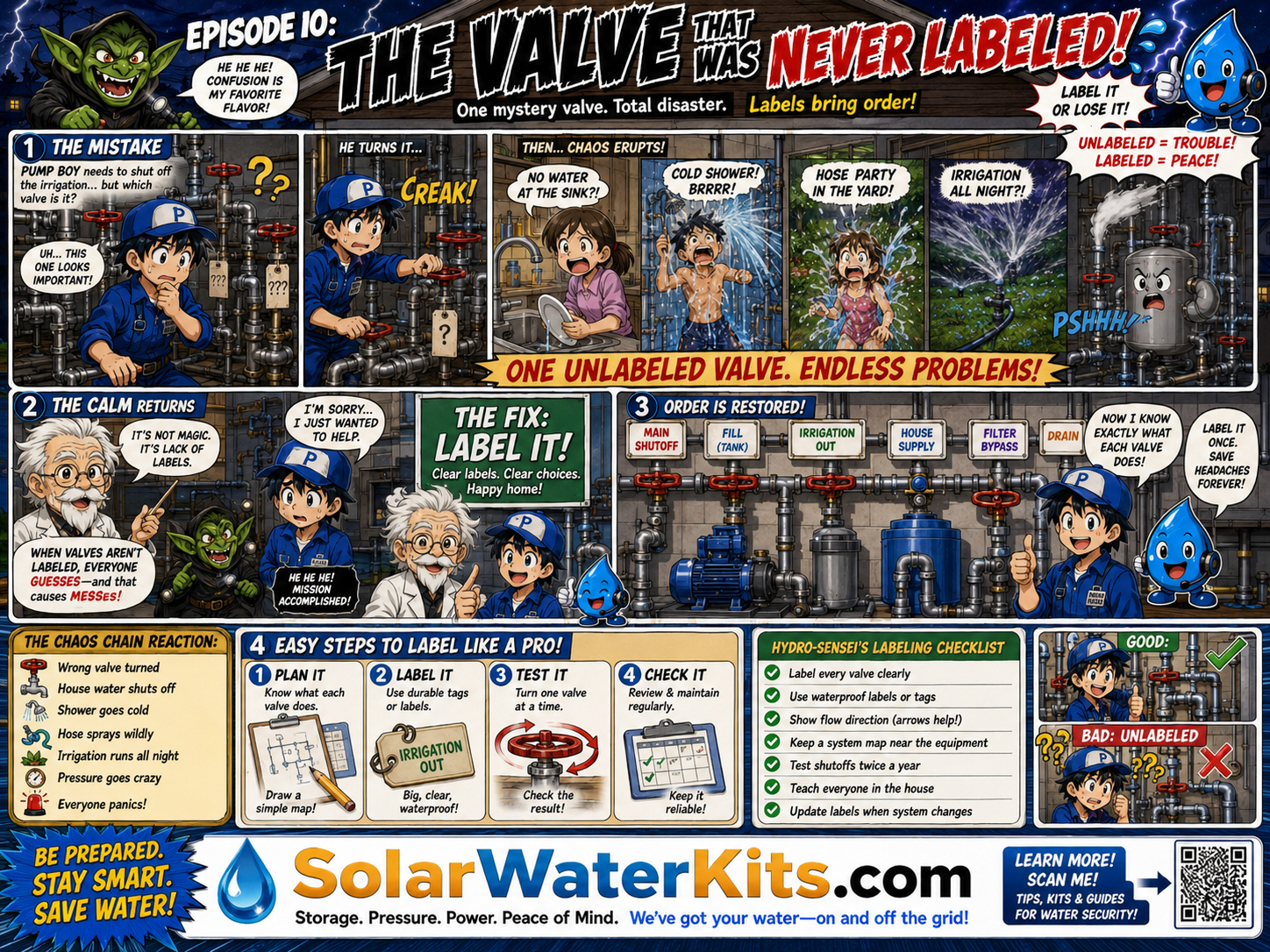
One unlabeled valve causes a total comic catastrophe.
Labels

The unlabeled valve

A mystery valve turns simple service into chaos.

Episode 10
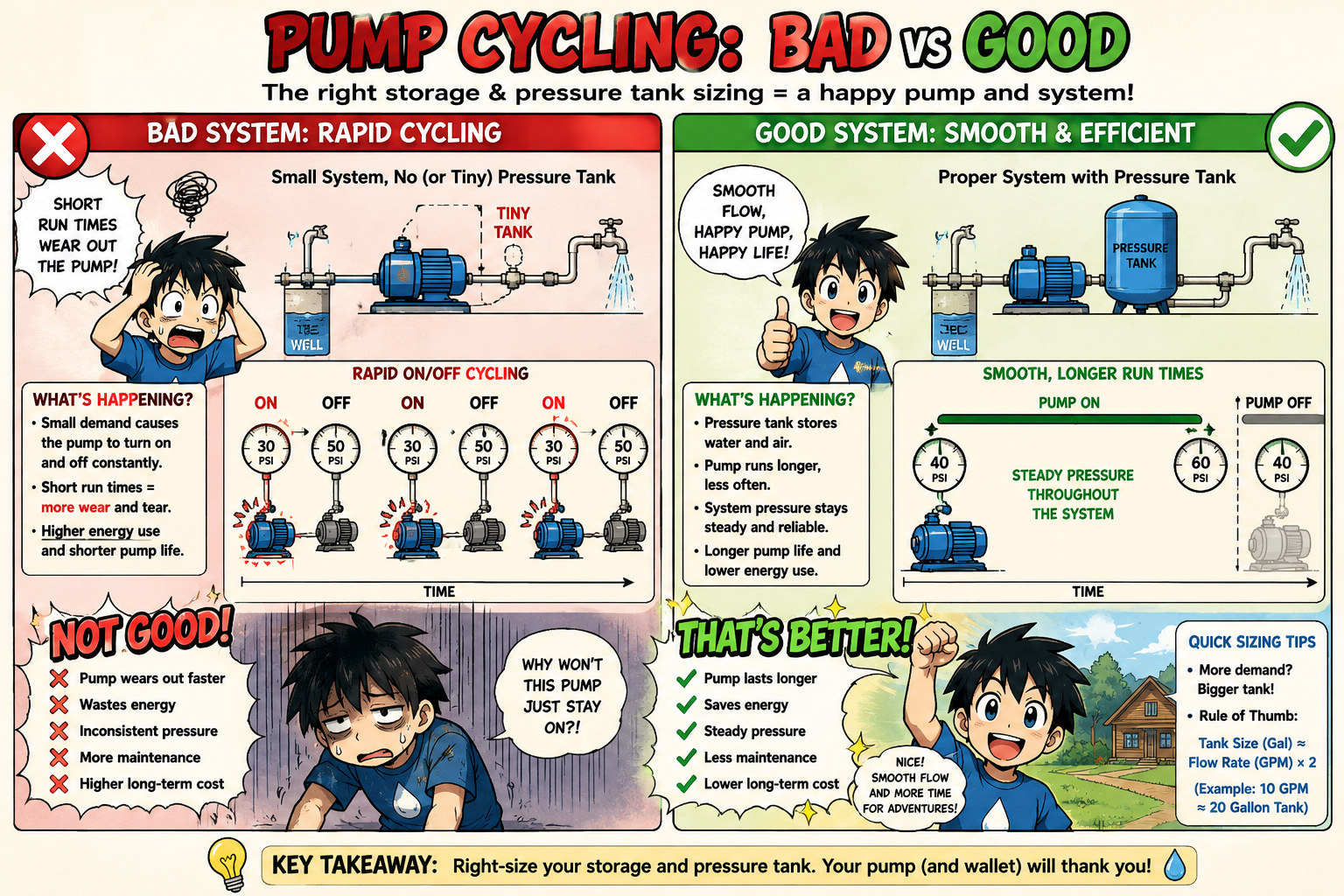
Bad rapid pump cycling versus good pressure tank sizing.
Pressure

The pump that clicked too much

Short-cycling quietly beats up pumps, switches, inverters, and batteries.

Pressure Tanks
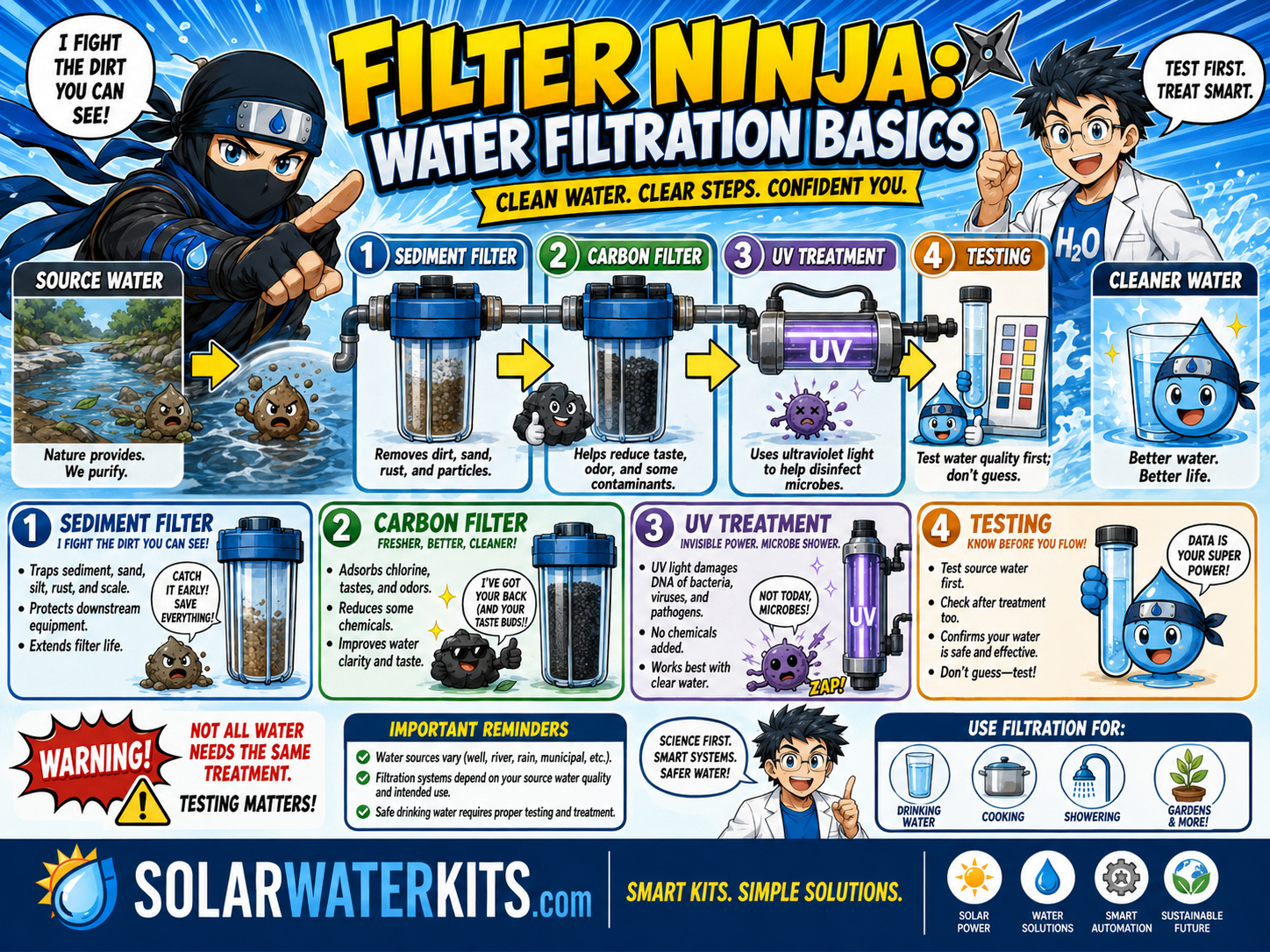
Filter Ninja introducing sediment filtration, carbon, UV, and testing.
Filters

The filter that everyone forgot

Clogged filters can turn a good pump into a weak system.

Filtration
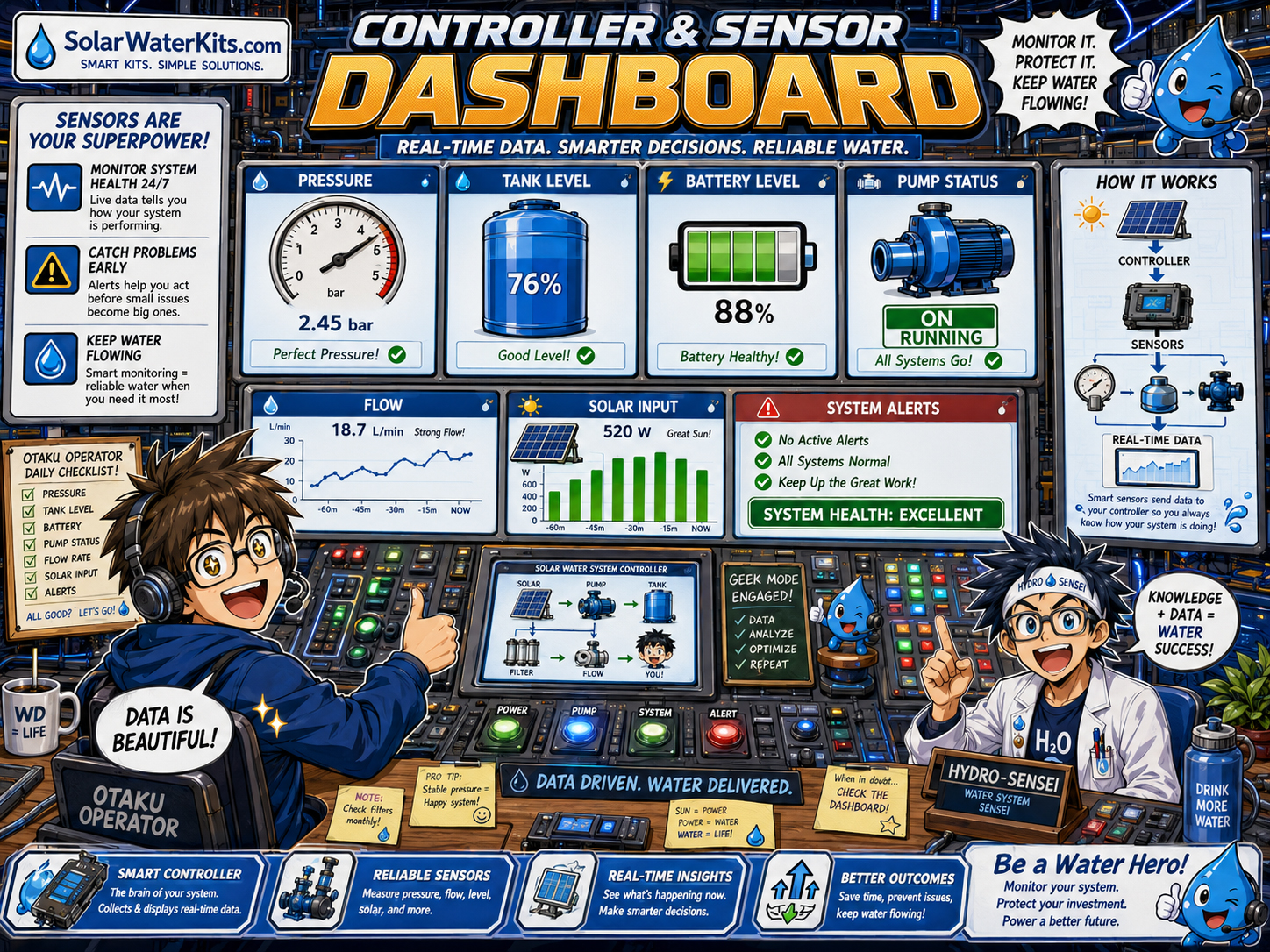
Otaku Operator monitoring pressure, tank level, battery level, pump status, and sunlight.
Controls

The alarm no one tested

Sensors only help if they are tested, labeled, and understood.

Controls
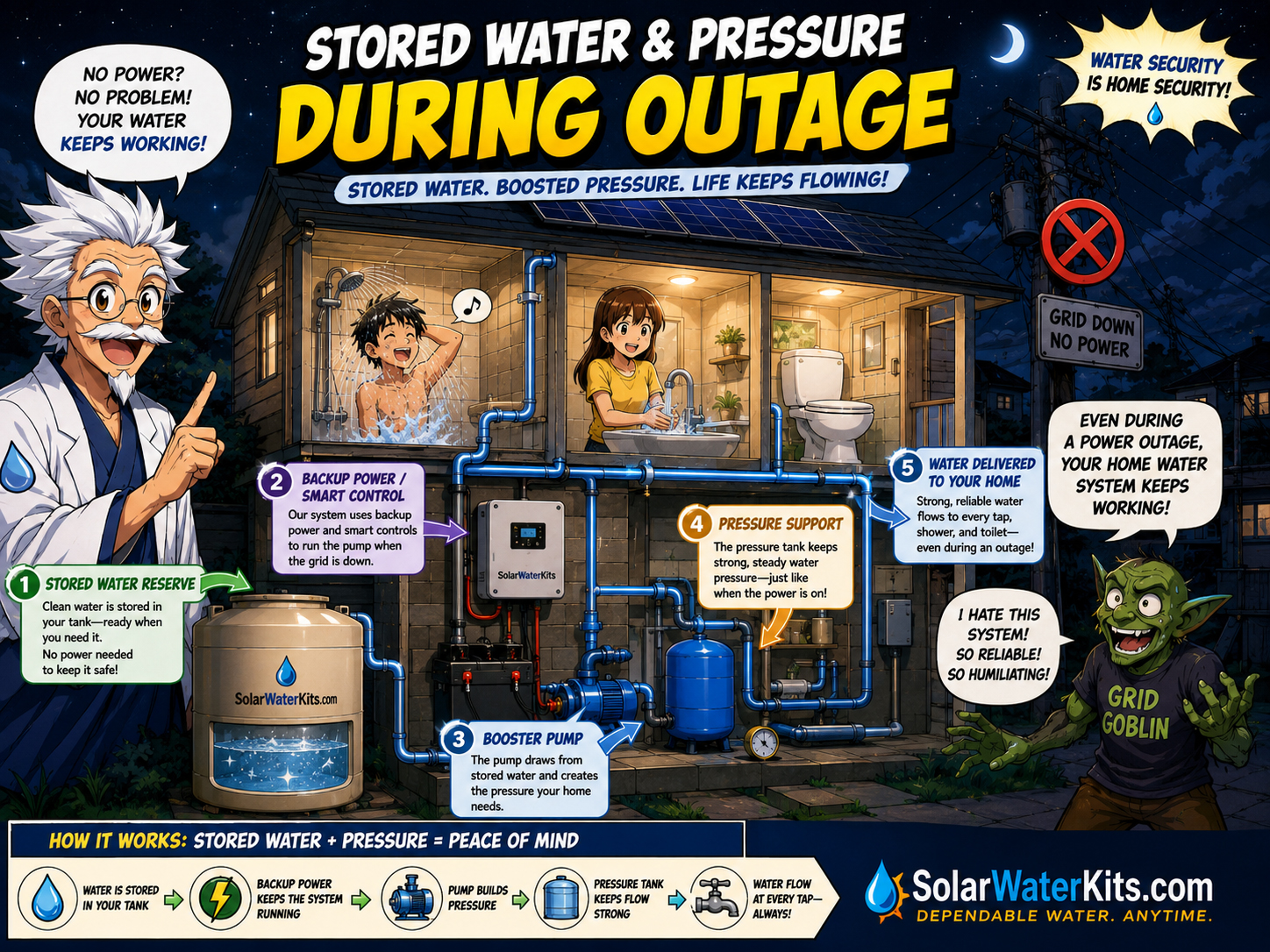
Stored water and pressure during an outage with tank, pressure tank, booster pump, and house water loads.
Storage

The empty reserve tank

A storage tank is only useful if it is filled, protected, and inspected.

Stored Water
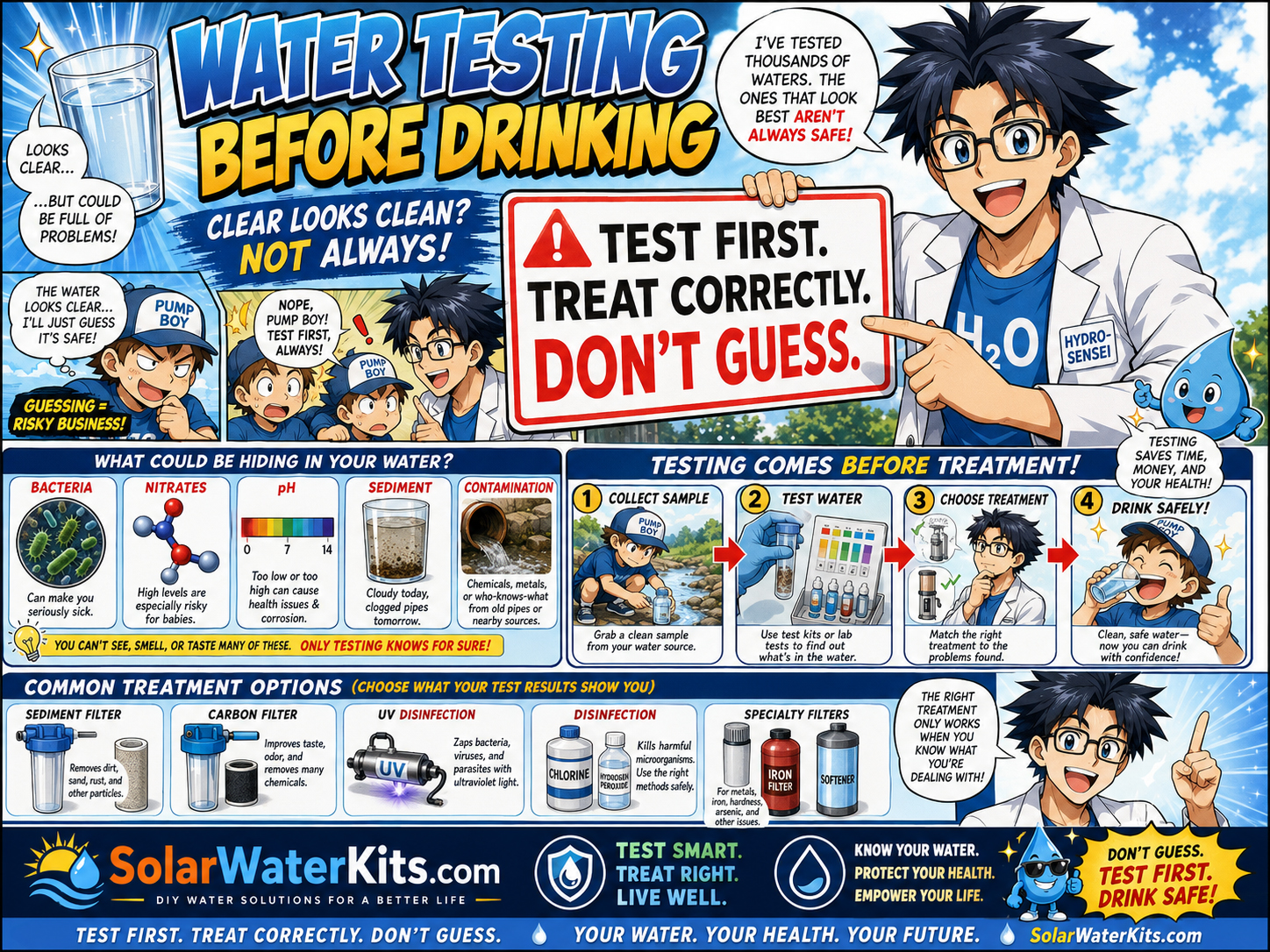
Hydro-Sensei points to a sign: test first, treat correctly, do not guess.
Testing

The clear water assumption

Water can look clean and still need testing and treatment.

Water Safety
Emergency Readiness

Test backup before you need backup

The blackout is not the time to learn that the battery cannot start the pump, the valve label is wrong, the tank is empty, or the filter is clogged.

Backup test checklist

  • Run the pump on backup power under real conditions.
  • Confirm inverter can start the pump.
  • Check battery state before and after test.
  • Confirm critical-load panel is accurate.
  • Verify storage tank reserve.
  • Confirm pressure delivery works.
  • Test float switch and low-water cutoff behavior.
  • Record test date, result, and problems found.

Emergency water checklist

  • Potable water reserve identified.
  • Non-potable water clearly labeled.
  • Drinking-water test dates recorded.
  • Emergency water priorities posted.
  • Manual shutoffs labeled.
  • Service contacts posted.
  • Spare filters and critical parts available.
  • Household or staff trained on outage mode.

Battery Beast says

Do not call it backup until you have watched it work.

Maintenance Safety Notice

Maintenance can expose pressure, electrical, and water-quality hazards

Real solar water systems may involve pumps, tanks, pressure vessels, filters, batteries, inverters, electrical panels, wet locations, potable water, non-potable water, backflow protection, graywater, rainwater, wells, fire-readiness concepts, permits, inspections, and manufacturer instructions.

Do this

  • Use qualified plumbing, electrical, pump, well, solar, battery, and water-treatment professionals where required.
  • De-energize and isolate equipment safely before service where required.
  • Relieve pressure before opening pressure components or filter housings.
  • Use potable-water-safe materials and clean handling where applicable.
  • Label and document every system change.
  • Follow local codes, permits, inspections, and manufacturer instructions.

Do not do this

  • Do not open pressurized filters or plumbing casually.
  • Do not improvise electrical work near water.
  • Do not bypass treatment or filters without a clear procedure.
  • Do not mix potable and non-potable equipment.
  • Do not ignore alarms, leaks, bad odors, cloudiness, or pressure problems.
  • Do not treat this page as a permit drawing or installation manual.