Know the source
Well water, rainwater, tank water, surface water, municipal water, graywater, and unknown water have different risks and rules.
A filter is a tool, not a wizard. Filter Ninja teaches what sediment filters, carbon filters, UV, testing, sanitation, storage, maintenance, and labels can do — and what they cannot do.
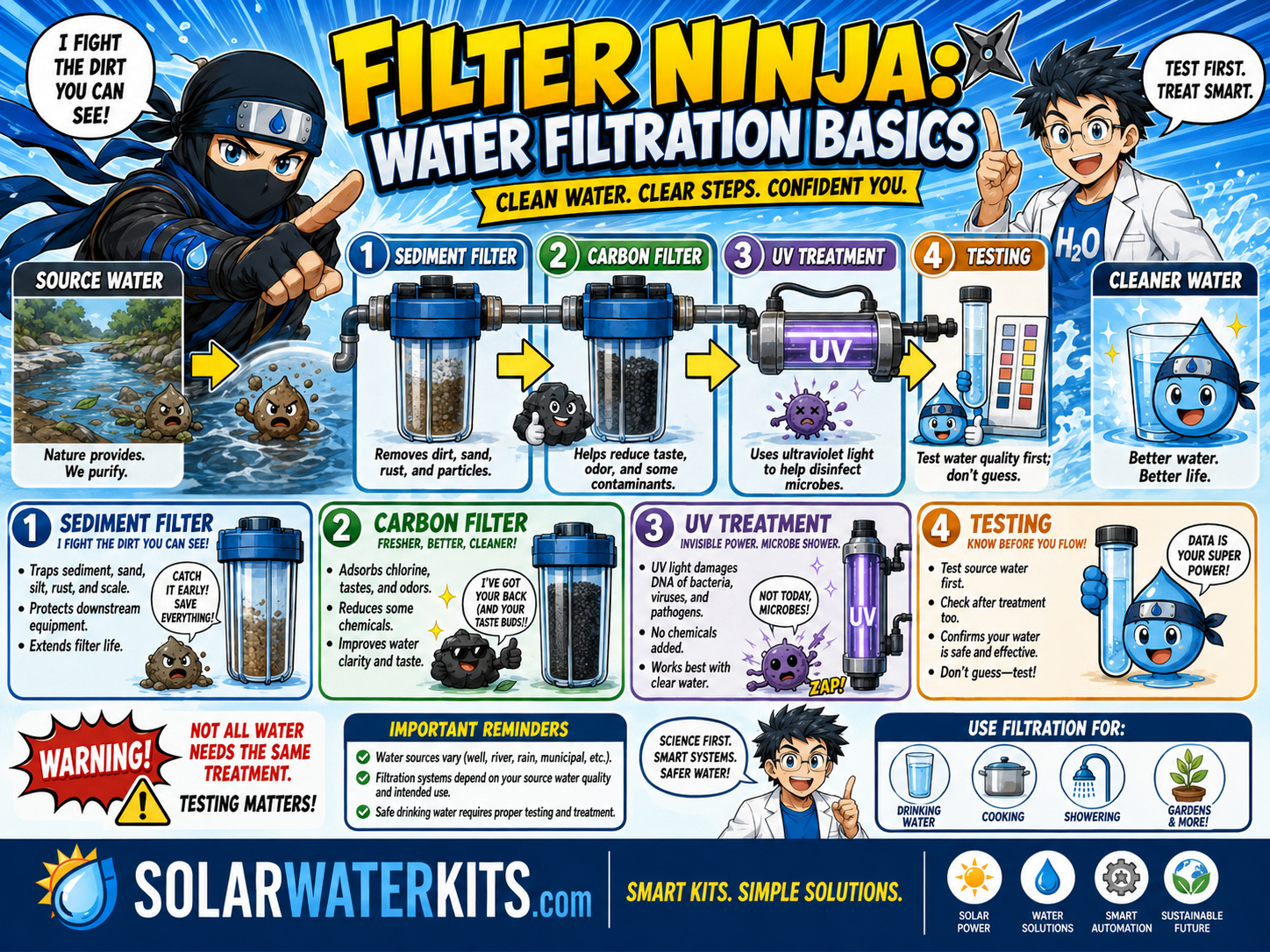
Solar panels make electricity. Pumps move water. Tanks store water. Filters remove specific things. None of those facts automatically makes water safe to drink.
Water filtration should be chosen after understanding the source water, intended use, test results, flow rate, pressure, maintenance requirements, and local rules.
Well water, rainwater, tank water, surface water, municipal water, graywater, and unknown water have different risks and rules.
Sediment, taste, odor, bacteria, chemicals, minerals, salts, hardness, and nitrates require different treatment approaches.
Drinking, irrigation, washdown, livestock, flushing, and emergency utility water are not the same category.
Filter Ninja does not swing one sword at every problem. The treatment chain depends on what is actually in the water.
Each tool has a purpose. No single filter solves every water problem.
| Problem | Possible Tool | Filter Ninja Warning |
|---|---|---|
| Sand, silt, rust, visible particles | Sediment filter, screen, strainer. | Particles are not the only possible problem. |
| Taste, odor, chlorine | Carbon filtration. | Carbon does not remove everything and must be replaced. |
| Bacteria risk | UV, chlorination, or other approved disinfection. | Disinfection requires correct design, dose, contact time, and maintenance. |
| Dissolved minerals, salts, nitrates, metals | Specialty treatment, RO, softening, or professional design. | Basic filters may do nothing for dissolved contaminants. |
| Tank contamination | Tank cleaning, covers, screens, treatment, testing. | Stored water can become contaminated water. |
| Unknown water | Testing and professional review. | Unknown means unknown, not “probably okay.” |
Filters create pressure drop. Pumps have curves. Batteries have runtime limits. A filter is not just a cartridge — it is part of the hydraulic and electrical system.
Filters have rated flow. Pushing too much water through the wrong filter can reduce performance, create pressure drop, or damage components.
Flow & PressureDirty filters can make a good pump look weak. Gauges before and after filters can help diagnose restriction.
Pump SizingA clogged filter can make a battery-backed pump run longer, cycle strangely, or fail to meet the water load.
Battery Backup“The filter is part of the pump calculation, not an afterthought taped to the pipe.”
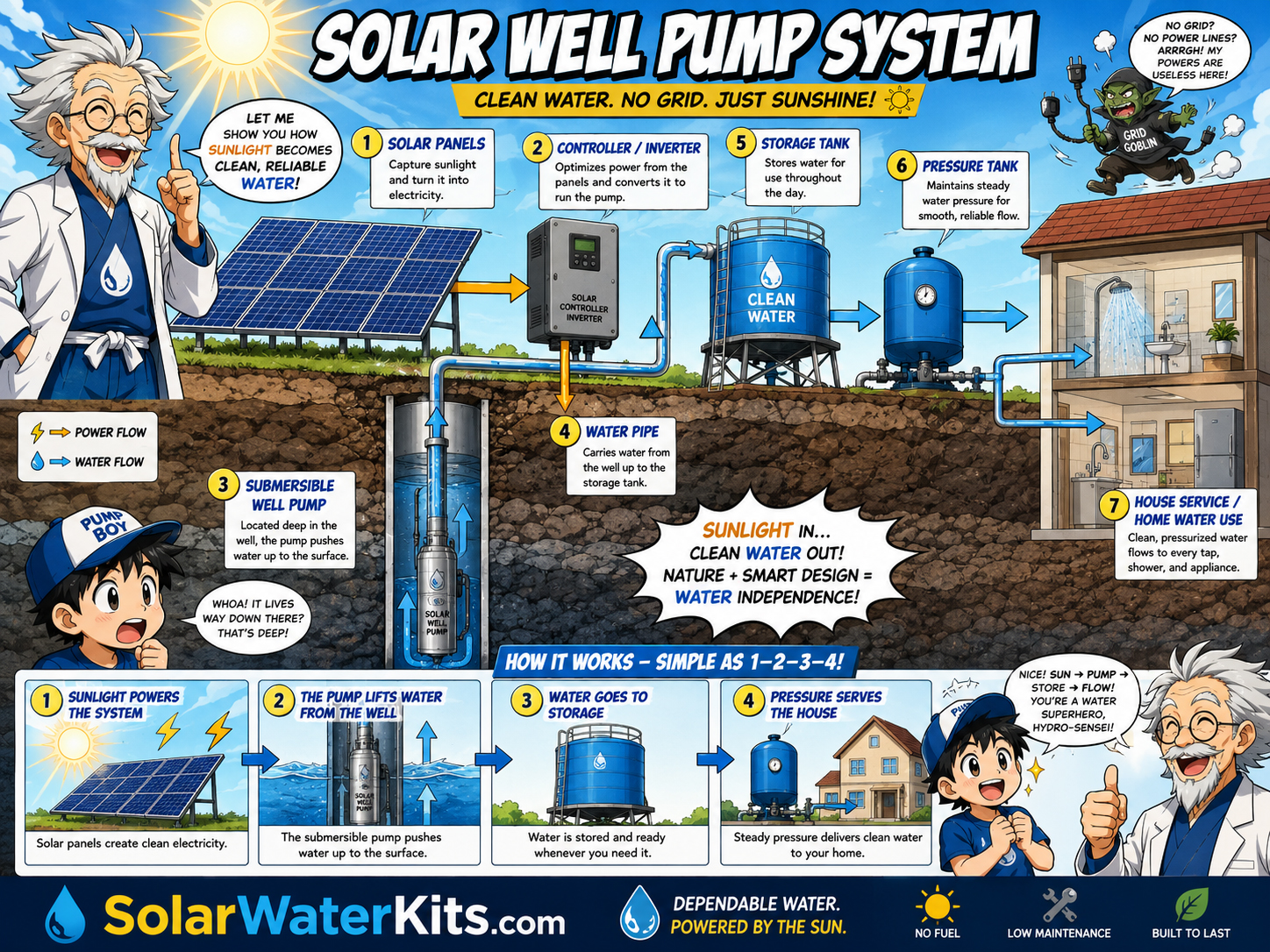
May contain sediment, hardness, iron, bacteria, nitrates, or other concerns depending on source conditions.
Well Pumps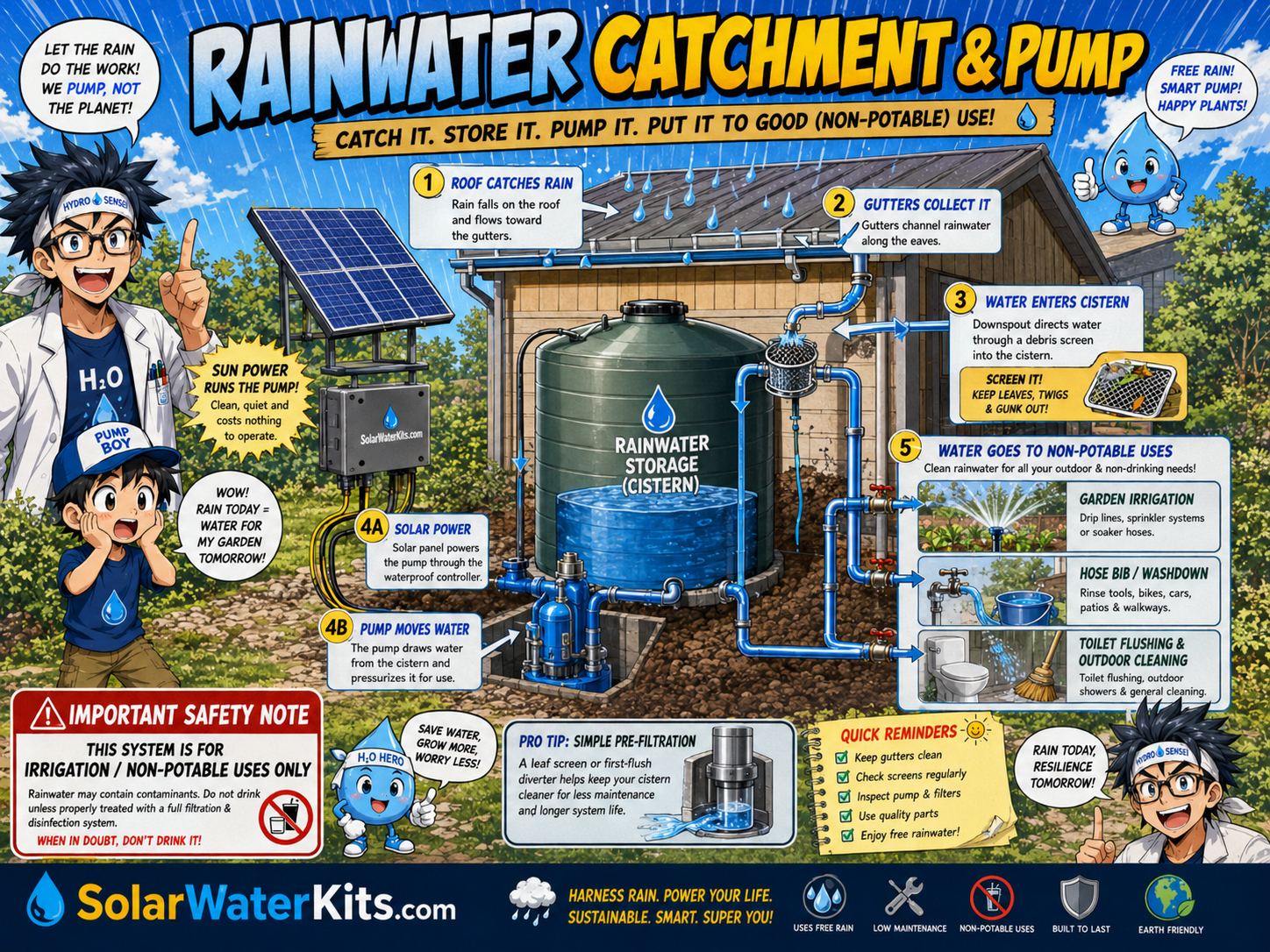
Can carry roof debris, ash, dust, pollen, insects, bird waste, and tank contamination.
Rainwater
Graywater is non-potable and highly rule-dependent. It should never be confused with drinking water.
GraywaterFilters need replacement, cleaning, pressure checks, sanitation, and records. The cartridge is not the whole system.
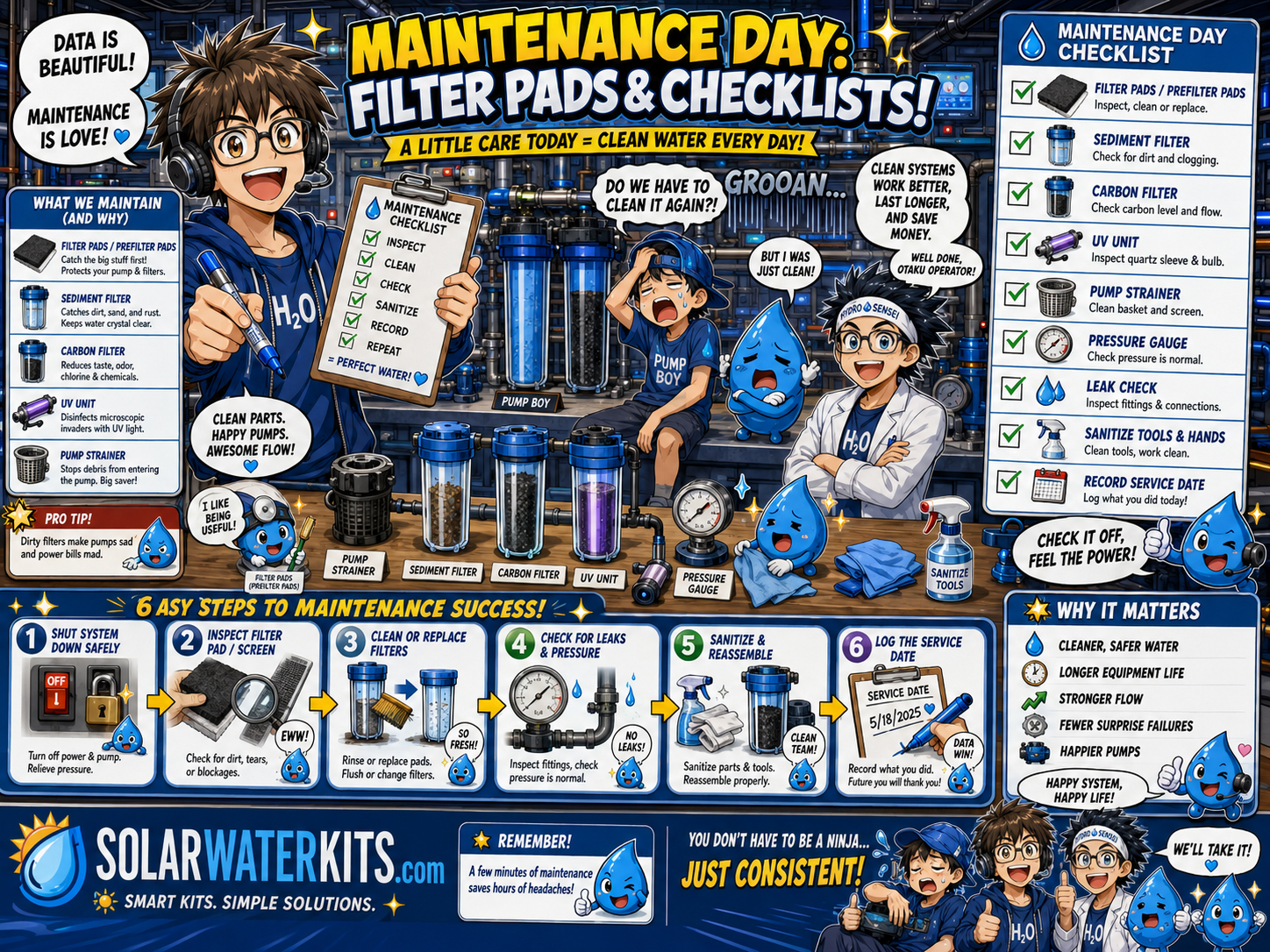
Filter date, pressure drop, cartridge type, flow direction, and bypass status should be clear.
“A filter you forgot is a filter you are only pretending to have.”
Tanks, hoses, caps, fittings, hands, buckets, and stagnant plumbing can reintroduce contamination.
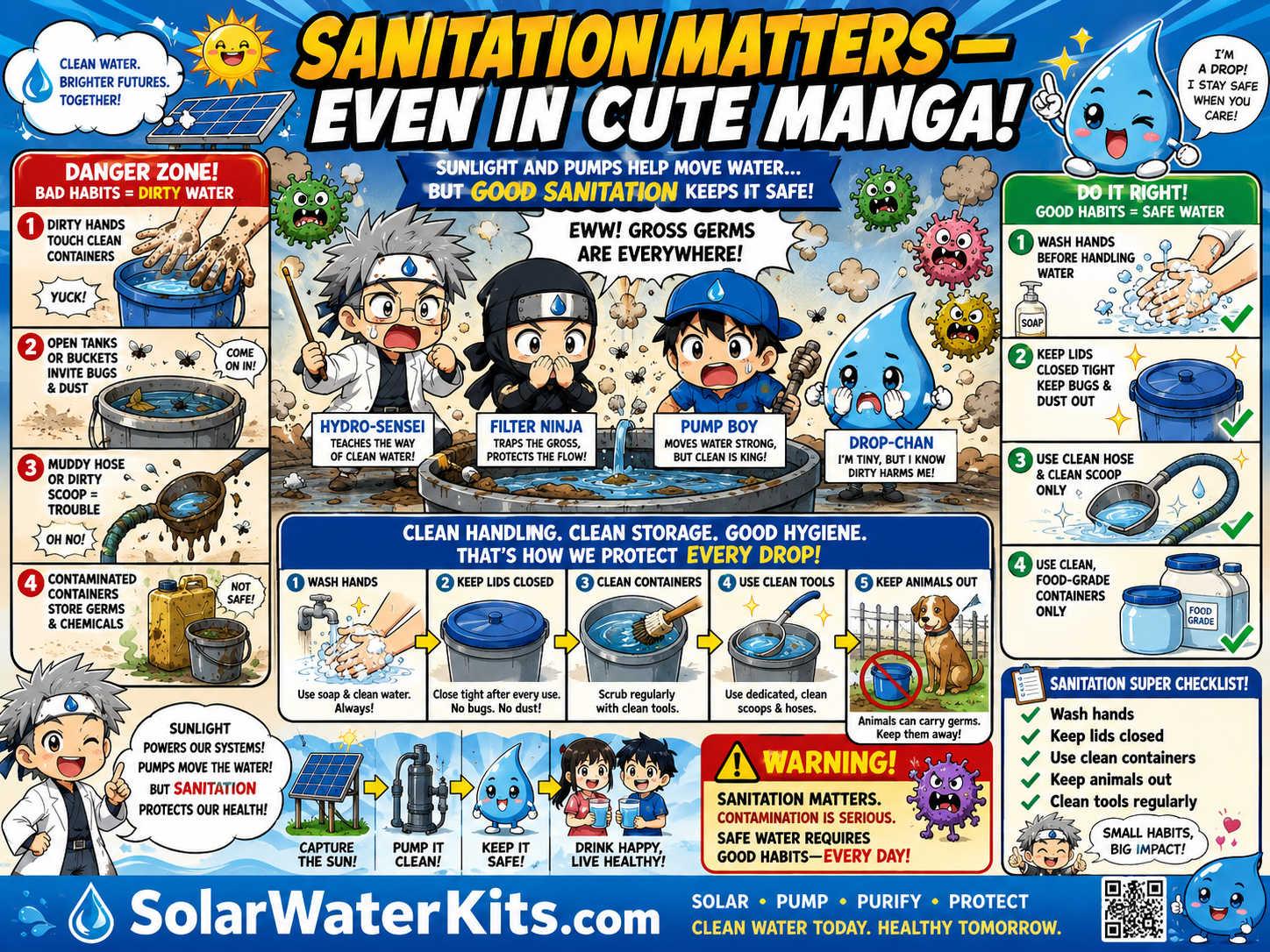
The handling around the filter can be as important as the filter itself.
Real water filtration and treatment may involve potable water, non-potable water, wells, rainwater, graywater, sediment filters, carbon filters, UV, disinfection, reverse osmosis, tanks, pressure equipment, pumps, electrical equipment, backflow protection, cross-connection control, permits, inspections, and health guidance.