Test first
Water testing tells you what problem you are trying to solve. Treatment chosen without testing can miss the real risk.
Solar power can move water. Pumps can pressurize water. Tanks can store water. None of that automatically makes water safe to drink. Filter Ninja’s rule is simple: test first, treat correctly, label clearly, and do not guess.
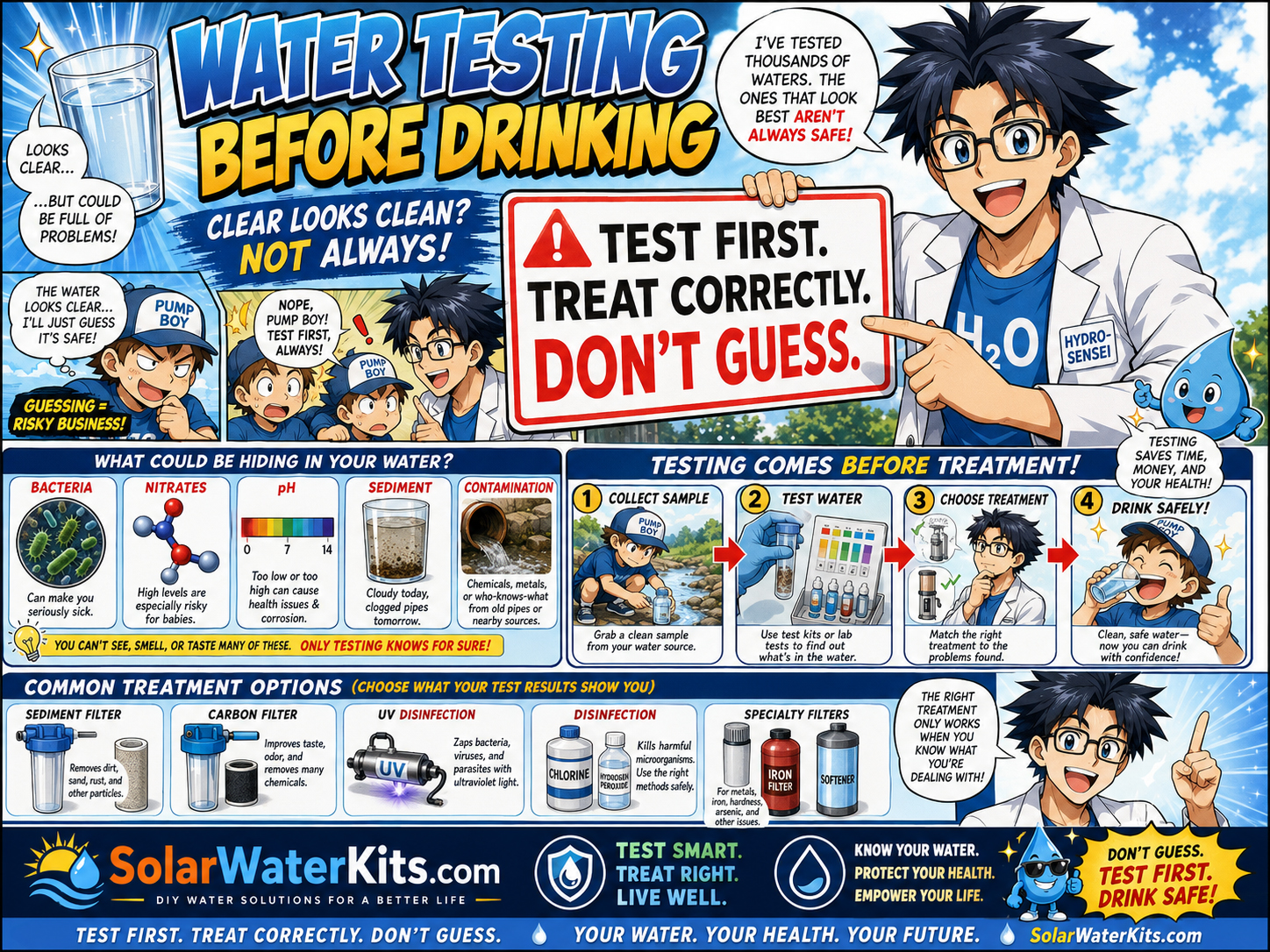
A solar water system can move, store, pressurize, and distribute water. Drinking-water safety is a separate question. Potable water requires appropriate source protection, testing, treatment, sanitary storage, maintenance, and code compliance.
Water can look clear and still contain bacteria, viruses, parasites, nitrates, metals, salts, chemicals, or other risks. Do not drink unknown water because it looks clean, smells fine, or came from a solar-powered pump.
Water testing tells you what problem you are trying to solve. Treatment chosen without testing can miss the real risk.
Sediment filters, carbon, UV, chlorination, reverse osmosis, softening, and specialty treatment all solve different problems.
A treatment system that is not maintained can become a false sense of safety. Filters, lamps, tanks, and lines need service.
Filter Ninja’s first job is to stop category confusion. A clean label can prevent a dirty mistake.
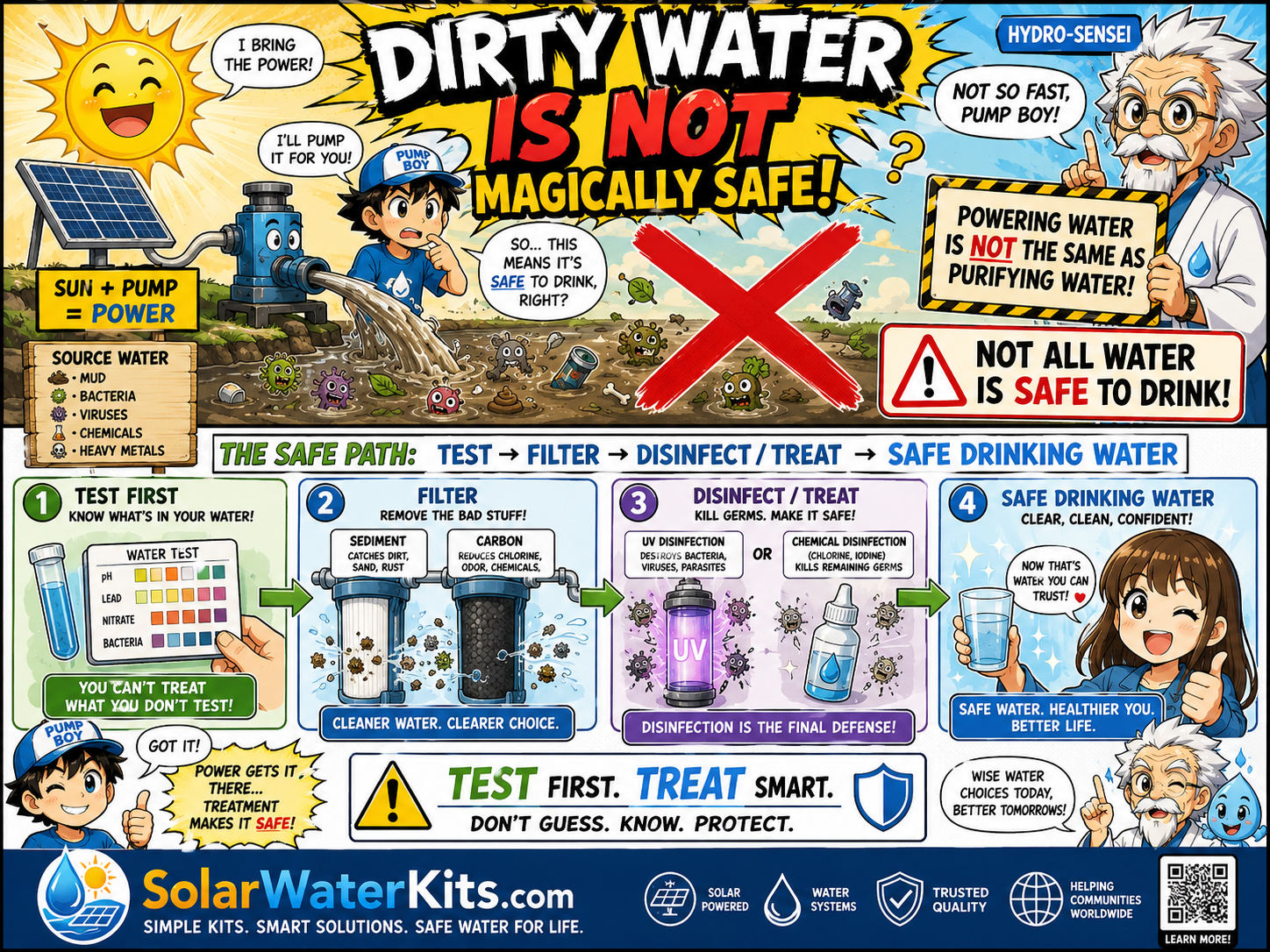
Power source and water quality are different questions.
| Water Category | Possible Uses | Filter Ninja Warning |
|---|---|---|
| Potable water | Drinking, cooking, brushing teeth, food contact. | Requires proper testing, treatment, storage, plumbing, and maintenance. |
| Non-potable water | Irrigation, washdown, flushing, dust control, some utility uses. | Must be labeled and separated from potable plumbing. |
| Rainwater | Often non-potable unless properly treated and allowed by local rules. | Roof runoff can contain debris, dust, ash, bird waste, and contaminants. |
| Graywater | Limited approved landscape uses where allowed. | Not drinking water. Not for casual plumbing connection. |
| Well water | May be potable only after testing and appropriate treatment where needed. | Clear well water can still have invisible risks. |
| Unknown water | Do not consume. | Unknown means unknown, not “probably fine.” |
Treatment must match the source water and the actual contaminant. Filter Ninja does not guess, and neither should the system designer.
Helps catch particles such as sand, silt, rust, and visible debris. It does not automatically remove bacteria, viruses, dissolved chemicals, salts, or nitrates.
Filtration BasicsMay help with taste, odor, chlorine, and selected organic compounds. It does not remove every contaminant and must be replaced on schedule.
Carbon FiltersUV and other disinfection approaches require correct water clarity, flow, exposure, power, maintenance, and testing context.
UV and Disinfection“Treatment is not a decoration after the pump. Treatment is a design decision based on water evidence.”
Water safety is not only about filters. Tanks, hoses, fittings, caps, hands, buckets, service tools, and storage conditions can all introduce contamination.
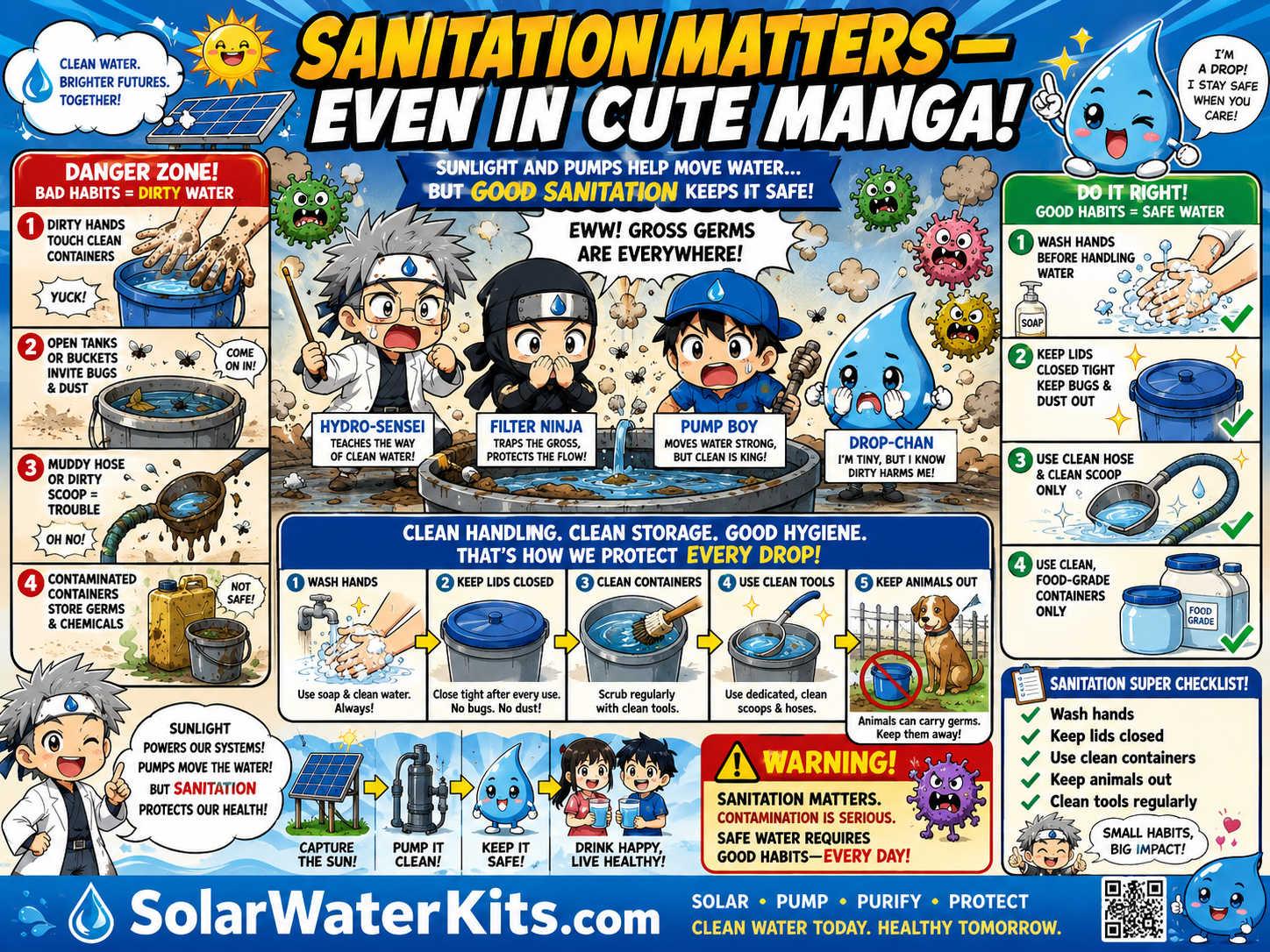
A clean-looking system can still fail if handling and storage are sloppy.
Cross-connections and backflow risks are serious. Potable water must be protected from non-potable systems, graywater, rainwater, irrigation, tanks, hoses, and unknown sources.
“The fastest way to ruin safe water is to connect it to unsafe water and call it clever.”
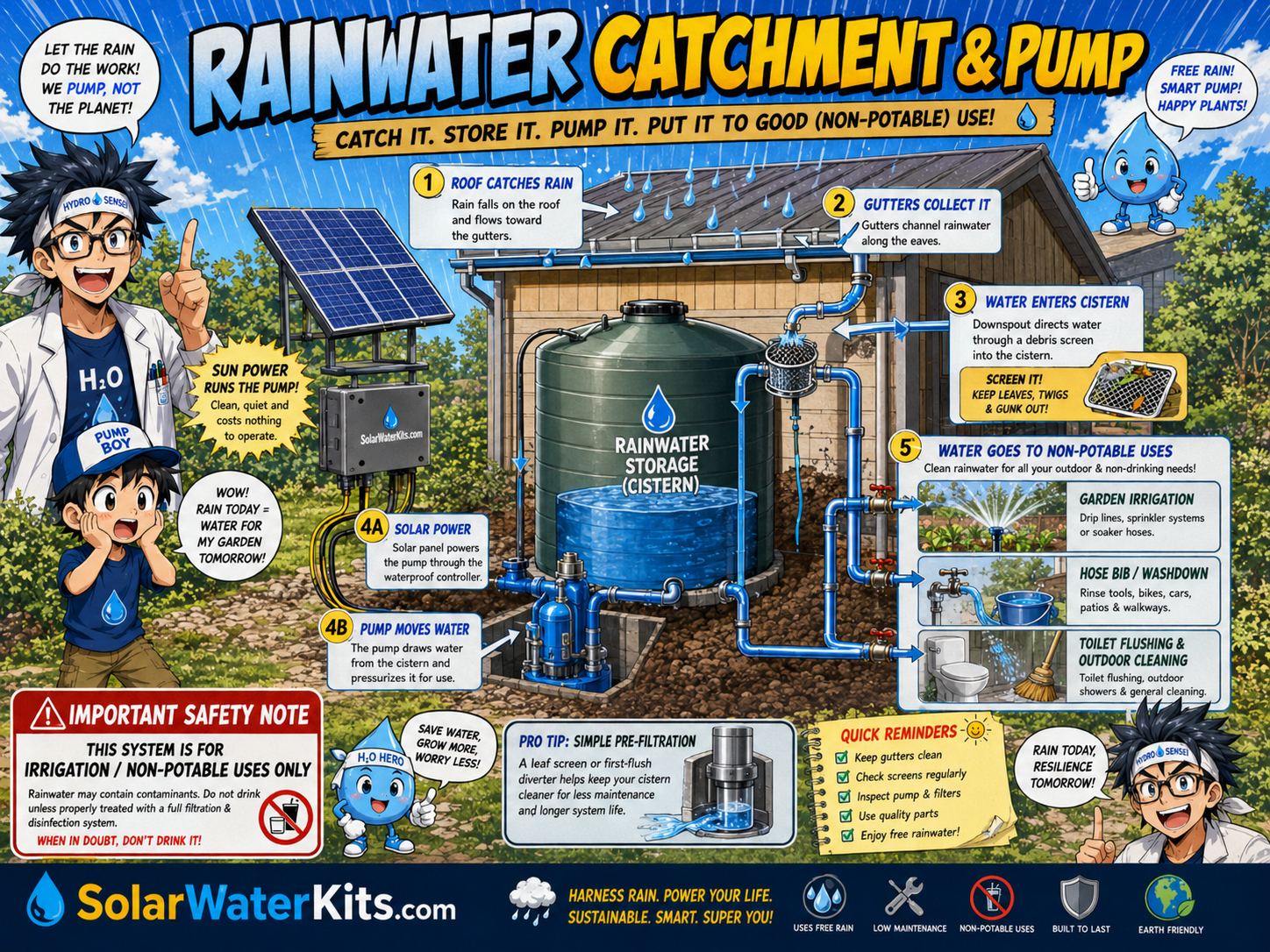
Catchment, cisterns, screens, first-flush concepts, pumps, labels, and treatment questions.
Rainwater
Graywater is non-potable and must be separated, labeled, and used only where allowed.
Graywater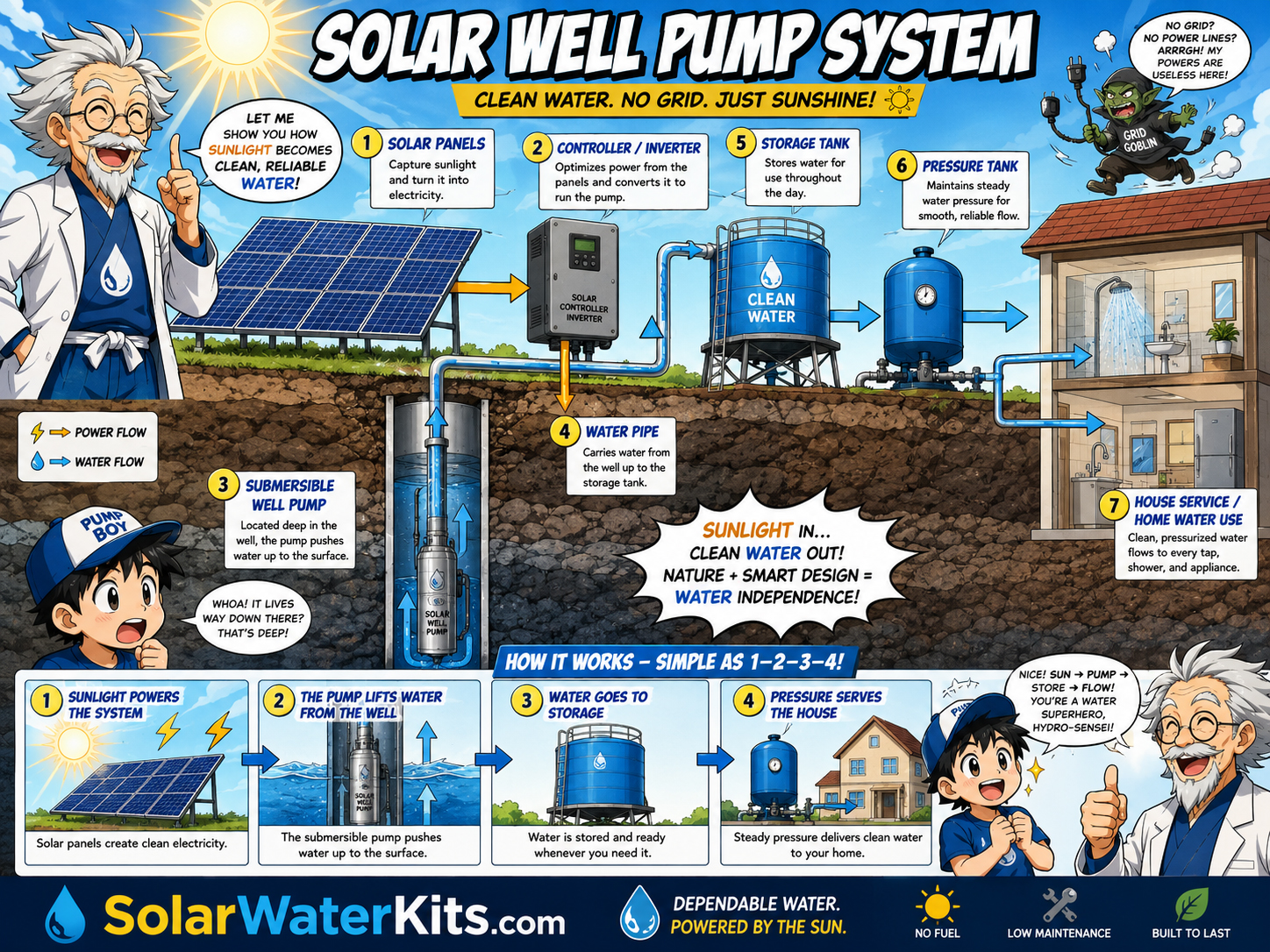
Well water requires source data, pump design, storage, pressure, testing, and treatment where needed.
Well PumpsIf nobody knows when the filter was changed, when the water was tested, or when the tank was cleaned, the system is operating on memory and hope.
| Record | Why It Matters | Filter Ninja Warning |
|---|---|---|
| Water test results | Shows actual water quality concerns. | Old results may not reflect current conditions. |
| Filter change dates | Shows whether treatment components are maintained. | Expired filters can create false confidence. |
| UV lamp service | UV lamps and sleeves need maintenance. | A glowing lamp is not proof of correct dose. |
| Tank inspection | Tracks sediment, algae, pests, lids, screens, leaks, and cleaning. | Stored water can become contaminated water. |
| System changes | Tracks new valves, bypasses, pumps, filters, or plumbing changes. | Unrecorded changes become future confusion. |
| Emergency water plan | Shows what water is safe and what water is only utility water. | Outage panic is a terrible water-quality manager. |
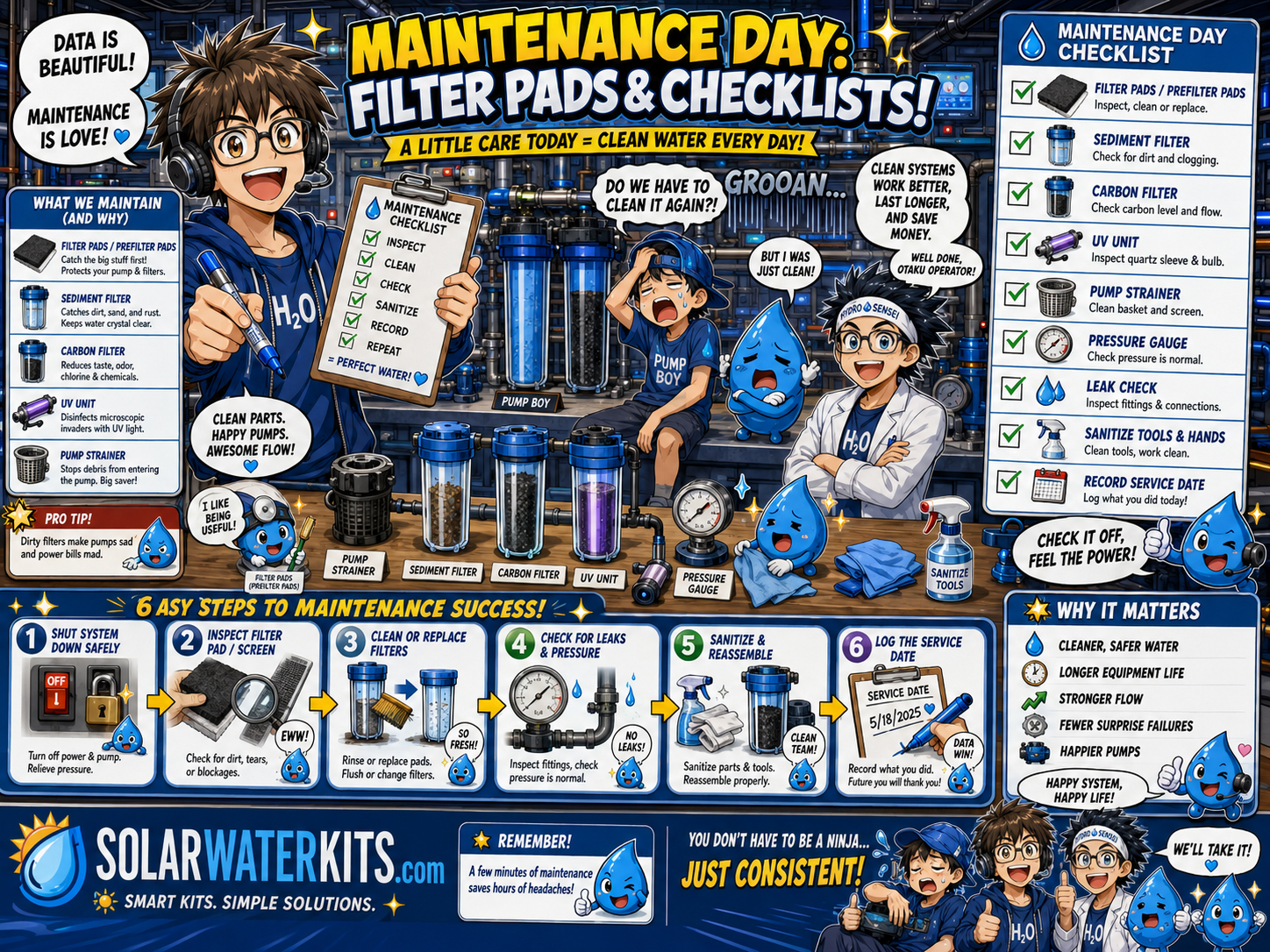
Logs, labels, filters, tanks, tests, and service dates keep the safety story alive.
Real water systems may involve potable water, non-potable water, wells, rainwater, graywater, tanks, pumps, filters, disinfection, reverse osmosis, UV, backflow protection, cross-connection control, pressure equipment, electrical equipment, permits, inspections, and health guidance.