The pump room goes quiet
The crew runs to the equipment room. The well pump is silent. The pressure gauge is dropping. Nobody labeled the backup plan because nobody wanted to think about boring things before breakfast.
The grid fails. The well pump stops. The faucet coughs once and gives up. Pump Boy panics, Grid Goblin laughs, and Hydro-Sensei begins the first lesson: water pressure is not magic. It is a system.
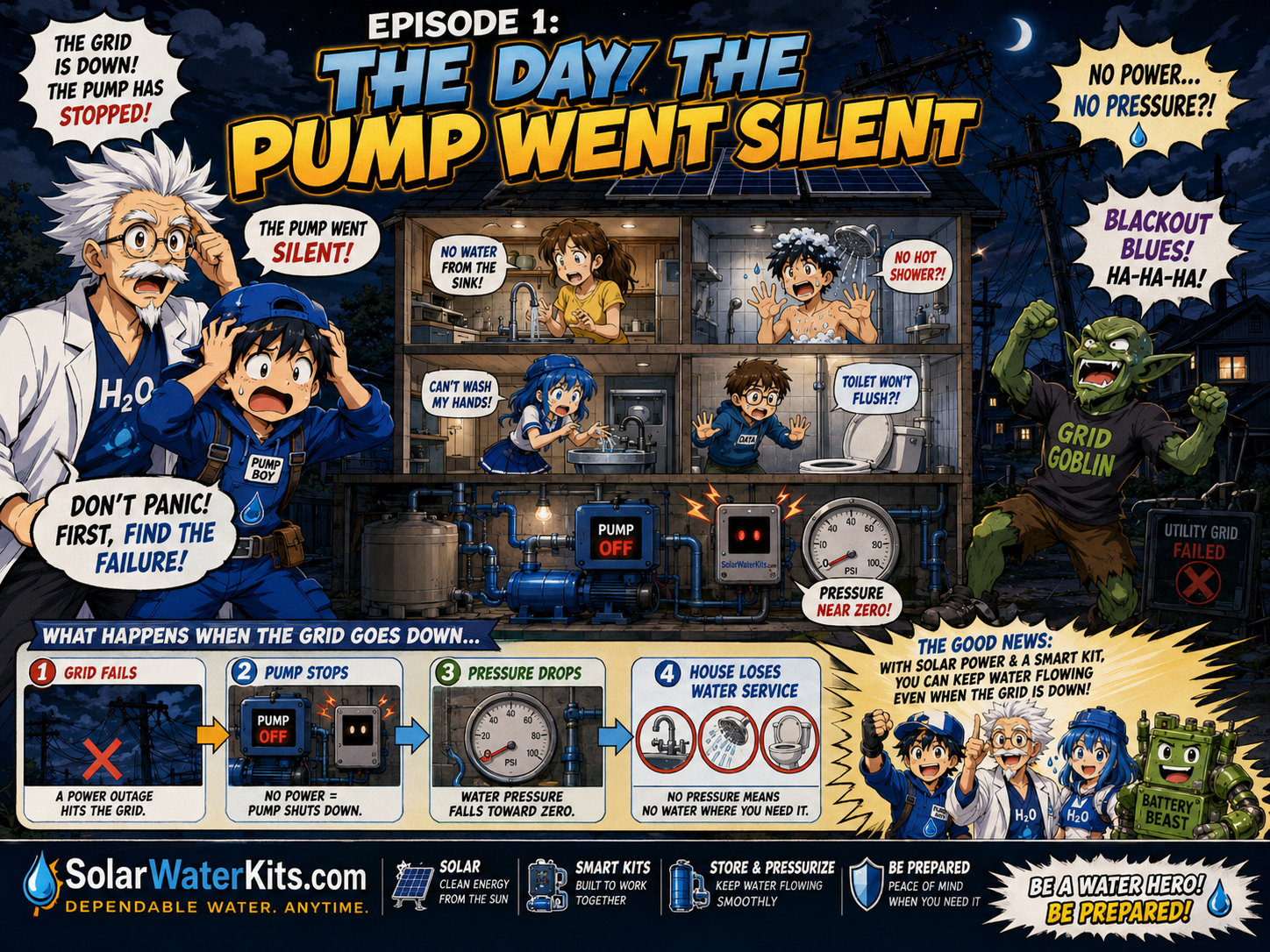
Episode 1 introduces the core emergency-water lesson: if your water depends on an electric pump, then power failure can become water failure.
Then the house learns that water pressure has an electrical dependency.
A normal morning becomes strange. The lights blink. The refrigerator hum stops. Somewhere outside, Grid Goblin snips the utility power with a villain grin.
Inside the house, someone opens the faucet. One sad splash appears, then silence. Pump Boy runs in wearing goggles and panic.
The crew runs to the equipment room. The well pump is silent. The pressure gauge is dropping. Nobody labeled the backup plan because nobody wanted to think about boring things before breakfast.
Tank-chan rolls in calmly. She points to the pressure tank and the storage tank. “I can help,” she says, “but only if someone filled me and designed the system before the crisis.”
Battery Beast opens one eye. “I can run the pump,” he growls, “but do not make me power every shower, hose, pool pump, and mystery load at the same time.”
Hydro-Sensei draws the emergency chain on the board: source → pump → power → storage → pressure → safe use.
Pump Boy stops panicking long enough to write it down.
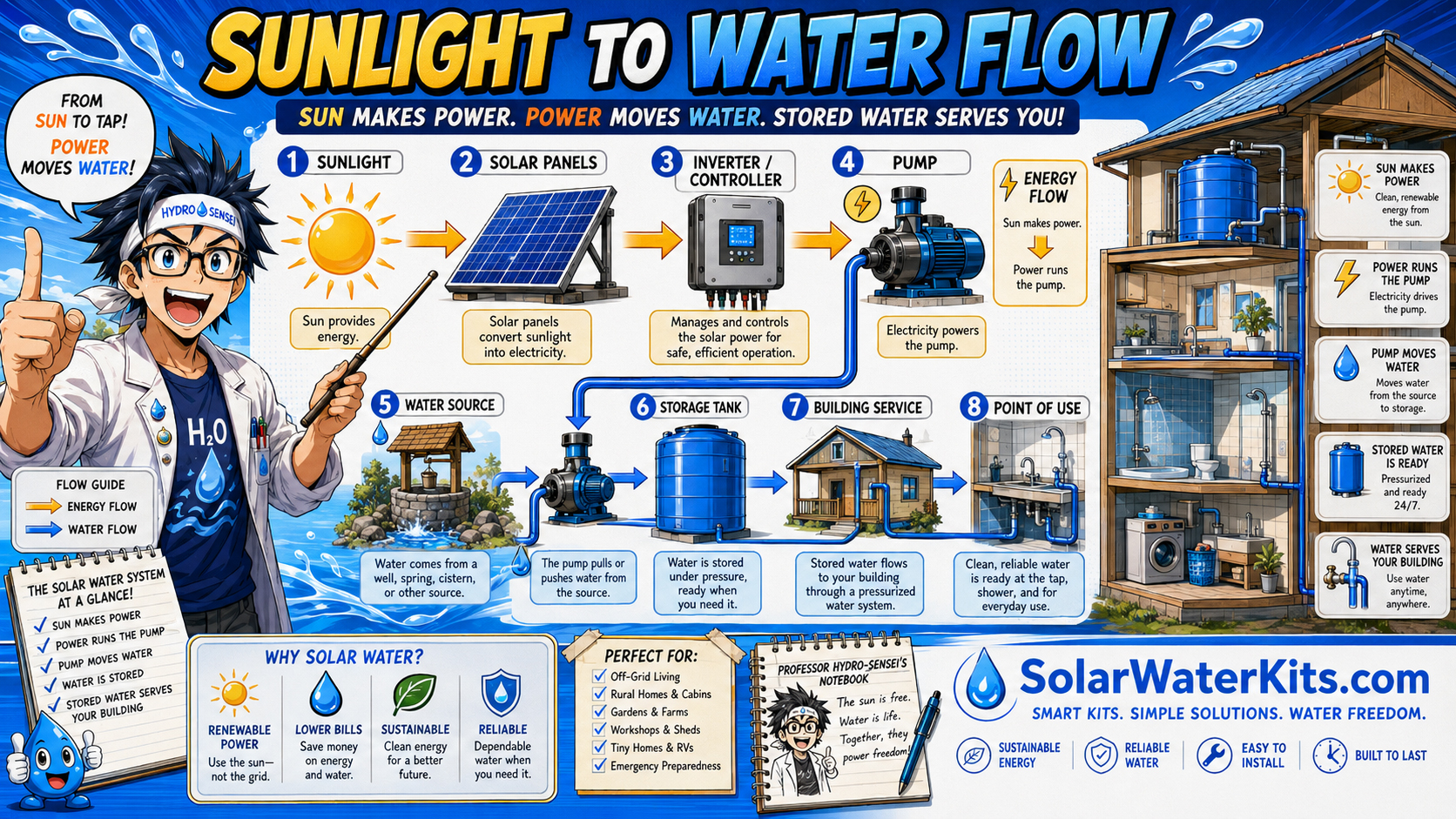
Sunlight, power, pump, tank, pressure, and use point all connect.
Someone grabs a mystery bucket. Filter Ninja appears from the shadows. “No drinking from unknown water,” he says. “Emergency water still needs categories.”
Otaku Operator opens the label maker. Main shutoff. Tank outlet. Pump breaker. Filter bypass. Non-potable hose. Battery-backed panel. The panic begins to look like a checklist.
The household does not get unlimited normal water. It gets essential water. Drinking, hand washing, toilets, and critical needs come first. The shower can wait.
Episode 1 is funny because the mistake is common. Many homes, cabins, ranches, and remote properties assume water will always be available — until the pump cannot run.
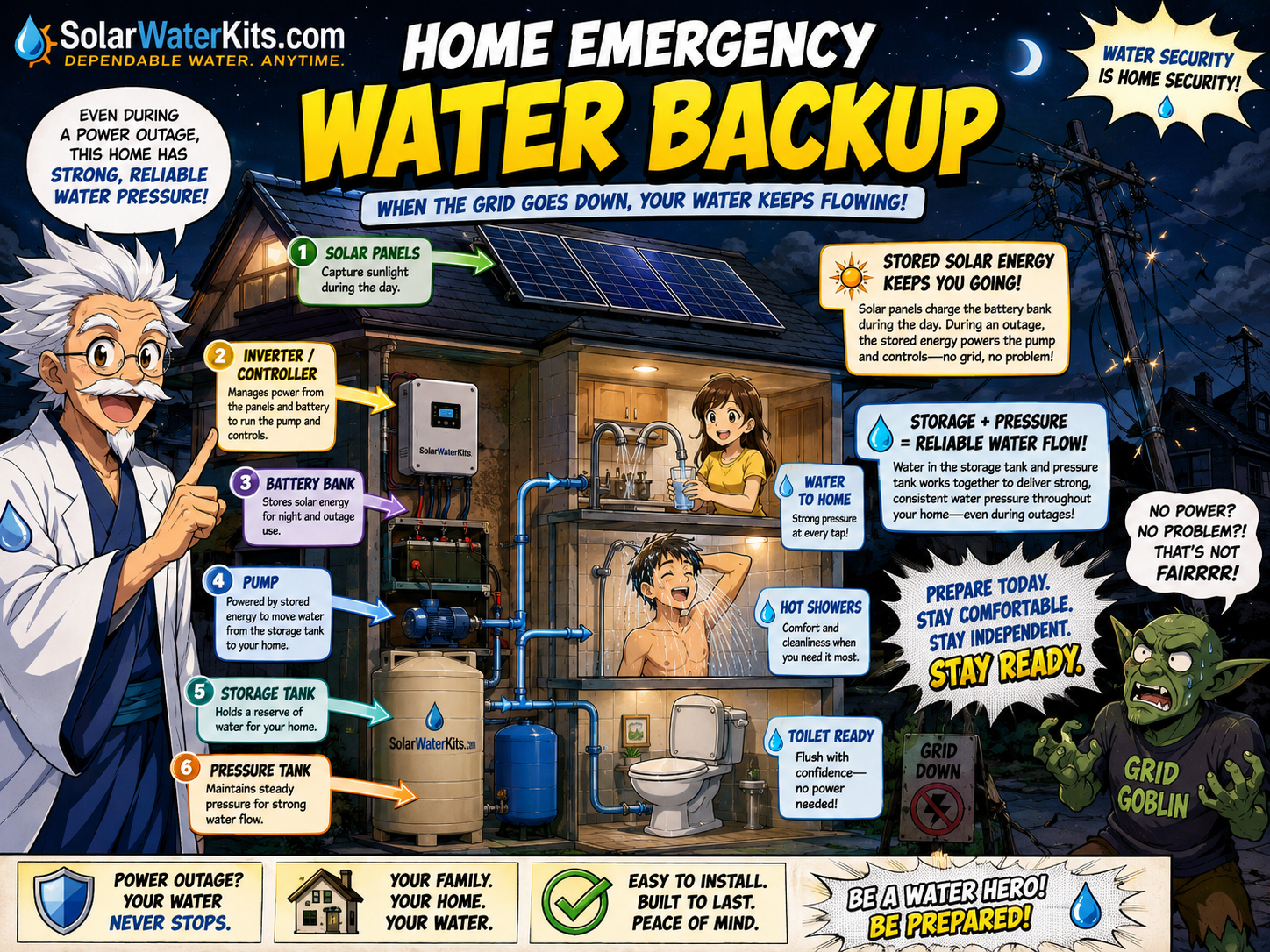
Stored water, backup power, pressure delivery, and essential-load priorities should be decided early.
Emergency Water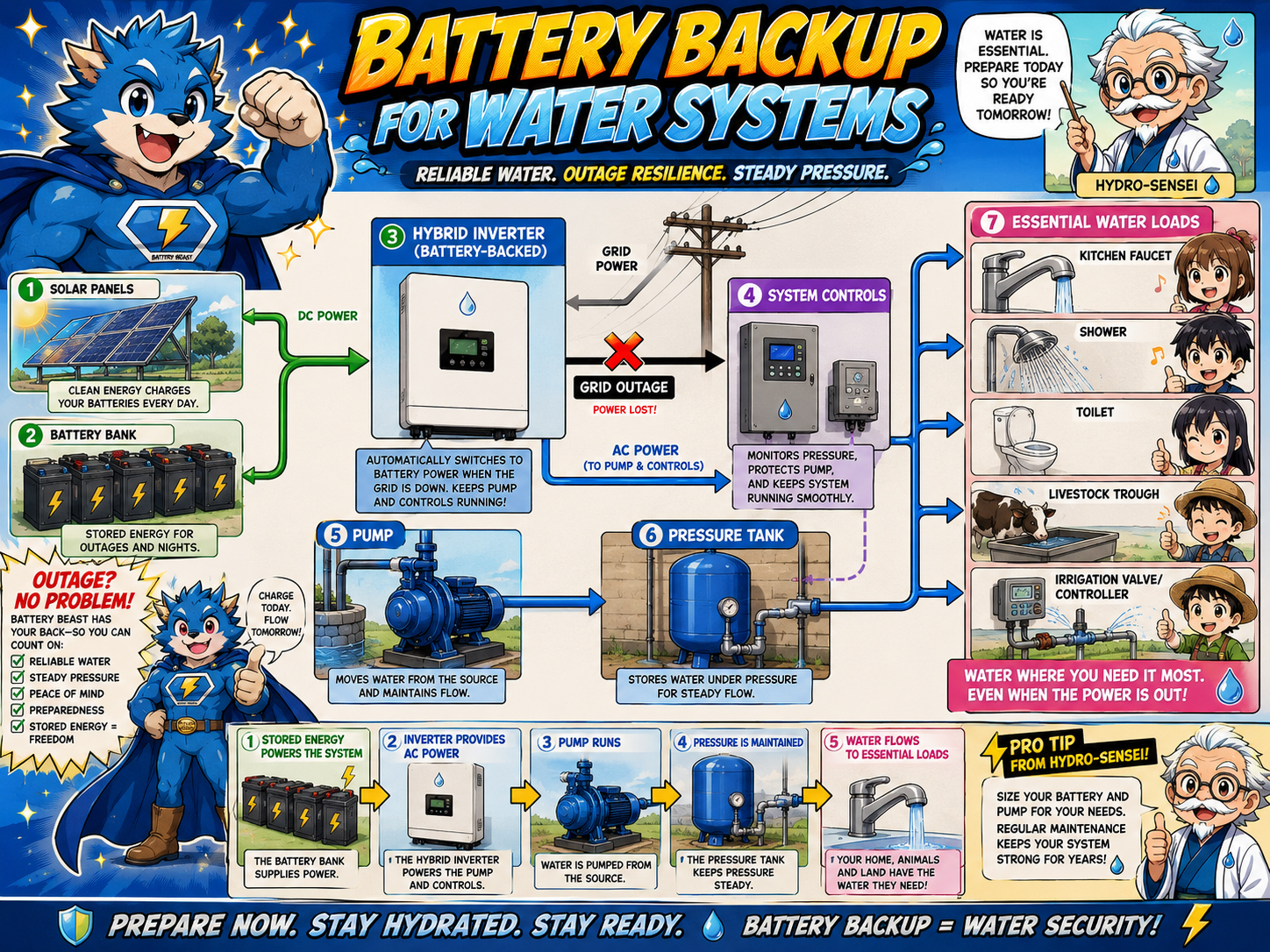
Pump horsepower, voltage, starting surge, runtime, inverter size, and battery capacity all matter.
Battery Backup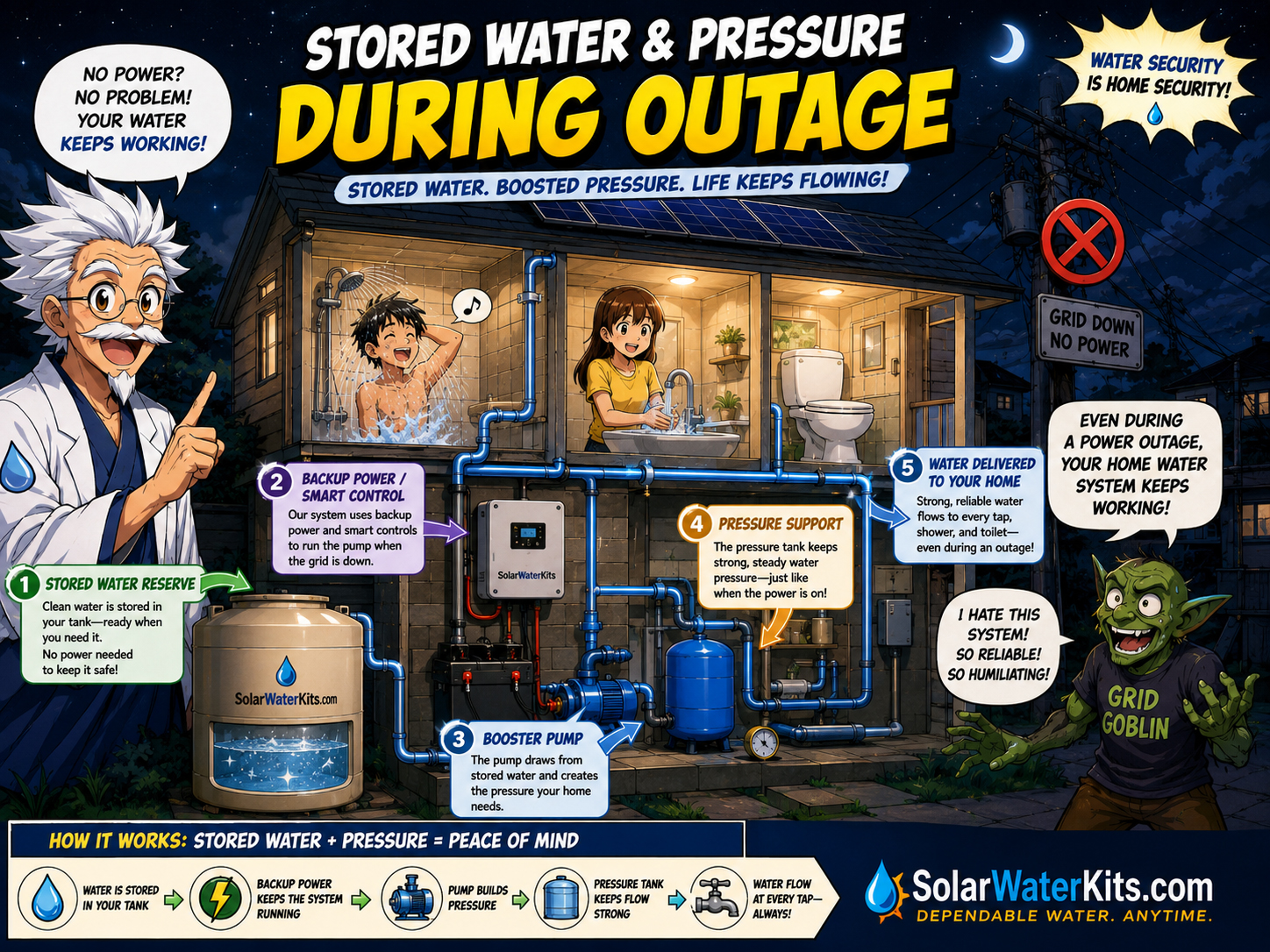
A tank can reduce pump dependence during emergency moments, but pressure and water quality still need design.
Stored Water| Failure | What Happens | Prepared-System Response |
|---|---|---|
| Grid power fails | Electric pump may stop. | Solar battery backup, generator interface, or stored water reserve. |
| Pressure drops | Faucets, toilets, hoses, or fixtures may stop behaving normally. | Pressure tank, booster pump, or essential water circuit. |
| Storage is empty | Backup power cannot help if there is no water to move. | Maintain tank levels and check reserves before outage season. |
| Battery is undersized | Pump may not start or may run briefly. | Size battery and inverter around real pump load and surge. |
| Water source is unsafe | Emergency water may not be drinkable. | Test, treat, label, and separate potable from non-potable water. |
| Valves are unlabeled | Stress turns plumbing into a guessing game. | Label valves, breakers, tanks, bypasses, filters, and shutoffs. |
Emergency water is not one device. It is a chain of decisions.
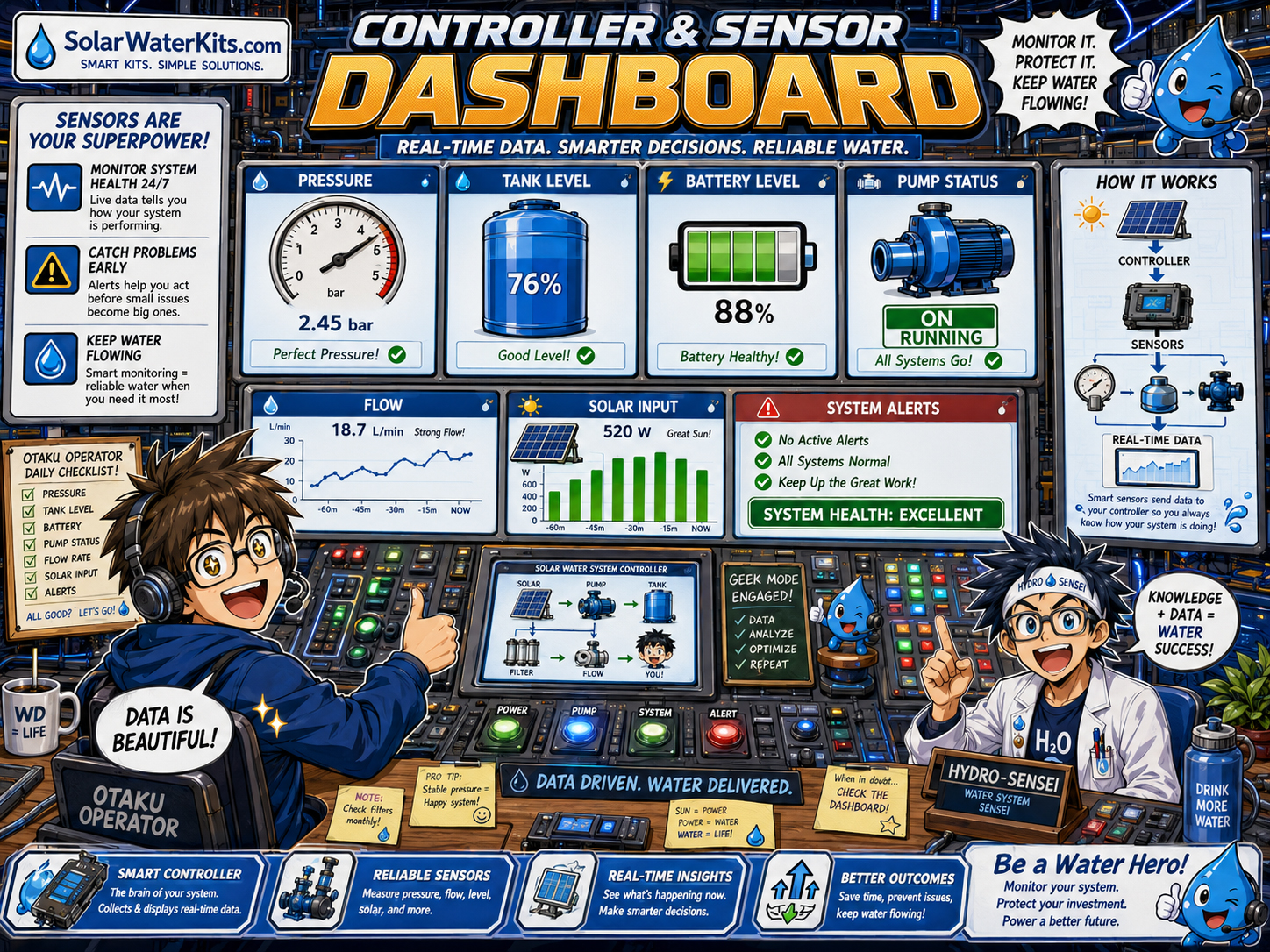
Tank level, pressure, pump status, battery state, and alarms turn fear into decisions.
The problem began earlier: no storage check, no backup test, no water-priority plan, no safe-water labels, no outage procedure, and no shared understanding of the water system.
Pump Boy: “So the pump went silent because the system was not ready?”
Hydro-Sensei: “Exactly. The silence was the report card.”
Real emergency water backup may involve wells, pumps, batteries, inverters, electrical panels, pressure tanks, pressure relief, potable-water systems, non-potable water, filtration, treatment, backflow protection, cross-connection control, permits, and inspections.
The crew learns how a pressure tank can smooth water delivery, reduce pump starts, and keep small uses alive longer than panic would.
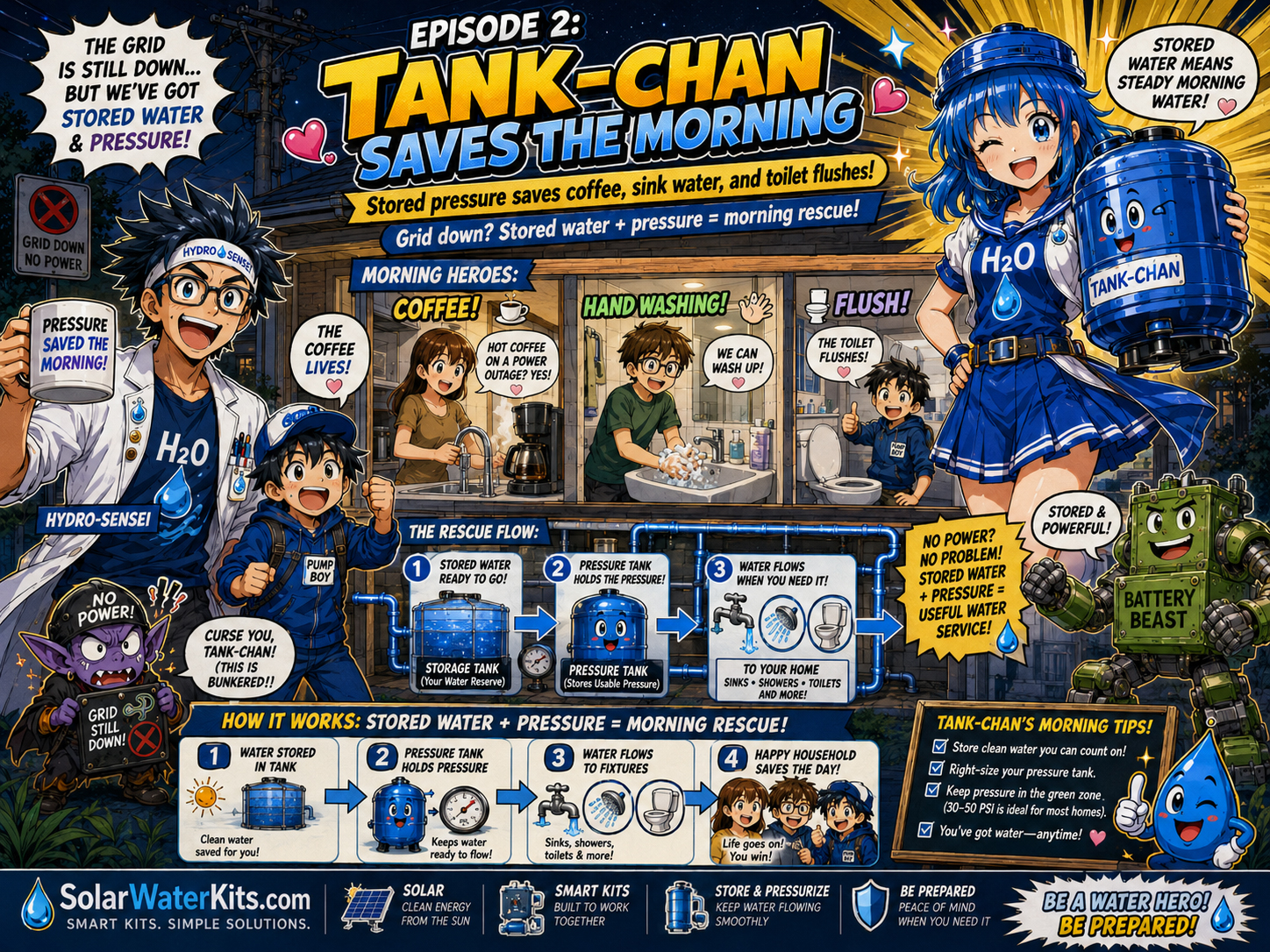
Stored pressure becomes the quiet hero of breakfast.
Read Episode 2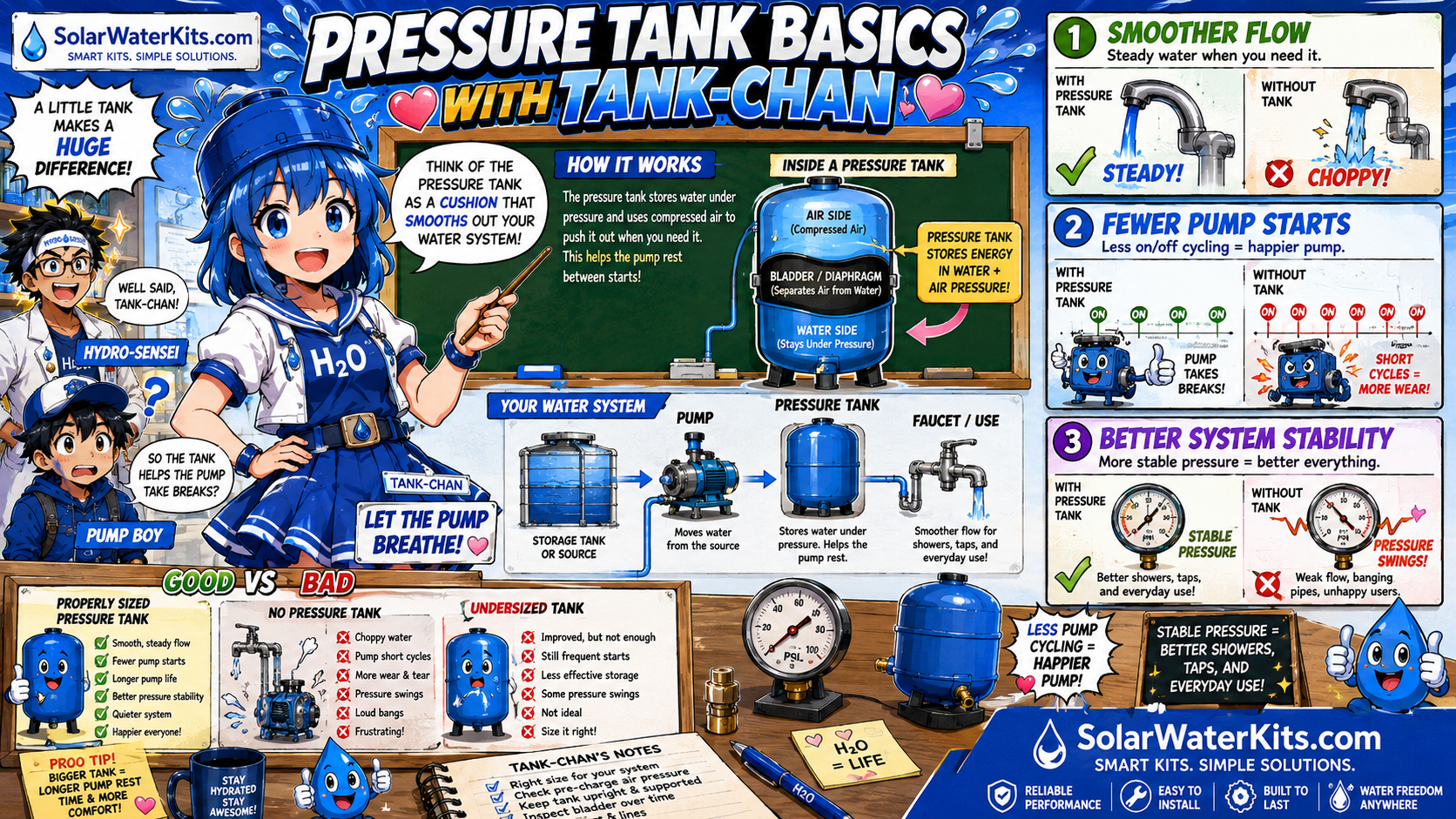
Learn drawdown, cut-in, cut-out, pump cycling, and pressure behavior.
Pressure Tanks
Learn how backup power supports essential water loads during outages.
Battery Backup