Daytime tank filling
Solar can run a pump during strong sun to fill a storage tank. That tank becomes a water reserve for evening, night, clouds, or outages.
Pumping BasicsSolar panels make power when the sun is available. Water storage gives the system time. Tank-chan teaches the big idea: pump when it makes sense, store water safely, and deliver it later with pressure, controls, filtration, and maintenance.
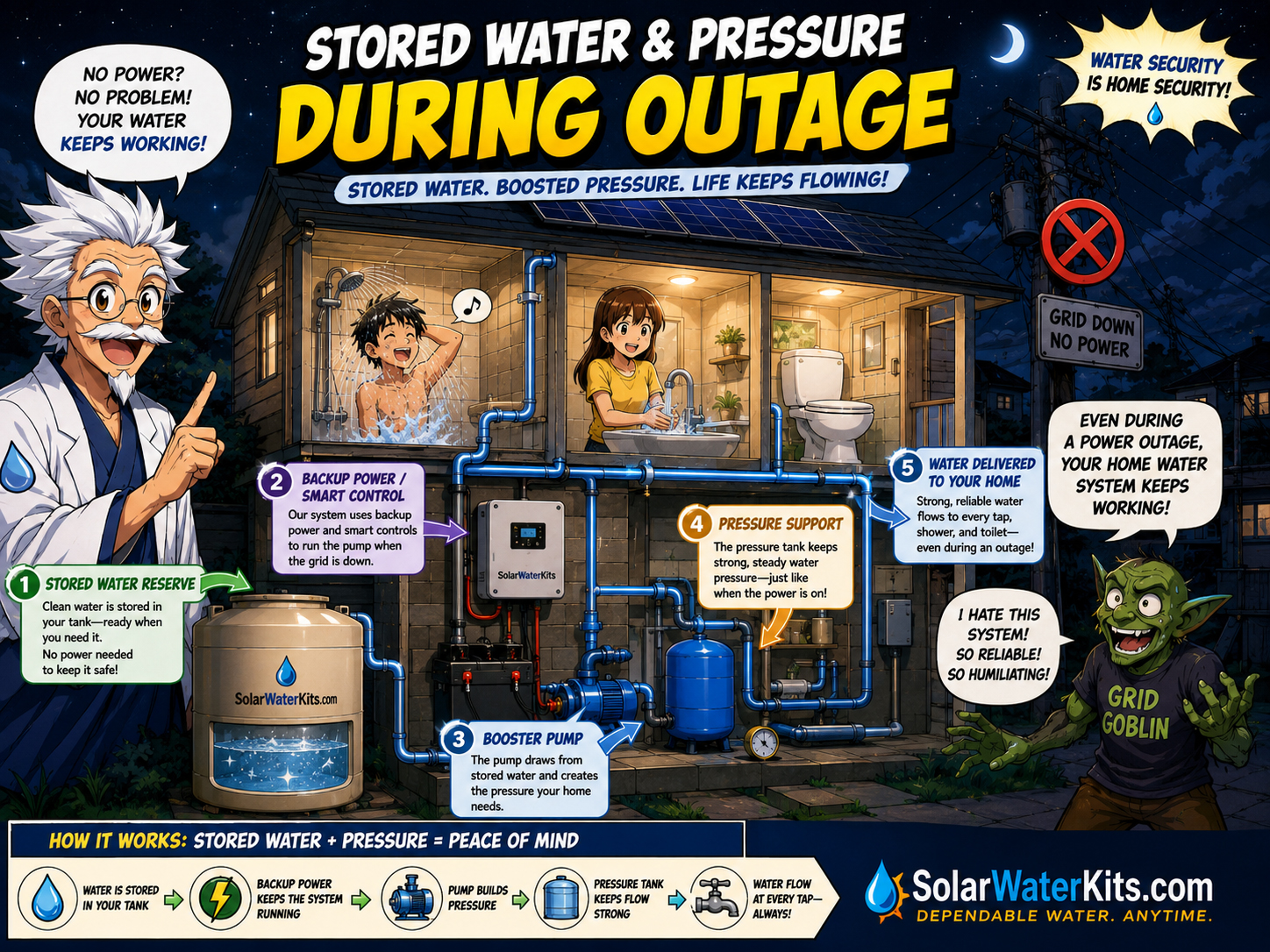
A storage tank gives the water system a reserve. It does not automatically create household pressure, clean drinking water, or emergency safety. Those jobs require additional design.
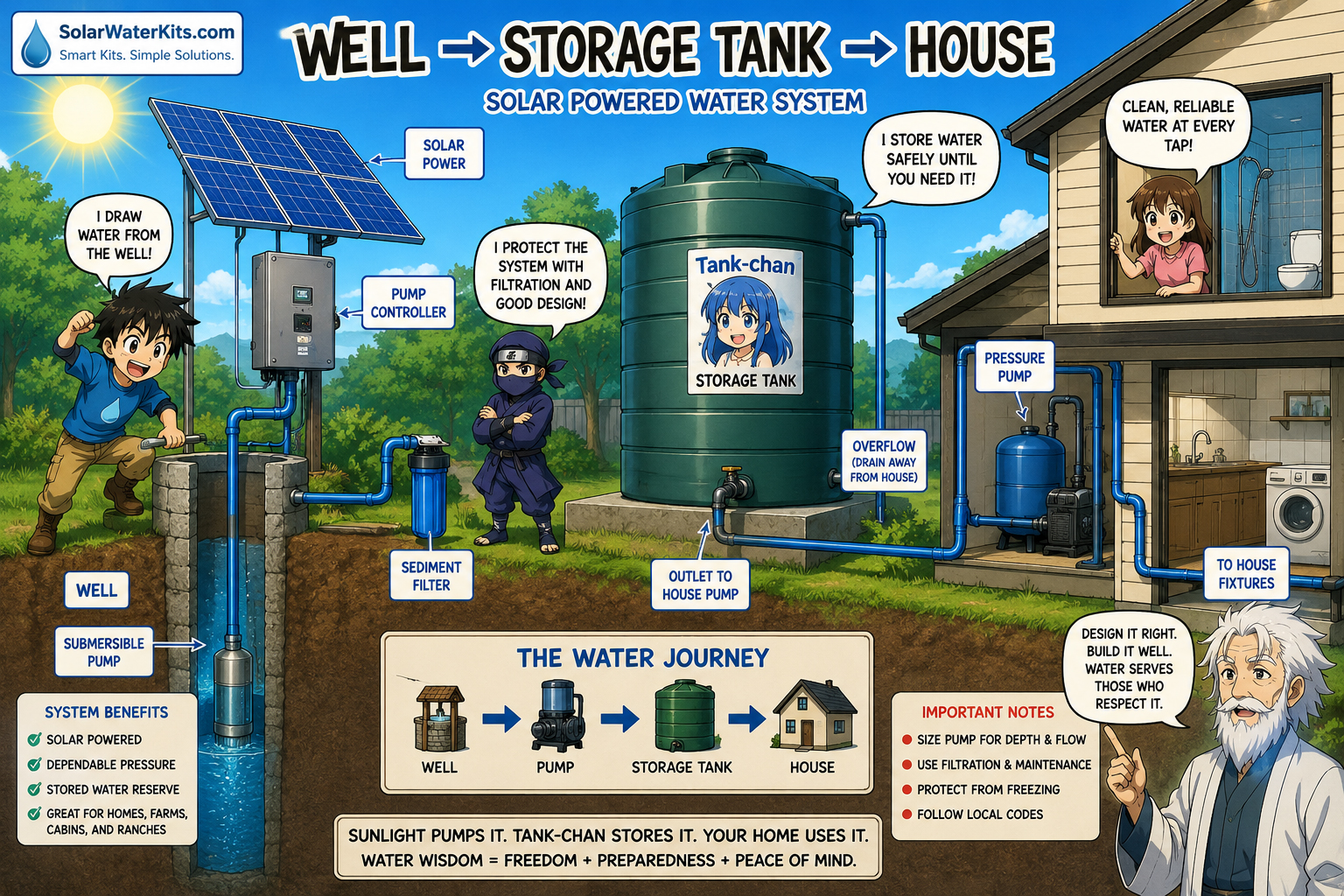
Source pump fills the tank. Pressure equipment serves the building later.
Stored water lets solar pumping work on a schedule. The pump can fill the tank during sunny hours, while pressure equipment serves water later.
Solar can run a pump during strong sun to fill a storage tank. That tank becomes a water reserve for evening, night, clouds, or outages.
Pumping BasicsA booster pump, pressure tank, or battery-backed system can serve essential water later, depending on how the system is designed.
Pressure TanksStored water can reduce the number of times a battery-backed pump must run. Sometimes storing water is as important as storing electricity.
Battery Backup“Do not make me start the pump for every tiny draw if Tank-chan can help. Store water, smooth pressure, and save battery for essentials.”
Water is heavy. Tanks need proper location, foundation, overflow, access, labels, fittings, maintenance, and water-quality planning.
| Storage Question | Why It Matters | Tank-chan Warning |
|---|---|---|
| How many gallons are needed? | Storage volume depends on daily use, emergency reserve, animals, irrigation, and refill schedule. | Guessing too low creates false resilience. |
| Where will the tank sit? | Water is heavy and requires a suitable base, support, and access. | A bad foundation becomes a wet problem. |
| How will overflow drain? | Overflow must avoid structures, slopes, neighbors, erosion, and electrical equipment. | Every tank needs an overflow plan. |
| Is the water potable or non-potable? | Tank material, sanitation, labeling, testing, and treatment change by intended use. | Do not drink water because it sat in a tank. |
| How will water be pressurized? | Gravity, booster pump, pressure tank, or battery backup may be needed. | Storage is not automatically pressure. |
| How will it be maintained? | Tanks need inspection, cleaning, screens, lids, valves, and access. | Stored water can become bad water. |
During an outage, stored water can buy time. It can support essential household water, ranch water, sanitation, limited washdown, or emergency reserve use depending on the system design.
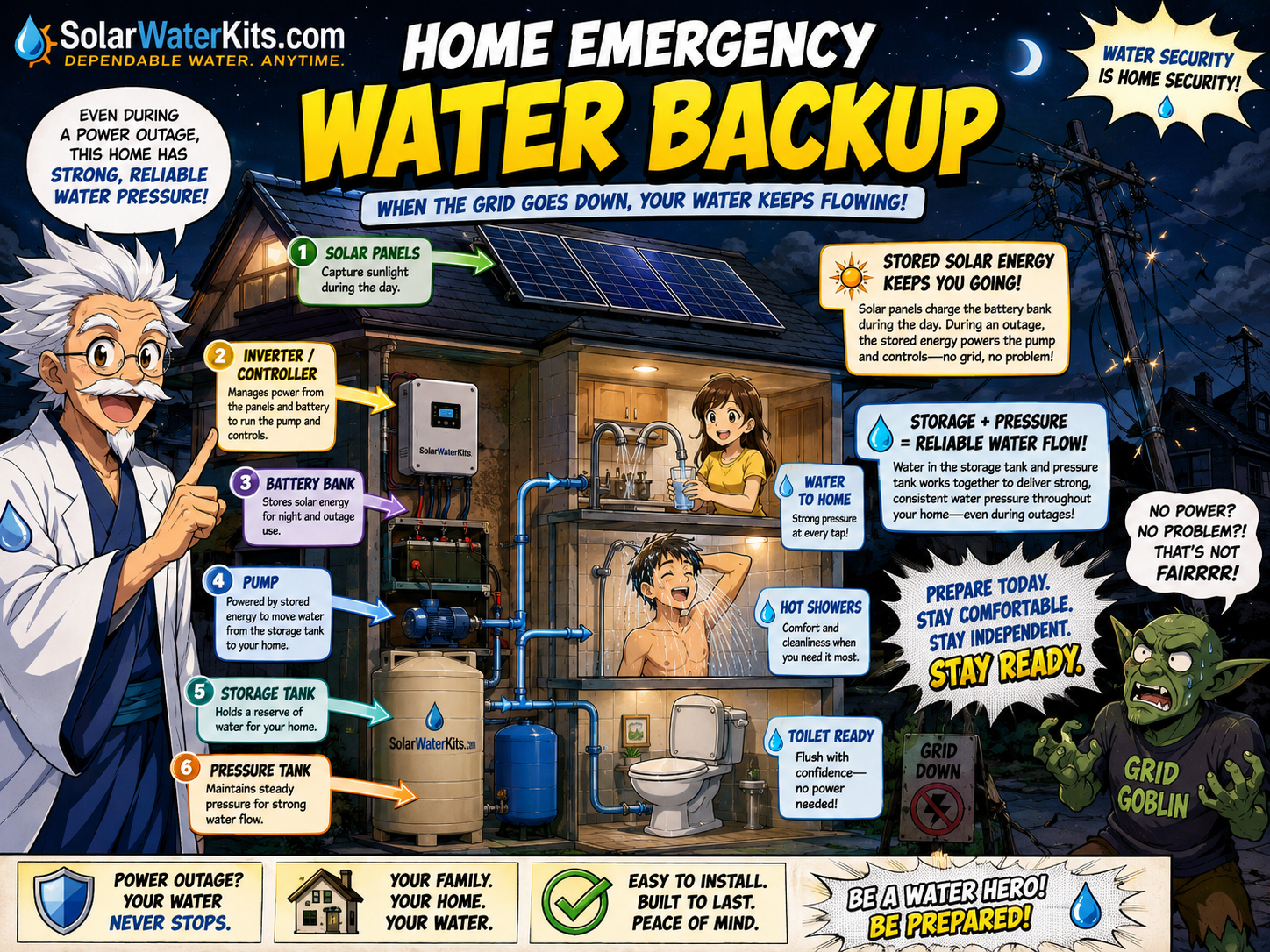
Stored water works best with a priority plan.
“Emergency storage is not a license to waste water. It is time you purchased before the emergency.”
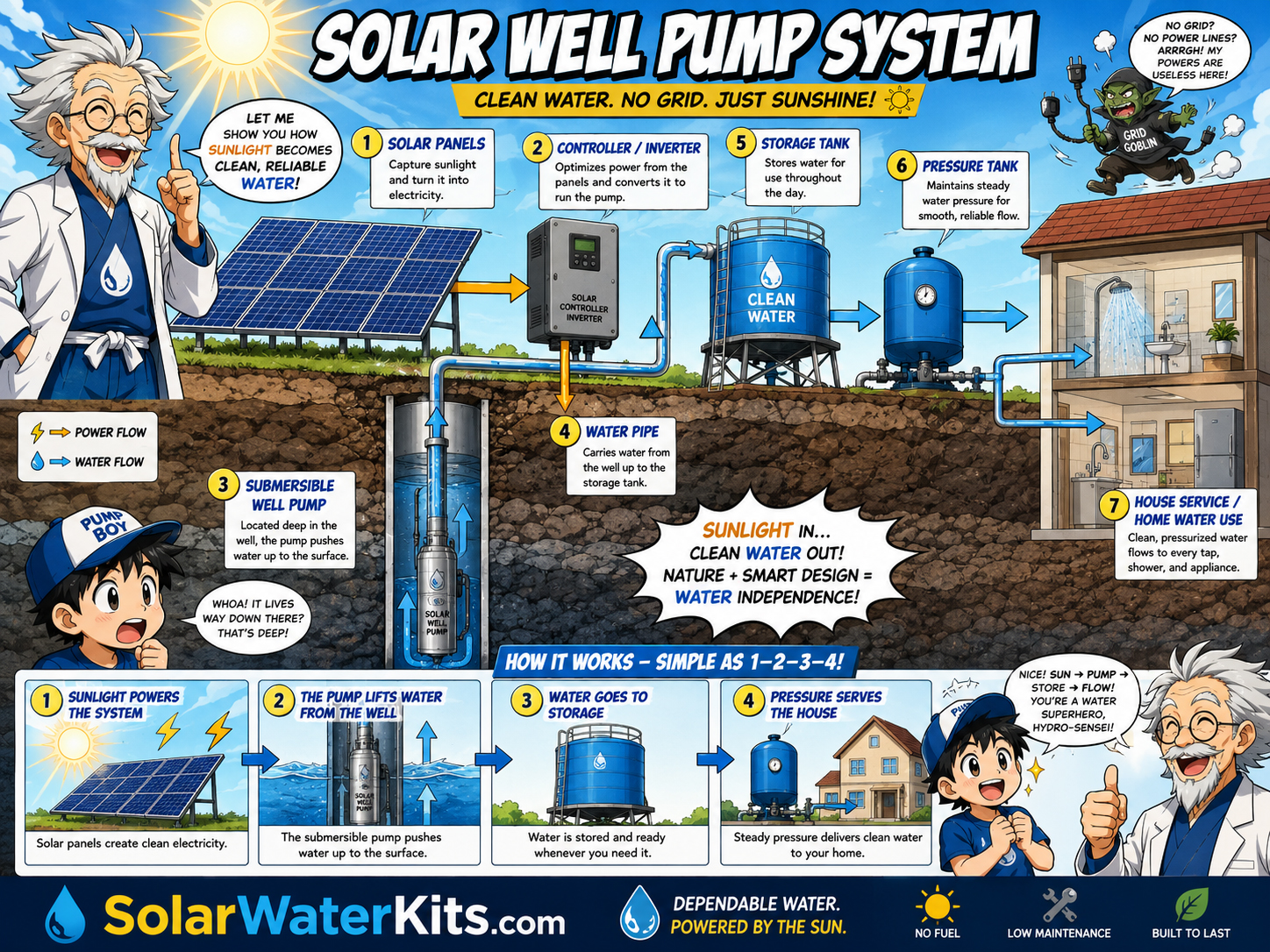
Pump to a tank when power is available, then serve the property from storage.
Well Pumps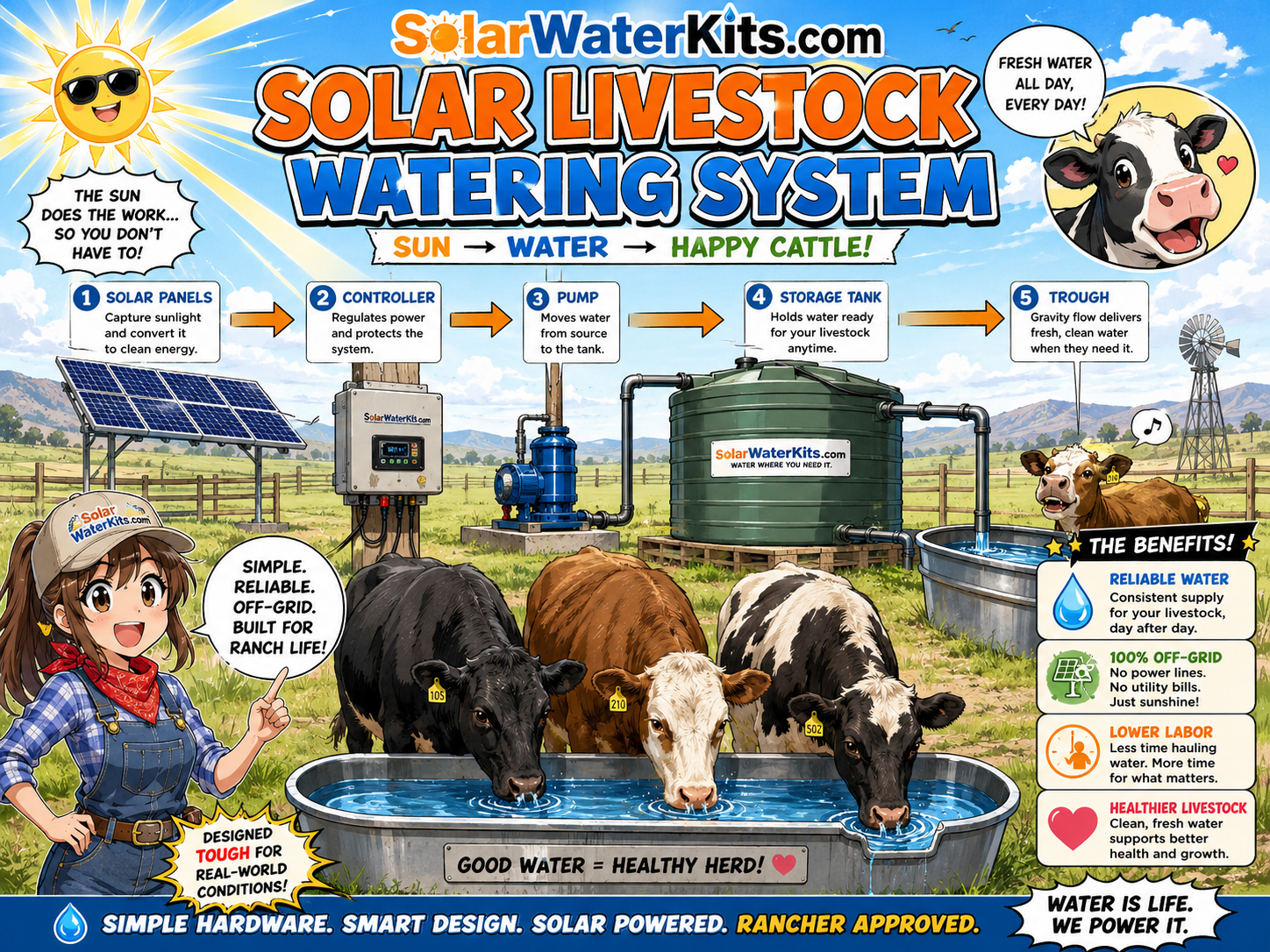
Stored water helps troughs stay reliable when sun, pump, or human schedule changes.
Livestock Water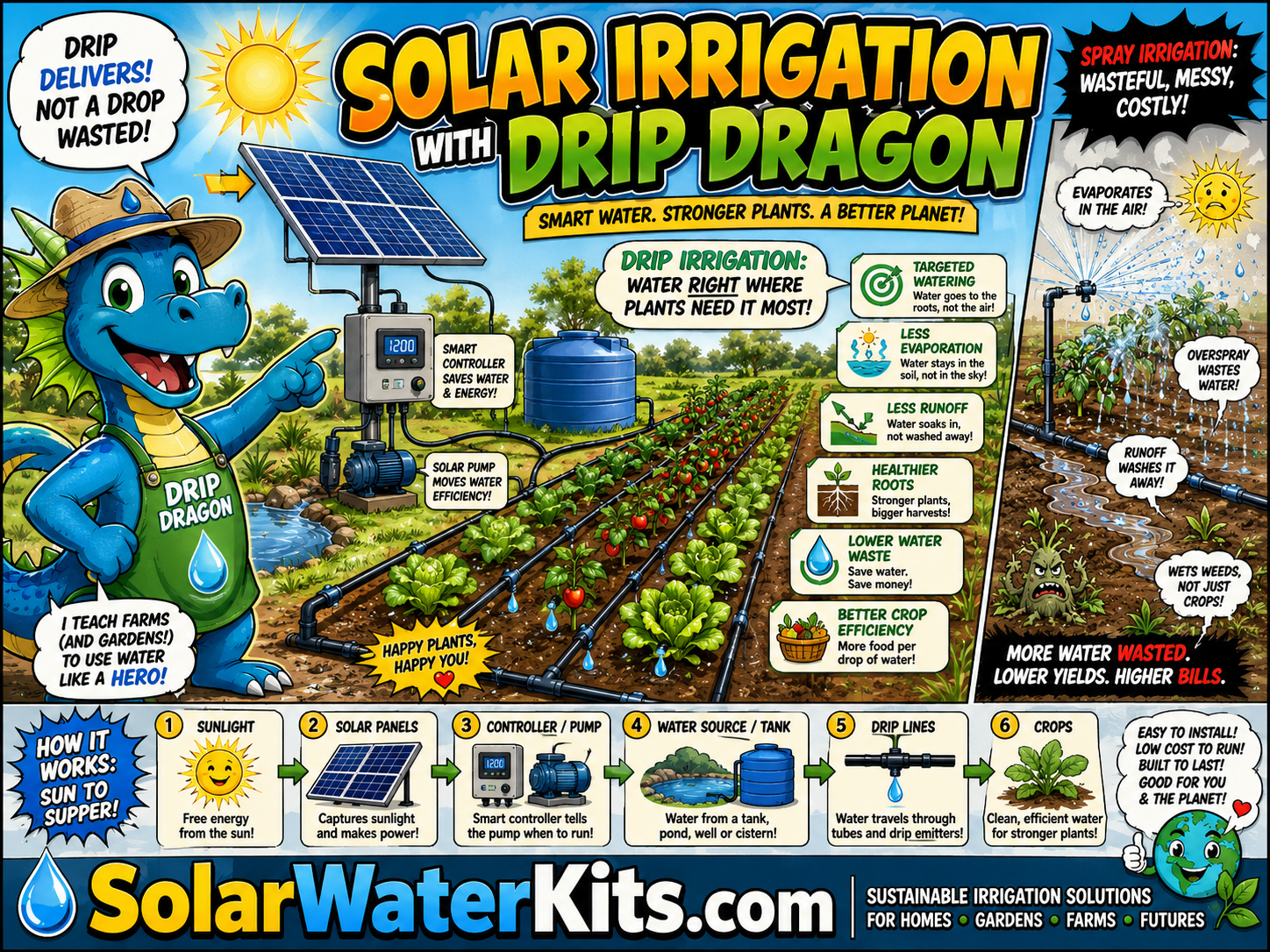
Storage can support timed irrigation zones and reduce instant pump demand.
Irrigation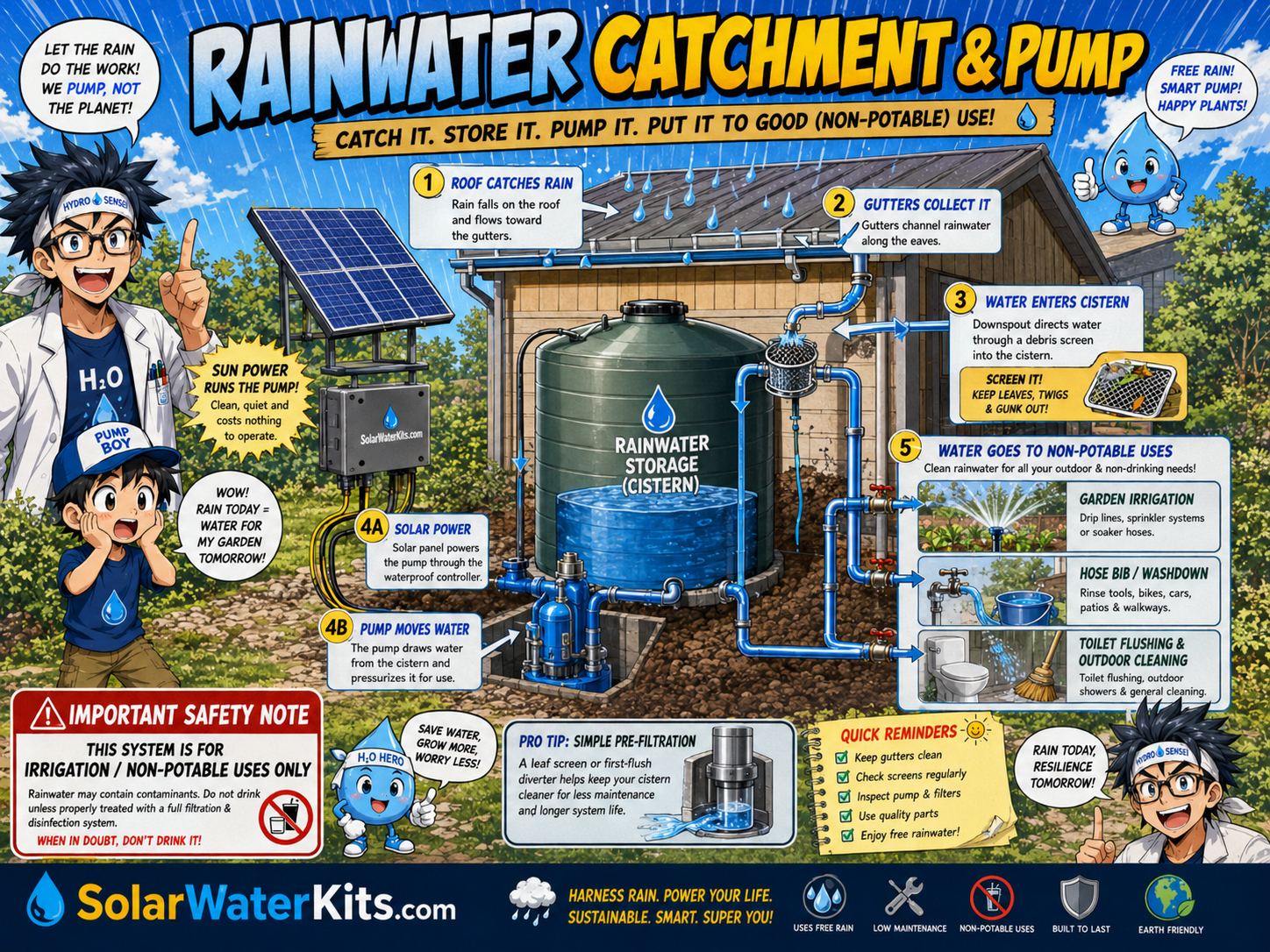
Cisterns and tanks can hold rainwater for approved non-potable or treated uses.
Rainwater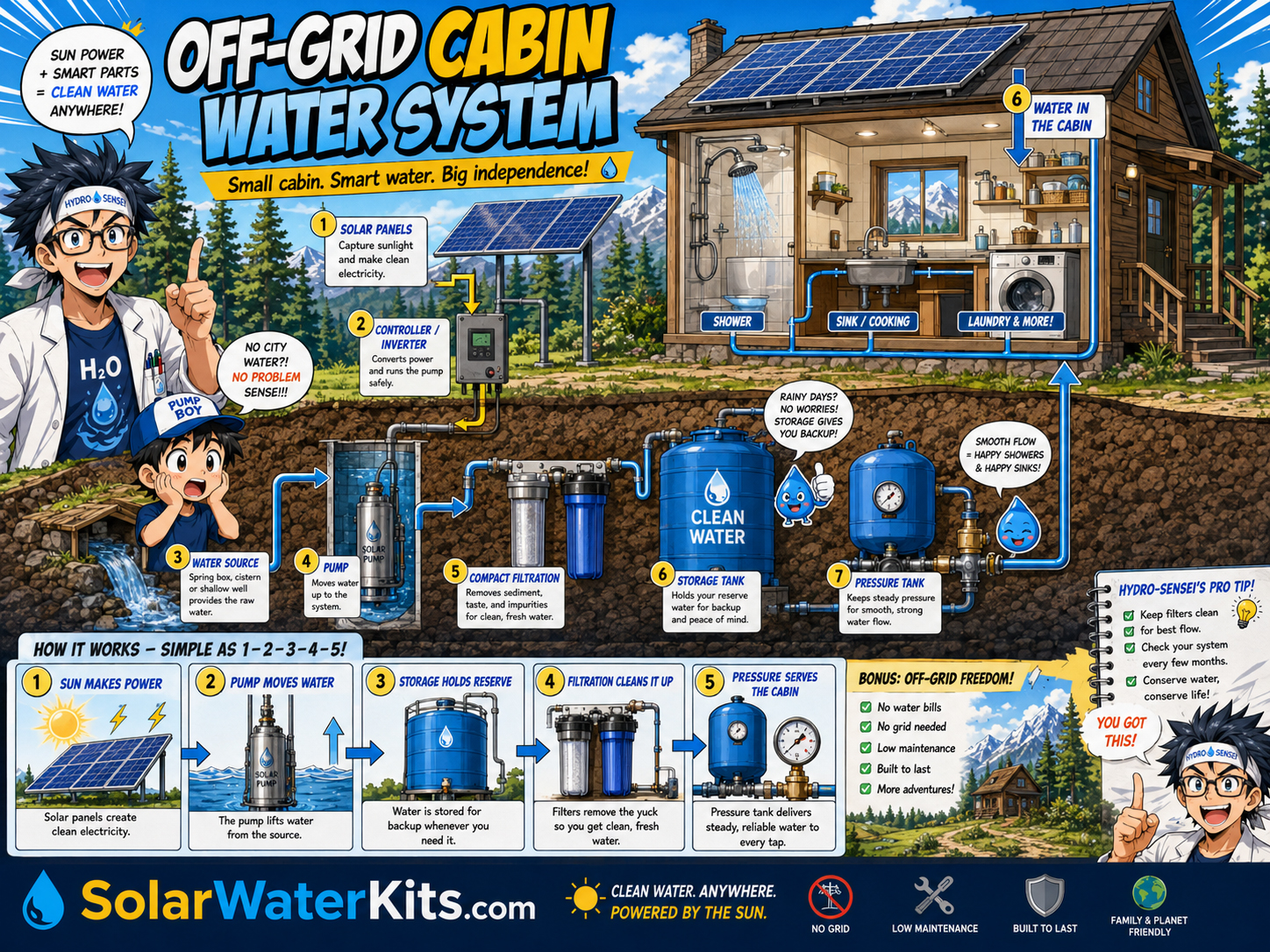
Cabins benefit from storage, pressure, filtration, freeze planning, and seasonal shutdown routines.
Cabin Water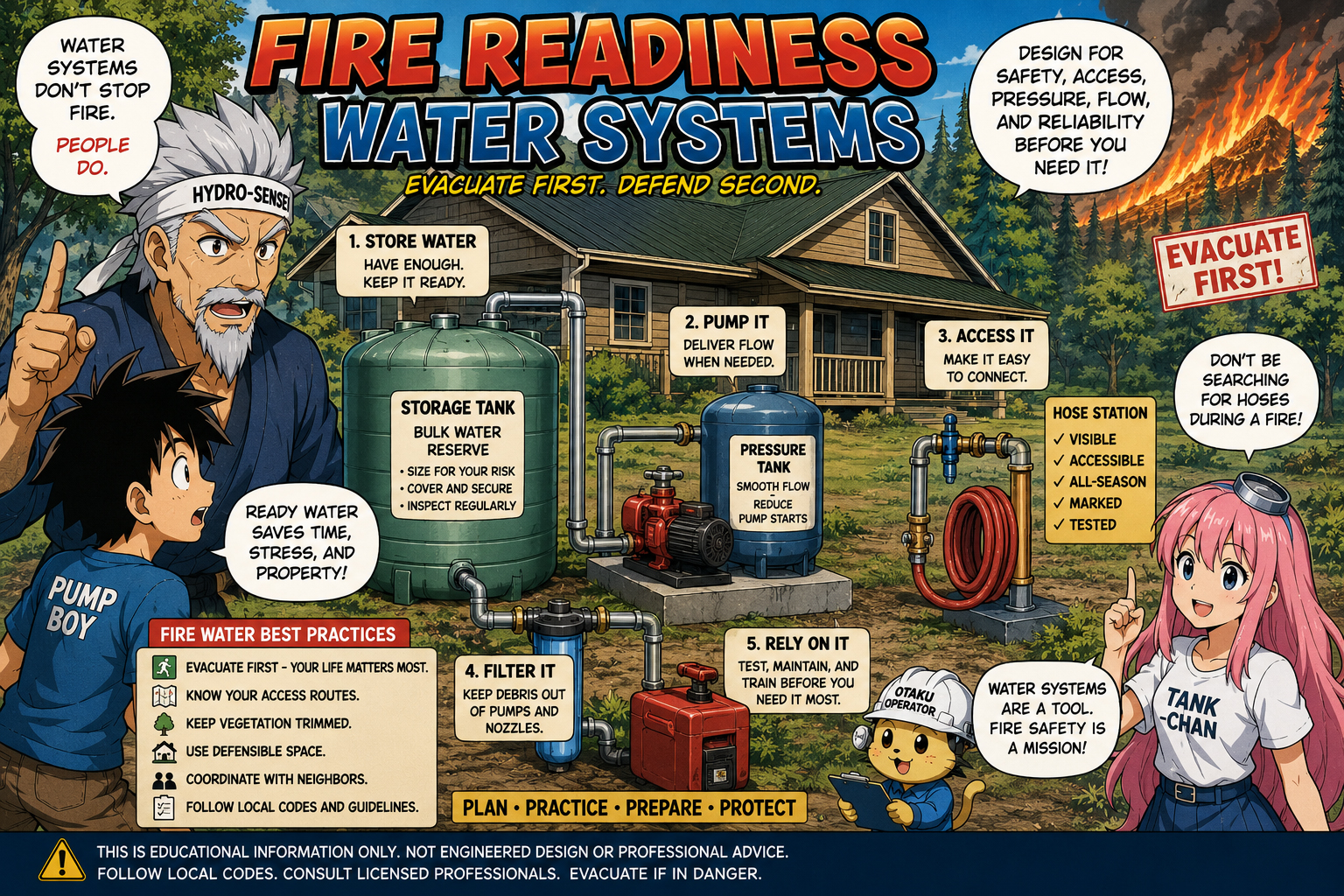
Stored water may support readiness concepts, but it does not replace evacuation or fire authority guidance.
Fire ReadinessStorage can help resilience, but tanks can also collect sediment, algae, insects, contamination, heat, and maintenance problems if neglected.
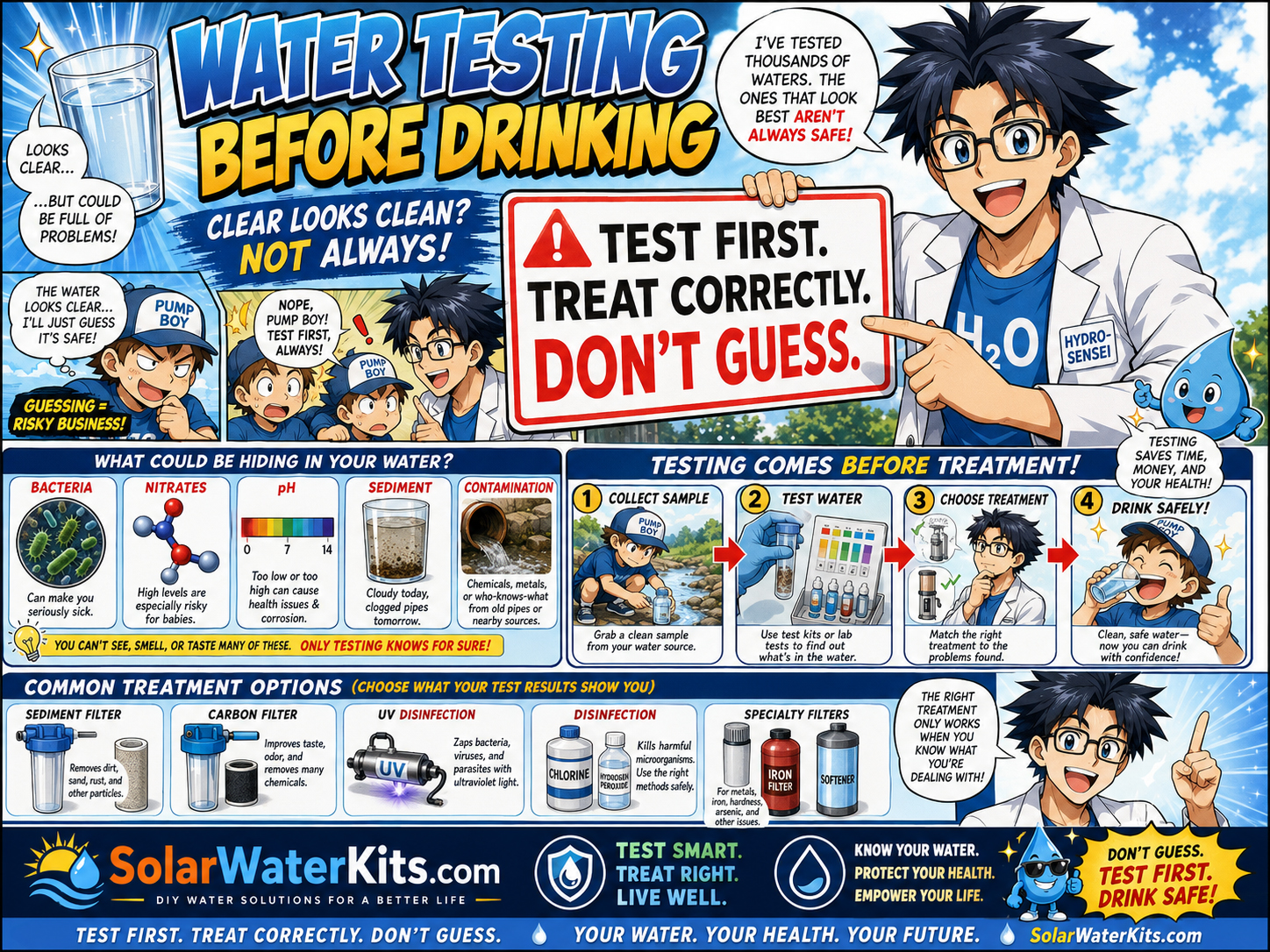
Testing and treatment depend on source and intended use.
Look for cracks, leaks, bulging, algae, sediment, pest entry, damaged lids, bad screens, unstable base, or overflow problems.
Tank outlet, drain, bypass, filter, pump isolation, overflow, and non-potable labels should be obvious before an emergency.
Verify pump start/stop, float switches, pressure behavior, battery backup, filters, alarms, and water level indicators.
“A tank is not ready because it exists. A tank is ready because it was inspected, filled, labeled, cleaned, and tested.”
Stored water systems may involve heavy tanks, foundations, overflow routing, pressure pumps, electrical equipment, potable-water rules, non-potable labels, filtration, disinfection, backflow protection, cross-connections, permits, inspections, and local code.