The pressure gauge speaks
Hydro-Sensei points at the gauge. There is still pressure in the system. Not endless pressure. Not miracle pressure. Useful pressure, if everyone stops acting like a fire hose.
The grid is still out. The pump is nervous. The household wants coffee, sink water, and one very urgent toilet flush. Tank-chan rolls in calmly and teaches the beautiful secret of stored pressure.
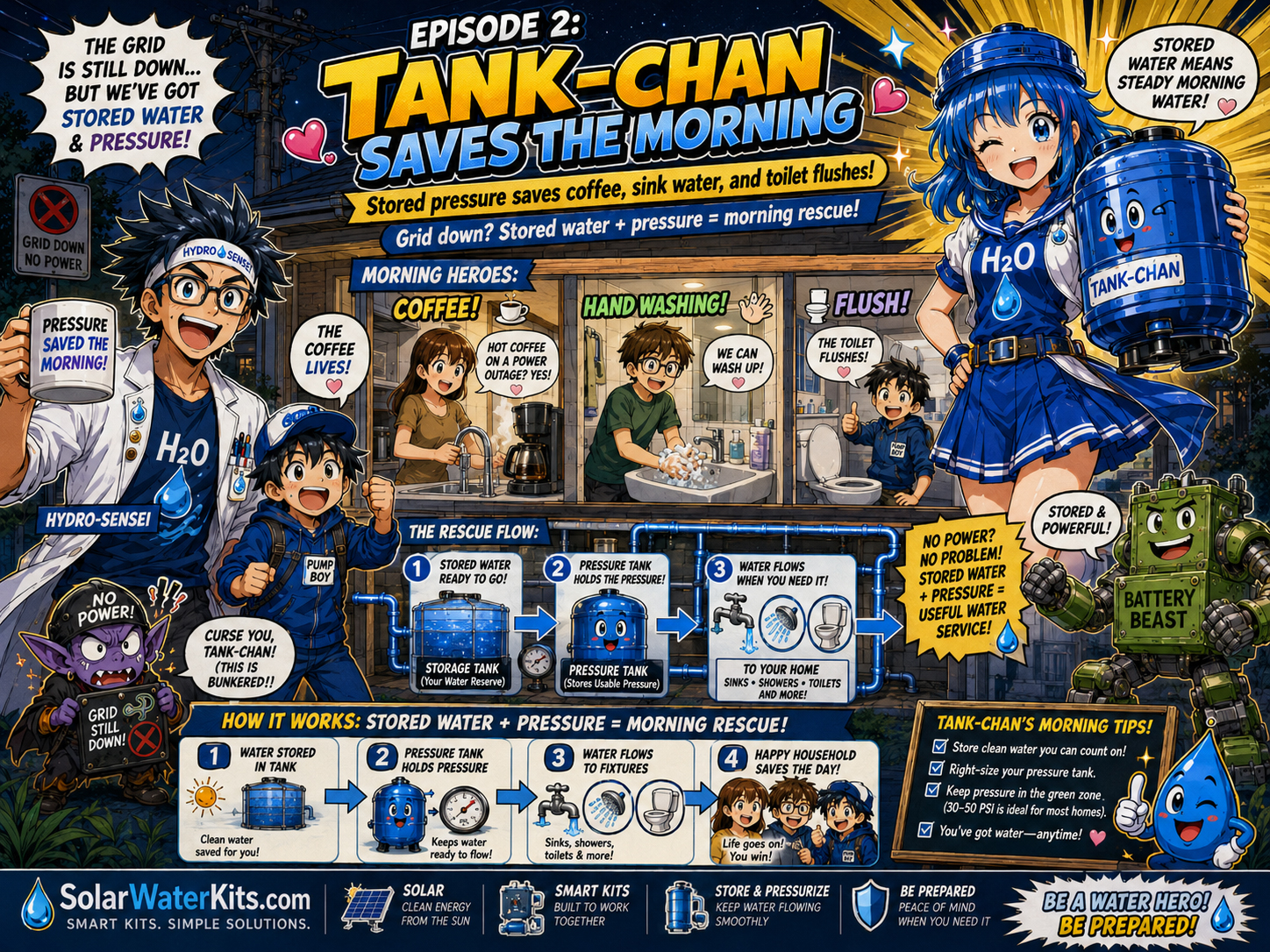
Episode 2 teaches that a pressure tank is not bulk water storage, but it can make a system calmer, smoother, and less dependent on instant pump starts.
Coffee, hand washing, and one toilet flush become a pressure-tank lesson.
The blackout continues. Pump Boy is pacing in circles. Someone in the kitchen whispers the most terrifying words in the house: “Can we still make coffee?”
Tank-chan rolls forward, calm and round, with a tiny gauge and a very serious face.
Hydro-Sensei points at the gauge. There is still pressure in the system. Not endless pressure. Not miracle pressure. Useful pressure, if everyone stops acting like a fire hose.
“I store a small usable amount of pressurized water,” Tank-chan says. “That gives the pump fewer starts and gives the humans a little time.”
Pump Boy reaches for the garden hose. Hydro-Sensei grabs his sleeve. “Emergency pressure is for essentials, not washing the driveway.”
One faucet opens gently. Hands are washed. Coffee is made. A toilet flushes. Everyone cheers like Tank-chan just defeated a dragon.
Grid Goblin growls outside. He hates anything that makes a system less fragile.
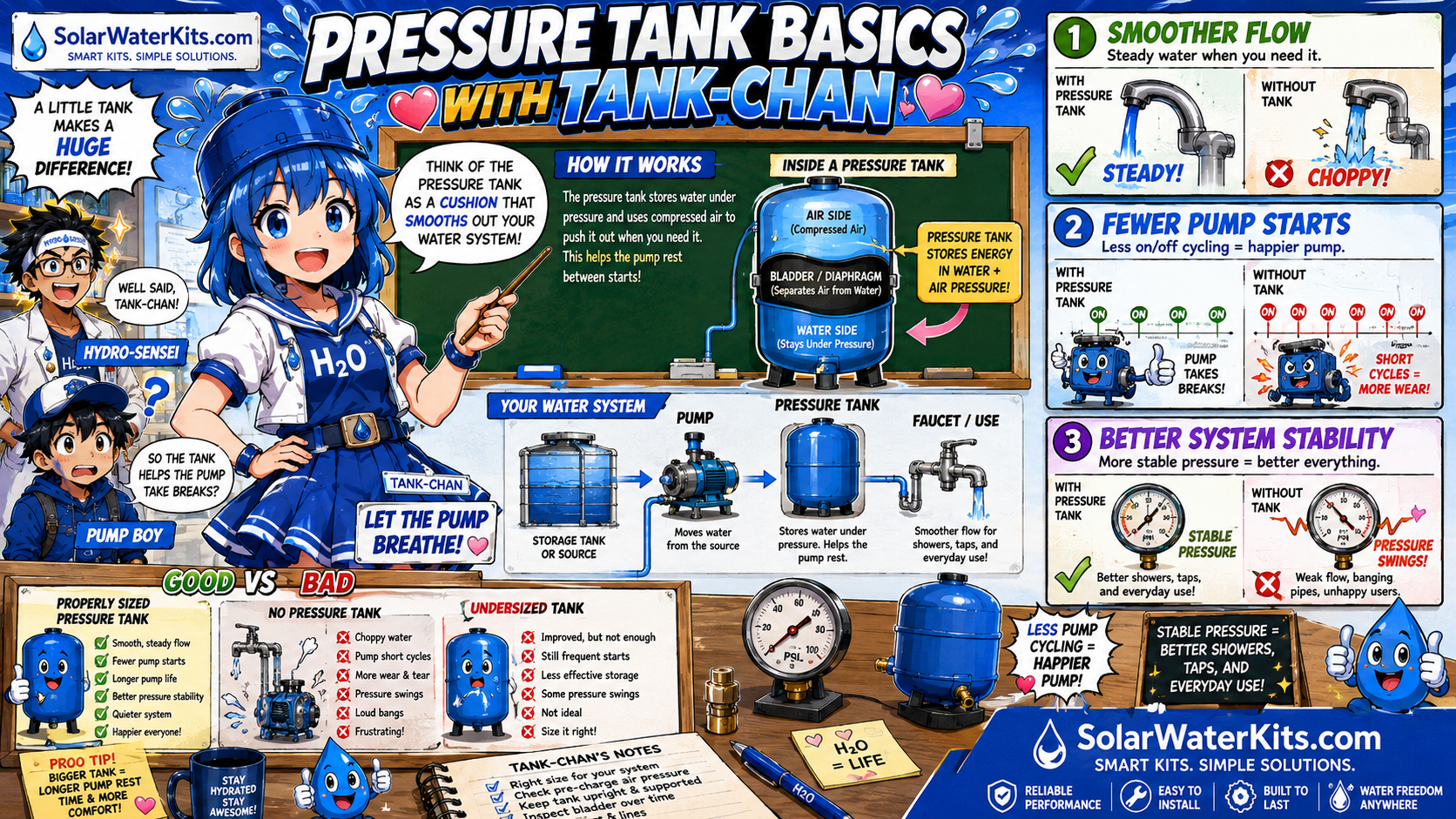
Smoother flow, fewer pump starts, and better system behavior.
Hydro-Sensei draws the pressure switch range on the board. The pump starts at cut-in pressure and stops at cut-out pressure. The tank helps the system breathe between those points.
A tiny goblin clicks the pump switch over and over. Tank-chan points at him: “Short-cycling is how pumps get tired.”
The household makes a rule: during outage mode, small essential uses only. Tank-chan smiles. The pump gets to rest. The morning survives.
A pressure tank is not the same as a large storage tank. It helps the pressure system behave better, reduces rapid pump cycling, and provides a limited amount of usable drawdown.
The pressure tank helps the system deliver small amounts of water without instantly starting the pump.
Pressure tanks →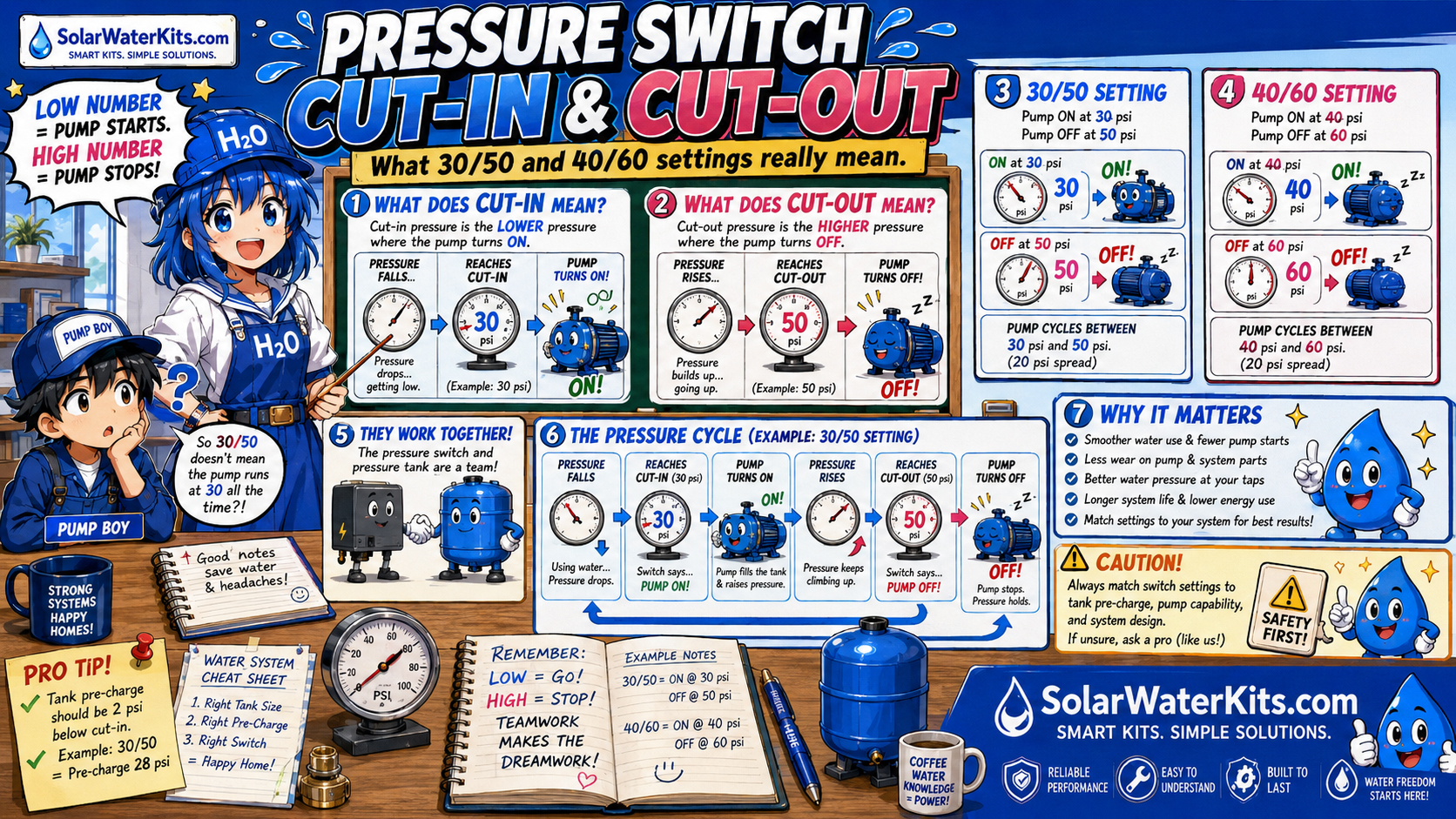
The pressure switch tells the pump when to start and stop within a safe operating range.
Pressure switch →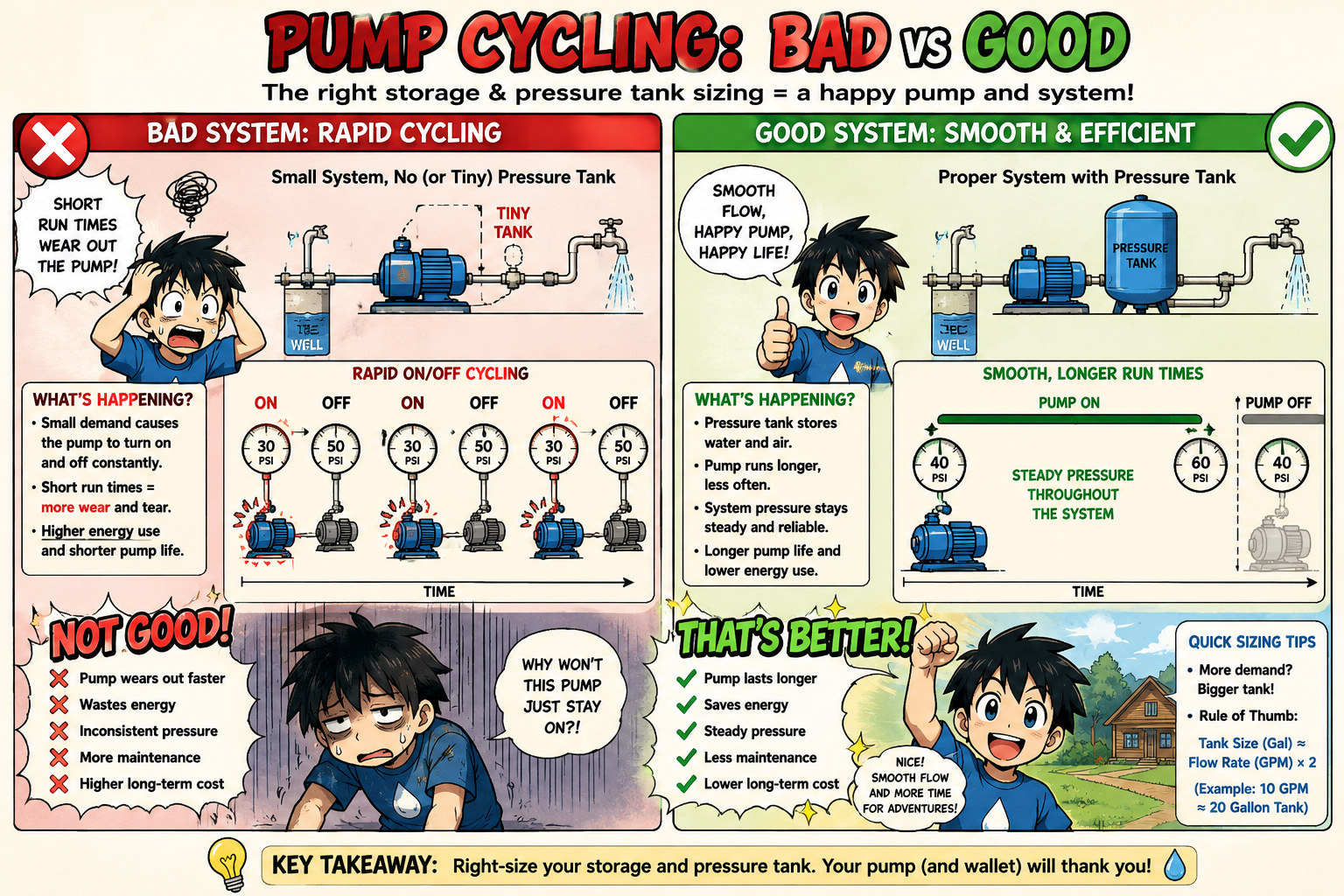
Rapid starts and stops can stress pumps, controls, inverters, batteries, and pressure switches.
Pump cycling →| Pressure Tank Term | Plain-English Meaning | Why It Matters |
|---|---|---|
| Cut-in pressure | The lower pressure where the pump starts. | Determines when the system calls the pump back to work. |
| Cut-out pressure | The higher pressure where the pump stops. | Prevents unnecessary running and keeps the system in range. |
| Drawdown | Usable water delivered before the pump restarts. | More useful drawdown usually means fewer pump starts. |
| Pre-charge | Air pressure inside the tank before water pressure is applied. | Wrong pre-charge can cause poor performance and cycling. |
| Short-cycling | The pump starts and stops too frequently. | Hard on pumps, controls, batteries, and pressure equipment. |
| Bulk storage | Large water reserve stored in a tank or cistern. | Different from a pressure tank; it stores volume, not pressure behavior. |
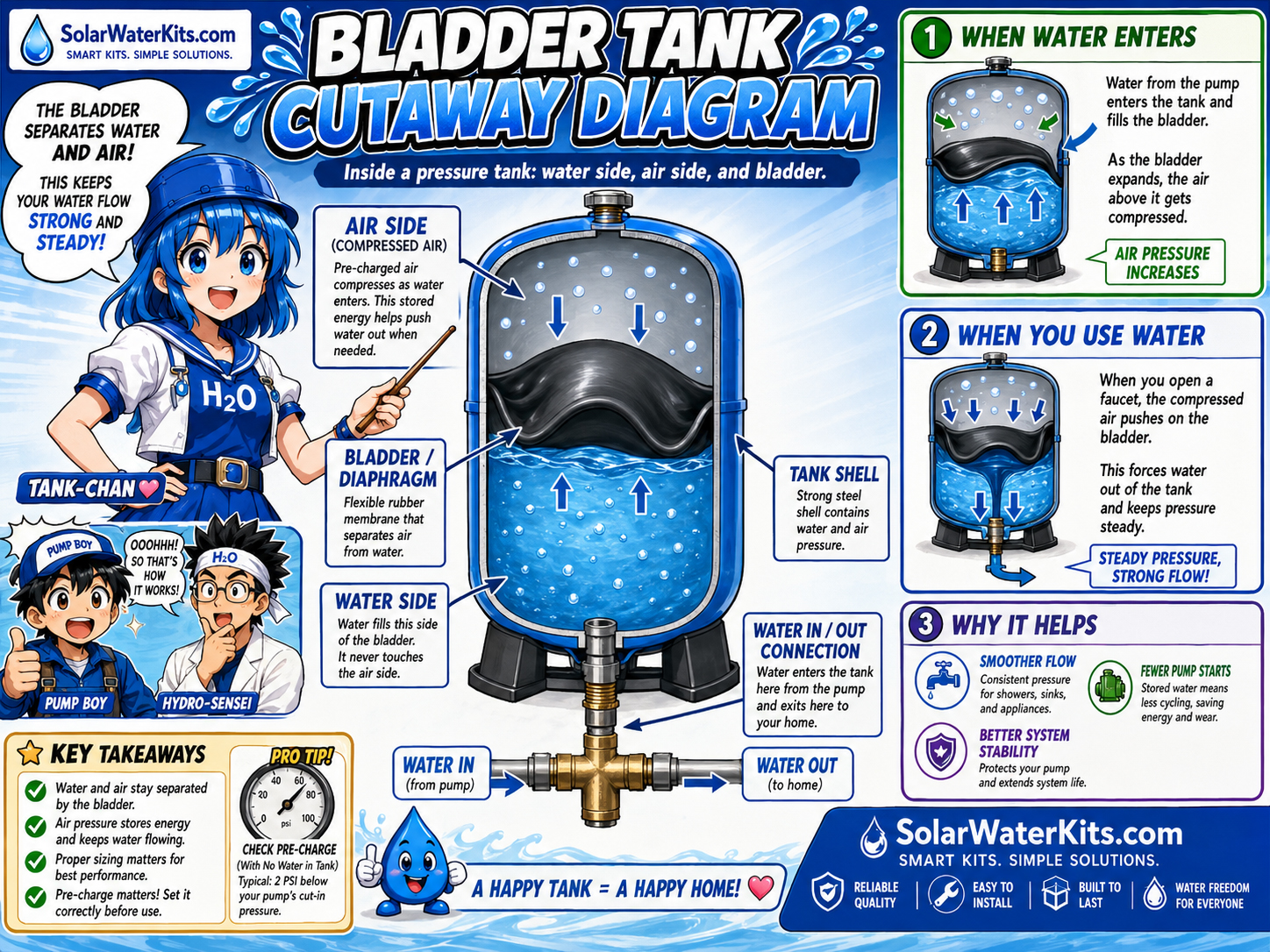
Air compresses. Water moves. The pump gets a break.
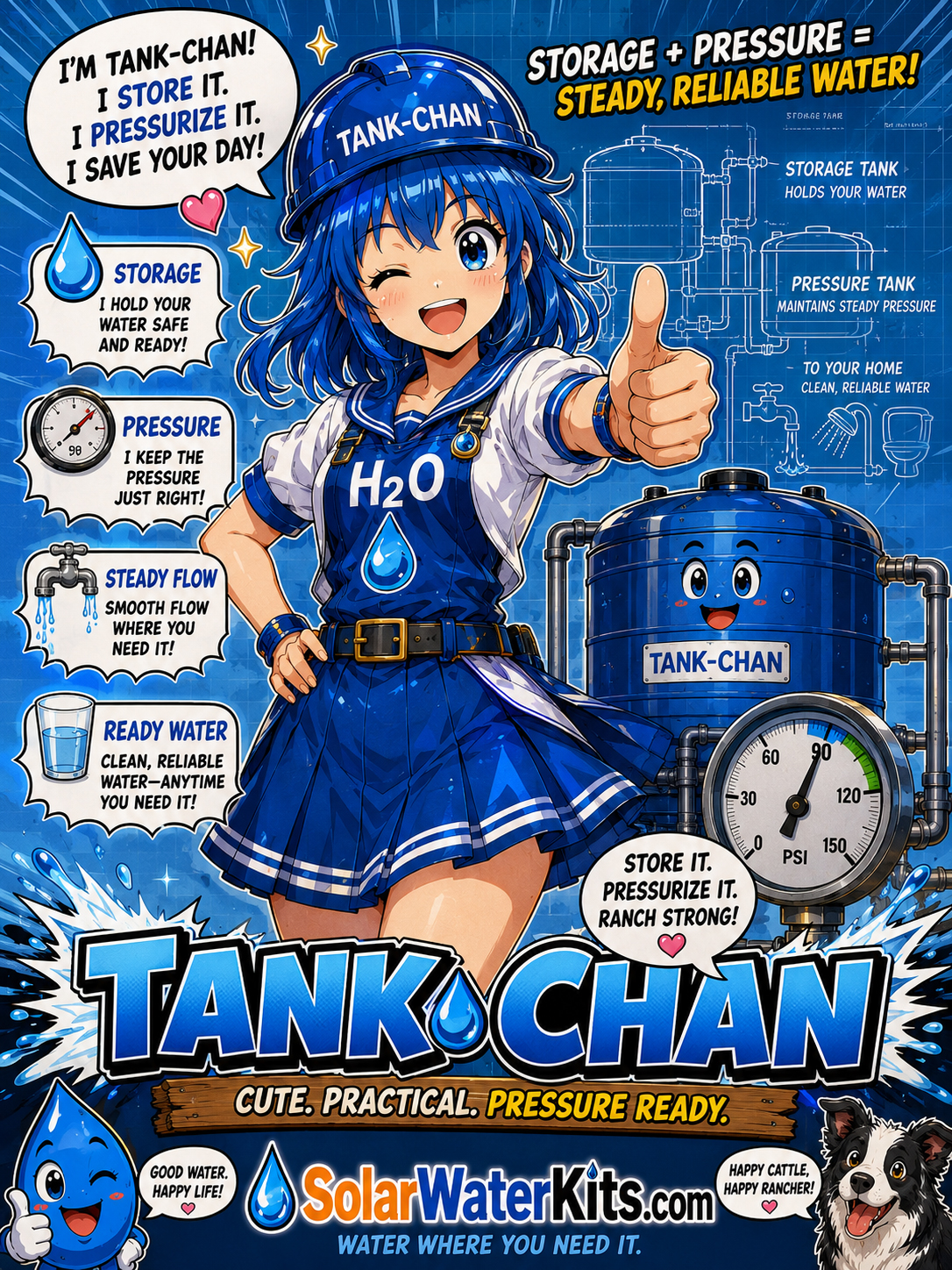
Cute, calm, practical, and allergic to pump short-cycling.
Tank-chan does not replace bulk storage or backup power. She makes the pressure system behave more calmly between pump cycles and helps the system survive small demands with less drama.
Real pressure tank systems may involve pressure vessels, pressure switches, relief valves, potable-water plumbing, pumps, batteries, inverters, electrical work, backflow protection, cross-connection control, permits, inspections, and manufacturer requirements.
Battery Beast learns to support the water system at night, but Hydro-Sensei makes him face the brutal truth: pump runtime is math.

Daytime charging. Nighttime water. Serious runtime math.
Read Episode 3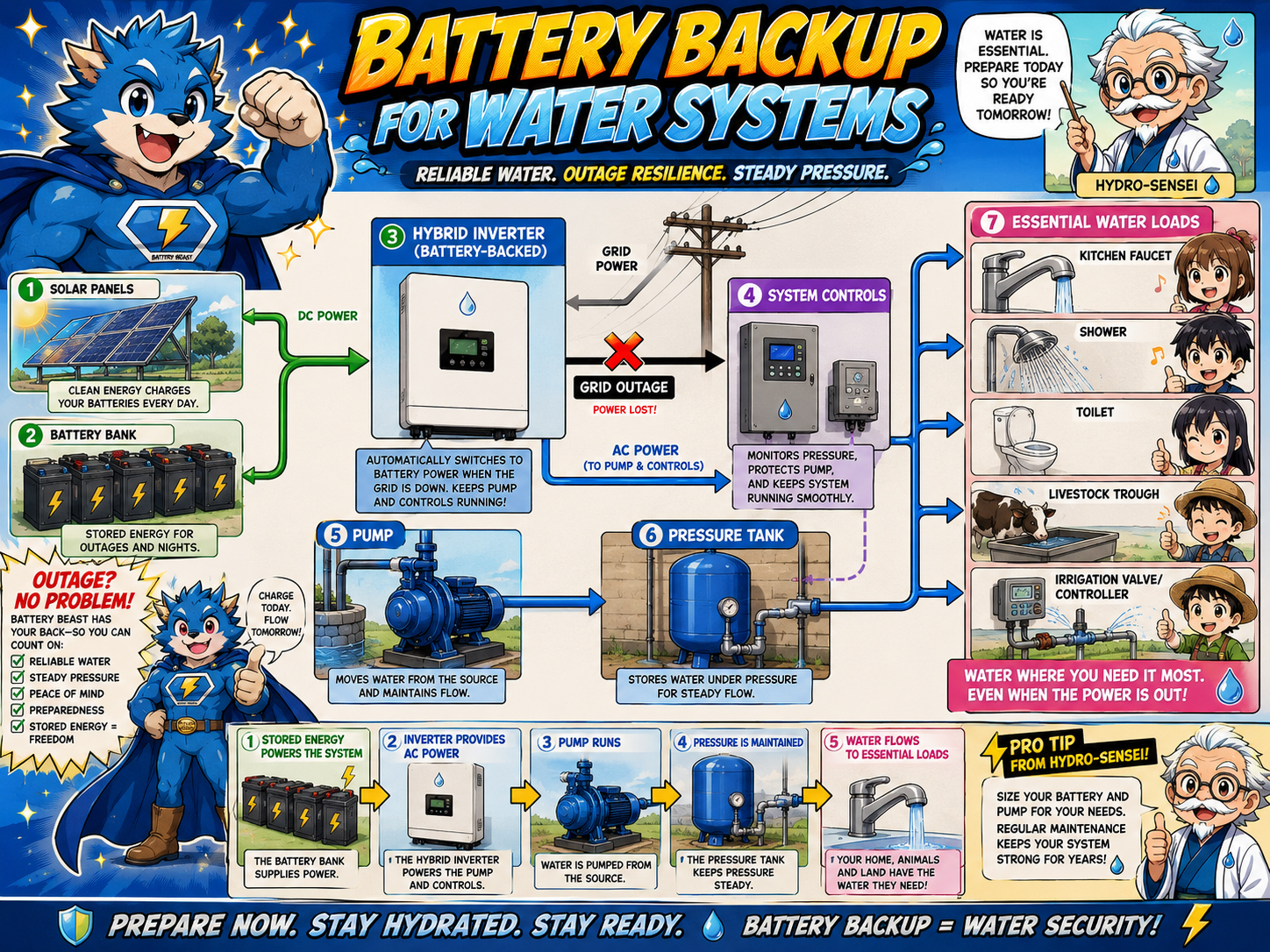
Learn how backup power supports essential water loads during outages.
Battery Backup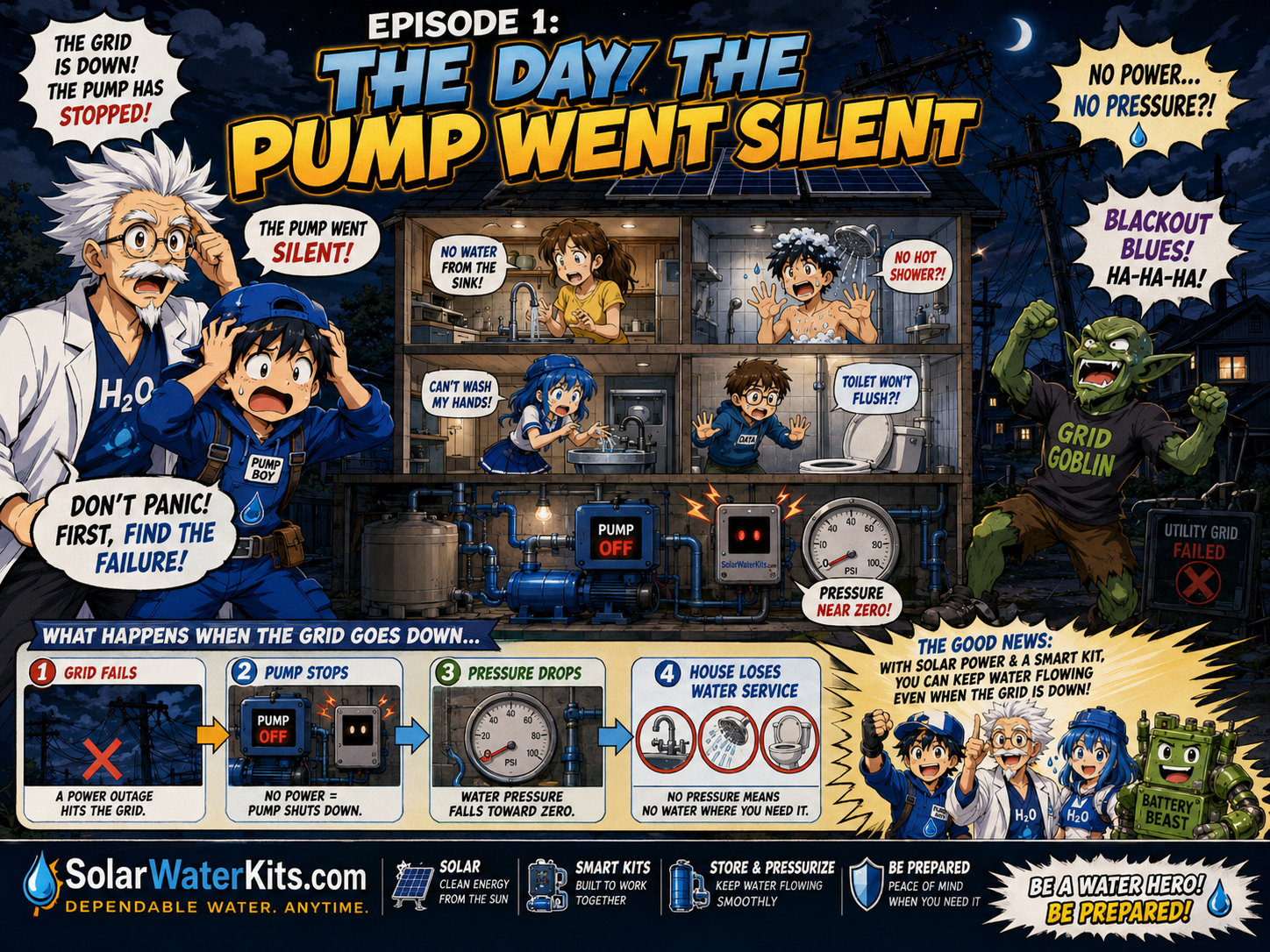
Go back to the blackout that started Hydro-Sensei’s emergency water class.
Read Episode 1