The system changes personality
The pressure gauge drops, then rises, then makes a sound no gauge should make. Hydro-Sensei hears it from across the property and runs toward the pump room.
One tiny unlabeled valve causes a total water-system catastrophe. Pump Boy turns the wrong handle, Tank-chan groans, Battery Beast gets confused, and Otaku Operator finally gets to say the most powerful sentence in the series: “This is why we label everything.”
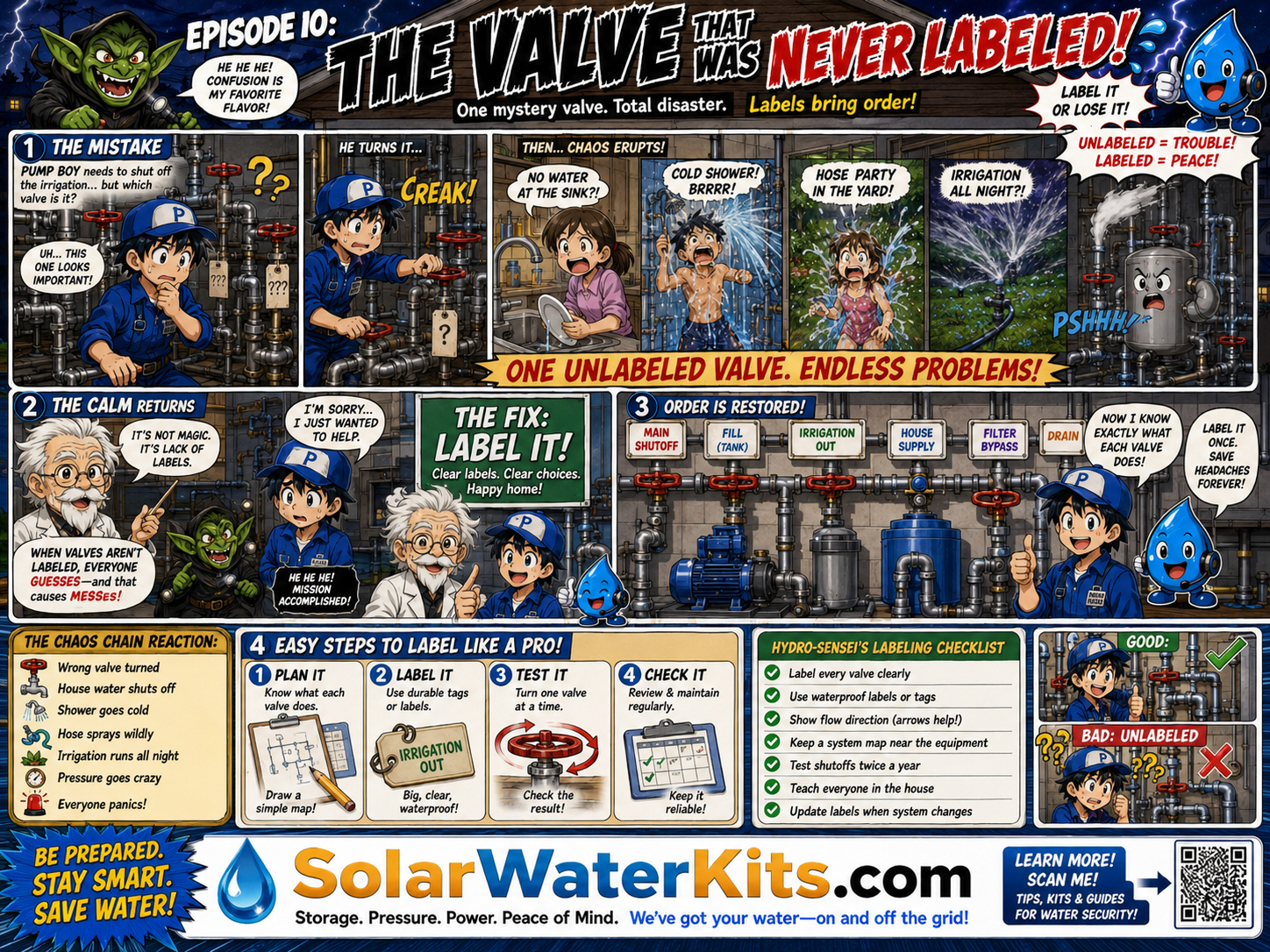
Episode 10 teaches the maintenance lesson: labels, diagrams, shutoffs, bypasses, drains, and normal operating positions are not boring. They are safety equipment.
One unlabeled valve turns routine service into a water-system comedy disaster.
Pump Boy enters the pump room holding a wrench and confidence. He sees a valve with no label, no arrow, no tag, and no memory attached to it.
Pump Boy turns the valve anyway. Somewhere in the house, the shower burps. Somewhere in the yard, a hose coughs. Somewhere in the tank room, Tank-chan feels a disturbance.
The pressure gauge drops, then rises, then makes a sound no gauge should make. Hydro-Sensei hears it from across the property and runs toward the pump room.
Valve Samurai enters in a dramatic cloud of pipe-thread tape. “A valve without a label,” he says, “is a sword without a handle.”
Someone asks if they can bypass the filter “just for a minute.” Filter Ninja appears instantly. “Bypass is a procedure, not a mood.”
Otaku Operator slams down a case of tags, arrows, zip ties, laminated diagrams, valve charts, waterproof markers, and a clipboard of terrifying completeness.
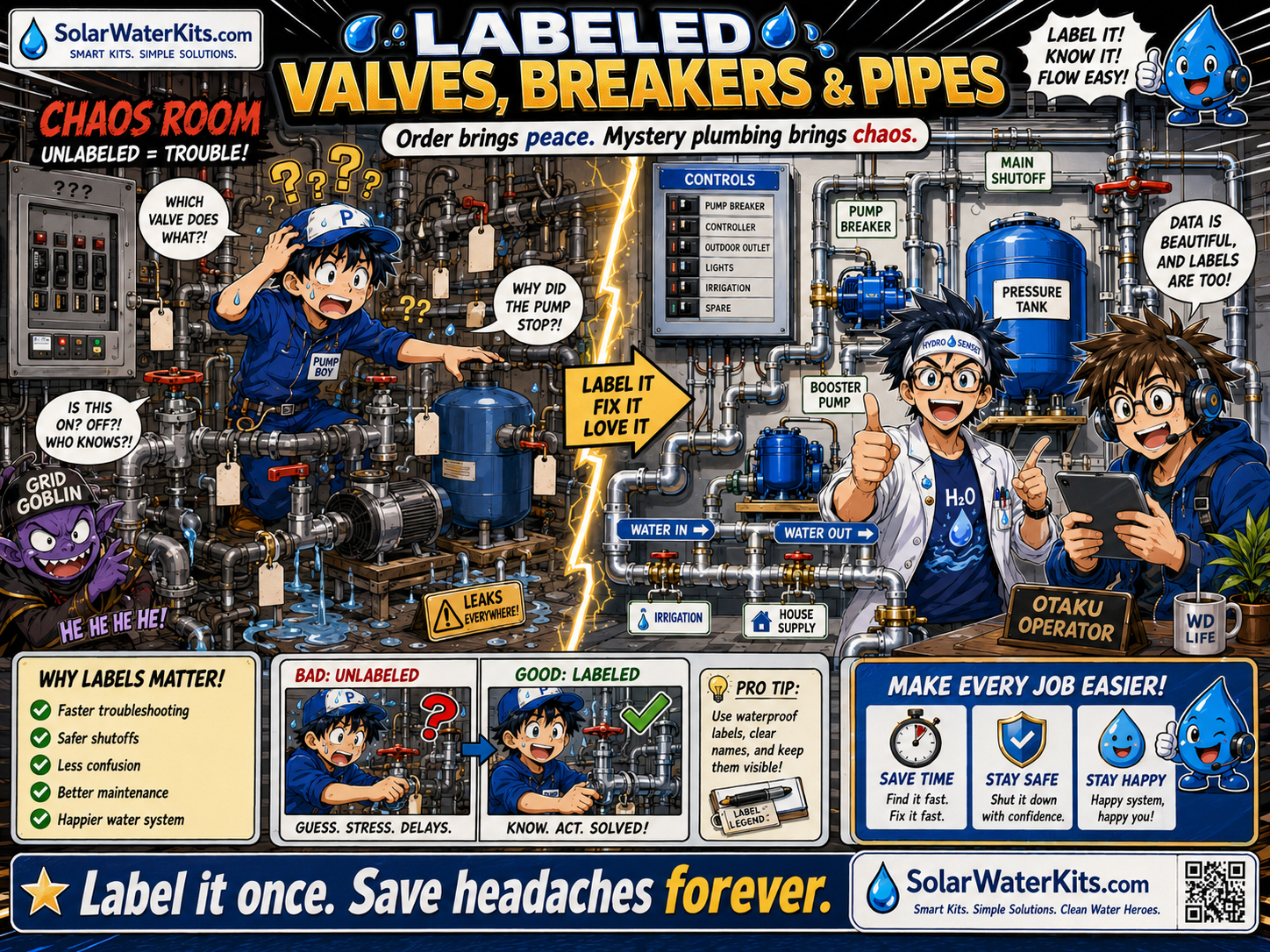
Valve name, normal position, flow direction, and service warning should be obvious.
Main shutoff. Tank outlet. Source pump isolation. Booster pump isolation. Filter bypass. Drain. Hose bib. Non-potable line. Everything gets mapped.
Otaku Operator draws little arrows: normally open, normally closed, service only, emergency shutoff, do not touch without reading.
Pump Boy is allowed near the valves again — but only after learning the sacred rule: “Touch nothing unlabeled, and label everything touched.”
A water system is not serviceable if nobody knows what the valves do. Labels protect pumps, tanks, filters, batteries, pipes, fixtures, and people.
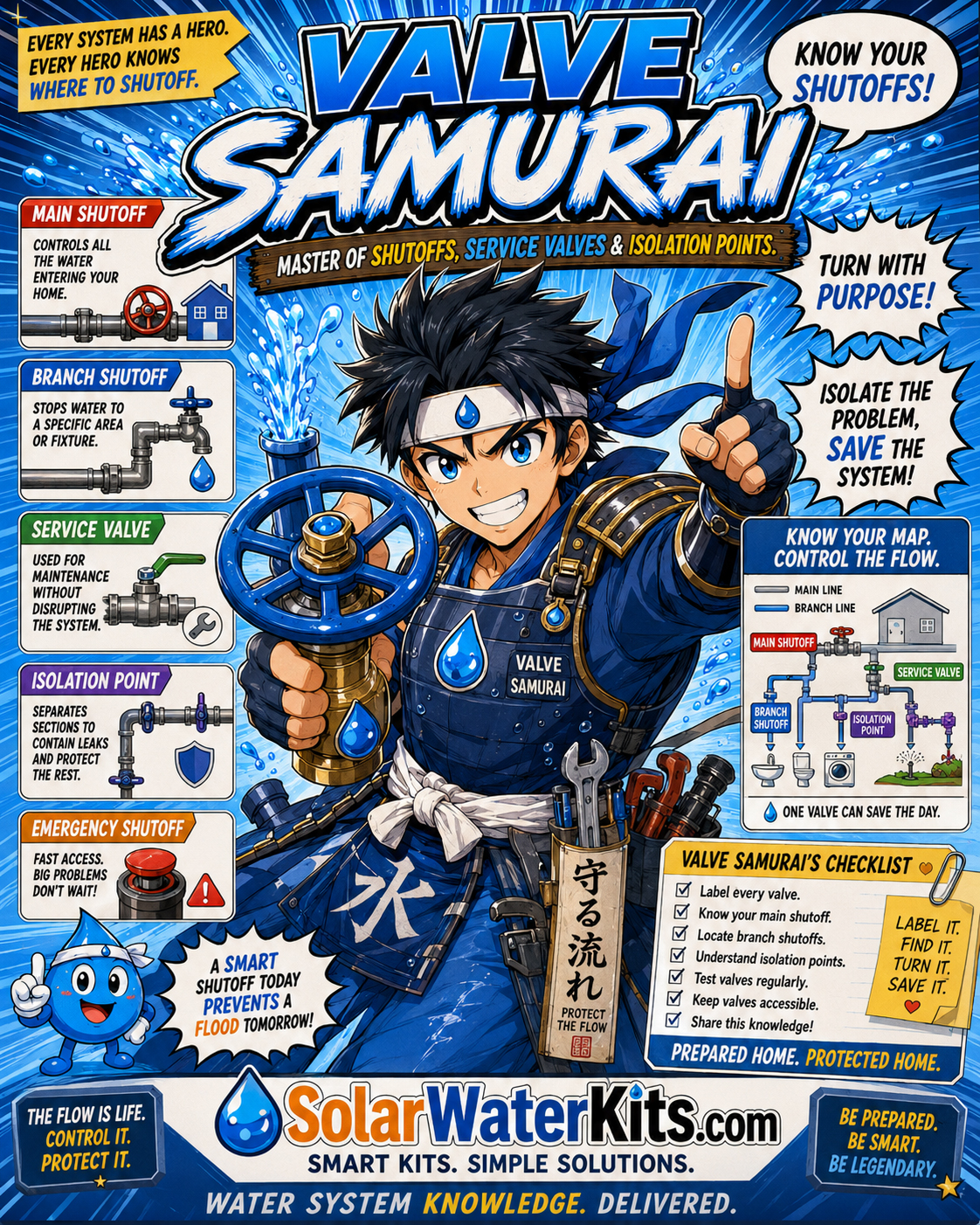
Every important valve should have a name, purpose, normal position, and service warning.
Maintenance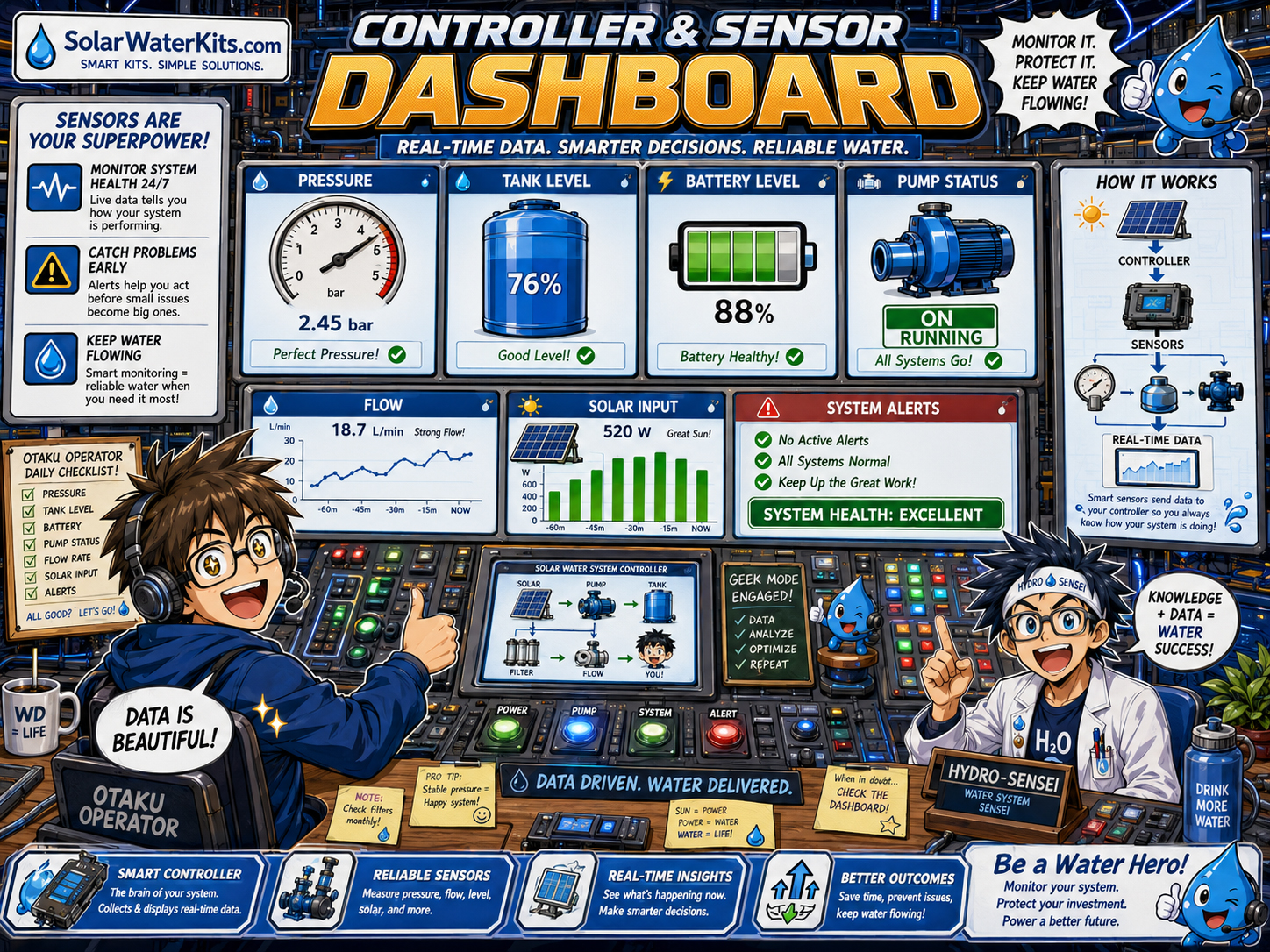
Status screens are only useful when the user knows what pump, tank, valve, or load they describe.
Controls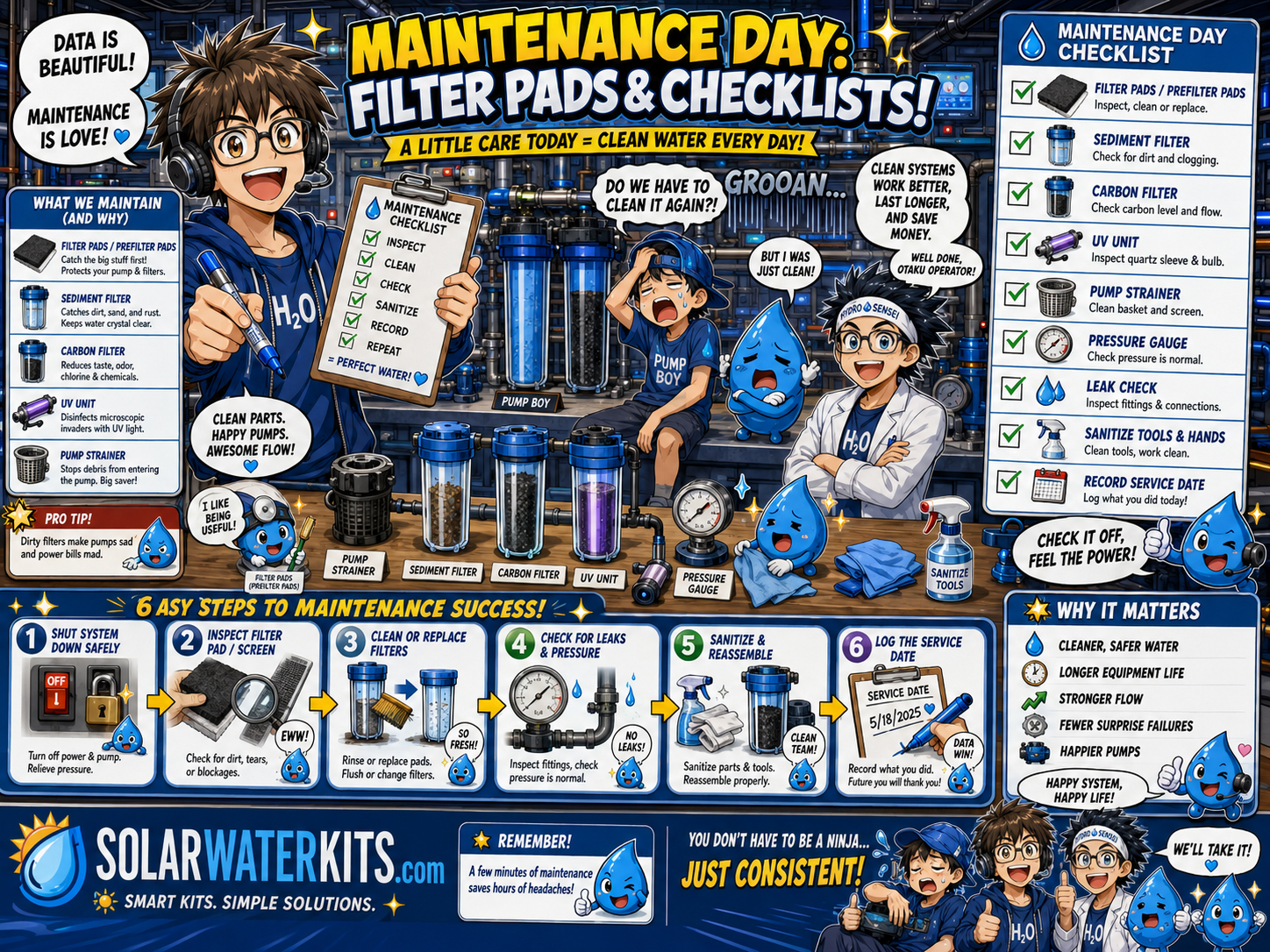
Labels, logs, dates, diagrams, and replacement schedules prevent repeat mistakes.
Maintenance| Item to Label | What the Label Should Say | Why It Matters |
|---|---|---|
| Main water shutoff | Main shutoff, normal position, direction to close. | Fast response during leaks or service. |
| Tank outlet | Tank name, outlet purpose, normal position. | Prevents accidental loss of reserve water. |
| Source pump isolation | Source pump isolation, service only, normal position. | Allows pump service without guessing. |
| Booster pump isolation | Booster pump isolation, inlet/outlet direction. | Protects pressure-system service work. |
| Filter bypass | Filter bypass, service only, water-safety warning. | Prevents accidental untreated water routing. |
| Drain valve | Drain, where it discharges, normal position. | Avoids accidental flooding or unsafe discharge. |
| Potable / non-potable lines | Potable, non-potable, graywater, rainwater, irrigation, or unknown. | Protects water safety and prevents cross-connection mistakes. |
| Electrical disconnect or breaker | Equipment served, voltage, pump or control name. | Helps service and emergency shutdown. |
A label is the voice of the person who understood the system before the emergency.
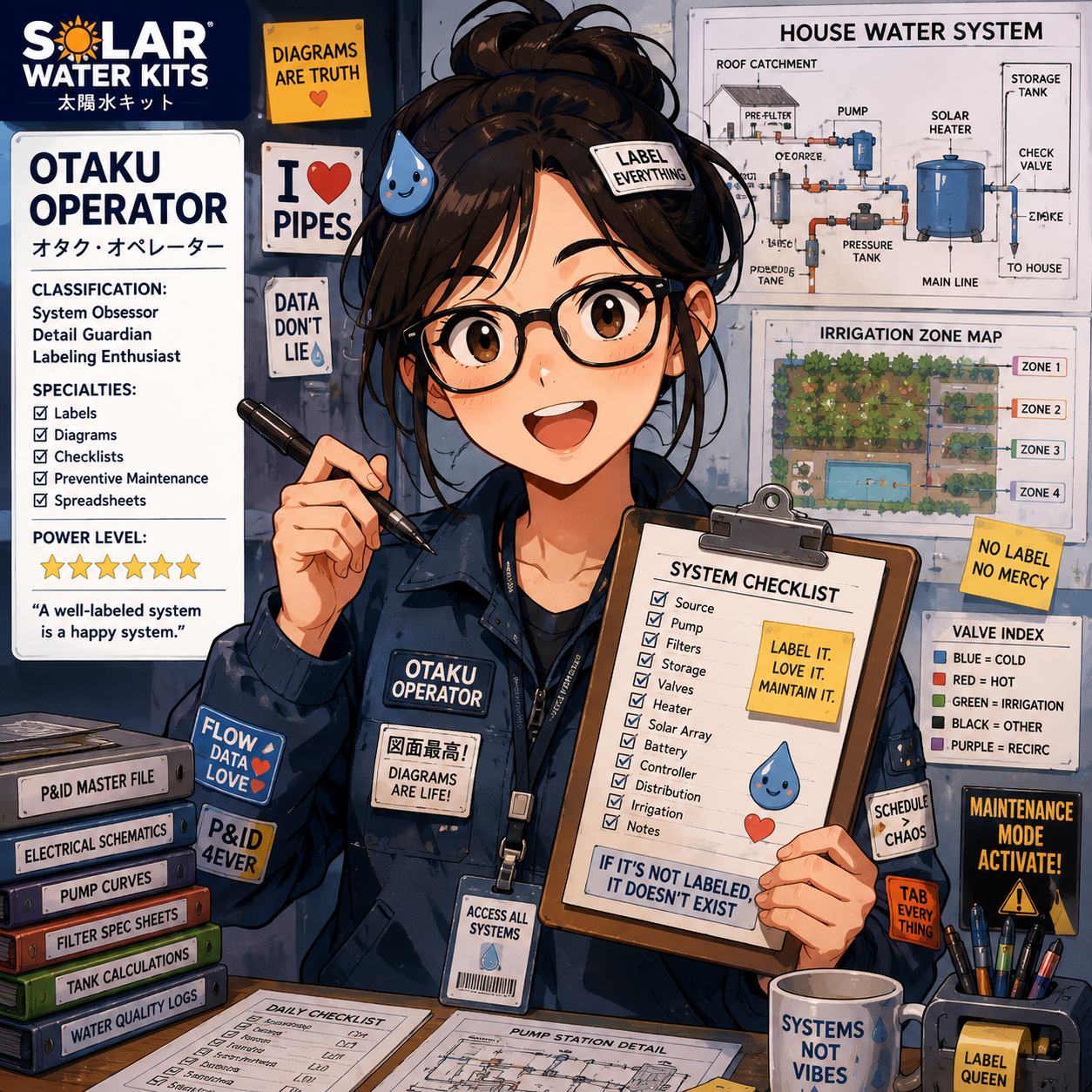
Labels, logs, diagrams, and checklists turn chaos into service work.
Mystery valves are funny in manga, expensive in real life, and dangerous during emergencies. Labeling is not decoration. It is part of the safety system.
Pump Boy: “So the label is part of the equipment?”
Otaku Operator: “Correct. The label is the equipment remembering what it is.”
Real water systems may involve potable water, non-potable water, pumps, tanks, pressure systems, electrical disconnects, batteries, filters, backflow protection, graywater, rainwater, fire-readiness concepts, permits, inspections, and manufacturer requirements.
The final episode proves the point: the glamorous solar water system still depends on plain labels, diagrams, maintenance, shutoffs, and disciplined service.
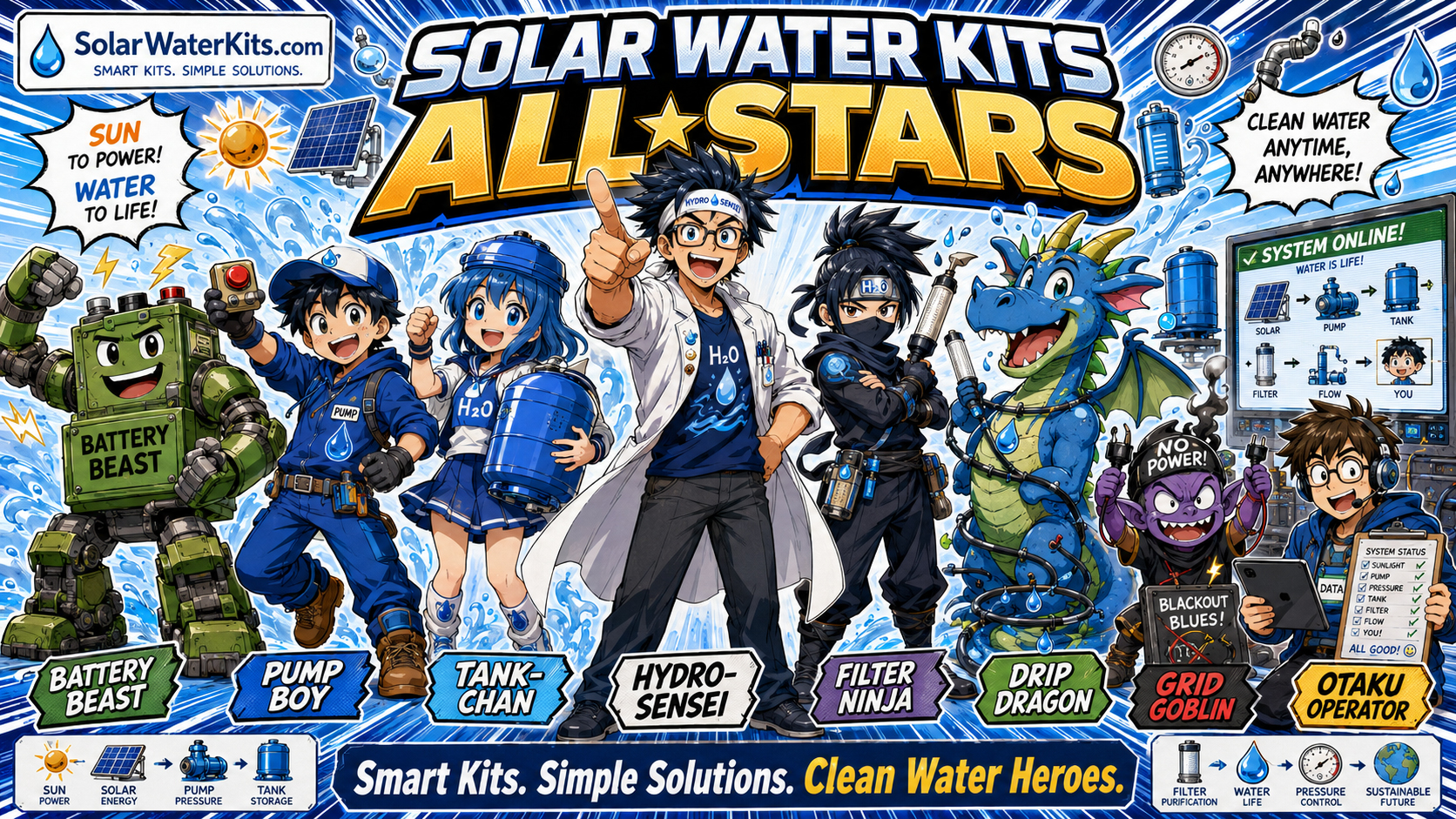
Filters, tanks, pumps, valves, batteries, sensors, labels, and water testing.
Maintenance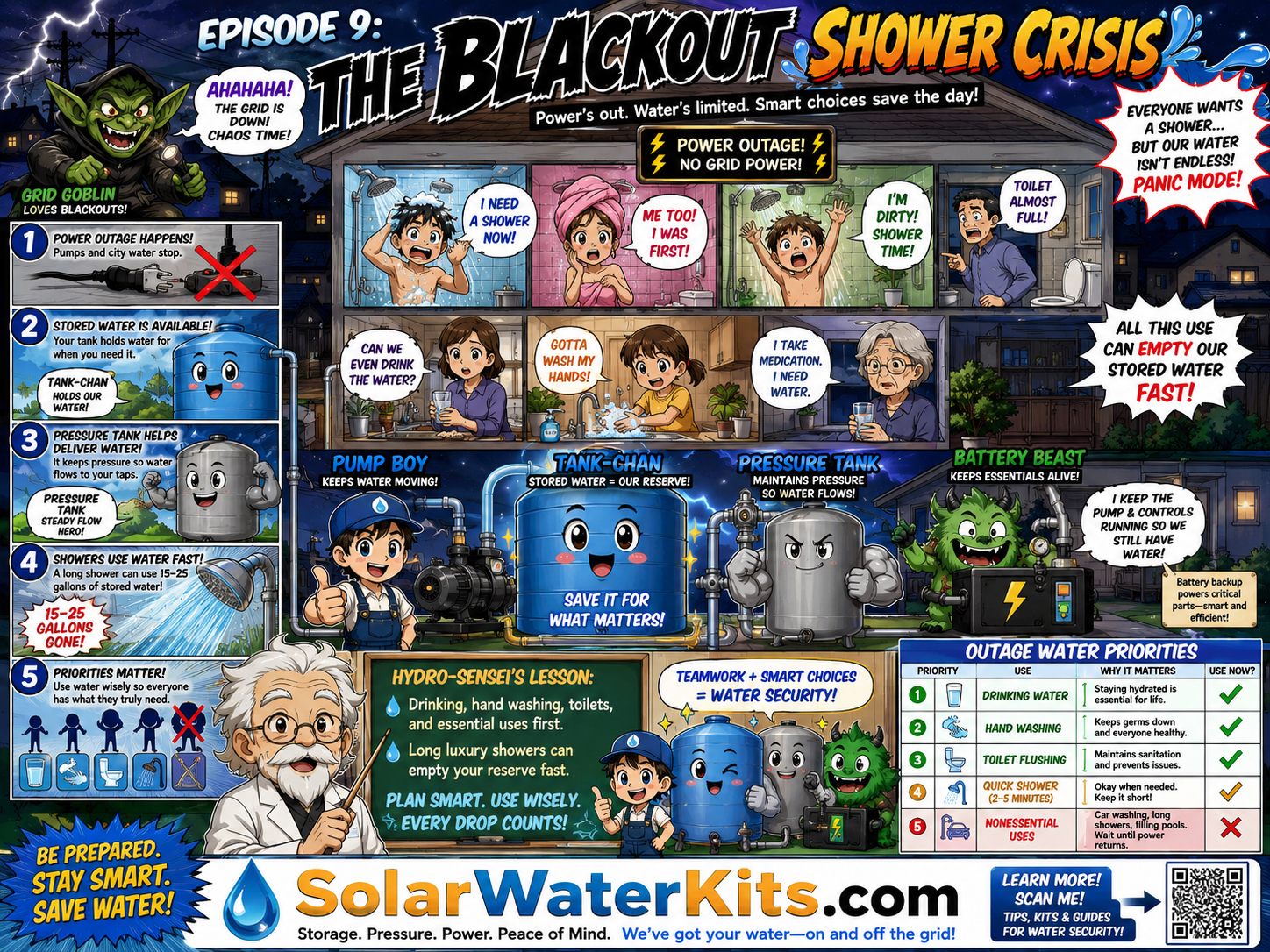
Go back to emergency water priorities and comfort-water discipline.
Read Episode 9