The household negotiates
One person wants a shower. Another wants laundry. Someone wants to rinse the patio. Tank-chan stares silently at the storage level gauge.
The grid is down, the pump is on backup, and suddenly everyone wants a shower. Hydro-Sensei, Tank-chan, Battery Beast, and Filter Ninja explain the brutal outage truth: comfort water comes after essential water.
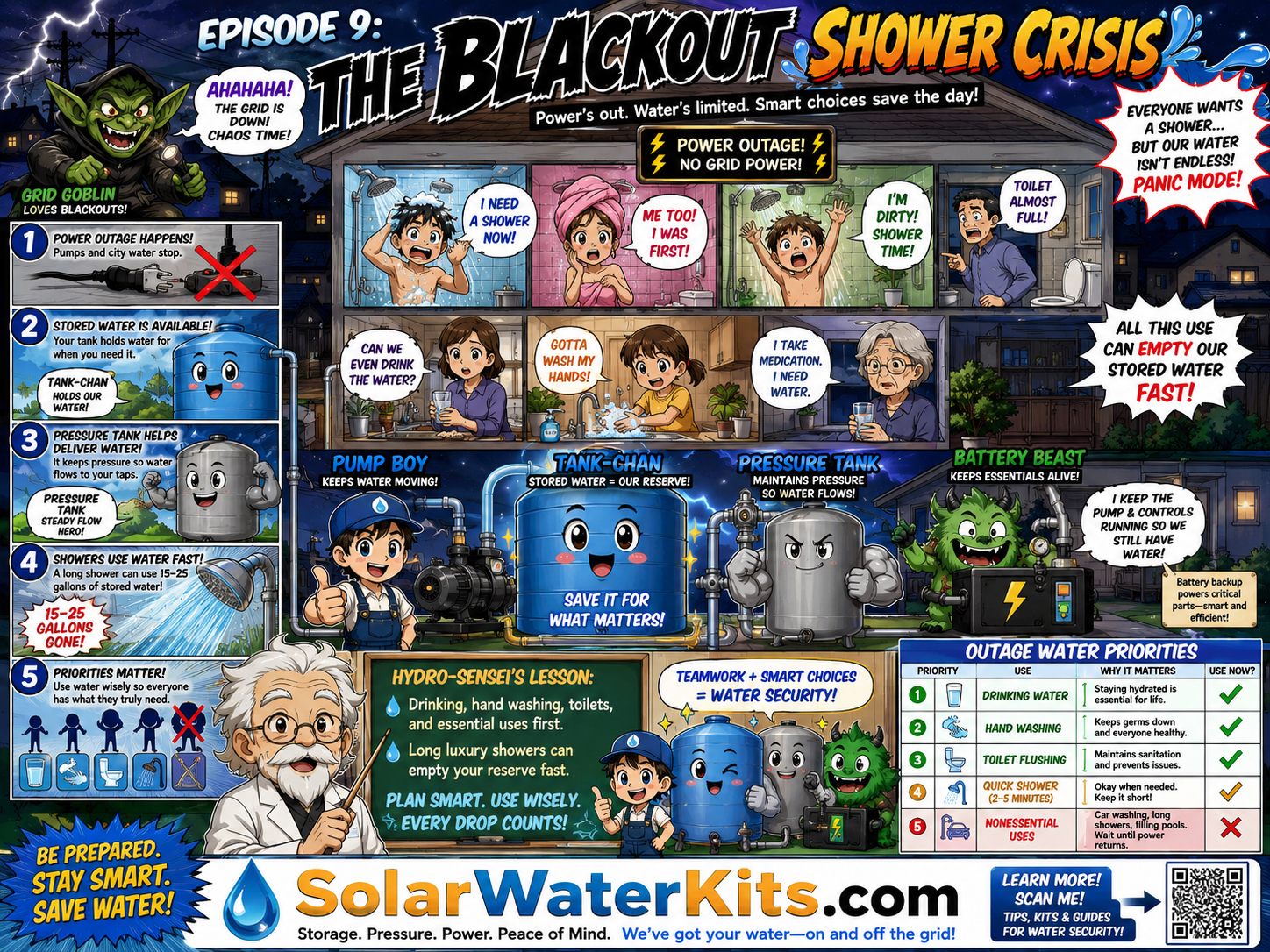
Episode 9 teaches water-priority discipline: stored water and battery-backed pumping should protect essential needs before comfort loads drain the system.
The outage begins. The bathroom becomes a negotiation chamber.
The lights flicker off. The refrigerator stops humming. The pump switches to backup mode. Three seconds later, someone asks, “Can I take a quick shower?”
Hydro-Sensei walks in holding a clipboard labeled “Outage Water Priorities.”
One person wants a shower. Another wants laundry. Someone wants to rinse the patio. Tank-chan stares silently at the storage level gauge.
Tank-chan announces: “Stored water is not a buffet. It is a reserve.” Everyone suddenly becomes interested in math.
Battery Beast points at the pump load. “Every minute of water movement uses energy. Every unnecessary pump start takes a bite.”
Hydro-Sensei writes the outage priority list: drinking → hand washing → toilets → medical/animal needs → limited cooking → short hygiene → comfort water last.
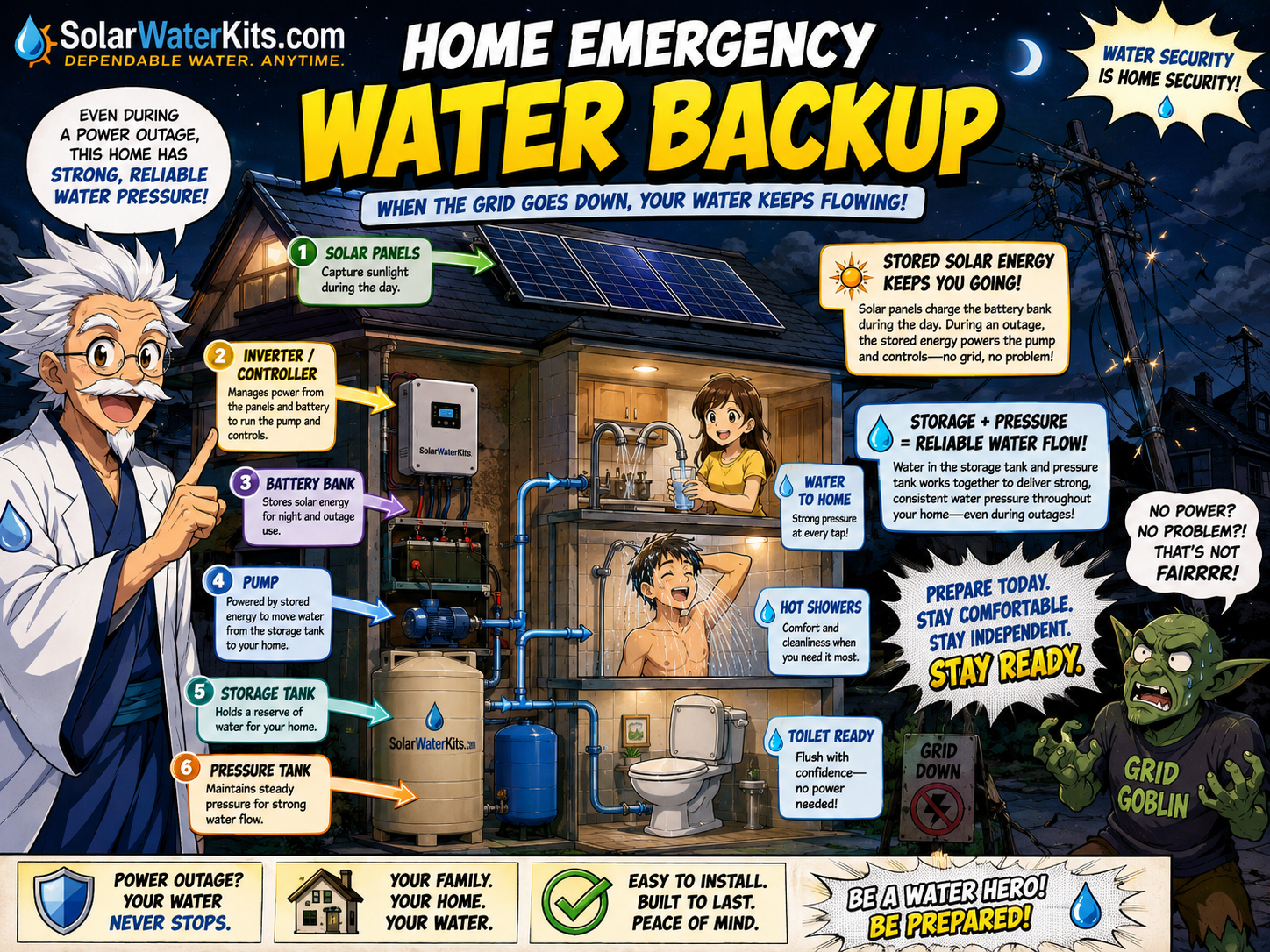
Stored water, backup power, pressure, and priorities work together.
Filter Ninja labels three buckets: potable, non-potable, and unknown. “A shower is not drinking,” he says, “but unsafe water still has rules.”
The card says: “No laundry. No hoses. No irrigation. No pool filling. Short hygiene only after essential needs are protected.”
The household accepts a smaller solution: wash hands, brush teeth, wipe down, save the shower for when the system recovers. Battery Beast applauds politely.
A battery-backed pump and stored water reserve can help during an outage, but the system must be protected from comfort loads that drain storage and battery before essential needs are served.
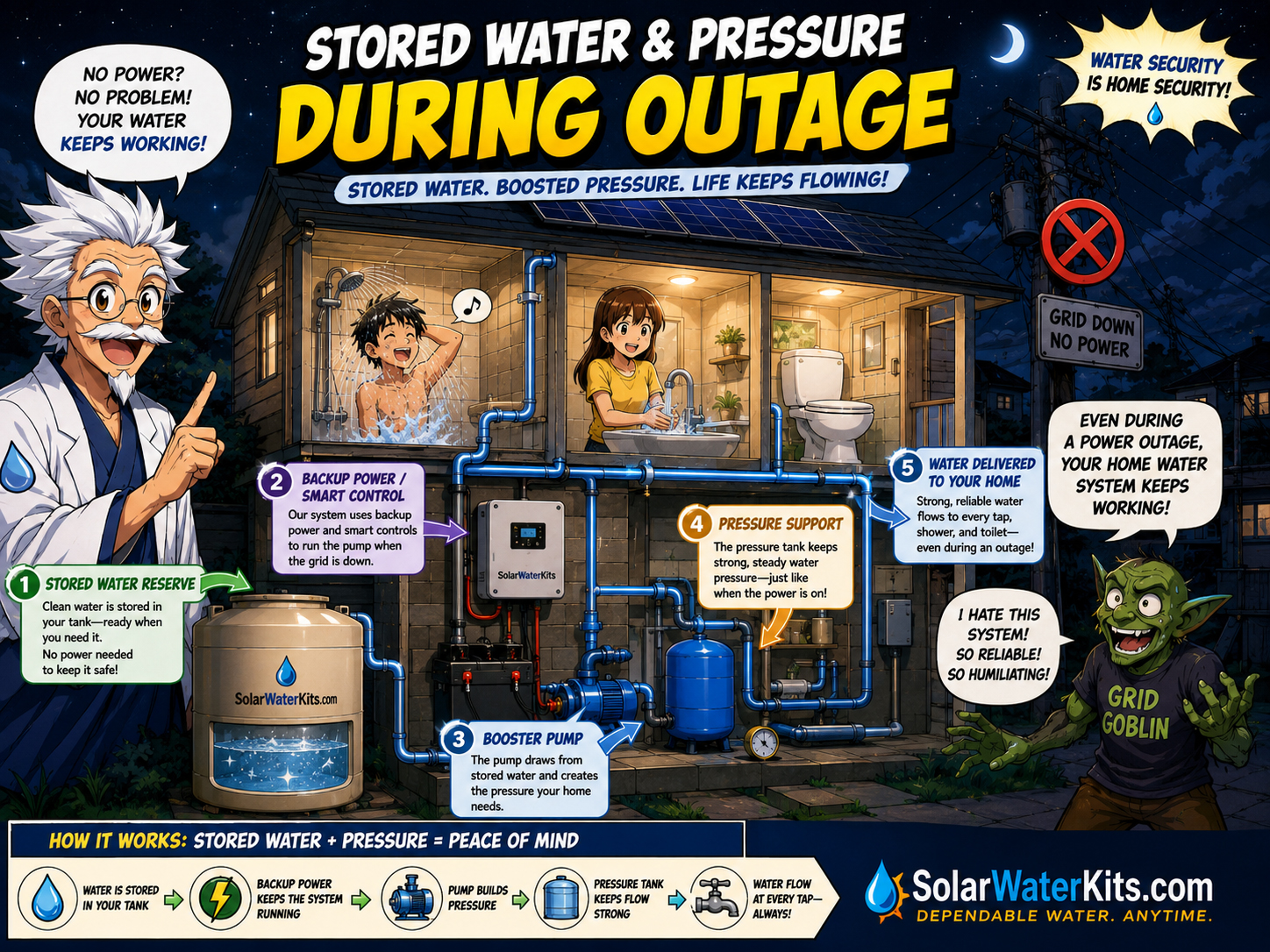
A water tank can give the system reserve gallons, but those gallons need priority rules.
Stored Water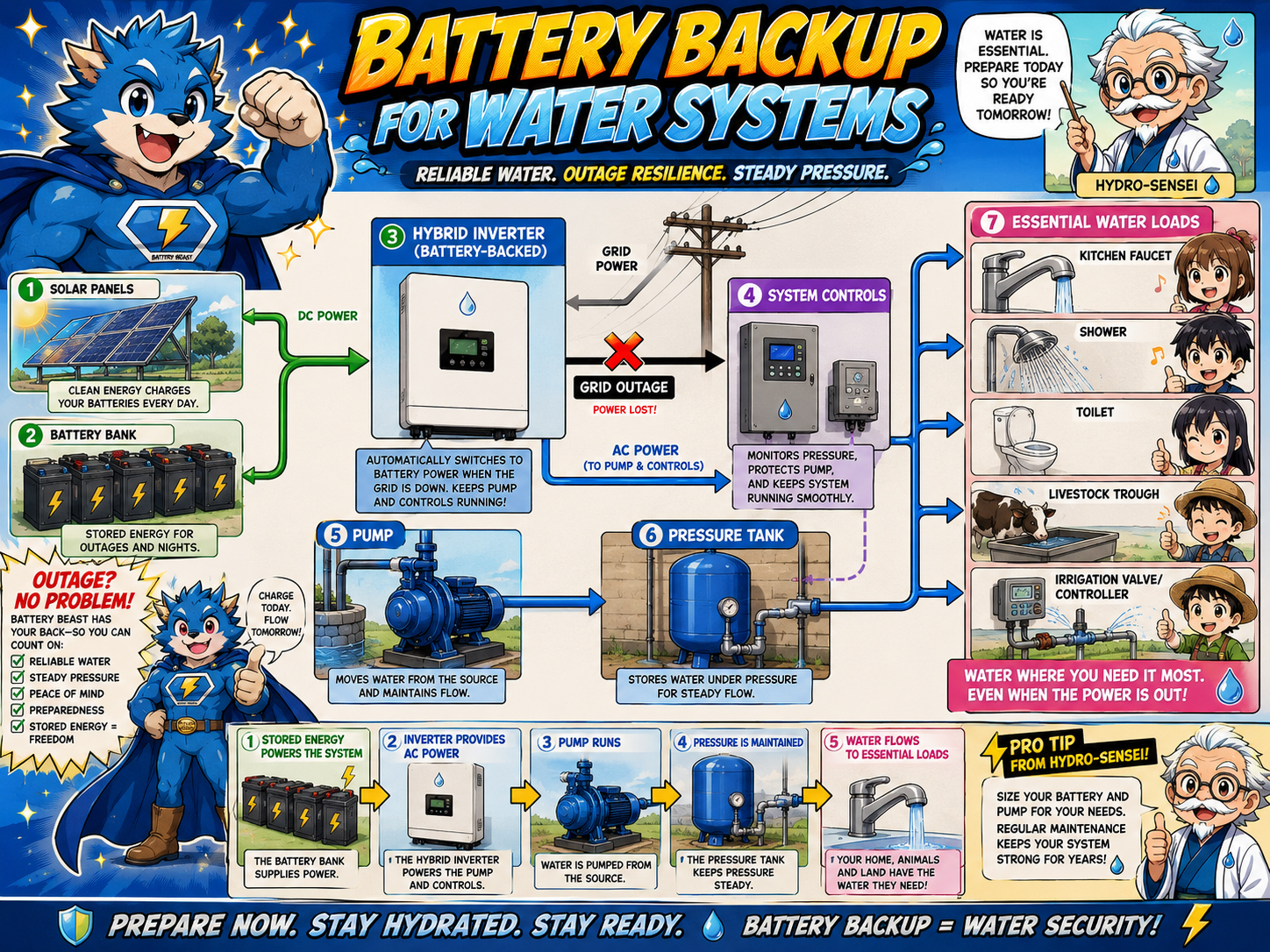
Pump surge, runtime, inverter size, battery capacity, and pressure behavior decide backup performance.
Battery Backup
Potable, non-potable, and unknown water must stay clearly separated and labeled.
Water Safety| Outage Water Use | Priority | Hydro-Sensei Rule |
|---|---|---|
| Drinking water | Highest | Must be known safe, tested, treated, and properly stored. |
| Hand washing and sanitation | Very high | Protect health first. Use water carefully. |
| Toilet flushing | High | May use non-potable water where properly separated and safe for the plumbing plan. |
| Medical or animal needs | High | Plan special needs before the outage. |
| Cooking and basic cleaning | Medium | Use safe water and conserve reserve gallons. |
| Short hygiene | Conditional | Allowed only when storage and battery status are healthy. |
| Long showers, laundry, hoses, irrigation | Low | Usually pause during outage mode. |
Emergency water is not about pretending the grid is fine. It is about keeping the important things working.
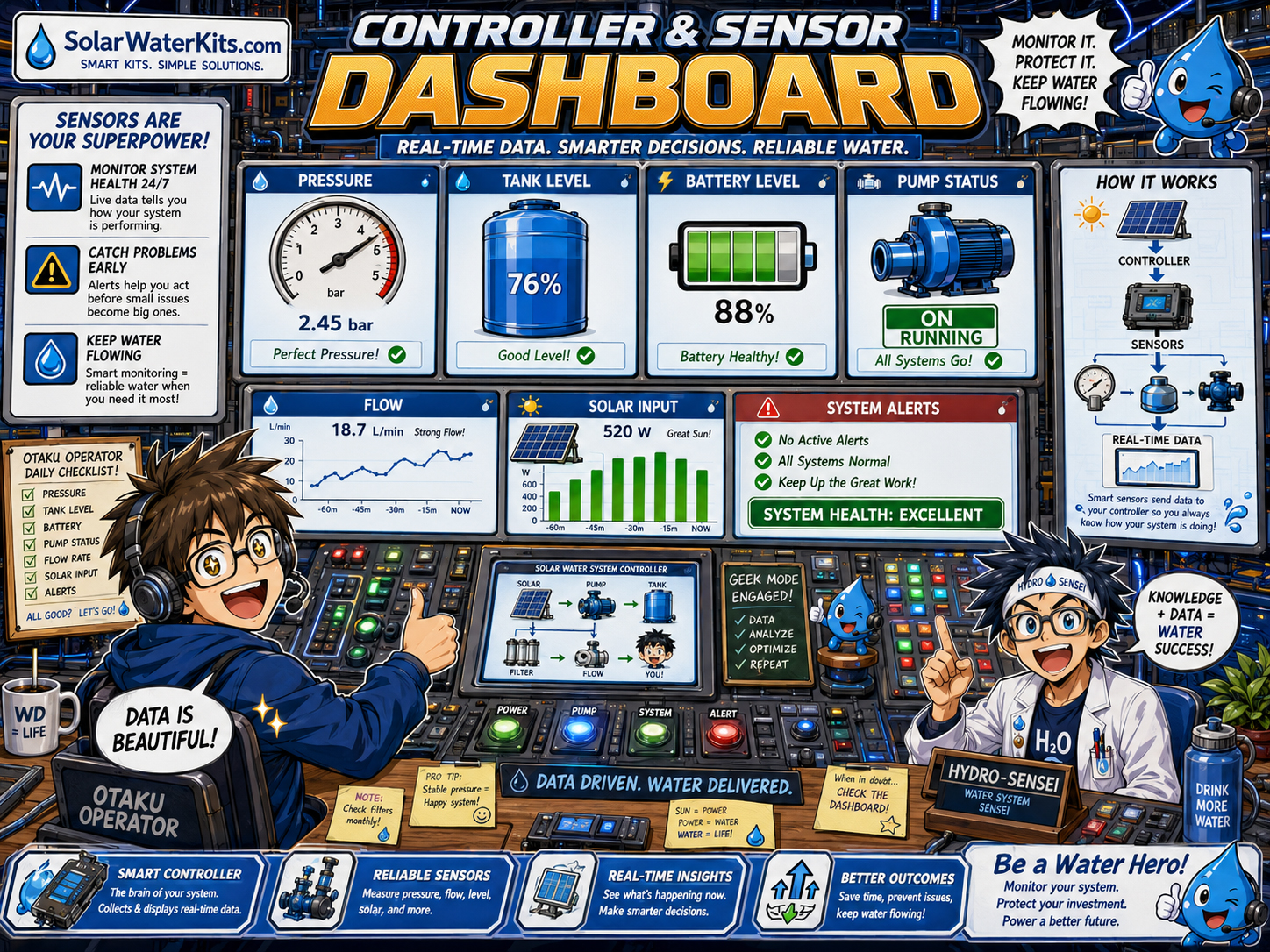
Tank level, battery state, pump status, pressure, and alarms guide water decisions.
The shower crisis teaches the household that storage and battery backup are not unlimited. The system works best when everyone understands emergency priorities before the outage begins.
Pump Boy: “So emergency water is not shower day?”
Hydro-Sensei: “Correct. It is civilization maintenance.”
Real emergency water systems may involve potable water, non-potable water, pumps, batteries, inverters, tanks, pressure systems, filters, treatment, backflow protection, plumbing rules, electrical work, permits, inspections, and health guidance.
One unlabeled valve causes a complete comic catastrophe. Otaku Operator teaches shutoffs, bypasses, drains, isolation points, and maintenance labels.
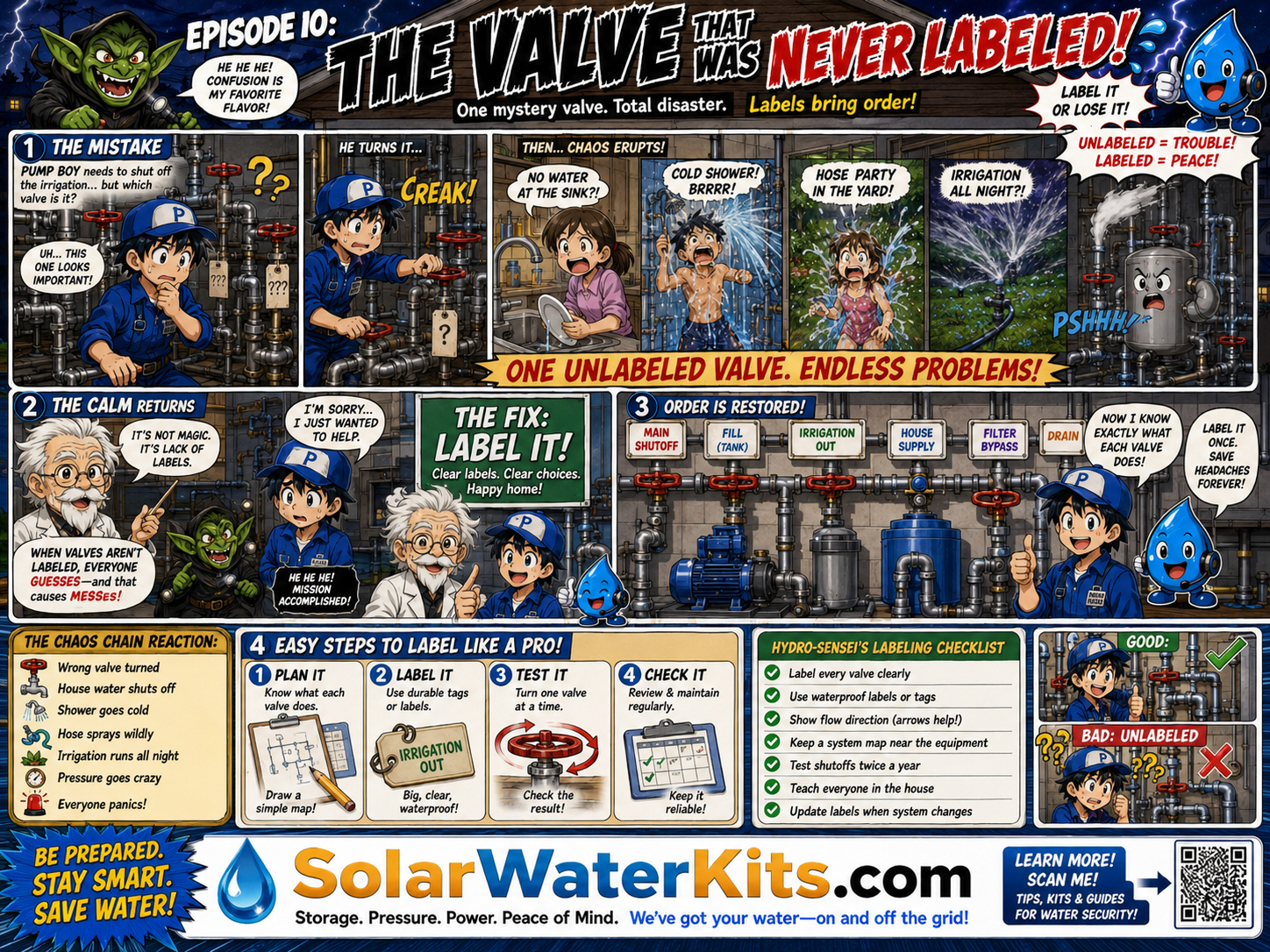
Mystery valves, service chaos, and Otaku Operator’s greatest day.
Read Episode 10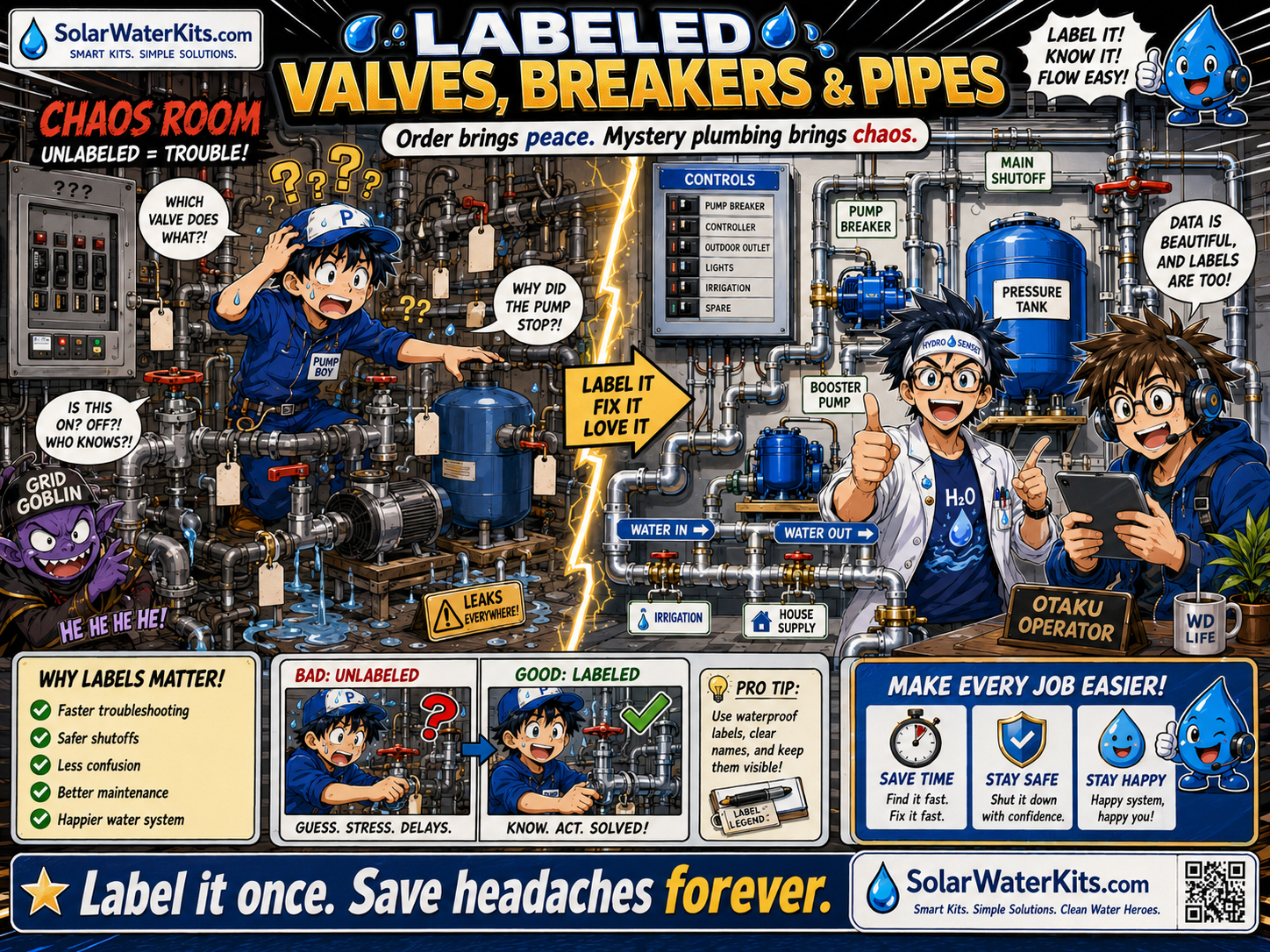
Valves, bypasses, drains, breakers, tanks, filters, and normal positions need labels.
Maintenance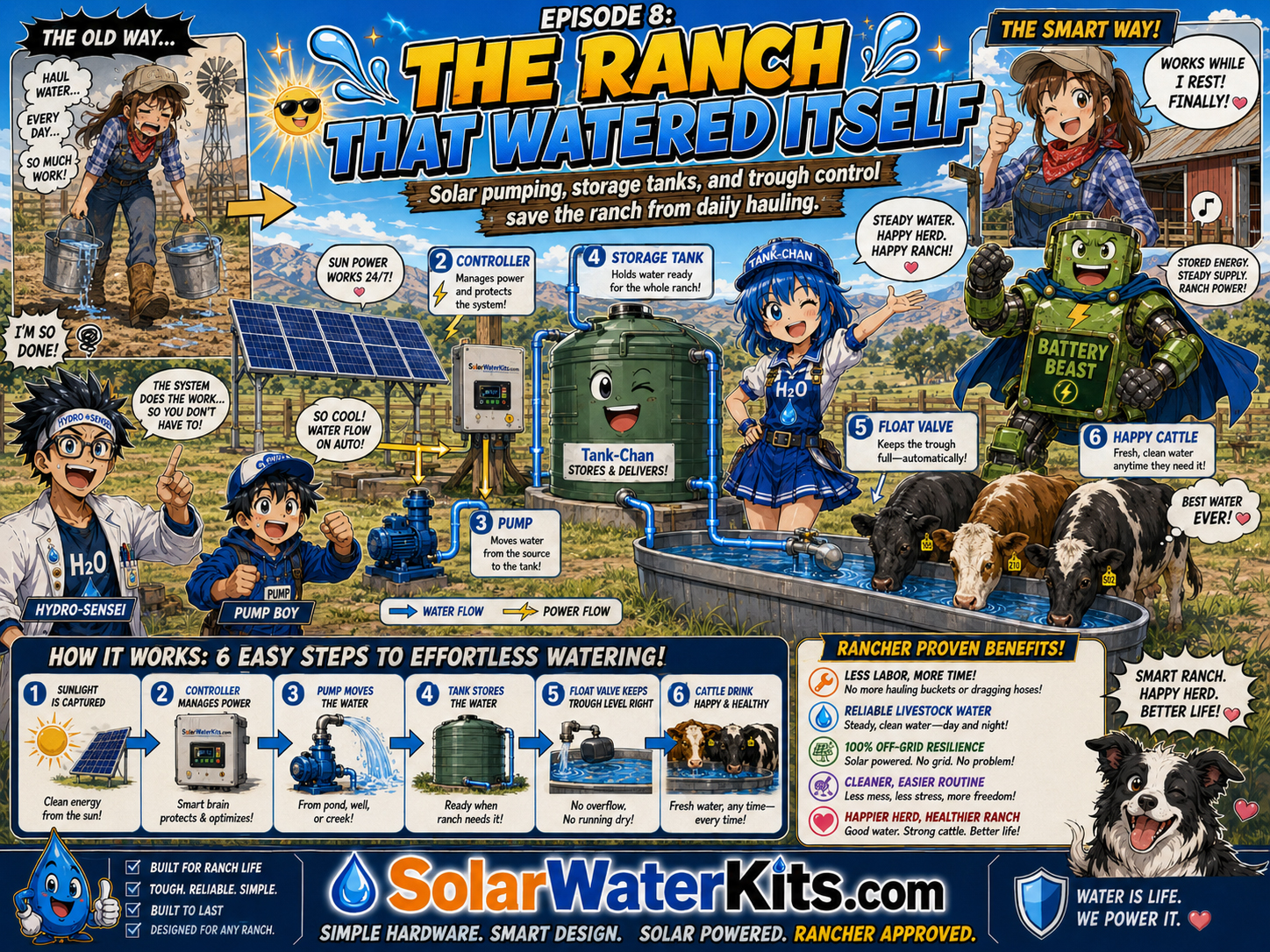
Go back to the solar ranch water lesson.
Read Episode 8