The Mud Monster laughs
A blob of sediment rises from the bucket wearing tiny boots. “You can see me,” it says. “That makes me the easy problem.”
The pump moves water. The tank stores water. But suddenly the water turns cloudy. Pump Boy wants to keep pumping. Filter Ninja drops from the ceiling and announces the lesson nobody gets to skip: moving water is not the same as making water safe.
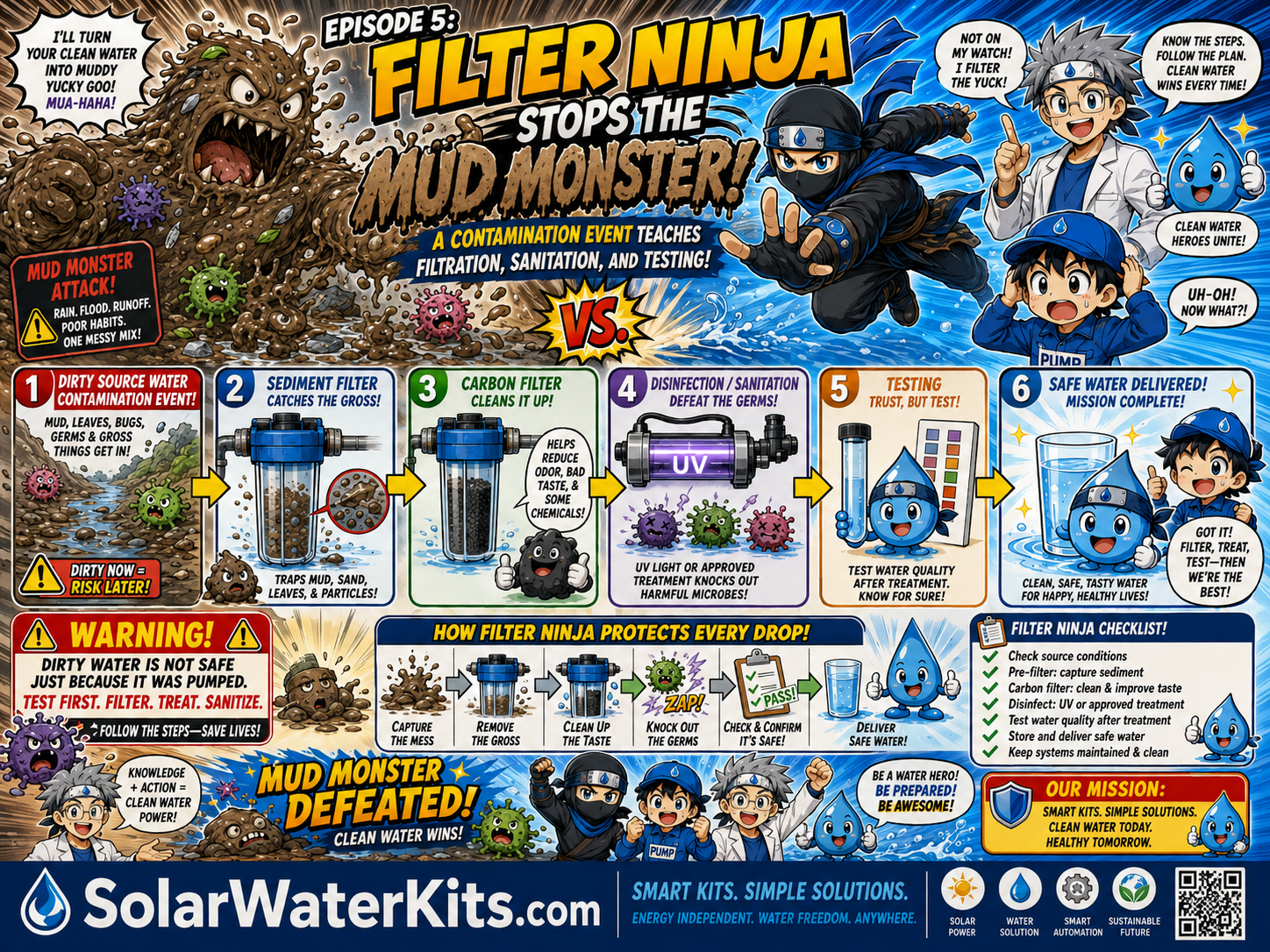
Episode 5 teaches the water-quality lesson: sediment is visible, but many serious water problems are invisible. Filter Ninja demands testing before anyone makes drinking-water assumptions.
The crew learns that dirty-looking water is obvious. Invisible problems are sneakier.
The well pump is running again. Tank-chan is calm. Battery Beast is proud. Then the faucet spits out cloudy water with a dramatic “GLURP.”
Filter Ninja lands between the faucet and the drinking glass. Nobody passes.
A blob of sediment rises from the bucket wearing tiny boots. “You can see me,” it says. “That makes me the easy problem.”
Screens, sediment filters, carbon cartridges, UV lamps, test strips, lab bottles, gloves, and labels appear in a perfect semicircle.
Hydro-Sensei writes on the board: “Source water first. Test second. Treatment third. Drinking assumptions last — and only if proven.”
The Mud Monster points behind the curtain. Out come Invisible Bacteria, Nitrate Ghost, Rust Gremlin, Hardness Rock, Mystery Chemical, and Bad Hose Spirit.
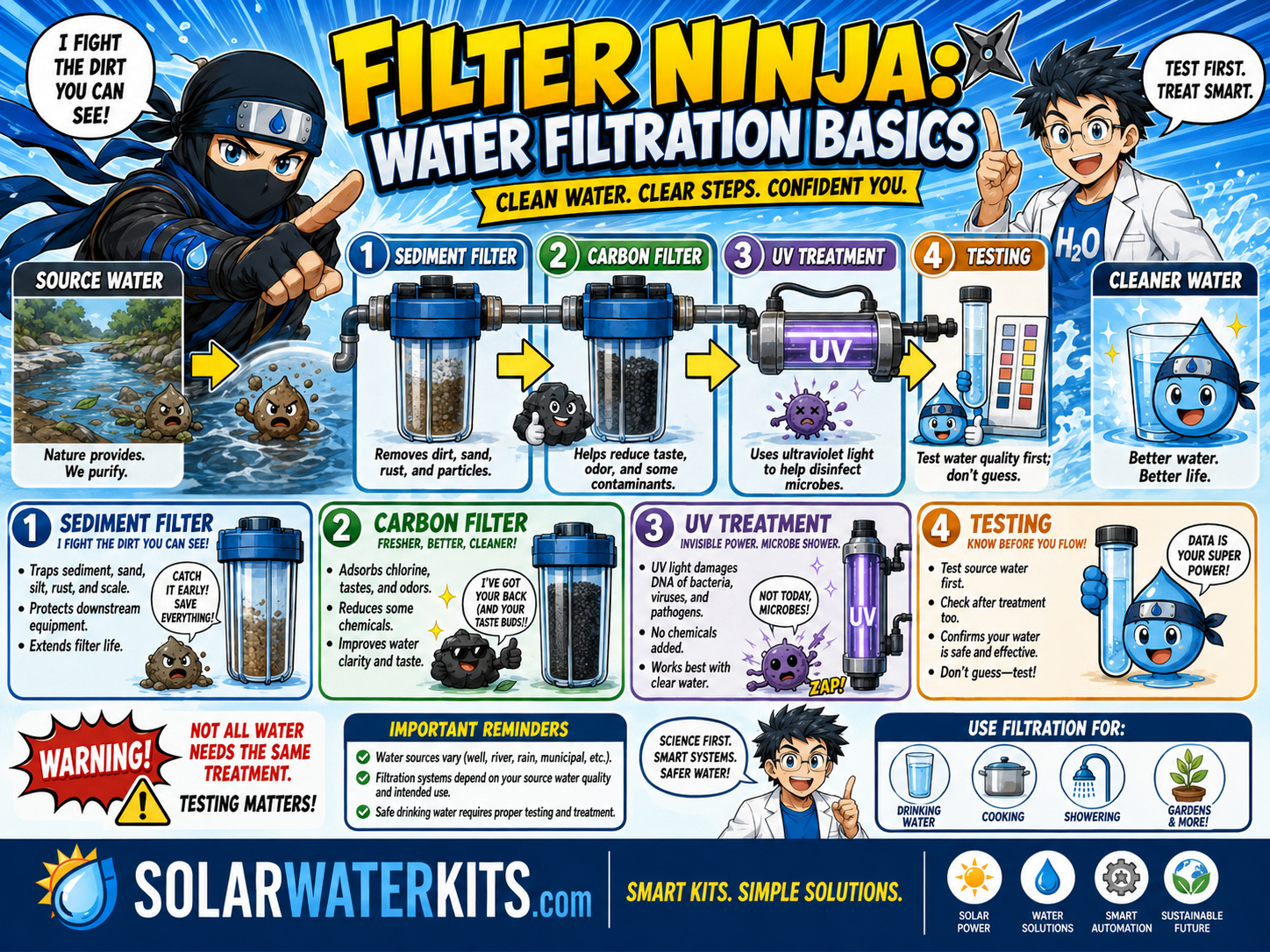
Source, test, filter, disinfect when needed, maintain, retest.
The Mud Monster slams into the sediment filter and splats dramatically. Everyone cheers. Filter Ninja does not smile yet.
The UV lamp glows like a tiny sun sword. Filter Ninja explains that UV needs clear enough water, correct flow, clean sleeves, power, and maintenance.
Otaku Operator labels the water: “Not confirmed potable.” Pump Boy groans. Hydro-Sensei nods. Safety has entered the manga.
A sediment filter does not make water potable by itself. Carbon does not remove every contaminant. UV does not remove chemicals. Testing guides treatment.
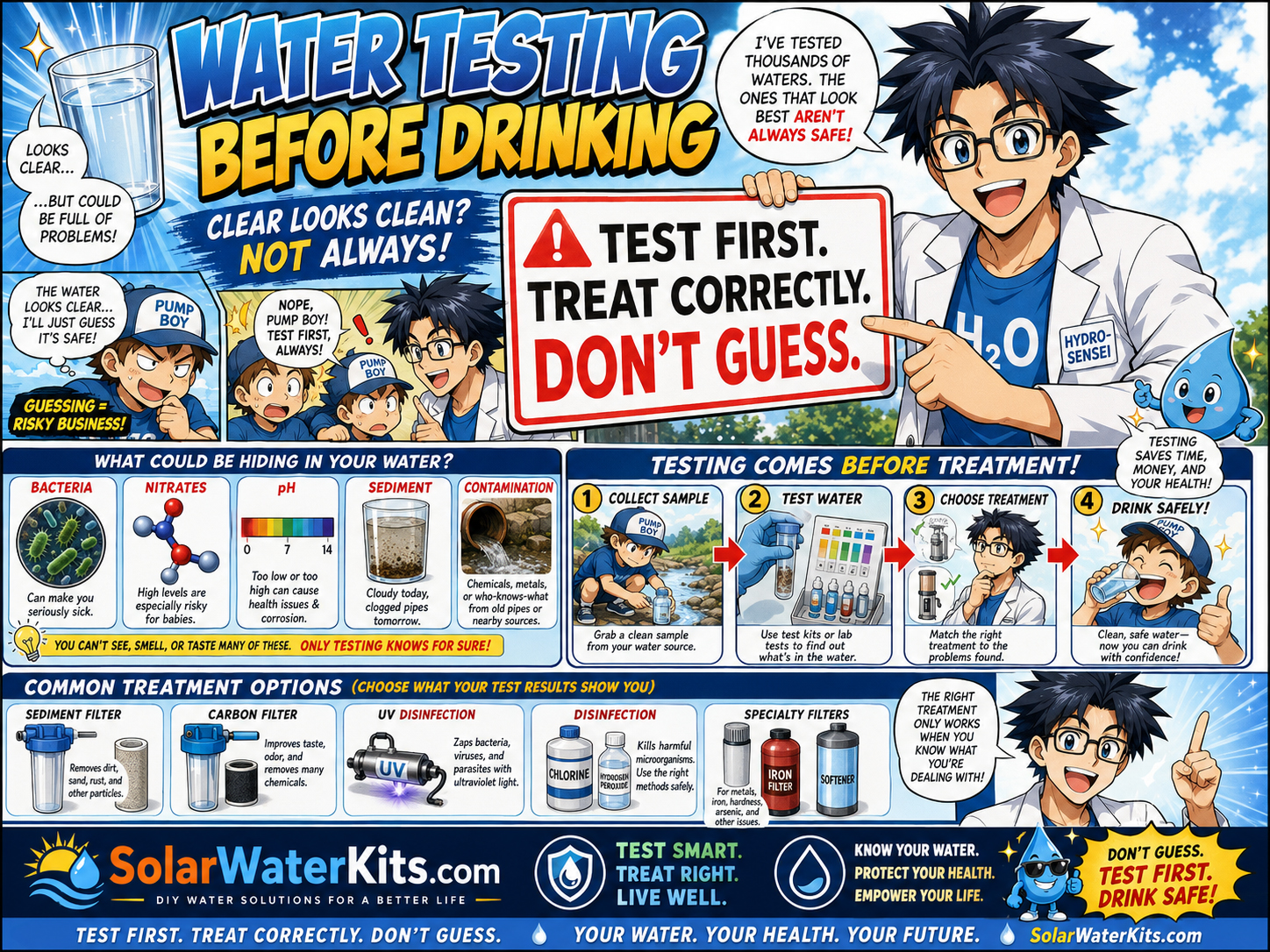
Water can look clean and still have invisible problems. Testing comes before treatment assumptions.
Water Safety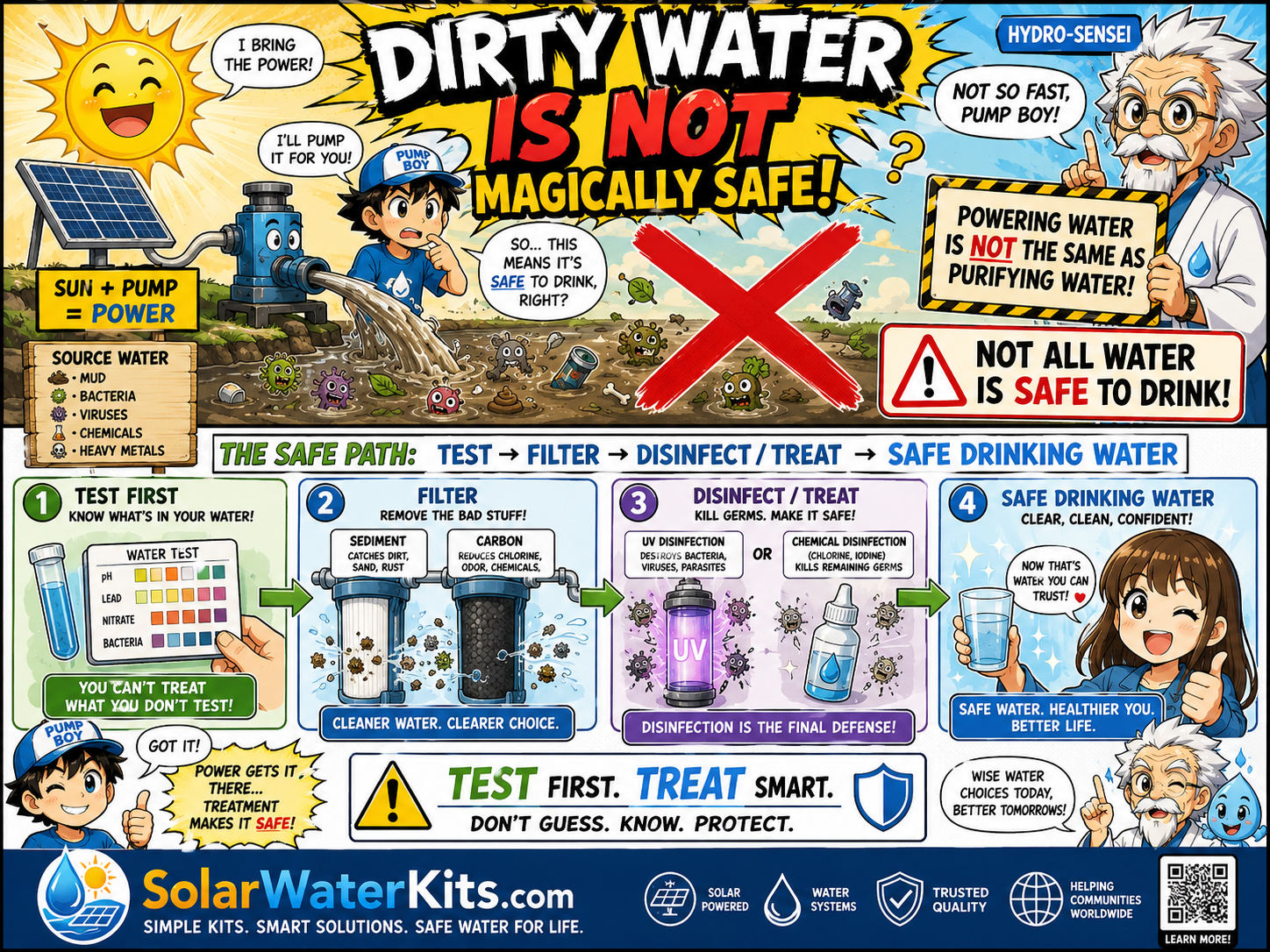
Solar power moves water. Pumps move water. Neither one proves the water is safe.
Filtration Basics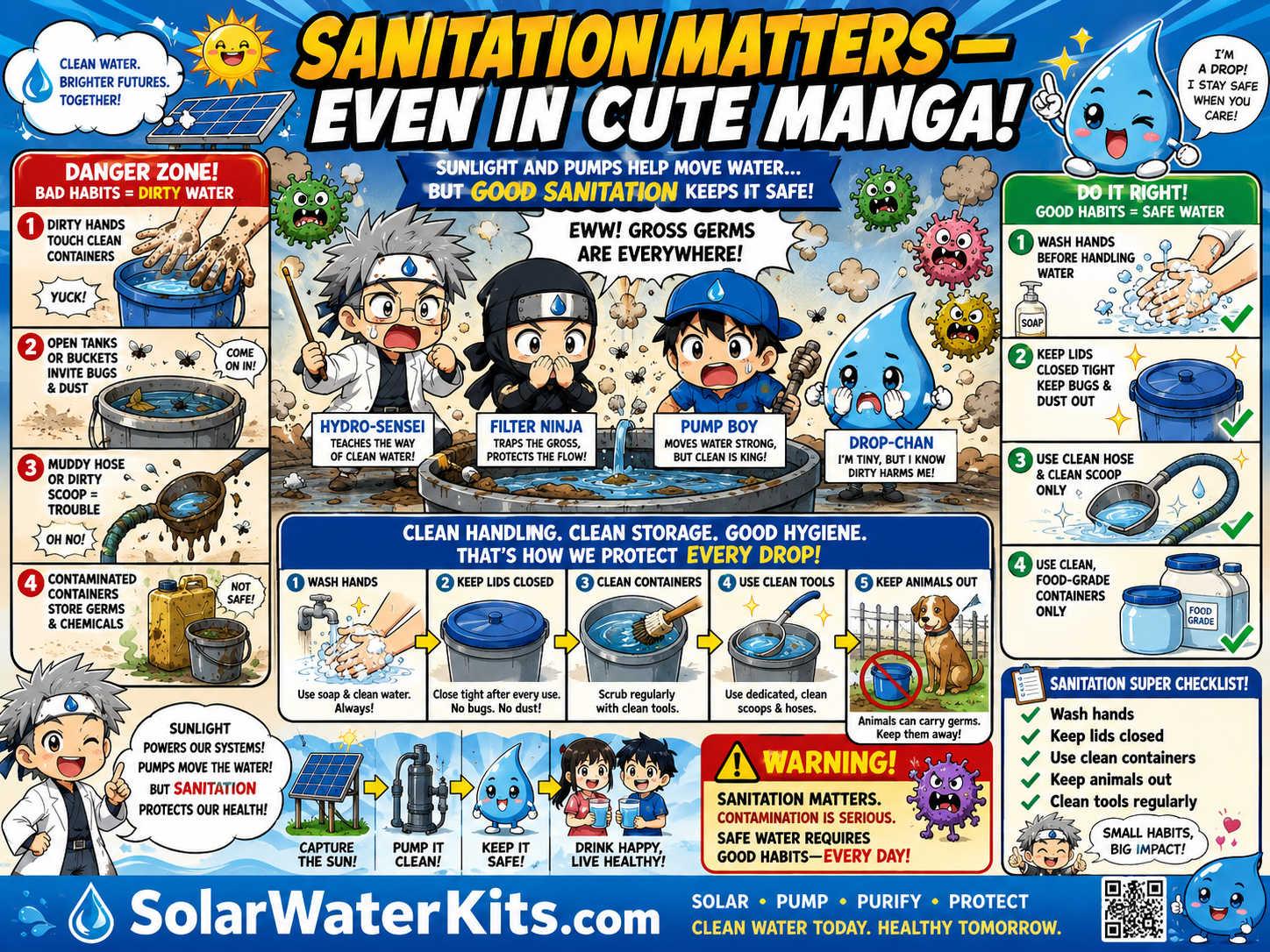
A good treatment system can be defeated by dirty tanks, hoses, hands, caps, or storage.
Maintenance| Water Problem | Possible Tool | Filter Ninja Warning |
|---|---|---|
| Sediment, sand, silt, rust | Sediment filter, screen, strainer. | Particles are not the only possible problem. |
| Taste, odor, chlorine, selected organics | Carbon filtration. | Carbon does not remove every contaminant. |
| Bacteria or biological risk | UV, chlorination, or other approved disinfection. | Disinfection must be matched to water clarity, dose, contact time, and maintenance. |
| Dissolved minerals or salts | Specialty treatment, softening, RO, or other design. | A basic cartridge may do nothing for dissolved issues. |
| Stored water contamination | Tank cleaning, covers, screens, treatment, testing. | Storage can recontaminate treated water. |
| Unknown source water | Testing and professional review. | Unknown water is not a guessing game. |
The water does not become safe because the drawing is cute.
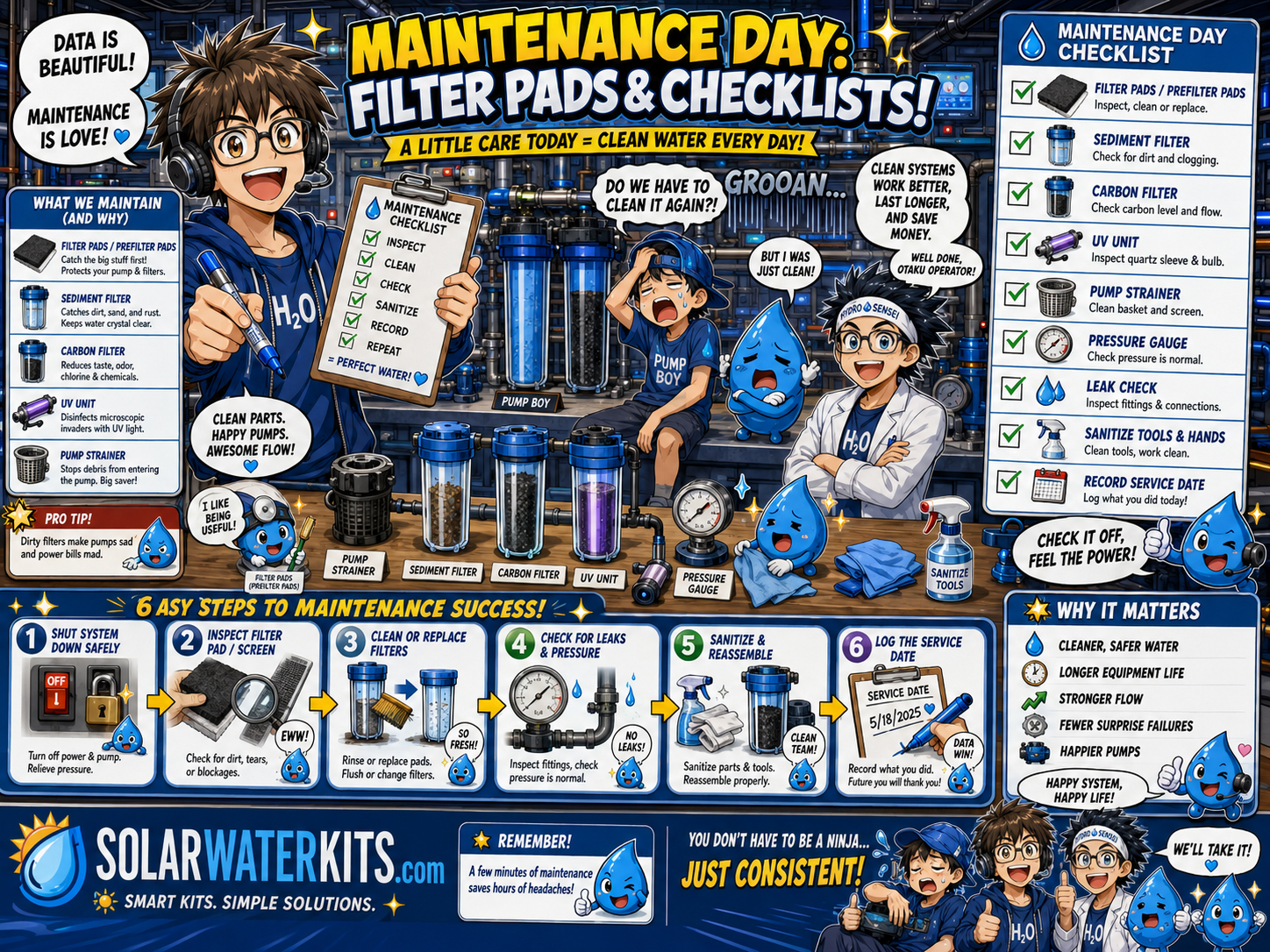
Cartridges, screens, UV lamps, tank cleaning, and logs keep the lesson alive.
A solar water system can move, store, and pressurize water. Drinking-water safety requires source protection, testing, treatment, sanitation, maintenance, and proof.
Pump Boy: “So the filter is not magic?”
Filter Ninja: “Correct. It is a tool, not a wizard.”
Real water treatment may involve source-water testing, certified equipment, sediment filtration, carbon filtration, UV, chemical disinfection, reverse osmosis, tank sanitation, potable-water plumbing, backflow protection, cross-connection control, permits, inspections, and local health guidance.
The crew moves from water safety to water efficiency. Drip Dragon learns that irrigation is not a flood contest.
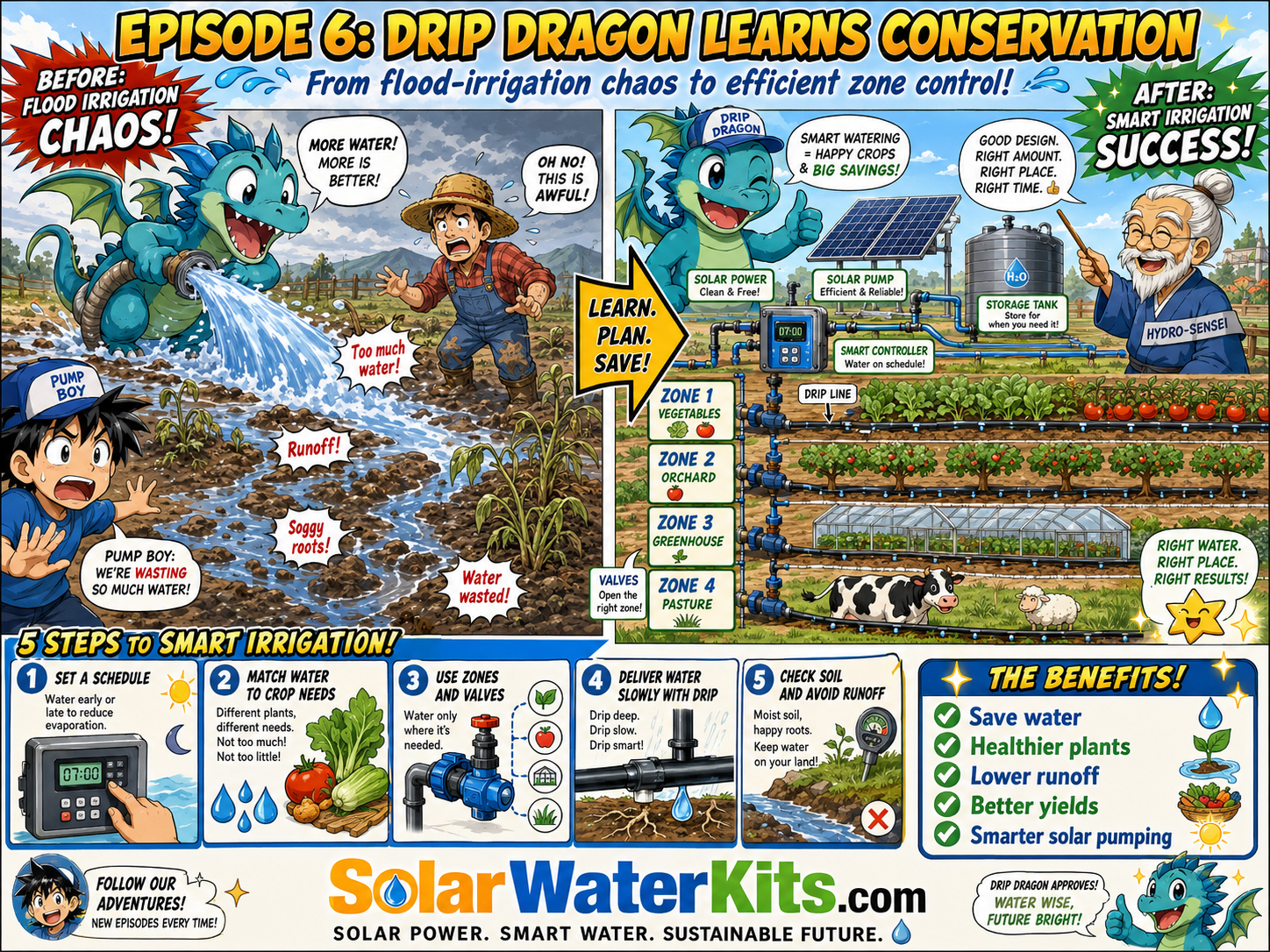
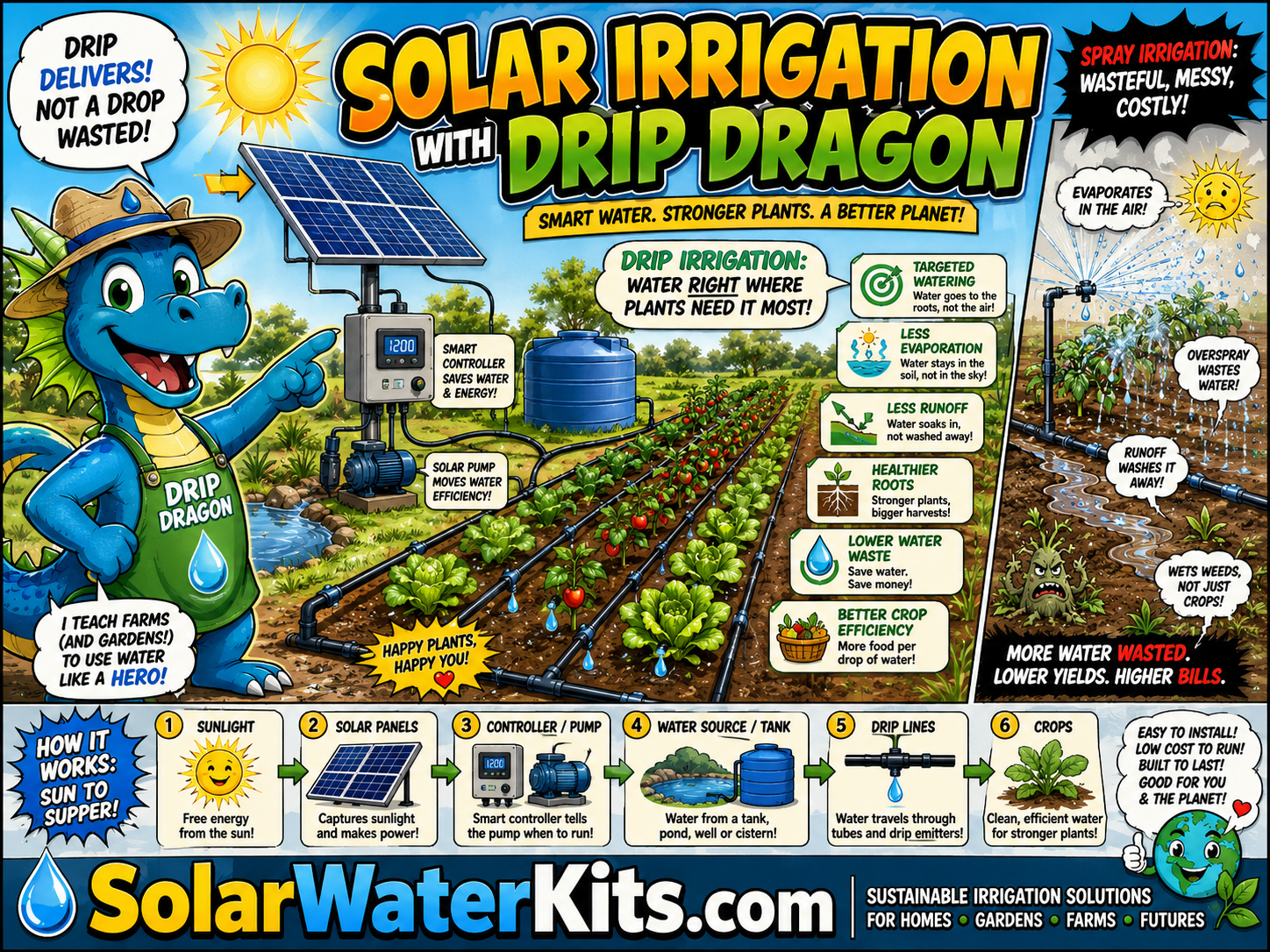
Zones, valves, filters, timers, drip lines, and water conservation.
Irrigation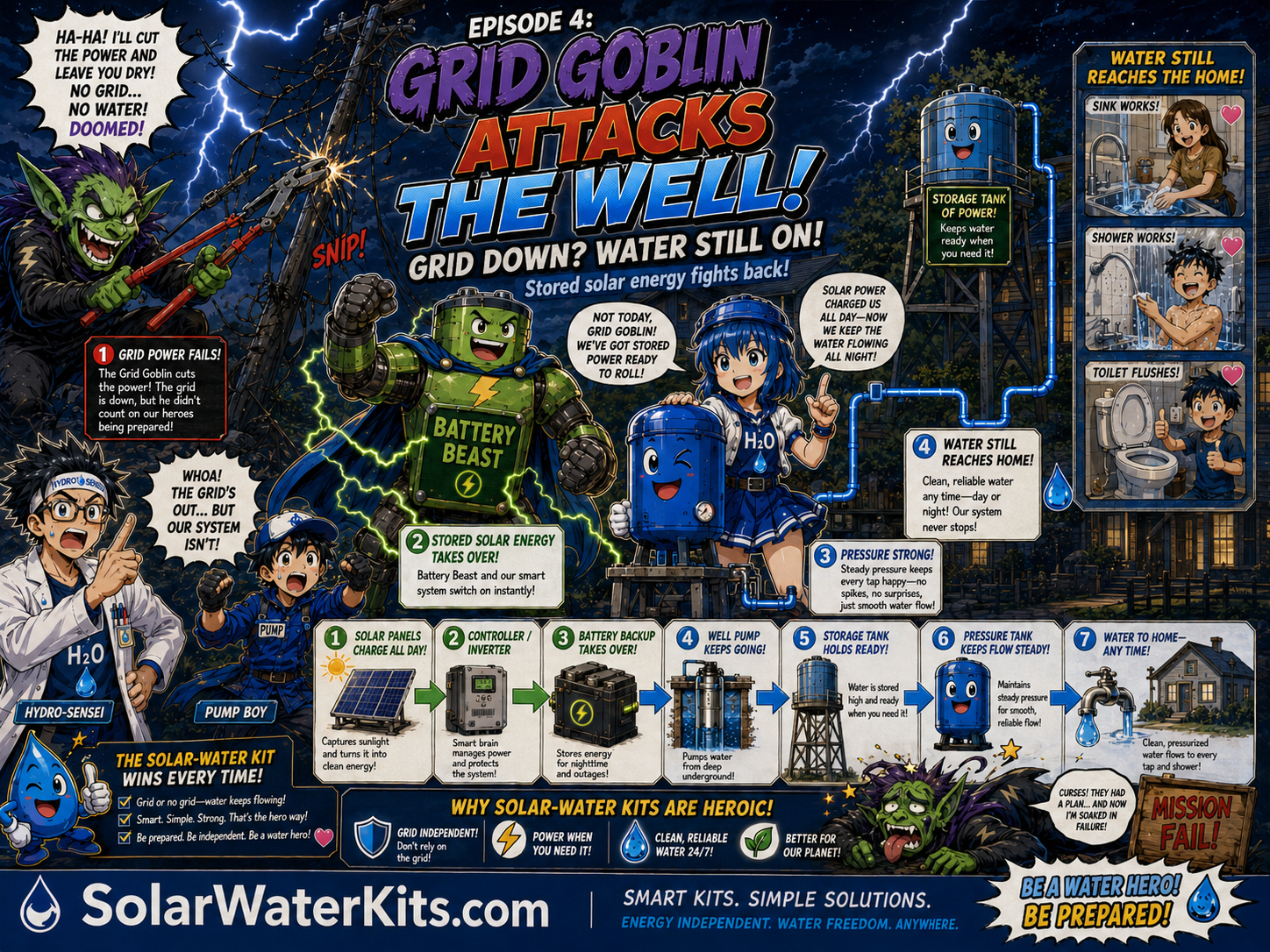
Go back to the well pump backup lesson.
Read Episode 4