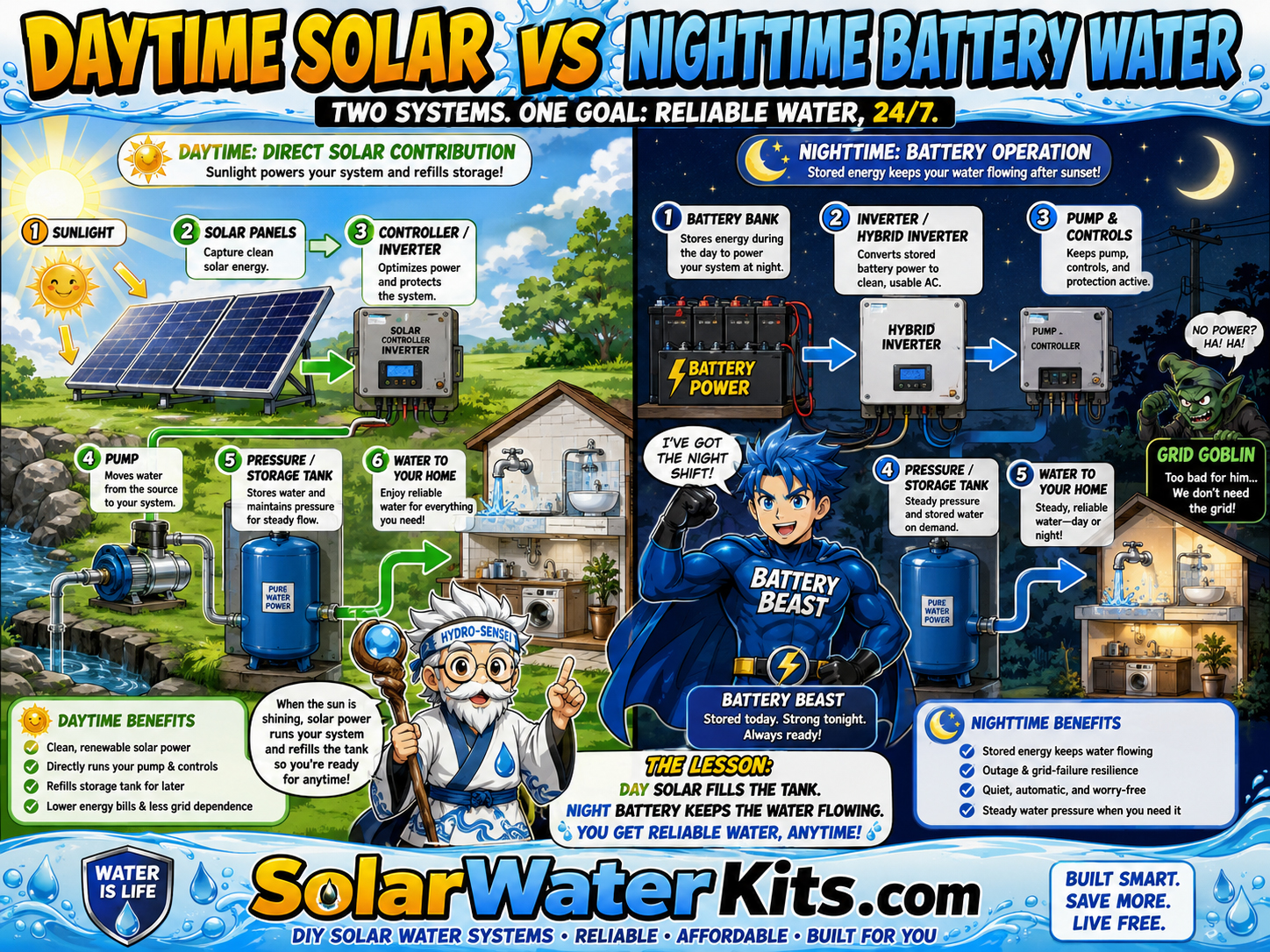
Daytime Solar
Pump when the sun is up
Where plant health allows, irrigation loads may be shifted toward available solar production.
Drip Dragon once blasted water everywhere. Then Hydro-Sensei taught him zones, valves, filters, pressure, timing, storage, and drip lines. Solar irrigation is not just pumping water — it is delivering the right water, at the right pressure, at the right time.
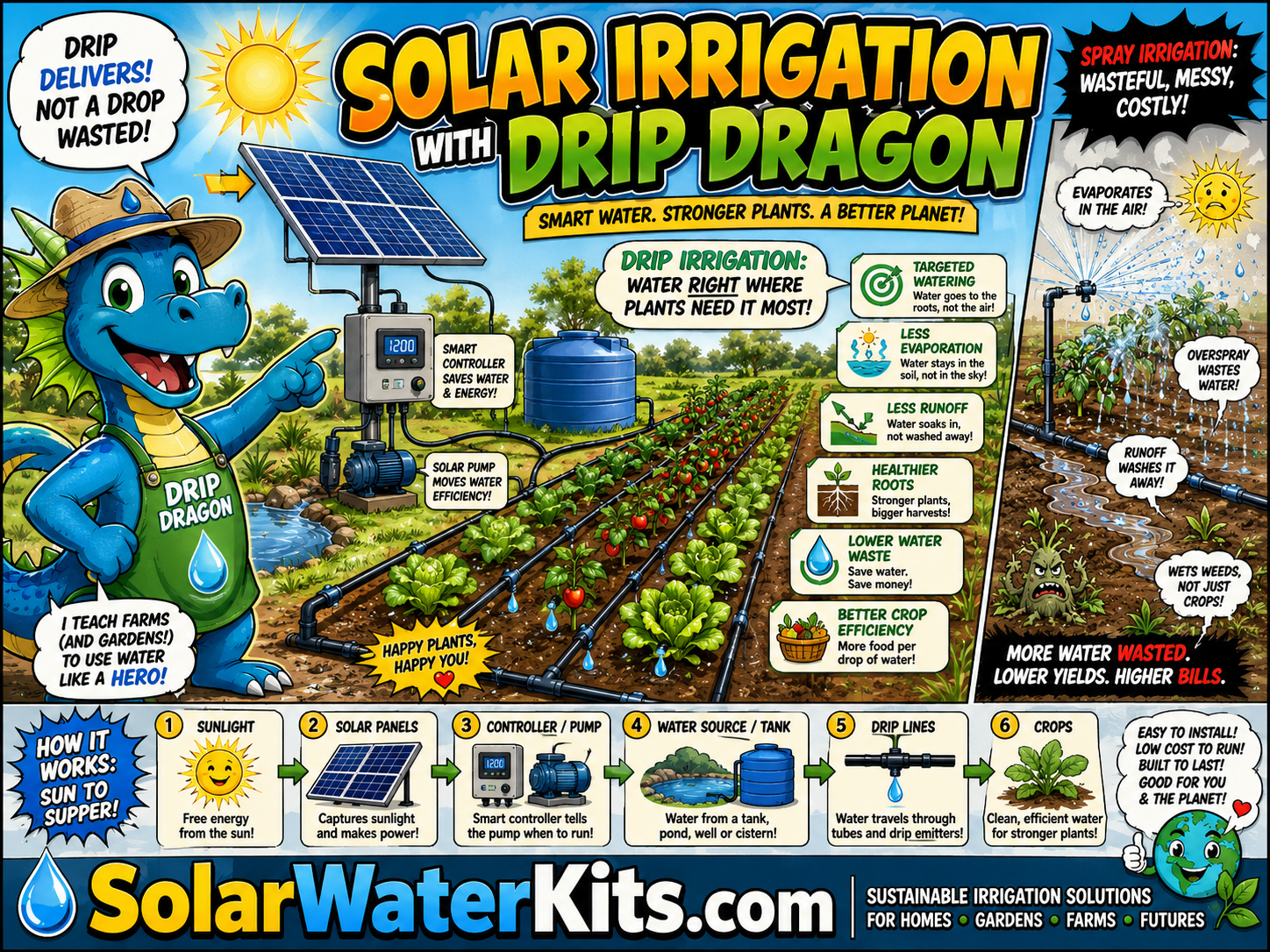
Irrigation is where water discipline matters. A good system considers the crop, soil, slope, pressure, filtration, zone size, run time, weather, and actual plant need.
The goal is not maximum water. The goal is useful water.
Drip systems aim water closer to the plant root zone instead of spraying sidewalks, fences, roads, or the air.
Many drip systems can operate at lower pressure than spray systems, which can reduce pump stress when designed properly.
Zones and timers help apply water in controlled amounts instead of one giant flood-dragon event.
Delivering water near the soil surface or below mulch can reduce waste compared with spraying during hot or windy conditions.
Different crops, beds, trees, or slopes can receive different watering schedules and flow rates.
A real irrigation design divides the property into zones. Each zone has a water need, valve logic, pressure requirement, filtration requirement, and schedule.
Well, tank, pond, cistern, rainwater system, municipal line, or treated non-potable source.
Solar direct, solar plus battery, inverter-backed AC pump, DC pump, or hybrid source-to-storage strategy.
Drip emitters and valves can clog or misbehave without proper filtration and pressure control.
Each zone should match plant type, slope, soil, sun exposure, and flow capacity.
Schedule watering by need, not habit. Soil moisture, weather, and season can change the plan.
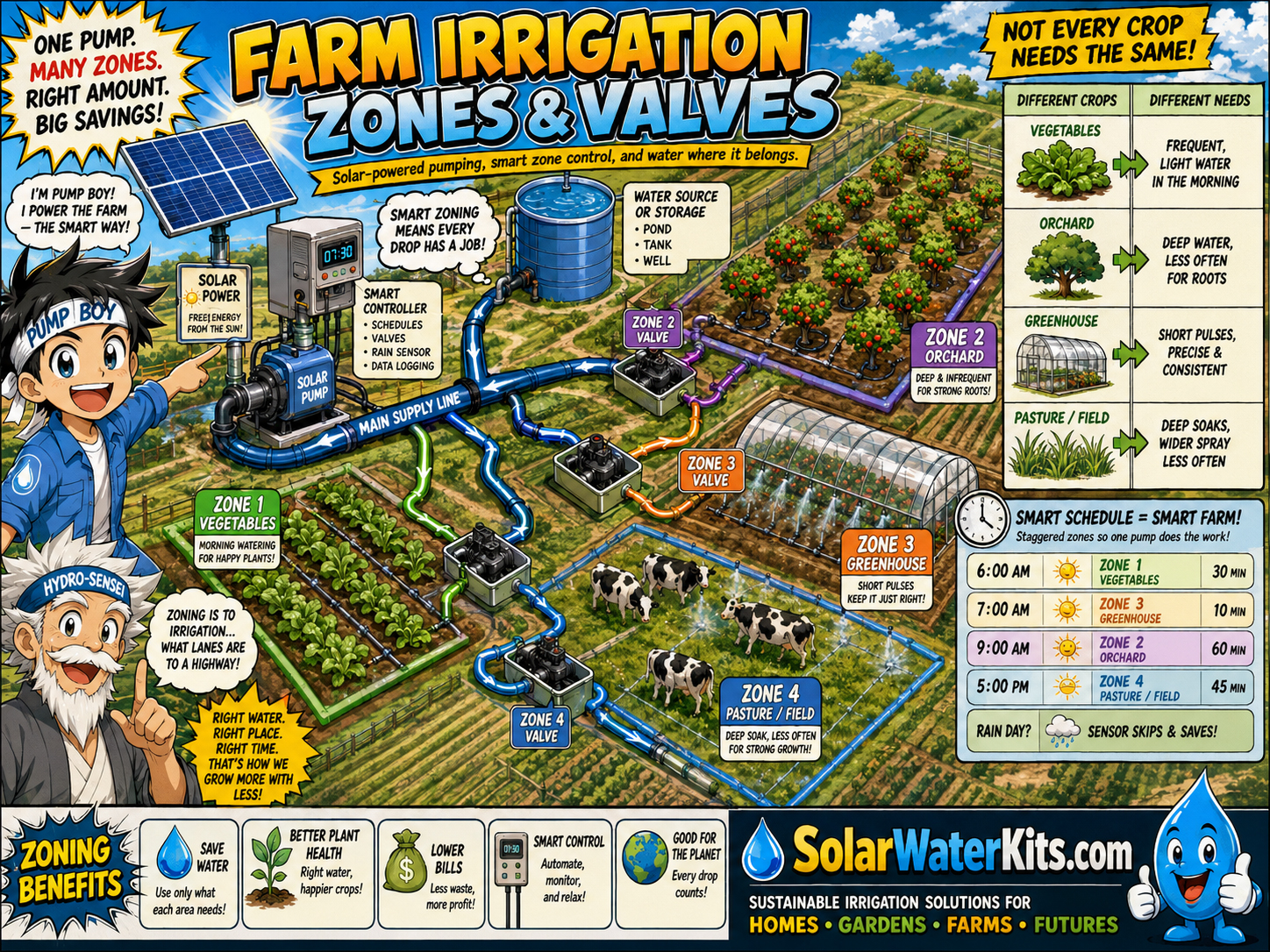
Map the water before you move the water.
Pump Boy thinks more water means happier plants. Drip Dragon learns that too much water can waste energy, damage roots, cause runoff, invite disease, and turn the garden into a swamp episode.

Water discipline beats pump enthusiasm.
Irrigation often does not need to happen at midnight. That makes it a good candidate for solar-timed pumping, storage-first design, or battery-light operation when the site allows it.
Where plant health allows, irrigation loads may be shifted toward available solar production.
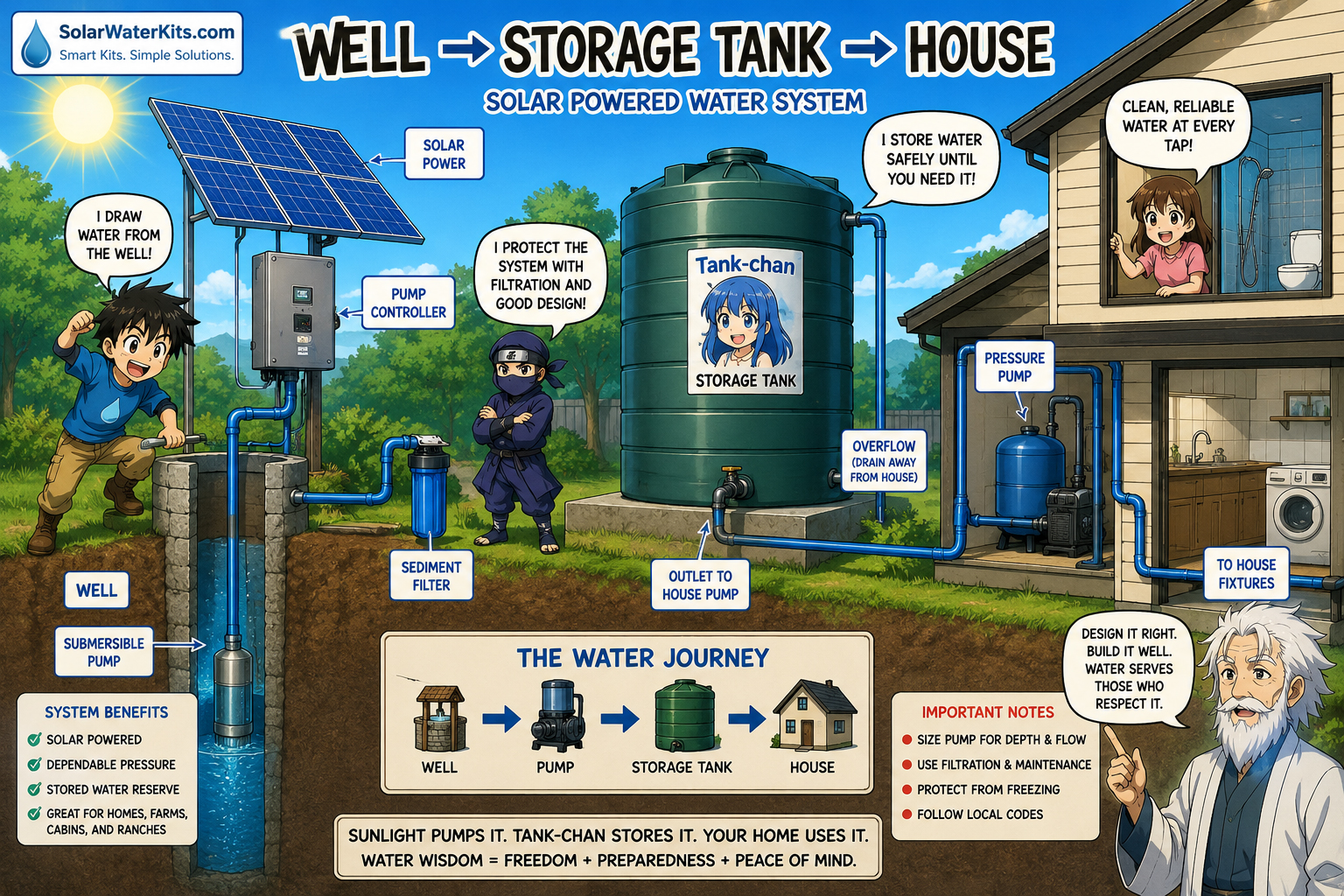
Storage can separate solar pumping time from irrigation time.
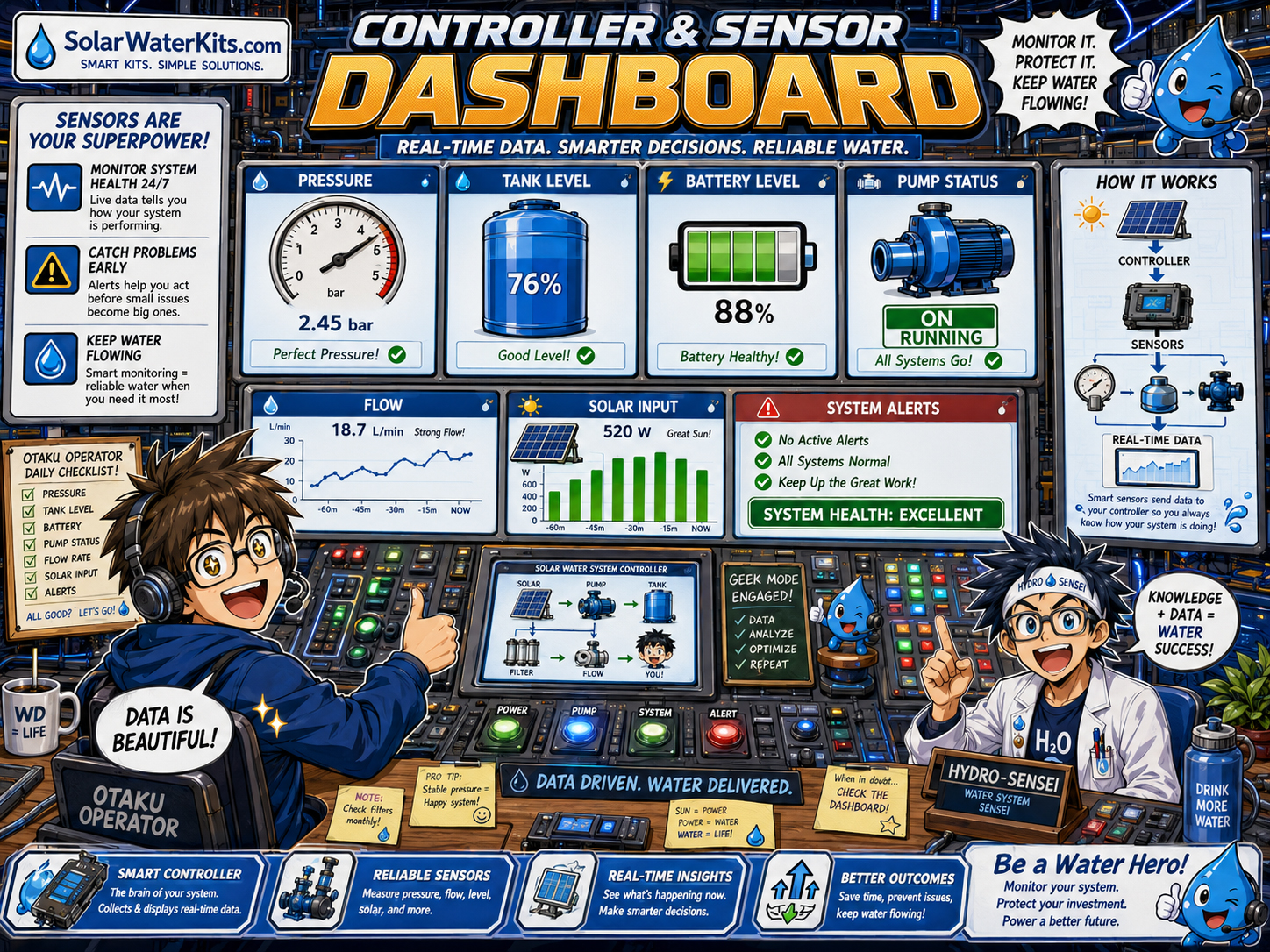
Tank level, battery state, pump status, pressure, and timers help avoid waste.
| Strategy | Good For | Watch Out For |
|---|---|---|
| Direct solar pumping | Daytime pumping to tank or irrigation where timing is flexible | Clouds, variable flow, pump controller compatibility |
| Solar pump to storage | Ranches, gardens, remote tanks, drip irrigation buffers | Tank sizing, float switches, algae, freezing, sanitation |
| Battery-backed irrigation | Precise schedules, nighttime needs, automation, critical crops | Battery capacity, pump surge, controls, overwatering risk |
| Grid-tied solar offset | Properties with existing irrigation pumps and utility service | Rate schedules, pump runtime, electrical design, interconnection rules |
Emitters, valves, screens, pressure regulators, and small tubing can clog. Filtration is not decoration. It is survival.
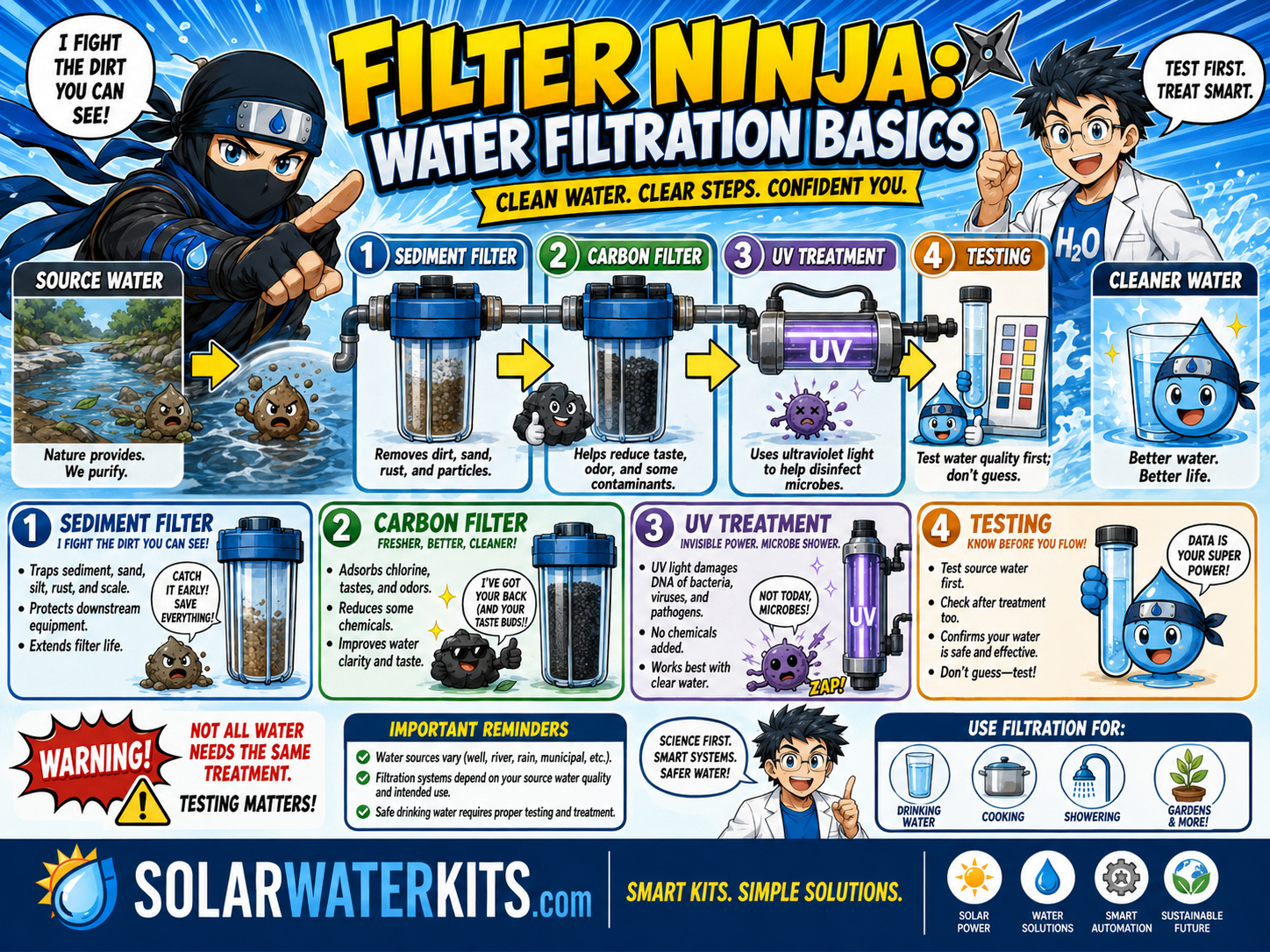
Source water may carry sediment, organic matter, minerals, or debris that can clog irrigation parts.
Filtration basics →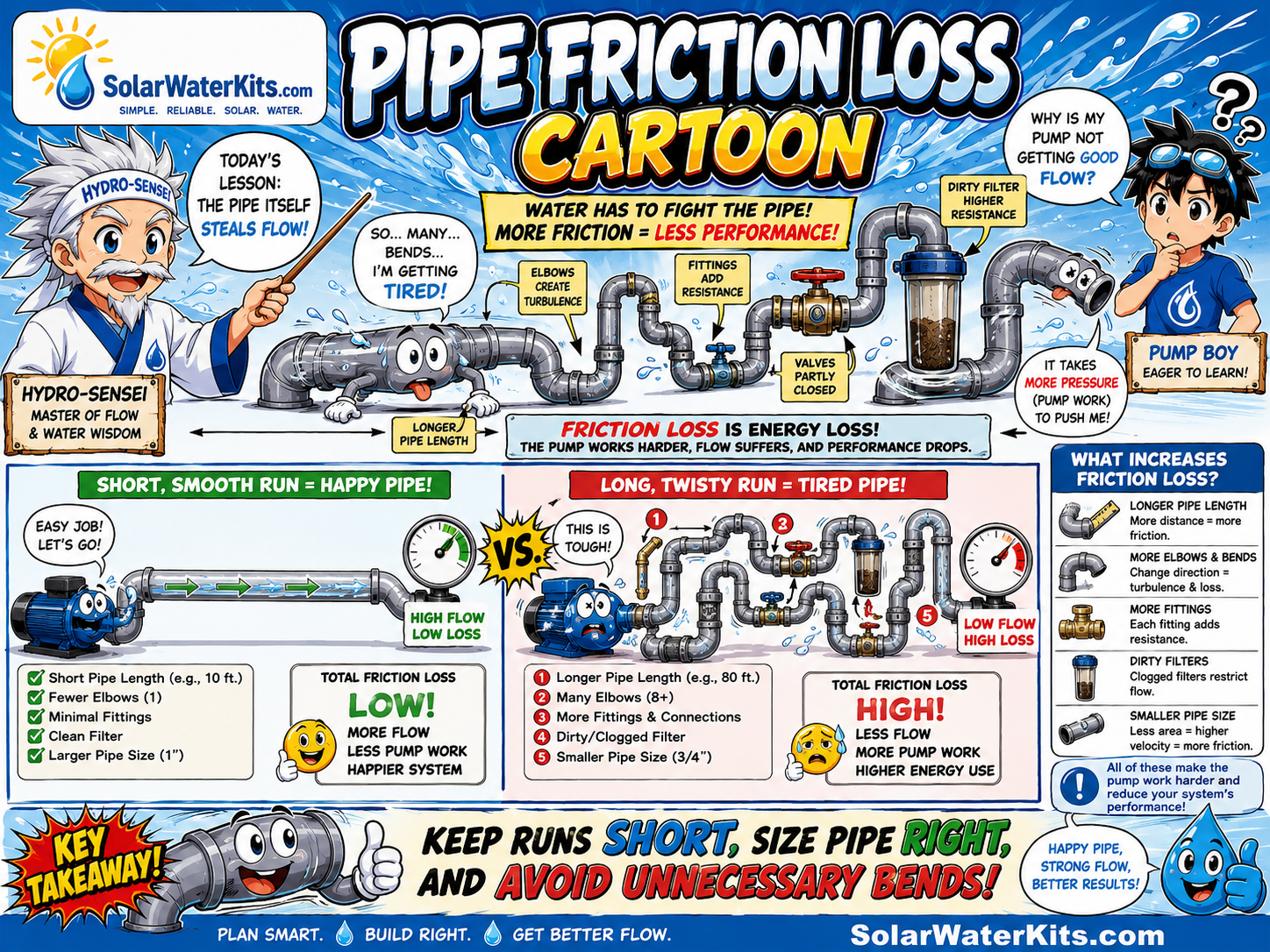
Filters protect emitters, but they also affect pressure and flow. Size and maintenance matter.
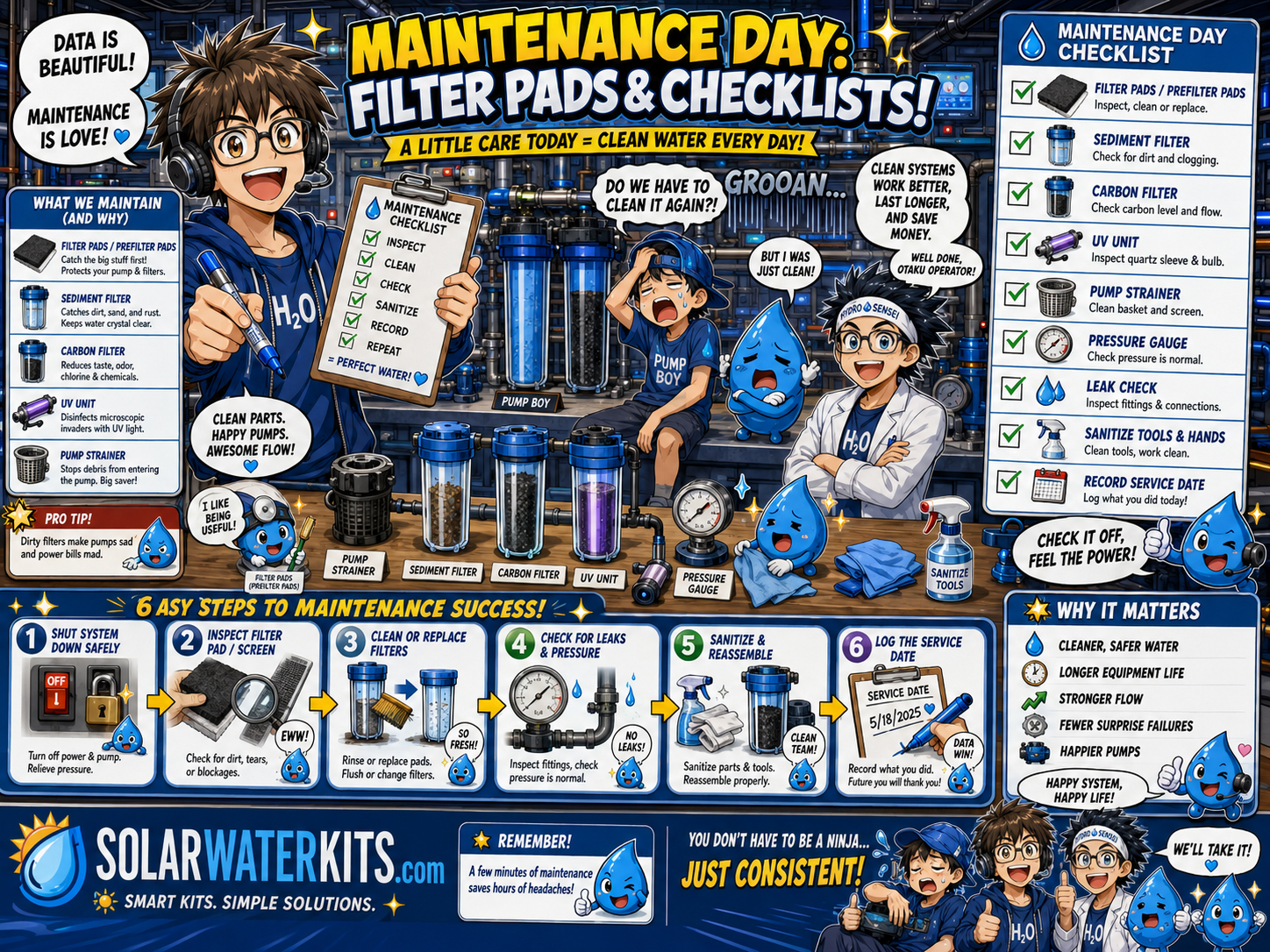
Drip irrigation works best when filters, screens, emitters, and valves are inspected and maintained.
Maintenance →If the hole is tiny, the filter matters. Drip emitters and micro-irrigation parts need water that is clean enough for the equipment, even when the water is not intended for drinking.
Farms and ranches often combine irrigation, trough filling, washdown, storage tanks, pumps, float valves, and backup water. The same solar-water logic appears again and again: source, pump, tank, pressure, control, filter, use.
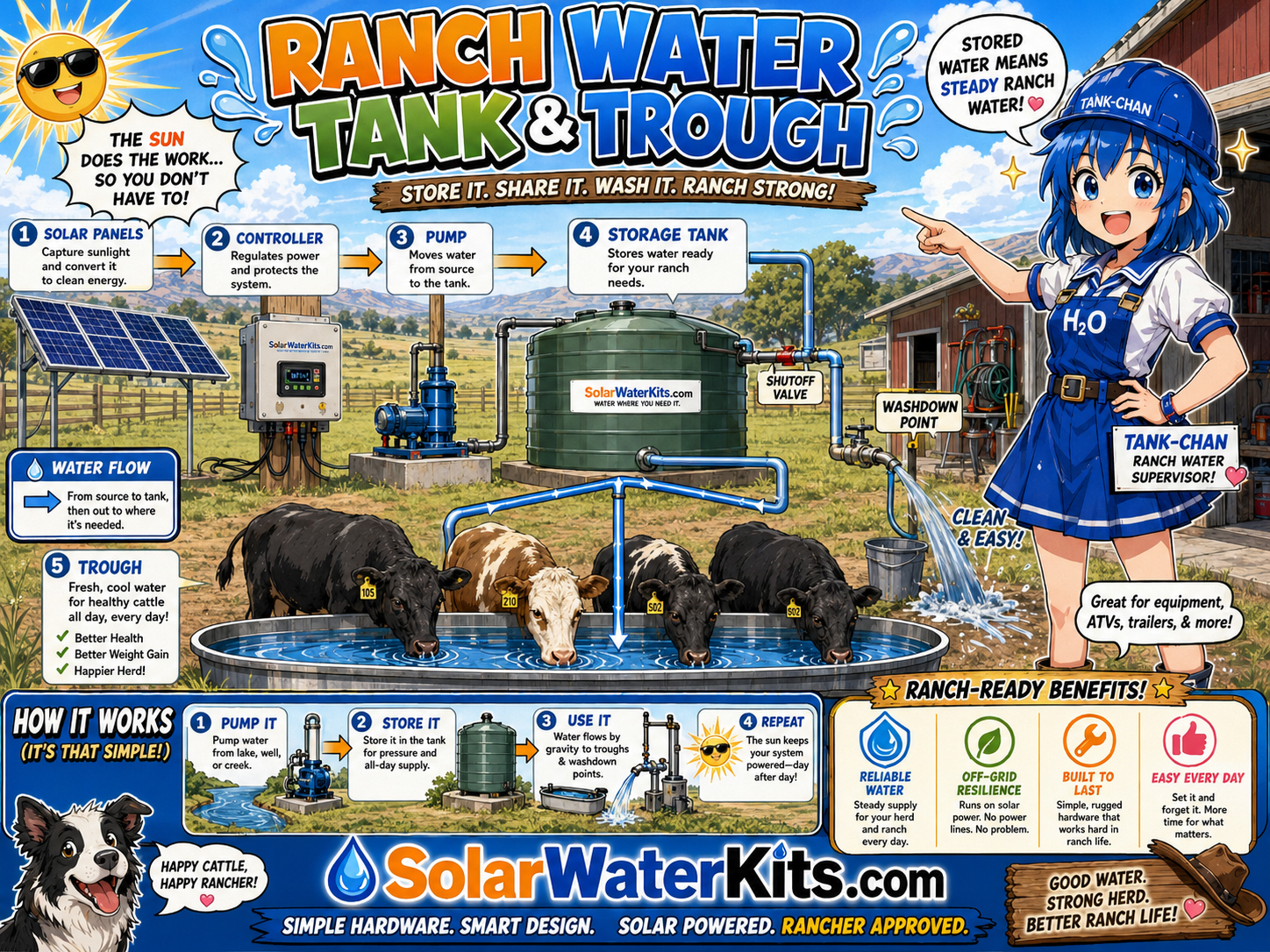
Storage, float valves, and simple field hardware matter.
Solar irrigation may use wells, tanks, ponds, rainwater, graywater, municipal water, or treated non-potable sources. The rules change depending on the source, crop, people, animals, public access, cross-connection risk, and local code. This page is educational only.
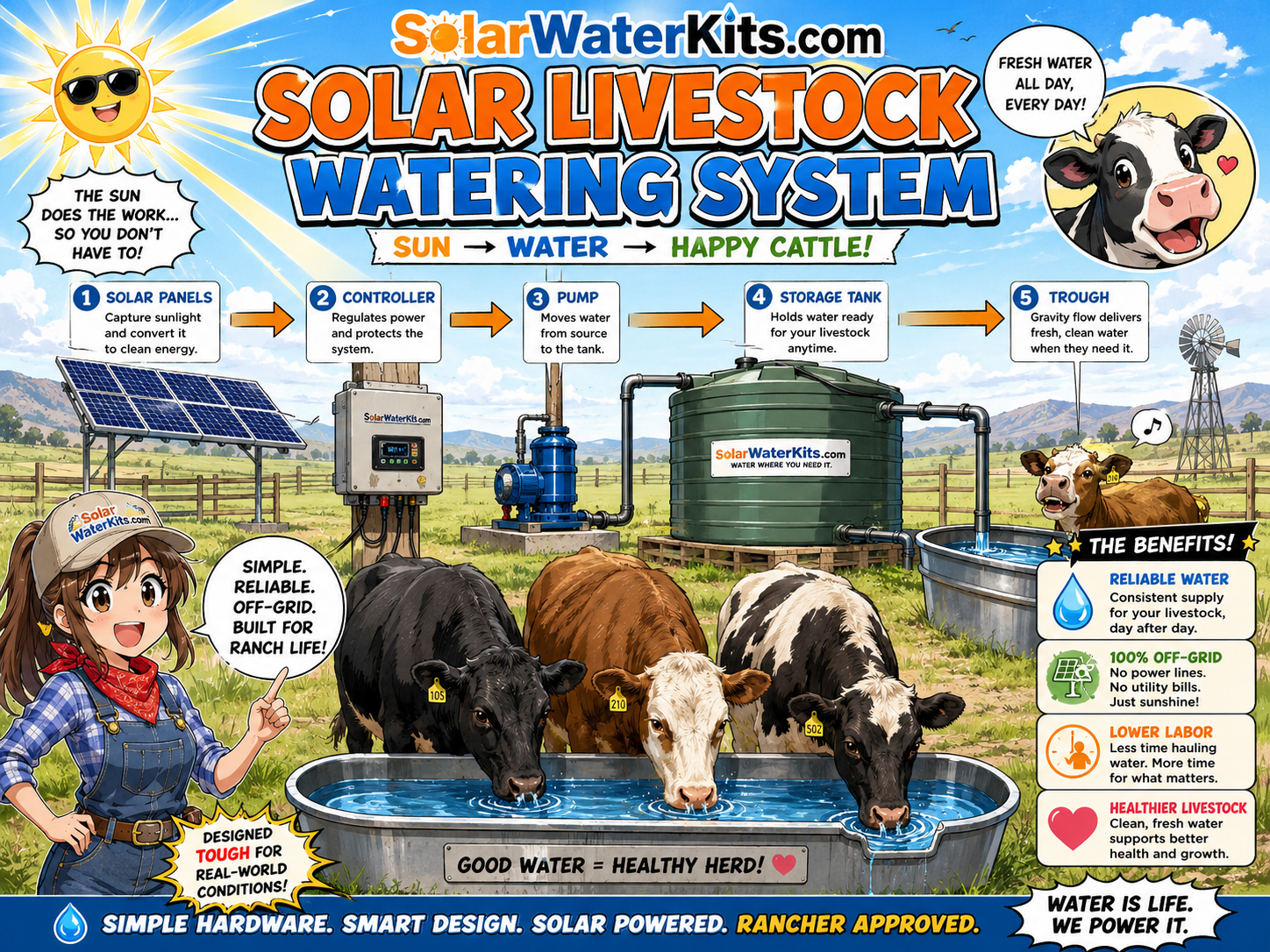
Troughs, float valves, storage tanks, field hardware, and ranch reliability.
Livestock water →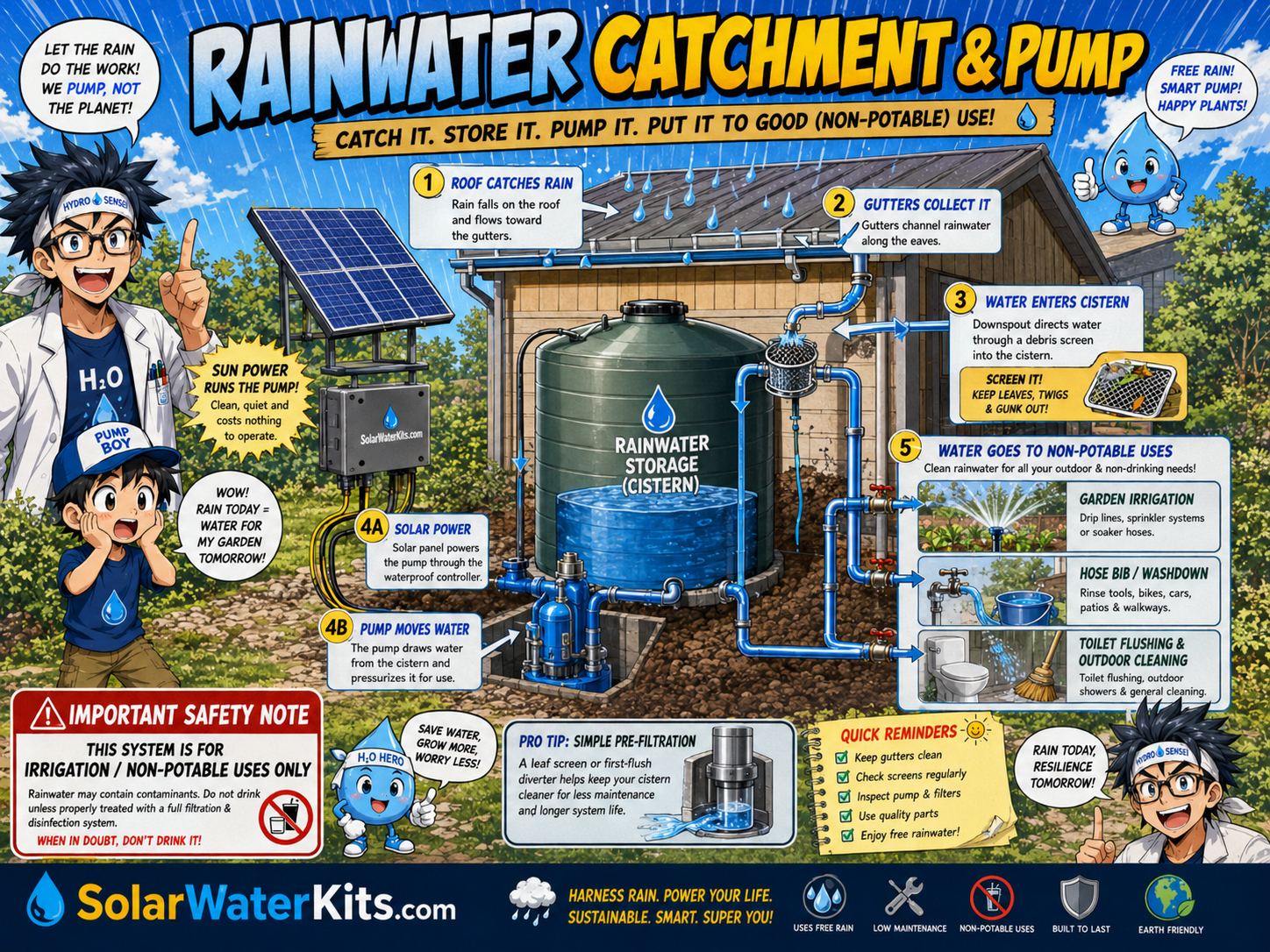
Catchment, cisterns, pumps, filters, and non-potable irrigation uses.
Rainwater pumping →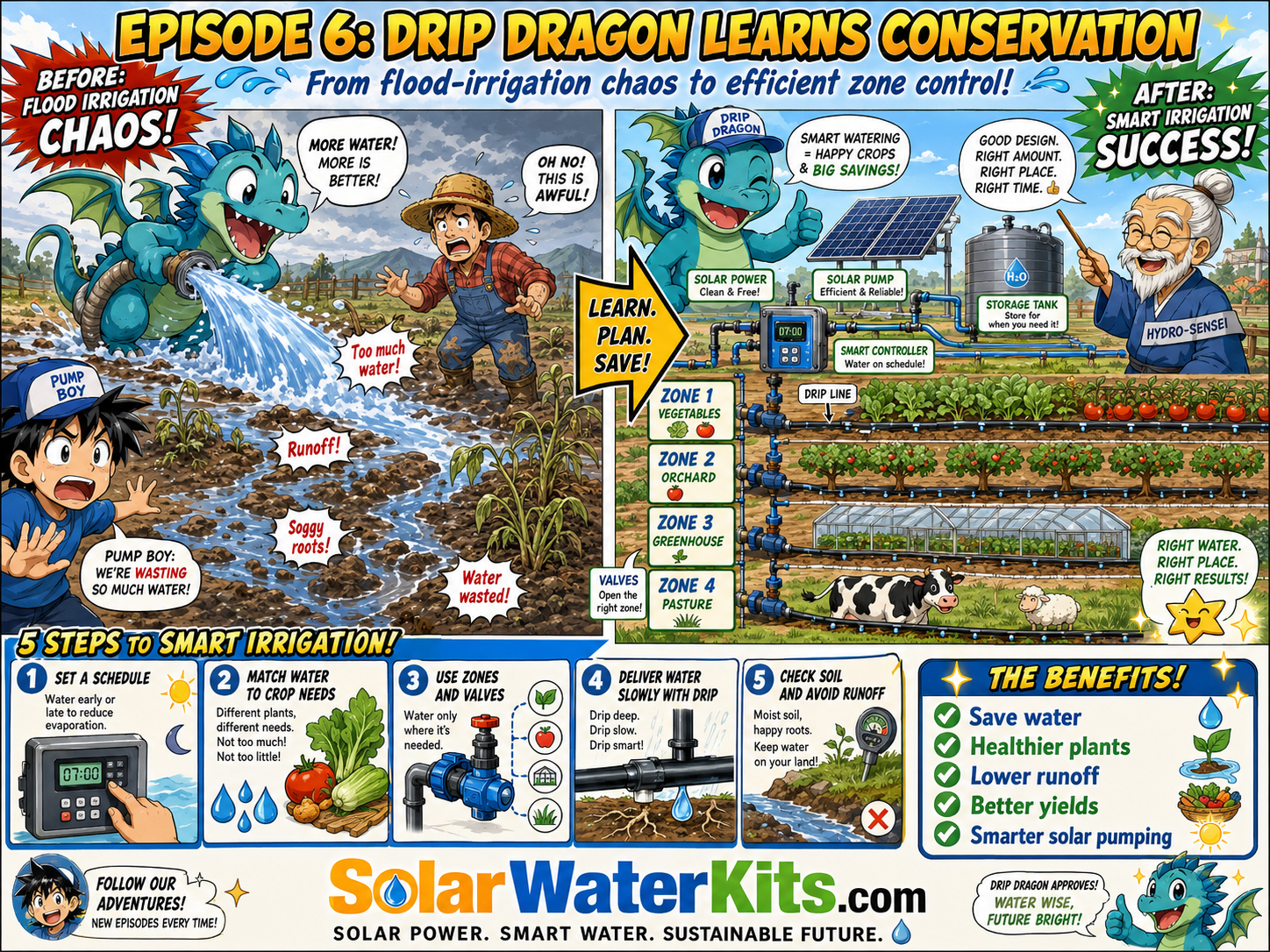
From flood chaos to efficient zone control — the dragon grows up.
Read the manga →