Storage
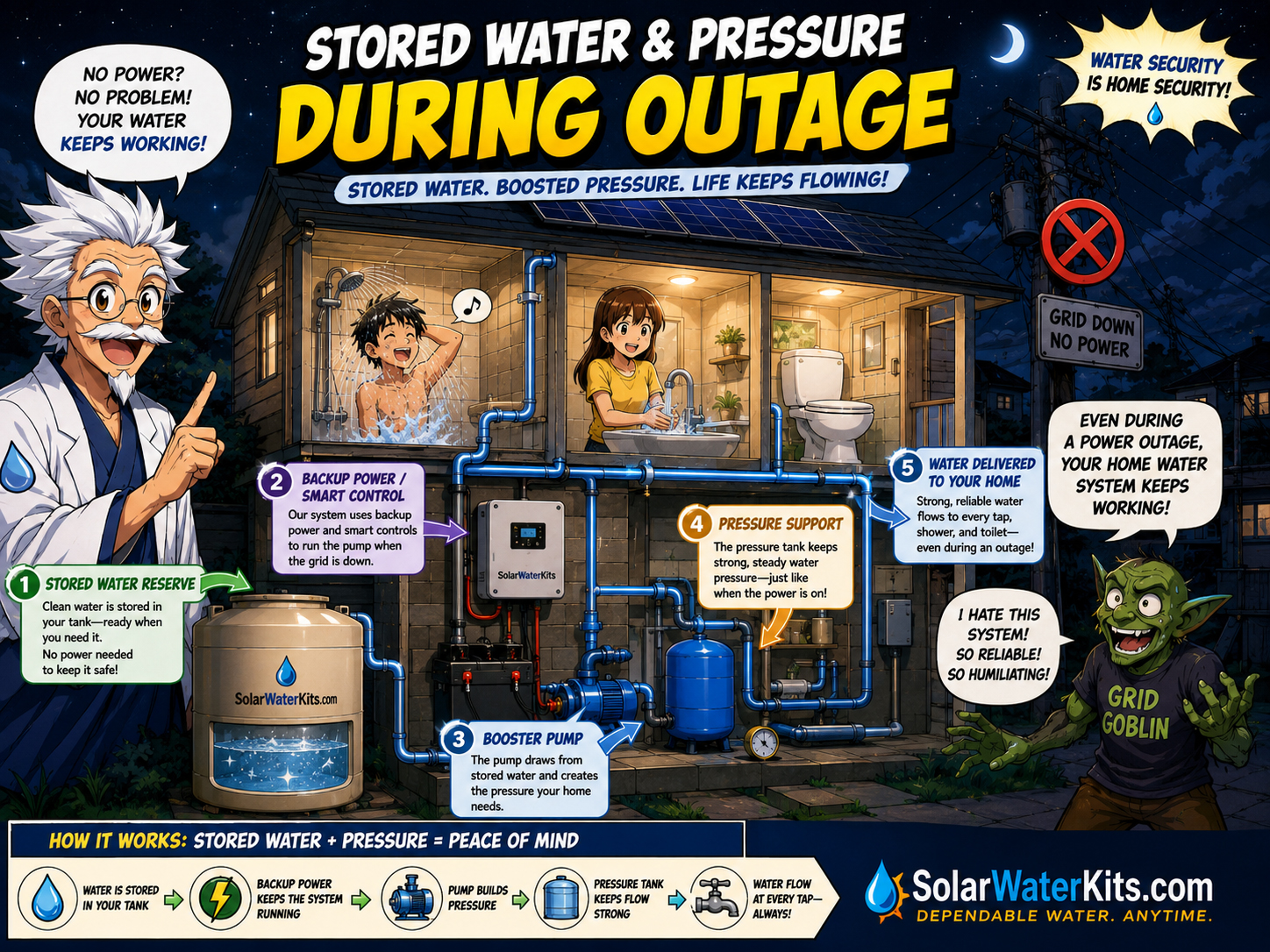
Tanks create time
Stored water can provide reserve volume when utility water pressure is weak or unavailable.
Stored water →Fire-readiness water is not a superhero fantasy. Hydro-Sensei teaches the serious concept: stored water, solar battery pumps, pressure tanks, pool and hot tub reserves, labeled valves, safe sprinkler zones, and evacuation-first planning.
The goal is not to “fight the wildfire” like a cartoon hero. The goal is to improve property readiness: water reserves, pumps, pressure, sprinklers, hose bibs, wet-down zones, shutdown controls, and a plan that respects firefighters and evacuation orders.
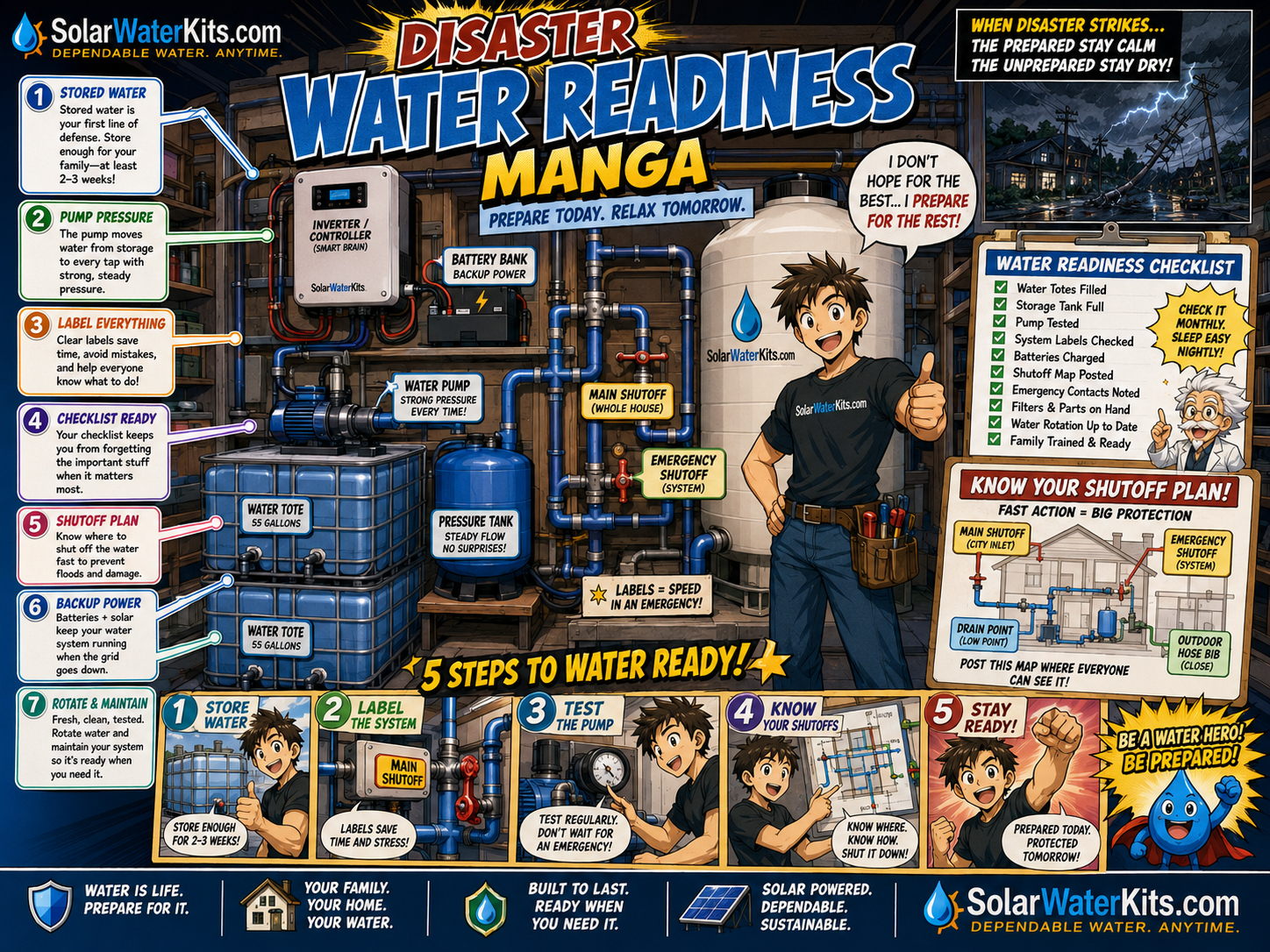
Stored water, labeled valves, and a plan are readiness tools.
Stored water may come from tanks, pool water, hot tub water, rainwater storage, or dedicated emergency reserves.
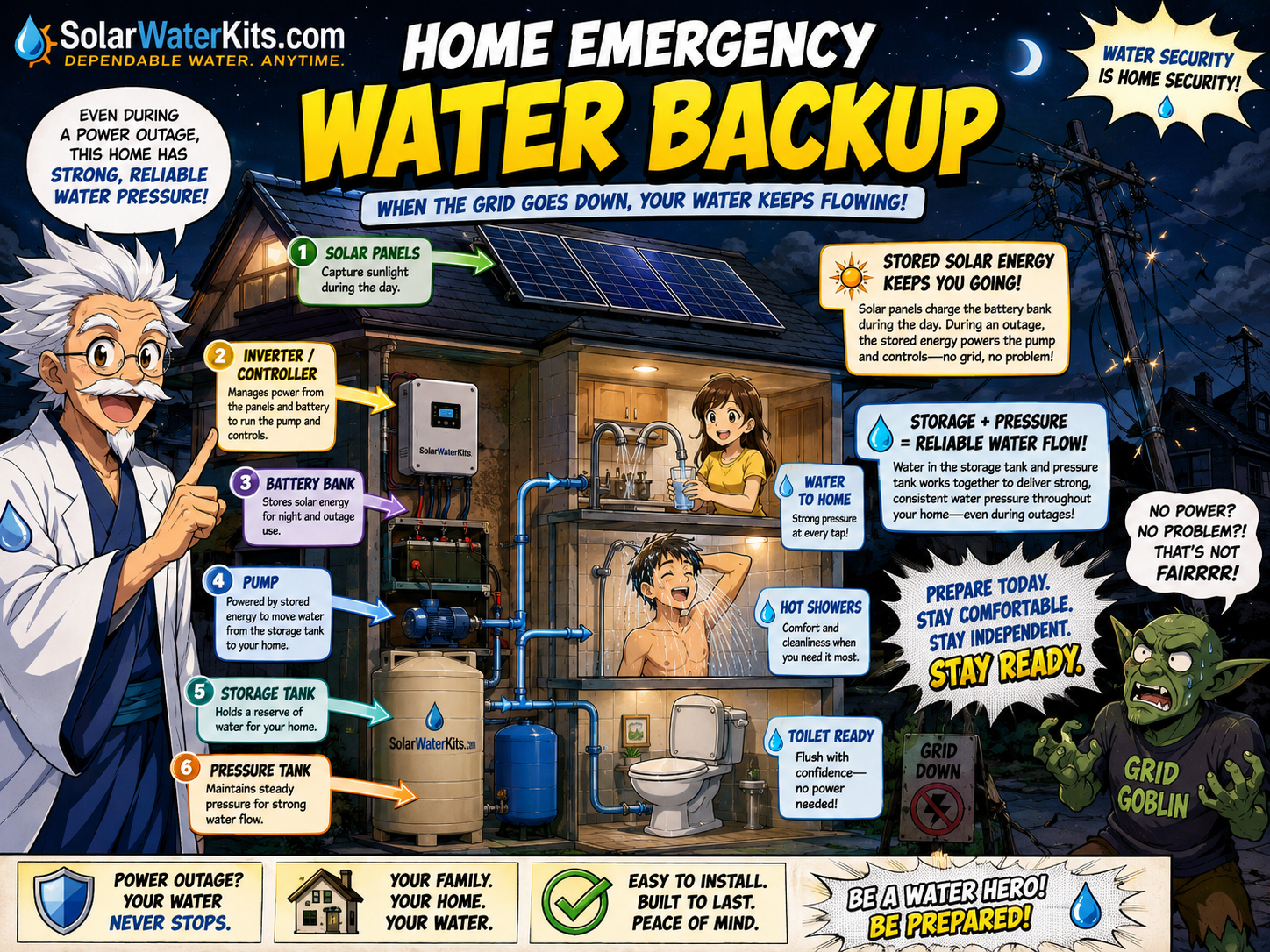
A pump needs reliable power. Solar battery backup can help if the grid fails, but pump load and runtime must be realistic.
Pressure tanks, booster pumps, hose bibs, roof sprinklers, yard sprinklers, or wet-down lines need correct pressure and flow.
Valves, breakers, bypasses, pump controls, and water-source lines must be obvious in stressful conditions.
No water system is worth staying behind in a dangerous wildfire. Life safety and official instructions come first.
Water that is already on site may be useful for wetting defensible space, supporting a pump, or providing an emergency reserve. The question is how it is accessed, powered, pressurized, and controlled.
Stored water can provide reserve volume when utility water pressure is weak or unavailable.
Stored water →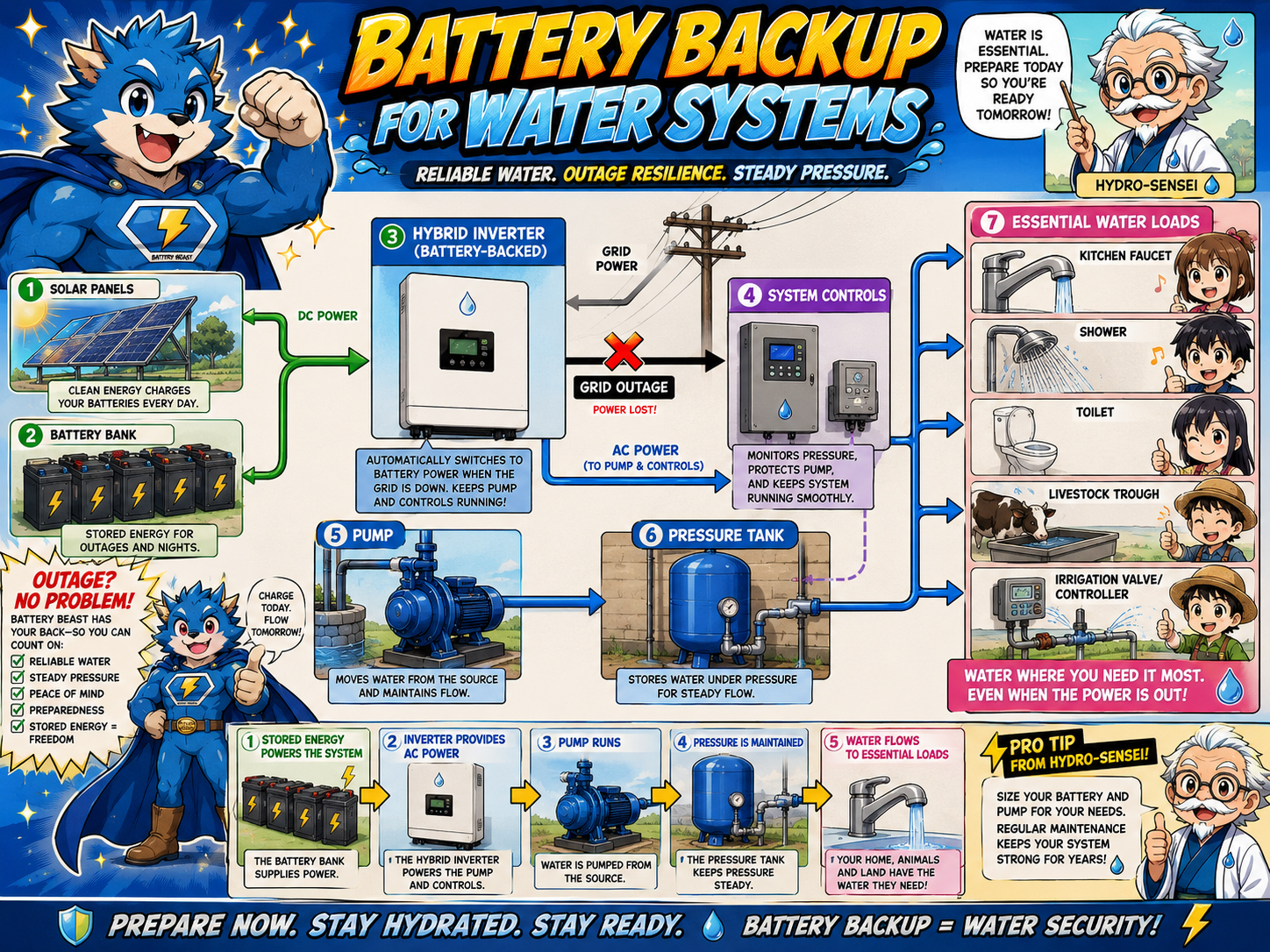
Battery-backed pumps require correct inverter sizing, surge planning, wiring, controls, and runtime assumptions.
Battery backup →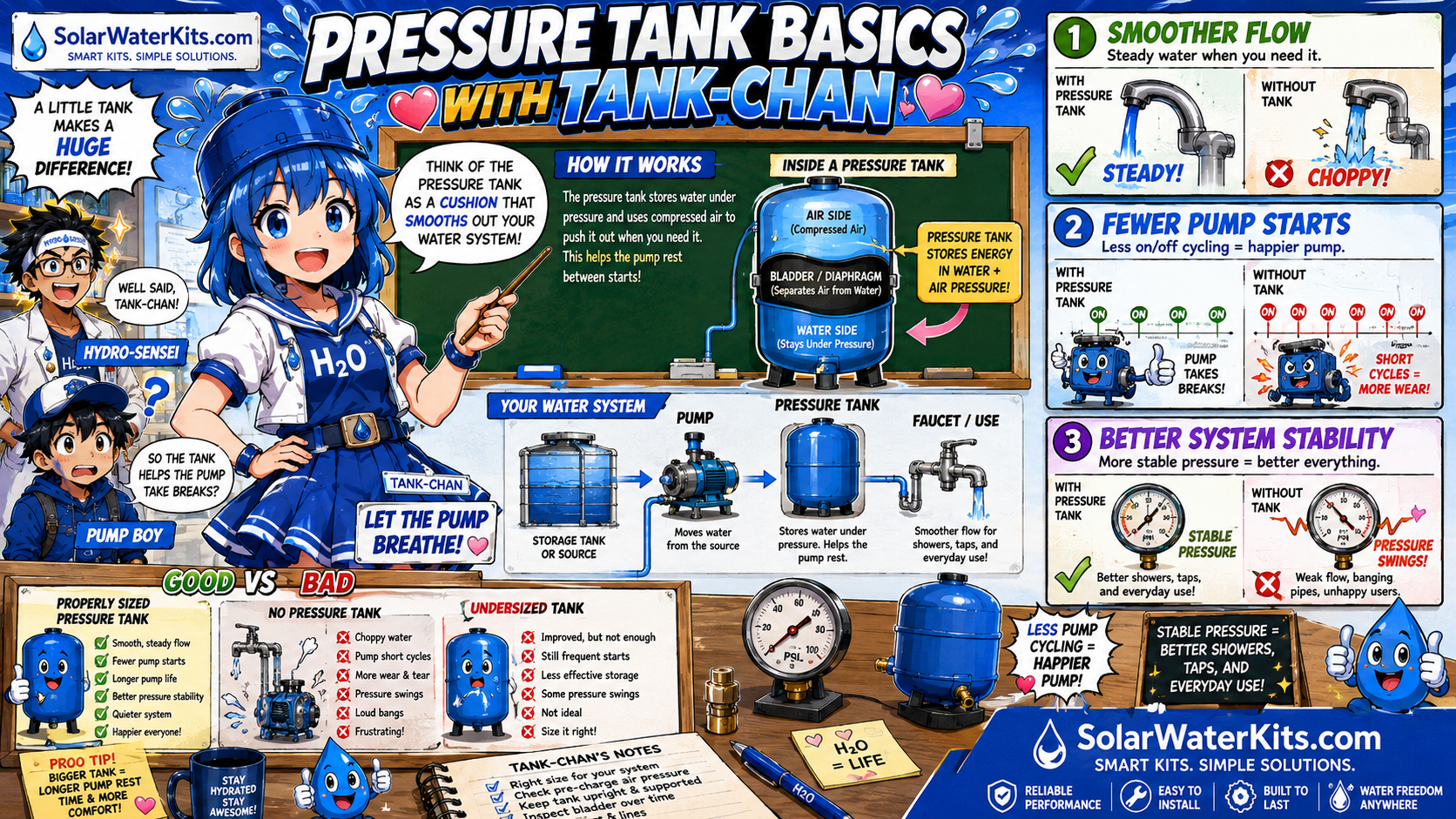
Water in a tank does not automatically become useful spray. Pressure and flow must be designed.
Pressure tanks →| Water Source | Possible Readiness Use | Hydro-Sensei Warning |
|---|---|---|
| Dedicated water tank | Stored reserve for pumps, hoses, sprinklers, or non-potable emergency use | Needs foundation, overflow, drain, labeling, and service access. |
| Pool water | Potential emergency source for pumps or wet-down use | Chemicals, pump access, suction safety, and non-potable labeling matter. |
| Hot tub water | Small stored reserve for last-line wet-down concepts | Volume is limited and water chemistry may not suit all equipment. |
| Rainwater tank | Non-potable reserve for landscape or wet-down use where allowed | Not automatically potable; screens, tank sanitation, and labels matter. |
| Well or municipal line | Source water for filling or pressure service | Grid failure, pressure loss, pump failure, or utility disruption can stop flow. |
Fire-readiness pumping may require high flow and pressure. Batteries are useful, but they are not infinite. The pump, inverter, battery, wire, controls, hose size, sprinkler zone, and water volume all have to match.
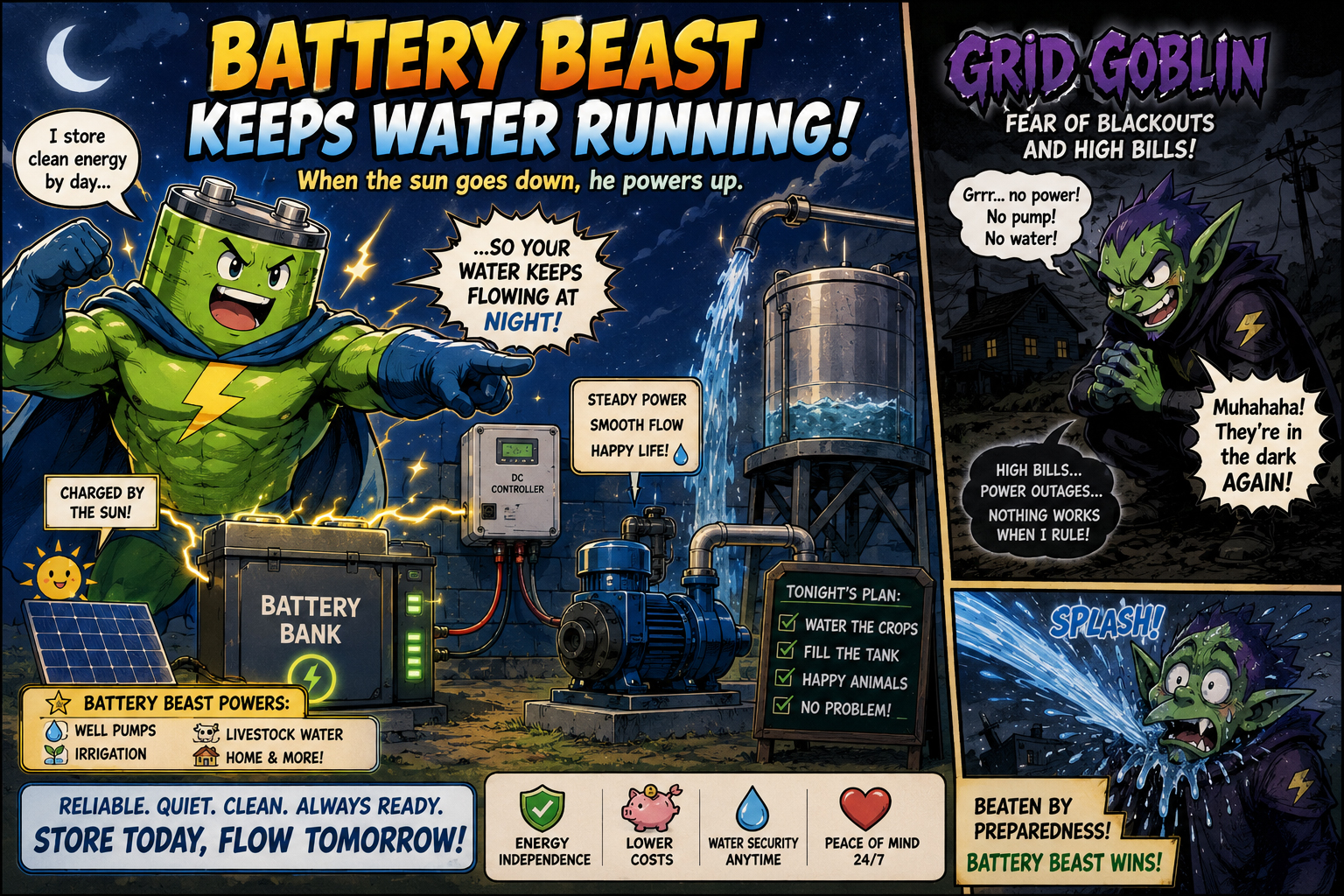
Only if the pump load and battery capacity make sense.
A sprinkler concept can be useful for wetting areas, but the system must be designed around flow, pressure, coverage, wind, drainage, pump capacity, water volume, electrical safety, and local fire rules.
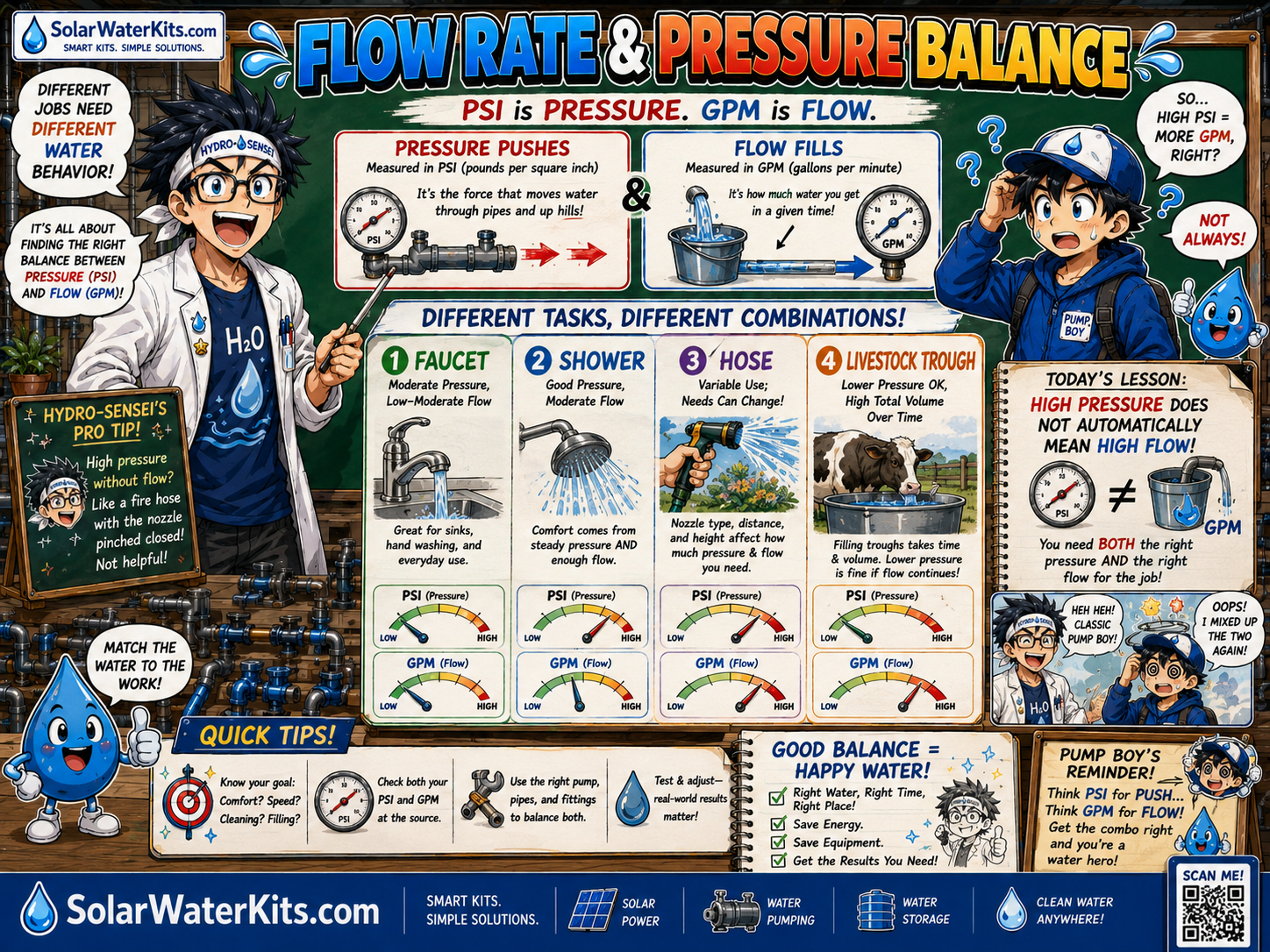
A sprinkler head without enough pressure and flow becomes a sad dribble.
Flow & pressure →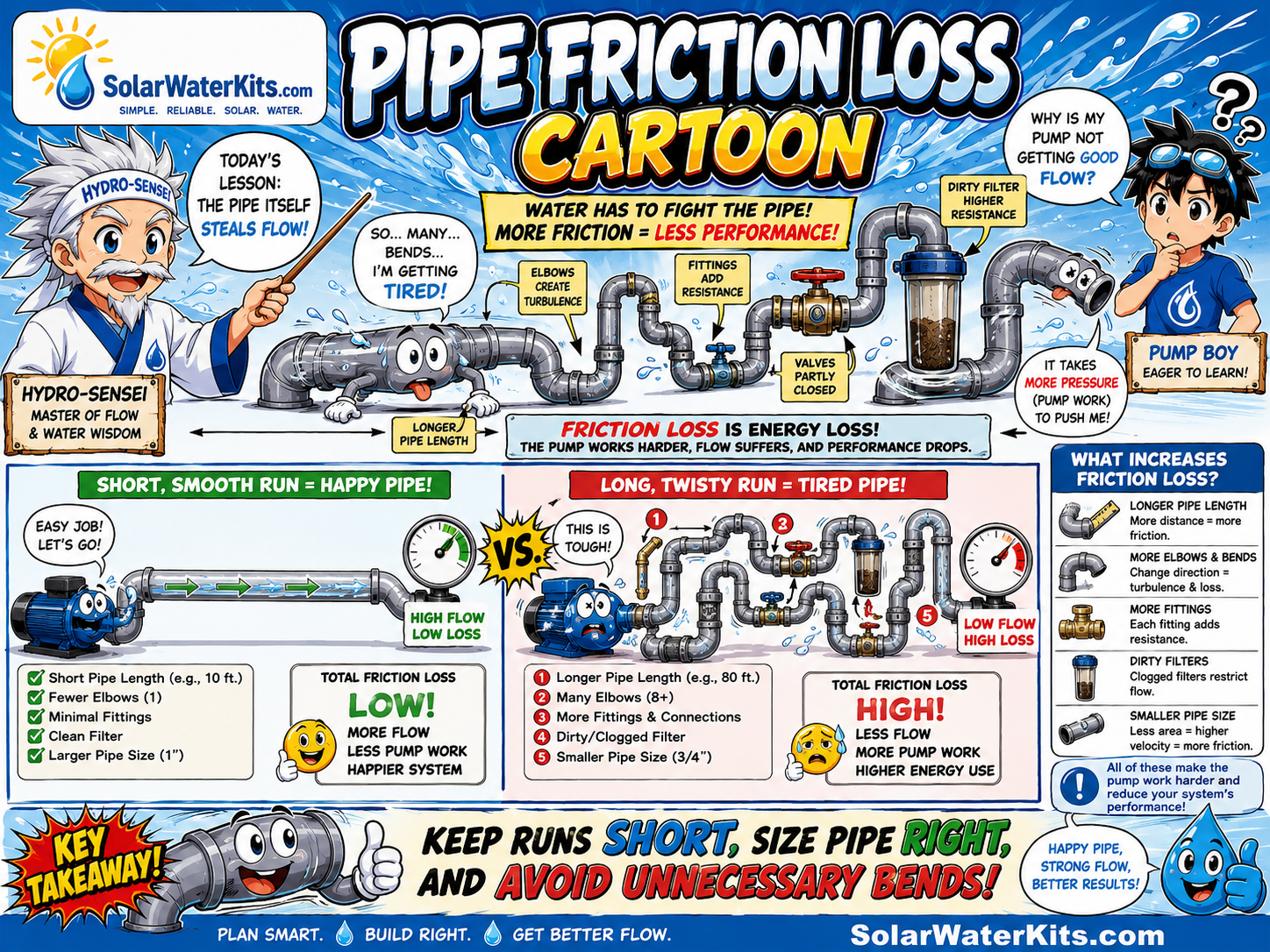
Pipe size, elbows, fittings, hose length, and filters all reduce real performance.
Pumping basics →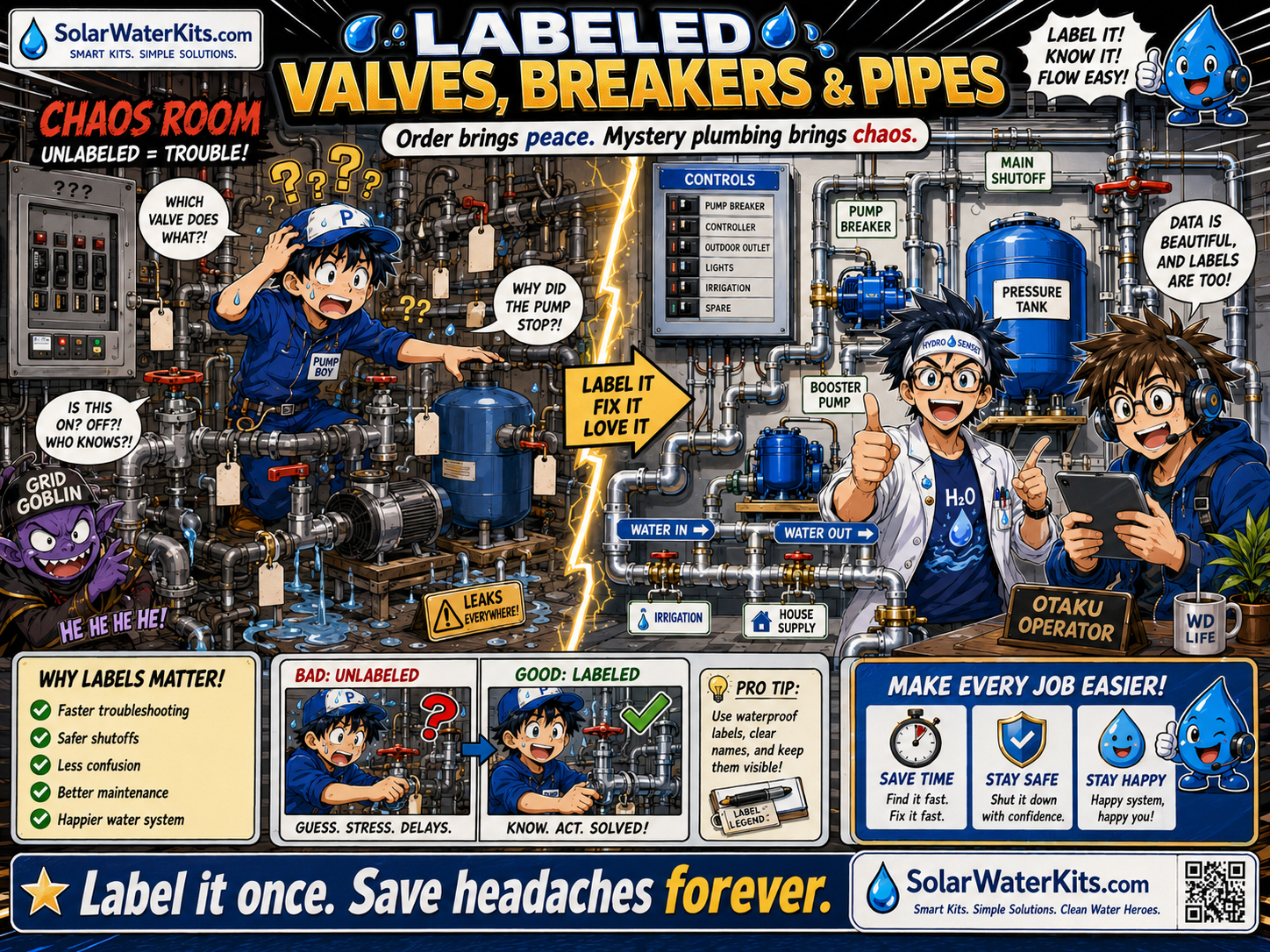
Fire-readiness systems need obvious valves, normal positions, shutoffs, and power controls.
Maintenance →A sprinkler concept is not a code-approved fire suppression system unless designed, permitted, installed, inspected, and maintained under applicable fire, building, plumbing, and electrical requirements.
Stored water and pumps do not replace defensible space, vegetation management, ember-resistant materials, clean gutters, closed vents, access routes, evacuation planning, official alerts, and firefighter instructions.
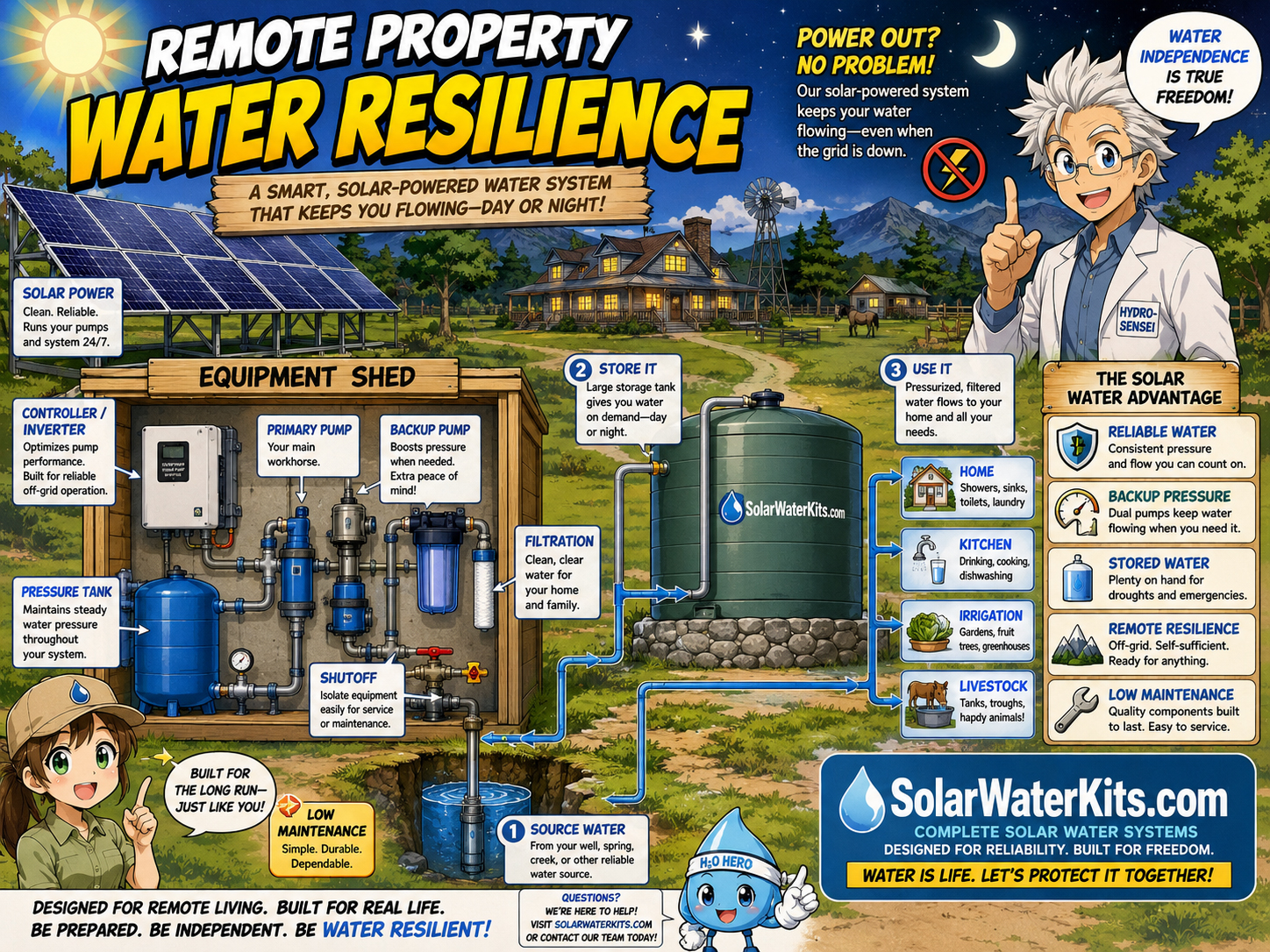
Labels, access, storage, and inspection matter before fire season.
Fire-readiness water concepts may support pre-wetting, ember defense ideas, pump backup, or property preparation. They do not make a home fireproof and do not justify ignoring evacuation orders.
A pump that has not been tested, a valve that no one can find, or a tank that is empty is not a readiness system. Otaku Operator brings the clipboard.
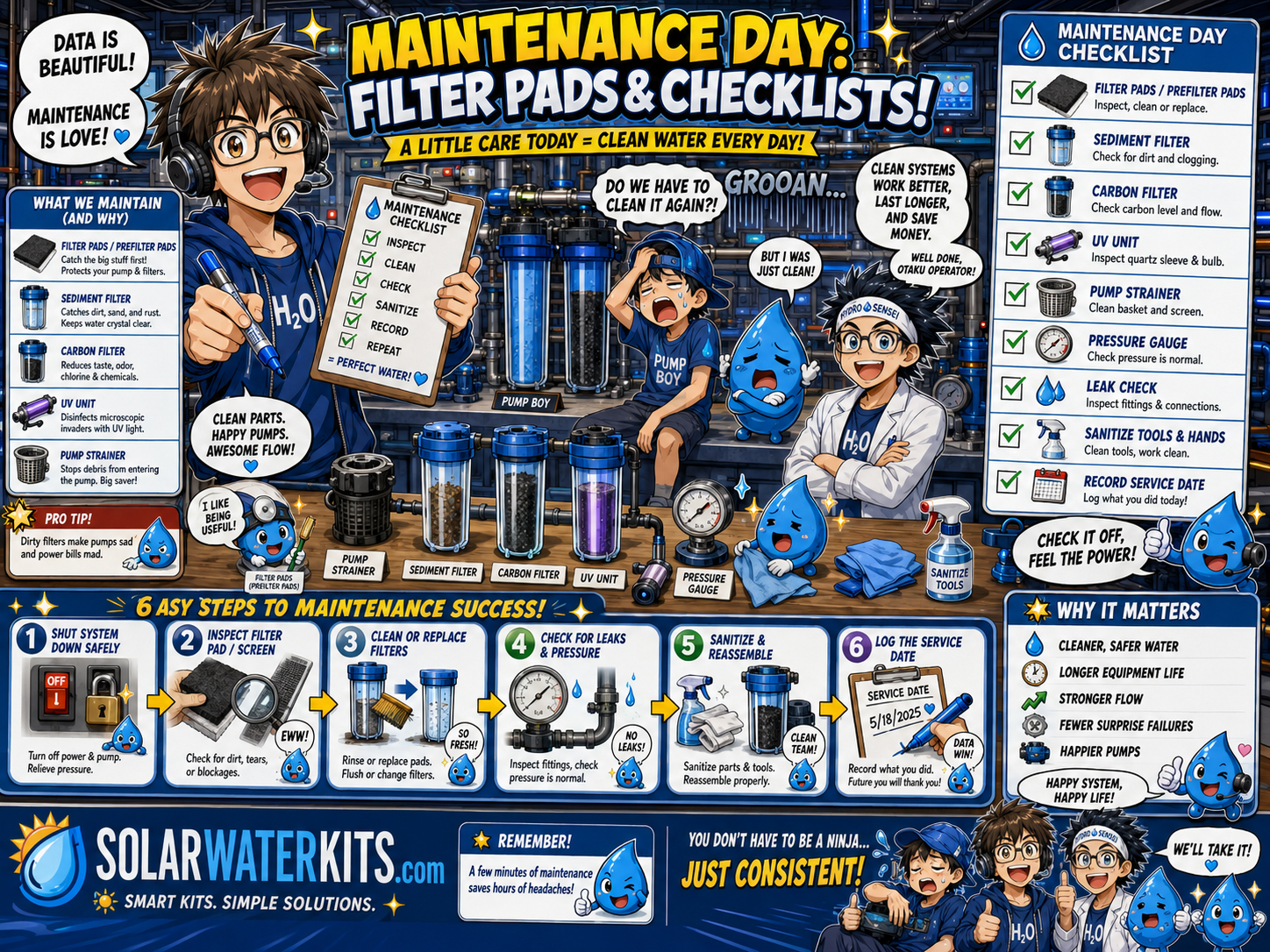
Check pumps, tanks, filters, valves, batteries, controllers, hoses, and labels.
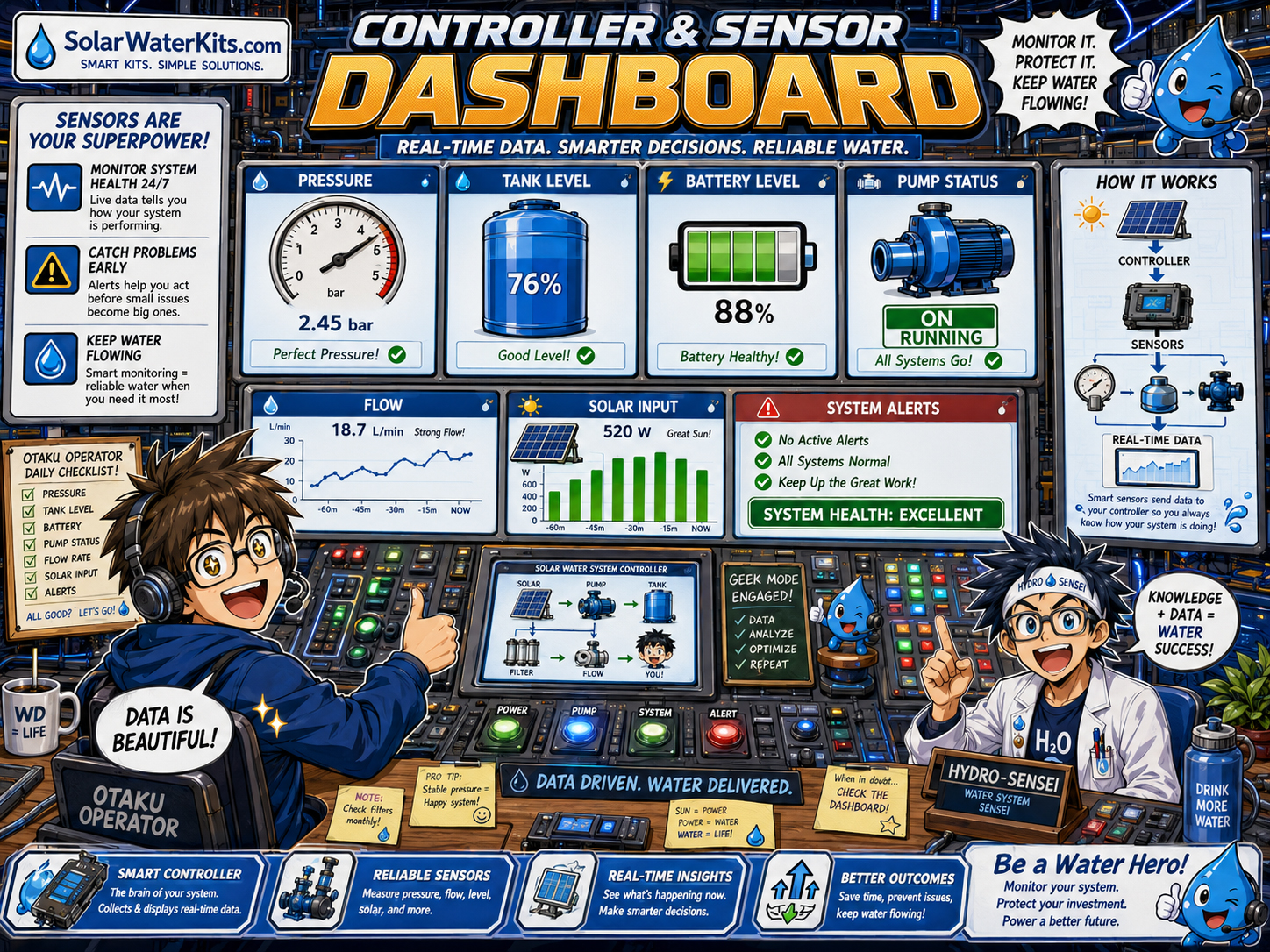
Tank level, pump status, battery state, pressure, and alarms reduce guessing.
Controllers →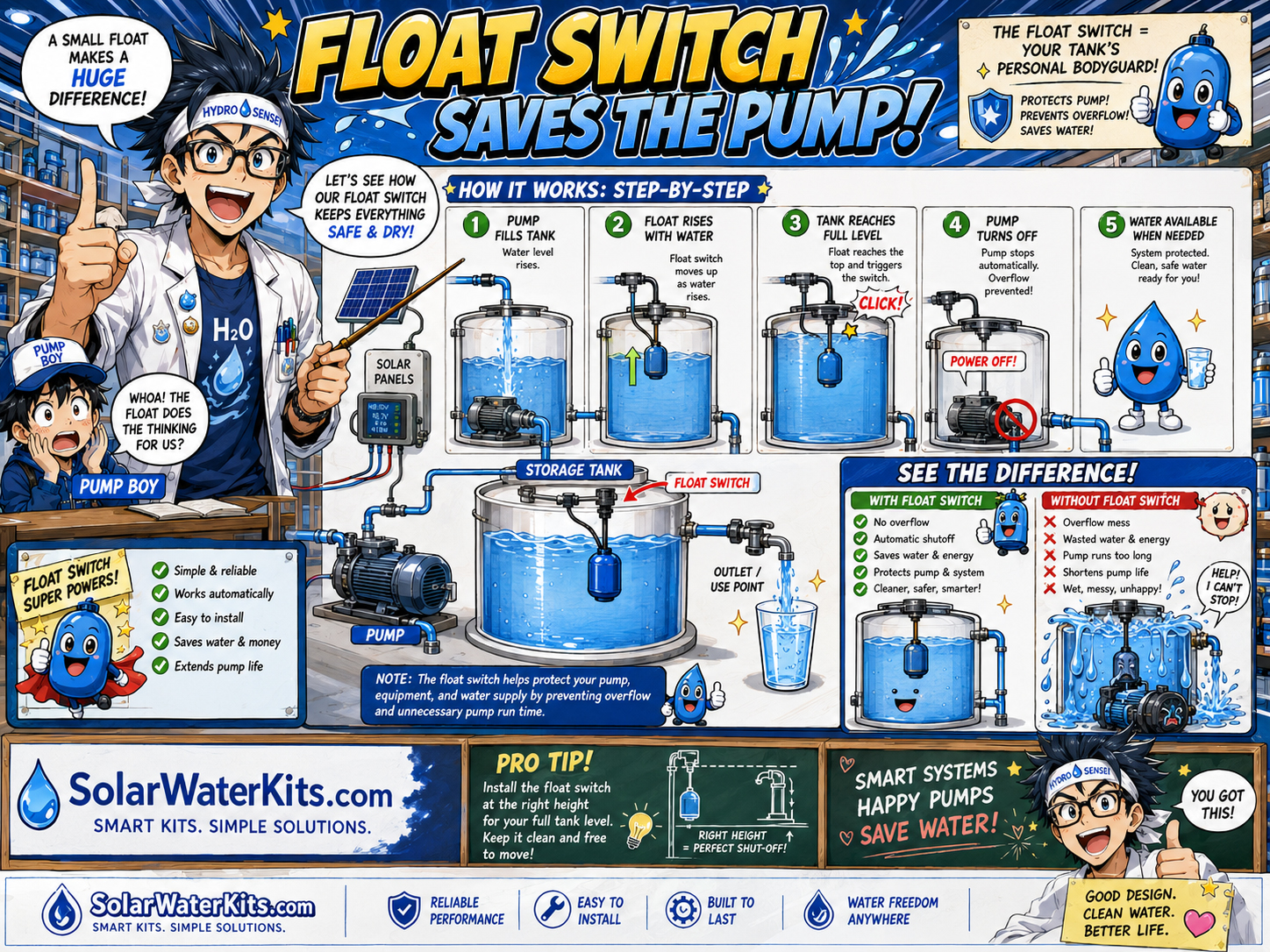
Tank levels, dry-run protection, and automatic stops help protect pumps and prevent waste.
SolarWaterKits.com is an educational manga concept site. Fire-readiness water systems are not a substitute for evacuation, firefighters, hydrants, permitted fire-suppression systems, building code, fire code, defensible-space requirements, emergency alerts, or professional fire-protection design.
Stored water, pressure, battery backup, and essential household water priorities.
Emergency water →
Critical-load thinking for pumps, pressure, controls, and essential water.
Battery backup →
Storage tanks, pumps, pressure, filters, labels, and emergency reserves.
Stored water →