❄️ Hydro-Sensei Winter Lesson

Freeze Protection for Water Systems

Winter is the quiet villain. It does not yell. It just freezes pipes, cracks filters, splits valves, damages pumps, ruins pressure tanks, and turns a beautiful solar water system into a very expensive ice sculpture.
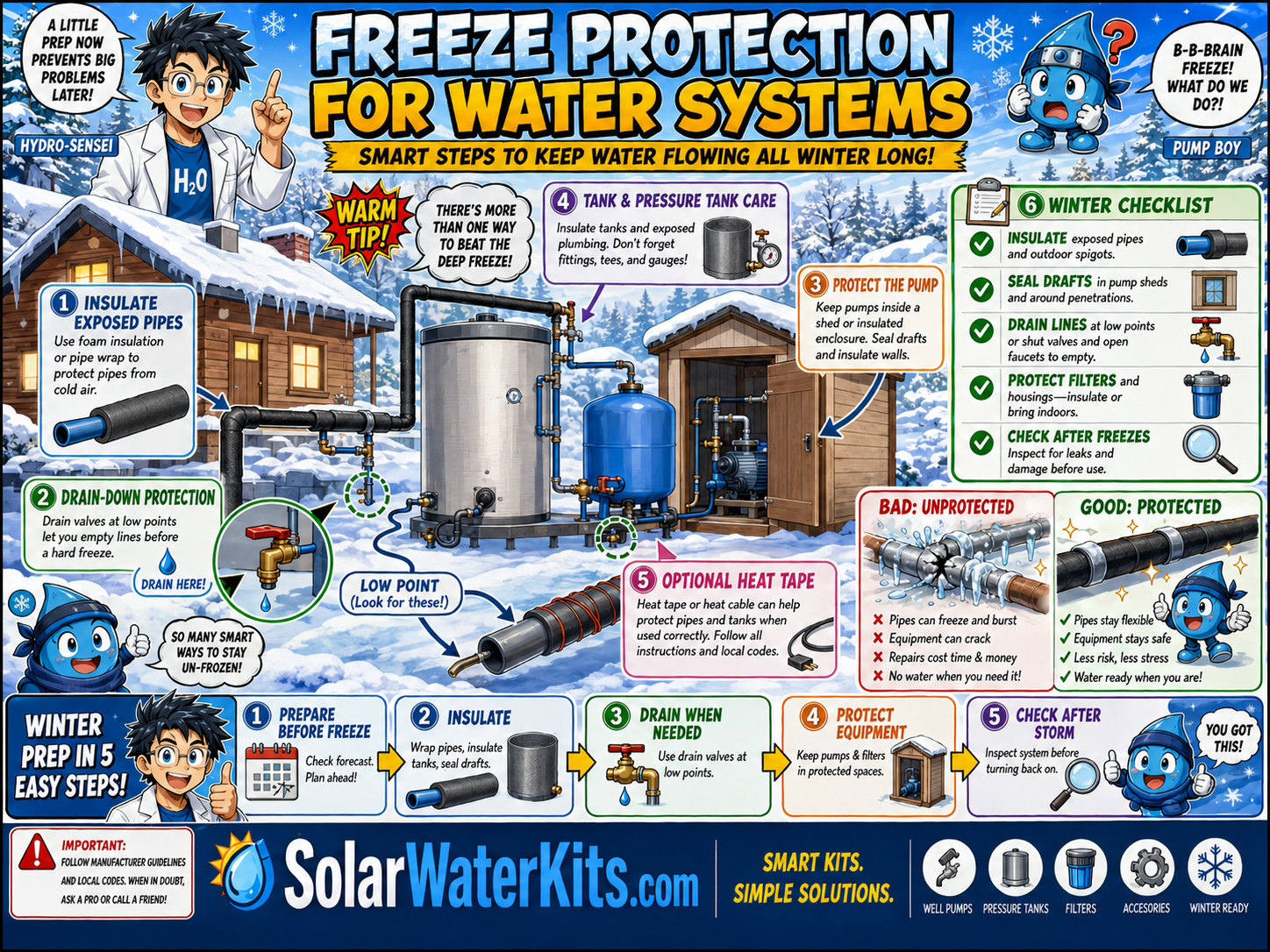
❄️ Pipes Freeze ⚙️ Pumps Crack 🧊 Filters Burst 🚰 Valves Need Drain-Down 🏷️ Label Winter Mode
Winter manga scene showing insulation, drain-down, heat trace, and freeze-protection concepts for solar water systems.
Water expands when frozen. Your plumbing will not enjoy this lesson.
Winter Villain Map

Freeze damage attacks the weakest water path

A solar water system may survive summer perfectly and fail the first hard freeze. The problem is not only the main pipe. Small trapped-water points are often the first to break.

Common freeze-failure points

Exposed pipes

Pipe above grade, along walls, under decks, or inside unheated sheds can freeze quickly.

Filters and housings

Filter bowls often trap water. Frozen filter housings can crack and leak badly after thawing.

Pumps and booster systems

Pumps can hold water internally. Freeze damage can break seals, housings, impellers, and fittings.

Valves and backflow devices

Small chambers inside valves can trap water and burst when frozen.

Pressure tanks and small lines

Pressure lines, gauges, switches, and small fittings are easy to forget and expensive to ignore.

Hoses and hose bibs

Attached hoses can trap water and freeze back into the valve or wall line.

Protection Methods

Freeze protection is usually a layered strategy

There is no single magic winter part. Good freeze protection may combine depth, insulation, heat, drain-down, protected equipment location, monitoring, and seasonal procedures.

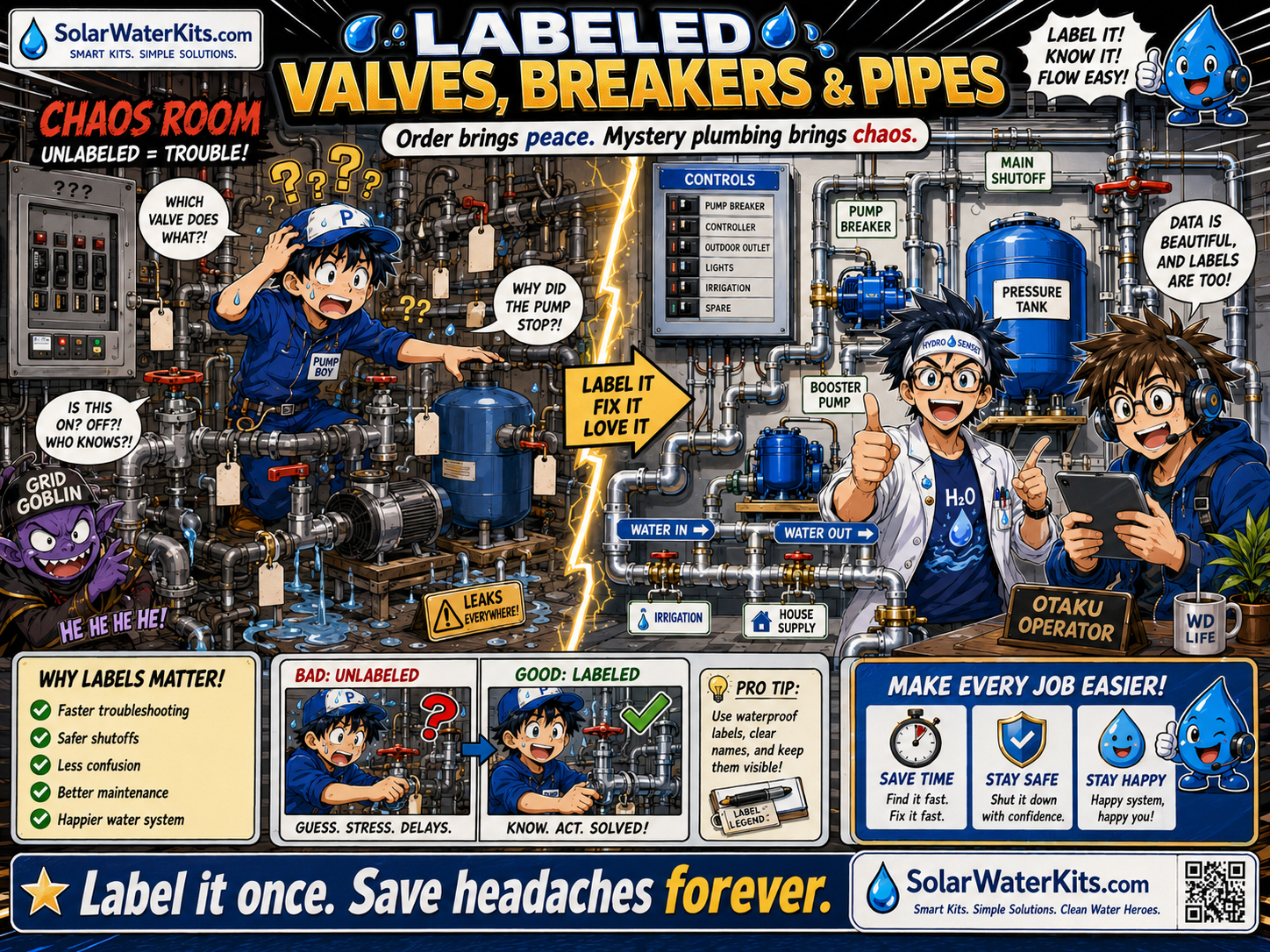
Labeled valves, breakers, and pipes prevent water-system chaos.
Drain-Down

Let water leave before it freezes

Drain valves and low points can allow seasonal shutdown or freeze-event protection when designed correctly.
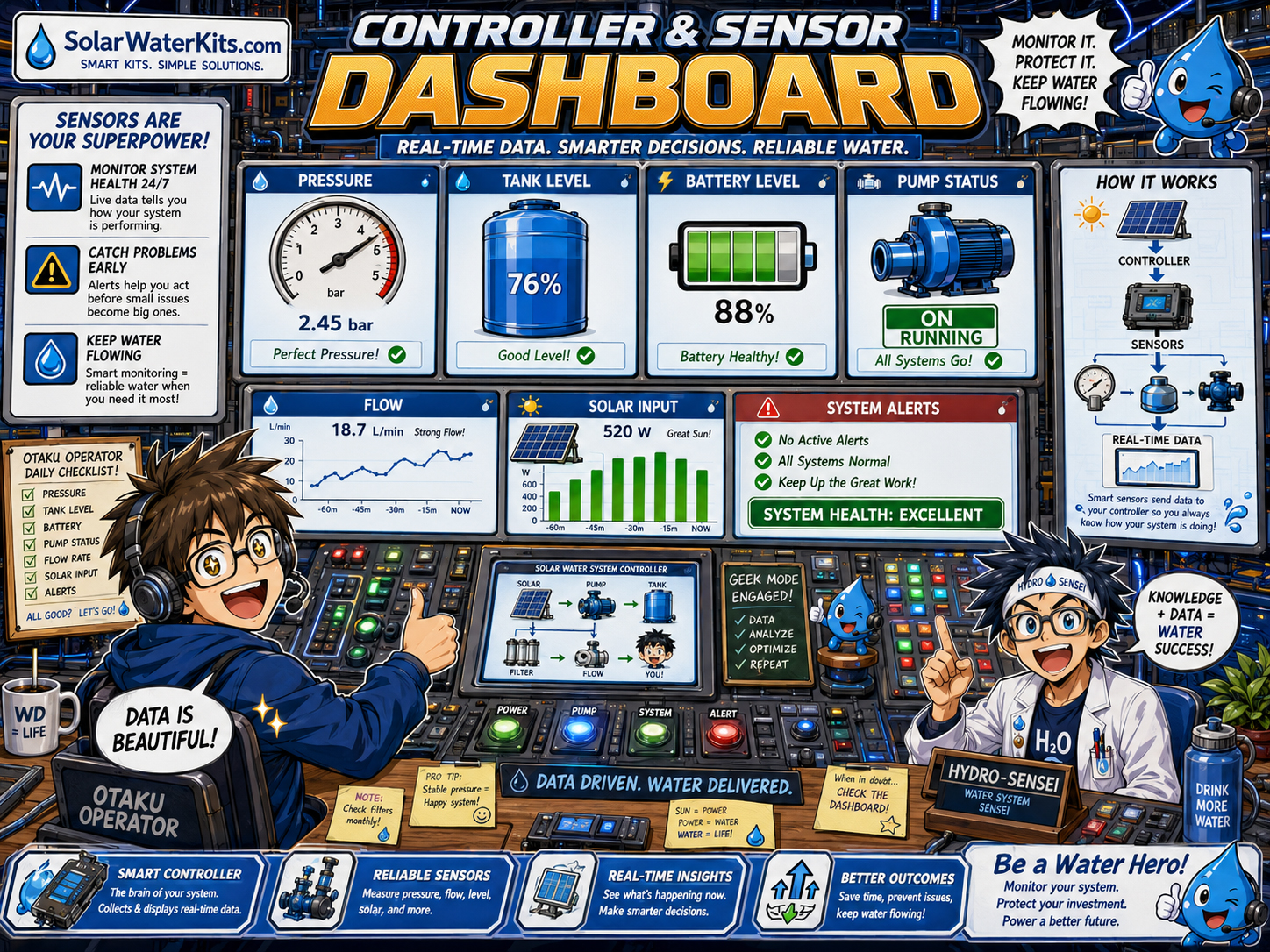
Otaku Operator monitoring pressure, tank level, battery level, pump status, and sunlight.
Monitoring

Temperature alarms help

Temperature sensors, battery status, pump status, and alerts can warn before the system freezes.

Controllers →
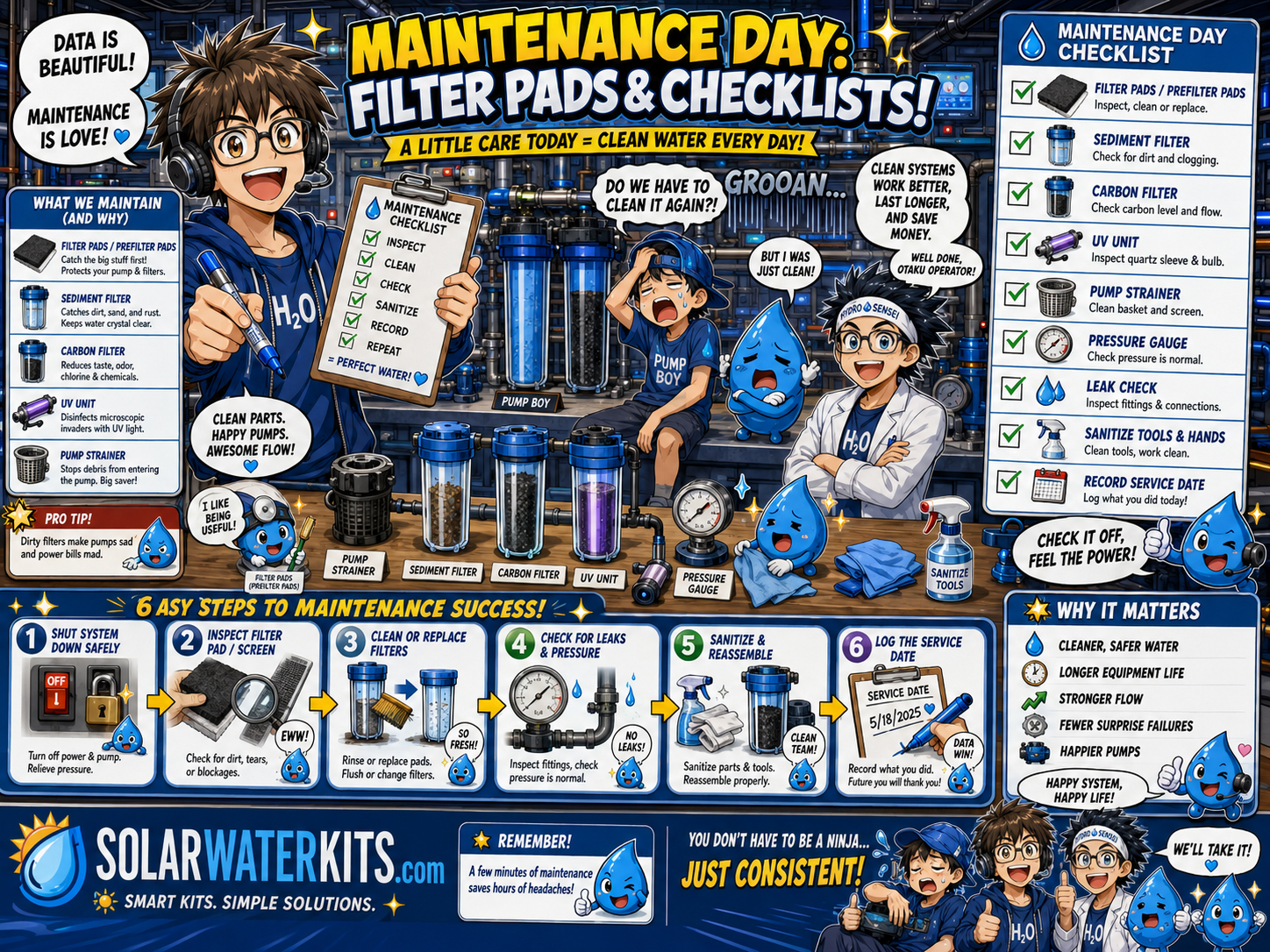
Otaku Operator doing maintenance with filters, pads, and winter checklists.
Maintenance

Winter checklist beats panic

Before cold weather, inspect valves, drains, filters, insulation, heat trace, pumps, and tank levels.

Maintenance →
Method What It Does Watch Out For
Burial depth Places pipe below local frost depth where appropriate. Depth varies by region; transitions above grade still need protection.
Insulation Slows heat loss from pipes, tanks, valves, and equipment. Insulation alone may not protect during long freezes without heat or flow.
Heat trace Adds controlled heat to pipes or equipment. Needs proper electrical design, GFCI protection, rating, and monitoring.
Drain-down Removes water from vulnerable lines and equipment. Must be designed with low points, slope, valves, and clear instructions.
Recirculation Moves water to reduce freezing risk in some systems. Uses power and must not compromise sanitation or pressure safety.
Protected pump shed Shields pump, filters, batteries, controls, and valves from cold and weather. Still needs ventilation, service access, electrical safety, and freeze planning.

Hydro-Sensei rule

Freeze protection must be designed for the coldest realistic condition, not the average winter day. The freeze does not care what usually happens.

Seasonal Shutdown

Cabins, ranches, and seasonal systems need a winter mode

A system that works in July may need a completely different operating state in January. Otaku Operator labels every valve because “winter mode” must be understandable months later.
Winter shutdown checklist

  • Turn off or isolate pump circuits where appropriate.
  • Drain vulnerable pipes, filters, pumps, hoses, and valves.
  • Open low-point drains and confirm water actually leaves.
  • Disconnect hoses from hose bibs.
  • Bypass, remove, or protect filter housings if required.
  • Set valves to labeled winter positions.
  • Document what must be reopened before spring startup.
Otaku Operator says: “A valve label in October is a miracle in February.”
System Areas

Every water system freezes differently

Ranch troughs, cabin plumbing, irrigation zones, rainwater tanks, pressure systems, and emergency water reserves all need different winter thinking.
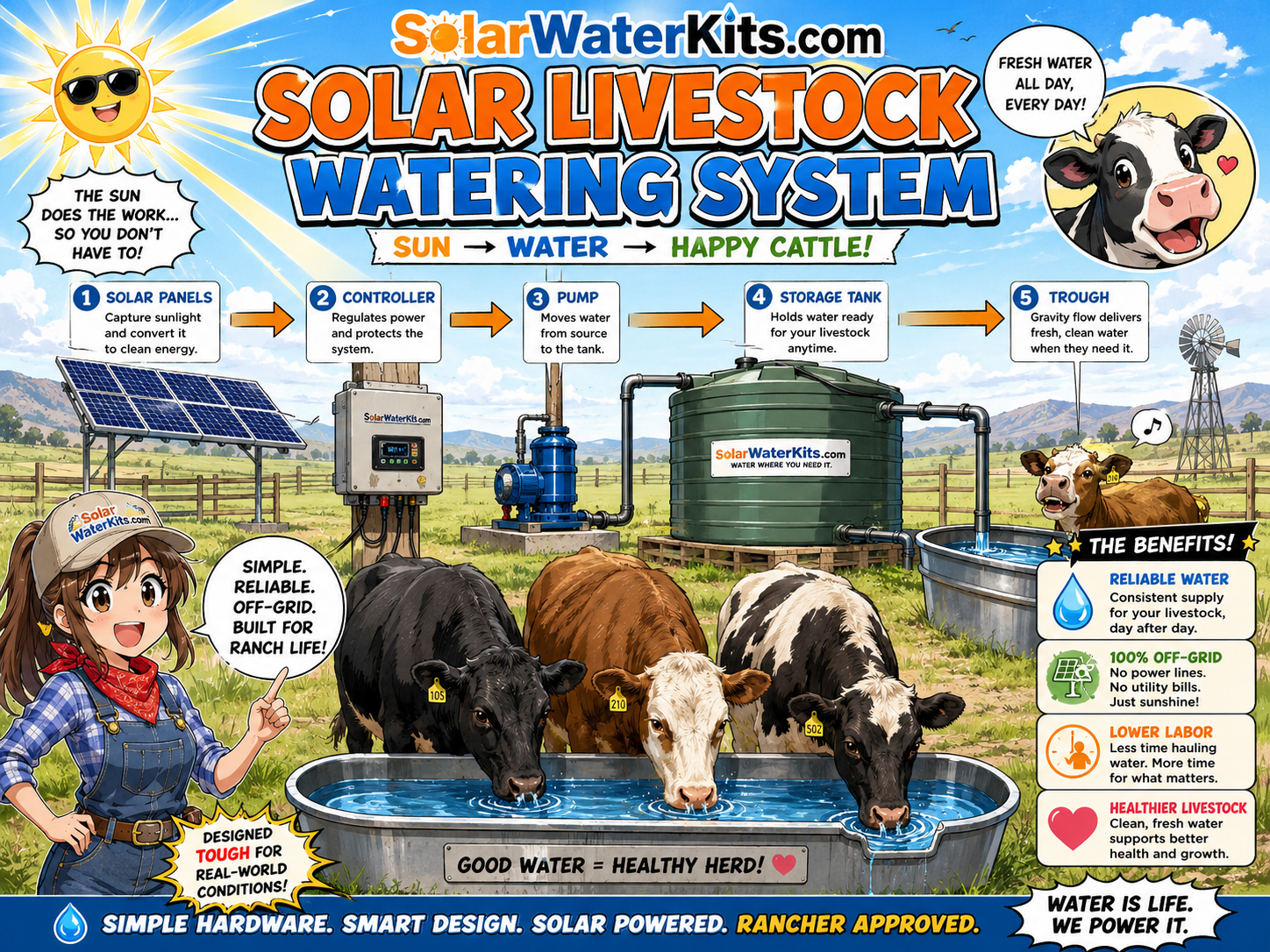
Cattle drinking from a trough fed by solar pumping and storage.
Livestock

Troughs must not freeze solid

Animals still need water in winter. Trough location, supply lines, heaters, drainage, and inspection matter.

Livestock water →
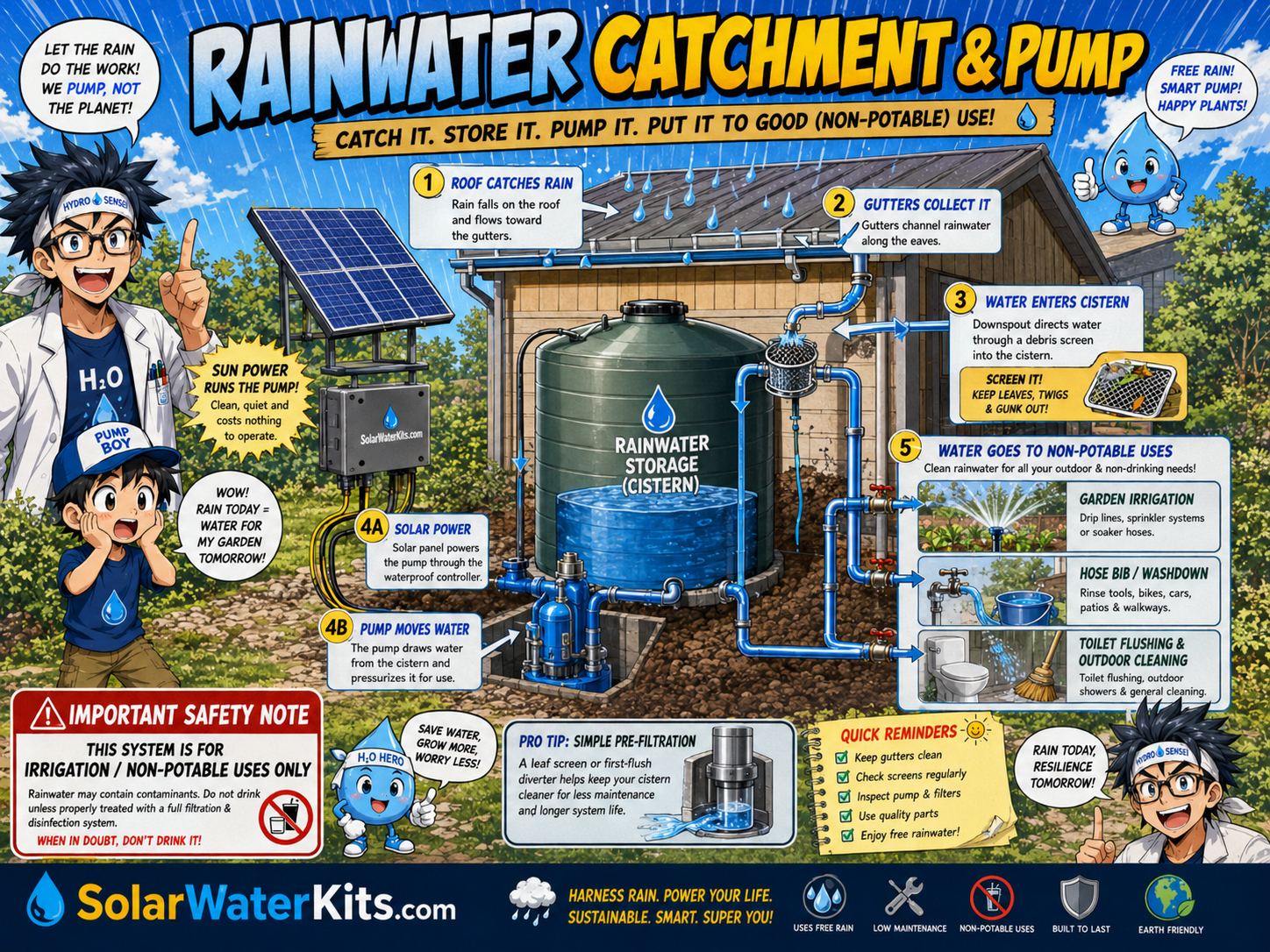
Rainwater catchment and cistern pump system.
Rainwater

Cistern outlets are vulnerable

Tank outlets, overflow lines, pumps, filters, and exposed valves can freeze even if the tank survives.

Rainwater →
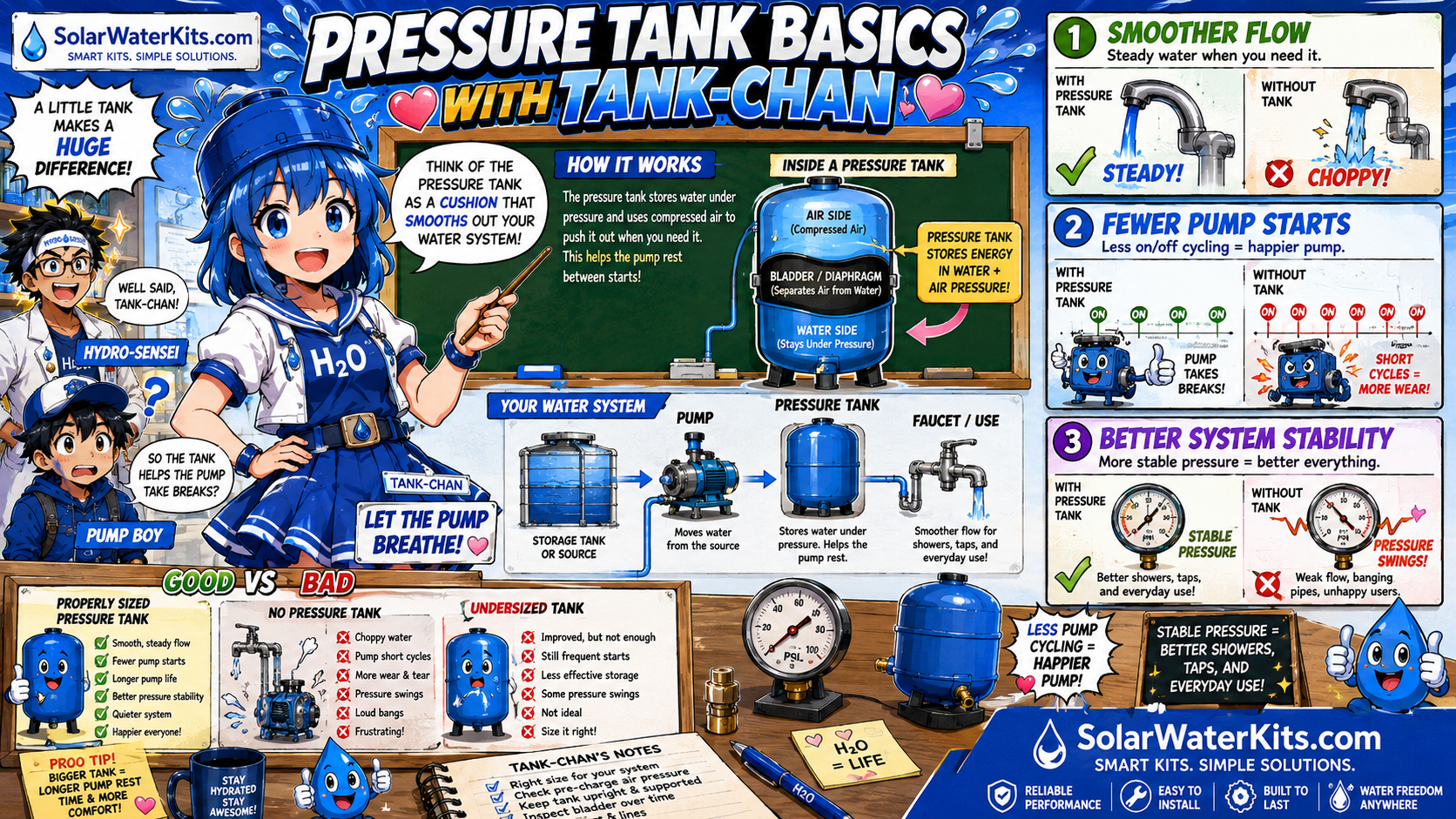
Tank-chan teaching pressure tank basics.
Pressure

Pressure tanks need warm space

Pressure switches, gauges, small pipes, and tank connections can freeze quickly in unheated areas.

Pressure tanks →
Heat Trace Reality

Heat trace is electrical equipment, not decorative rope

Heat trace can help protect pipes in some applications, but it must be correctly rated, installed, powered, protected, inspected, and used according to manufacturer instructions and local code.

  • Use listed heat trace for the specific pipe and environment.
  • Follow manufacturer spacing, wrapping, thermostat, and insulation instructions.
  • Use proper GFCI protection and electrical safety practices.
  • Keep heat trace away from damage, animals, abrasion, and improper overlaps.
  • Test before freezing weather.
  • Do not assume heat trace works if the power is out.

Battery backup and freeze protection

Battery Beast can help during outages, but winter loads can be demanding. Pumps, heat trace, controls, alarms, and recirculation can all consume energy.

  • Decide which freeze loads are truly critical.
  • Calculate watts and runtime honestly.
  • Protect the battery from cold if required by equipment specifications.
  • Do not let heat trace silently drain emergency batteries.
  • Use temperature alarms where practical.
Freeze Protection Mistakes

The ice goblin loves tiny mistakes

Bad habits

  • Leaving hoses connected to hose bibs.
  • Insulating pipe but forgetting valves and filters.
  • Assuming a shed is warm enough because it has walls.
  • Forgetting small pressure lines and gauges.
  • Installing drain valves that do not drain the low point.
  • Depending on heat trace without backup power or testing.
  • Failing to label winter valve positions.

Better habits

  • Map every place water can remain trapped.
  • Use drain-down points that actually empty the vulnerable lines.
  • Protect pumps, filters, valves, and pressure switches.
  • Label normal mode, winter mode, and startup sequence.
  • Test heat trace, alarms, and backup power before cold weather.
  • Keep spare filters, fittings, valves, and repair parts on site.
  • Inspect after the first freeze, not after the first flood.
Pump Boy: “It only froze a little!”
Hydro-Sensei: “Water only has to expand once.”
Spring Startup

Spring startup is not just “turn it back on”

After winter, a system should be inspected before pressure is restored. Frozen cracks often reveal themselves only after thawing and re-pressurizing.

Before pressurizing

  • Inspect visible pipes, filters, valves, gauges, tanks, and pumps.
  • Close drains and confirm valve positions.
  • Check filter bowls and housings for cracks.
  • Look for rodent damage, insulation damage, and loose wiring.
  • Confirm pump and controller status.
  • Open water slowly and watch for leaks.

After pressurizing

  • Check for leaks under pressure.
  • Verify pressure switch and pressure tank behavior.
  • Flush stagnant lines appropriately.
  • Replace filters if winterized or contaminated.
  • Test water where drinking use is intended.
  • Update the maintenance log.
Freeze Protection Safety

Freeze protection involves plumbing, electrical, pressure, and sanitation risks

Freeze protection may involve buried pipe, insulation, heat trace, electrical circuits, batteries, pump sheds, valves, pressure tanks, relief devices, potable-water plumbing, drains, antifreeze concepts, sanitation, and local code. This page is educational only.

Do this

  • Use qualified plumbing, electrical, pump, well, and water professionals where required.
  • Follow local frost-depth guidance and code requirements.
  • Use listed heat trace and proper electrical protection where applicable.
  • Protect pressure tanks, filters, valves, pumps, and small lines.
  • Label winter shutdown and spring startup procedures clearly.
  • Test water quality after winter shutdown where drinking use is intended.

Do not do this

  • Do not assume insulation alone protects every freeze condition.
  • Do not improvise heat trace, extension cords, or electrical wiring near water.
  • Do not put unsafe antifreeze into potable-water systems.
  • Do not disable pressure relief or safety devices.
  • Do not pressurize a frozen or suspected-damaged system without inspection.
  • Do not treat this page as an installation manual or engineered design.
Next Lessons

Continue the winter water classroom

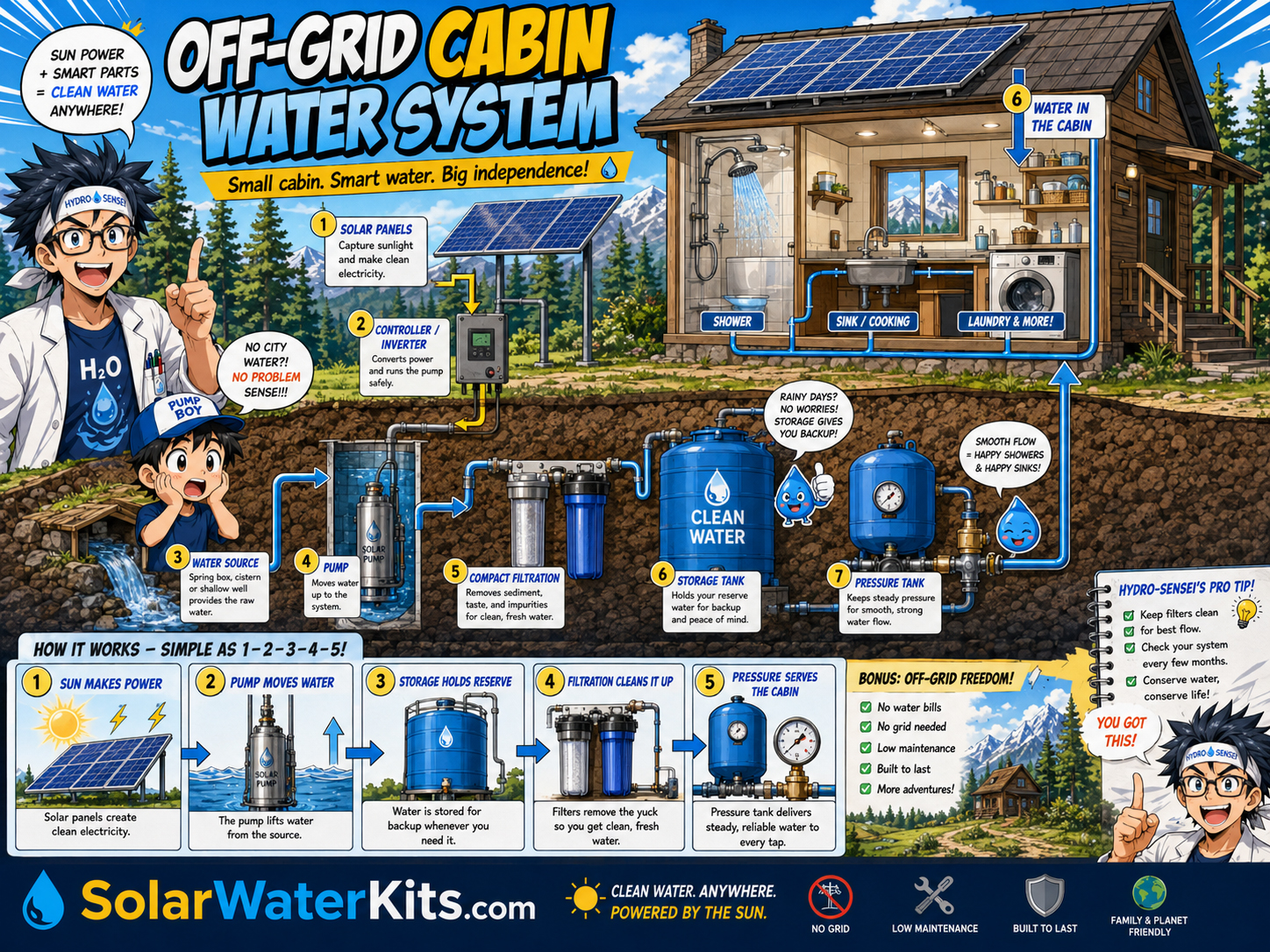
Off-grid cabin water system cutaway.
Cabin

Solar cabin water

Seasonal cabins need water source, storage, pressure, filtration, and winter shutdown planning.

Cabin water →
Solar livestock watering system with cattle and trough.
Ranch

Livestock water

Animals still need water when it freezes. Trough systems need winter design.

Livestock water →
Otaku Operator doing maintenance with checklists.
Checklist

Maintenance

Winter systems survive because someone checked the boring things first.

Maintenance →