Graywater is non-potable
It should be labeled clearly and kept separate from drinking-water systems. Do not drink it, cook with it, or connect it casually to potable plumbing.
Graywater may be useful for limited non-potable landscape concepts where allowed, but it is not drinking water, not kitchen water, not toilet waste, and not something to connect casually. Keep systems separate, label everything, and follow local codes.

Graywater is a limited category of used water that may come from certain fixtures such as showers, bathroom sinks, or laundry, depending on local rules. It is generally non-potable and should never be confused with safe drinking water.
Graywater rules vary by location. Before designing, pumping, storing, filtering, or reusing graywater, check local plumbing codes, health department rules, environmental requirements, and permit rules.
It should be labeled clearly and kept separate from drinking-water systems. Do not drink it, cook with it, or connect it casually to potable plumbing.
Local rules decide what sources are allowed, where it may go, whether storage is allowed, and what design or permits are required.
Filters, valves, labels, piping, subsurface distribution, maintenance, and safe separation are not optional decorations.
Filter Ninja’s first rule is category control. Some water may be allowed for graywater reuse, some may be prohibited, and some belongs nowhere near a reuse system.
Graywater should never be mistaken for potable water.
| Water Source | Possible Category | Filter Ninja Warning |
|---|---|---|
| Shower / bathtub | May be graywater where allowed. | Still non-potable and must be handled correctly. |
| Bathroom sink | May be graywater where allowed. | Soap, toothpaste, hair, and cleaning products affect use. |
| Laundry | May be graywater where allowed. | Detergents, bleach, softeners, and chemicals matter. |
| Kitchen sink | Often excluded from simple graywater. | Food waste, grease, and pathogens complicate reuse. |
| Toilet water | Blackwater. | Do not confuse with graywater. |
| Unknown water | Unknown / unsafe until evaluated. | Unknown water is not a reuse plan. |
Solar power can support pumps and controls for approved non-potable reuse concepts, but the safety category remains non-potable unless professionally treated, tested, and approved otherwise.
A pump may move graywater from a collection point to approved landscape distribution, but pump design must account for clogging, solids, soaps, filters, and maintenance.
Pumping BasicsGraywater reuse is often limited to approved landscape use, with careful separation from food crops, potable plumbing, surface pooling, and public contact.
Solar IrrigationGraywater systems need clear valves, bypasses, emergency shutoffs, filters, labels, and an easy way to divert water when products or conditions are not suitable.
Controls“Solar power can move graywater. It cannot change the rule that graywater is not potable.”

Non-potable means non-potable. Make it visible.
Filters, screens, valves, pumps, labels, irrigation outlets, and diversion controls need frequent attention. Graywater is not a “set it and forget it” system.
“Graywater maintenance is not optional. It is the difference between reuse and regret.”
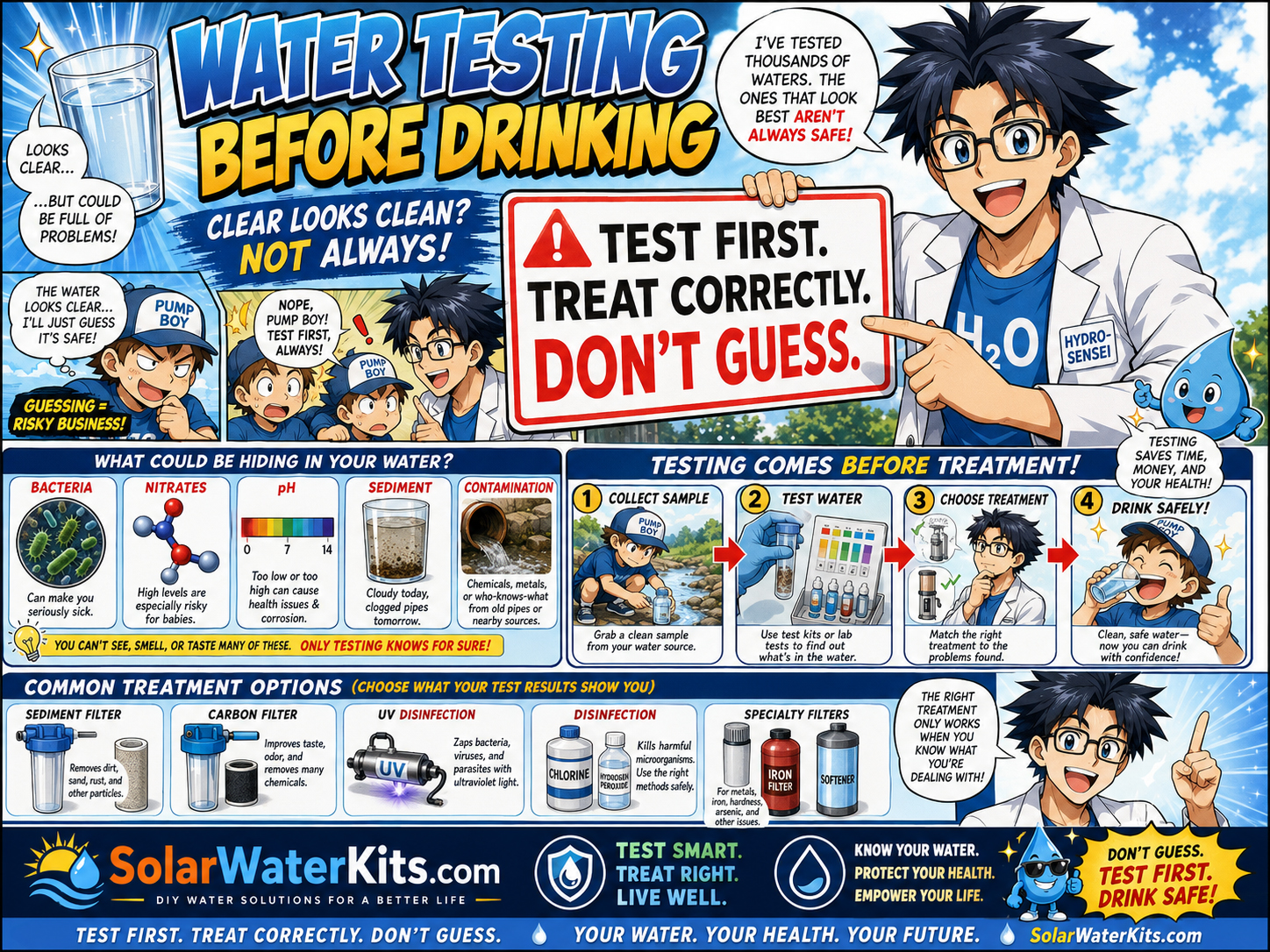
Learn the difference between potable, non-potable, rainwater, graywater, and unknown water.
Water Safety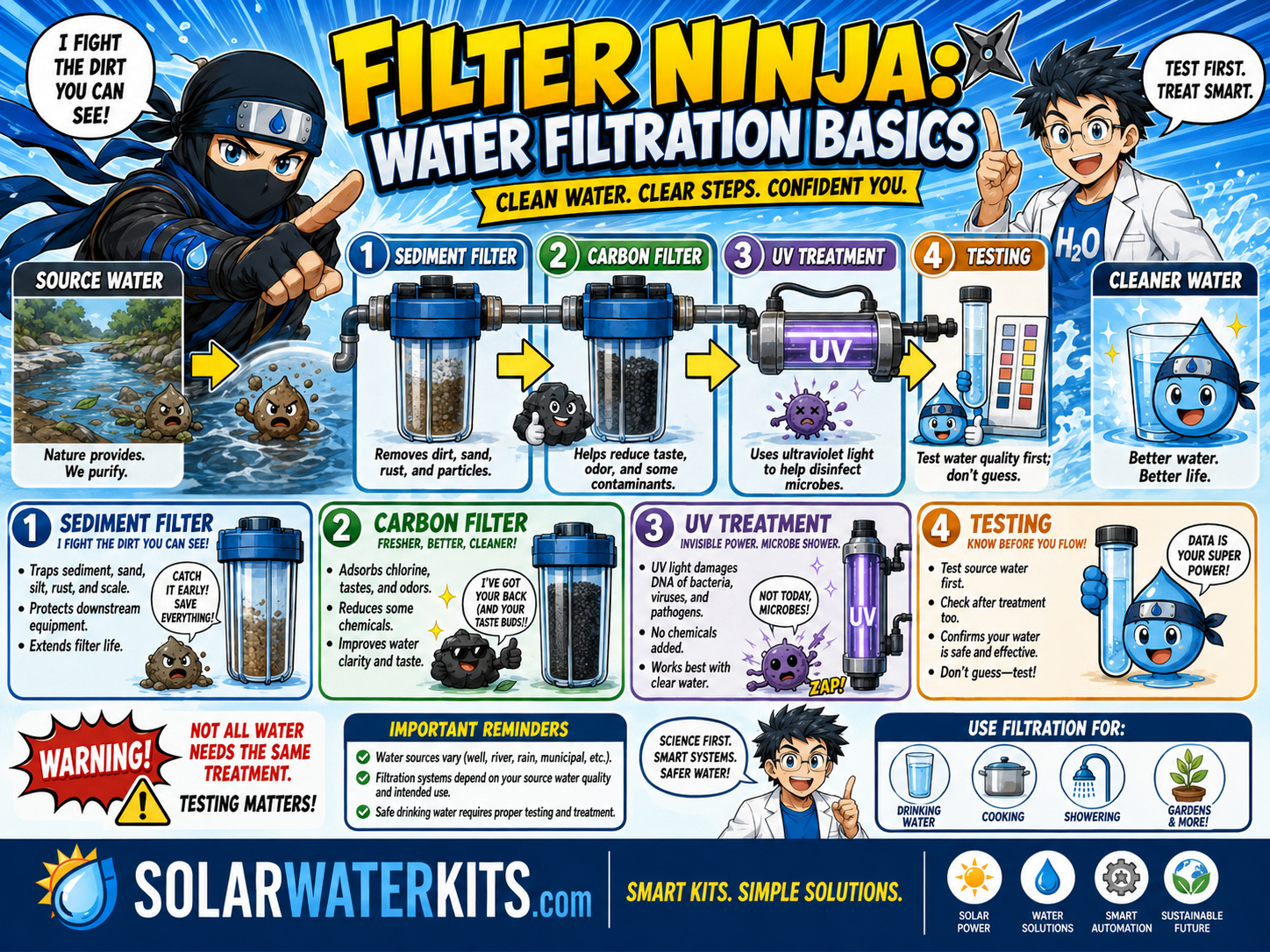
Filters reduce certain problems. They do not automatically make graywater potable.
Filtration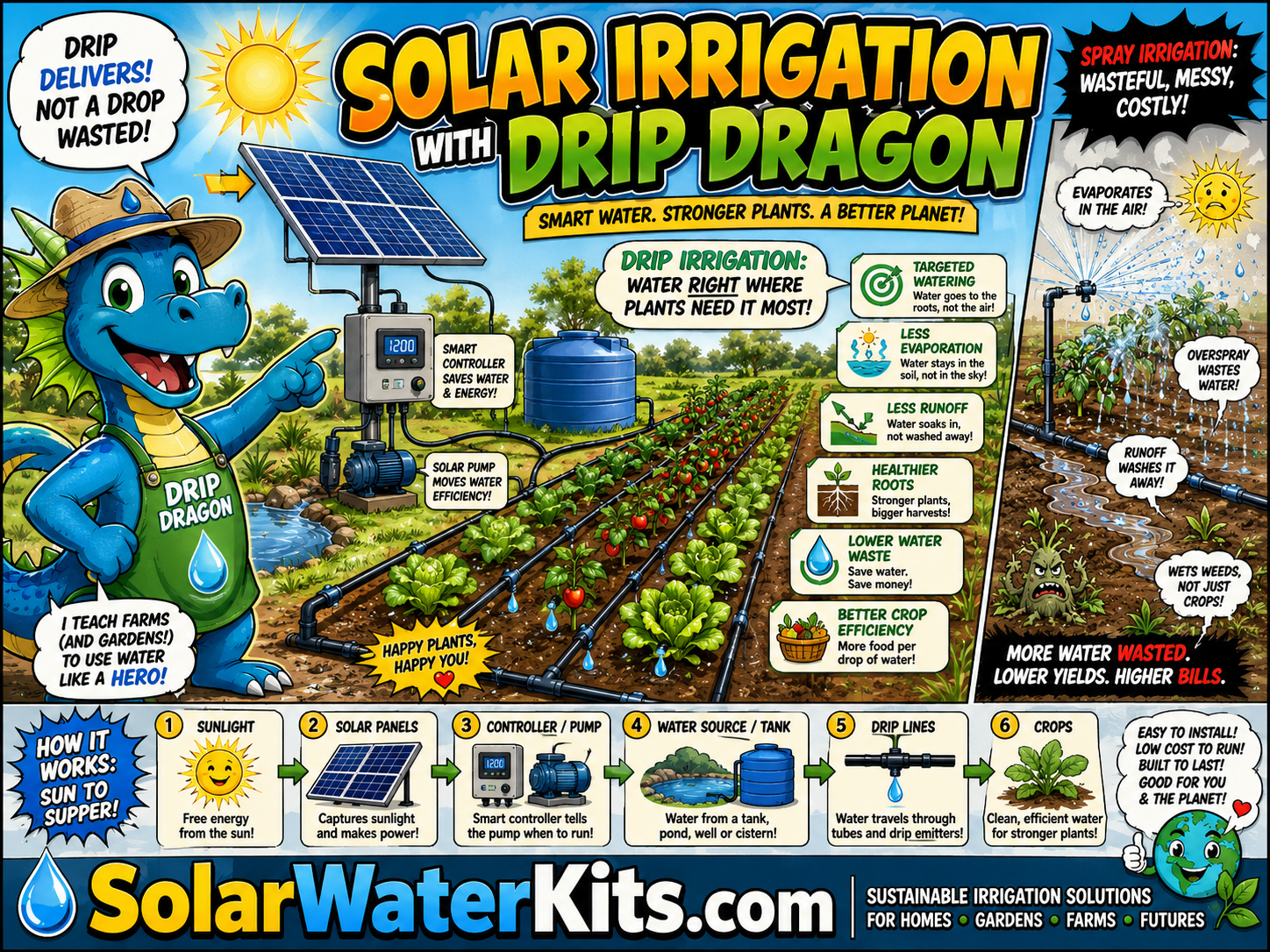
Where allowed, graywater concepts often connect to landscape irrigation design rules.
IrrigationReal graywater systems may involve plumbing code, health rules, non-potable labels, cross-connection control, backflow protection, pumps, filters, valves, irrigation rules, storage limits, environmental concerns, permits, inspections, and maintenance requirements.