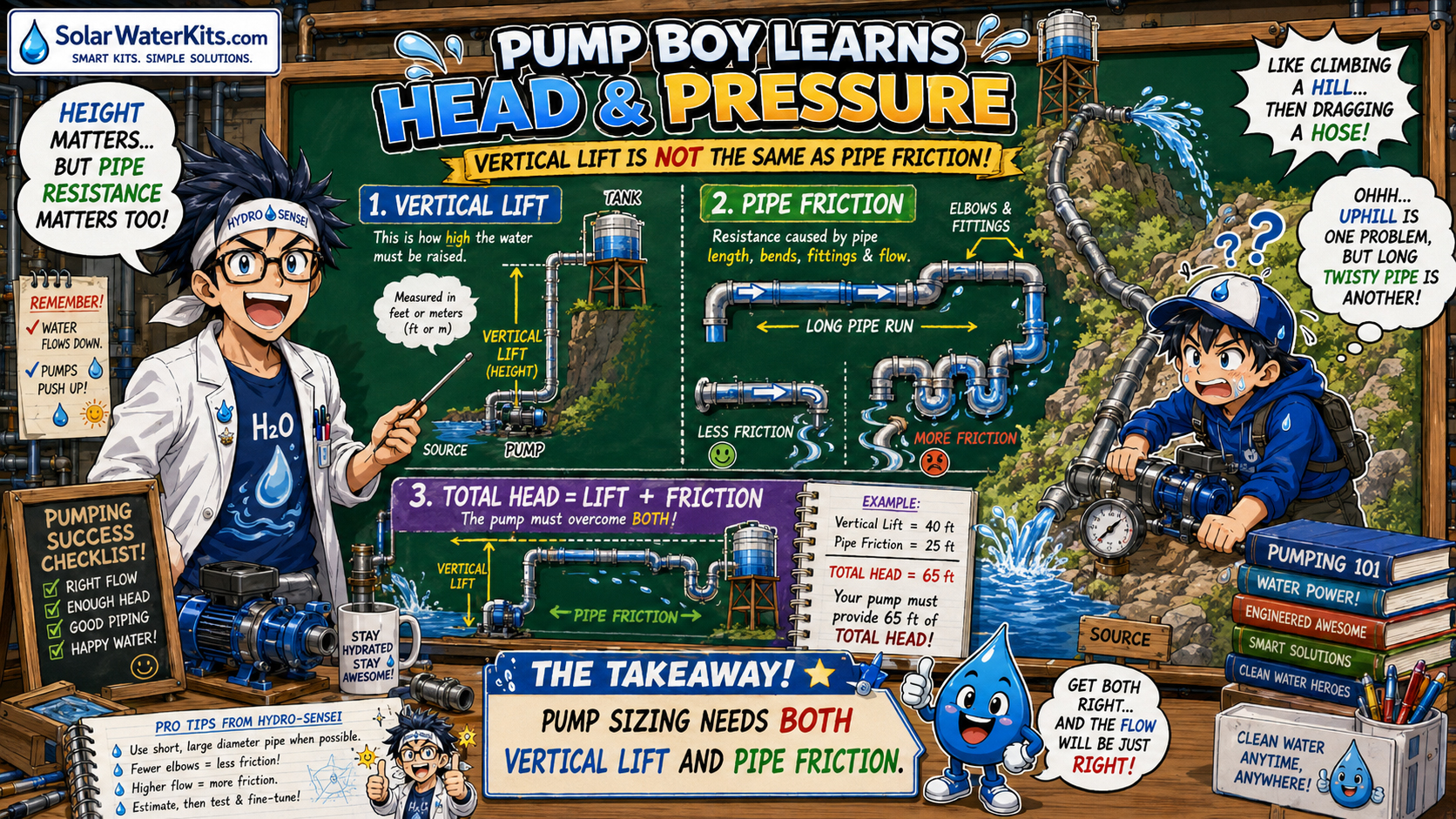
Depth & Lift
How far below ground is the water?
The pump must overcome water level, vertical lift, delivery height, and pressure needs. Static water level and pumping water level both matter.
Hydro-Sensei’s well-pump rule: do not just ask, “What pump fits the hole?” Ask how deep the water is, how far it travels, where it is stored, how it is pressurized, and what happens when the grid goes dark.
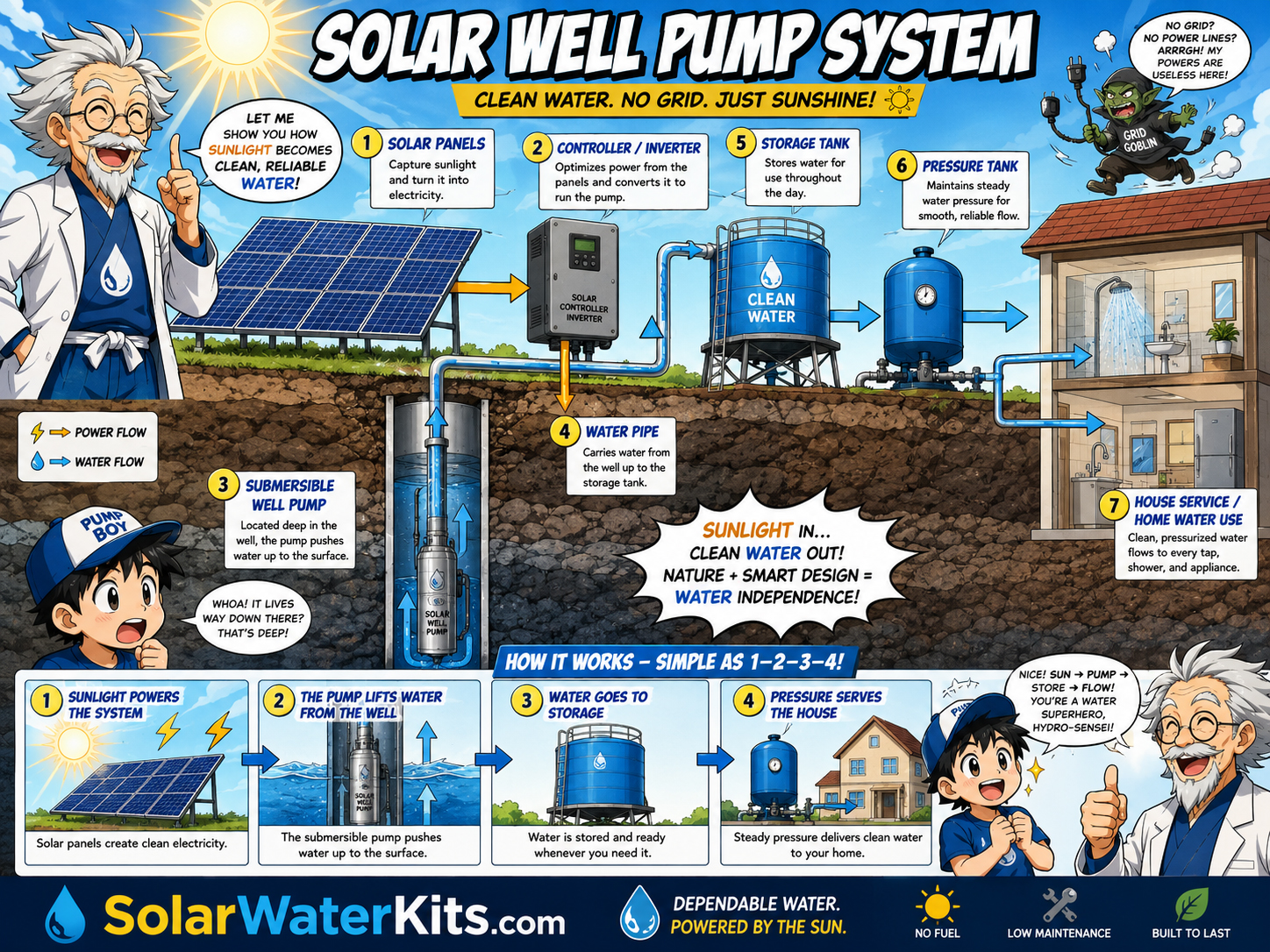
A well pump does one job: it moves water from the well. The complete system decides whether that water is useful: storage, pressure, controls, filtration, protection, and backup power.
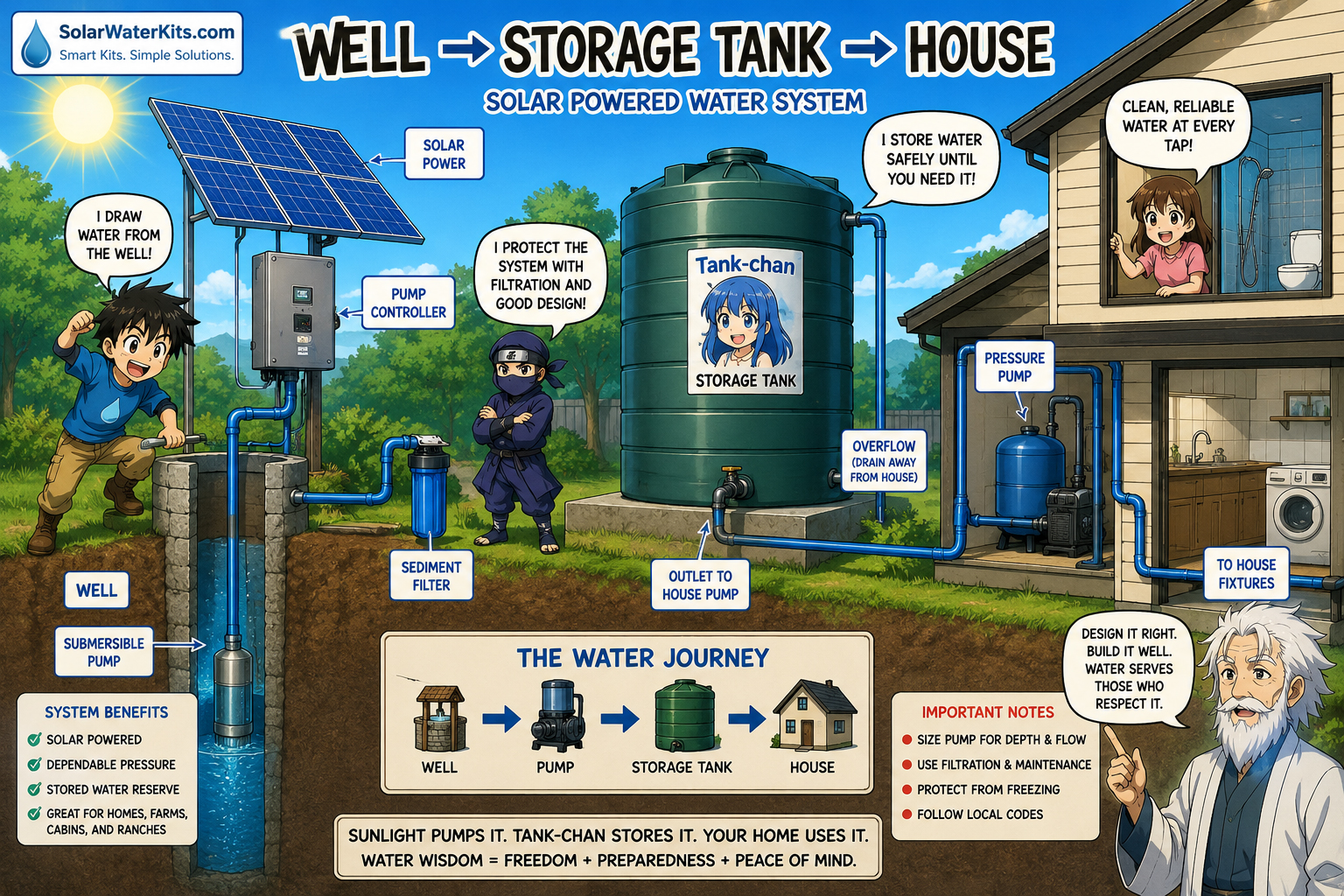
Stored water separates when the pump runs from when the building needs water.
Panels make electricity. The system may be direct DC, inverter-backed AC, battery-supported, or hybrid.
The controller manages voltage, pump operation, starts, stops, float switches, and protection features.
The pump usually sits down in the well and pushes water up toward storage or pressure service.
The tank gives the system a water reserve, so the well pump does not have to run every time someone opens a faucet.
A pressure tank, booster pump, or pressure controls help deliver usable water to the house, barn, trough, or irrigation zone.
Well water may need sediment filtration, treatment, disinfection, softening, or testing depending on local conditions.
Pump Boy wants to order parts immediately. Hydro-Sensei locks the shopping cart until the well data is known.
The pump must overcome water level, vertical lift, delivery height, and pressure needs. Static water level and pumping water level both matter.
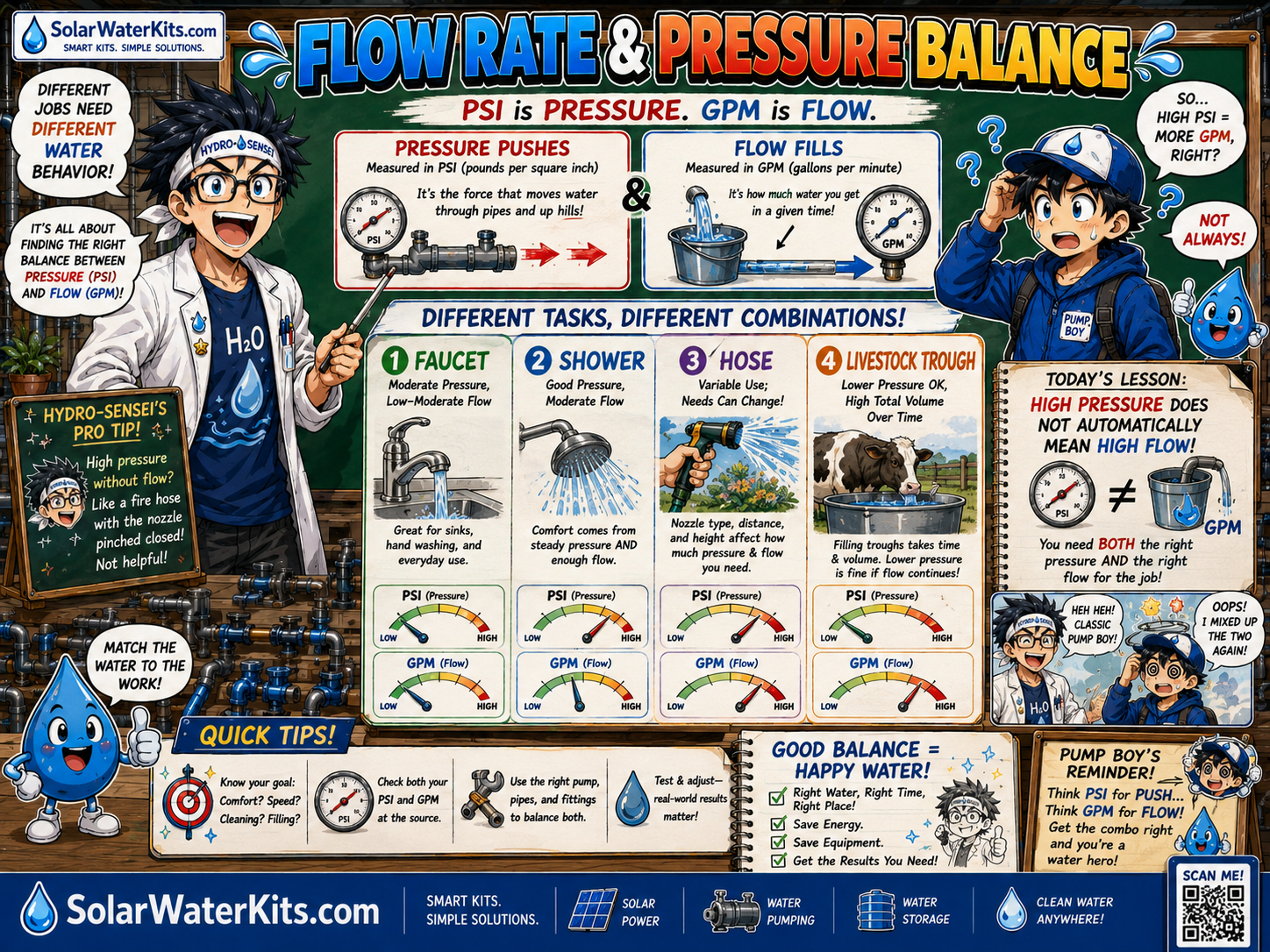
A cabin, house, garden, trough, and ranch all need different gallons per day. Daily demand drives storage and pumping schedule.
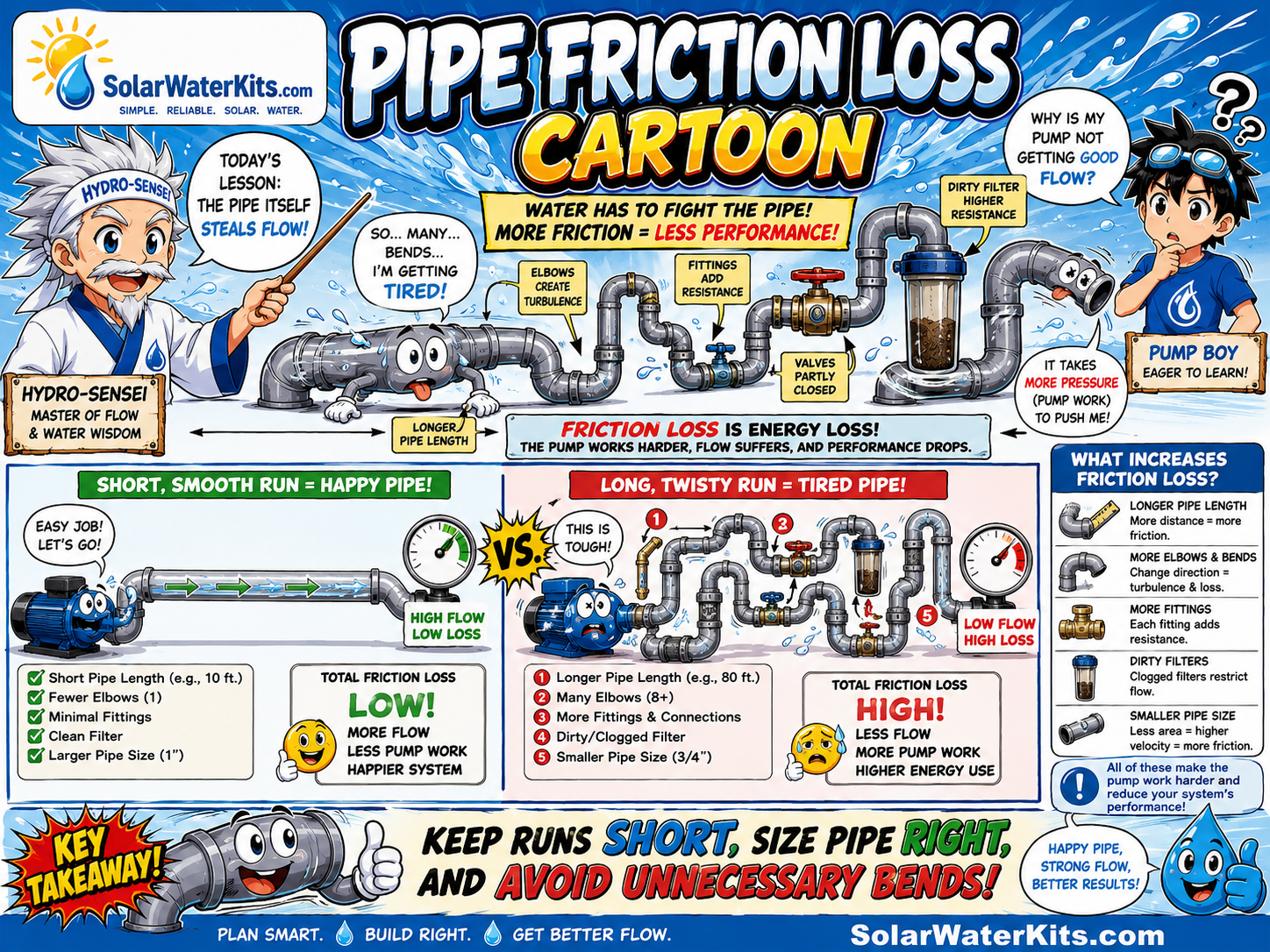
Long pipe runs, small pipe, fittings, valves, filters, and elevation changes add friction loss. The pump feels all of it.
| Question | Why It Matters | Hydro-Sensei Note |
|---|---|---|
| What is the well depth? | Helps determine pump placement and wire/piping needs. | Depth alone is not enough; water level matters. |
| What is the static water level? | Shows where the water sits when the well is resting. | Do not confuse well depth with water lift. |
| What is the pumping water level? | Shows how far the water drops during pumping. | This can be the real design condition. |
| What is the recovery rate? | Shows how quickly the well refills. | A pump cannot create water the well cannot supply. |
| How many gallons per day? | Sizes pump runtime and storage. | Use real demand, not fantasy demand. |
| Will it run at night? | Determines whether batteries or storage-first design are needed. | Water storage can be cheaper than extra battery. |
Many rural homes depend on electric well pumps. When utility power fails, water pressure can disappear. A solar well strategy may use daytime pumping, storage tanks, batteries, a backup loads panel, pressure tanks, or a generator interface depending on the property.
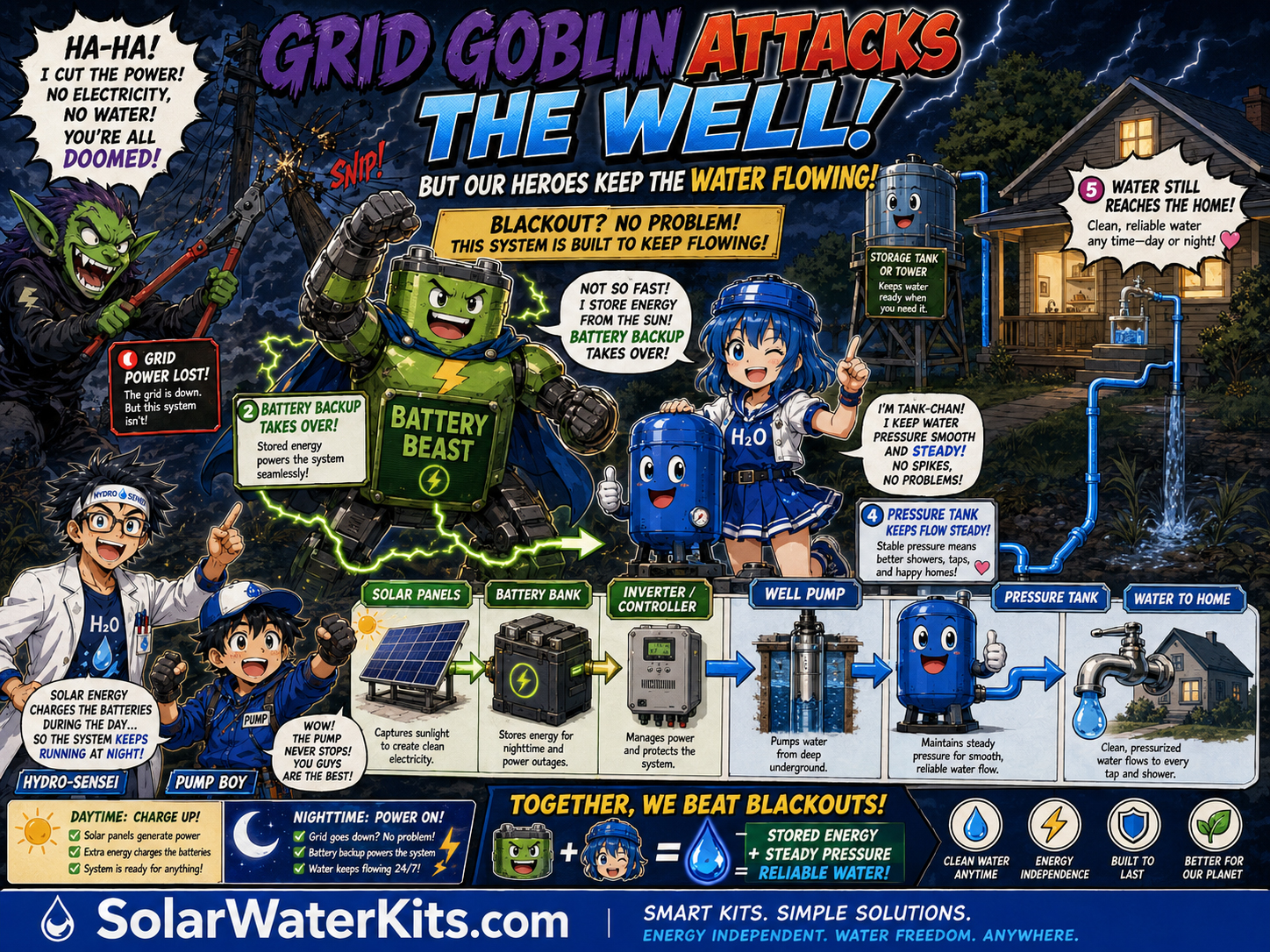
Backup design starts before the blackout.
The pump may be DC, AC, variable-speed, controller-driven, inverter-backed, battery-supported, or tied into a larger property power system.
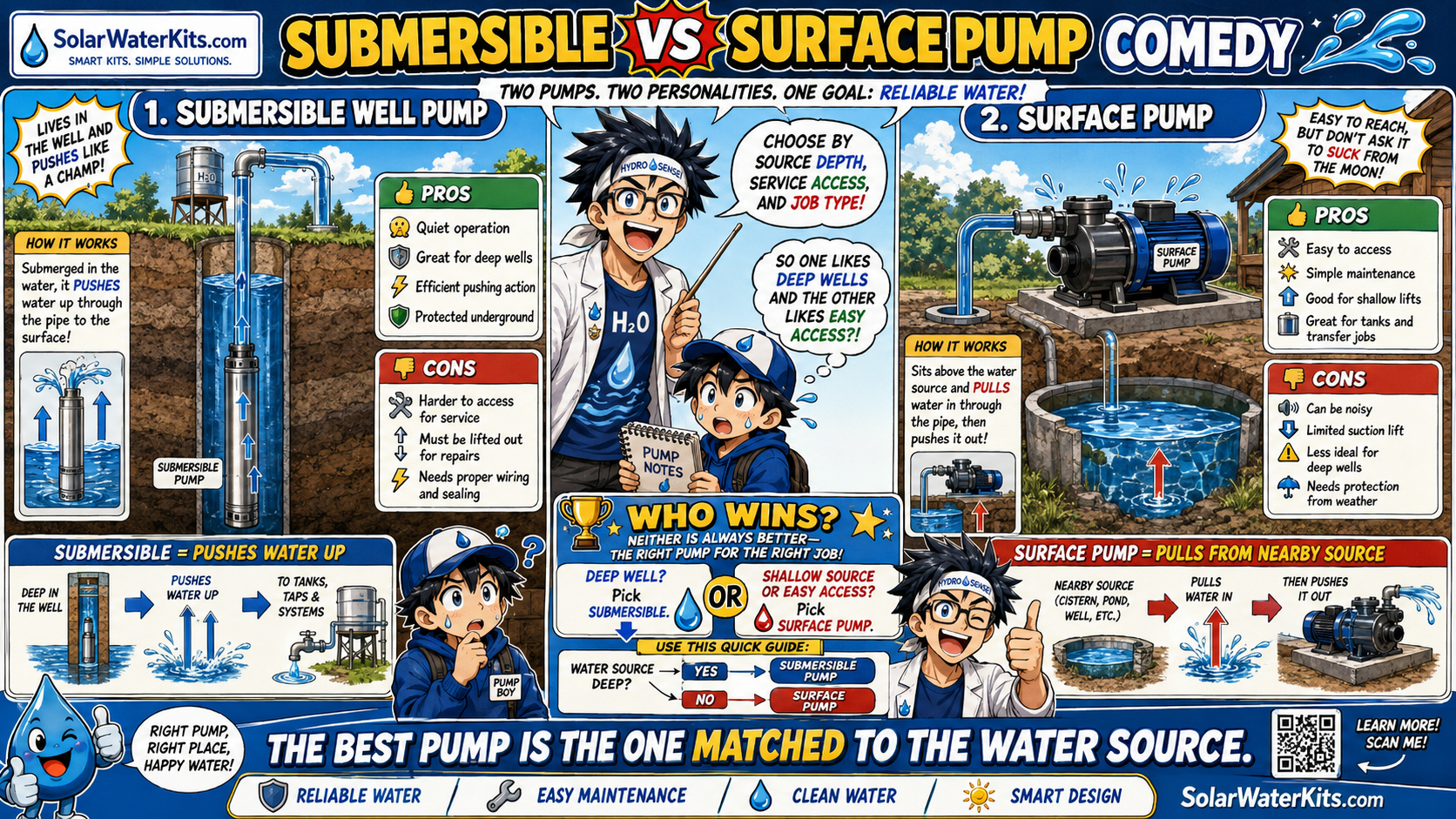
Submersible well pumps push water from inside the well. Surface pumps have suction limits and are more often used for boosting, transfer, shallow sources, or tank-to-use applications.
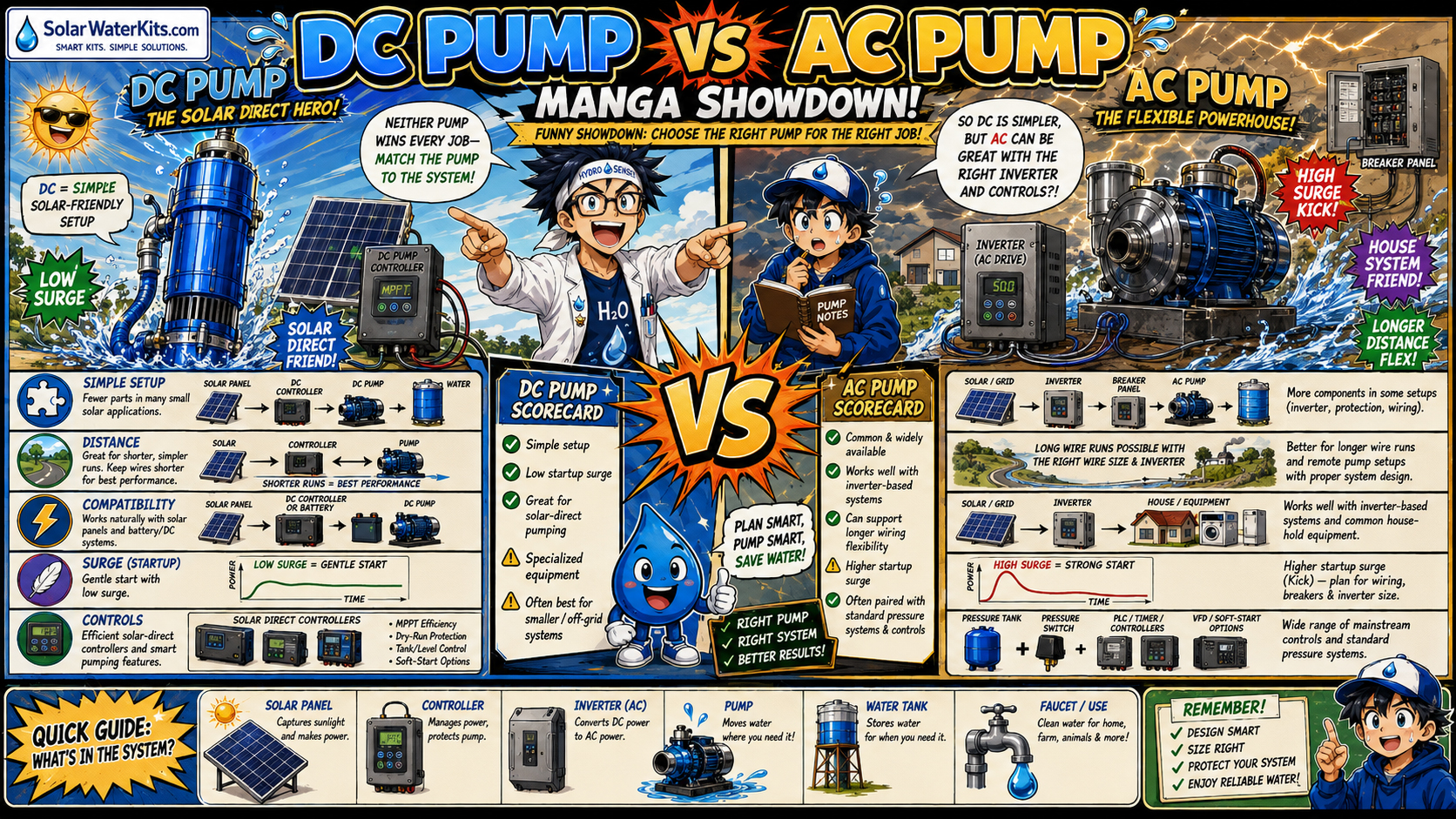
DC solar pumps can be elegant for direct solar pumping to storage. AC pumps can be better for homes with existing electrical infrastructure, inverters, and standard pressure systems.
The best well-pump system is not always the biggest pump. It is the pump that matches the well yield, water demand, total dynamic head, power source, storage strategy, and maintenance plan.
A solar well pump should not be left to fight dry wells, dead batteries, overflowing tanks, short-cycling pressure systems, or unlabeled valves alone.
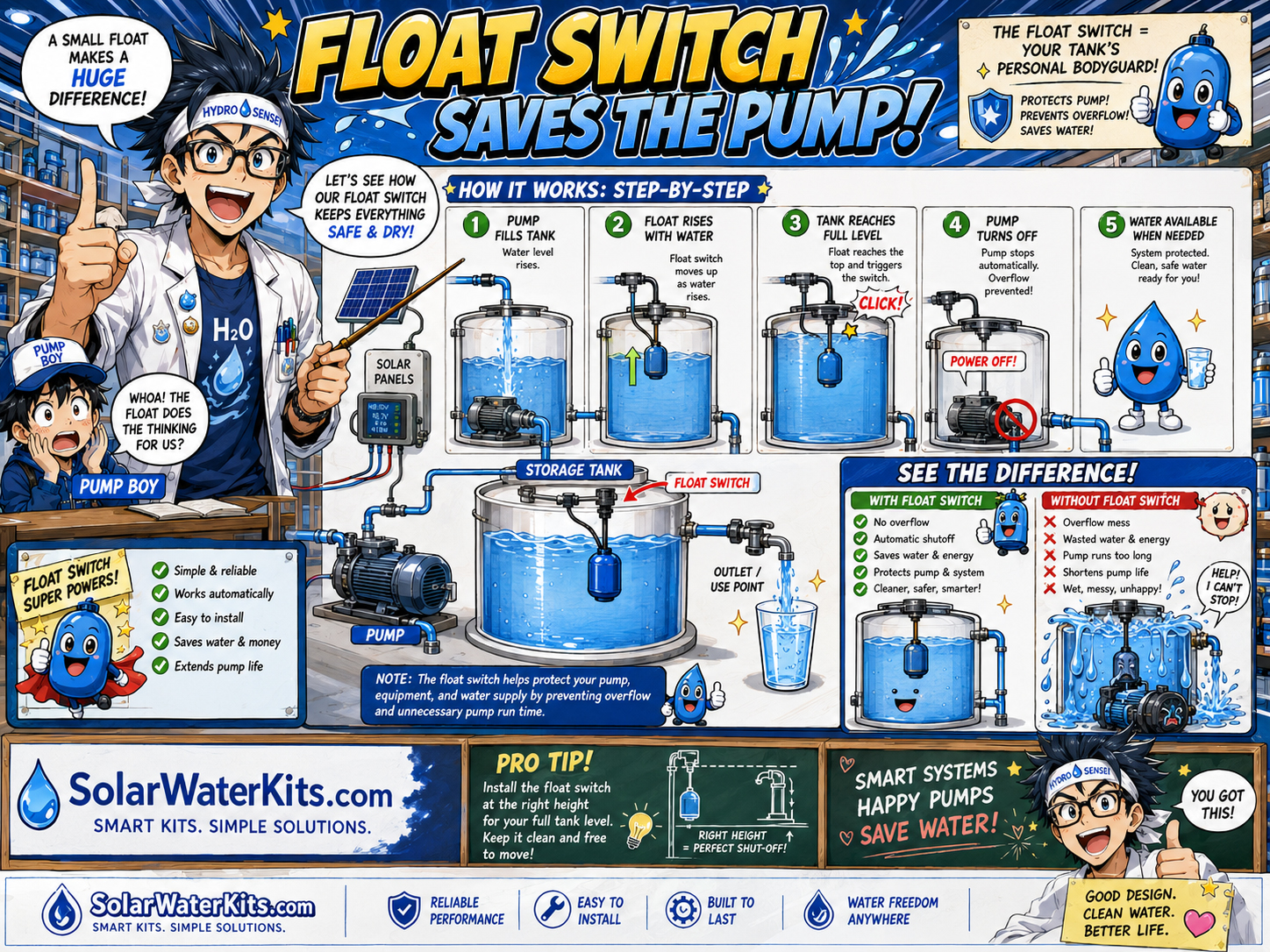
Prevents overflow and tells the system when storage has enough water.
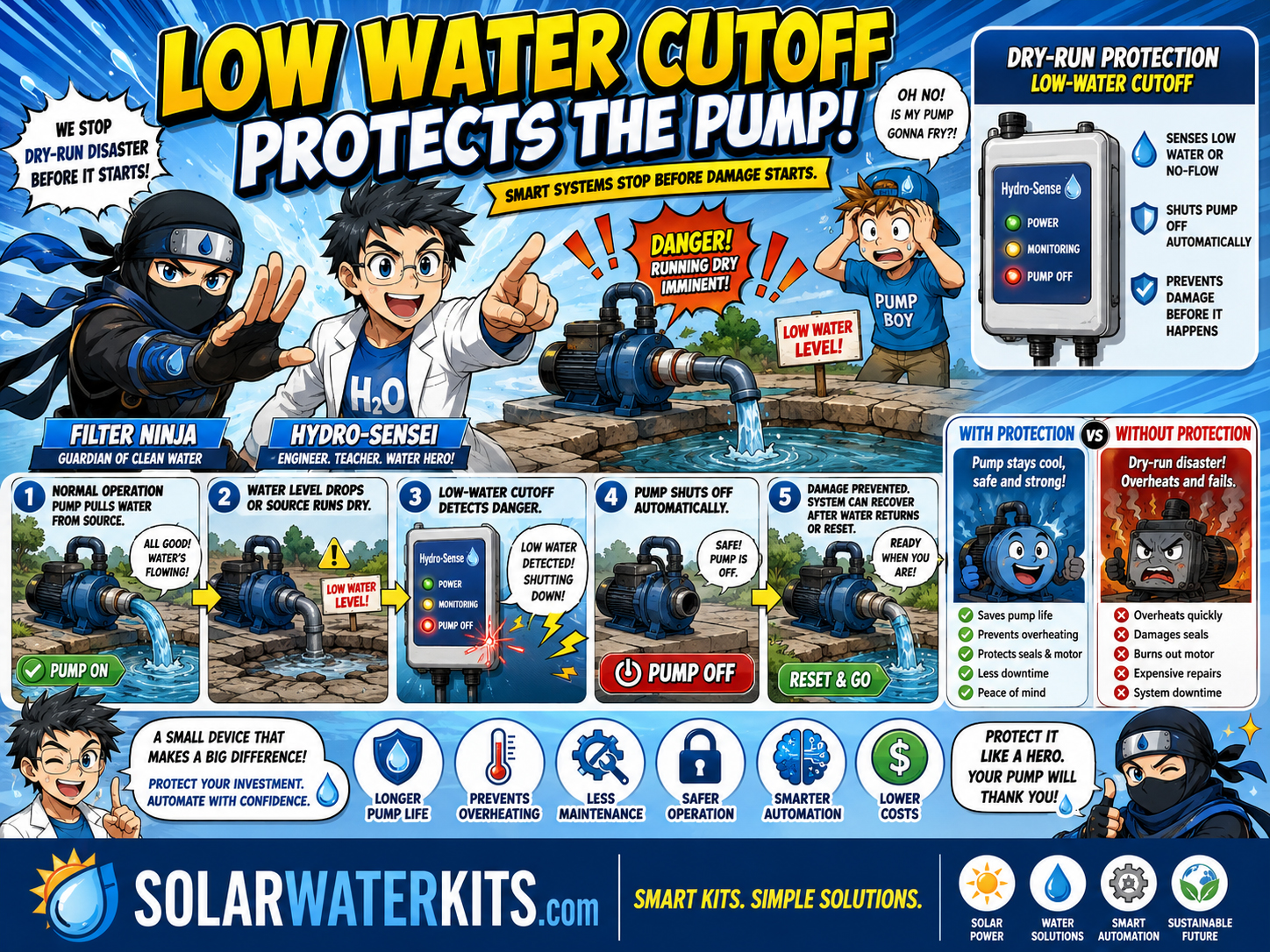
Protects the pump if the well level drops or the system detects unsafe pumping conditions.
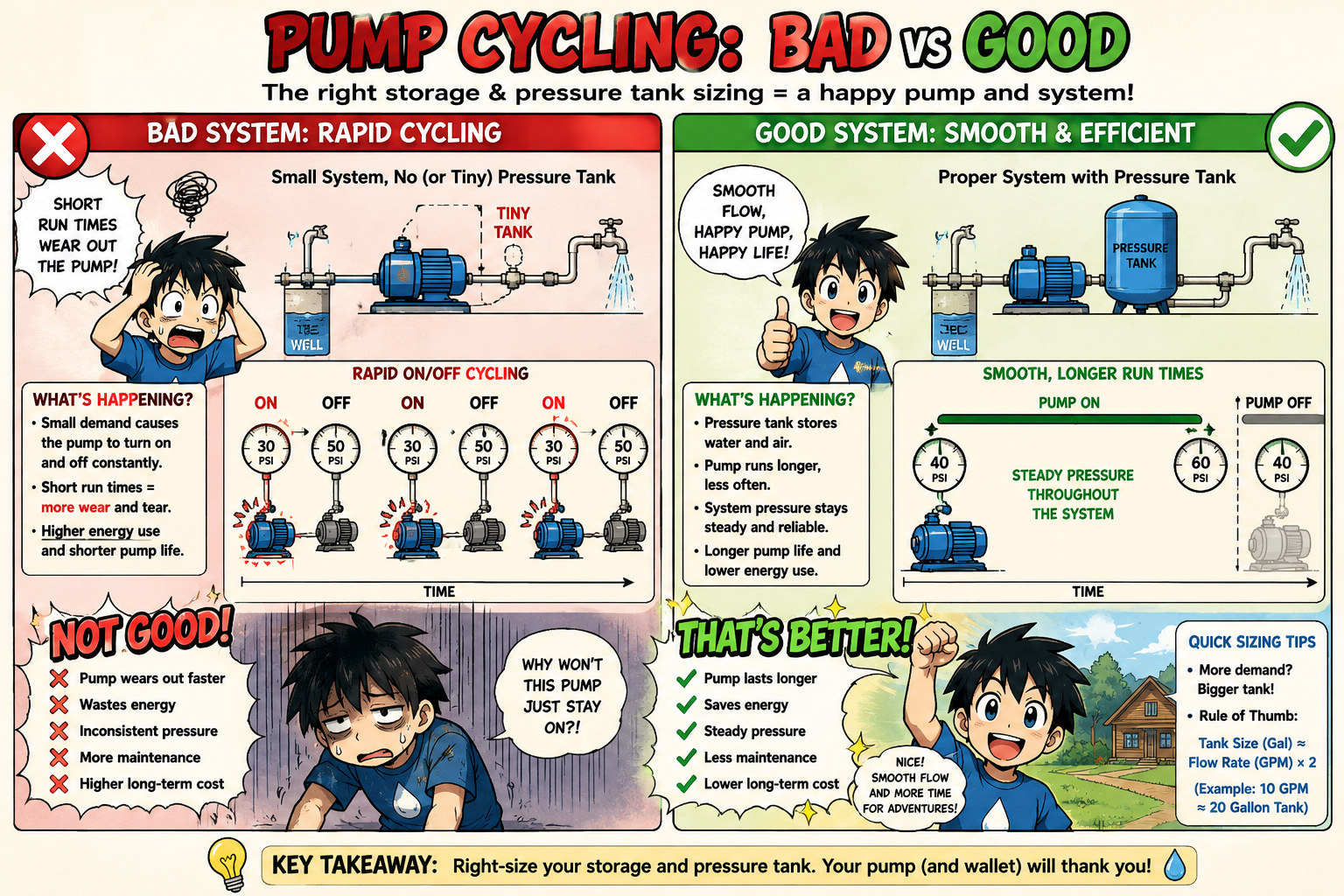
A properly sized pressure tank and controls reduce pump abuse from short-cycling.
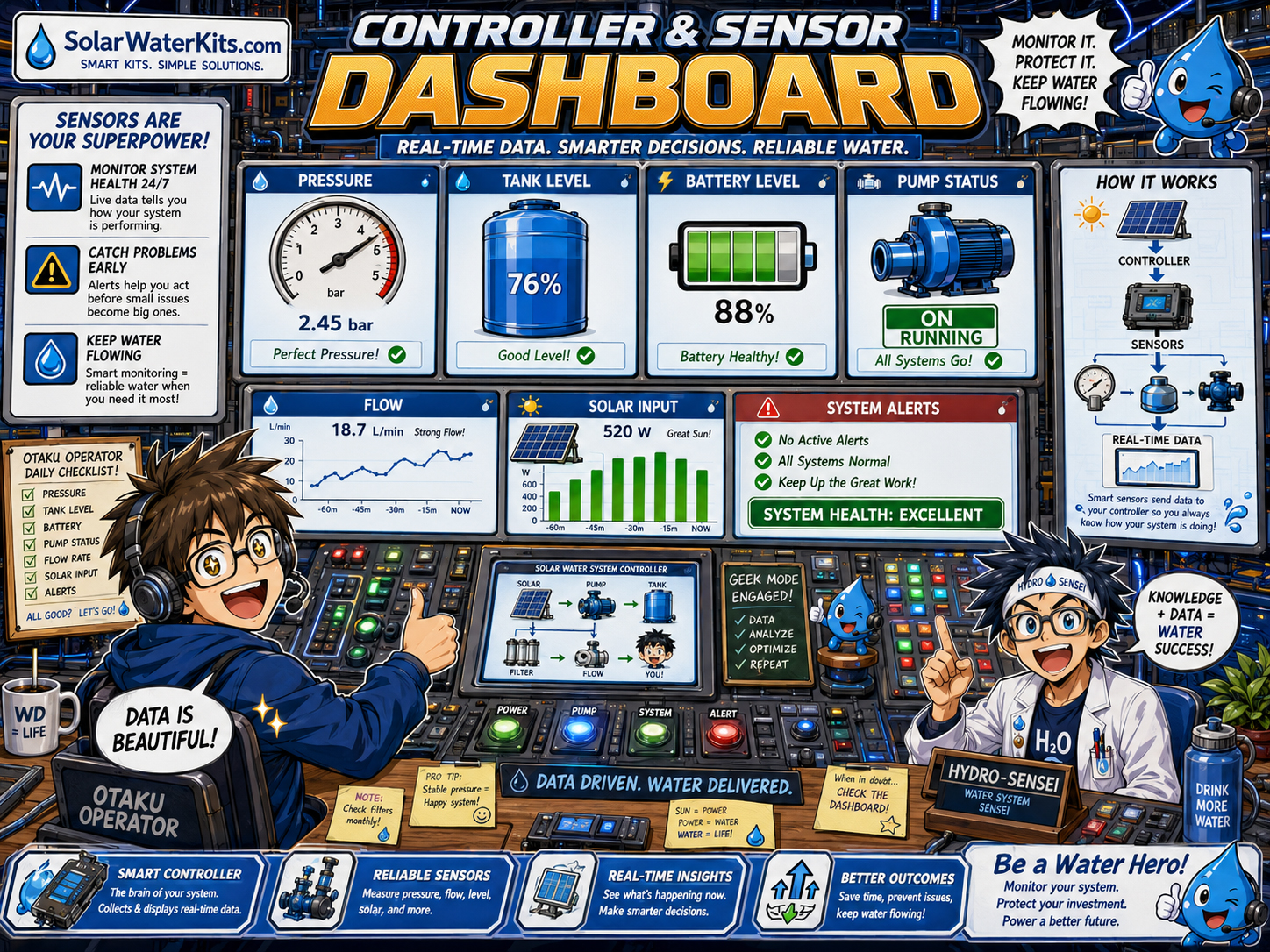
Tank level, pump state, battery state, pressure, and alarms make service easier.
A solar well pump moves water. It does not guarantee drinking-water quality. Well water may need testing, sediment filtration, disinfection, treatment, backflow protection, proper tank materials, and ongoing maintenance. Use local requirements and qualified water professionals.
These are conceptual patterns, not installation instructions. The actual design depends on the well, water demand, site conditions, and code.
Solar runs the well pump during good sun. Water fills a storage tank. A separate pressure system serves the home or ranch.
Solar and batteries support the well pump, booster pump, or pressure system so water can be available at night or during outages.
The well pump is treated as a critical load. A backup loads panel may support pump controls, communications, pressure, and essential water circuits.