Transfer pumping
A transfer pump moves rainwater from one tank to another, from a cistern to a day tank, or from collection storage to a use point.
Pumping BasicsRain falls for free, but a rainwater system is not free of design. Roof catchment, gutters, screens, cisterns, pumps, overflow, labels, filtration, sanitation, and local rules all matter before Tank-chan accepts the first drop.
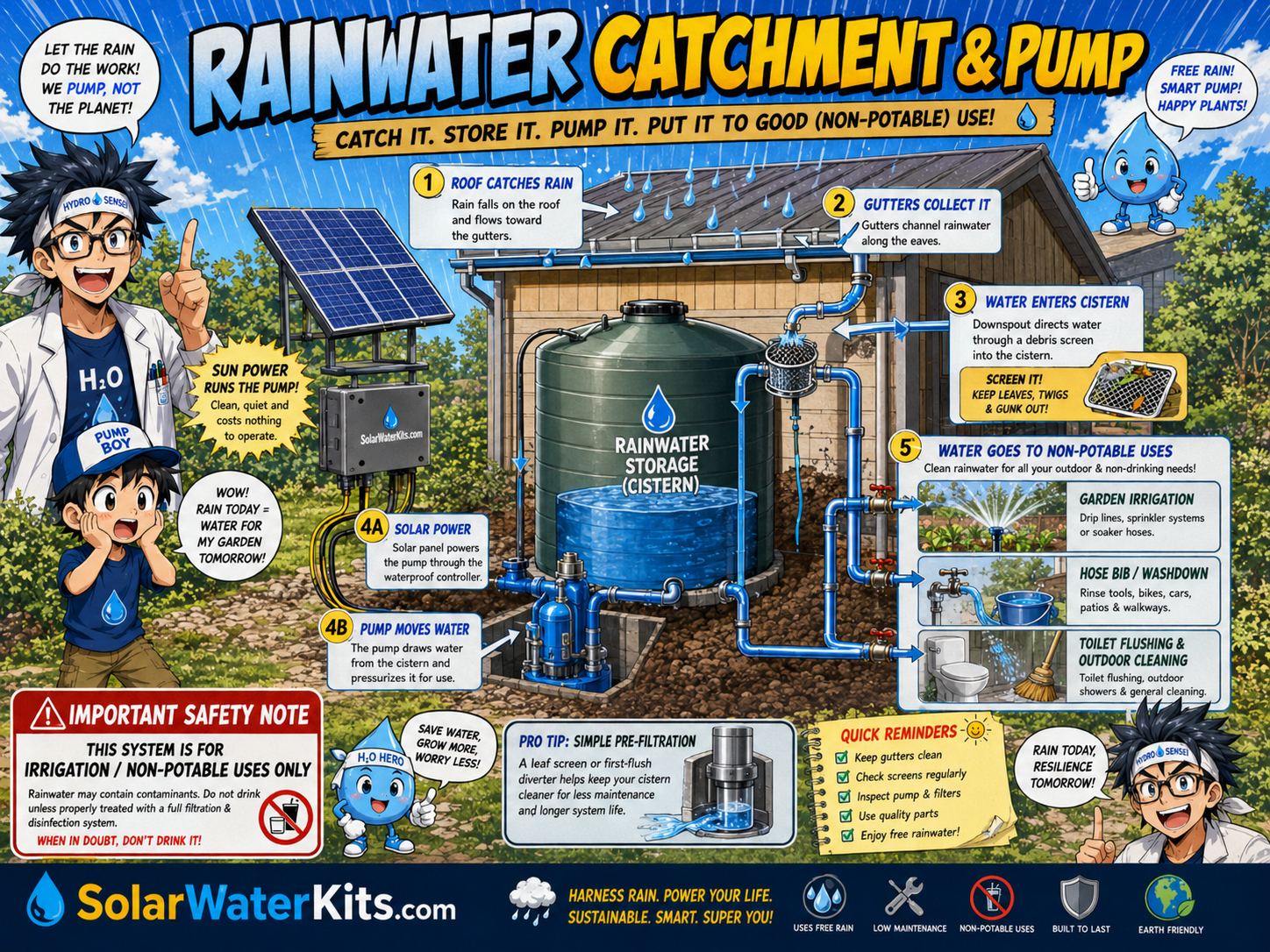
A rainwater system starts at the roof or catchment surface, then moves through gutters, screens, pre-filtration, storage, pump control, overflow, use point, and maintenance.
The path must be screened, labeled, maintained, and protected.
Rainwater pumping is usually about moving stored water. The correct pump depends on flow, pressure, lift, distance, filtration, controls, and intended use.
A transfer pump moves rainwater from one tank to another, from a cistern to a day tank, or from collection storage to a use point.
Pumping BasicsRainwater can support irrigation where allowed, but filters, pressure regulators, zones, emitters, and non-potable labels matter.
Solar IrrigationStored rainwater may support non-potable emergency utility water, washdown, or landscape use, but it should not be assumed potable.
Emergency Water
“If the tank has water, the pump can move it.”
Hydro-Sensei replies: “Only if the pump, pipe, filter, controls, and use case agree.”
| Question | Why It Matters | Filter Ninja Warning |
|---|---|---|
| What surface collects the rain? | Roof material, debris, animals, ash, dust, and coatings affect water quality. | Catchment surface affects treatment needs. |
| What is the intended use? | Irrigation, washdown, flushing, fire-readiness concepts, and drinking water have different rules. | Use category decides labels and treatment. |
| Is the water potable? | Potable use requires proper testing, treatment, plumbing, and local approval. | Do not assume rainwater is drinking water. |
| How is debris kept out? | Screens, pre-filtration, gutters, tank lids, and maintenance reduce contamination. | Leaves and bird waste are not design features. |
| Where does overflow go? | Overflow must avoid structures, slopes, erosion, neighbors, and electrical equipment. | Every tank needs an overflow plan. |
| How is the pump protected? | Low-water cutoff, float switches, filters, and dry-run protection protect equipment. | Empty tanks can kill pumps. |
| How is non-potable water labeled? | Users must not confuse rainwater outlets with drinking-water plumbing. | Label every outlet clearly. |
Roof runoff may carry dust, ash, bird droppings, insects, leaves, pollen, roof material residue, and tank contamination. A solar pump does not change that.
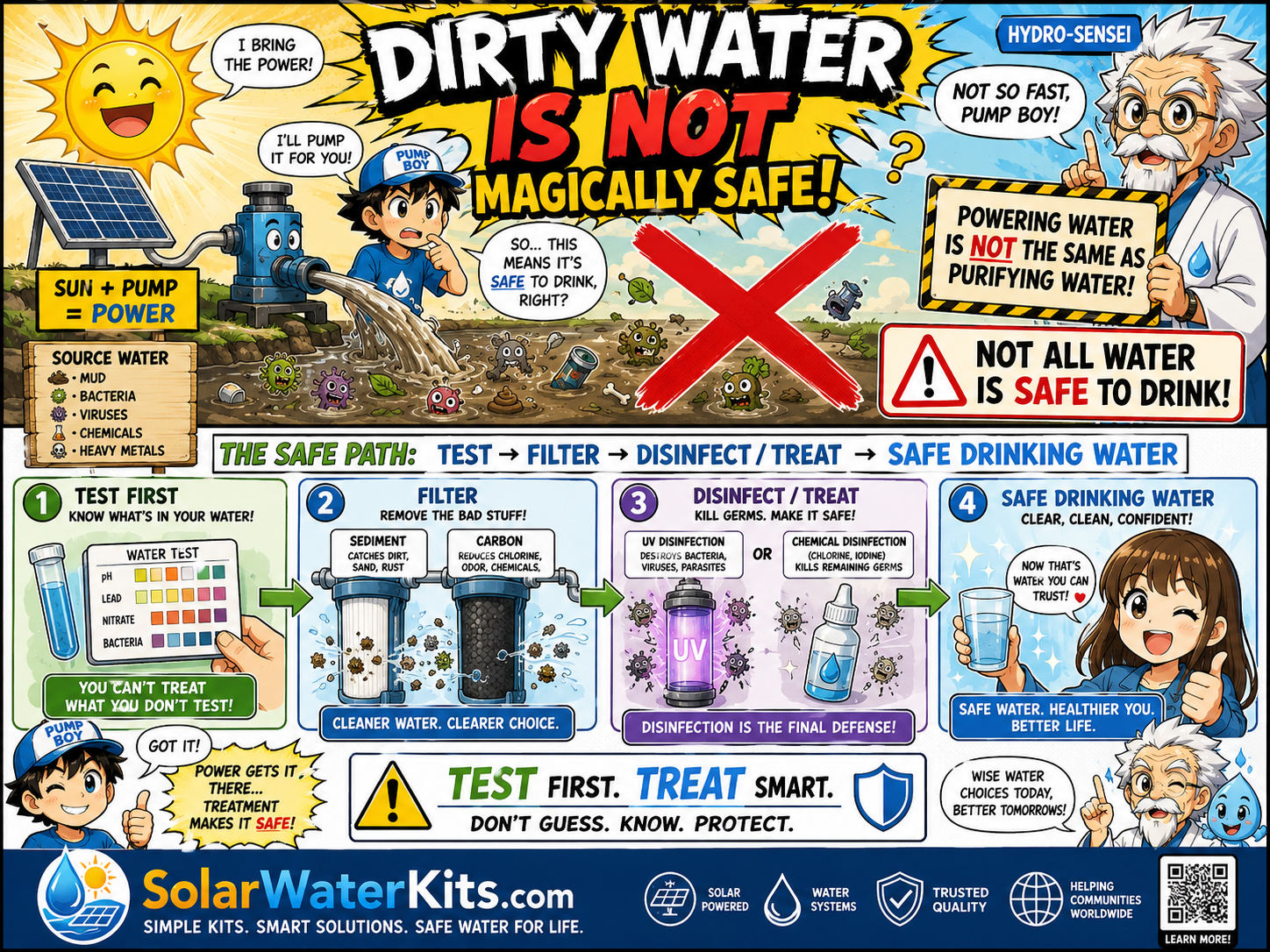
Testing and treatment depend on source, storage, and intended use.
“The sky may be clean. Your roof, gutter, tank, hose, and bucket may not be.”
Rainwater systems need control logic so pumps do not run dry, tanks do not overflow into bad places, and users know when water is available.
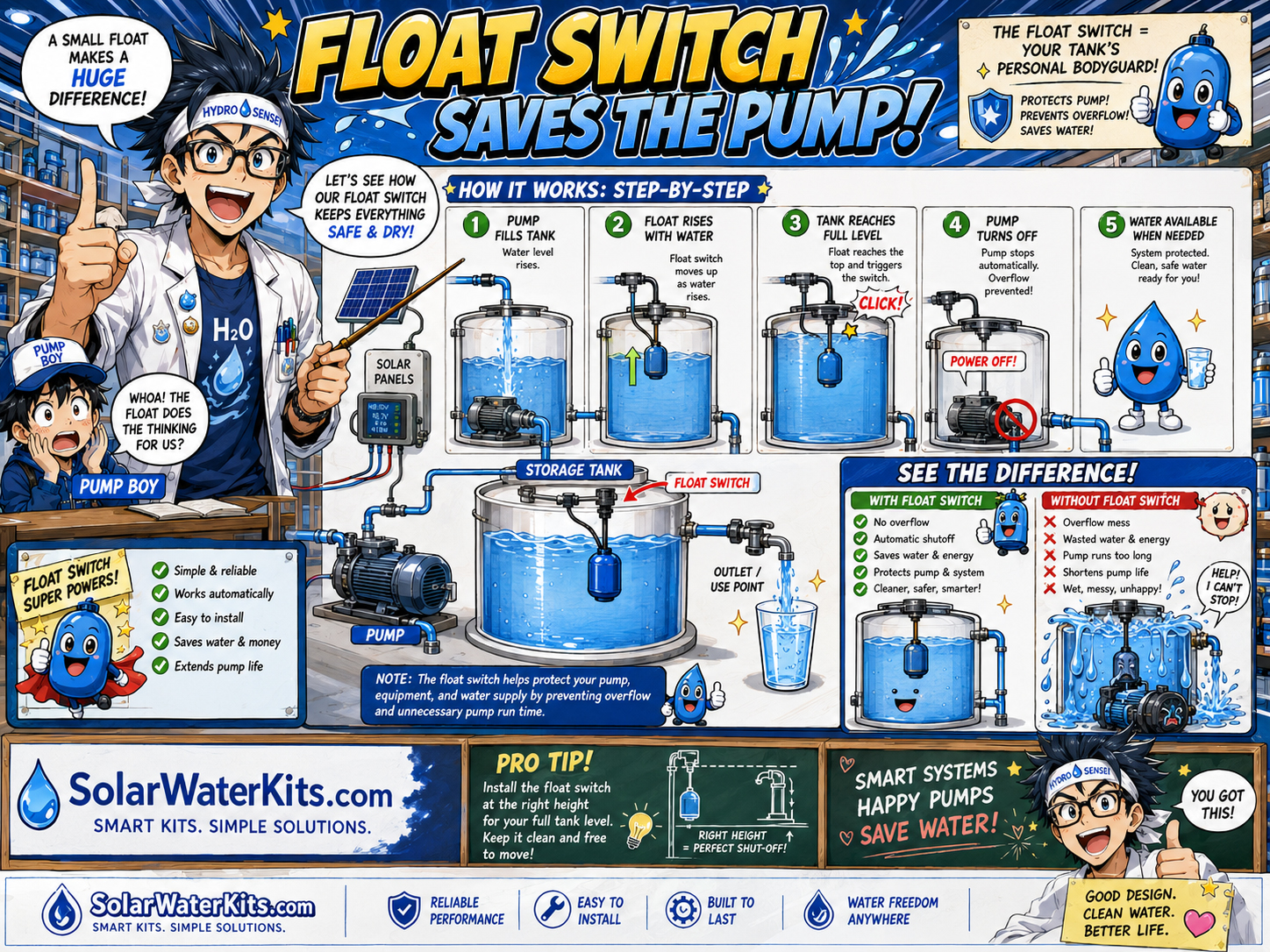
Float switches can stop filling, trigger pumping, or protect pumps from low tank levels.
Controls
Pumps should not run against empty storage unless designed for that condition.
Sensors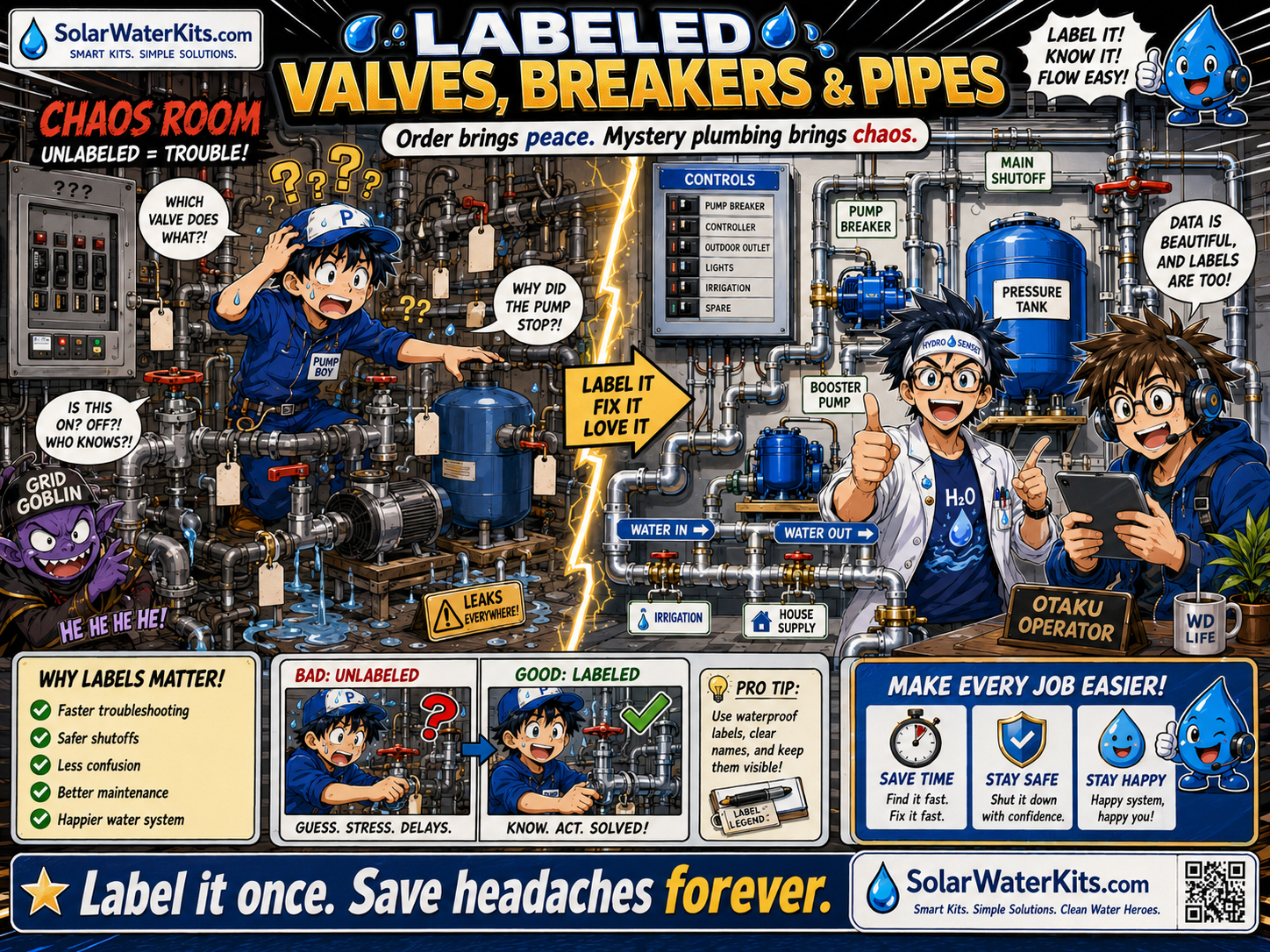
Rainwater outlets should be clearly labeled by use category and safety status.
Maintenance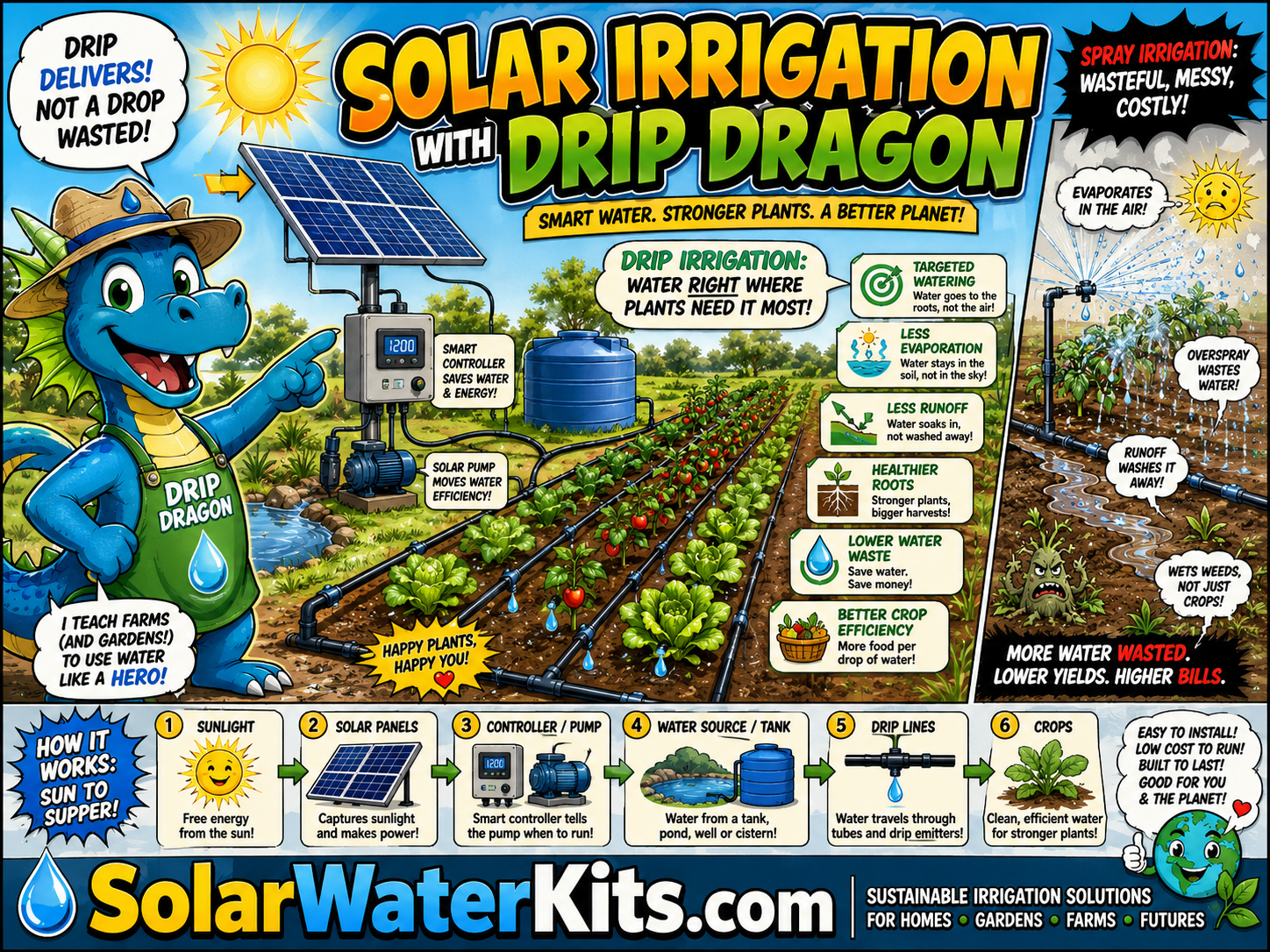
Rainwater can support irrigation where allowed, with filtration, pressure, zones, and labels.
Irrigation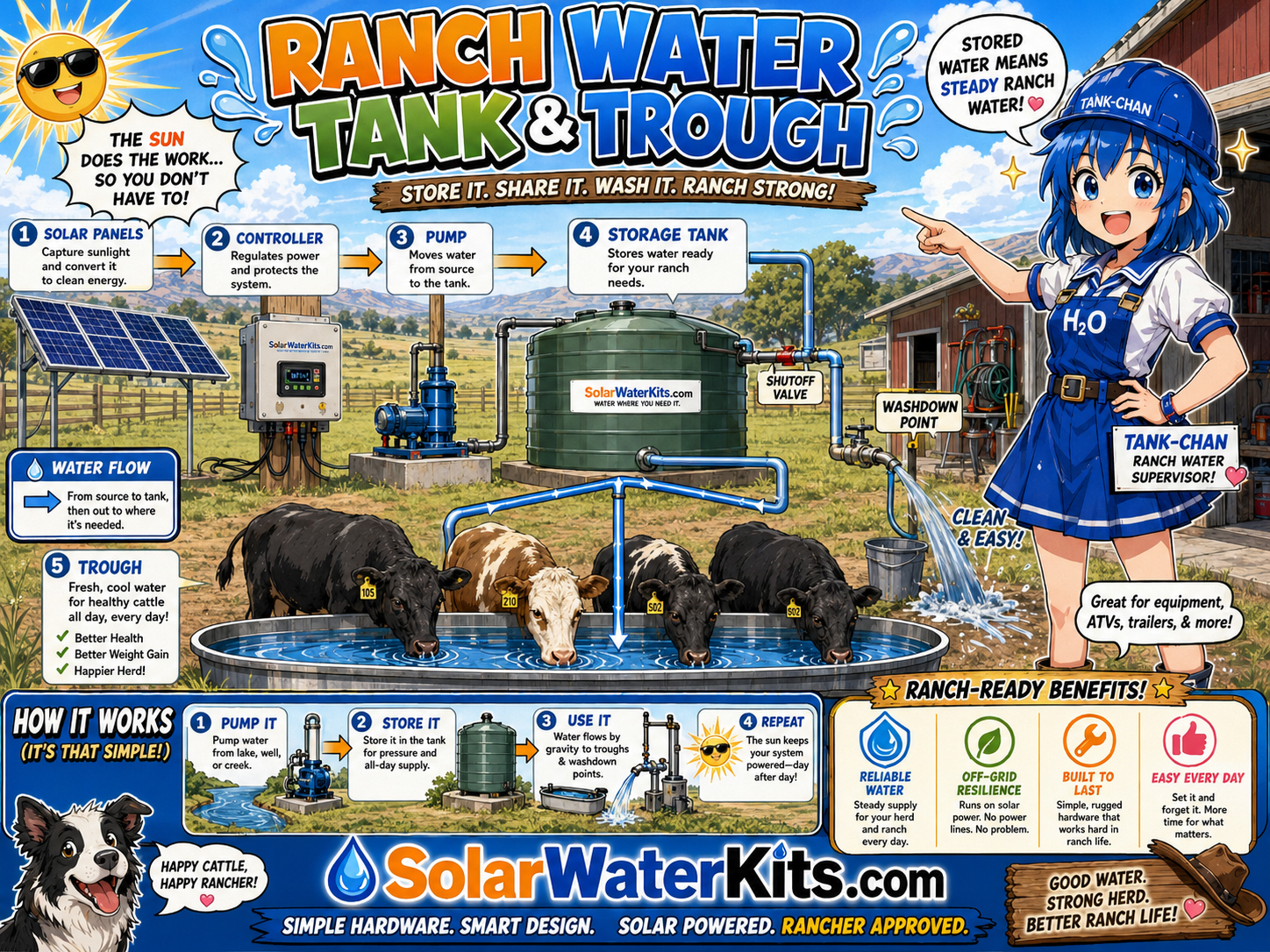
Rainwater may support washdown or utility needs where appropriate and clearly separated.
Ranch Water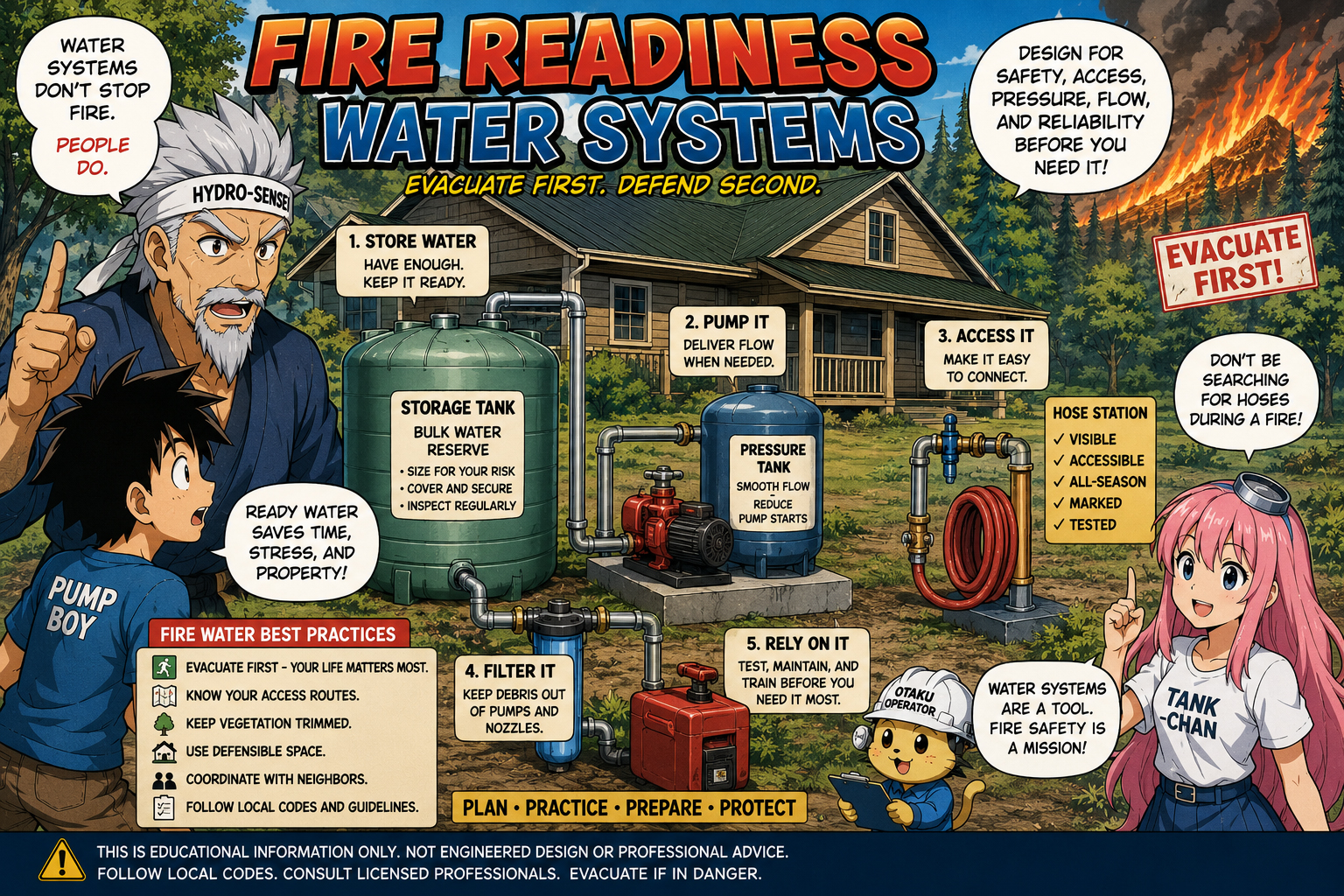
Stored rainwater may support readiness concepts, but it is not a substitute for fire-code systems or evacuation.
Fire ReadinessThe roof, gutters, screens, tank, pump, filters, labels, and overflow all need routine inspection. Rainwater systems become gross quietly.
“A rainwater tank is not maintained by weather. It is maintained by humans with checklists.”
Real rainwater systems may involve roof catchment, cisterns, tanks, pumps, filters, electrical equipment, potable-water rules, non-potable labels, backflow protection, cross-connection control, overflow routing, structural support, stormwater rules, permits, inspections, and health guidance.