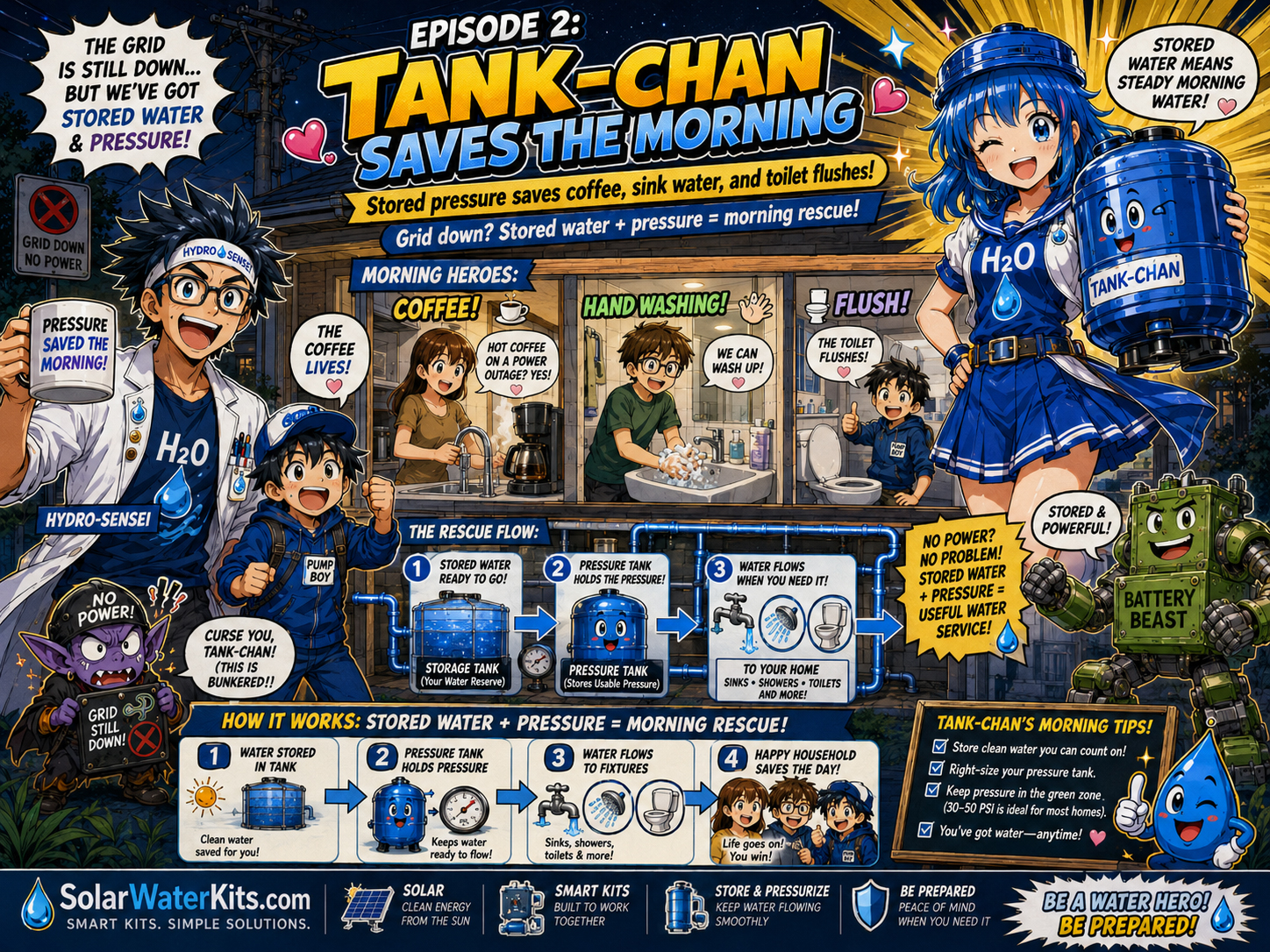
Night arrives
The house goes dark again. The pump wants power. The pressure tank wants support. The family wants water. Battery Beast cracks his knuckles and steps toward the critical-load panel.
Solar panels feed the battery all day. Night falls. Grid Goblin smiles in the dark. Battery Beast steps forward to power the water system — until Hydro-Sensei opens the runtime notebook.
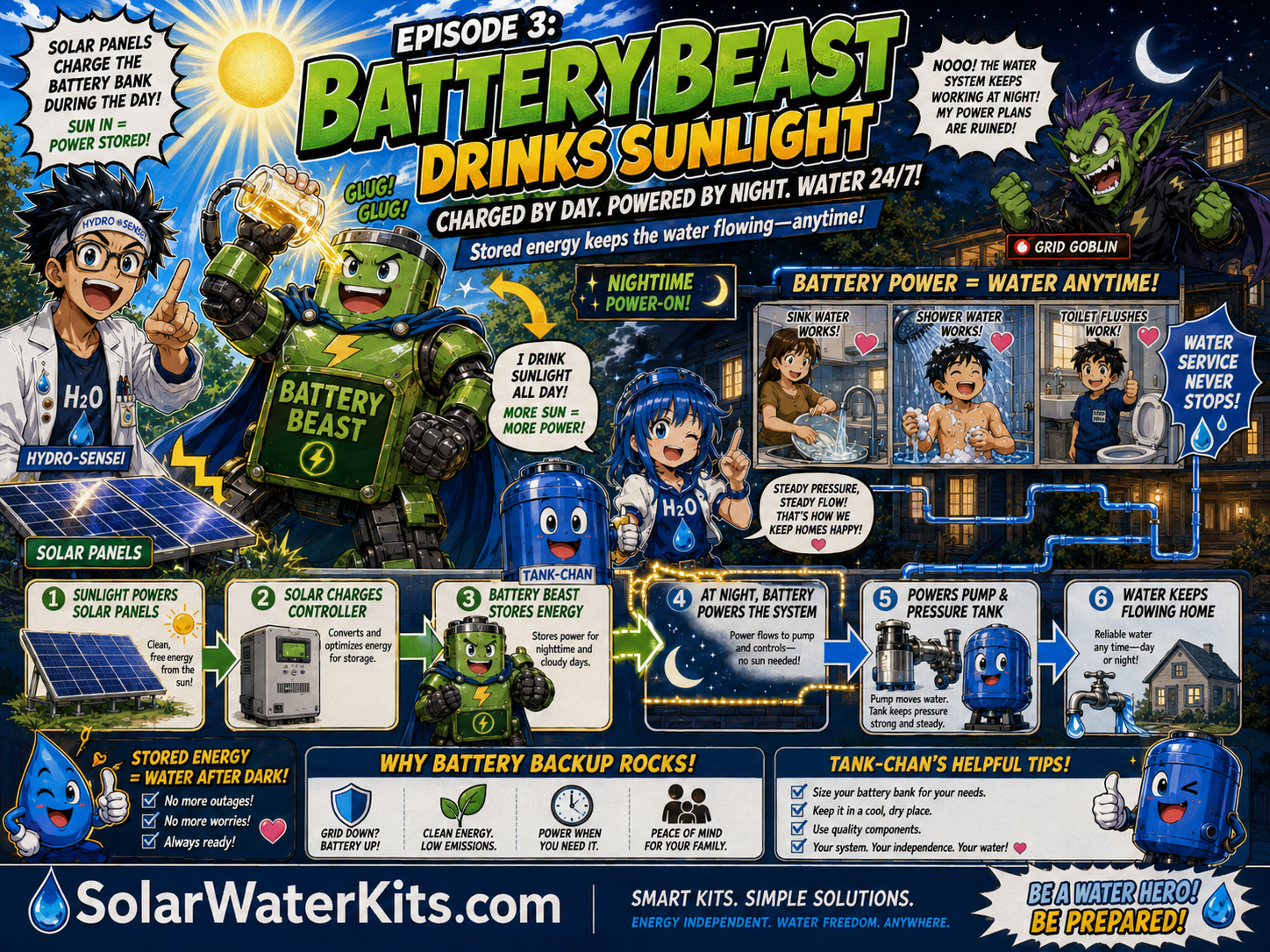
Episode 3 teaches the core battery-backup lesson: stored electricity can support water, but only when loads, runtime, surge, storage, and priorities are honest.
Daytime solar becomes nighttime water support — if the system is sized correctly.
All afternoon, Battery Beast sits beside the inverter, eating golden sunlight from the solar panels. He grows bigger, brighter, and more confident.
Pump Boy cheers anyway. Grid Goblin hides behind the utility pole, waiting for sunset.
The house goes dark again. The pump wants power. The pressure tank wants support. The family wants water. Battery Beast cracks his knuckles and steps toward the critical-load panel.
The pump starts with a heavy electrical gulp. Battery Beast staggers backward. “That was not running power,” Hydro-Sensei says. “That was starting surge.”
Pump Boy writes a list: shower, hose, pool pump, irrigation, laundry, and “maybe a fountain.” Battery Beast slowly lowers his sunglasses.
Hydro-Sensei draws four boxes: pump watts → surge → runtime → battery reserve.
The household crosses out nonessential loads. Essential water gets priority.
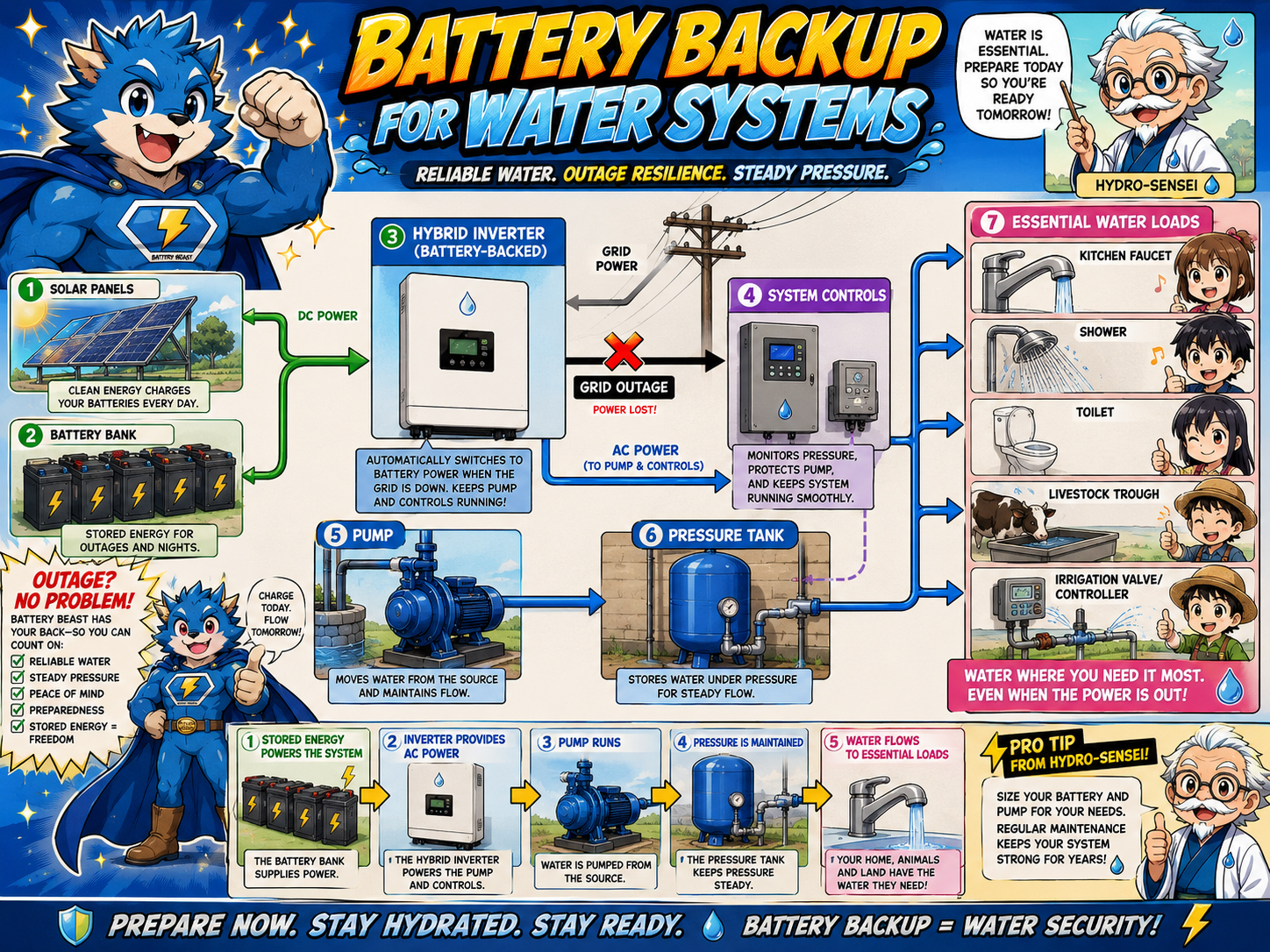
Battery, inverter, pump, controls, pressure tank, and essential loads must match.
Tank-chan explains that stored pressure and stored water can reduce unnecessary pump starts. Battery Beast nods. “Fewer starts, fewer gulps.”
Otaku Operator labels the critical-load panel: well pump, booster pump, controls, communications. The pool pump is politely uninvited.
Essential water continues. Grid Goblin fumes. Battery Beast smiles, but keeps one eye on the state-of-charge meter.
Battery-backed water systems must be designed around actual pump loads, motor surge, inverter capacity, battery capacity, controls, pressure behavior, and emergency priorities.
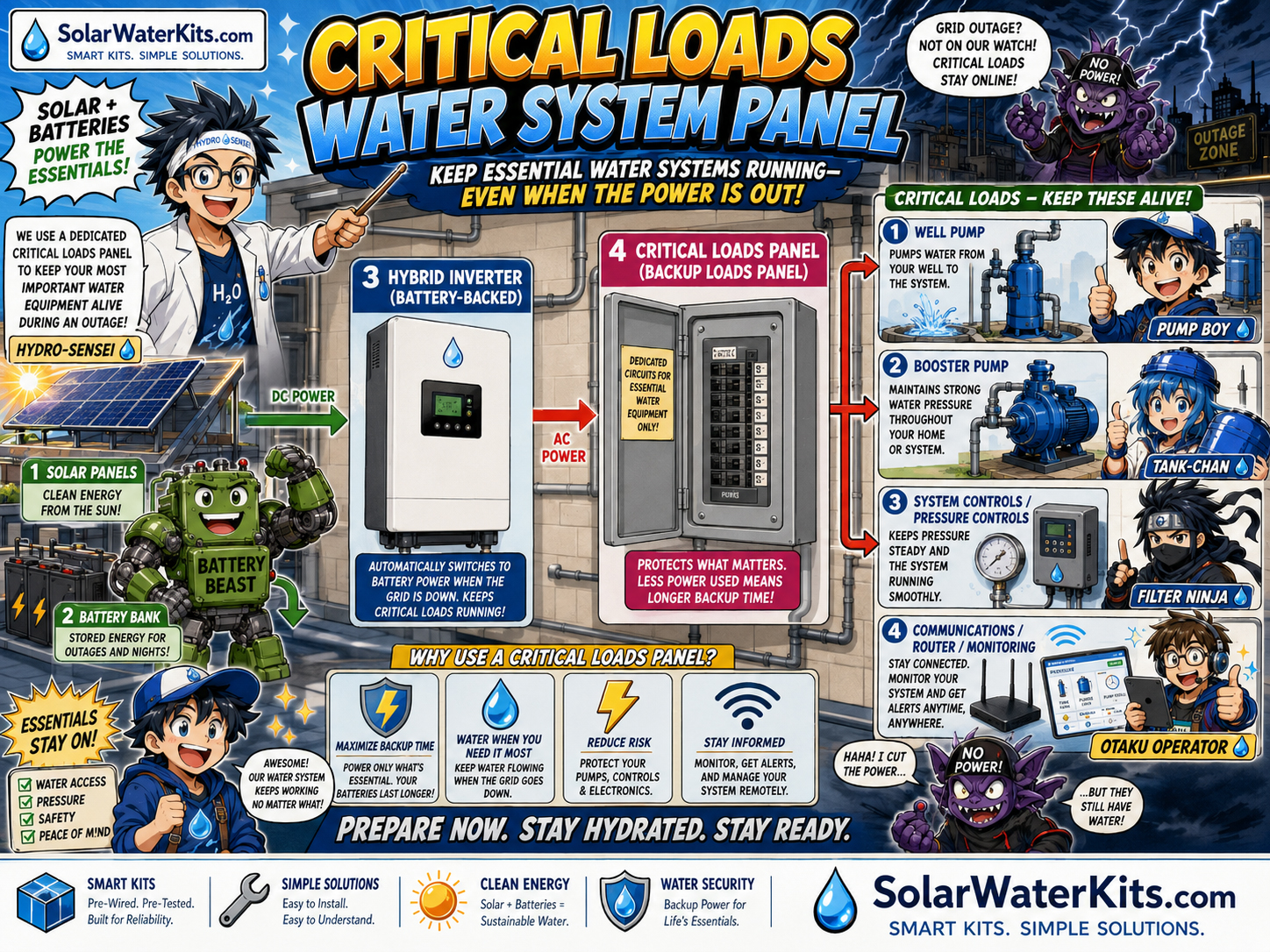
A clean critical-load panel helps keep battery backup focused on the water jobs that matter.
Critical Loads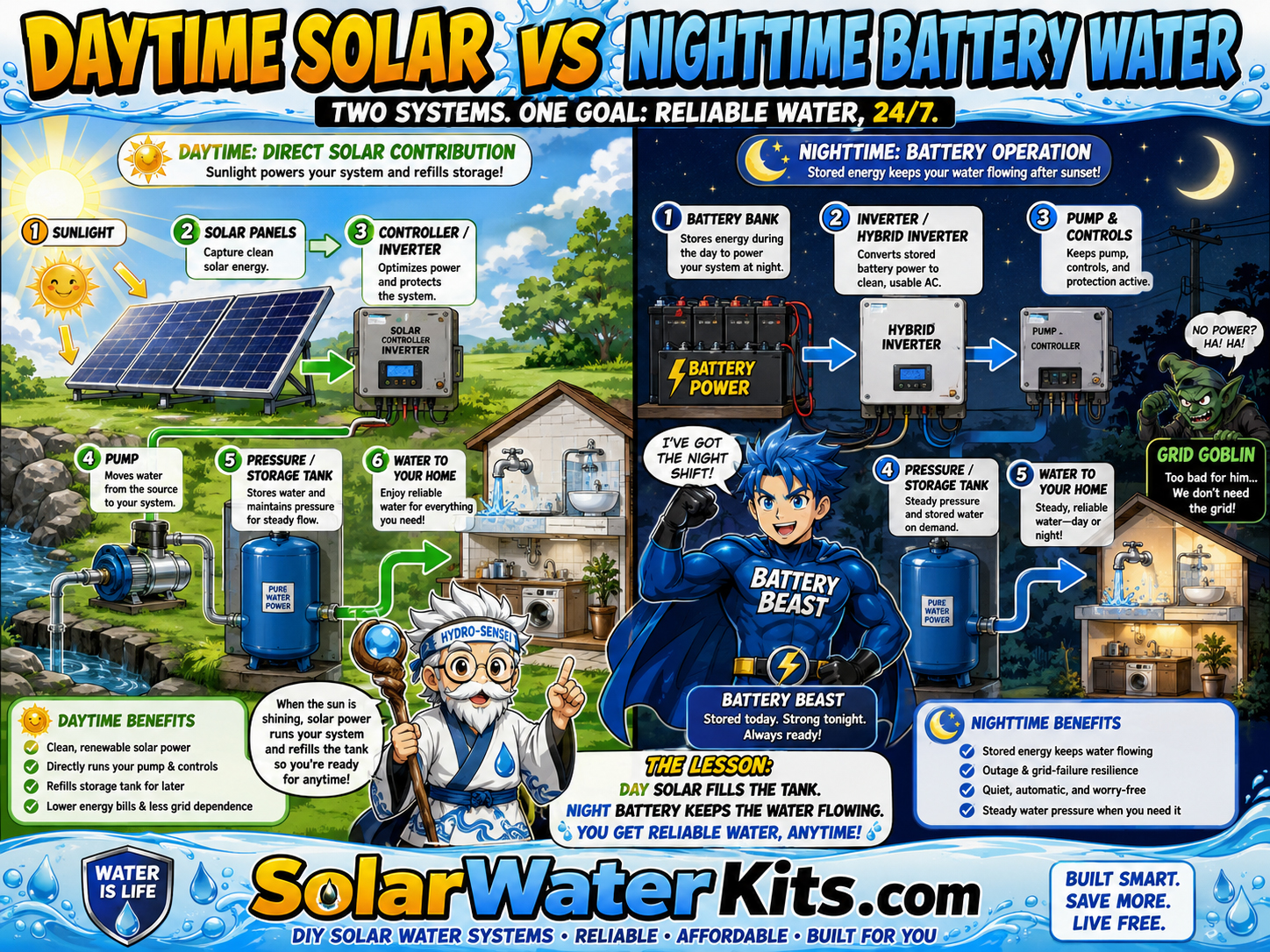
Daytime solar can recharge batteries or run pumps. Nighttime water draws from stored energy or stored water.
Battery Backup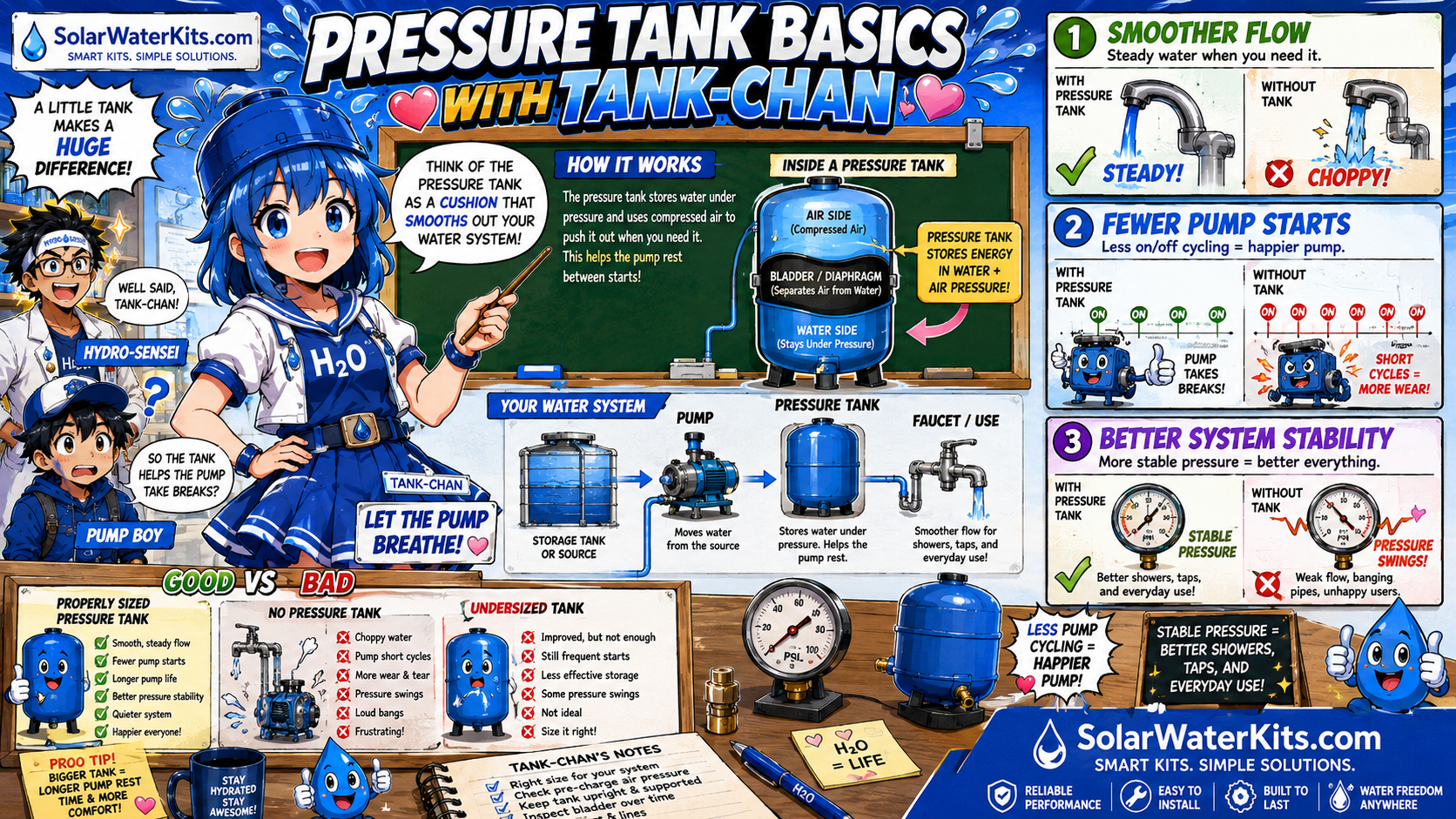
Pressure tanks can reduce short-cycling and help a battery-backed pump system behave more calmly.
Pressure Tanks| Backup Design Question | Why It Matters | Battery Beast Warning |
|---|---|---|
| What pump is being backed up? | Well pump, booster pump, transfer pump, and pressure pump may have different loads. | Do not say “the pump” until you know which pump. |
| What is the starting surge? | Motors may require more power to start than to run. | An inverter may run lights but fail to start a pump. |
| How long must it run? | Runtime determines battery energy needed. | Minutes matter. Hours matter more. |
| What water uses are essential? | Essential loads preserve battery and stored water. | Do not back up comfort loads before survival loads. |
| Is there stored water? | Water storage can reduce how often the pump must run. | Sometimes storing water beats storing more electricity. |
| Are controls and labels clear? | People must know what the backup system powers. | Mystery panels drain batteries and patience. |
I can carry the night. I cannot carry bad math.
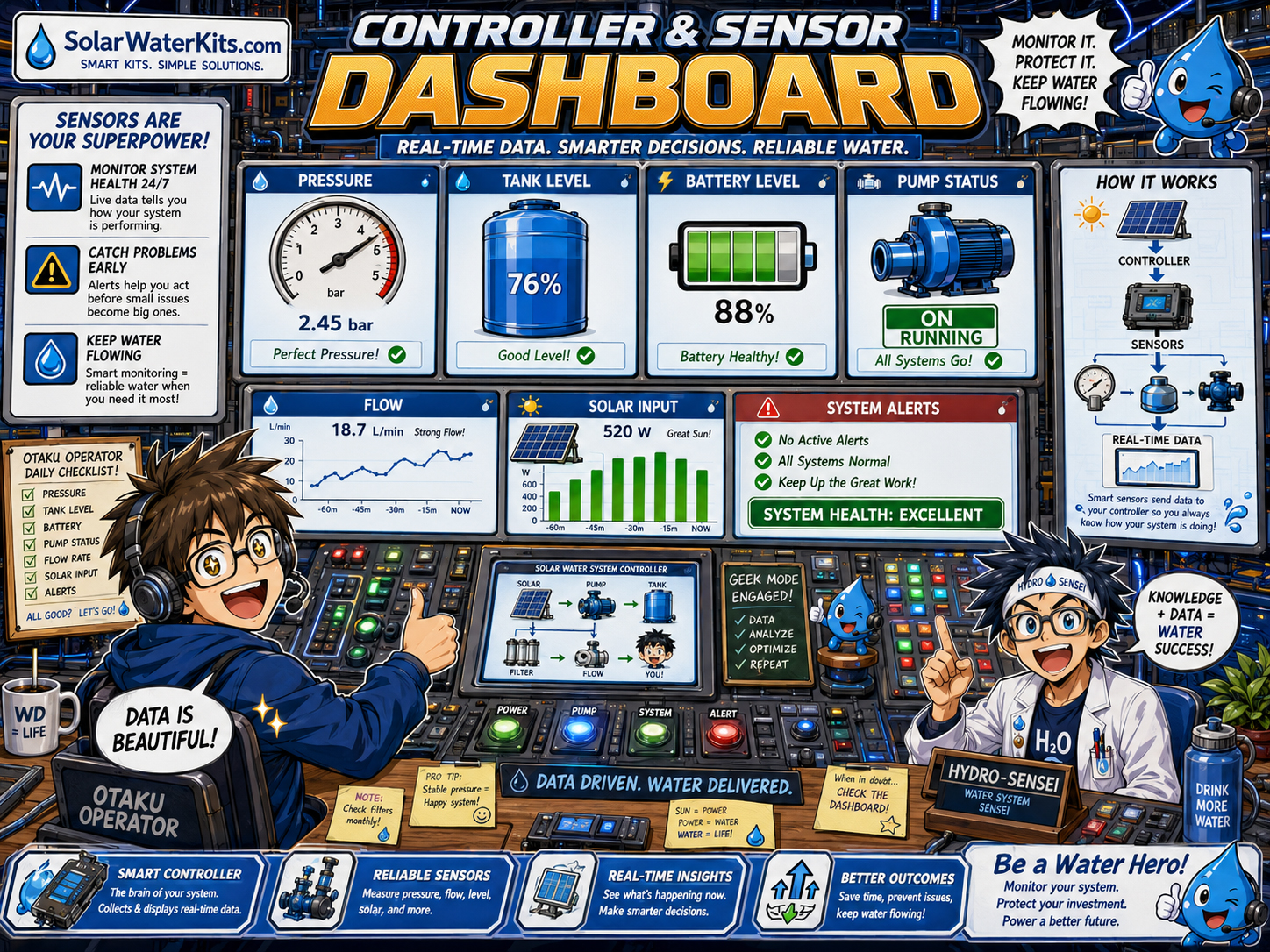
State of charge, pump status, tank level, pressure, and alarms should be visible.
The battery is not there to pretend nothing happened. It is there to keep the important things working while the grid is unavailable and water use is disciplined.
Pump Boy: “Can Battery Beast run everything?”
Hydro-Sensei: “Only in bad advertising.”
Real battery-backed water systems may involve batteries, inverters, solar arrays, electrical panels, pumps, wet locations, grounding, disconnects, overcurrent protection, pressure tanks, potable-water plumbing, filters, backflow protection, permits, and inspections.
Grid Goblin goes after the well pump directly. Hydro-Sensei teaches why well water, storage, battery backup, and pressure delivery must be mapped as one system.
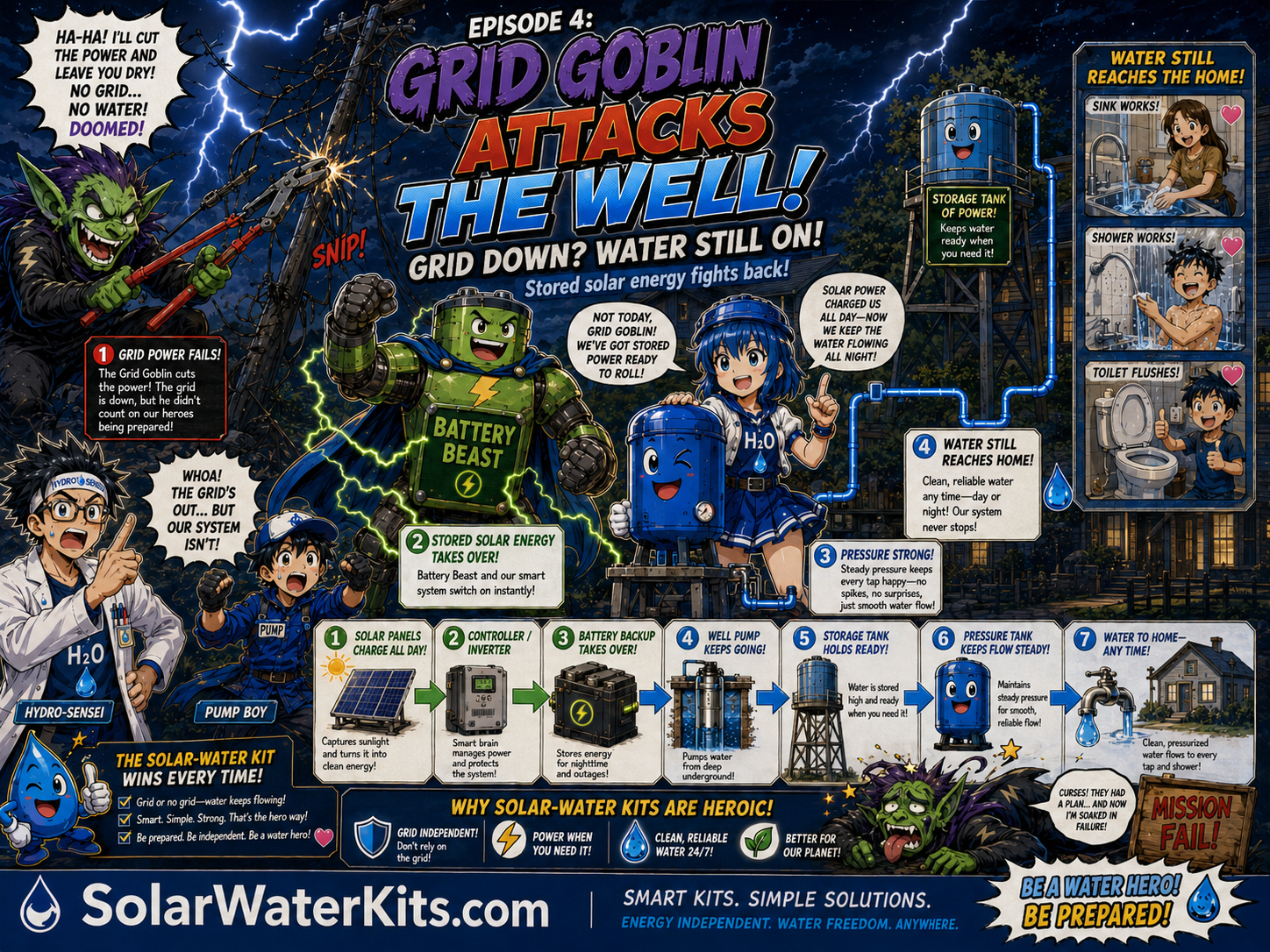
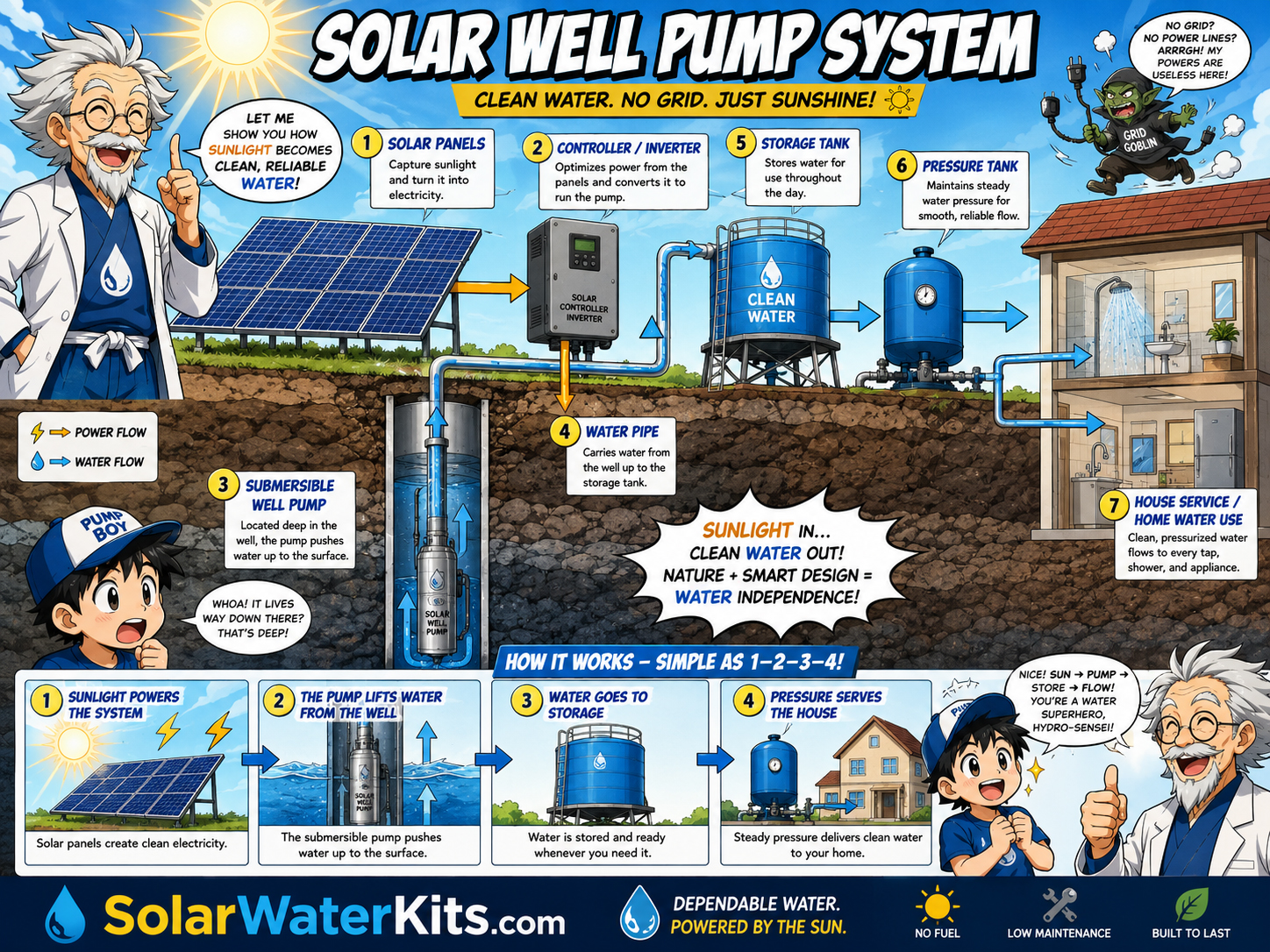
Well depth, storage, pressure, controls, and outage planning.
Well Pumps