Thermal-side parts
- Solar thermal collector or heat exchanger.
- Hot-water storage tank.
- Circulation pump or thermosiphon design.
- Temperature sensors and controller.
- Freeze protection and overheating protection.
Hot water is where sunlight gets cozy. Hydro-Sensei explains the big choice: solar thermal captures heat directly, while PV-powered electric systems make electricity that can support water heaters, heat pumps, pumps, and controls.
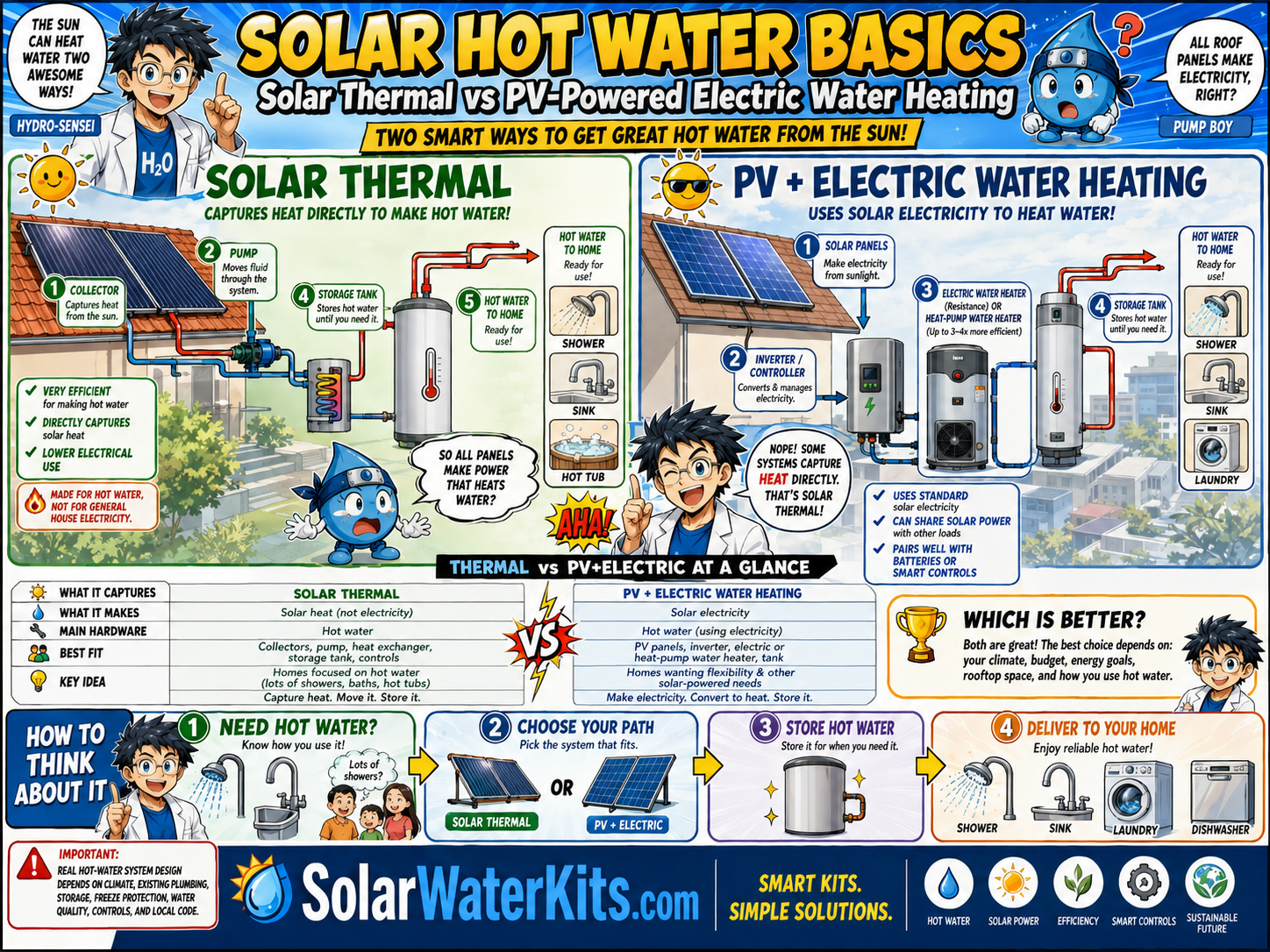
Both can be part of a solar hot water strategy. The right choice depends on roof space, climate, existing equipment, maintenance tolerance, plumbing complexity, backup heating, and whether you want heat directly or electricity first.
One captures heat. One makes electricity. Both need smart design.
Collectors absorb sunlight as heat and transfer that heat into water or a heat-transfer loop.
Solar panels make electricity that can support an electric tank, heat-pump water heater, controls, or pumps.
Hot water is usually stored in a tank. Tank size, insulation, temperature, and backup heat all matter.
Mixing valves, temperature controls, pressure relief, expansion, freeze protection, and maintenance are not optional details.
Pump Boy thinks “hot water is just hot water.” Hydro-Sensei points to the whiteboard. The equipment path changes everything.
| Approach | How It Works | Strengths | Watch Out For |
|---|---|---|---|
| Solar Thermal | Sun heats a collector, then heat transfers into water or a storage tank. | Direct use of heat; can be efficient for hot-water production. | Plumbing complexity, freeze protection, stagnation, leaks, maintenance. |
| PV Electric Tank | Solar electricity offsets or powers electric resistance heating. | Simpler electrical integration; no rooftop fluid loop. | Resistance heat can use a lot of energy; timing and controls matter. |
| PV + Heat Pump Water Heater | PV electricity supports a heat-pump water heater. | Can be much more efficient than resistance heating. | Location, air temperature, noise, condensate, space, backup mode. |
| Hybrid Strategy | Combines solar, storage, backup heat, timers, and controls. | Flexible and resilient when designed carefully. | More parts means more design discipline. |
Solar hot water is not just about making water hot. It is about making enough hot water, at the right time, safely, without wasting energy or creating plumbing hazards.
Whether the system is solar thermal or PV-powered, the supporting parts decide whether it is safe, reliable, serviceable, and useful.
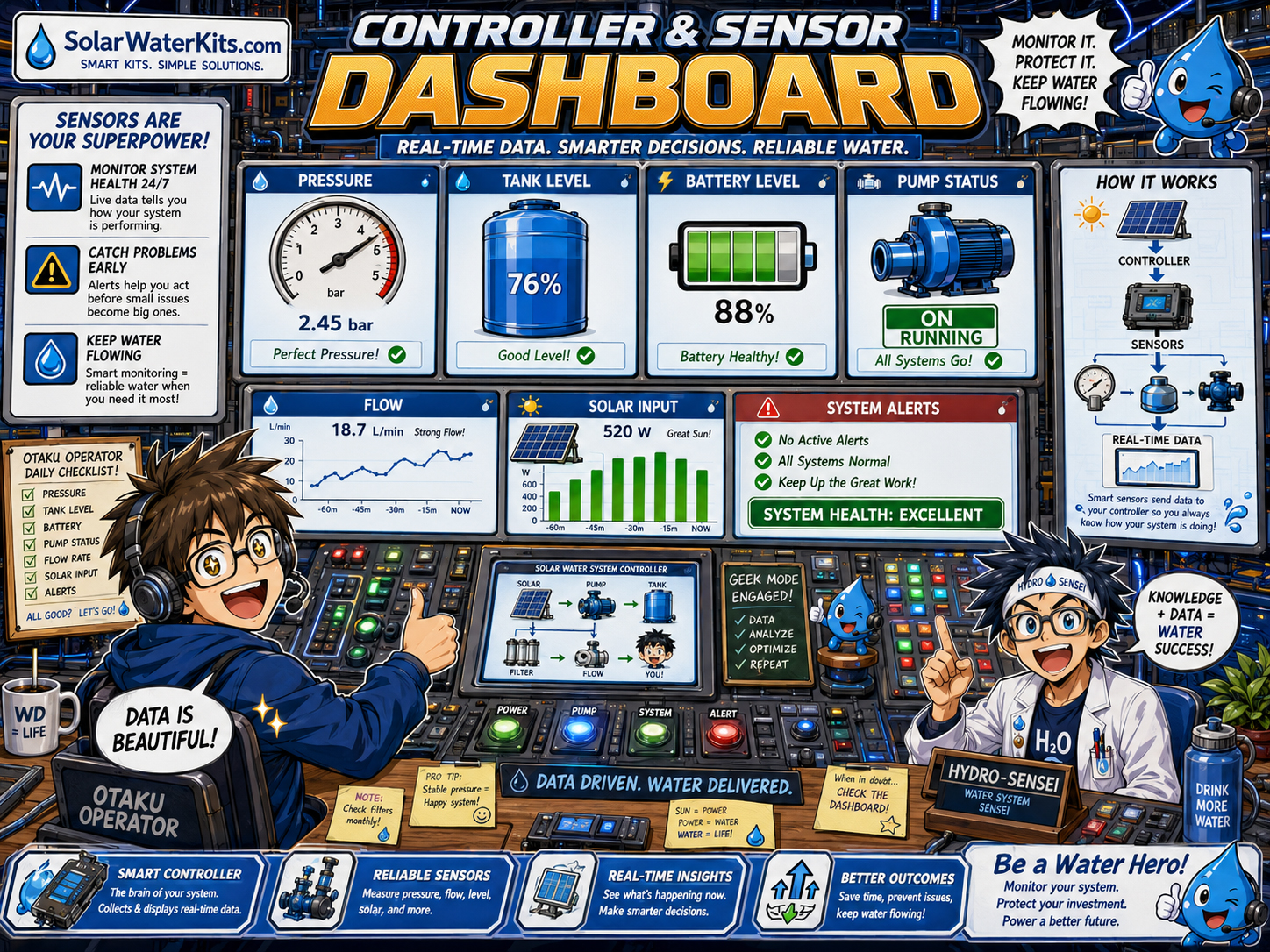
Temperature, tank status, power status, and alarms matter.
A shower, kitchen sink, laundry load, radiant floor, livestock washdown, spa, and commercial use all have different temperature, volume, timing, and safety requirements.
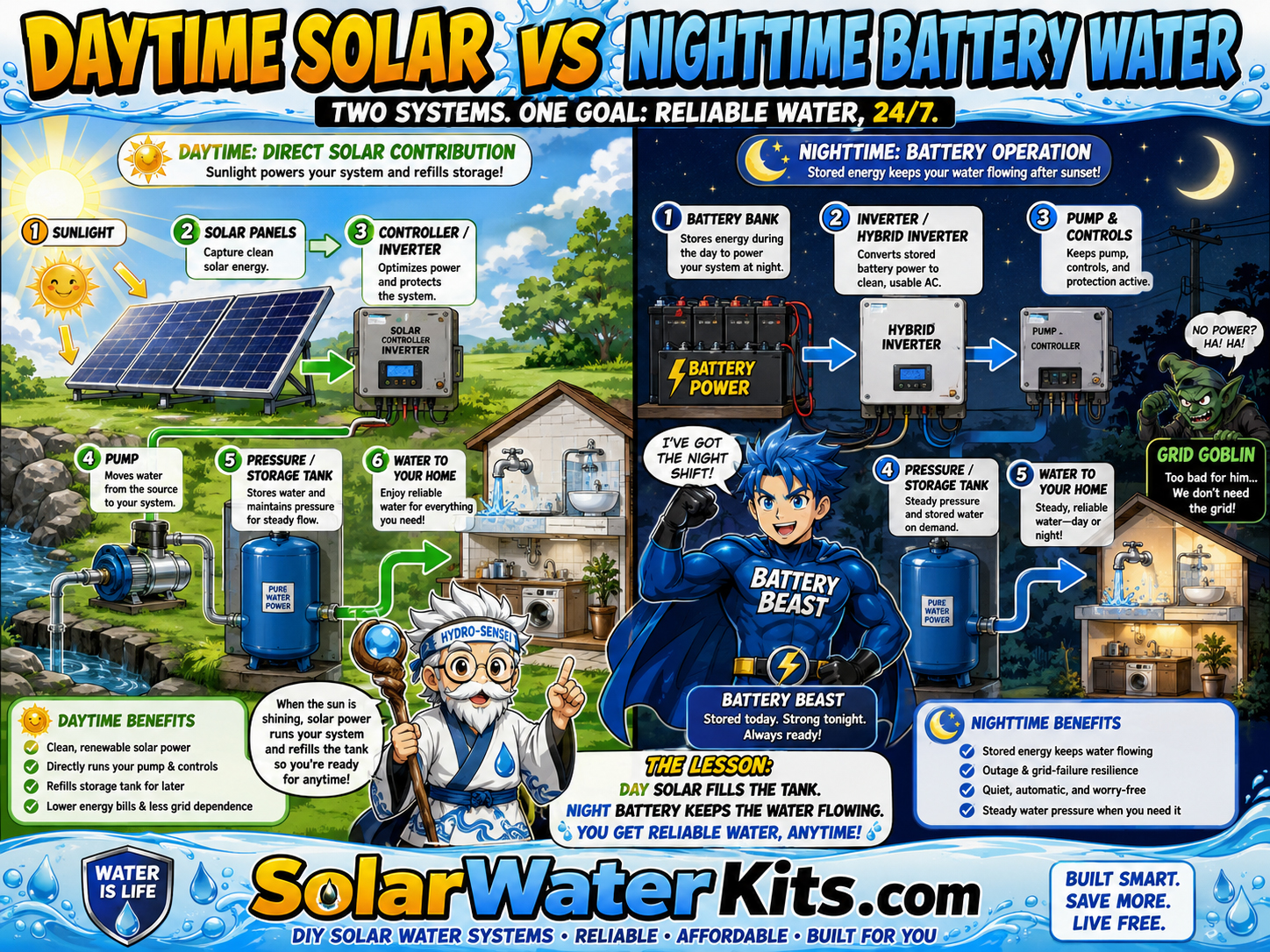
Morning showers, evening dishes, daytime commercial use, and nighttime demand each change the strategy.
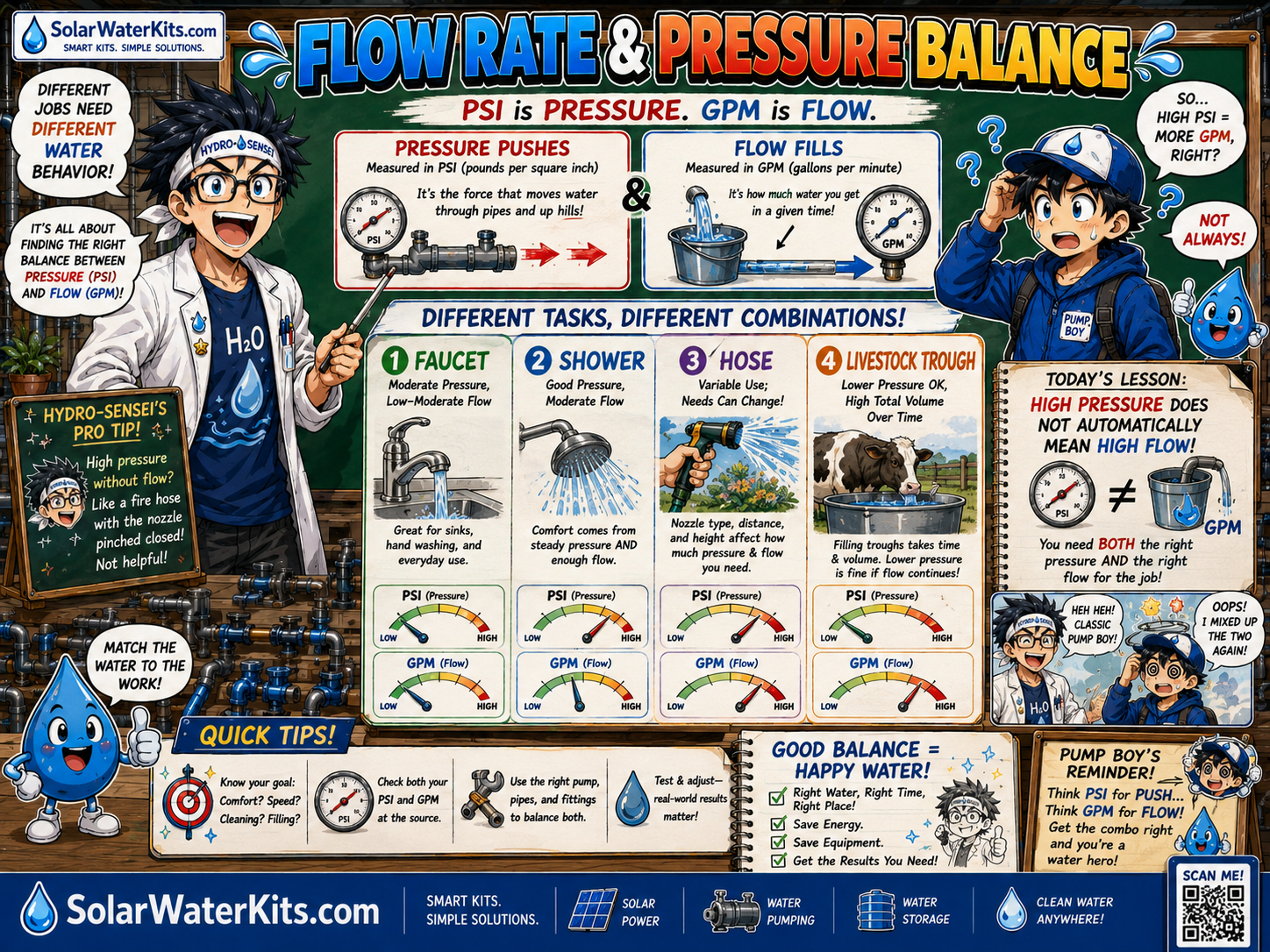
The system must match gallons, recovery time, storage size, and backup heating needs.
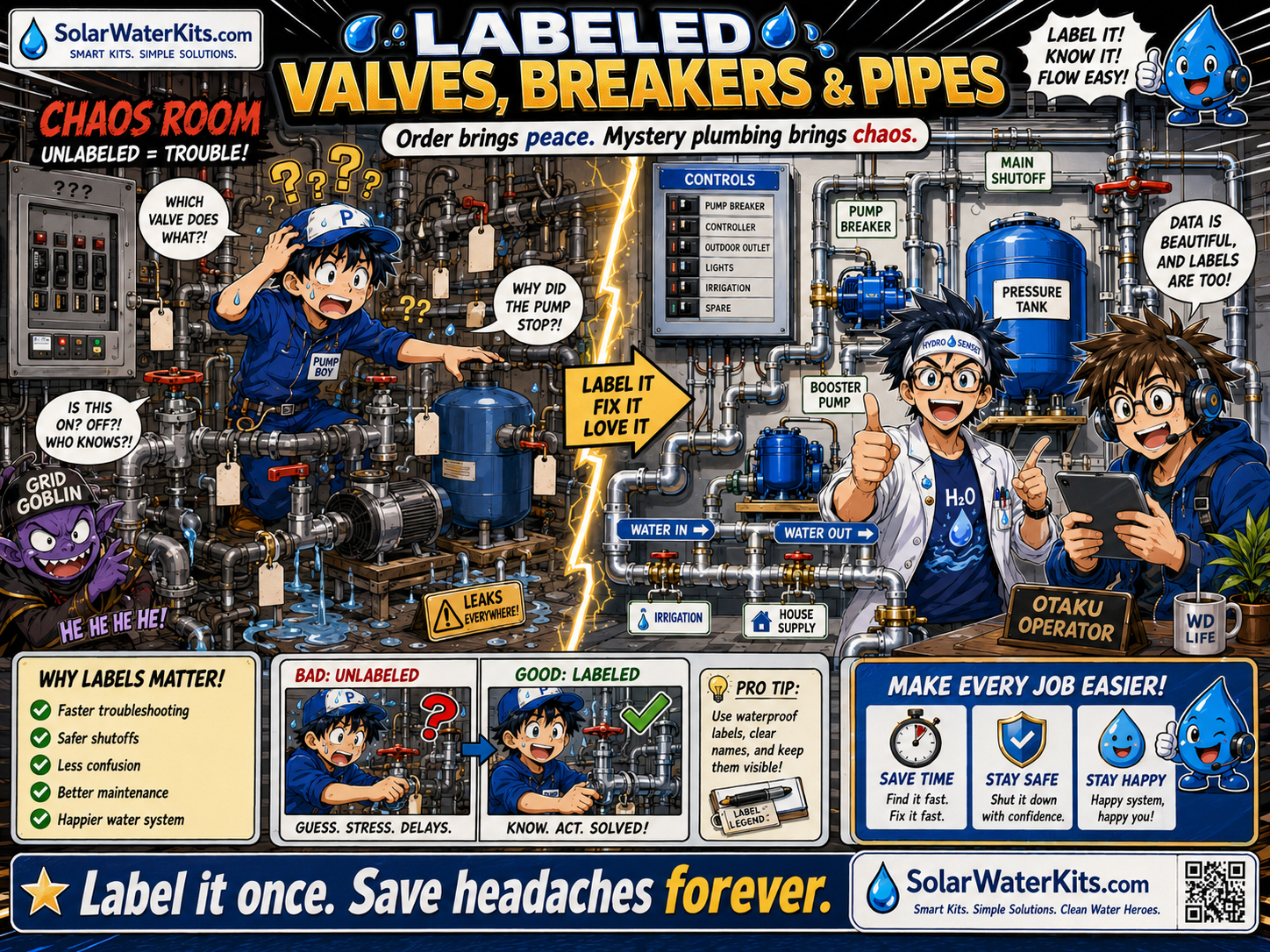
Valves, labels, access, drain points, diagrams, and maintenance records keep the system from becoming chaos.
Solar water systems must deal with the weather. Cold climates can freeze exposed water lines. Hot sunny days can overheat collectors or tanks if the system is not designed correctly.
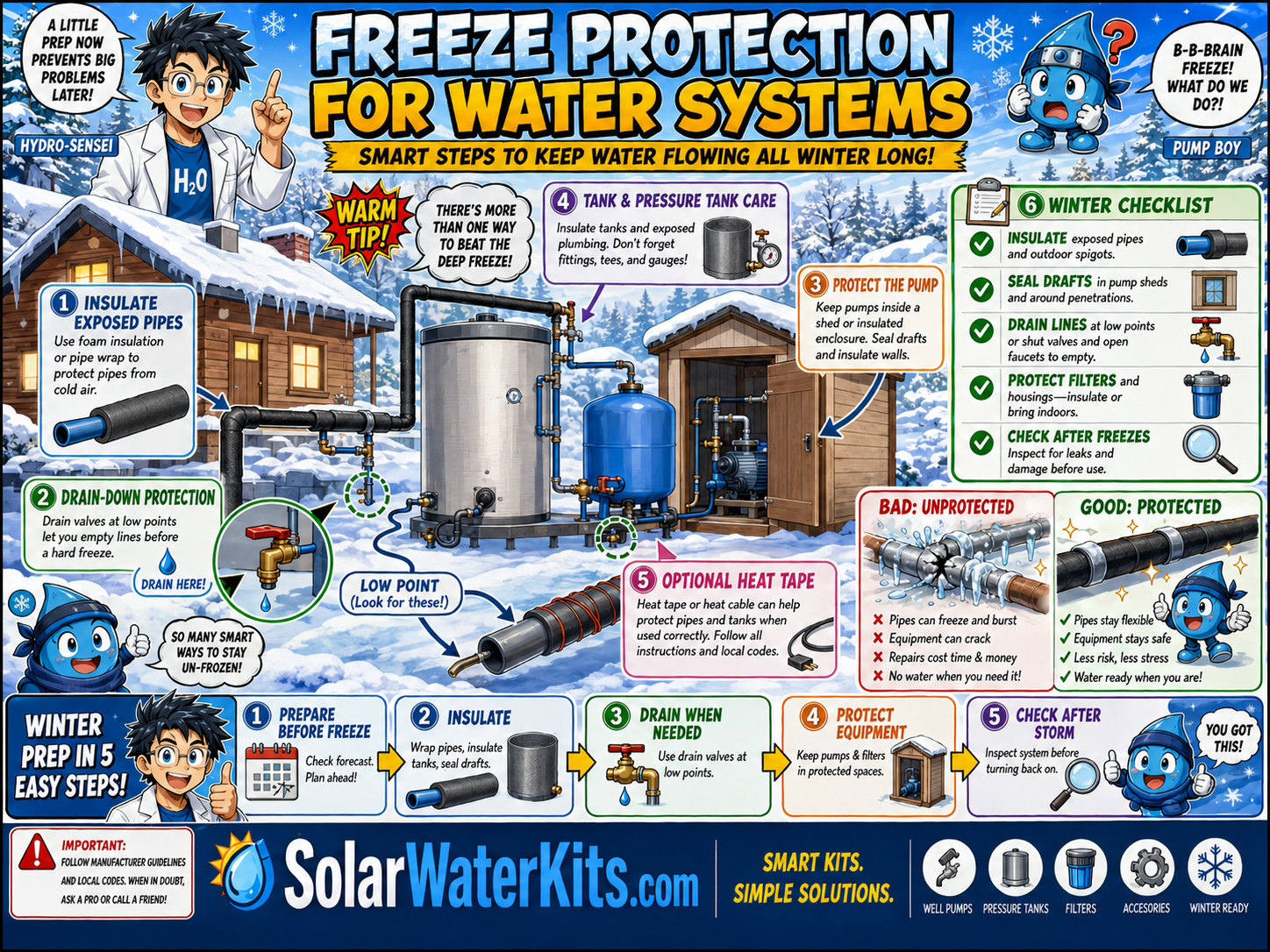
Winter does not care how cute the manga is.
Hot water systems need inspection. The parts are working with temperature, pressure, minerals, water quality, pumps, valves, controls, and sometimes rooftop equipment.

Checklists beat panic every time.
Solar hot water systems may involve high temperatures, pressurized tanks, relief valves, pumps, mixing valves, electrical equipment, rooftop collectors, structural attachments, freeze protection, and potable-water plumbing. This page is educational only.
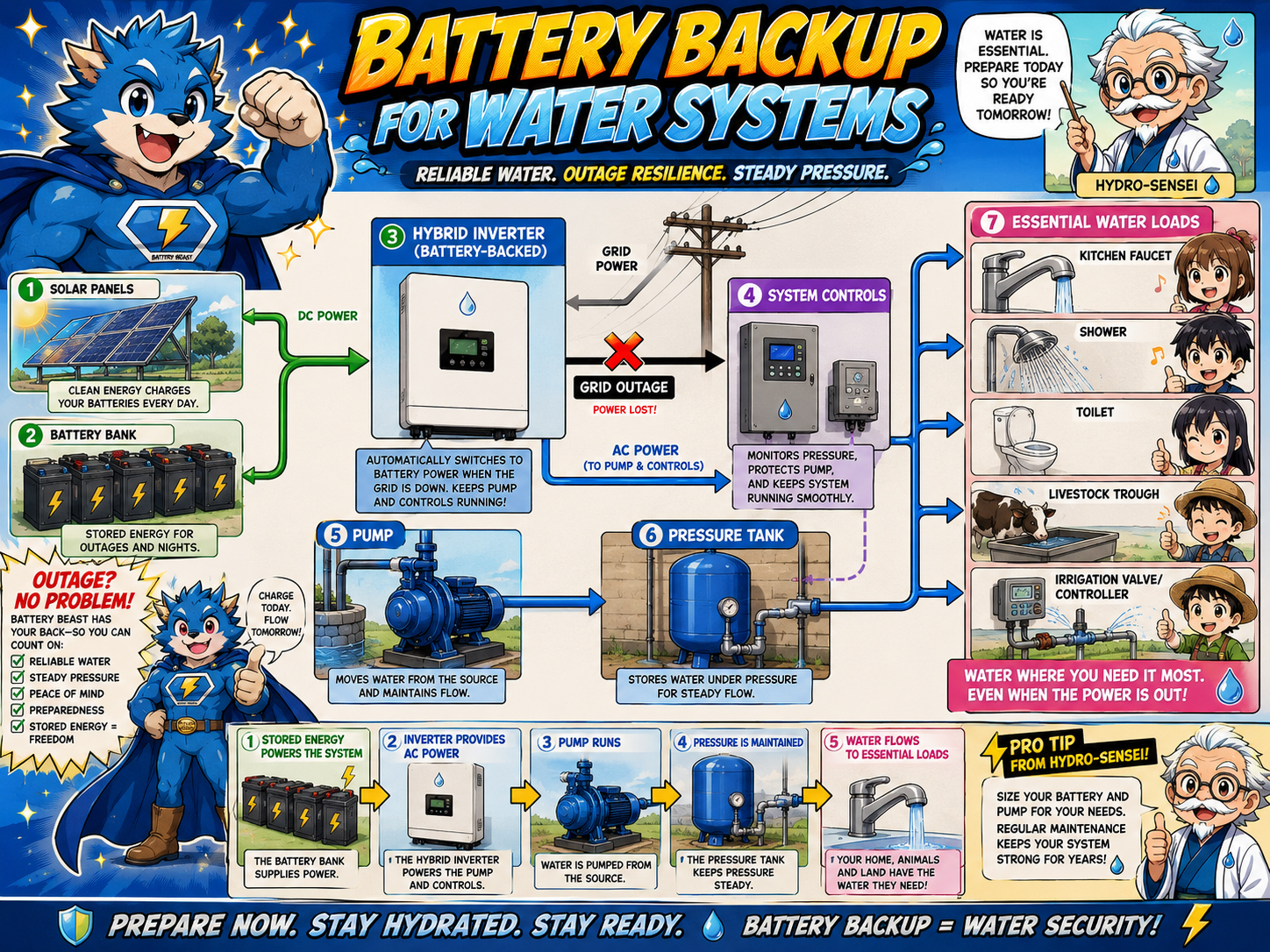
Keep critical water loads alive when utility power fails.
Battery backup →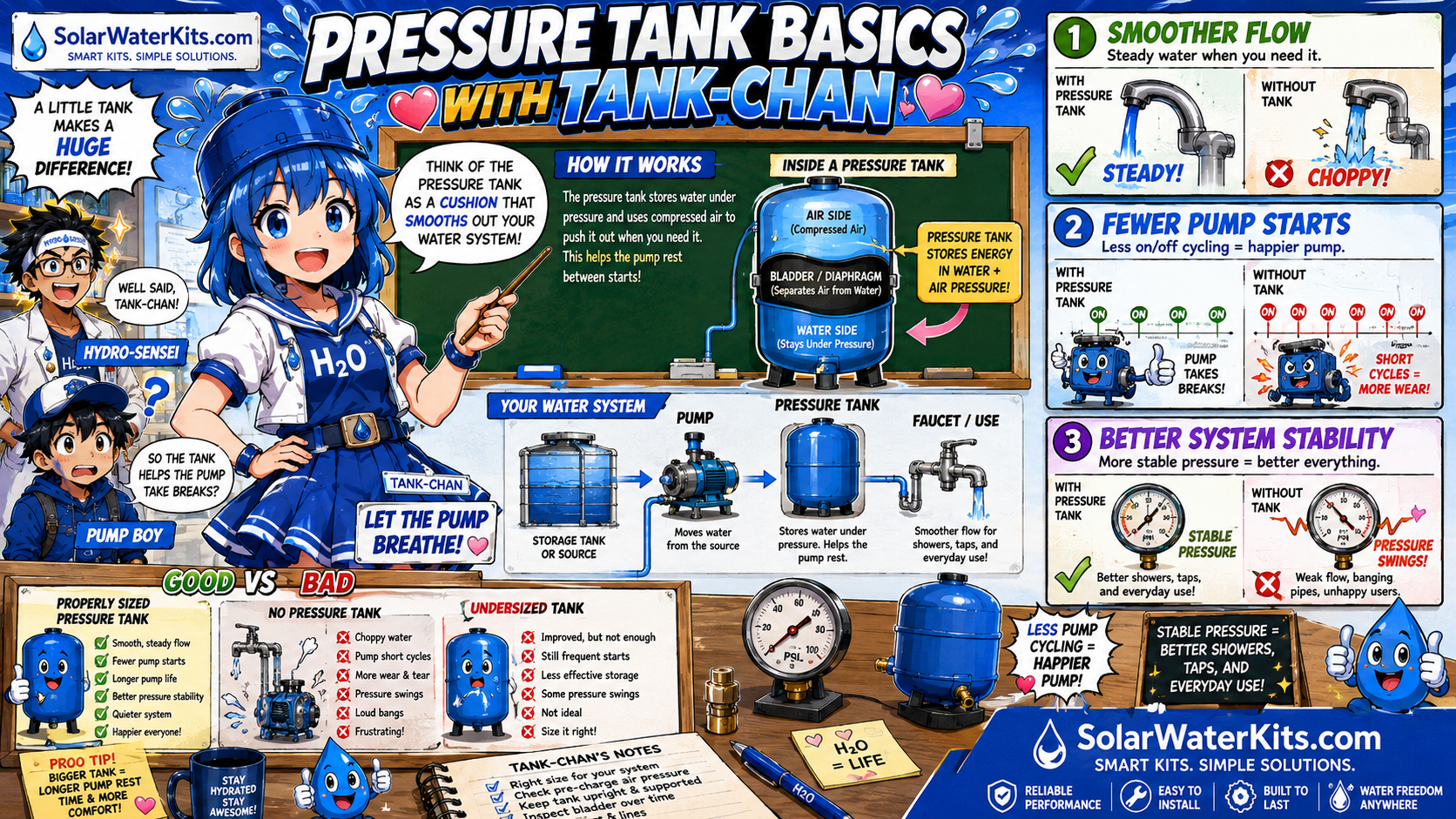
Storage is volume. Pressure is delivery behavior. Tank-chan explains.
Pressure tanks →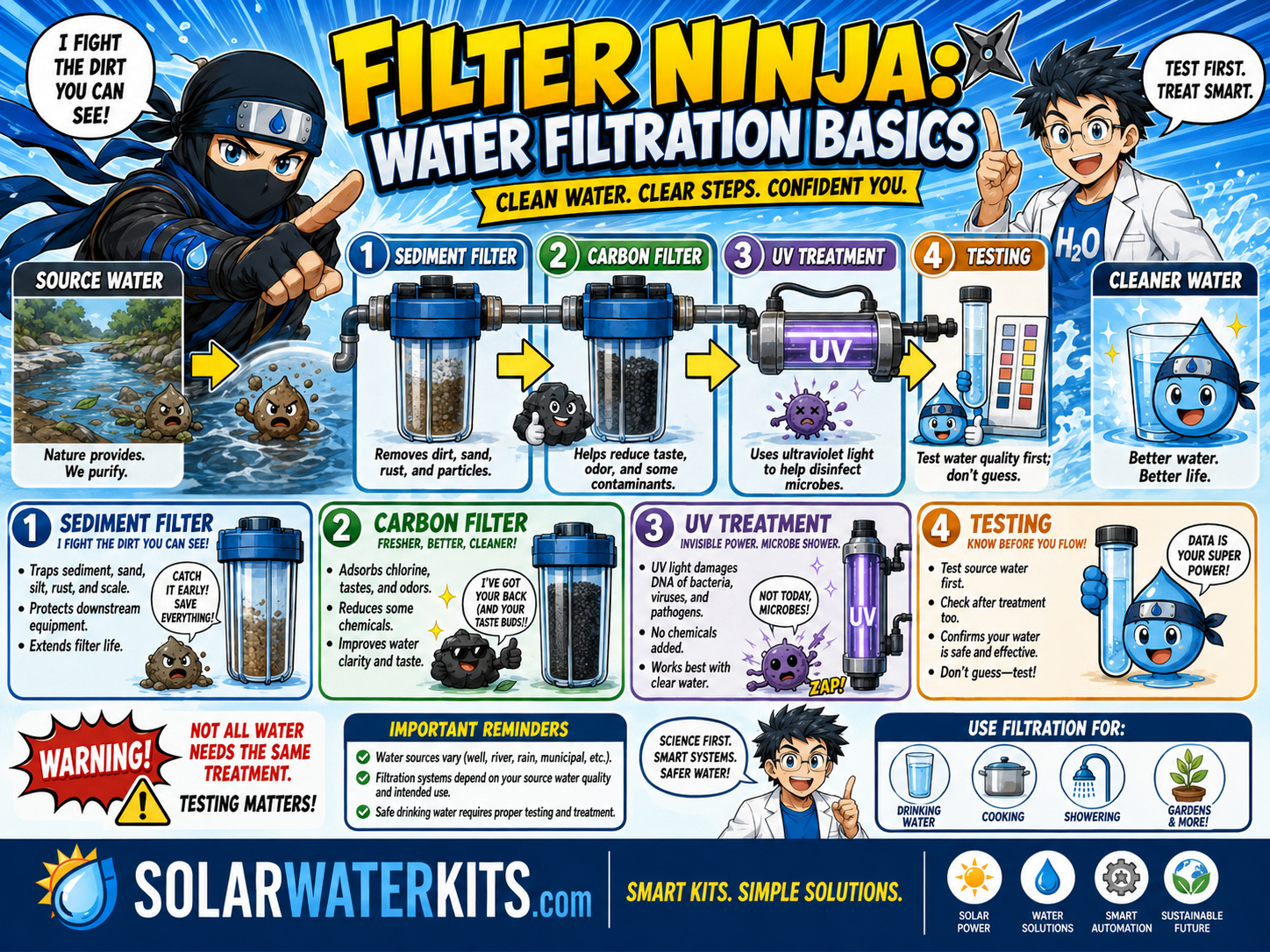
Heating water does not replace proper water testing, treatment, and sanitation.
Filtration basics →