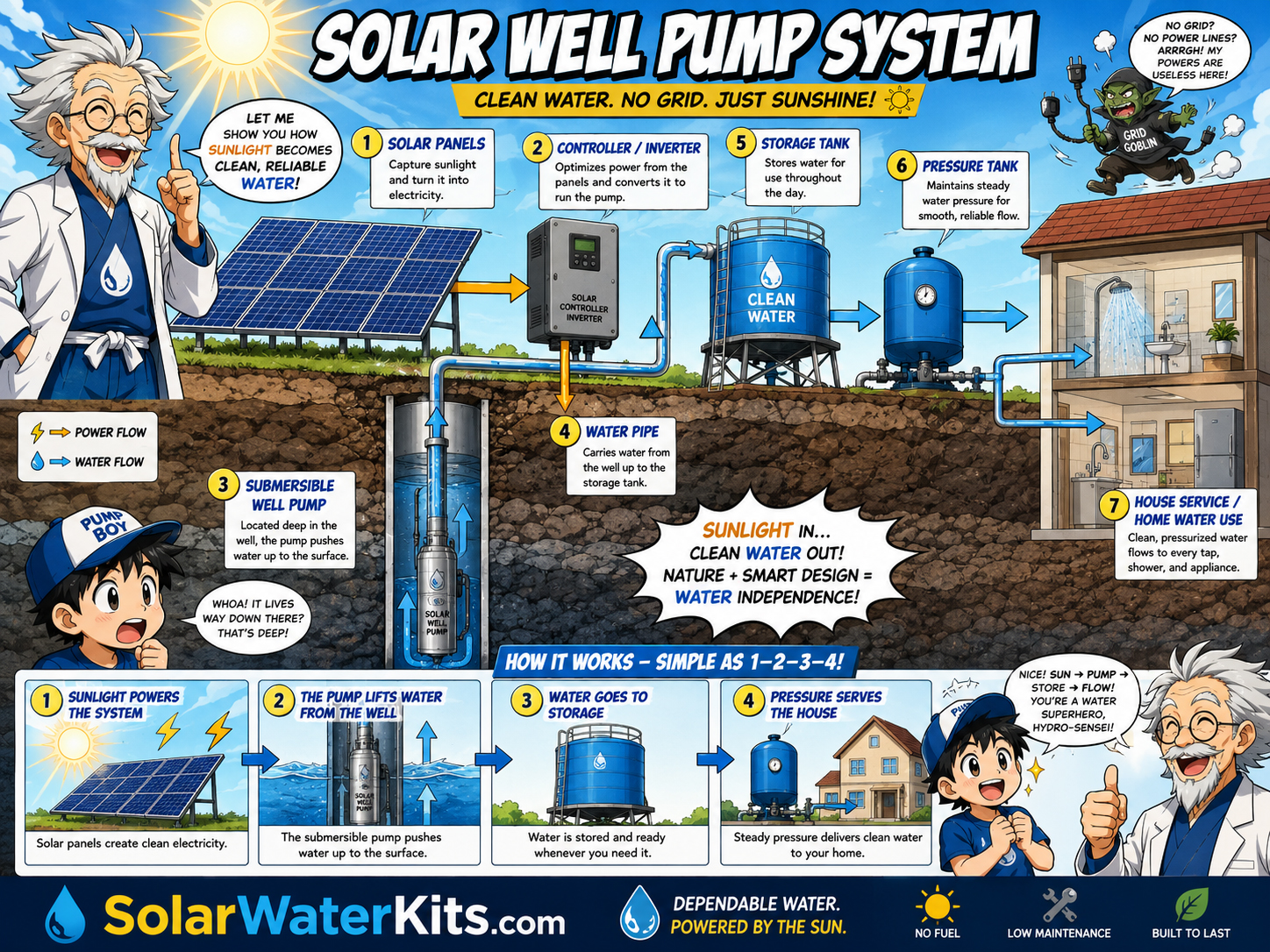
Well Water
Well to cabin
Well depth, static water level, pumping level, recovery rate, pump type, and filtration all matter.
Solar well pumps →A cabin water system must be simple, serviceable, and honest. Hydro-Sensei teaches the cabin chain: source water, solar pump, storage tank, pressure tank, filters, battery backup, freeze protection, sanitation, and a clear shutoff plan.
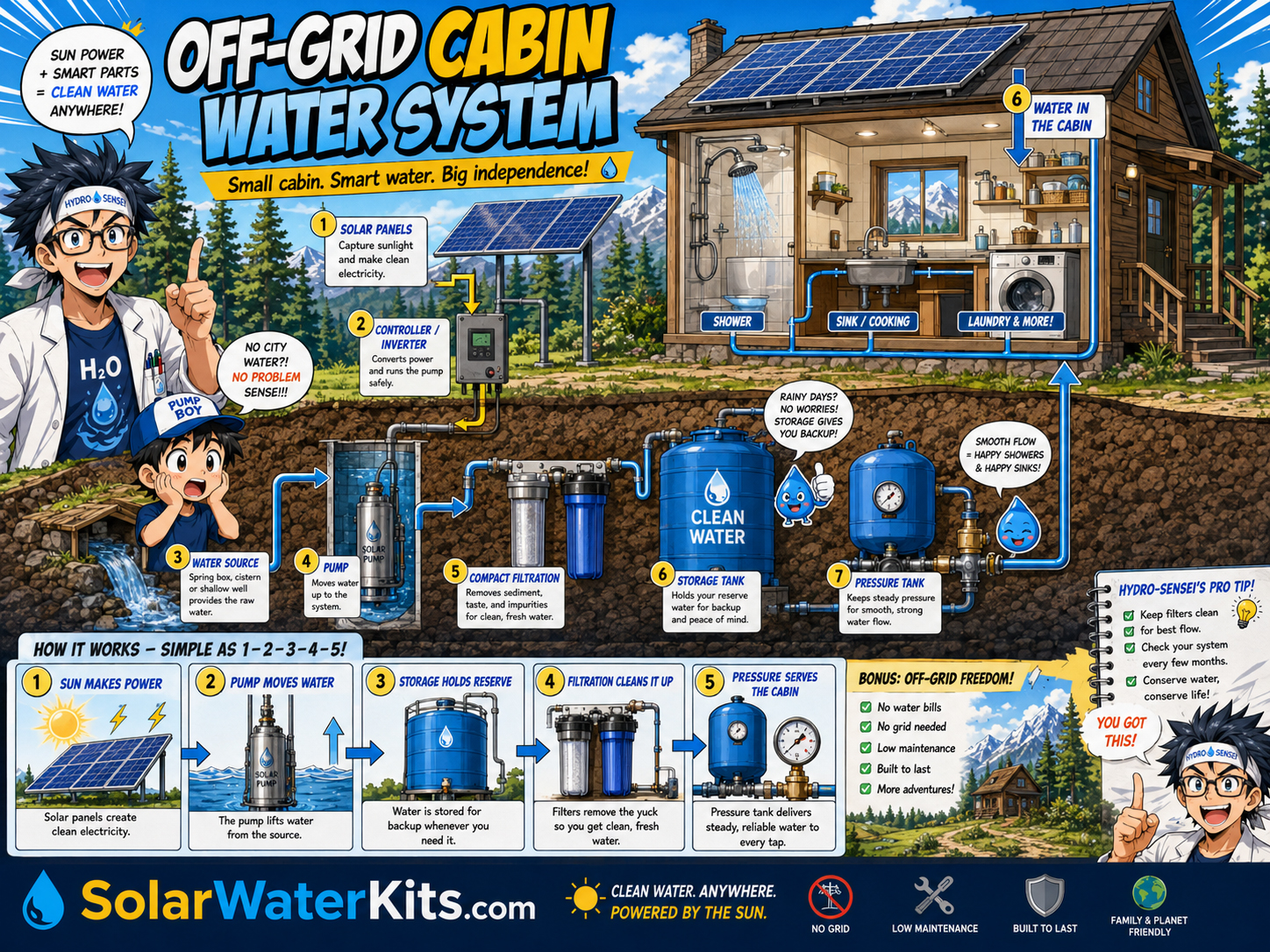
Cabin systems are often remote, seasonal, small, and owner-maintained. That means every valve, filter, pump, tank, drain, breaker, and label matters more than usual.
Source, pump, tank, pressure, filters, use points, and shutoffs.
Well, spring, rainwater tank, hauled water, cistern, lake, stream, or approved local supply.
Moves water from source to storage or from storage to the cabin pressure system.
Creates reserve volume so the cabin is not dependent on instant pump operation every time someone opens a faucet.
Helps provide usable pressure for sinks, showers, toilets, hose bibs, and small appliances.
Must be matched to water source and testing. Solar does not make unknown water safe to drink.
Cabins often face freezing, vacancy, and seasonal shutdown. Design for draining, isolation, and restart.
Pump Boy sees “water.” Filter Ninja sees sediment, bacteria, minerals, organics, algae, turbidity, backflow risk, and bad assumptions. Know the source before designing the kit.
Well depth, static water level, pumping level, recovery rate, pump type, and filtration all matter.
Solar well pumps →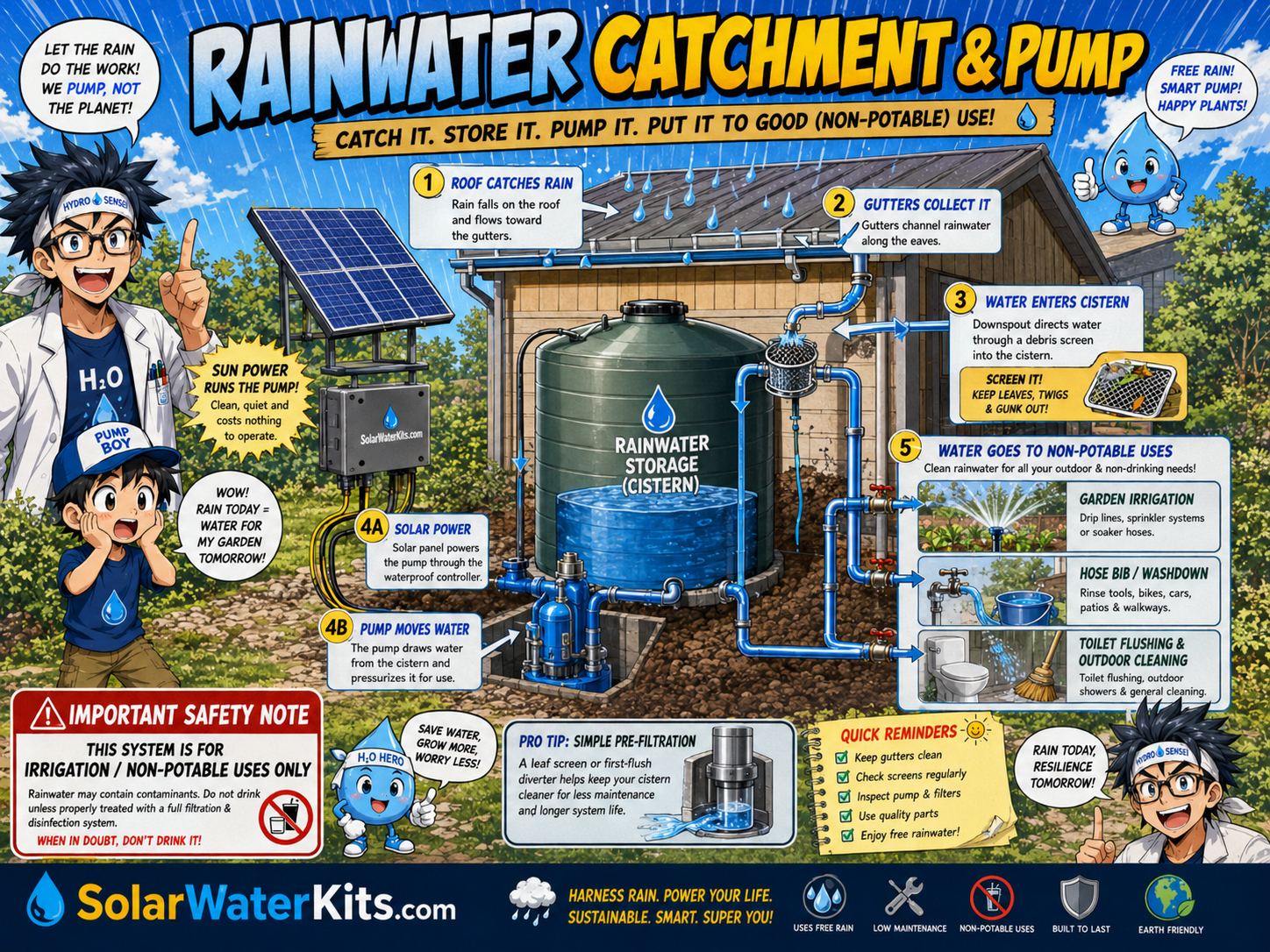
Rainwater can be useful for approved uses, but it needs screening, storage, treatment rules, and clear labeling.
Rainwater systems →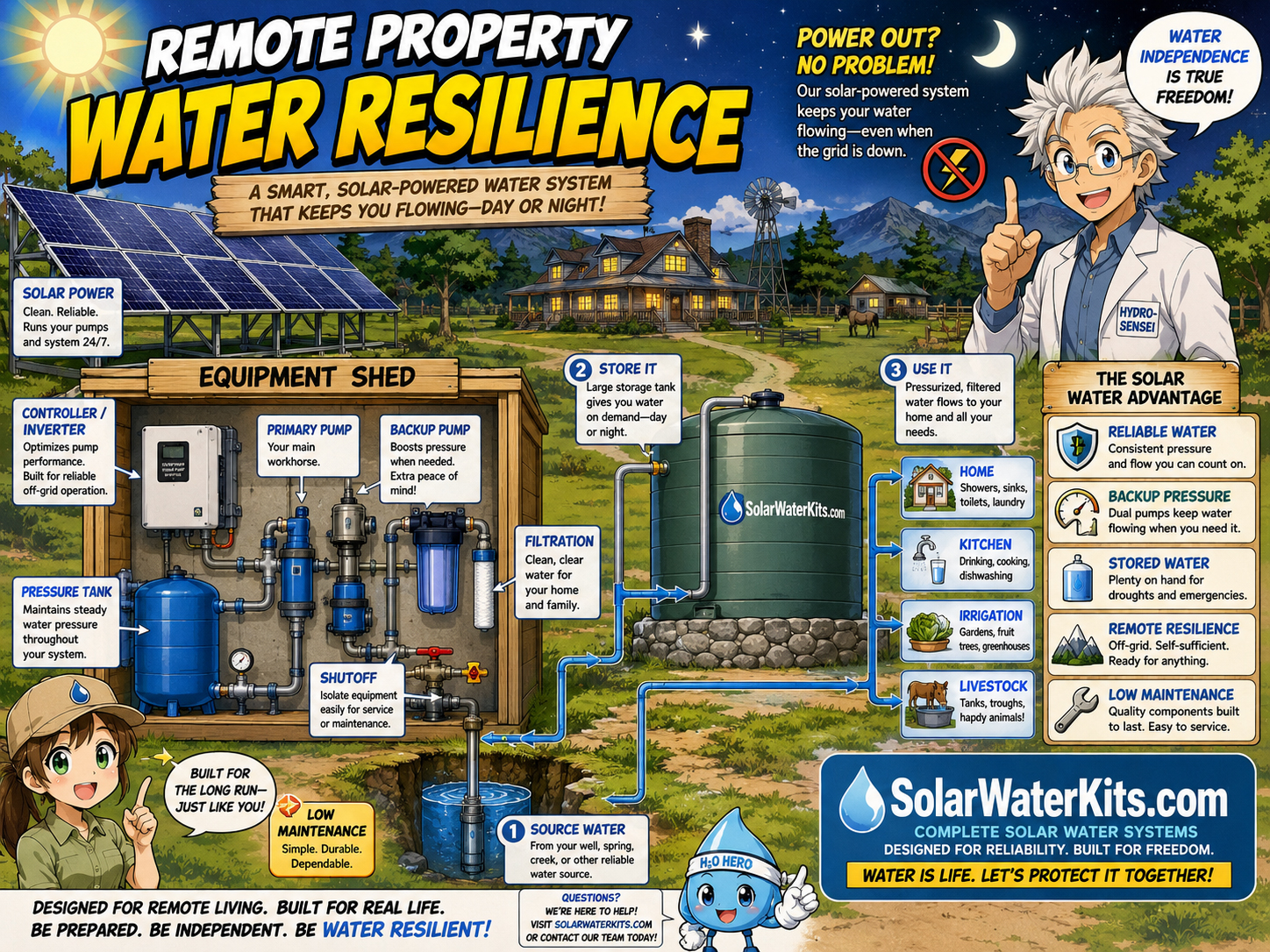
Hauled water or cistern storage can simplify the source but still needs sanitation, pressure, and protection.
Springs, rainwater, wells, lakes, ponds, and hauled water all have different risks. Water intended for drinking requires proper testing, treatment, storage, and maintenance.
A storage tank can let the solar pump work during good sunlight, while the cabin uses water later. A pressure tank or booster system can then deliver water more like a normal home.
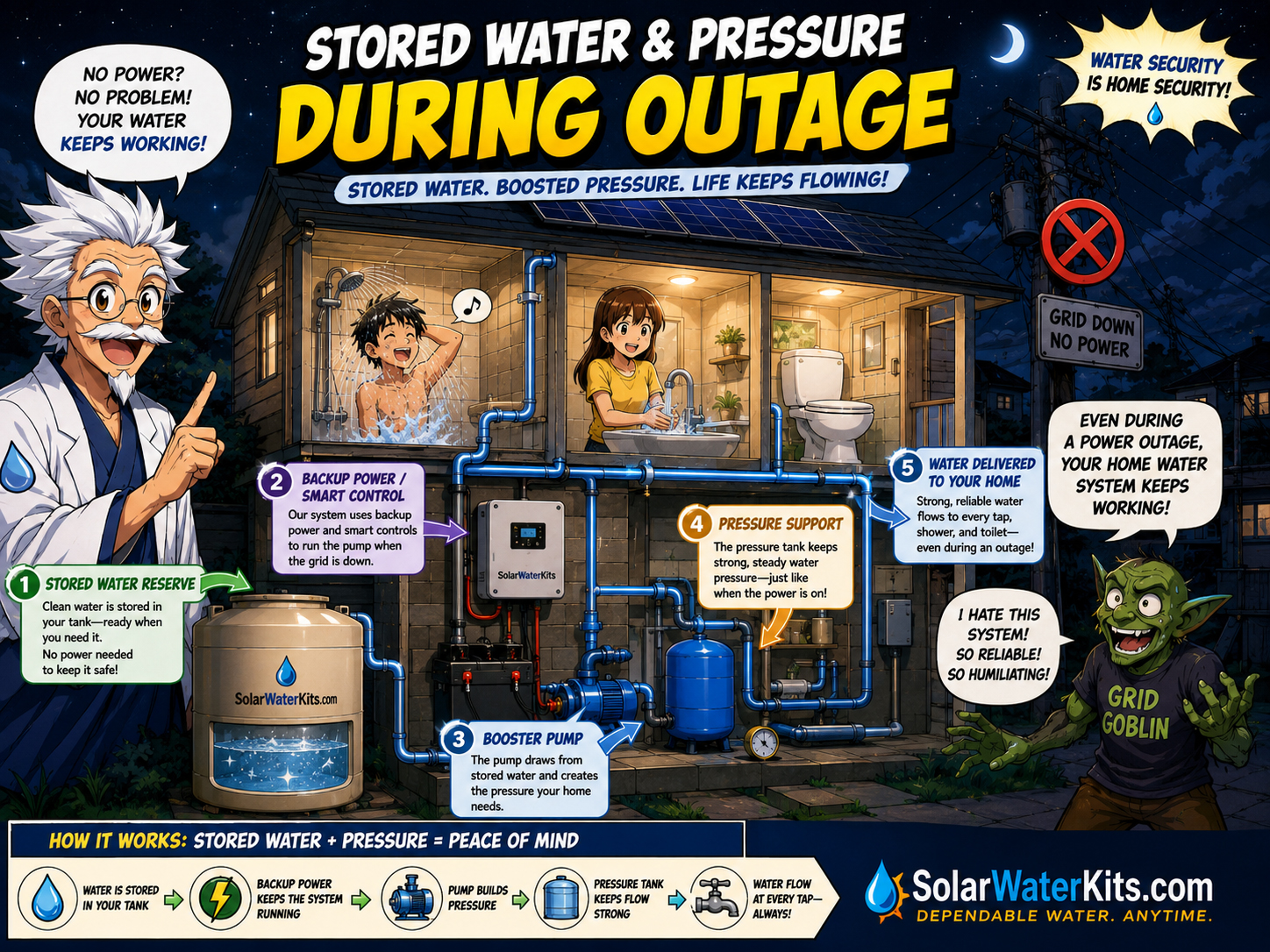
Volume and delivery behavior are different jobs.
A cabin battery is precious. Do not waste it on poor pump cycling, oversized loads, leaky fixtures, mystery controls, or a pump that was never matched to the inverter.
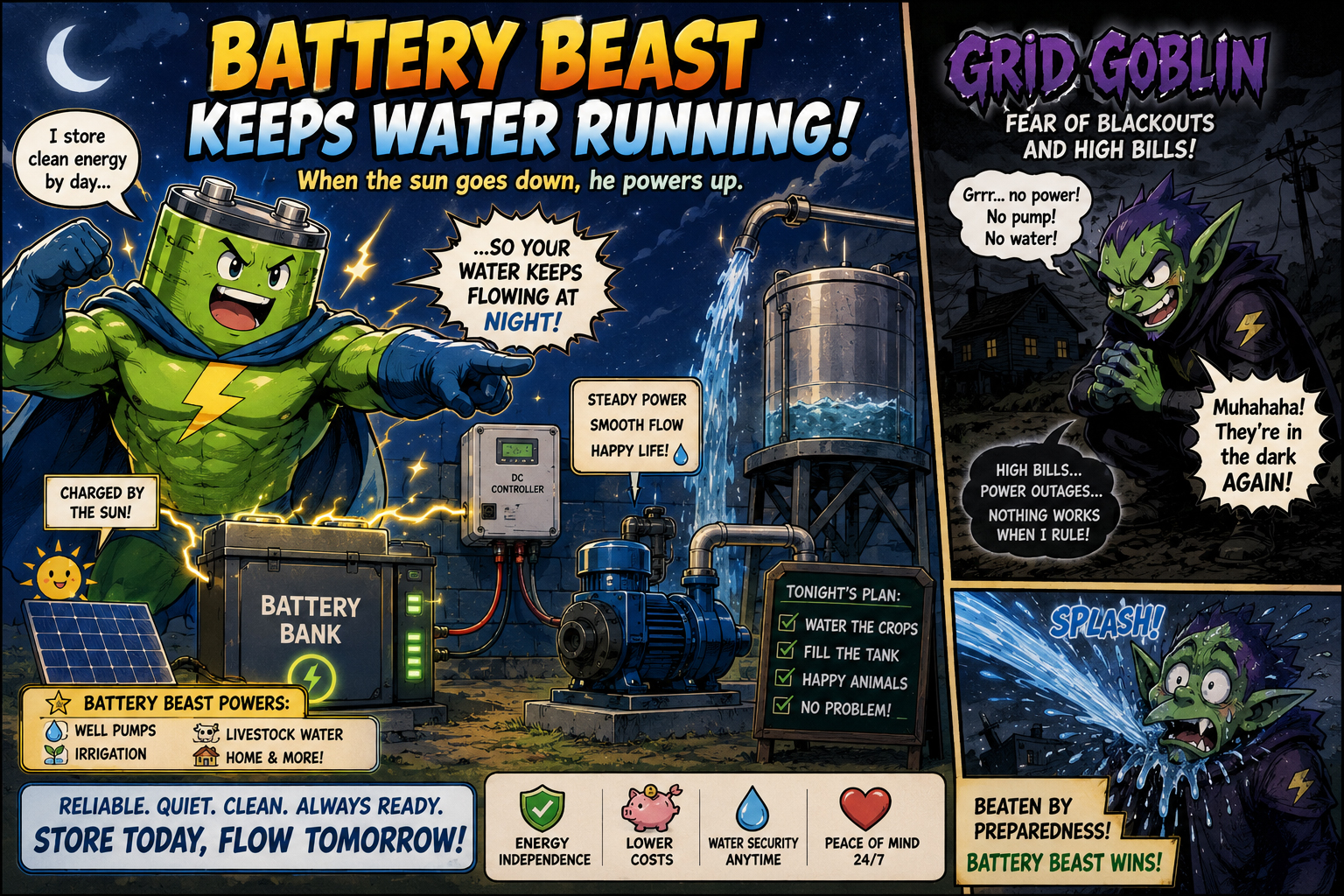
Nighttime pumping requires honest battery capacity, inverter sizing, and runtime assumptions.
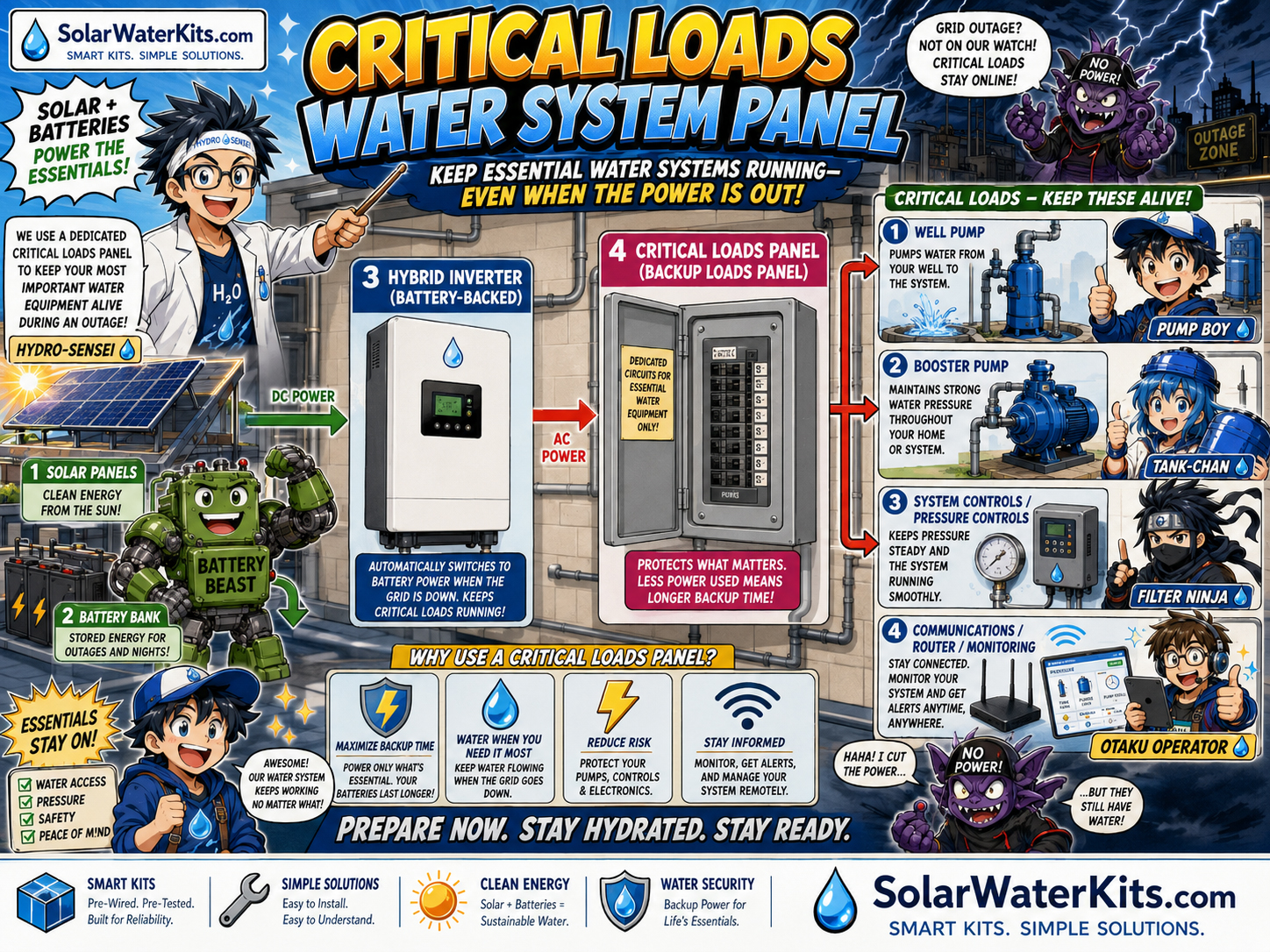
Cabin water loads should be planned around what is truly needed during outages or overnight.
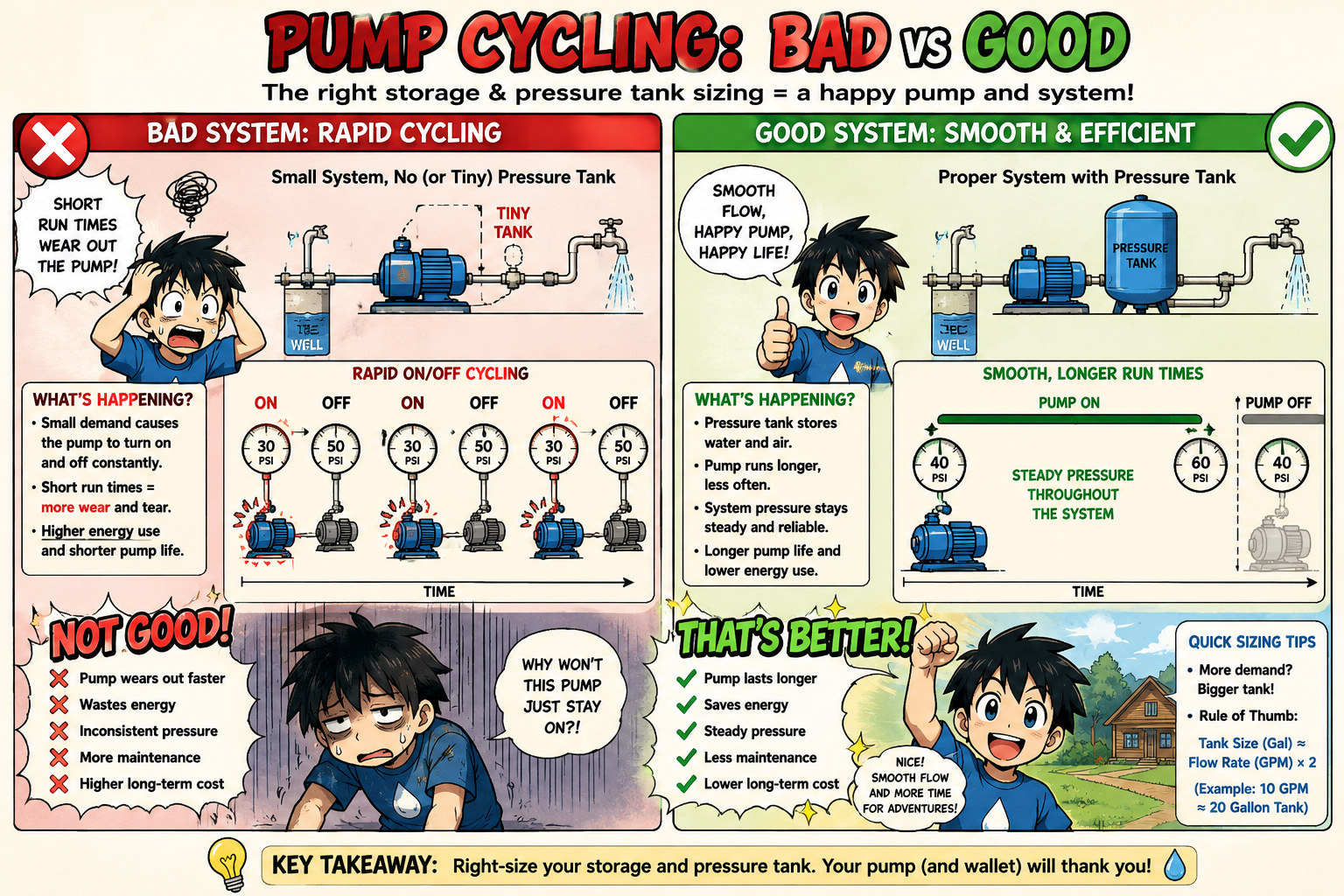
Pressure tank sizing and controls can reduce unnecessary pump starts and battery stress.
Batteries store energy. Tanks store water. Pressure tanks store delivery behavior. A smart cabin uses all three instead of forcing one piece to do every job.
Cabin water often comes from sources that need testing and treatment. A filter cartridge is not a universal safety spell. Treatment must match the source and actual test results.
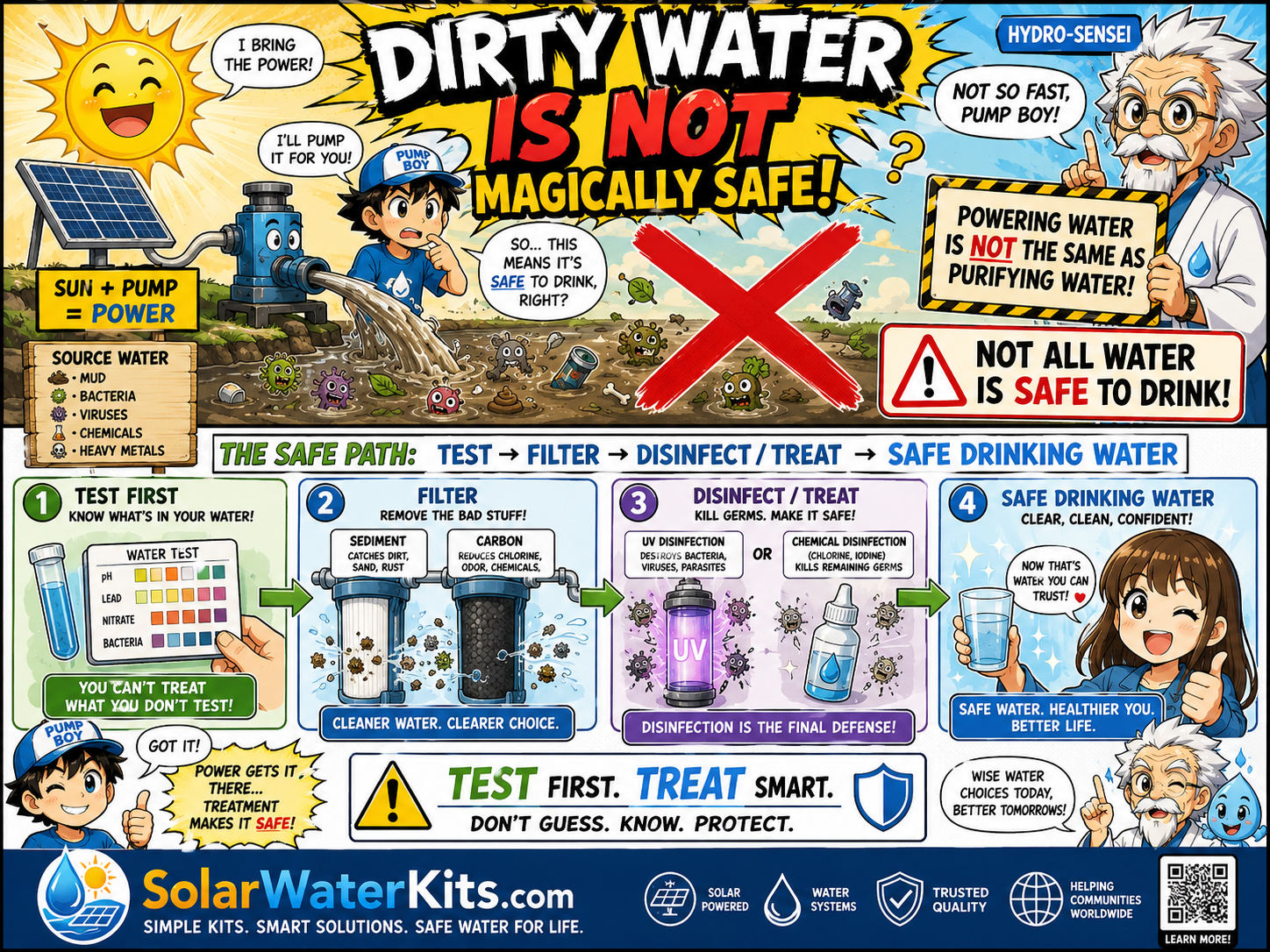
Test first. Treat correctly. Do not guess.
Seasonal cabins need a freeze plan. The best solar pump in the world cannot help if the pipe, tank outlet, filter, valve, or pressure line is frozen solid.
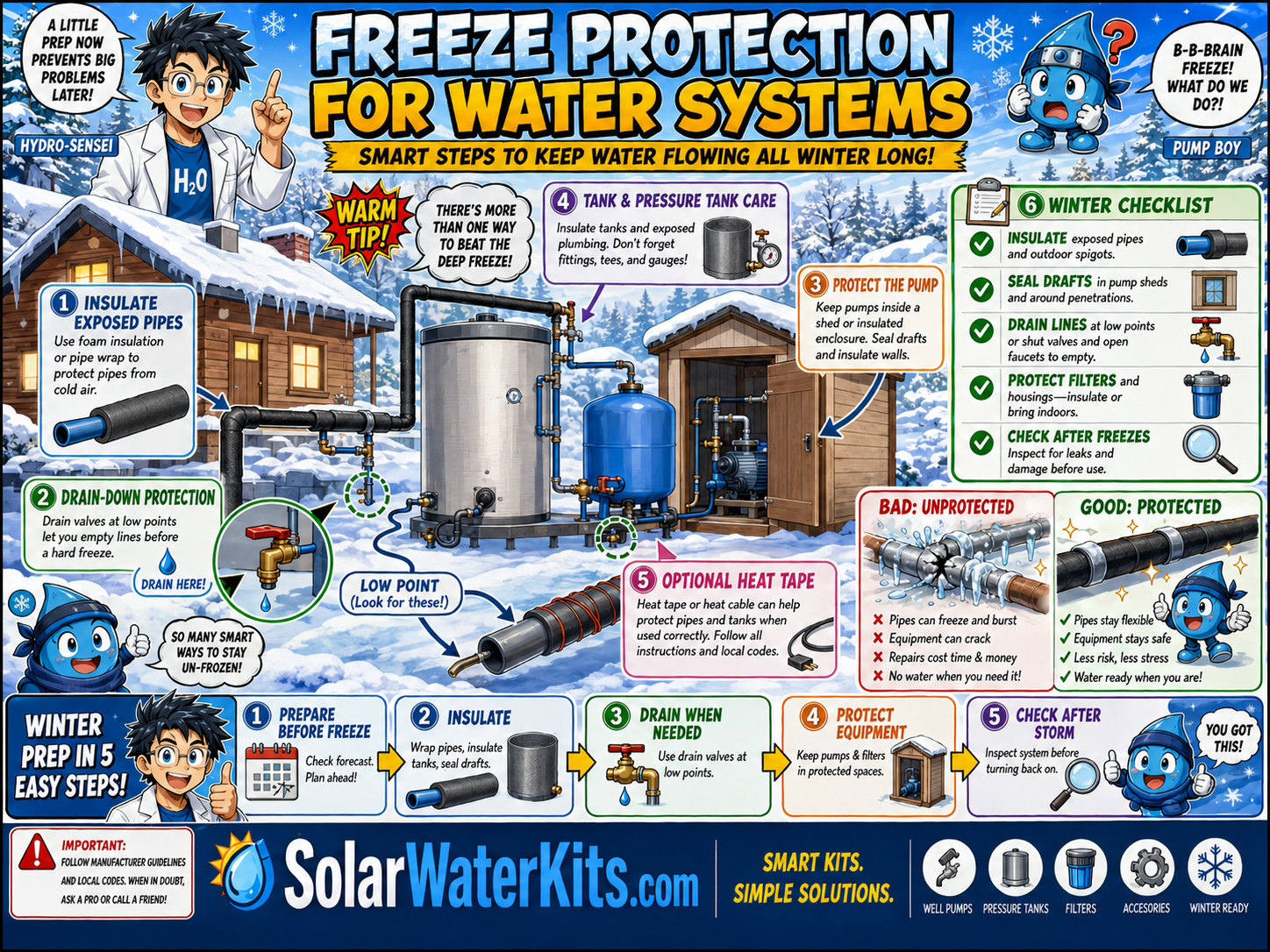
Insulation, drain-down, heat, burial depth, and shutdown planning matter.
Otaku Operator wins the cabin arc with labels, checklists, spare parts, clean filters, tank inspection, battery checks, and a laminated diagram.
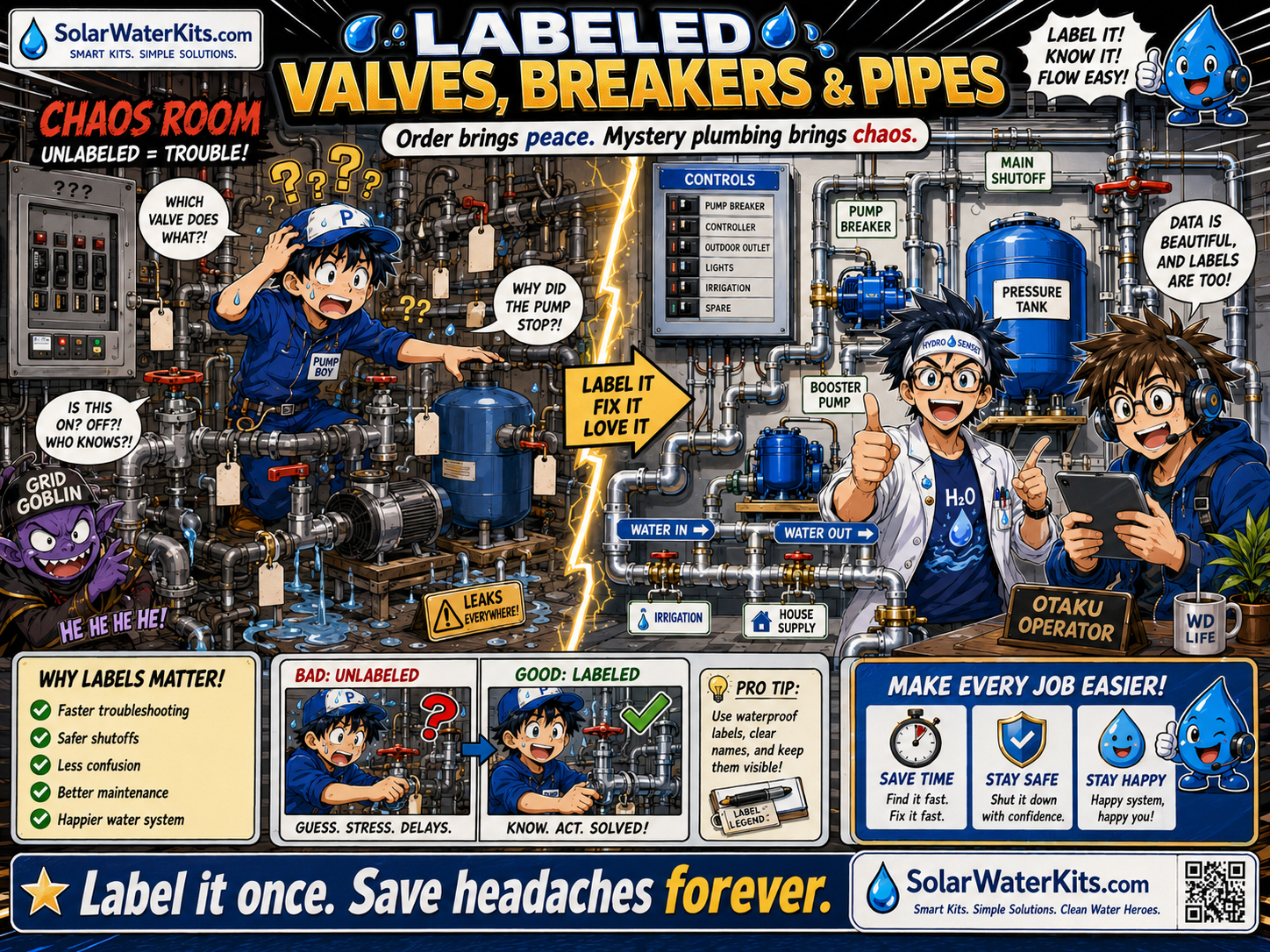
Label shutoffs, drains, bypasses, filters, breakers, pump circuits, and normal valve positions.
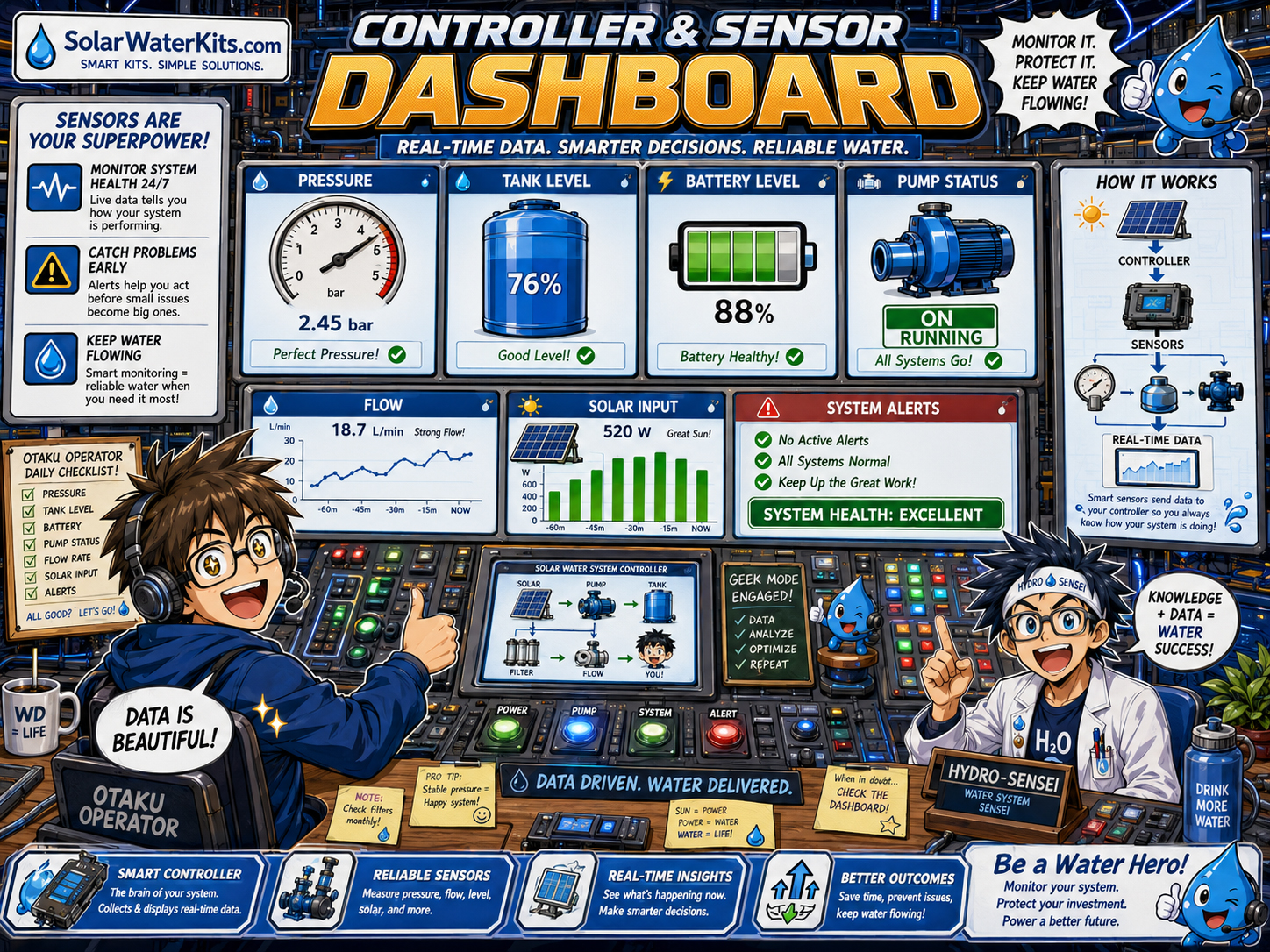
Tank level, battery state, pump status, pressure, and alarms help remote cabins behave.
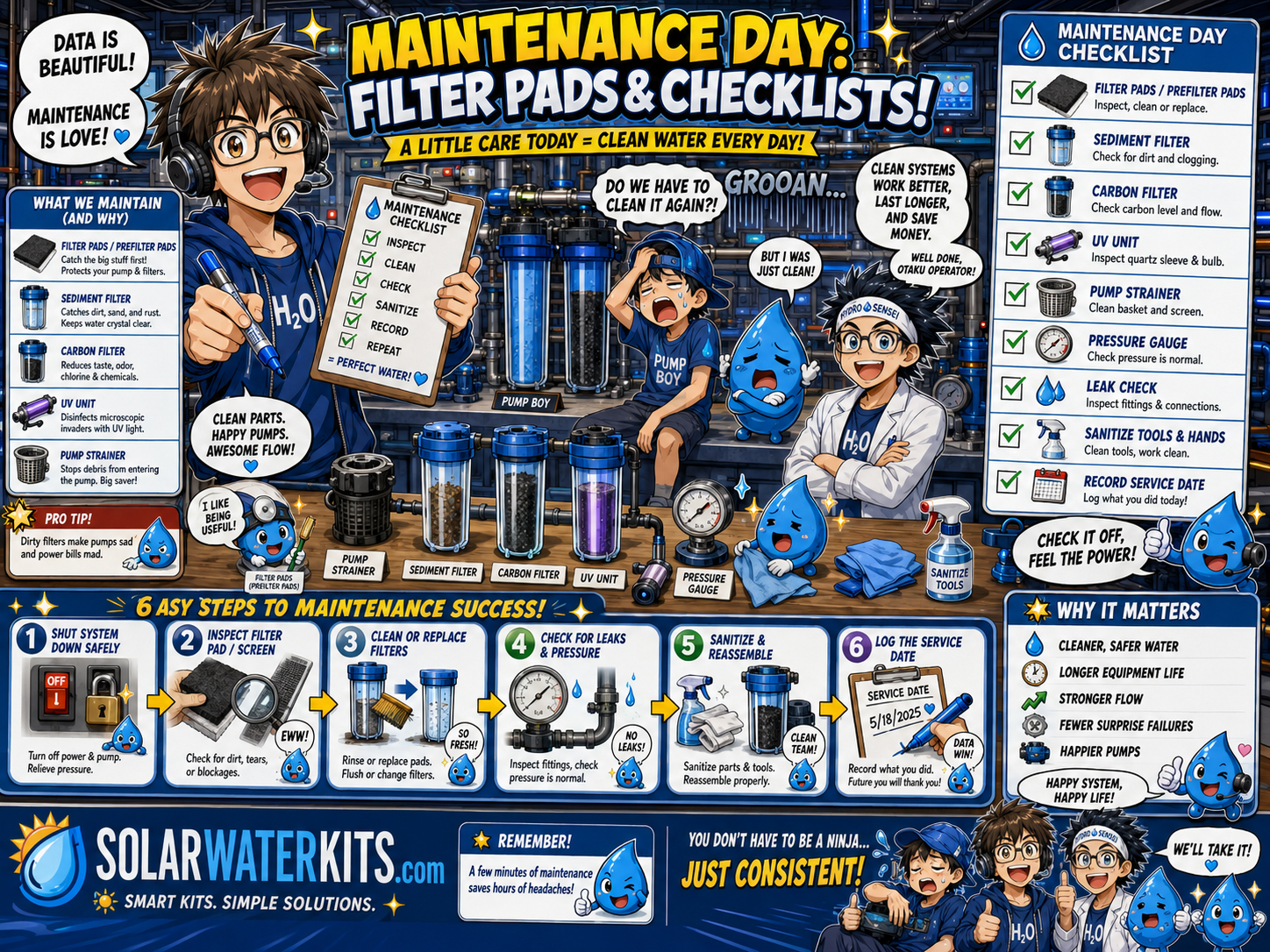
Filters, tanks, pumps, valves, batteries, and freeze protection need inspection.
Solar cabin water systems may involve wells, springs, rainwater, cisterns, potable and non-potable plumbing, pumps, pressure tanks, batteries, inverters, wet locations, filters, disinfectants, freeze protection, and seasonal shutdown. This page is educational only and is not an installation manual.
Well depth, recovery, pump type, storage, pressure, and backup planning.
Well pumps →
Cisterns, screens, pumps, labels, filters, and non-potable use planning.
Rainwater systems →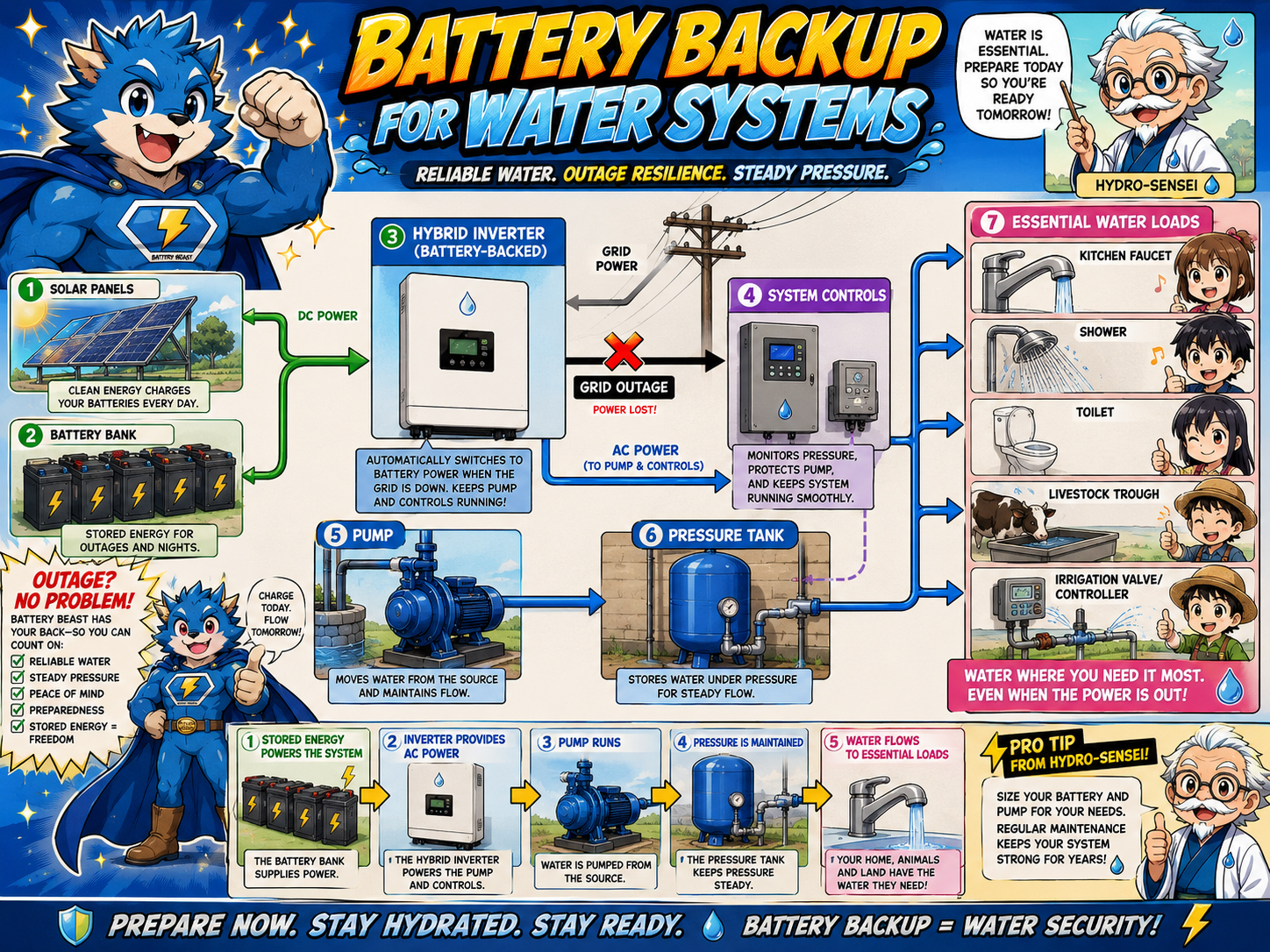
Critical-load thinking for pump, pressure, controls, and essential cabin water.
Battery backup →