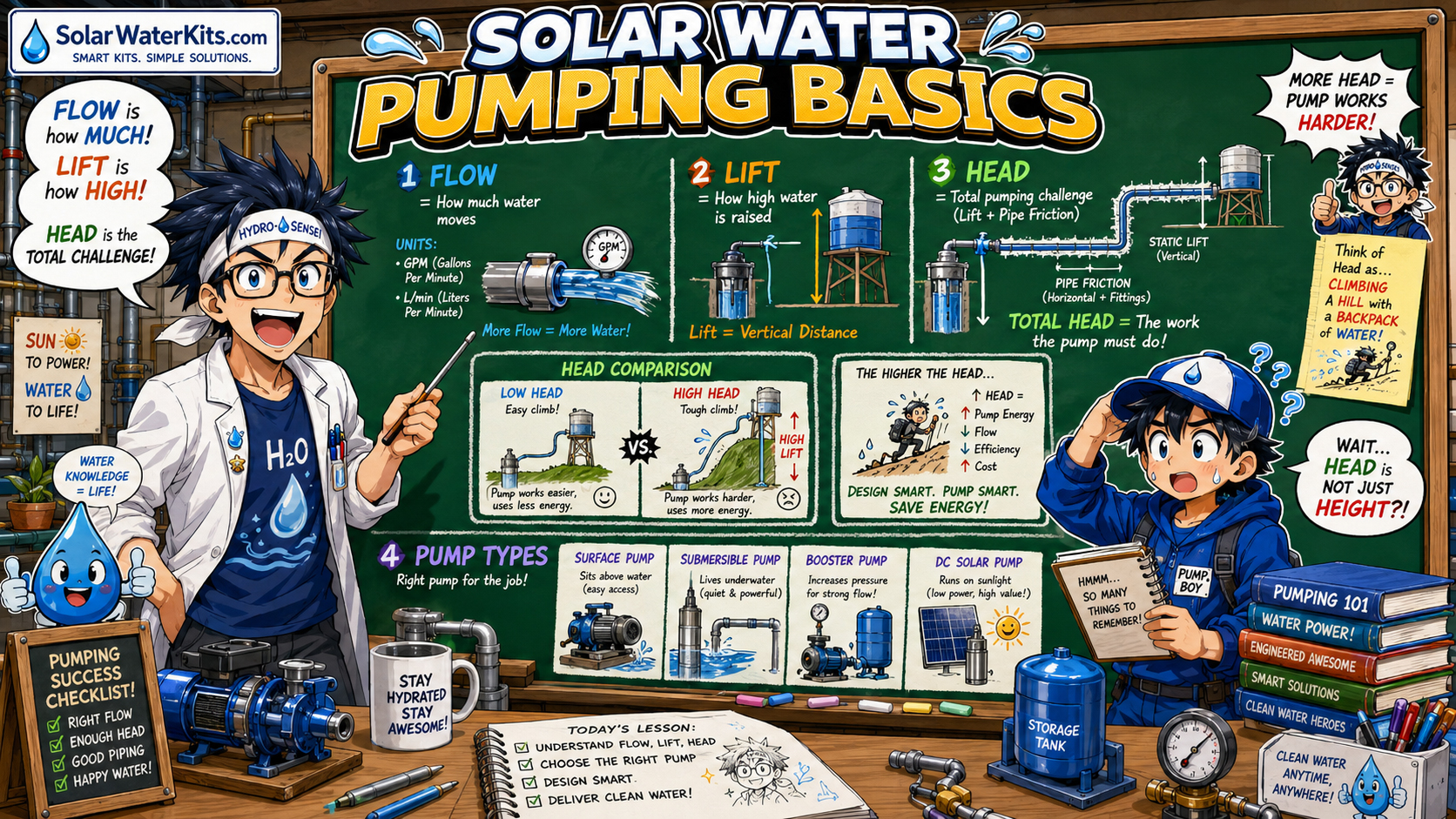
Pumping
Pressure takes energy
Desalination pumps are not ordinary garden pumps. Pressure, flow, and runtime drive energy needs.
Pumping basics →Pump Boy thinks desalination is easy: “Just pump seawater and boom — drinking water!” Hydro-Sensei covers the wall with equations. Desalination needs pretreatment, high pressure, membranes, energy, corrosion control, brine handling, testing, post-treatment, and real engineering.
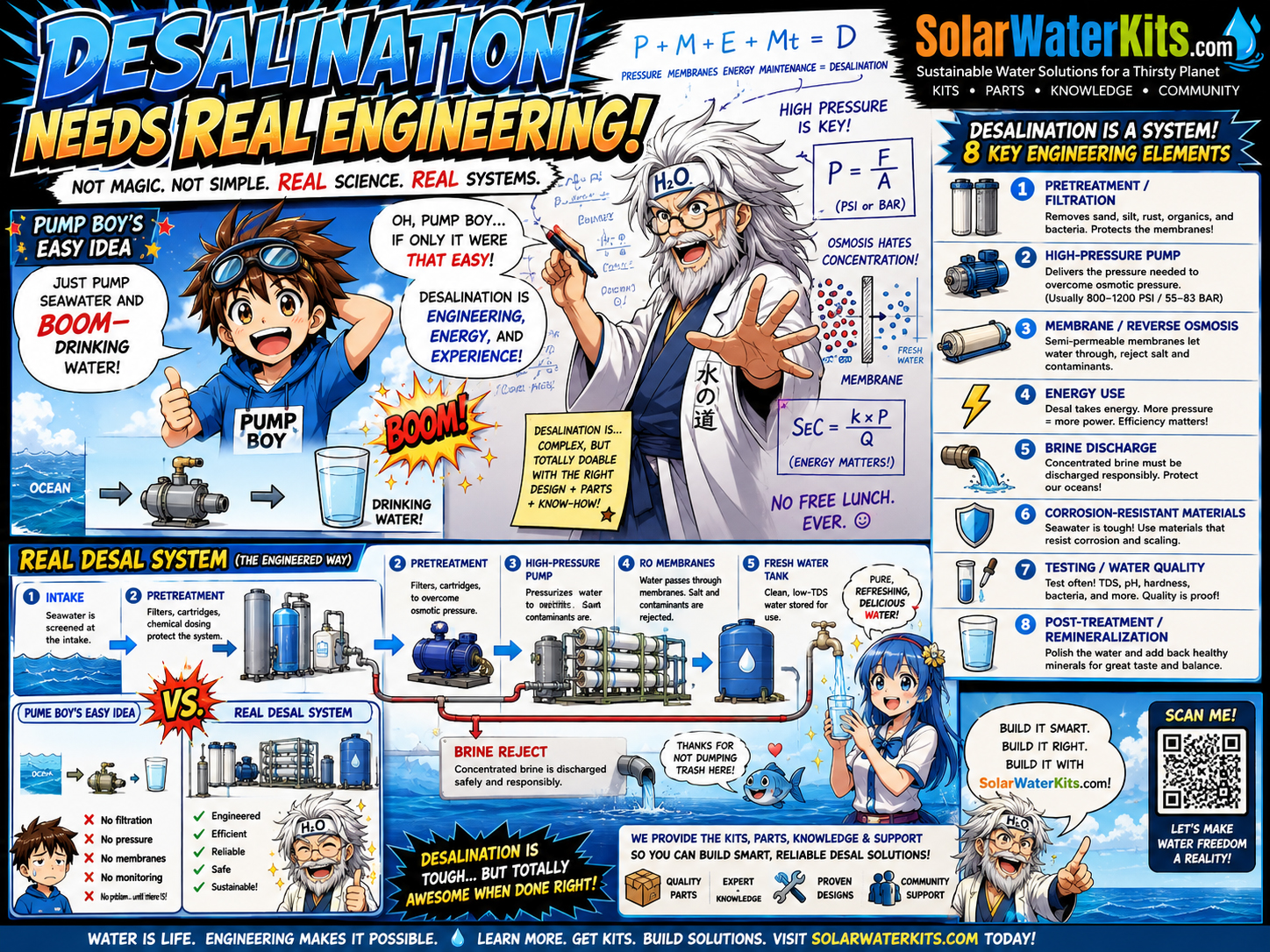
Reverse osmosis desalination can remove salts from seawater or brackish water, but the membrane is only one part. The whole system has to protect the membrane, provide pressure, manage energy, handle brine, and verify water quality.
Desalination works when the whole system is engineered.
Seawater, brackish groundwater, or salty source water must be characterized before equipment is selected.
Filters, screens, anti-scaling, chemical control, and sediment removal protect pumps and membranes.
Reverse osmosis needs pressure to push water through membranes while salts are rejected.
RO membranes produce fresh permeate and concentrated reject brine. Both streams need proper handling.
Desalinated water may need pH adjustment, remineralization, disinfection, and storage before use.
TDS, pressure, flow, pH, conductivity, microbial safety, membrane performance, and system alarms matter.
Desalination can pair with solar power, especially where sun is abundant and water is scarce, but the energy demand, pump pressure, duty cycle, battery needs, storage, and maintenance plan must be honest.
Desalination pumps are not ordinary garden pumps. Pressure, flow, and runtime drive energy needs.
Pumping basics →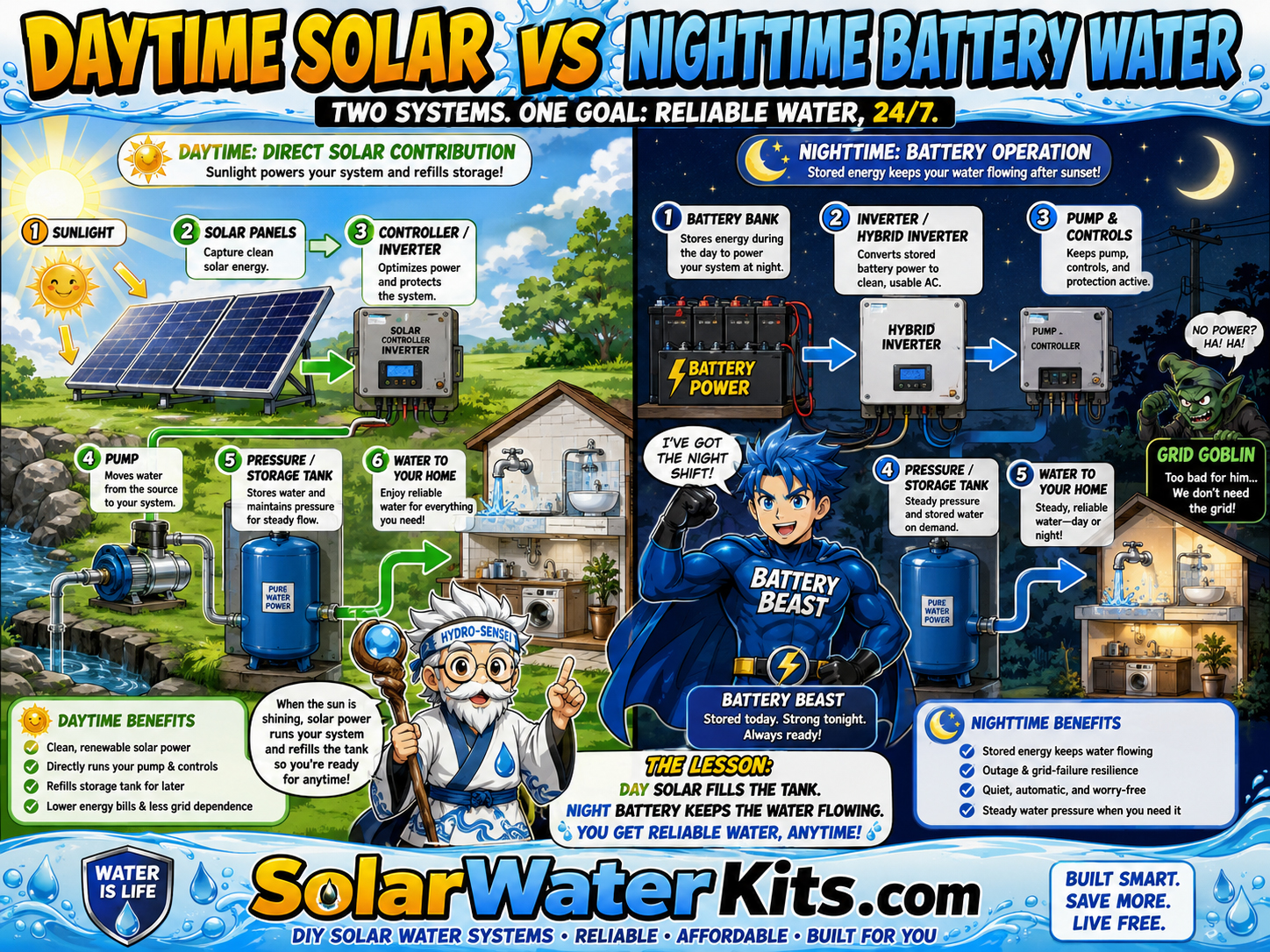
Solar can support daytime desalination, while storage tanks can hold product water for later use.
Stored water →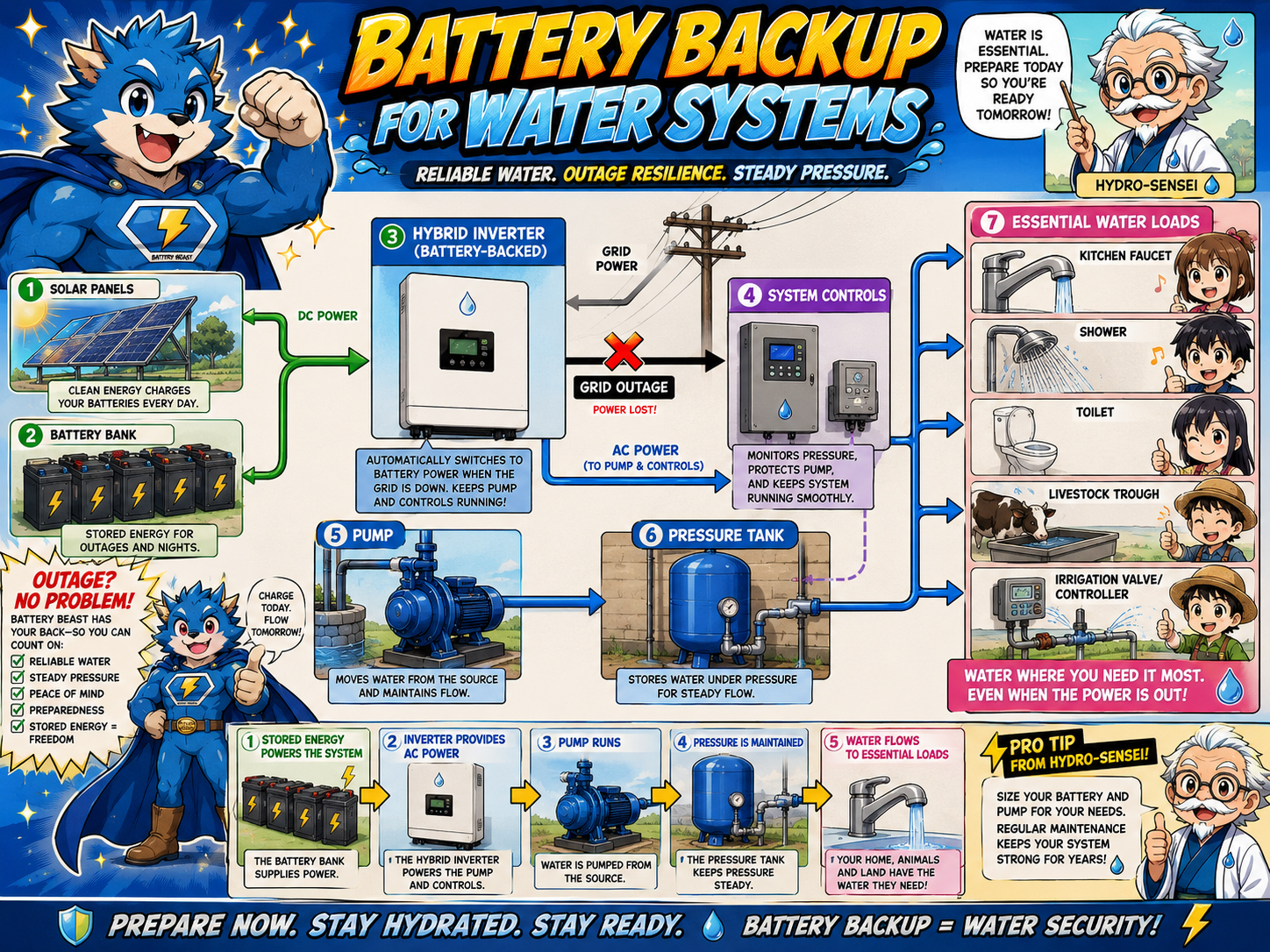
Battery-backed desalination must be sized around real pump load, runtime, and energy budget.
Battery backup →Solar can provide clean energy. It does not eliminate the energy demand of pushing salty water through membranes. Product-water storage is often a key part of solar-powered desalination thinking.
Pump Boy wants one shiny machine. Hydro-Sensei wants a full engineering checklist. The difference is whether the system works after the first exciting week.
Protects membranes from sediment, organics, scaling, fouling, and biological growth.
RO needs pressure. The pump, motor, inverter, piping, and valves must be selected accordingly.
Membranes are sensitive. They need correct pressure, pretreatment, cleaning, and monitoring.
Power demand can be substantial. Solar, batteries, and storage must be sized honestly.
Reject water is concentrated. Disposal can be regulated and environmentally sensitive.
Saltwater attacks materials. Pumps, fittings, frames, valves, and fasteners must be compatible.
TDS, conductivity, pH, hardness, microbes, and product-water quality must be monitored.
Filters clog, membranes foul, pumps wear, sensors drift, and brine systems need service.
Removing salts is not the final chapter. Product water can be low in minerals, corrosive, biologically vulnerable, or out of balance. Testing and post-treatment matter.
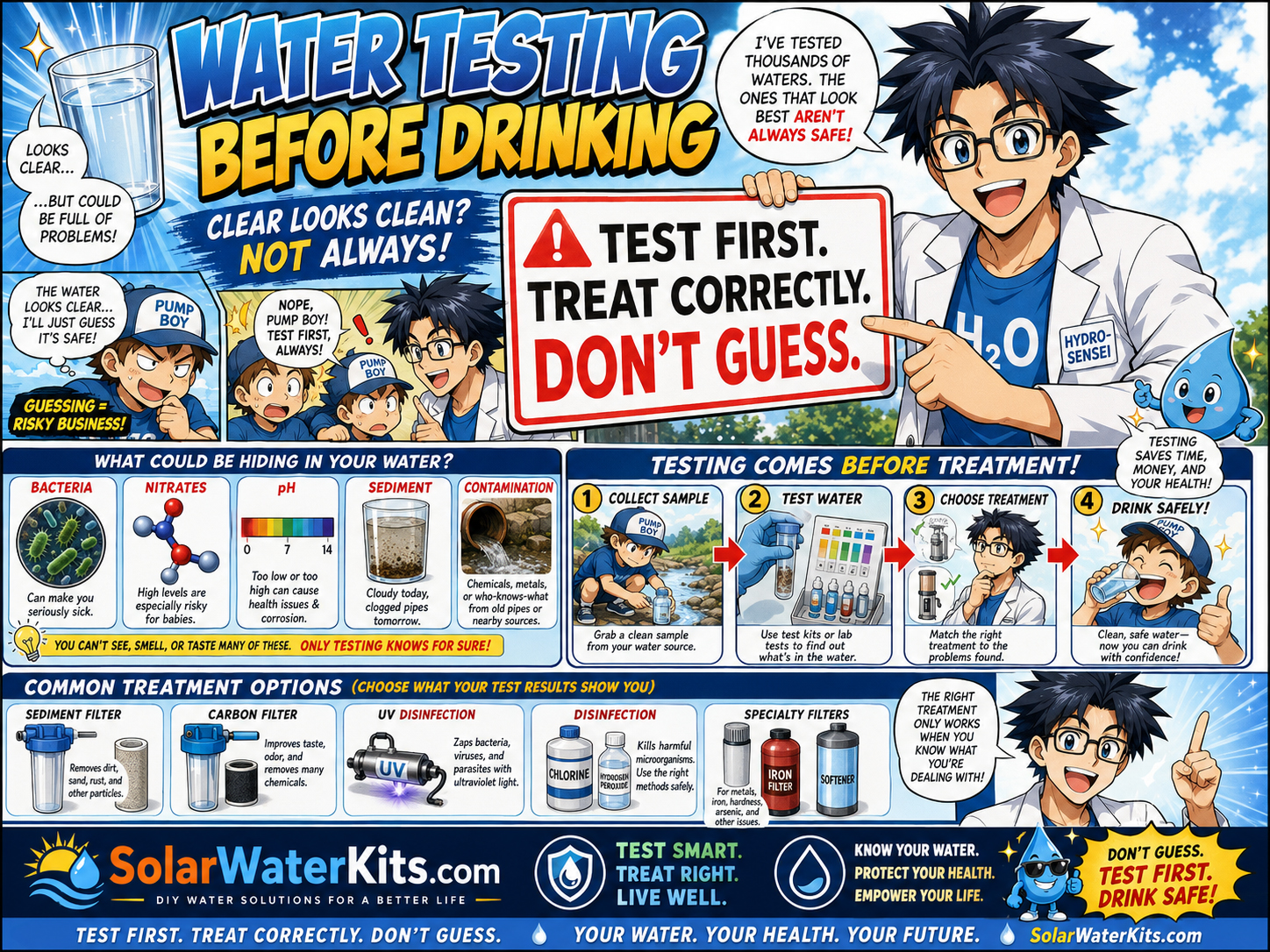
Product water must be verified, especially for drinking or sensitive uses.
Water safety →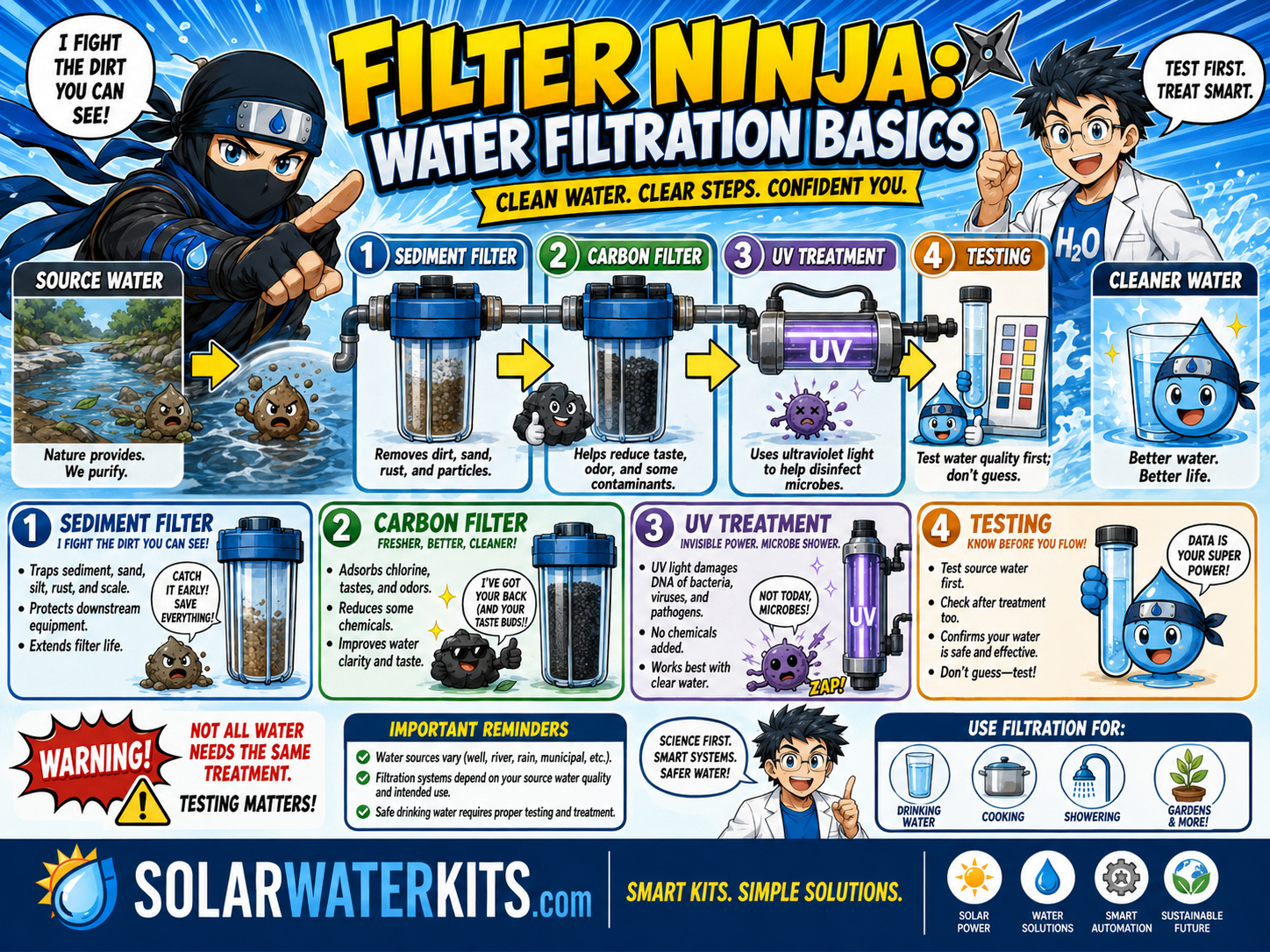
Good pretreatment protects expensive desalination components.
Filtration basics →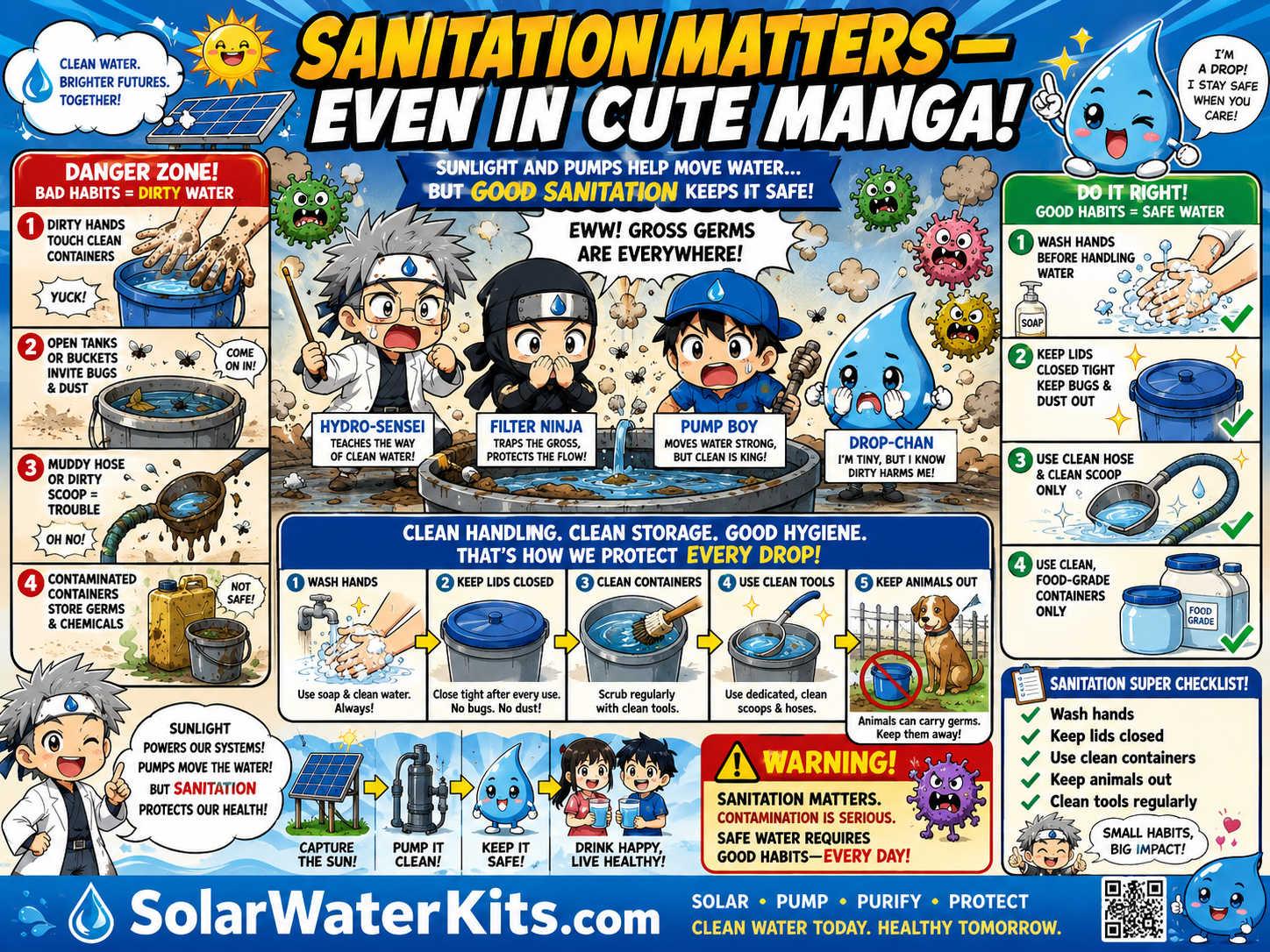
Storage, hoses, tanks, outlets, and hands must not defeat the treatment system.
| Issue | Why It Matters | Typical Response |
|---|---|---|
| Low mineral content | Water may taste flat or be corrosive. | Remineralization or pH adjustment may be needed. |
| Microbial risk after treatment | Clean water can be recontaminated in storage. | Disinfection, sanitary storage, and testing. |
| High TDS breakthrough | May indicate membrane failure or poor performance. | Conductivity/TDS monitoring and membrane service. |
| Scaling or fouling | Reduces membrane performance and raises pressure needs. | Pretreatment, cleaning, anti-scalant, maintenance. |
| Brine disposal | Reject water can harm soils, drains, or ecosystems. | Approved discharge or disposal plan. |
| Corrosion | Saltwater and low-mineral product water can attack materials. | Material compatibility and water chemistry review. |
Desalination produces product water and reject brine. Brine is concentrated source water. It may include salts, pretreatment chemicals, cleaning residues, and contaminants concentrated from the feed water. Disposal is a major design and permitting issue.
Disposal is part of the system design.
Solar-powered desalination may be useful in niche cases where water is scarce, sunlight is strong, fuel logistics are difficult, grid power is weak, and maintenance capability exists.
Possible when intake, energy, brine discharge, corrosion, storage, and maintenance are professionally designed.
Brackish water may require less energy than seawater, but still needs testing, pretreatment, membrane design, and brine handling.
Small systems may support niche emergency or marine applications, but output, maintenance, and power limits must be realistic.
Sometimes the better answer is rainwater capture, well treatment, storage, conservation, leak reduction, irrigation efficiency, or hauled water. Desalination is powerful, but not always the first move.
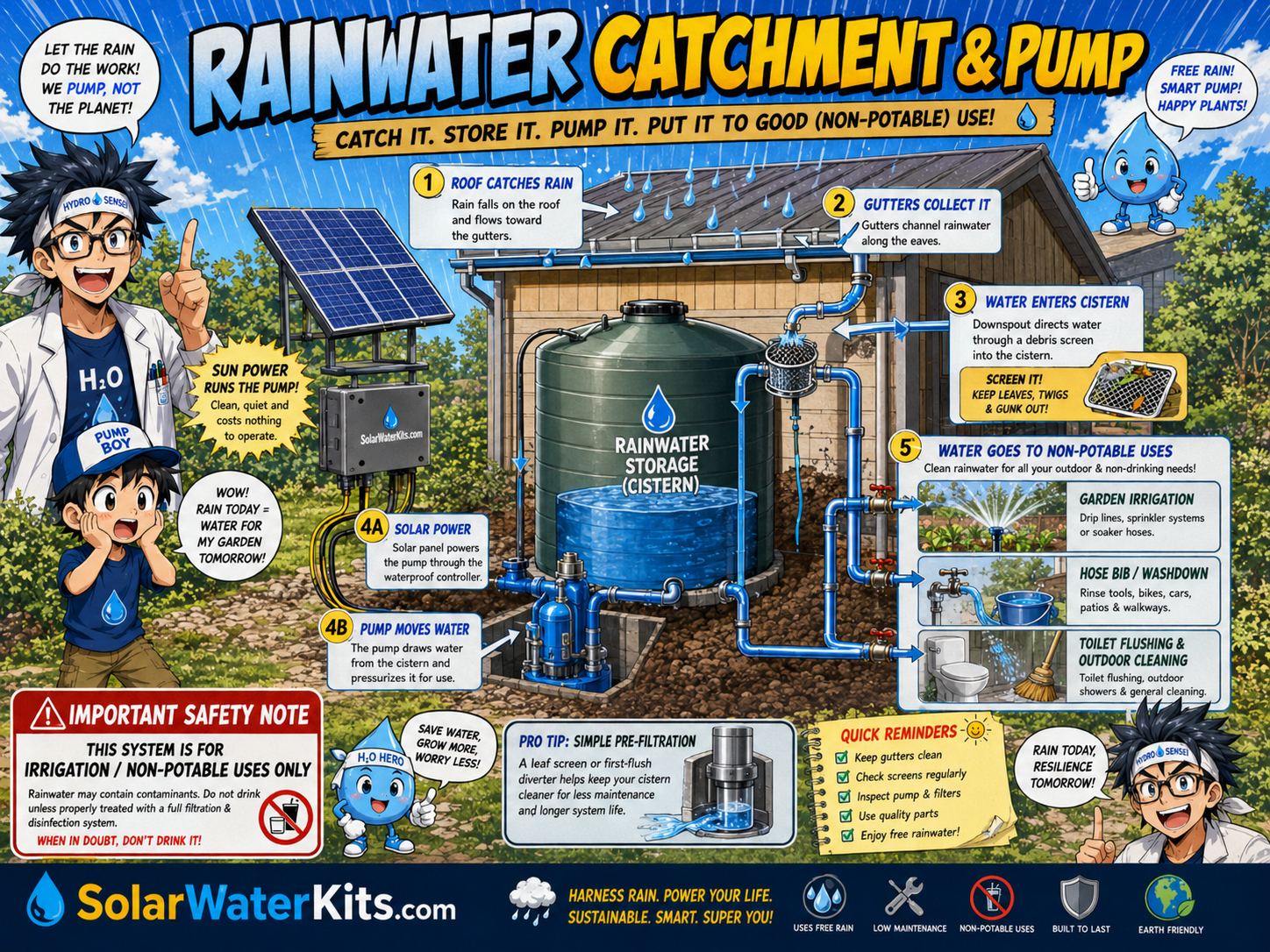
Rainwater can help for approved uses where rainfall and rules support it.
Rainwater →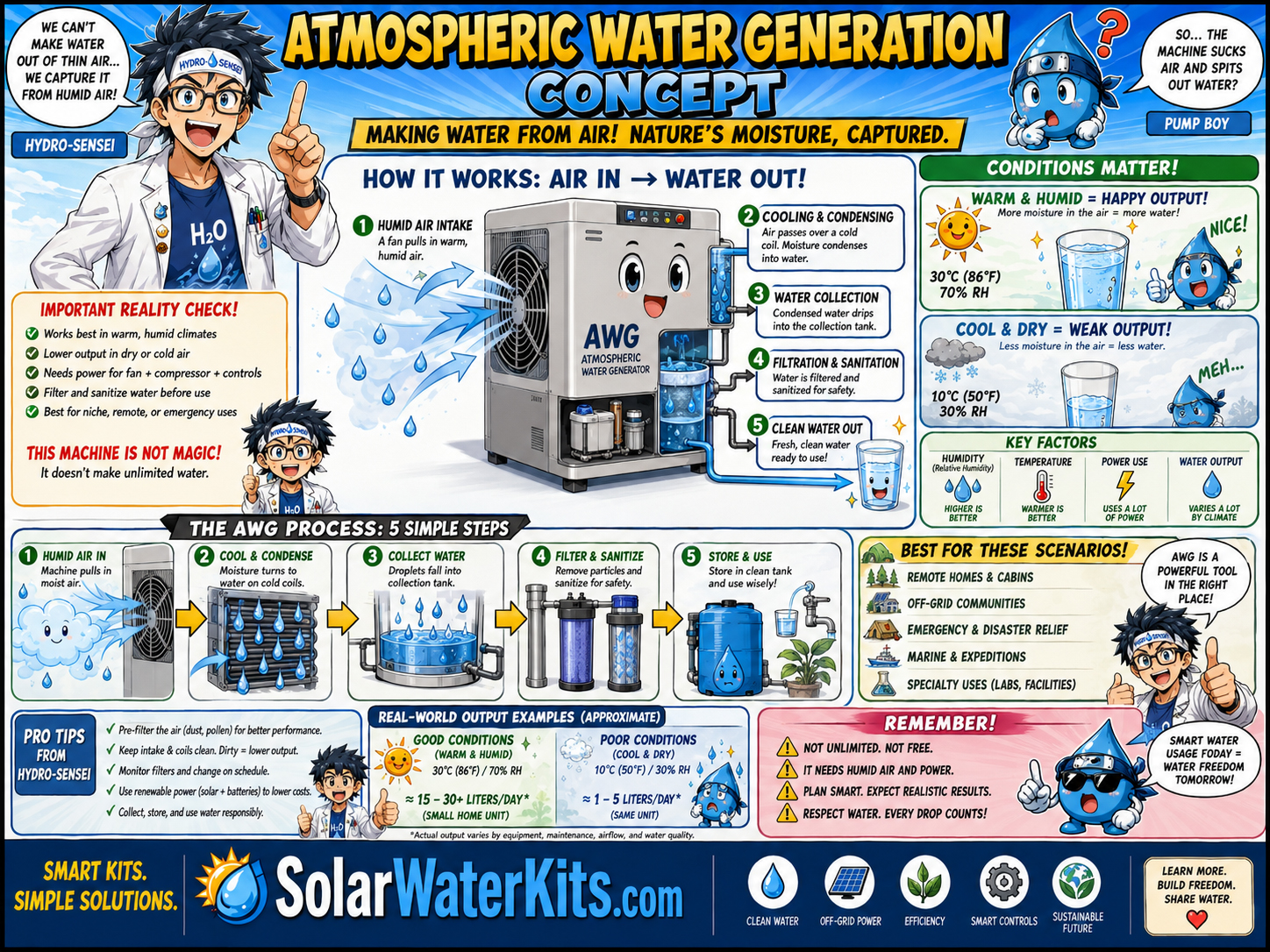
Atmospheric water generation depends heavily on humidity, temperature, and energy input.
AWG concept →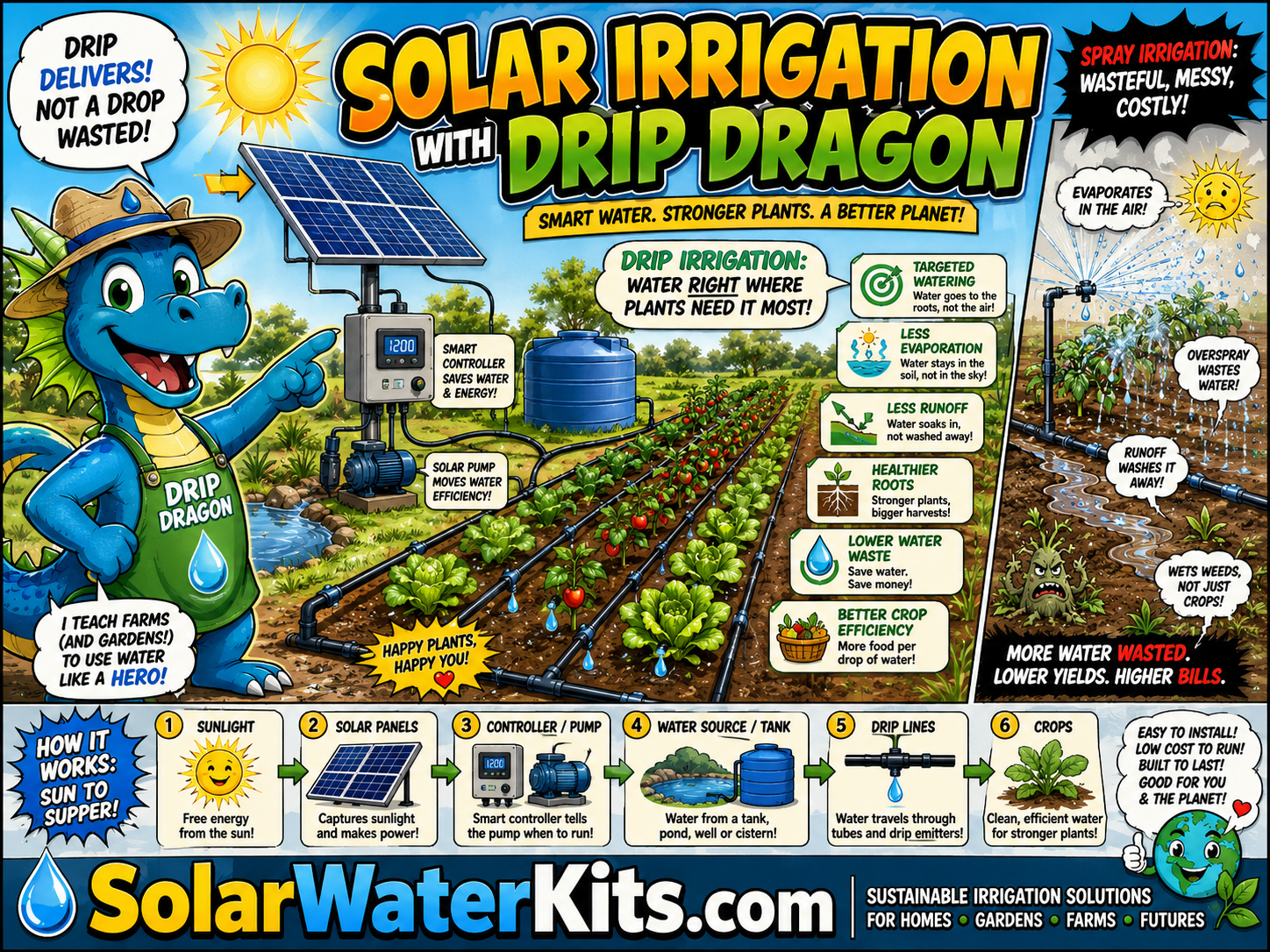
Reducing demand can be cheaper than producing difficult water.
Solar irrigation →Desalination systems may involve seawater or brackish water intake, high pressure, electrical equipment, pumps, pretreatment chemicals, membranes, corrosion, pressure vessels, potable-water treatment, brine discharge, environmental permits, and public-health rules. This page is educational only and is not an installation manual.
Humidity, temperature, energy use, filtration, sanitation, and realistic output.
AWG concept →
Drinking-water use demands proof, treatment, storage, and maintenance.
Water safety →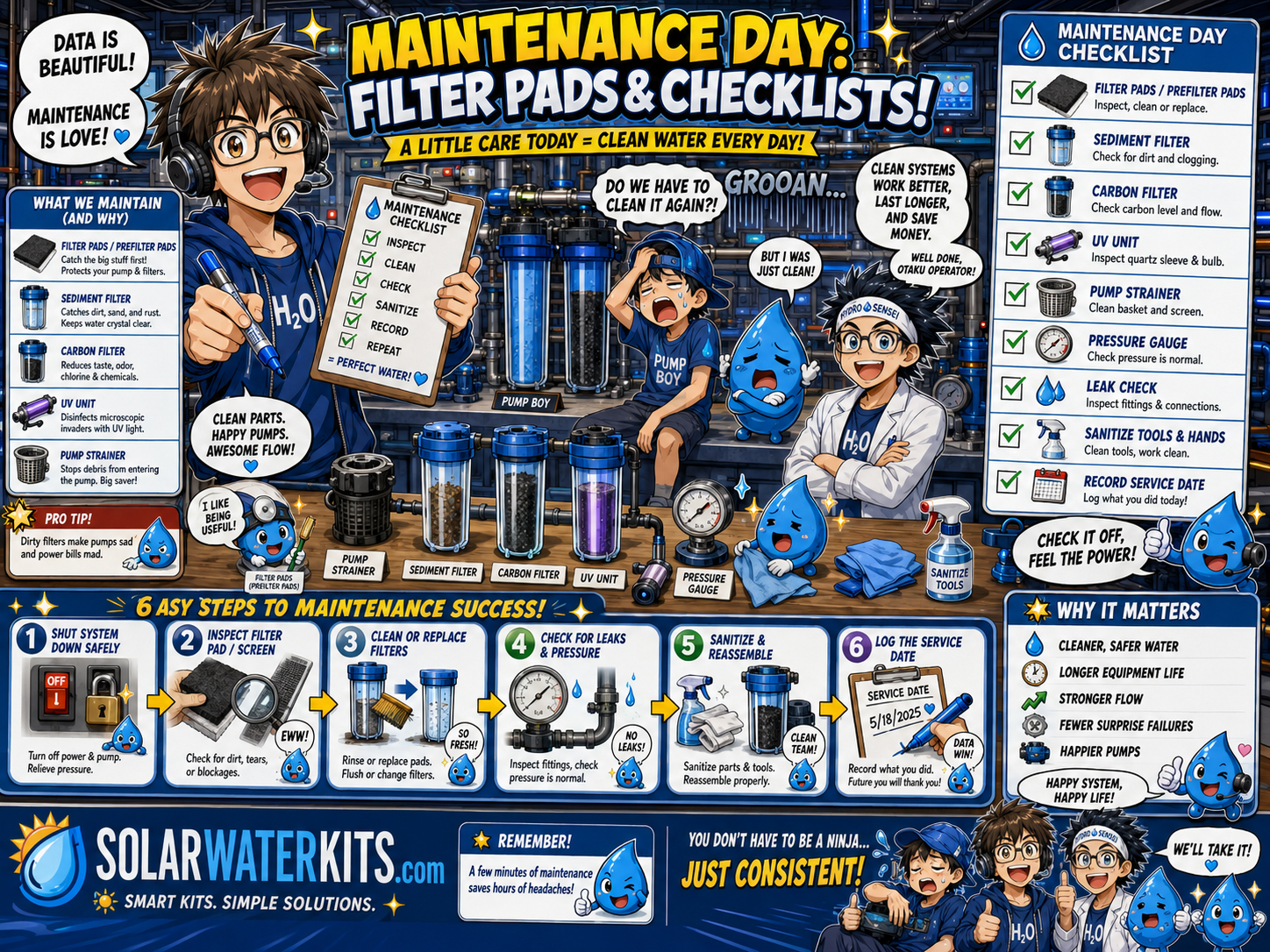
Filters, pumps, membranes, sensors, pressure gauges, and logs keep systems alive.
Maintenance →