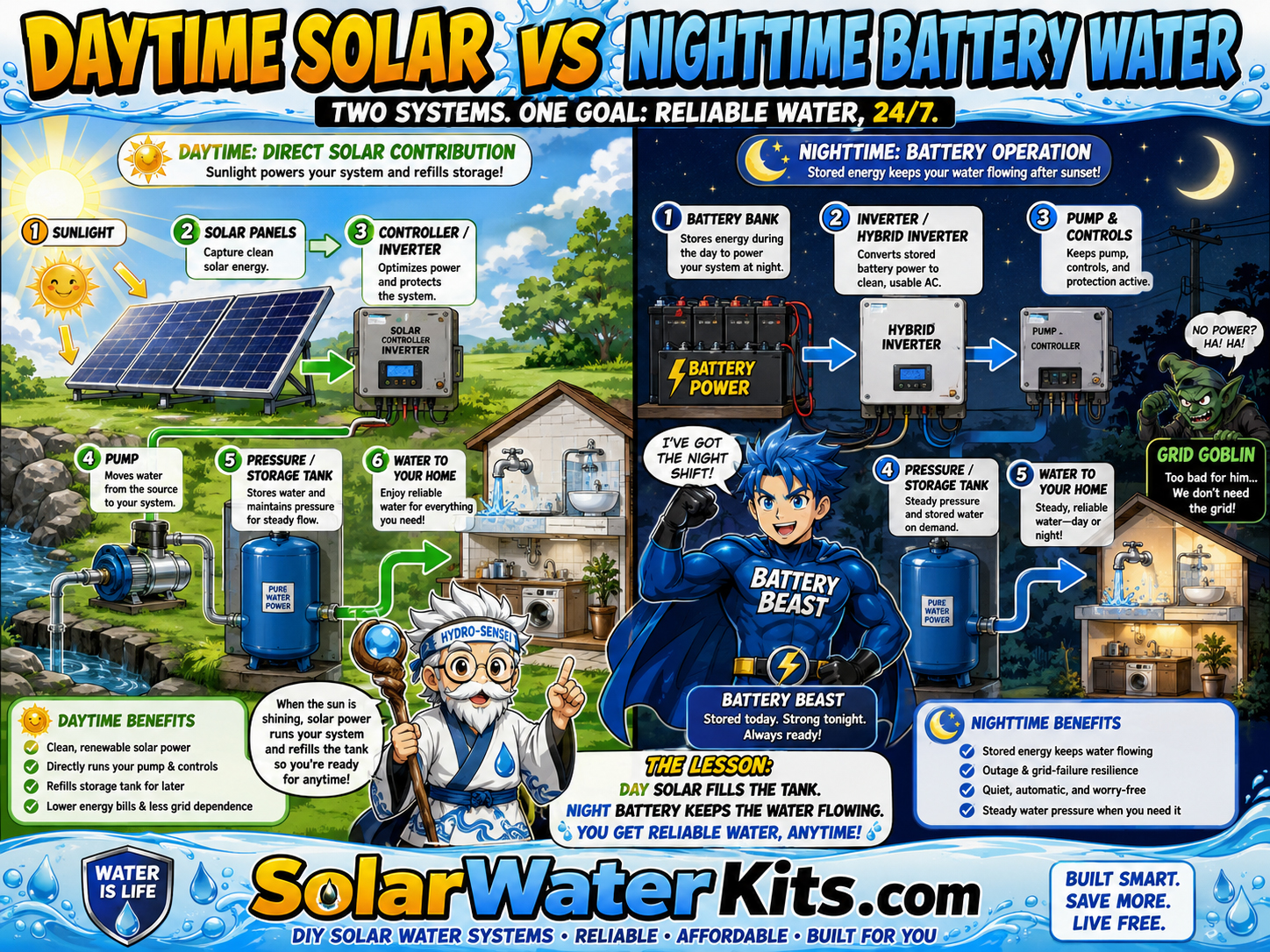
Solar Timing
Run when solar is strong
AWG may fit better as a daytime solar load if storage can hold produced water for later use.
Stored water →Pump Boy sees humid air and shouts, “Free water!” Hydro-Sensei grabs the calculator. Atmospheric water generation can make water from air, but output depends on humidity, temperature, airflow, energy use, filtration, sanitation, maintenance, and realistic expectations.
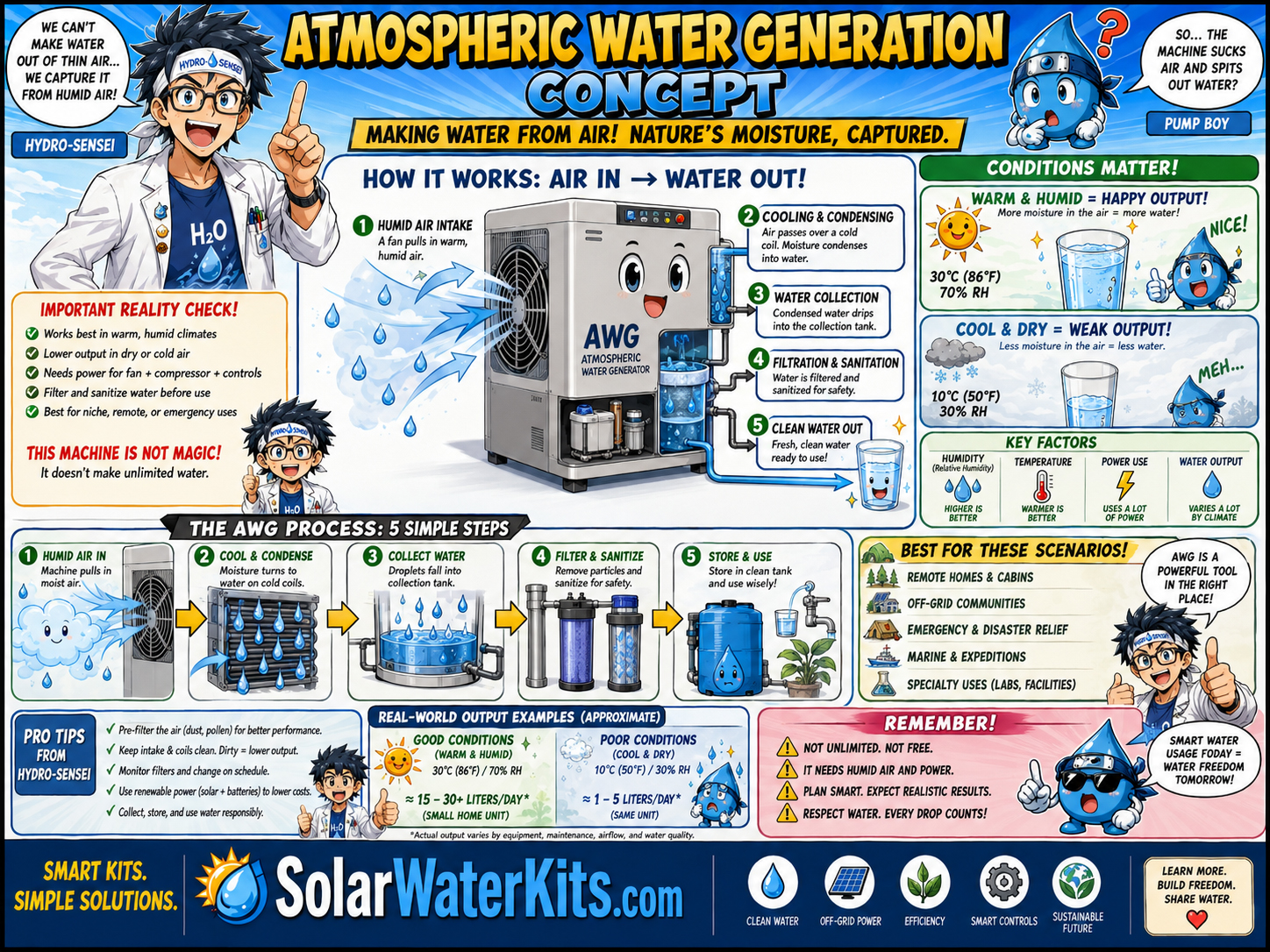
AWG pulls moisture from air. The more warm, humid air available, the easier the job can be. Dry air, cold air, poor airflow, dirty filters, and weak power turn the manga dream into a tiny drip.
The concept is simple. The performance is climate-dependent.
The machine pulls in air. Humidity, temperature, dust, smoke, pollen, and air quality affect performance and maintenance.
Some systems cool air below the dew point to condense water. Other concepts use desiccants or sorption materials.
Condensed water is collected, but it still needs sanitary handling, treatment, and storage.
Water may need filtration, UV, minerals, disinfection, tank sanitation, and regular testing before drinking use.
Produced water must be stored safely and delivered through clean, labeled plumbing or dispensing equipment.
Air filters, coils, tanks, tubing, UV lamps, mineral cartridges, and sanitation routines decide long-term usefulness.
Atmospheric water generation often uses electricity for fans, compressors, cooling, controls, pumps, filtration, and disinfection. Solar can help, but the water output must be compared honestly against the energy required.
AWG may fit better as a daytime solar load if storage can hold produced water for later use.
Stored water →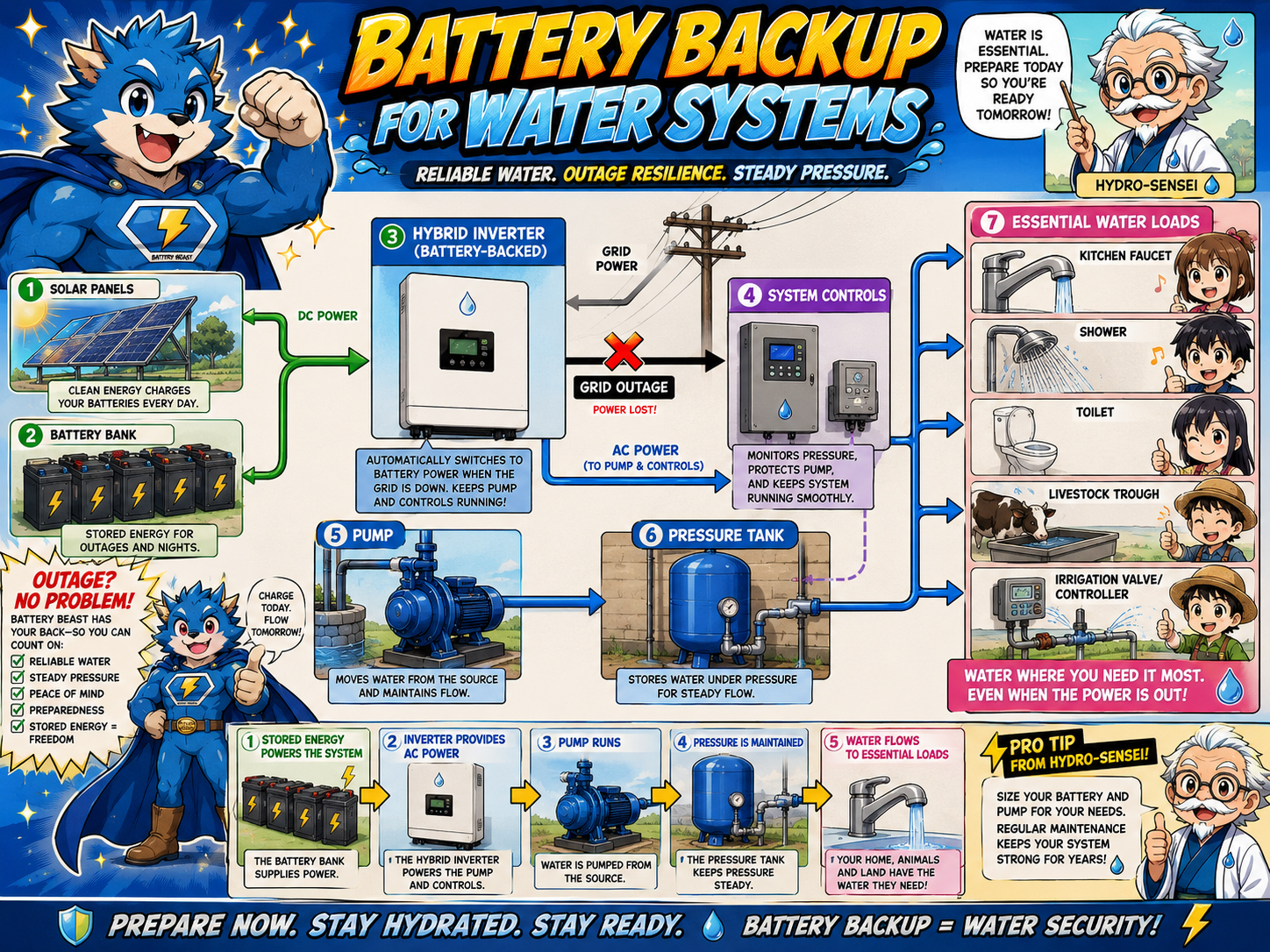
Running AWG at night means the battery must carry the fans, cooling, pumps, and treatment loads.
Battery backup →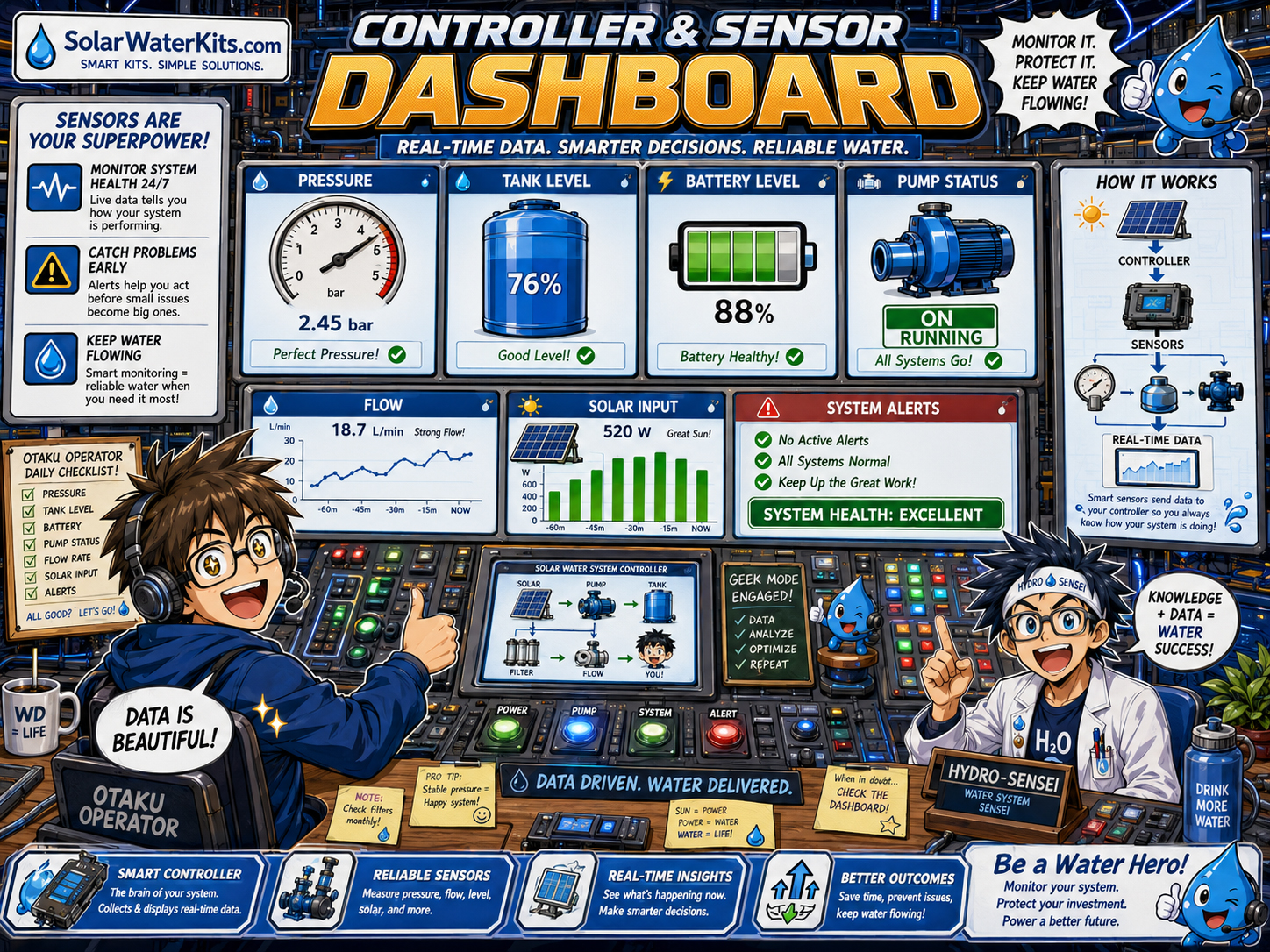
Energy use, water output, humidity, temperature, tank level, and filter status should be tracked.
Controllers →AWG is a water appliance and an energy appliance at the same time. The key metric is not just “gallons per day.” It is gallons per day under local climate conditions, with a real energy budget and a maintenance plan.
AWG output can change dramatically by location and season. A humid coastal night, a tropical afternoon, a desert summer day, and a cold dry mountain morning are not the same water source.
AWG marketing can sound magical. The serious questions are output, energy, local climate, maintenance, water quality, storage, cost, and backup water planning.
| Question | Why It Matters | Hydro-Sensei Warning |
|---|---|---|
| What humidity and temperature were used for the rated output? | Output can fall when air is cooler or drier. | Rated output may not match your site. |
| How many watts per gallon? | Energy intensity drives solar, battery, and cost planning. | Water from air is often energy-intensive. |
| What filters and treatment are included? | Condensate still needs sanitary handling and treatment. | Do not assume it is safe just because it condensed. |
| How is the tank cleaned? | Stored water can be recontaminated. | Maintenance access matters. |
| What happens during smoke, dust, or wildfire ash? | Air quality can affect filters and system cleanliness. | Air source quality matters too. |
| What is the backup water plan? | AWG output may be too low during some conditions. | Do not make AWG the only plan without proof. |
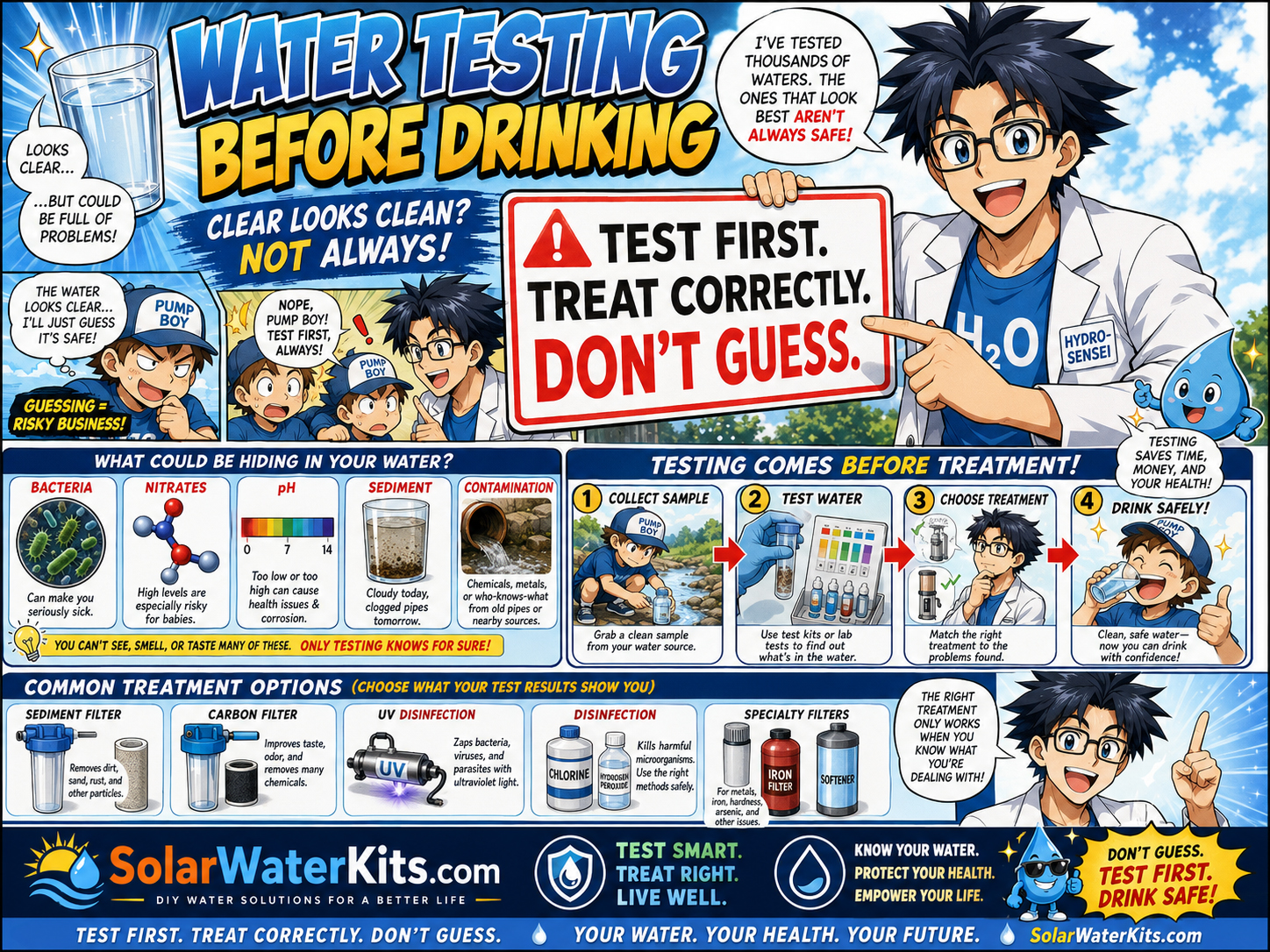
AWG water for drinking still needs water-quality verification and sanitation discipline.
Water safety →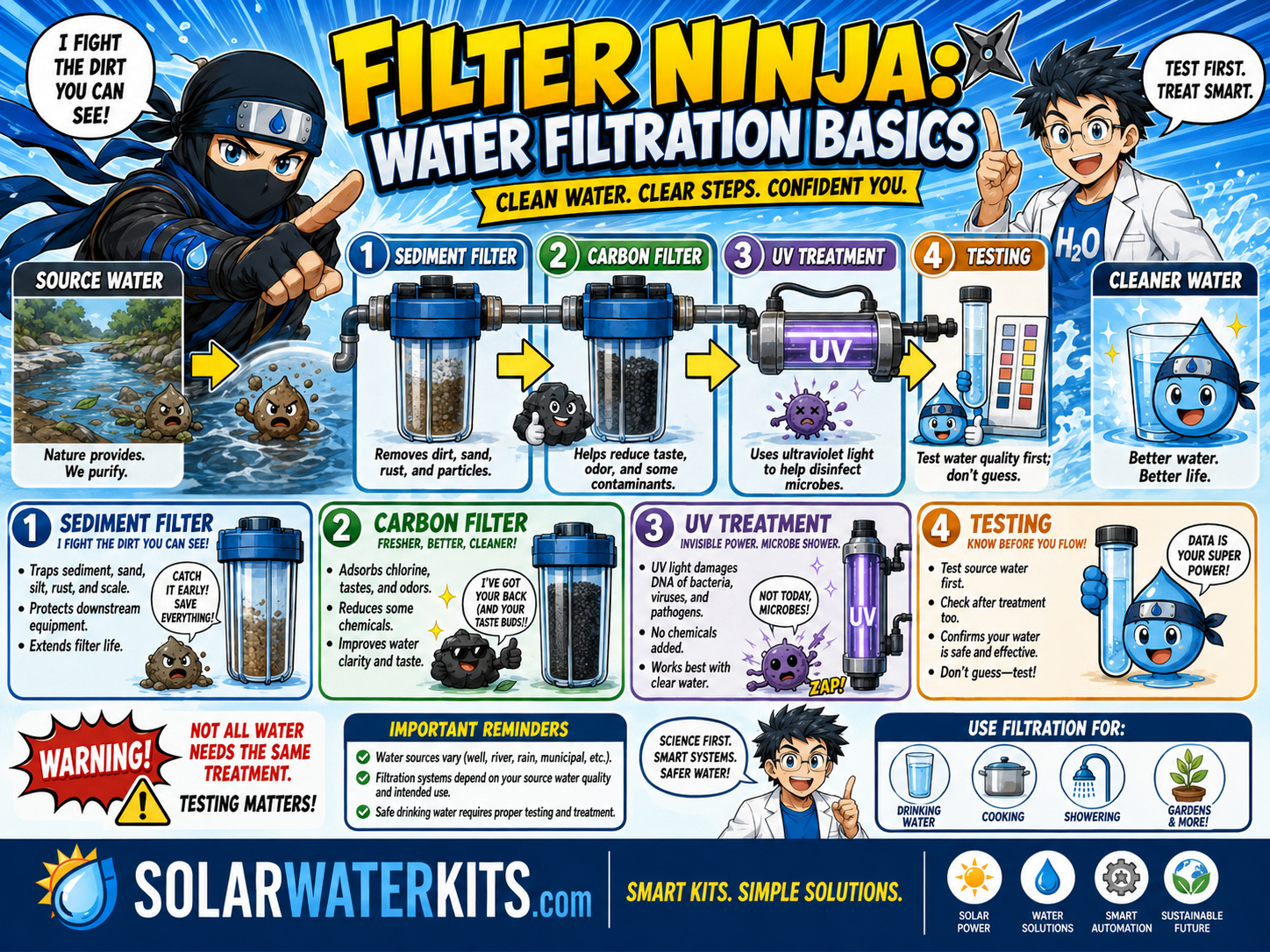
Filters, UV, mineral cartridges, clean tanks, and disinfection may all play roles.
Filtration basics →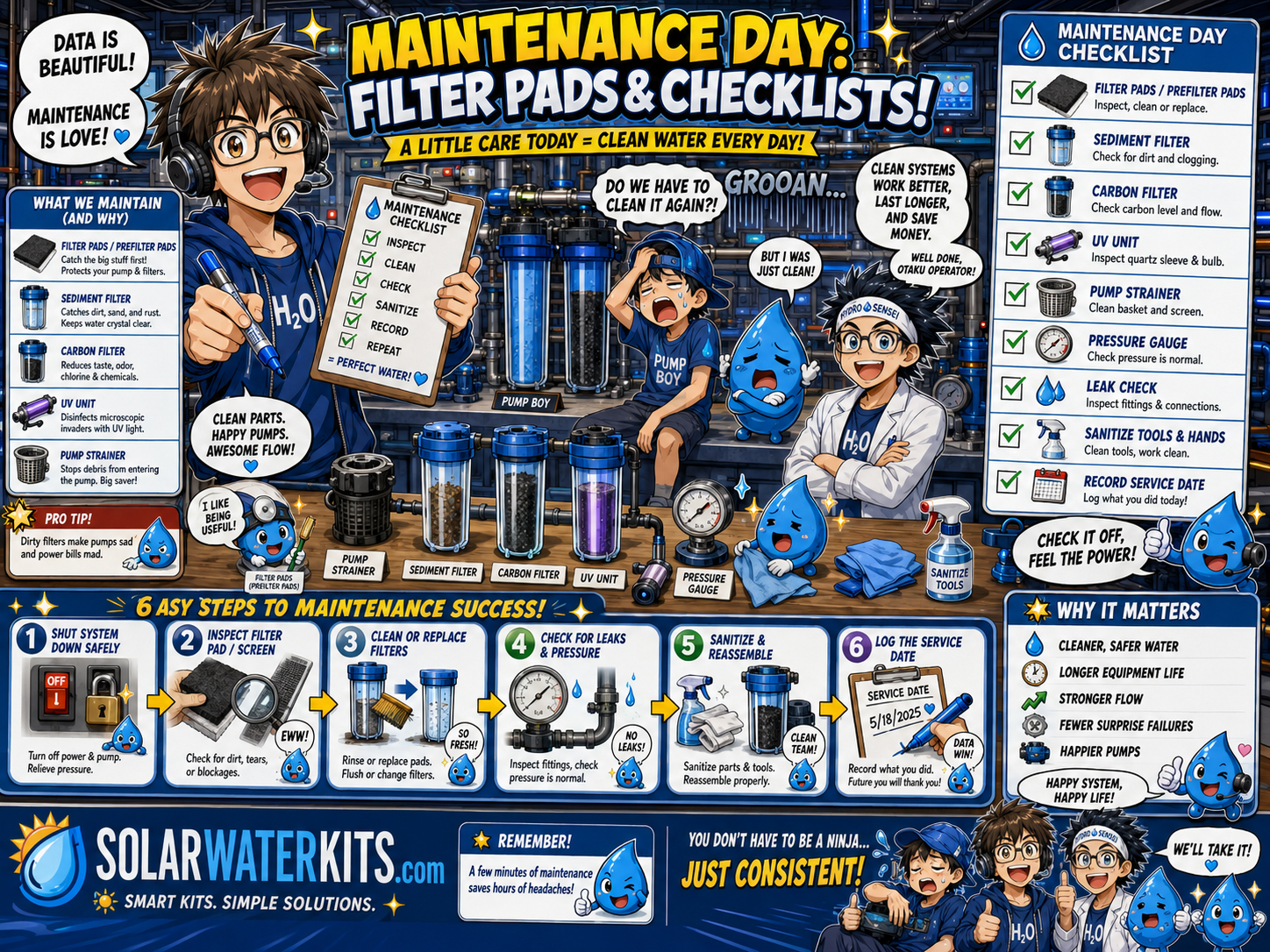
AWG systems need air-filter cleaning, water-tank sanitation, and treatment maintenance.
Maintenance →Once AWG produces water, the system still needs clean storage, sanitary piping, treatment maintenance, tank turnover, and protection from recontamination. A dirty tank can defeat a clean condenser.
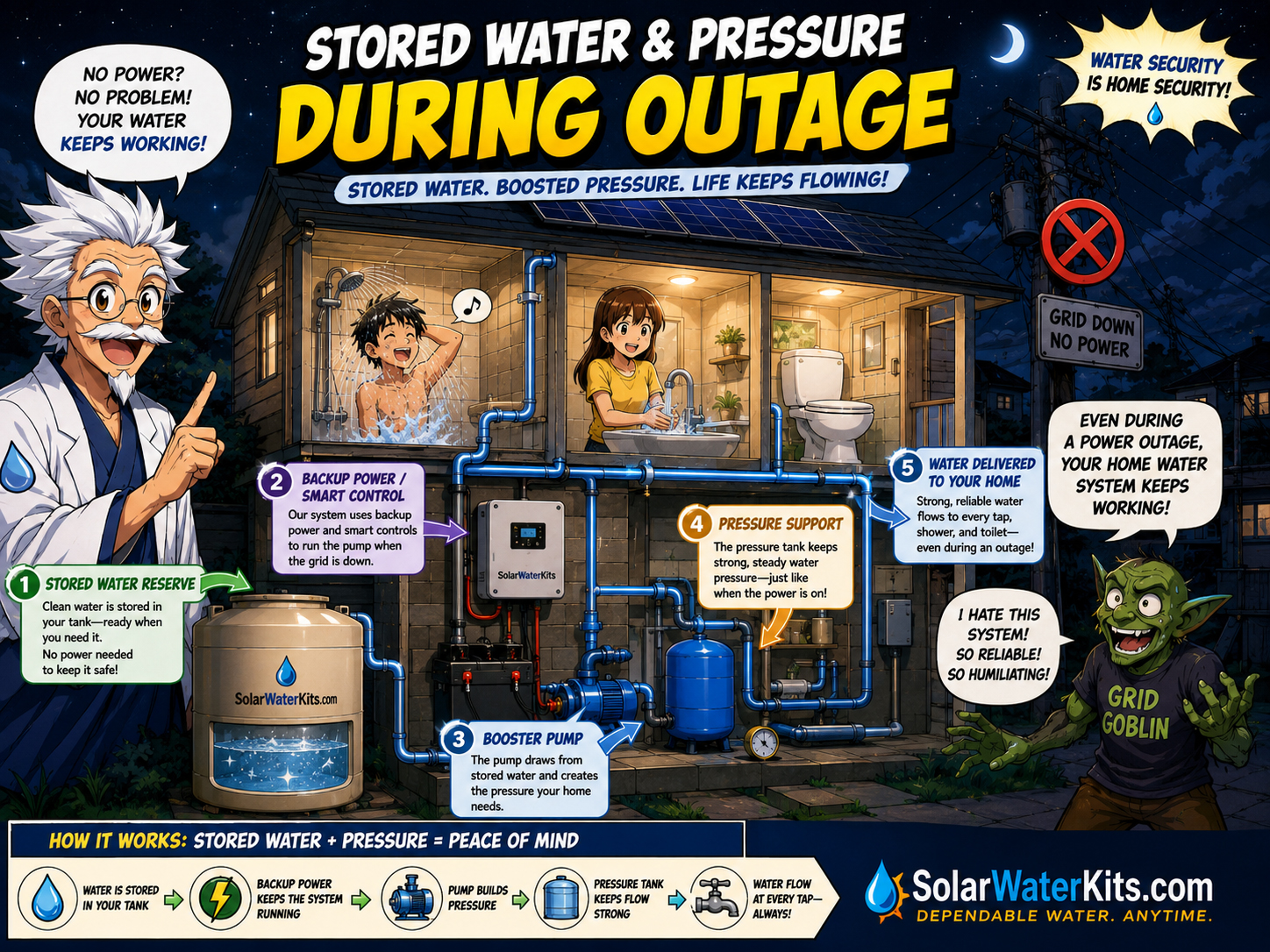
Produced water must be stored safely or used safely.
In some places, rainwater catchment, well treatment, desalination, storage, conservation, or hauled water may make more sense than pulling water from air. The site conditions decide.
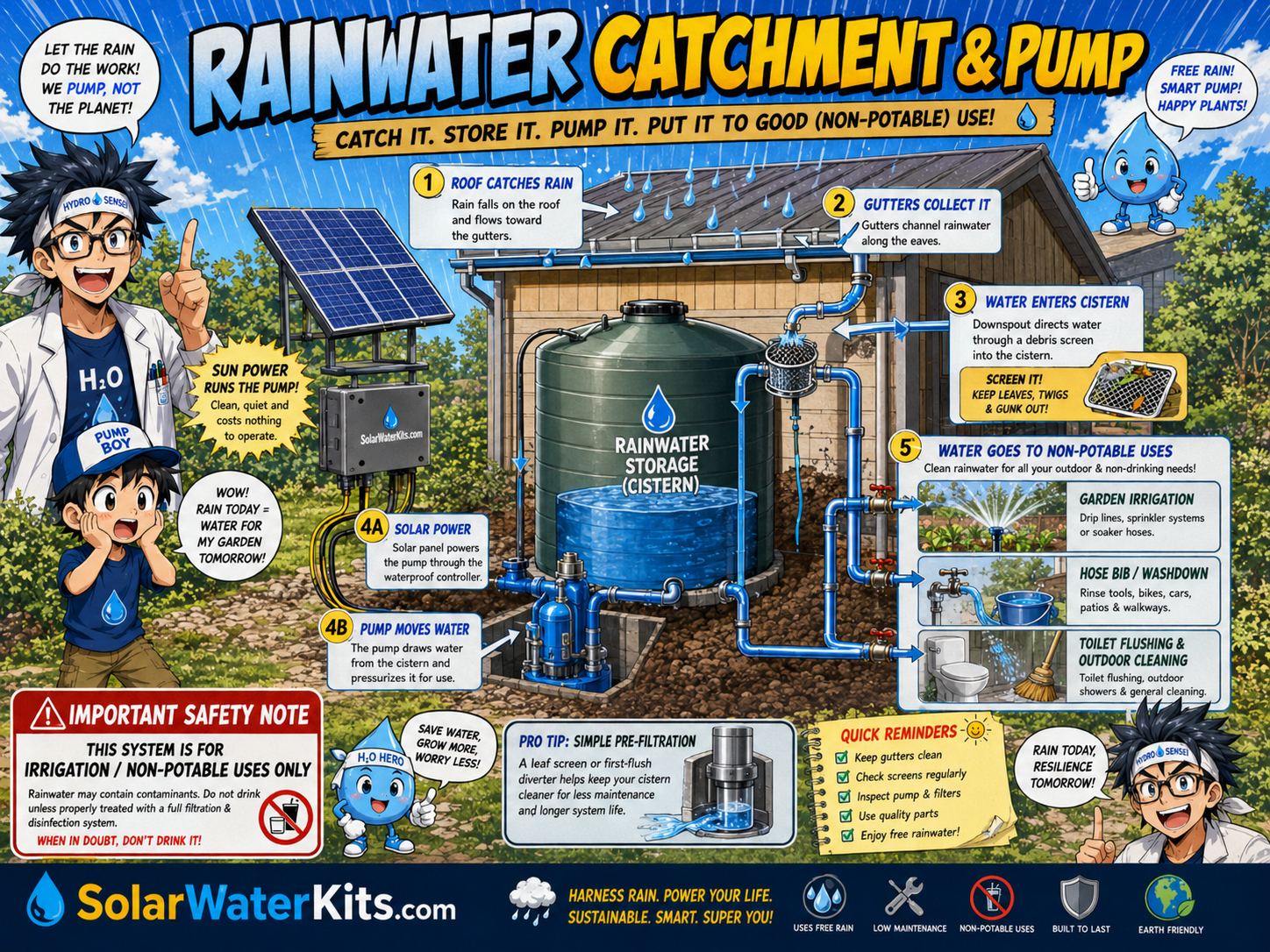
Rainwater may be useful for approved uses where rainfall and storage make sense.
Rainwater →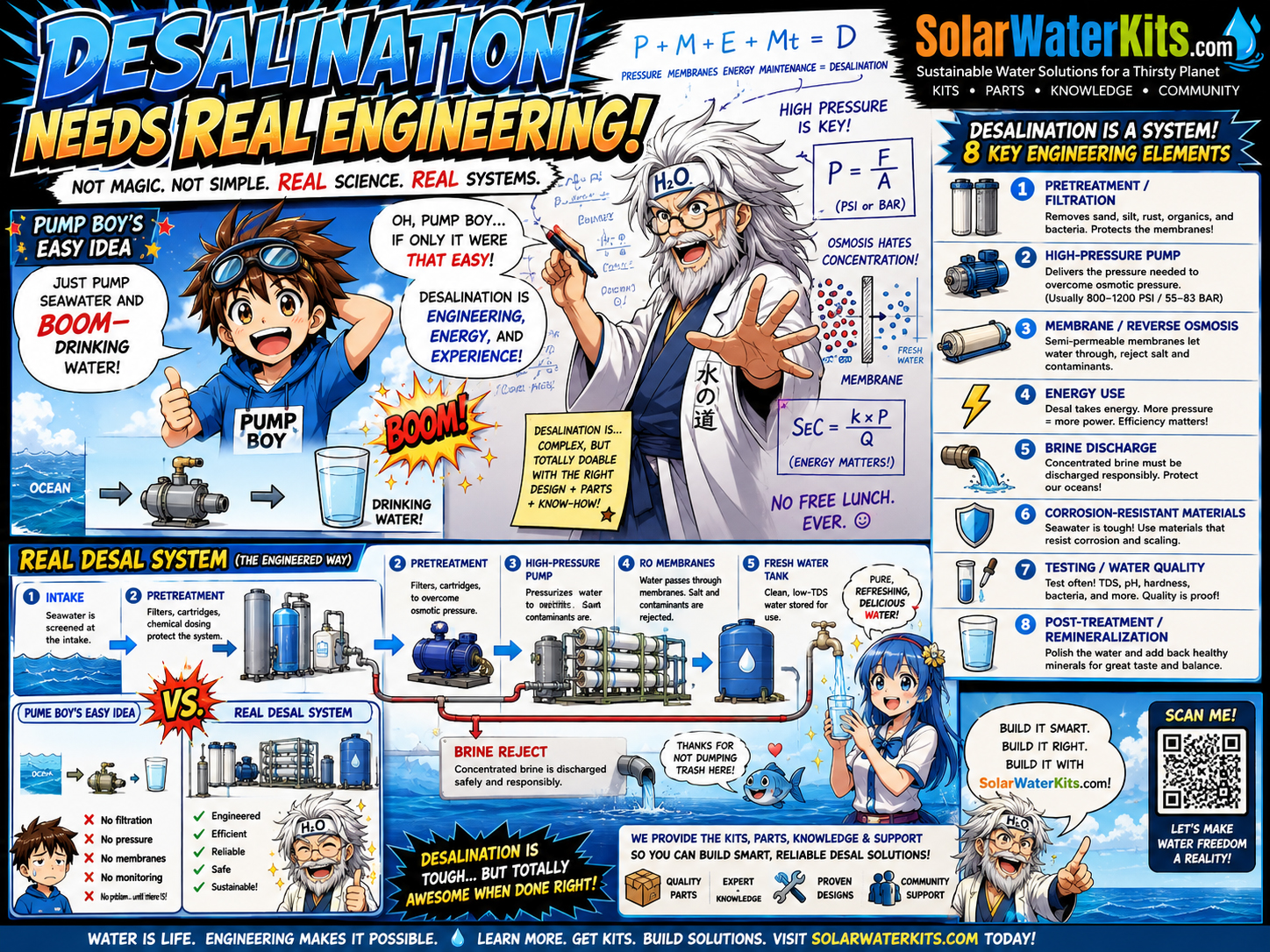
Desalination needs pretreatment, pressure, membranes, brine handling, and testing.
Desalination →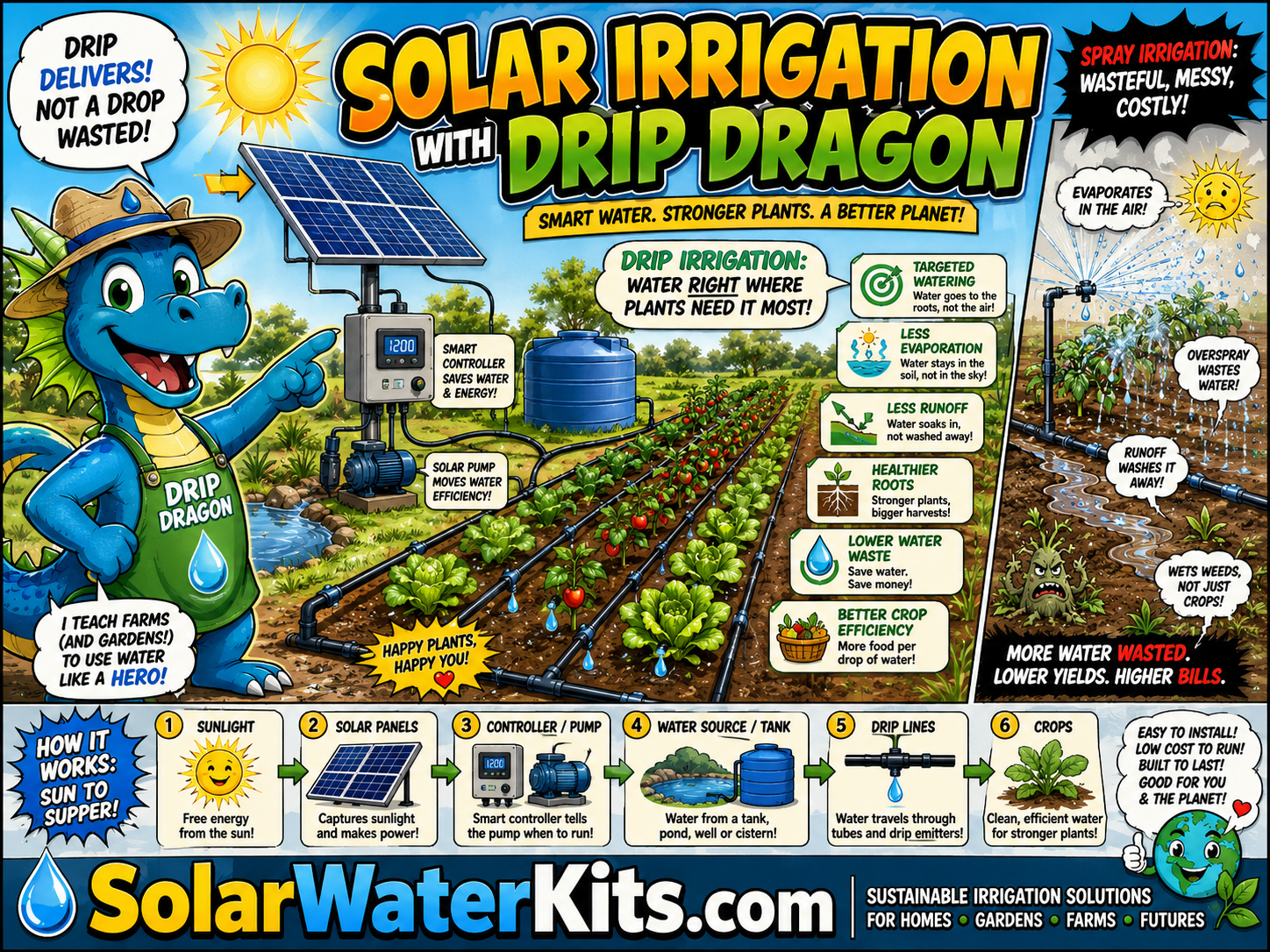
Reducing demand can be cheaper than making difficult water.
Solar irrigation →Atmospheric water generation can be interesting for education, demonstration, small drinking-water support, humid climates, emergency backup concepts, and specialized remote uses — but only with realistic output and maintenance assumptions.
AWG is a powerful teaching tool because it connects humidity, energy, condensation, filtration, sanitation, and storage in one visible system.
Warm humid climates may support better output than dry or cold regions, but actual performance still depends on equipment and conditions.
AWG may supplement stored water or drinking-water planning, but should not replace a proven emergency water plan without testing.
AWG systems may involve compressors, fans, electrical equipment, condensate surfaces, filters, UV lamps, mineral cartridges, storage tanks, sanitation procedures, air-quality issues, potable-water rules, and performance claims that depend on climate. This page is educational only.
Pressure, membranes, pretreatment, brine, energy, and engineering discipline.
Desalination →
Testing, treatment, storage, sanitation, potable/non-potable labeling, and maintenance.
Water safety →
Storage tanks, pressure, pumps, safe handling, and emergency reserves.
Stored water →