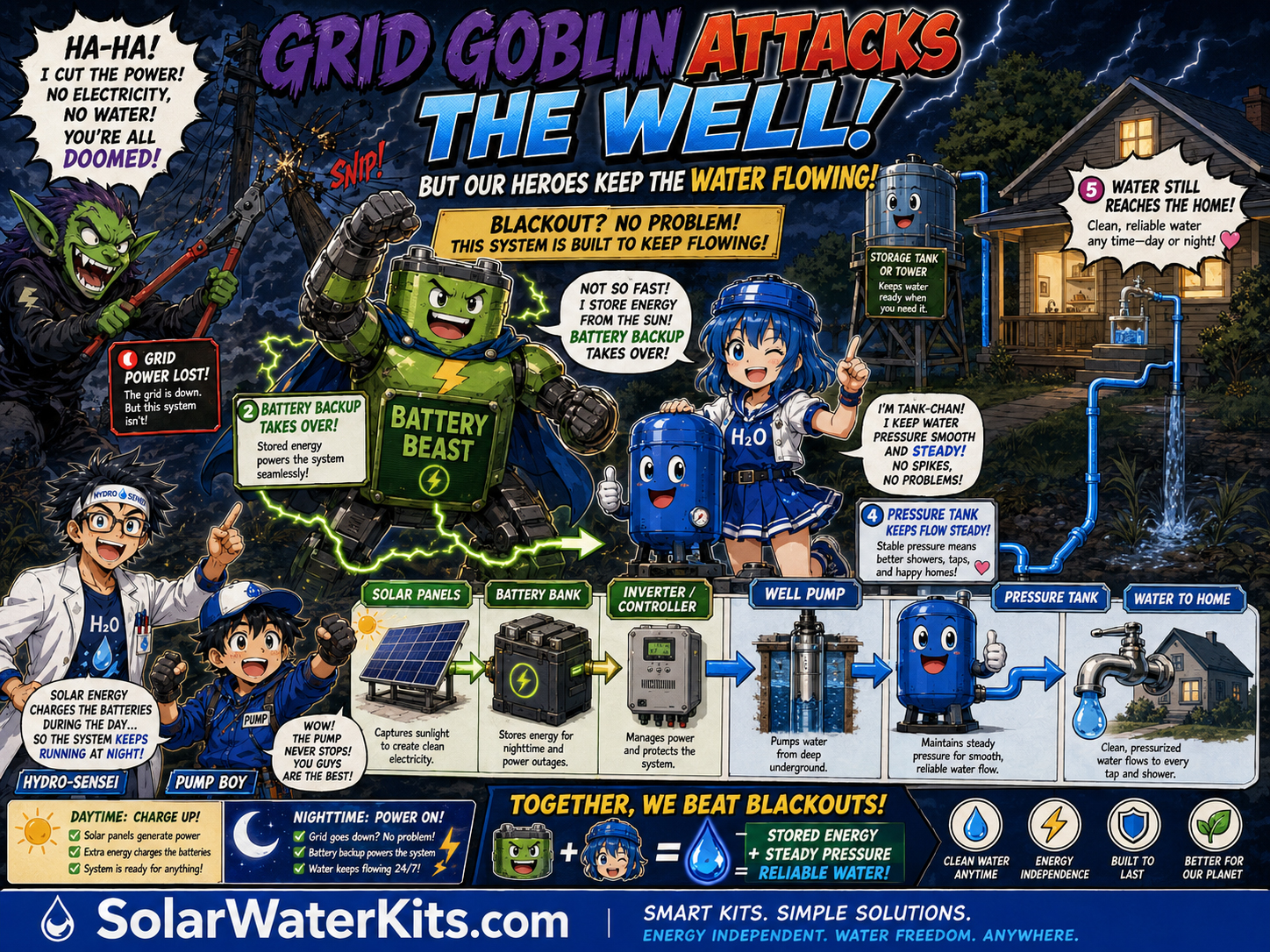
Blackout
Power fails, pump stops
Battery backup, stored water, critical-load panels, and pressure tanks can keep essentials alive.
Battery pump backup →Disasters do not politely wait for the pump, the grid, the valve label, or the water filter. Hydro-Sensei teaches a practical manga map for disaster water: stored water, safe water, backup pumping, pressure, sanitation, shutoffs, labels, and real priorities.
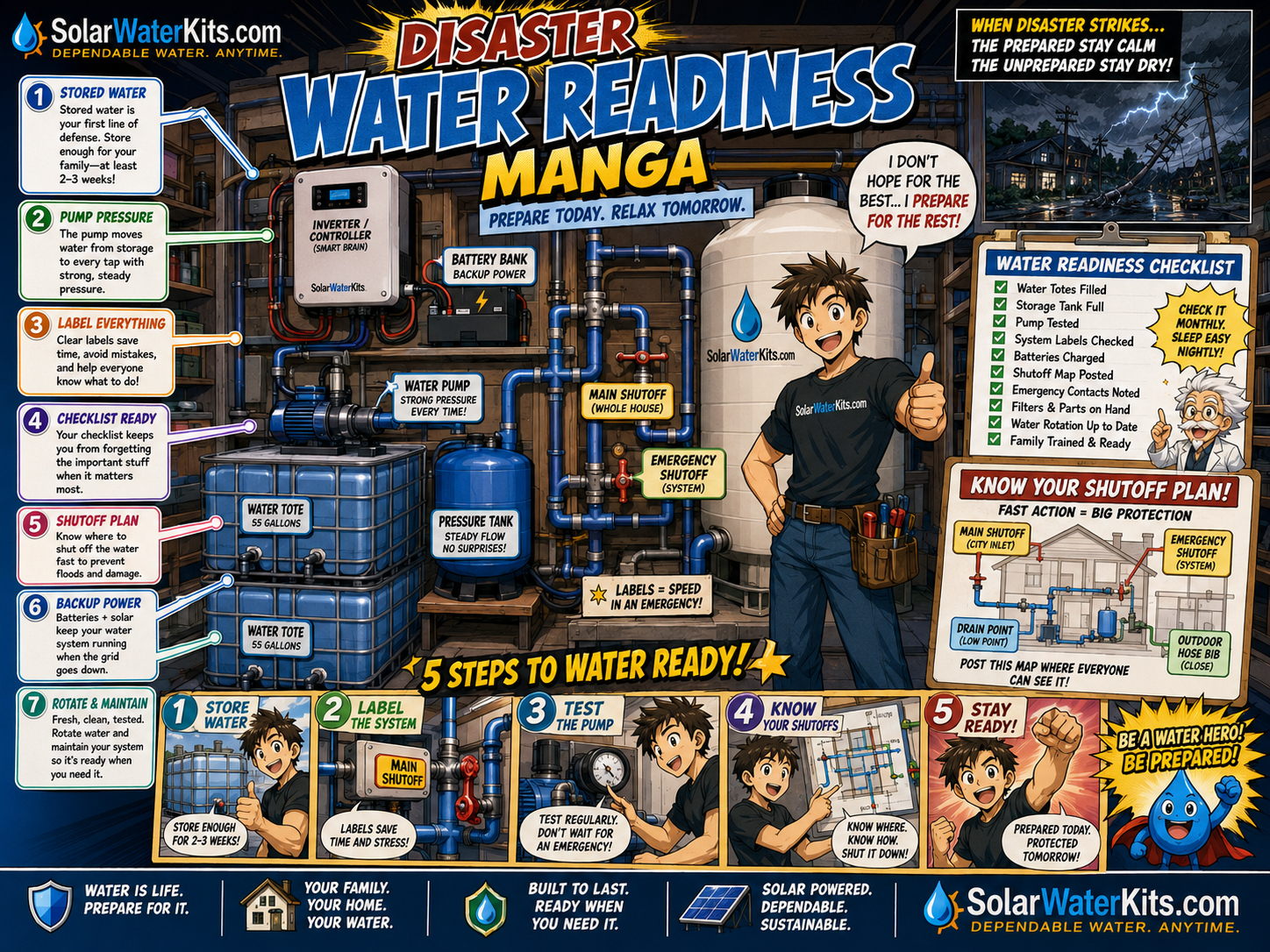
A disaster water system is layered. Some water is for drinking. Some is for toilets. Some is for washing. Some is for animals. Some is for firefighting reserve or property protection. Mixing those categories without design is how manga chaos becomes real trouble.
Stored gallons are the reserve. Pumps and pressure make them usable.
Keep safe drinking water separate, protected, rotated, and clearly labeled.
Stored water for toilets, washing, cleaning, animals, irrigation triage, or approved non-potable use.
Solar, batteries, inverters, pumps, or manual alternatives that can move water when the grid fails.
Filter and treat water according to source and intended use. Do not guess because the water looks clear.
The system must be understandable when people are tired, stressed, and the lights are out.
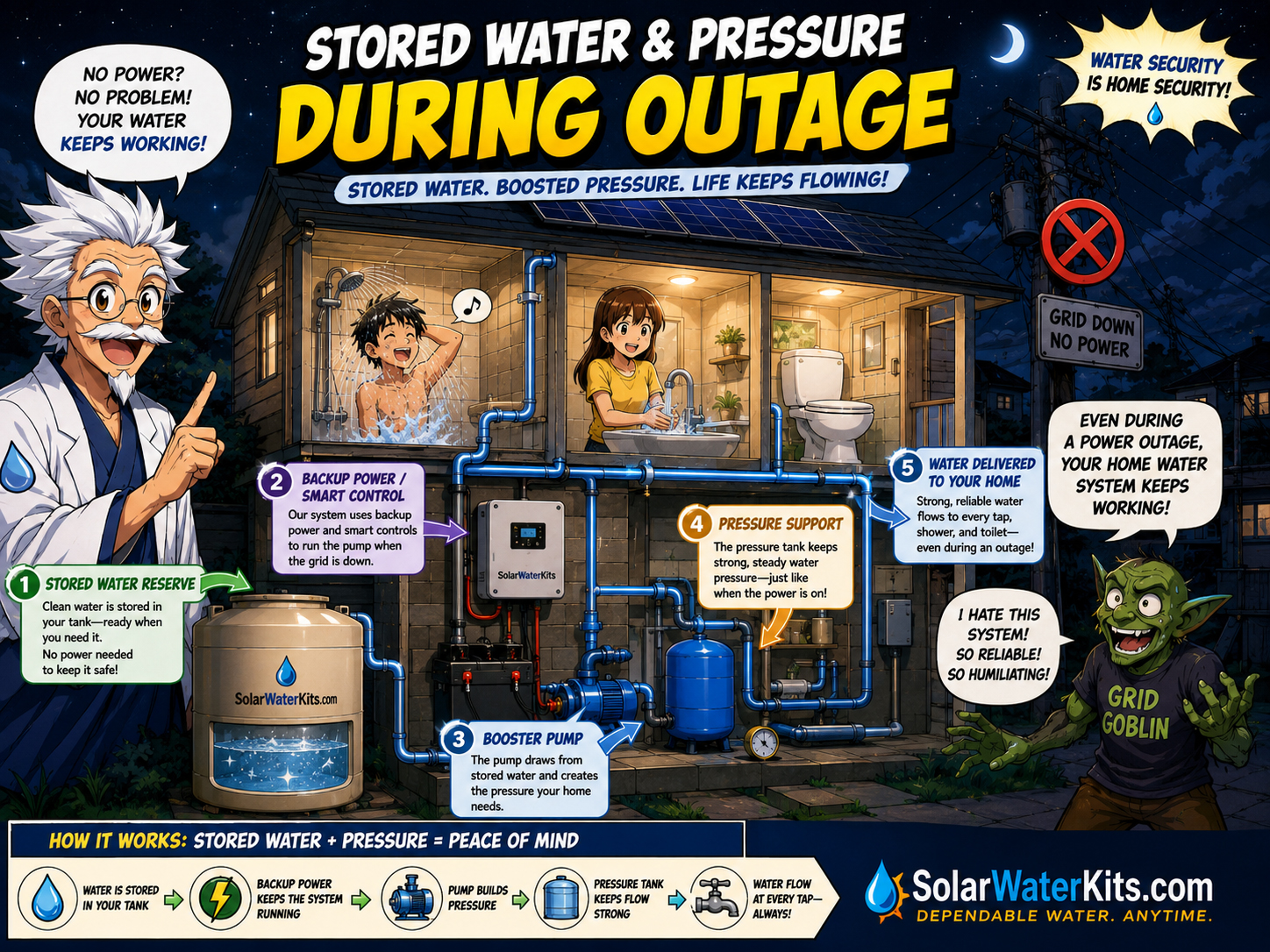
Grid Goblin is only one villain. Earthquakes, wildfires, storms, floods, heat waves, freezing weather, pump failures, contamination events, and utility outages each attack the water system differently.
Battery backup, stored water, critical-load panels, and pressure tanks can keep essentials alive.
Battery pump backup →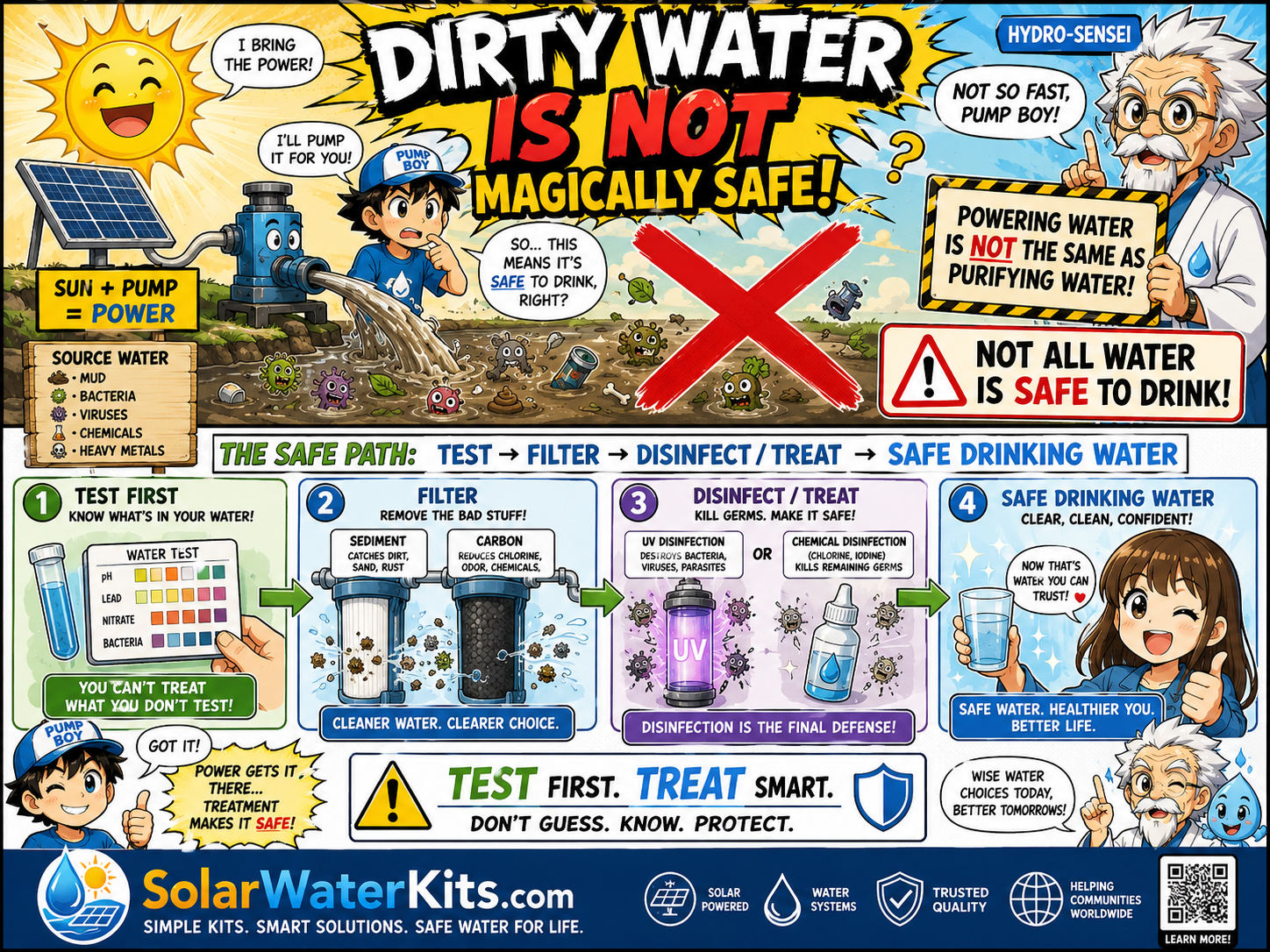
Filtration, disinfection, testing, separation, and clear labeling become the main event.
Filtration basics →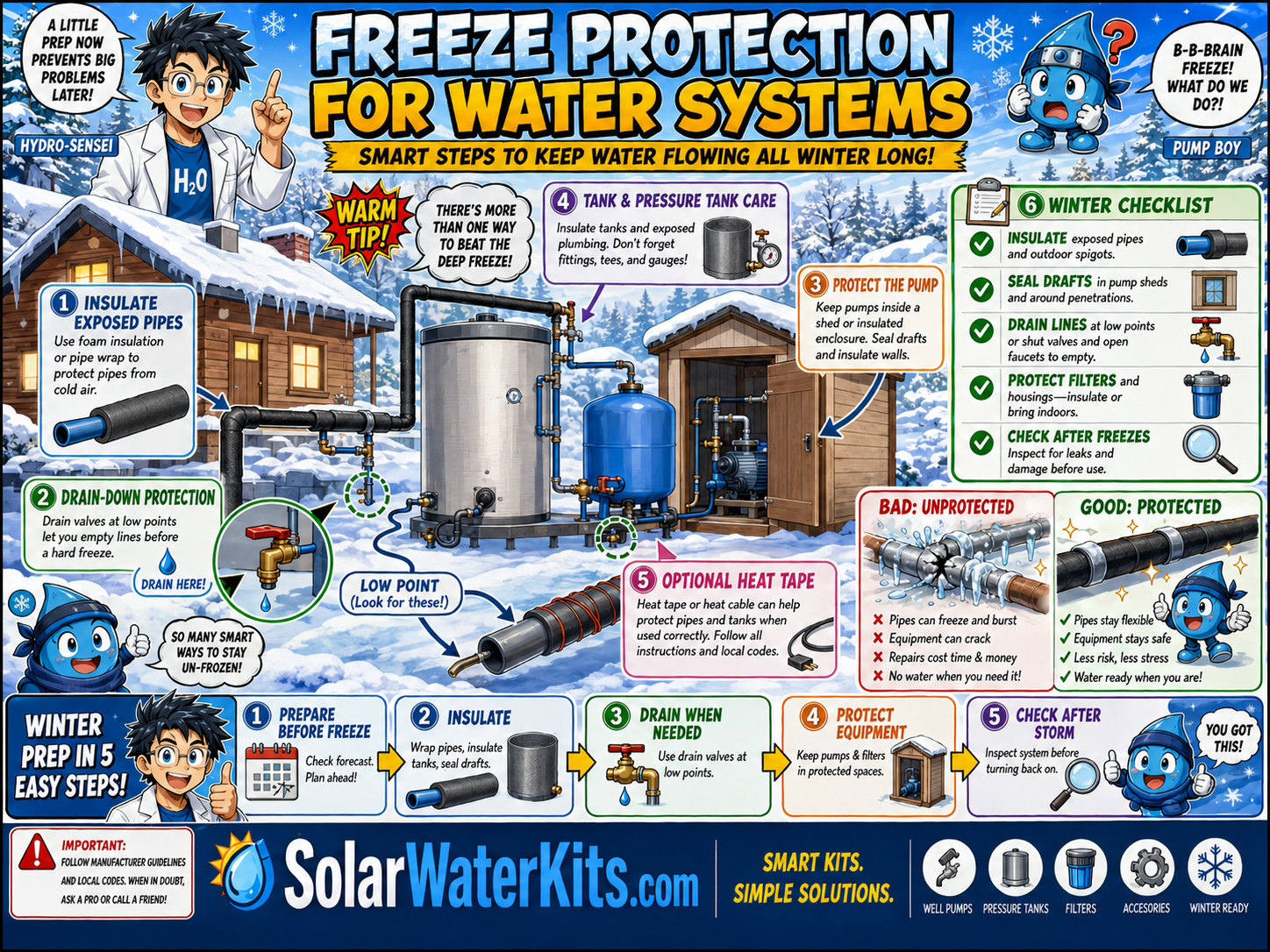
Drain-down, insulation, burial depth, heat, shutdown plans, and winter labels matter.
Freeze protection →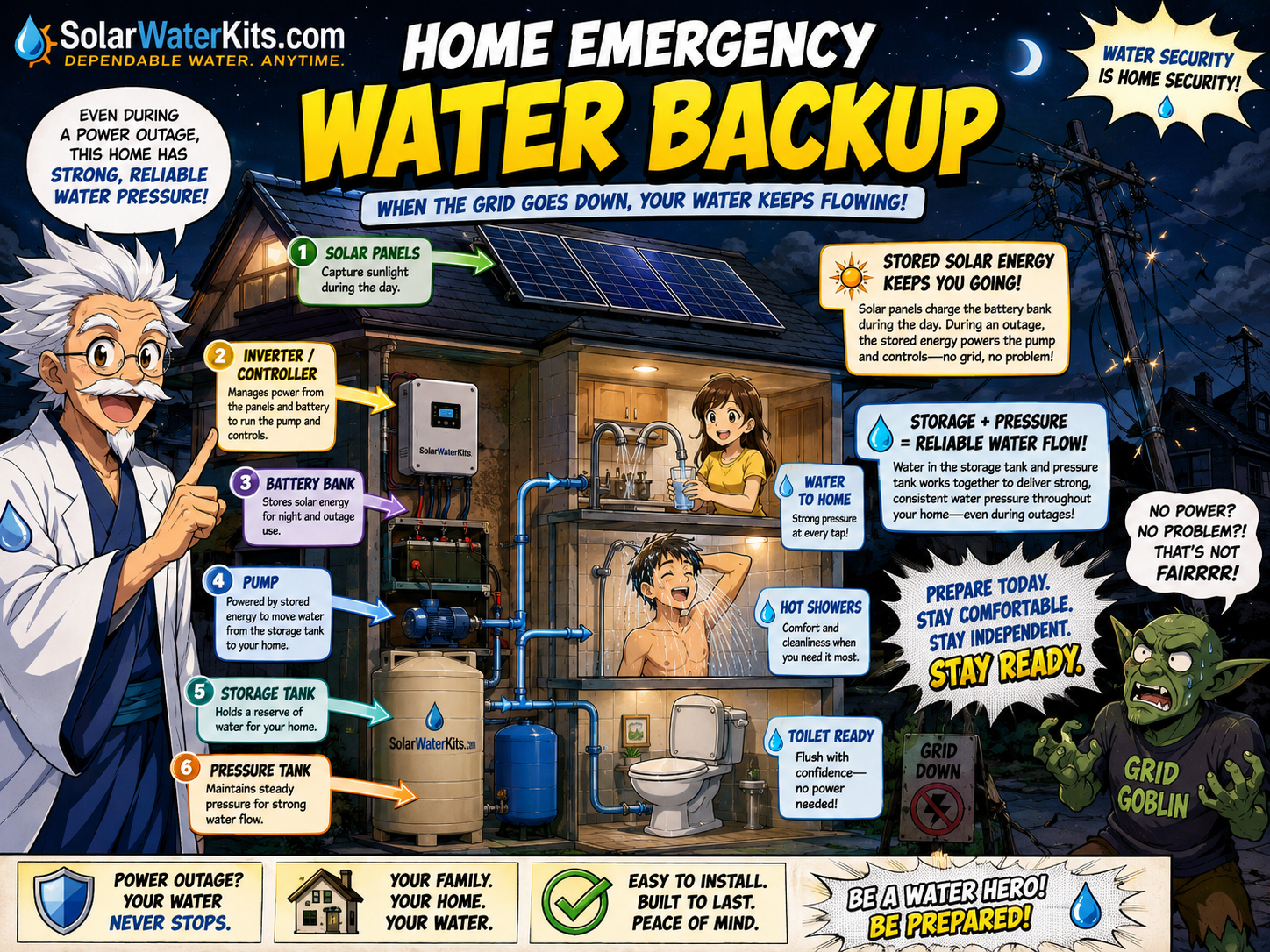
Stored water plus booster pressure can keep basic household uses going.
Emergency water →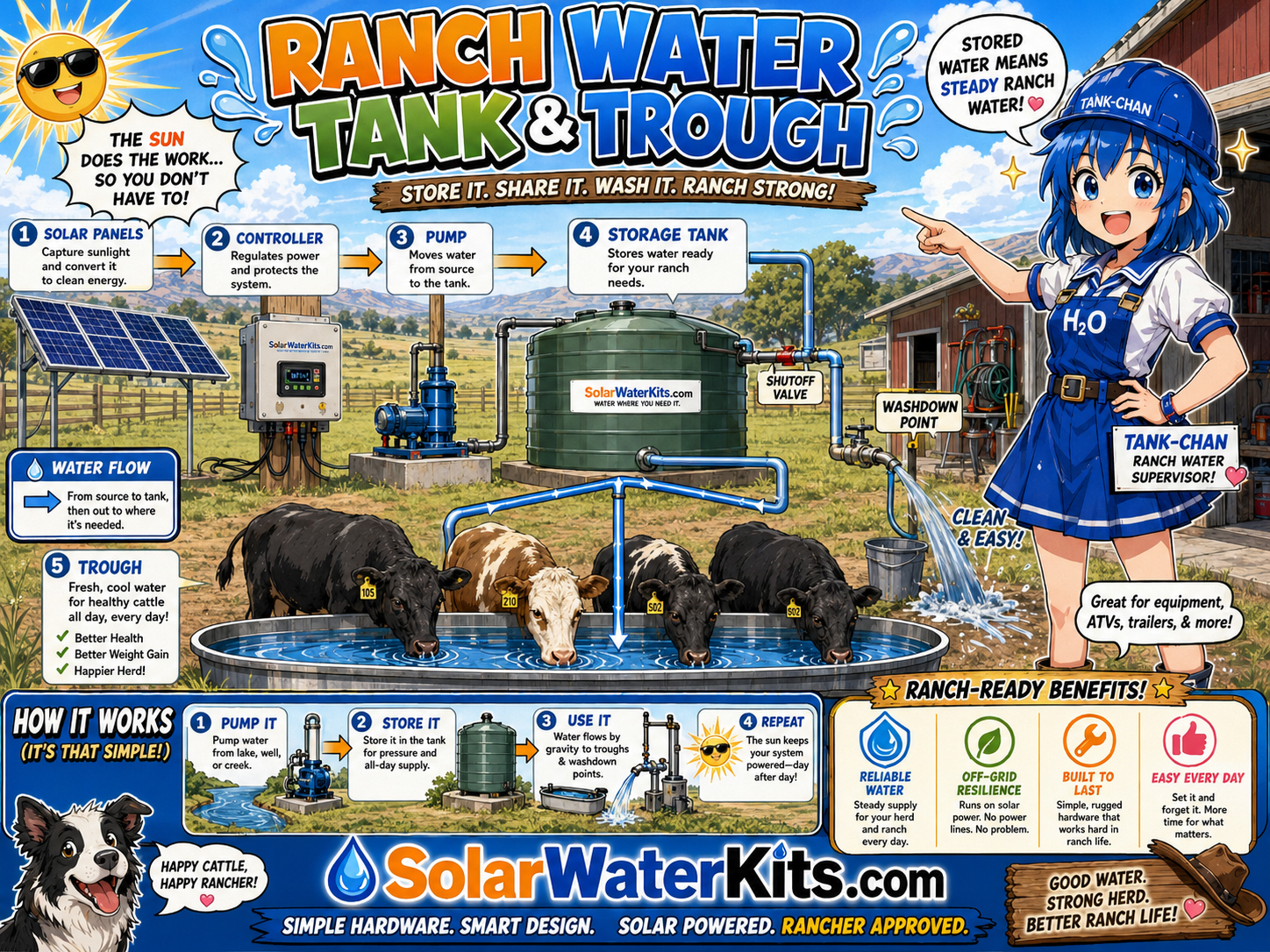
Ranches need storage, trough control, inspection, and backup fill methods.
Livestock water →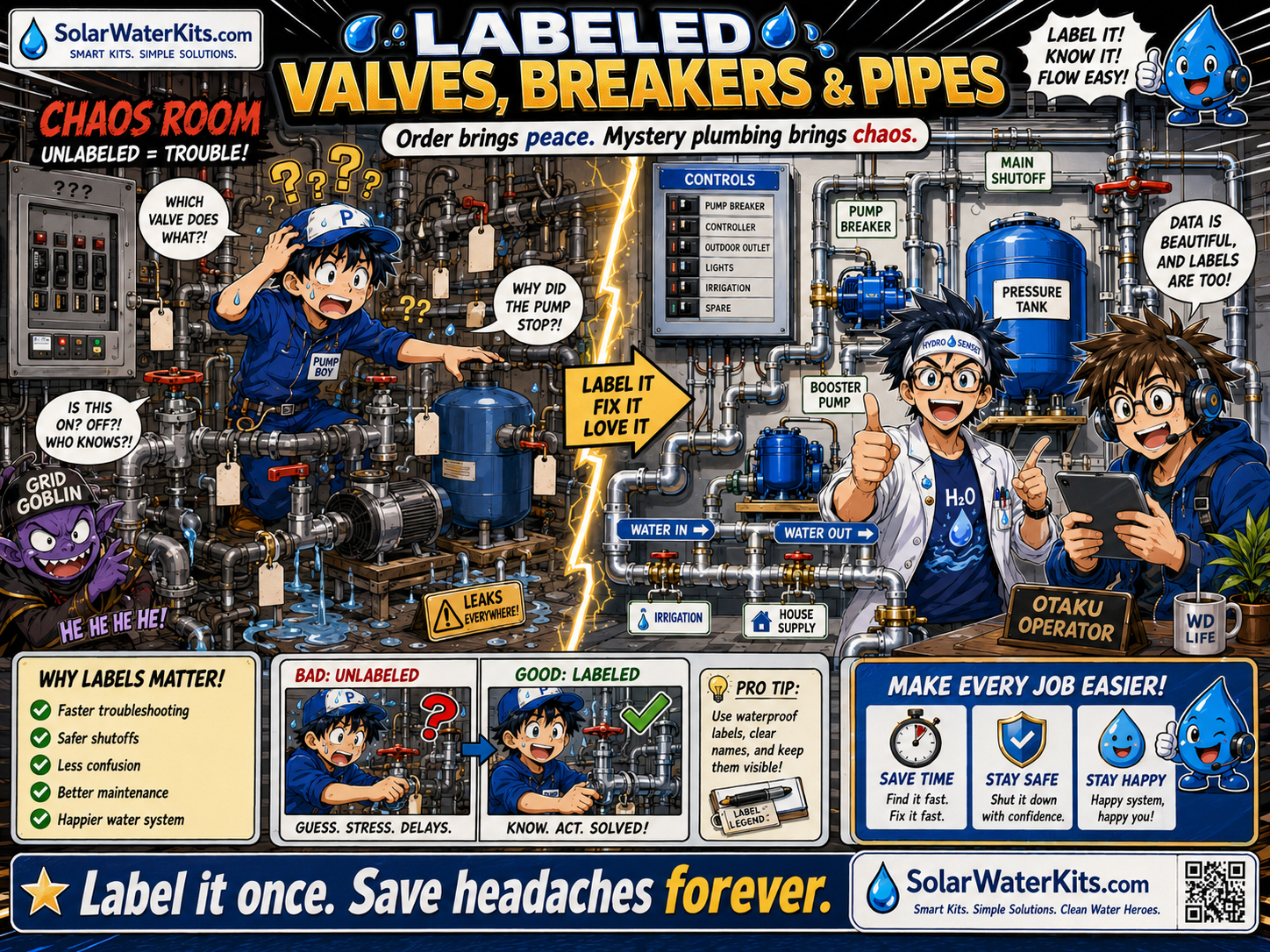
Labels, normal-position tags, diagrams, and checklists are emergency equipment too.
Maintenance →During a disaster, unlimited showers, landscape watering, pool filling, and casual washdown move to the back of the line. Hydro-Sensei makes everyone choose survival priorities first.
A disaster system may include potable water, non-potable utility water, rainwater, graywater, pool water, firefighting reserve, and irrigation water. The label matters.
| Water Category | Possible Uses | Danger if Confused |
|---|---|---|
| Potable drinking water | Drinking, cooking, brushing teeth, some medical needs | Unsafe water can cause illness. |
| Stored utility water | Toilets, cleaning, limited washing, approved non-potable uses | May not be safe to drink. |
| Rainwater | Irrigation or approved uses after proper screening/treatment | Roof debris and contamination risk. |
| Graywater | Highly restricted reuse where allowed | Cross-connection and sanitation risk. |
| Pool or spa water | Usually non-potable emergency utility uses only, if appropriate | Chemicals and contamination risk. |
| Fire reserve water | Property protection support where professionally designed | Not a substitute for firefighters, hydrants, evacuation, or code systems. |
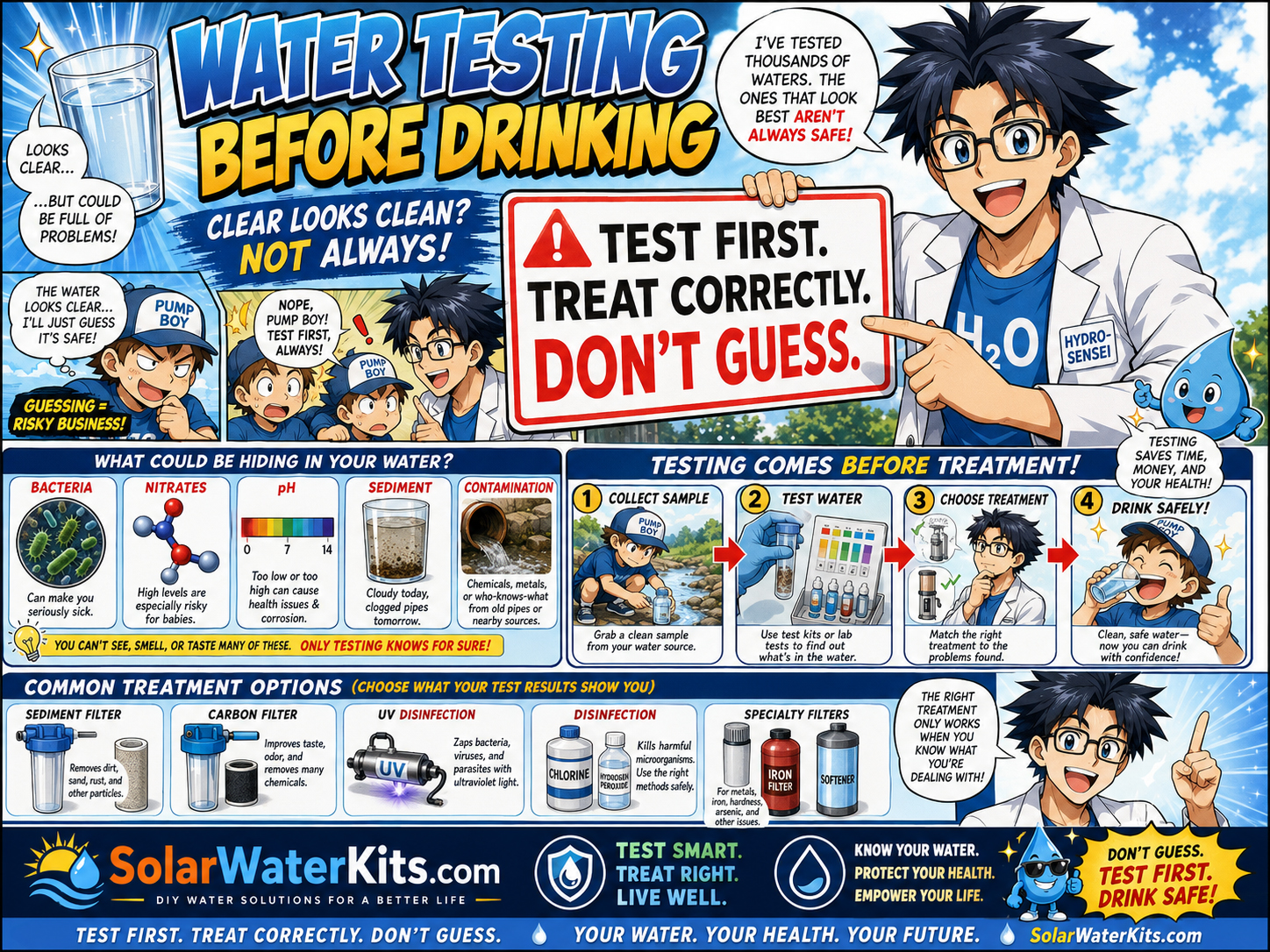
Drinking-water use requires higher care than utility water use.
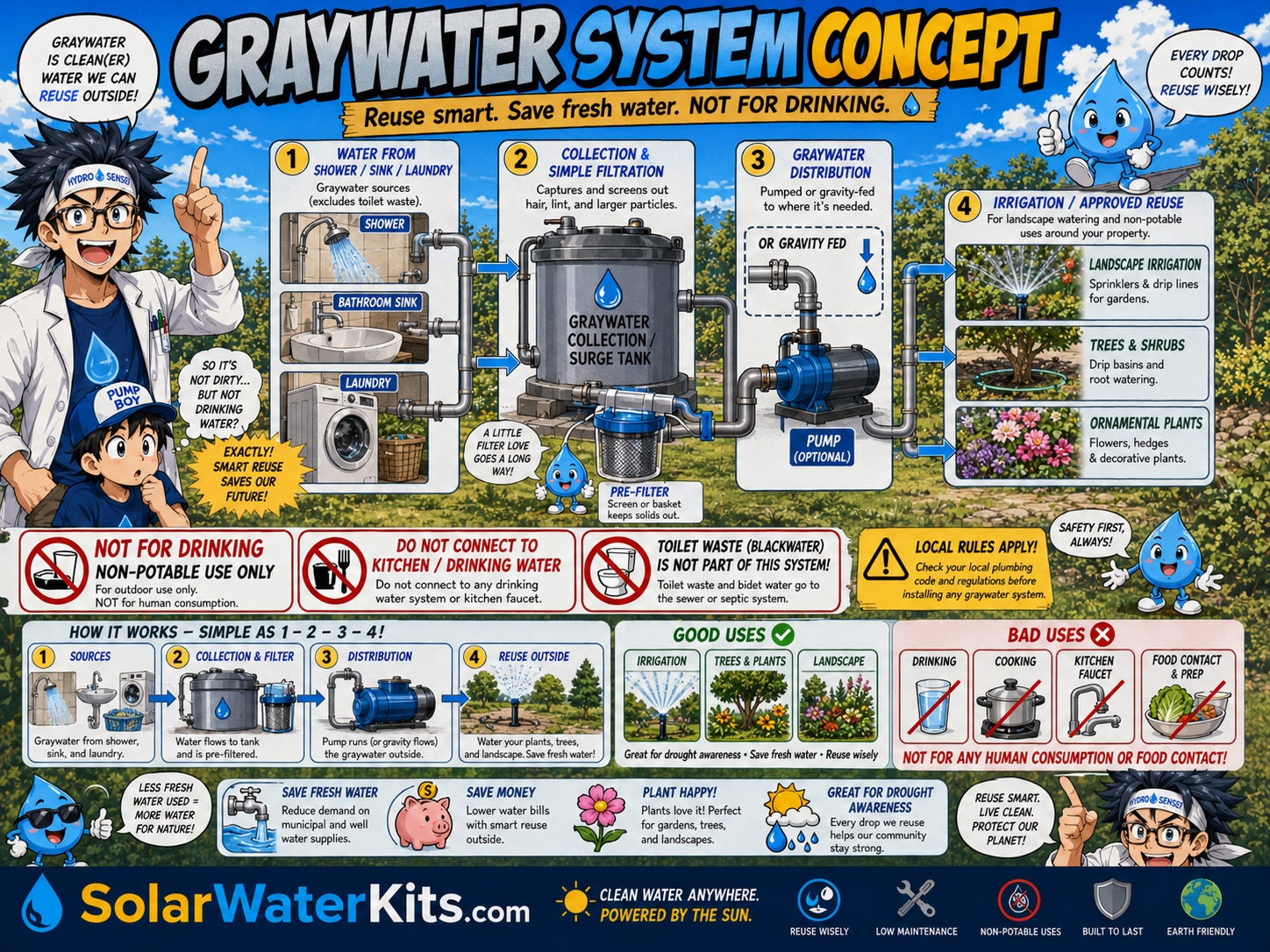
Reuse concepts need local code, separation, labeling, and sanitation discipline.
Graywater concepts →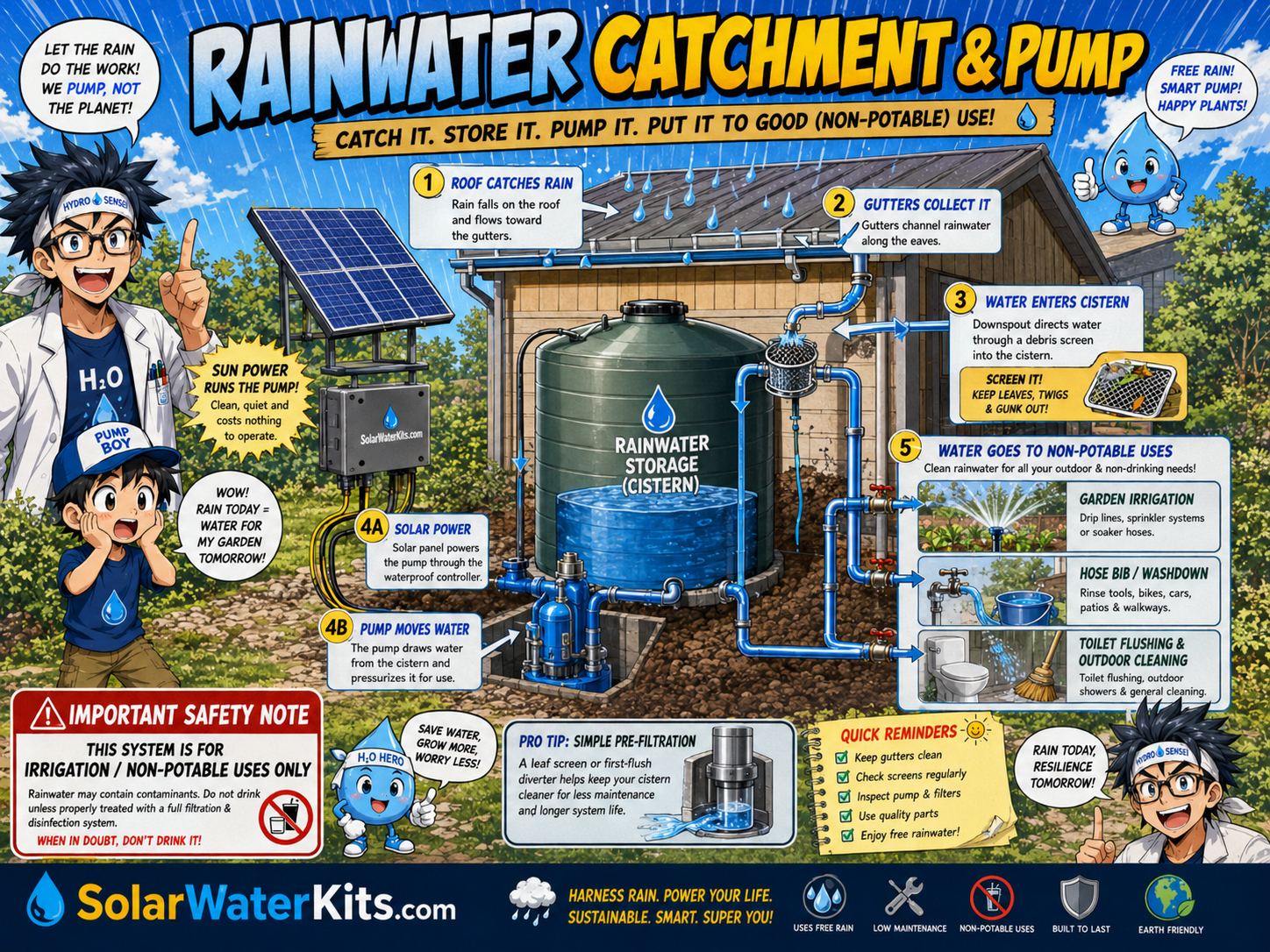
Rainwater can be useful, but it is not automatically potable.
Rainwater pumps →Battery Beast can help, but pumps have real loads. Some pumps have large starting surge. Some wells are deep. Some pressure systems short-cycle. Some batteries are already busy. The design must decide what water equipment truly deserves backup power.
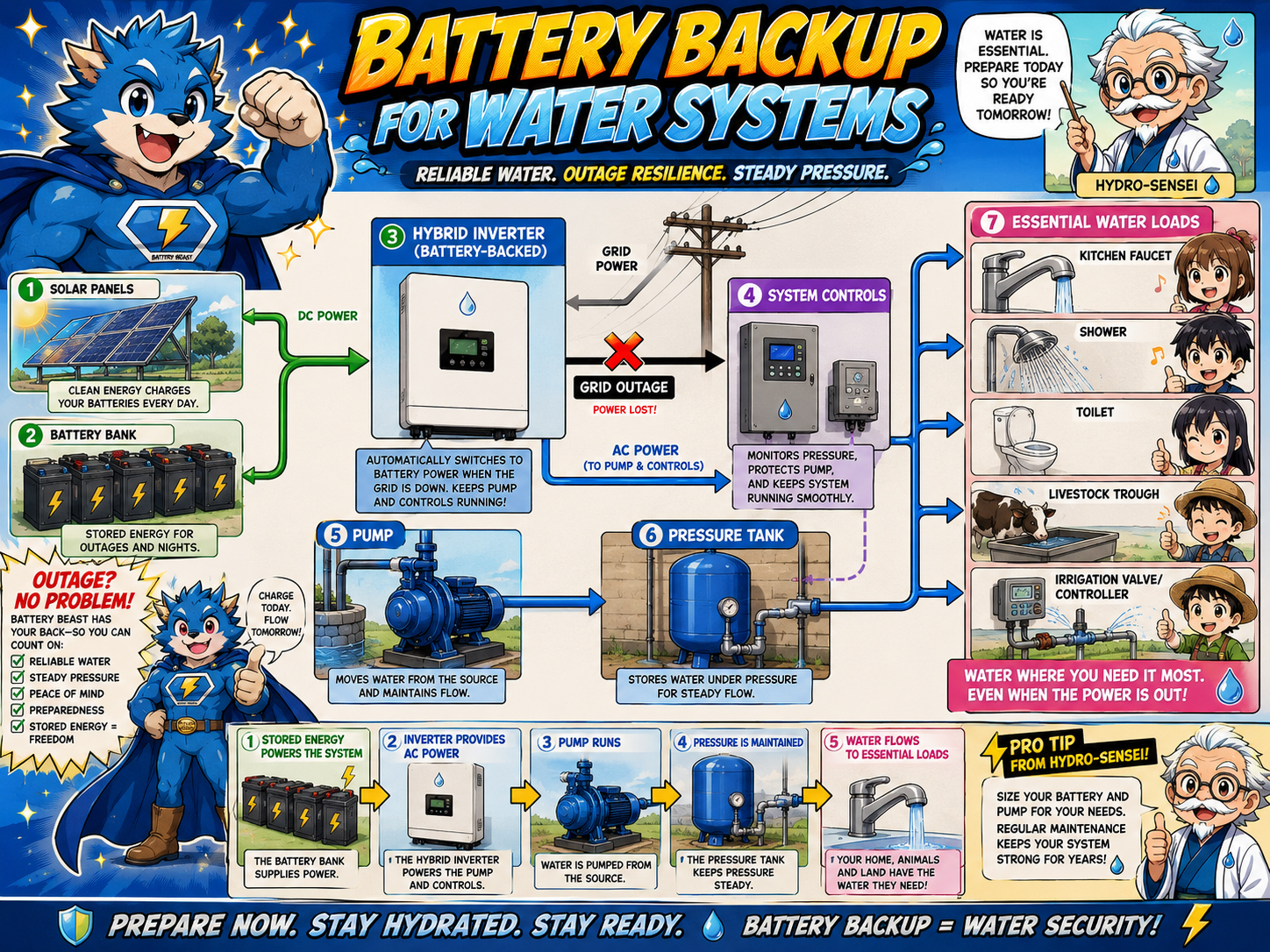
Only works when pump, inverter, battery, and controls are matched.
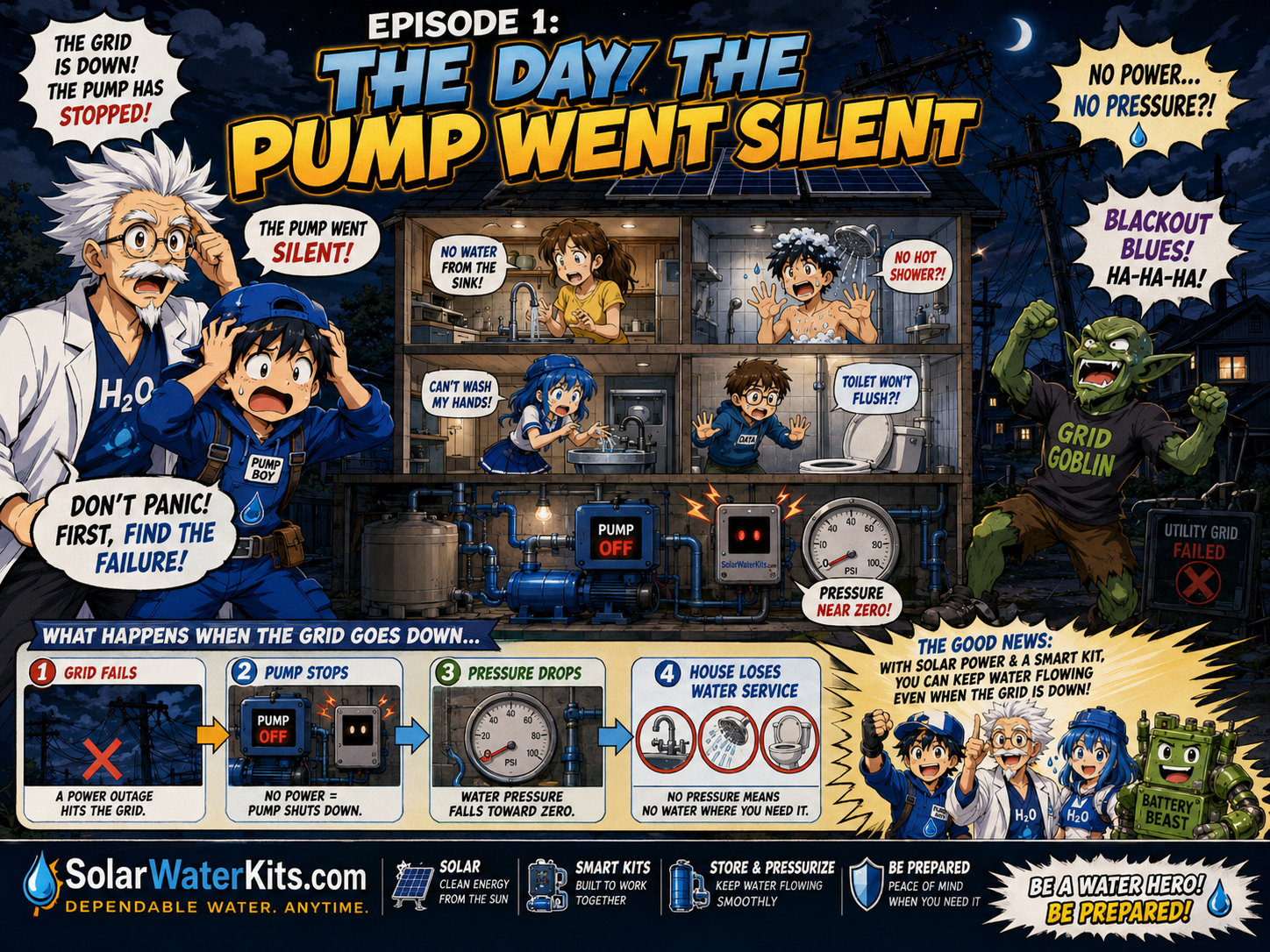
The disaster lesson begins when the faucet does nothing.
In the first manga episode, the household panics when the pump stops. By episode ten, Otaku Operator has labeled the valves, Tank-chan has a reserve, Battery Beast knows the critical loads, and Filter Ninja refuses to let anyone drink mystery water.
A plan that only exists in a drawer is a manga prop. Test valves, pumps, batteries, filters, labels, and procedures before the emergency.
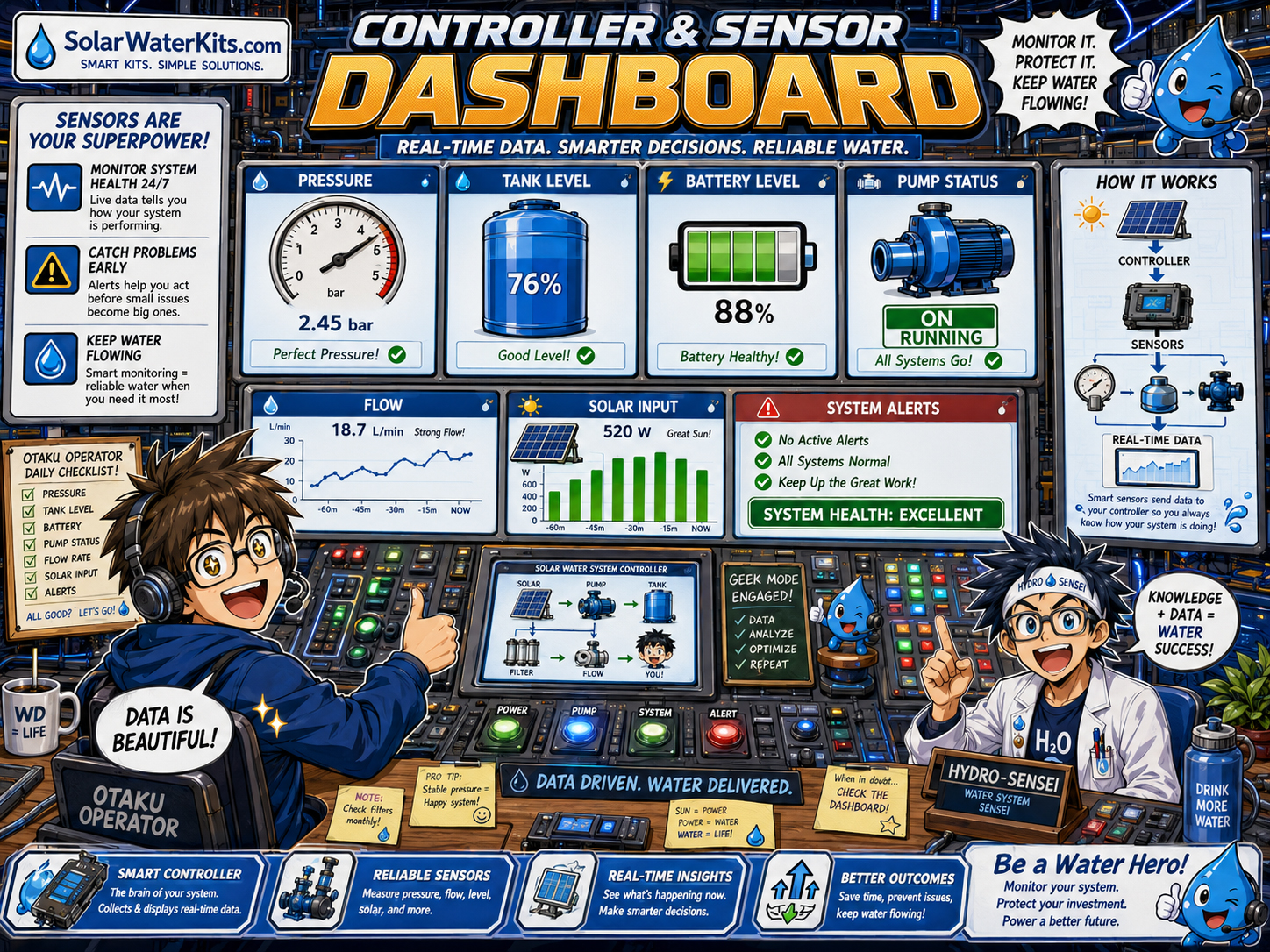
Know the status before the emergency becomes a guessing game.
Disaster water systems may involve potable water, non-potable water, rainwater, graywater, pool water, wells, pumps, batteries, inverters, pressure tanks, relief valves, filters, disinfectants, sanitation, backflow protection, cross-connection control, electrical safety, and local emergency rules. This page is educational only.
Household water priorities, stored water, pressure, and essential loads.
Emergency water →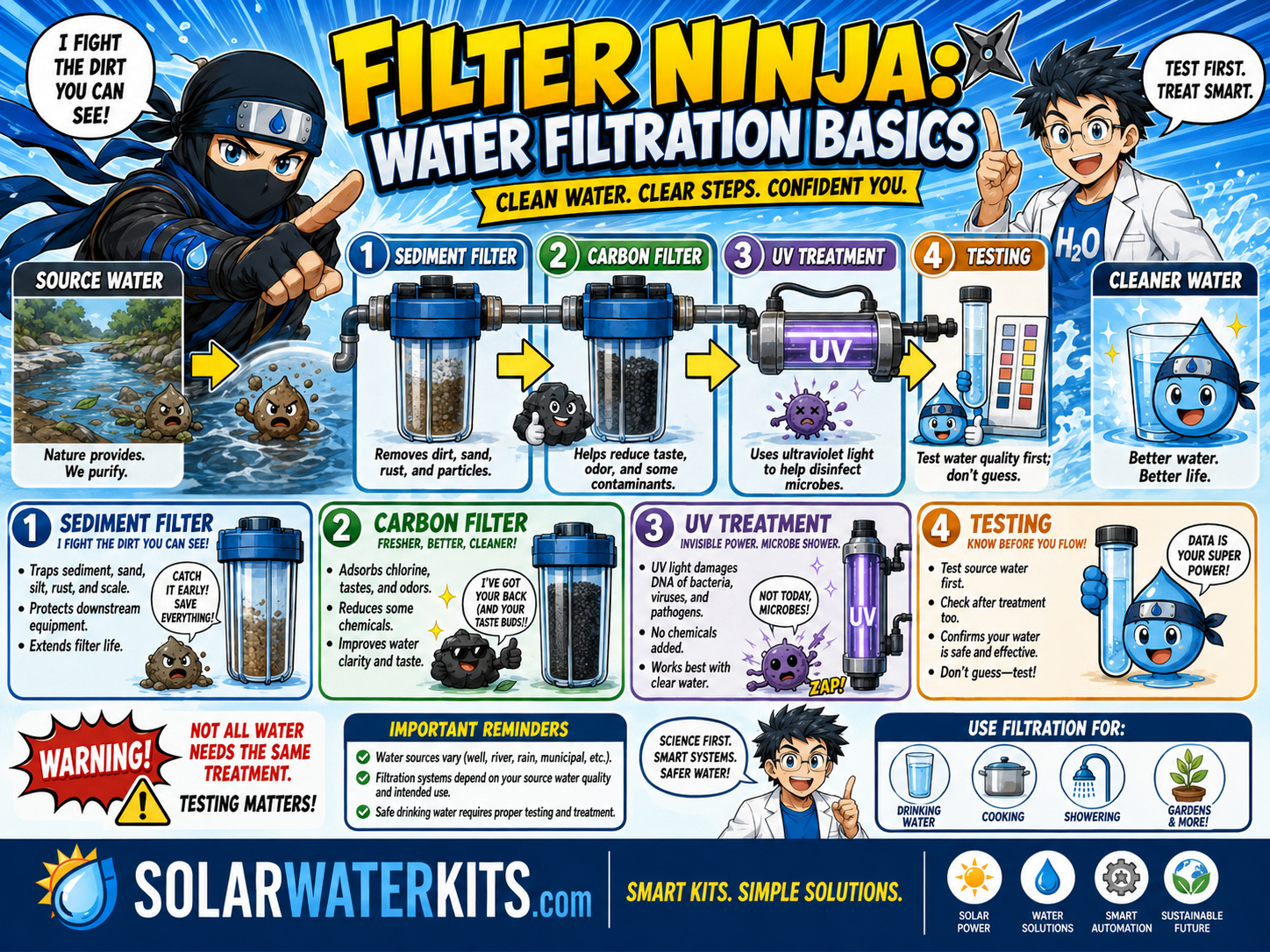
Filter Ninja explains why treatment must match the source and use.
Filtration basics →
Mystery valves are not emergency equipment. Labels save time.
Maintenance →