❓ Hydro-Sensei FAQ Desk

Solar Water Kits FAQ

Fast answers from the otaku water lab: solar pumps, storage tanks, pressure tanks, battery backup, filtration, rainwater, graywater, irrigation, livestock water, emergency water, freeze protection, maintenance, and permits.

☀️ Solar Pumping 🛢️ Storage 🔋 Backup 🥷 Filtration 🚫 Not a Permit
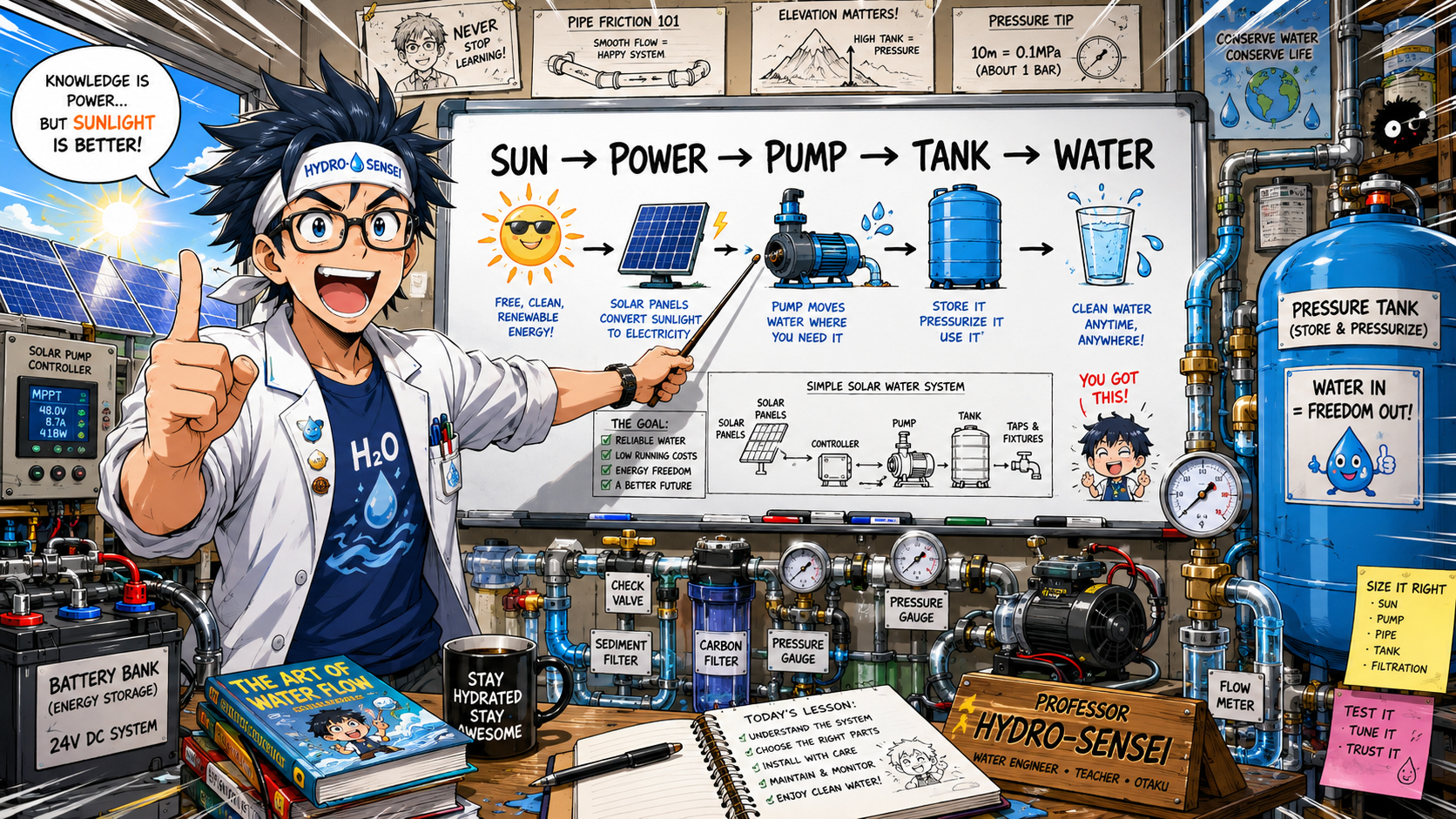
Professor Hydro-Sensei in an otaku water lab full of pipes, gauges, batteries, filters, tanks, and solar water diagrams.
Ask first. Pump later.
Basic Questions

Start with the system, not the gadget

Solar water systems work best when the source, pump, power, storage, pressure, filtration, controls, labels, maintenance, and use case are designed together.

Q

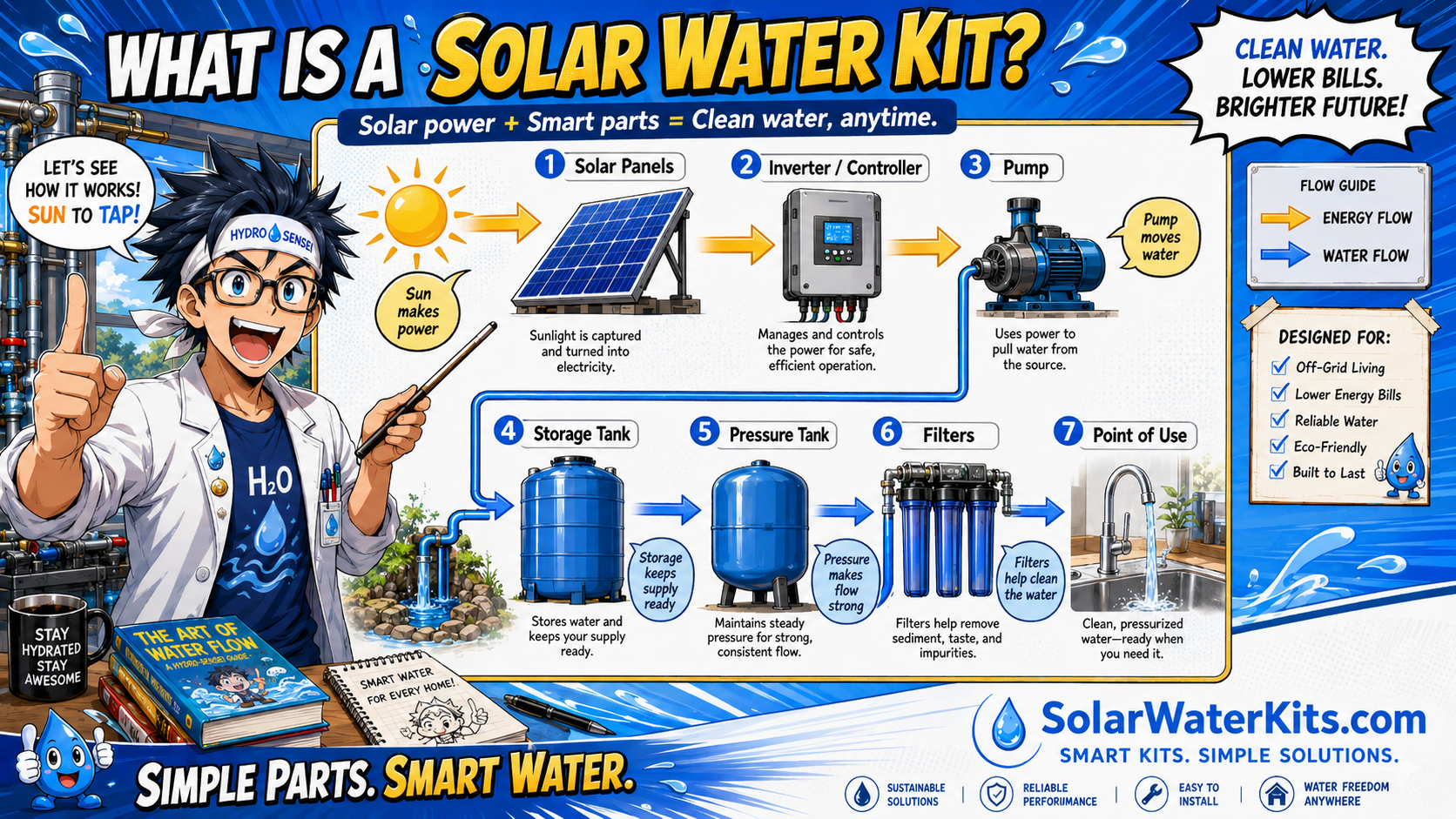
What is a solar water kit?

A solar water kit is a water system concept that uses solar power to help move, store, pressurize, filter, or manage water. It may include solar panels, a pump, controller or inverter, storage tank, pressure tank, filters, sensors, valves, and a defined water use.

Learn the parts →
Q

Is a solar water kit just a pump?

No. Pump Boy wants it to be just a pump, but Hydro-Sensei disagrees. The pump is only one part. The system also needs source water, power, pipe sizing, pressure behavior, storage, controls, water quality, and maintenance.

Solar water pumping →
Q

What is the difference between a storage tank and a pressure tank?

A storage tank holds water volume. A pressure tank helps deliver pressurized water more smoothly and reduces pump cycling. Tank-chan’s translation: storage answers “how much water do we have?” Pressure answers “how calmly can we deliver it?”

Pressure tank basics →
Q

Can solar pump water directly during the day?

Yes, in some systems. Direct or daytime solar pumping can work well for filling tanks, livestock trough systems, irrigation buffers, and remote water uses. The design must still match pump flow, lift, pipe friction, voltage, controls, and water demand.

Pump sizing basics →
Q

What does “pump to storage first” mean?

It means using the pump to fill a tank first, then serving the building, trough, irrigation zone, or hose from storage later. This can separate “when pumping is easy” from “when water is needed.”

Stored water and solar →
Q

What is the difference between PSI and GPM?

PSI is pressure: the push. GPM is flow: the amount of water moving per minute. A system can have pressure but weak flow, or flow with too little useful pressure.

Flow rate and pressure →
Backup and Emergency Questions

Battery Beast is strong, not infinite

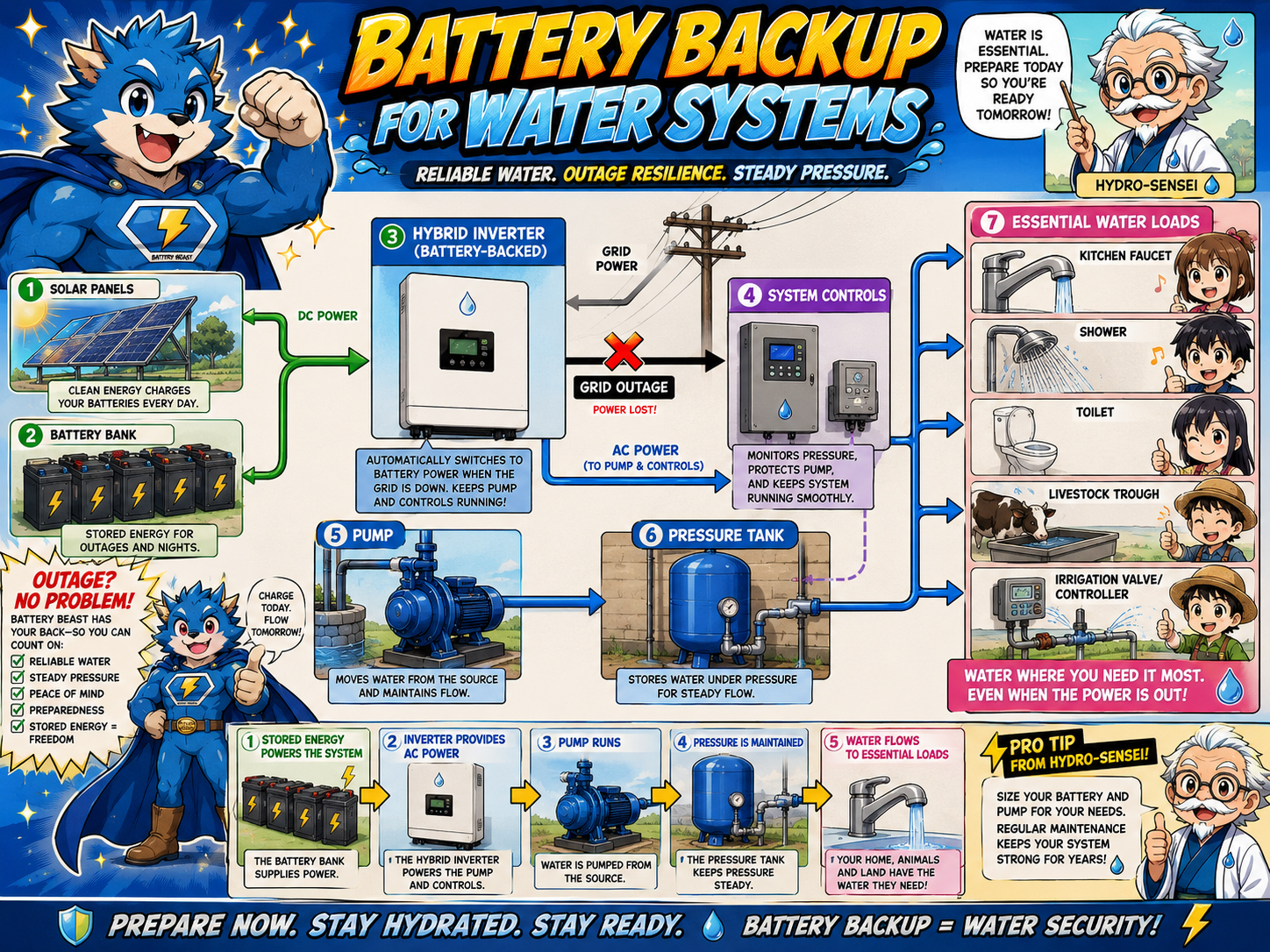
Battery backup can help water systems during outages, but the system must be sized around real pump loads, starting surge, runtime, storage, and essential-water priorities.

Q

Can batteries run my well pump during an outage?

Possibly, but it depends on the pump voltage, horsepower, starting surge, runtime, inverter size, battery capacity, wiring, controls, and whether the well pump is truly the load you want to back up. This needs real electrical review.

Battery pump backup →
Q

Should every water load be on battery backup?

No. Emergency backup should prioritize essential water loads first: well pump, booster pump, pressure controls, basic household water, medical needs, animals, and sanitation. Pool pumps, irrigation, long showers, and decorative water features usually come later.

Emergency water backup →
Q

Is stored water better than more battery?

Sometimes. Storing water can reduce how often pumps need to run during outages. Batteries store electricity; tanks store water. A smart emergency system often uses both.

Stored water →
Q

What is emergency water backup?

Emergency water backup is a plan for keeping essential water available during outages, disasters, pump failures, or utility interruptions. It may include stored water, backup power, pressure delivery, filtration, labels, shutoffs, and usage priorities.

Disaster water systems →
Water Safety Questions

Solar power does not make water safe to drink

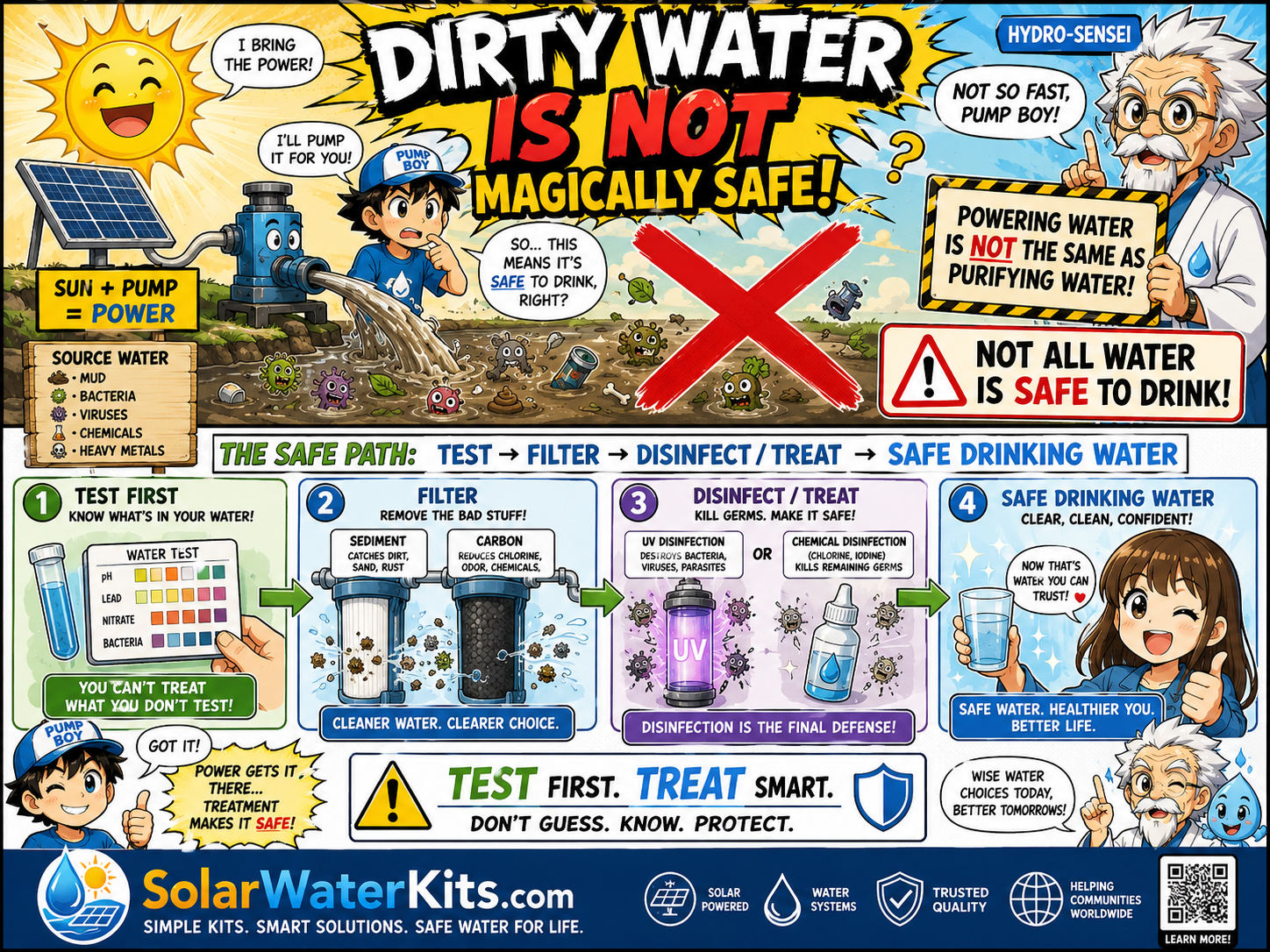
Filter Ninja’s rule: test first, treat correctly, label clearly, and do not guess.

Q

Does solar pumping make water safe?

No. Solar power runs equipment. A pump moves water. Neither proves that the water is safe. Drinking water requires appropriate source protection, testing, treatment, sanitation, and maintenance.

Water safety →
Q

Can I drink rainwater from a solar pump system?

Do not assume that. Rainwater can carry roof debris, bird droppings, dust, ash, insects, tank contamination, and other risks. Drinking-water use requires proper testing, treatment, code review, and sanitary storage.

Rainwater systems →
Q

What does a sediment filter do?

A sediment filter catches particles such as sand, silt, rust, or scale. It does not automatically remove bacteria, viruses, dissolved chemicals, salts, hardness, or every contaminant.

Filtration basics →
Q

What is graywater?

Graywater is selected non-toilet wastewater, often from showers, bathroom sinks, or laundry, depending on local rules. It is non-potable and must be separated, labeled, and used only where allowed.

Graywater and solar →
Q

Can graywater be used for drinking?

No. Graywater is not drinking water. It belongs in the non-potable category and may be restricted to approved landscape uses where local code allows it.

Safety and sanitation →
Application Questions

Different water jobs need different kits

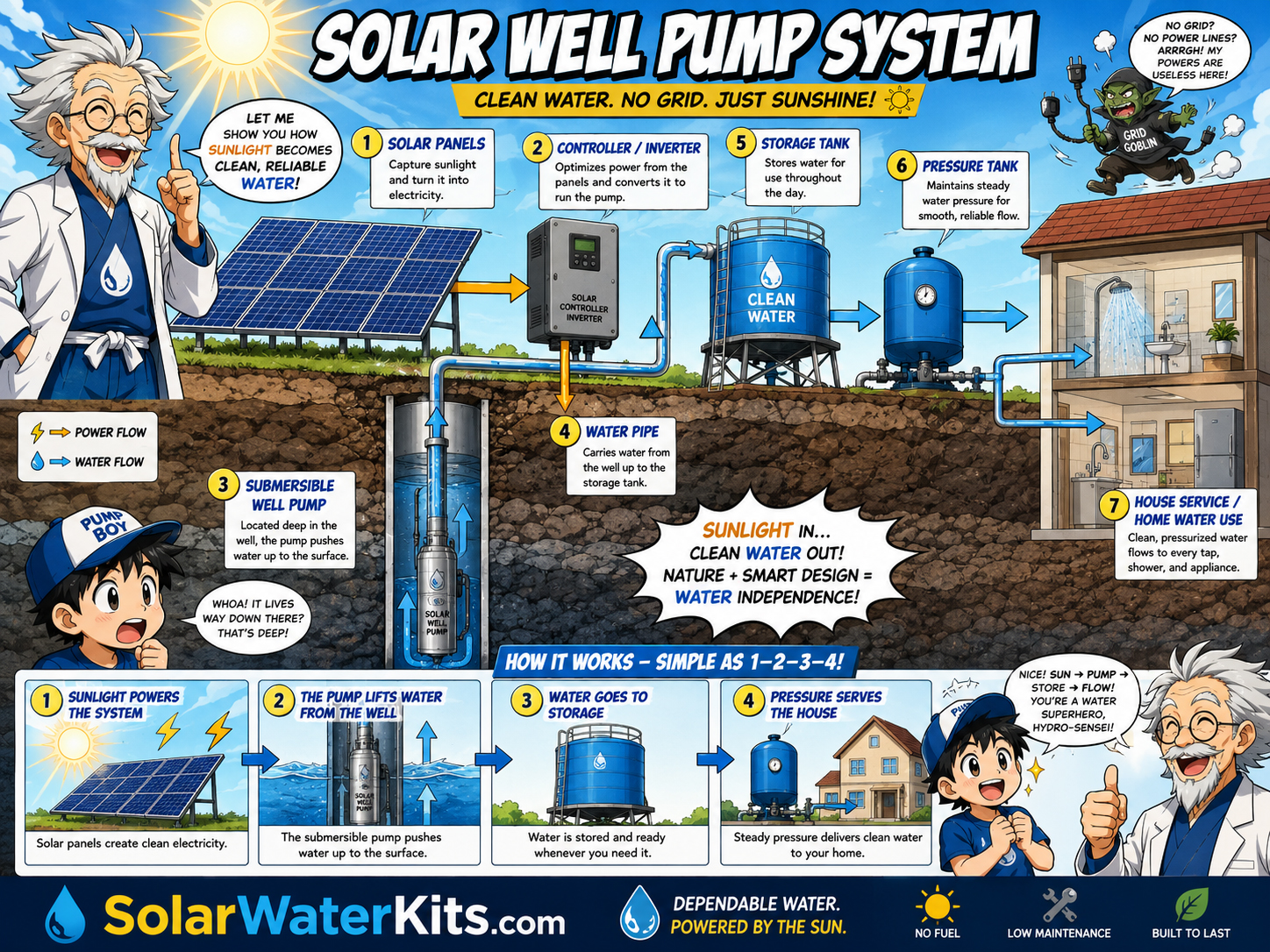
Solar well pump system cross-section.
Well Pumps

Can solar run a well pump?

Sometimes, but well depth, water level, recovery rate, pump surge, storage, pressure, and treatment all matter.

Well pumps →
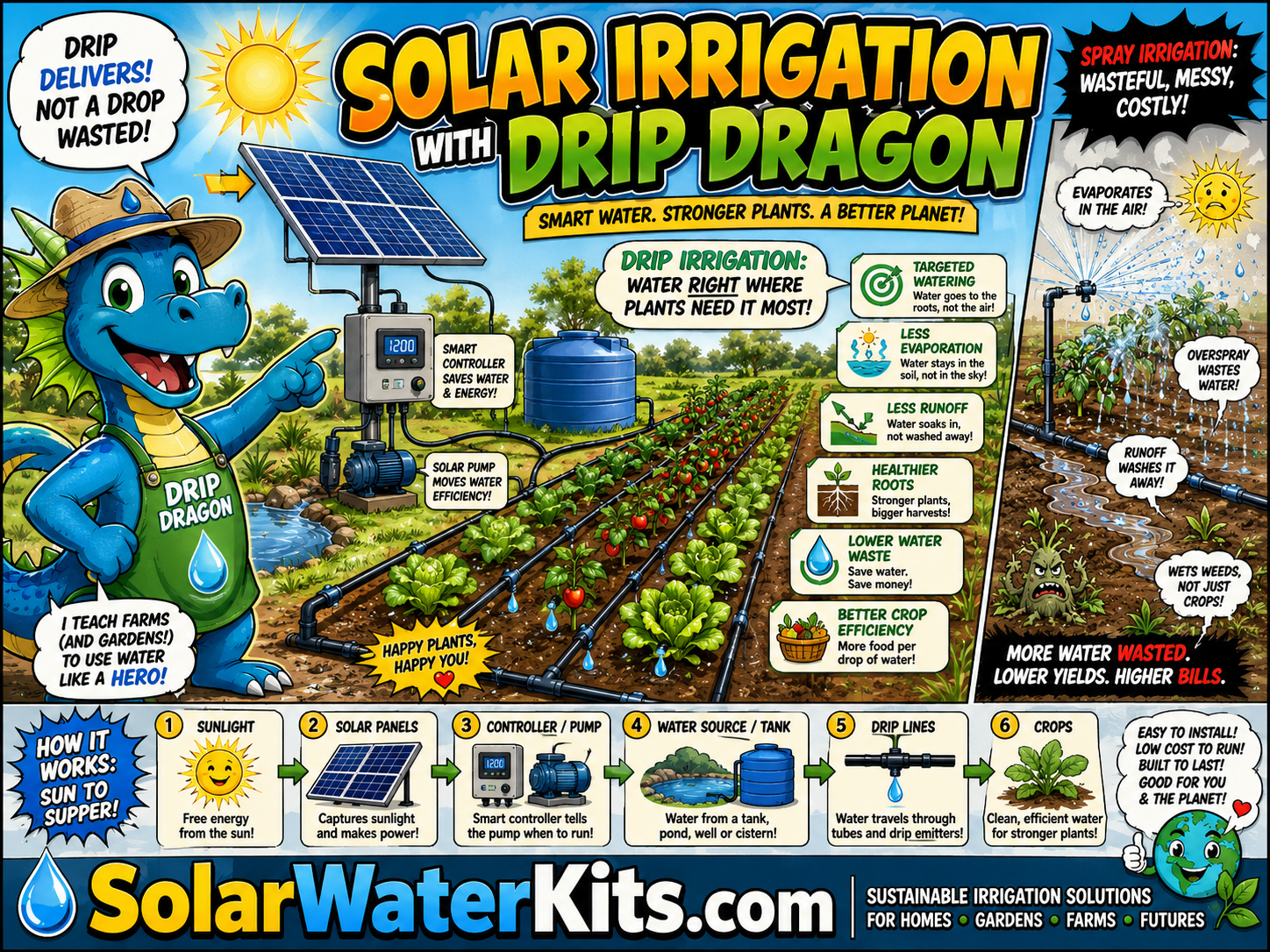
Drip Dragon explaining solar irrigation.
Irrigation

Is solar irrigation a good fit?

Often, because irrigation can be scheduled. The design needs zones, valves, filters, pressure, and timers.

Irrigation →
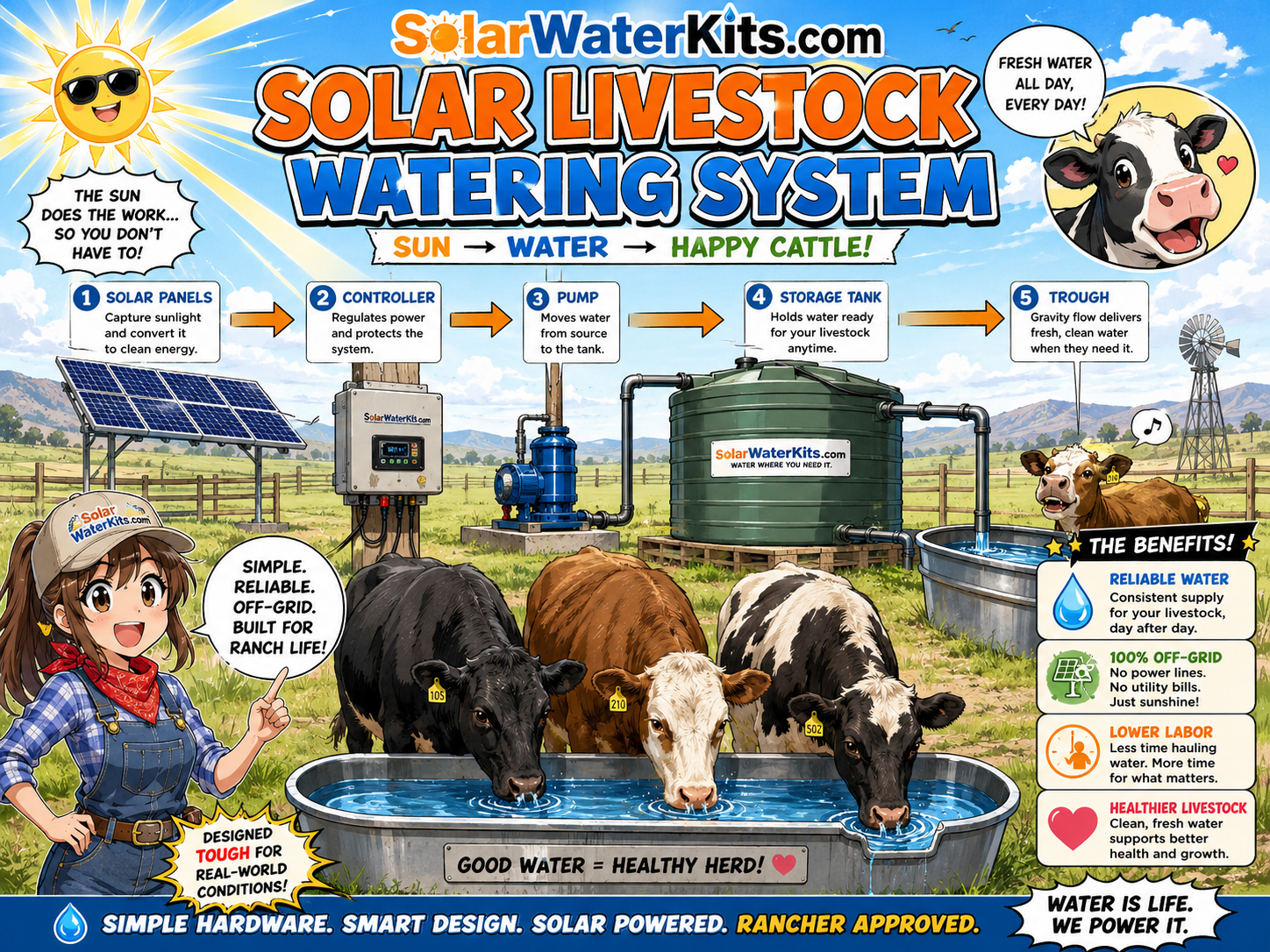
Solar livestock watering system with cattle and trough.
Livestock

Can solar water livestock?

Yes in many cases, but daily demand, storage, trough controls, float valves, freezing, and inspection matter.

Livestock water →
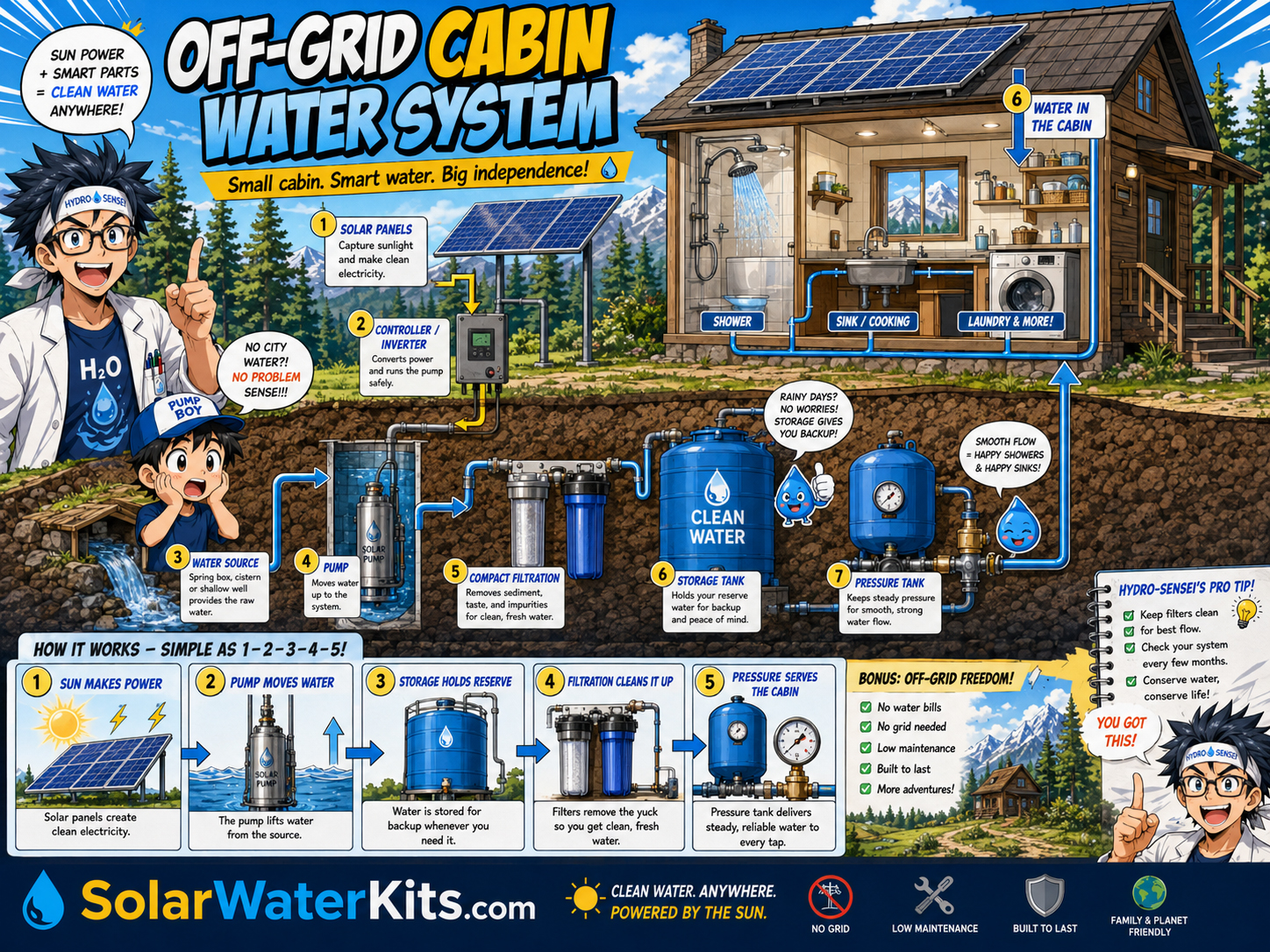
Off-grid cabin water system.
Cabins

What about off-grid cabins?

Cabin water needs source planning, tanks, pressure, filtration, battery backup, freeze protection, and shutdown routines.

Cabin water →
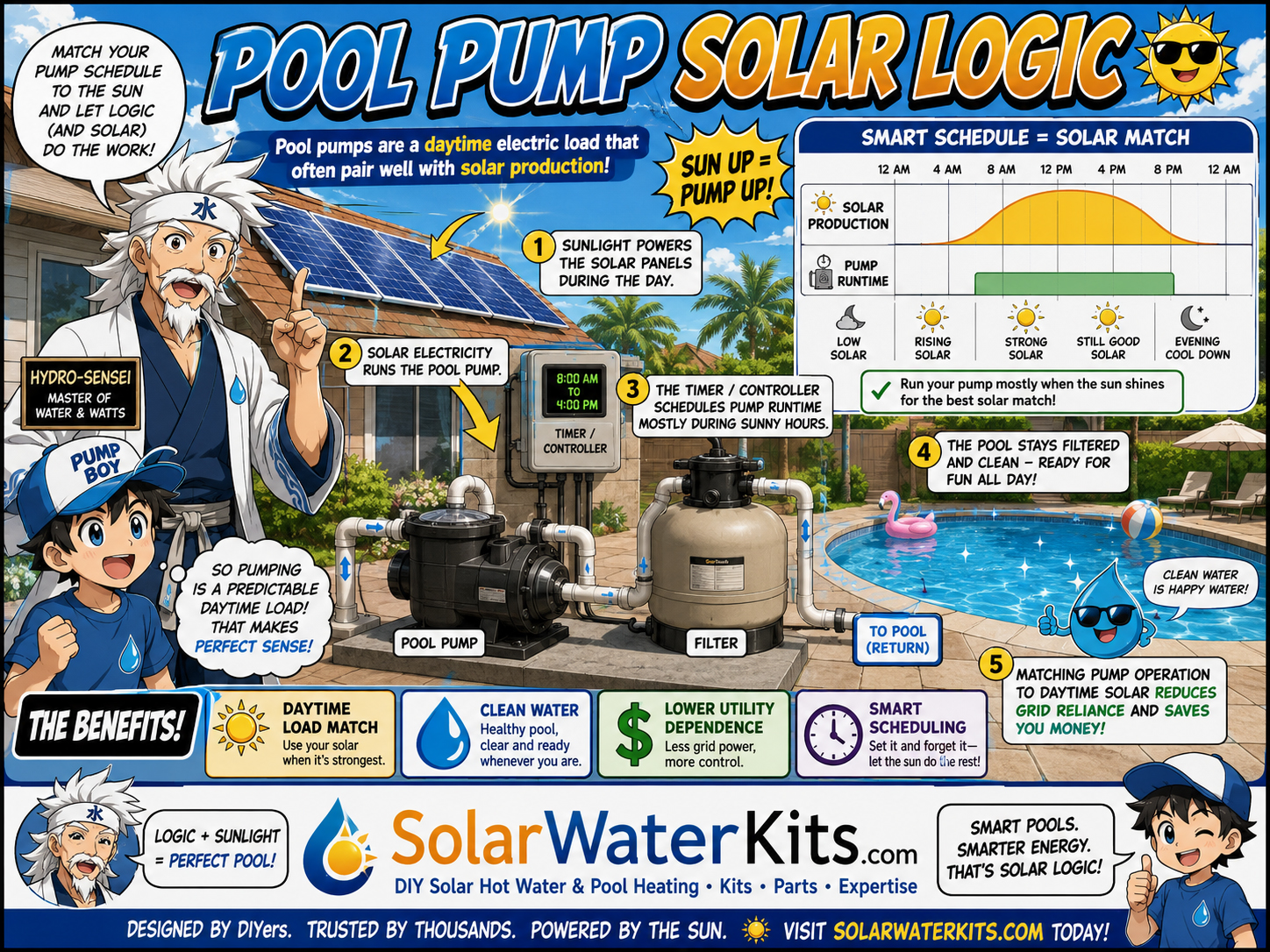
Pool pump solar logic.
Pools

Can pool pumps match solar?

Pool pumps are often schedule-friendly daytime loads, but pool electrical and water safety require professional review.

Pool pumps →
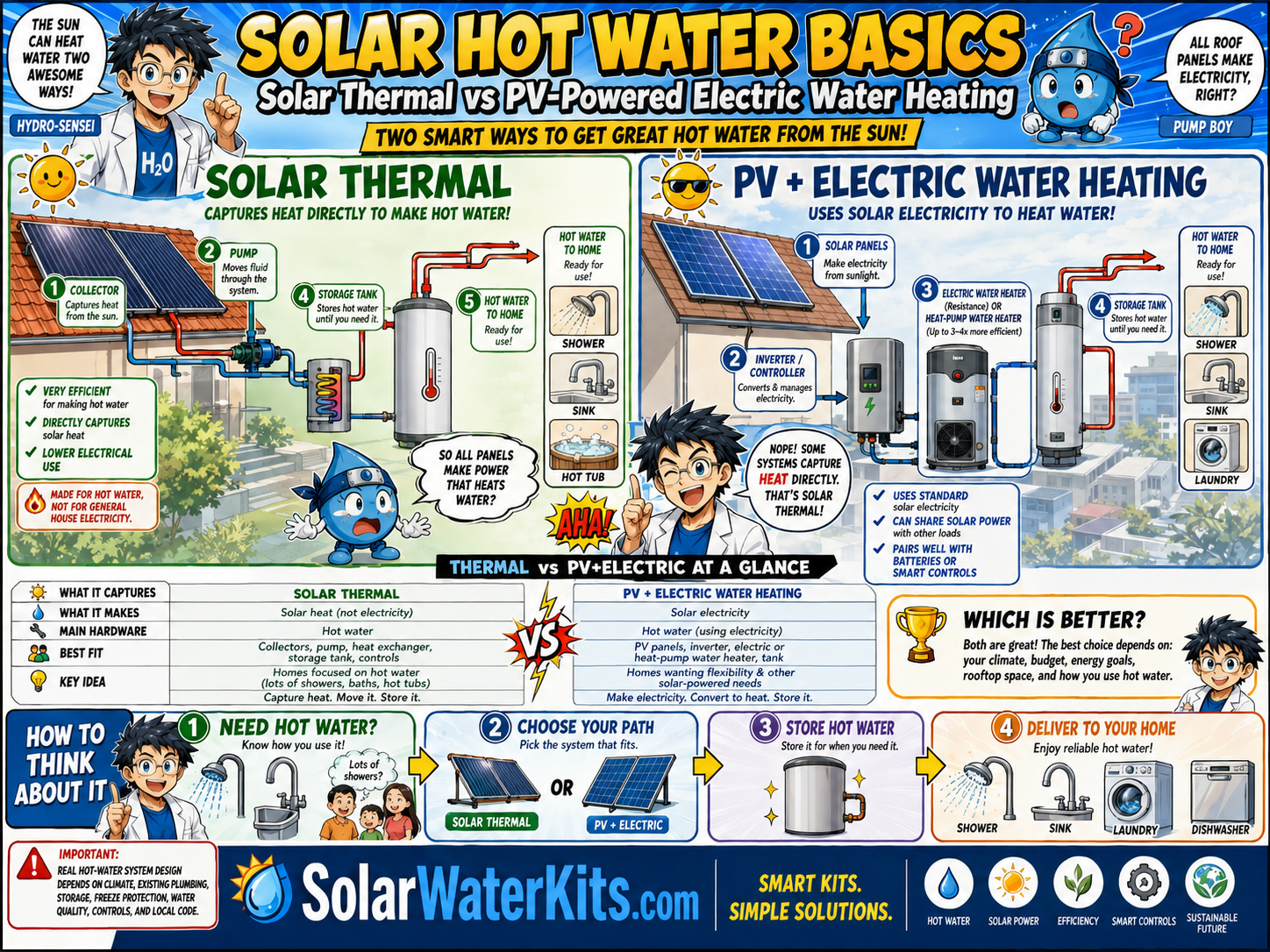
Solar hot water basics.
Hot Water

Is solar hot water the same as solar pumping?

No. Solar thermal heats water directly; PV-electric systems make electricity that can support water heating.

Solar hot water →
Permit and Legal Questions

This site is not the authority having jurisdiction

SolarWaterKits.com is an educational manga concept site. Real systems may require permits, licensed professionals, manufacturer instructions, inspections, and local code compliance.

Q

Is SolarWaterKits.com a plumbing permit?

No. It is not a plumbing permit, electrical permit, building permit, fire-code approval, water-treatment certification, engineering design, inspection report, or installation manual.

Not a plumbing permit →
Q

Do solar water systems need permits?

They may. A real project can involve plumbing, electrical, building, structural, well, water-treatment, backflow, graywater, rainwater, fire, or health department rules. Check local requirements before building.

Disclaimer →

Hydro-Sensei’s permit answer

A diagram can teach the concept. It cannot approve the installation. The authority having jurisdiction, licensed professionals, manufacturer instructions, inspectors, and local codes decide the real project requirements.

Advanced Water Questions

Cool water ideas still need serious engineering

Q

Can solar power desalination?

Solar can help power desalination, but desalination is a serious engineering problem: pretreatment, high pressure, membranes, energy use, brine handling, corrosion, testing, post-treatment, and maintenance all matter.

Desalination and solar →
Q

Can atmospheric water generation make water from air?

Yes, but output depends heavily on humidity, temperature, airflow, energy use, filtration, sanitation, storage, and maintenance. AWG is climate math, not magic.

Atmospheric water generation →
Q

Can stored water help with fire readiness?

Stored water may support readiness concepts, but it is not a substitute for evacuation, firefighters, hydrants, fire-code systems, defensible space, or professional fire-protection design.

Fire readiness water →
Q

What about freeze protection?

Freeze protection may require drain-down, insulation, burial depth, heat trace, protected pump sheds, temperature alarms, winter mode labels, and professional plumbing/electrical review.

Freeze protection →
Maintenance Questions

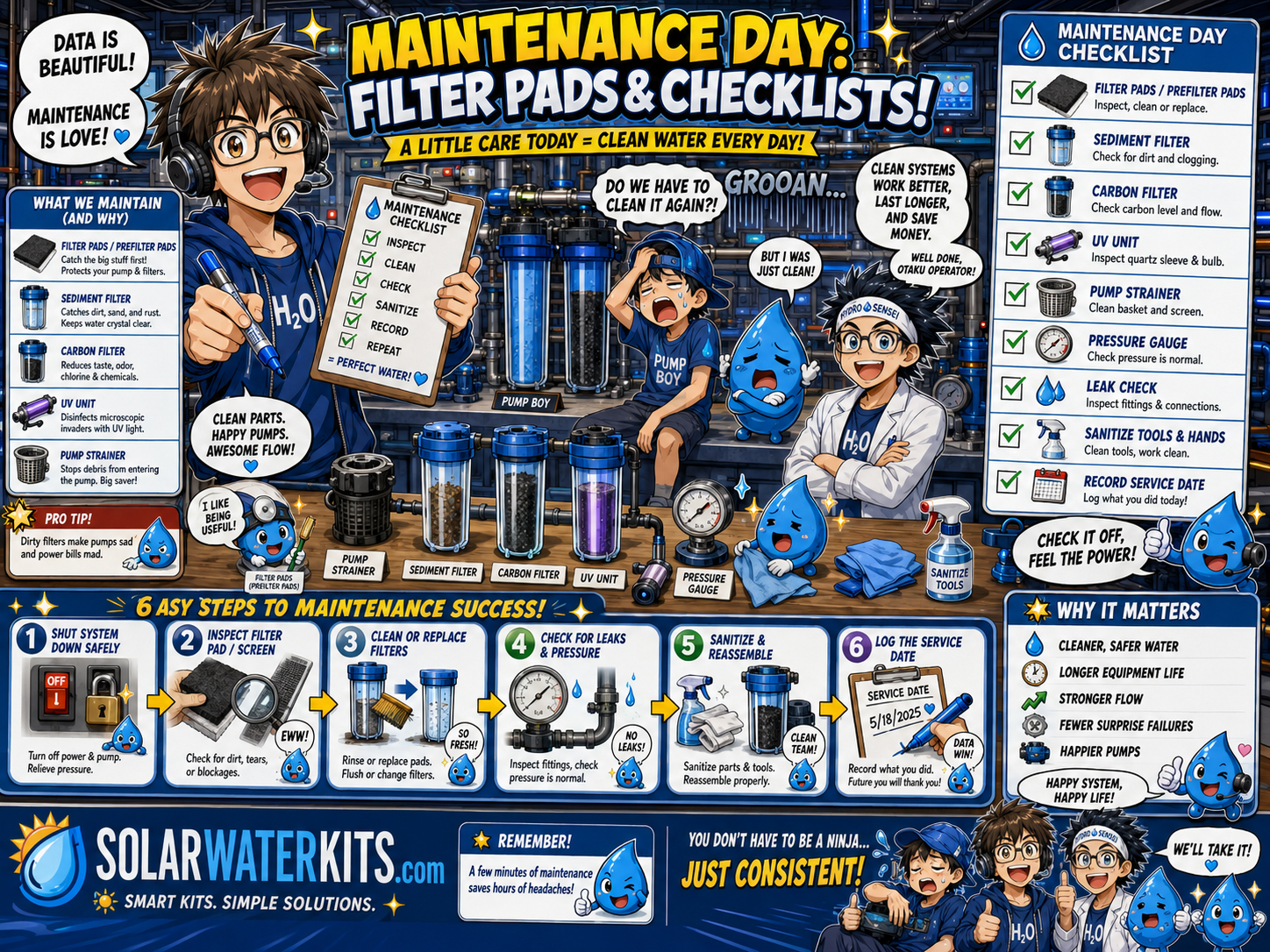
Maintenance day beats emergency day

Q

What maintenance do solar water systems need?

Common maintenance includes checking pumps, filters, strainers, valves, pressure tanks, tank levels, batteries, controllers, sensors, water quality, labels, winter protection, and emergency procedures.

Maintenance guide →
Q

Why are labels so important?

During service or emergency mode, mystery valves waste time and create risk. Label pipes, valves, tanks, breakers, pumps, bypasses, filters, drains, potable lines, non-potable lines, and normal operating positions.

Controllers and sensors →
Safety First

SolarWaterKits.com is educational only

Real water systems can involve electricity, pressure, potable water, non-potable water, wells, pumps, tanks, batteries, filters, UV, heat trace, backflow protection, cross-connection control, fire-readiness concepts, graywater, rainwater, and local code.

Use this site for

  • Learning vocabulary.
  • Understanding system relationships.
  • Preparing better questions for professionals.
  • Recognizing risks before spending money.
  • Teaching water-system concepts in a fun way.

Do not use this site as

  • A permit drawing.
  • An installation manual.
  • A drinking-water approval.
  • A fire-code approval.
  • A substitute for licensed professionals.
  • A reason to skip local code or inspections.